
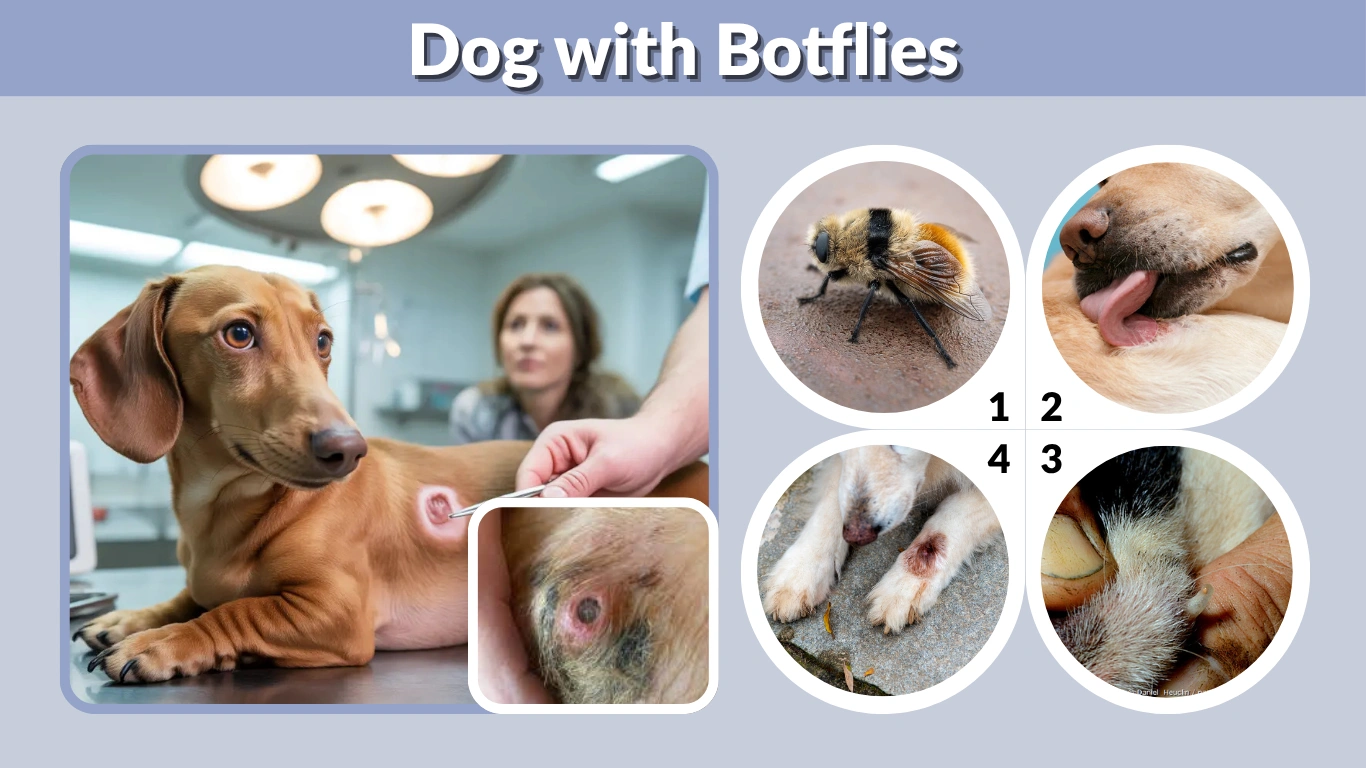
Botfly infestations in dogs are more common than many owners realize, especially in regions where rabbits, rodents, and wildlife are abundant. These parasites can cause painful swellings, infection, and distress for the affected dog. While the sight of a breathing hole or visible movement beneath the skin can be frightening, botfly larvae can be removed safely when proper techniques are used.
Understanding how dogs become infested, the signs to look for, and the safest removal methods can help prevent complications. This guide covers symptoms, professional treatment, at-home care, and prevention strategies so dog owners can respond quickly and confidently.
What Are Botflies?
Understanding Botfly Larvae
Botflies are parasitic insects whose larvae develop beneath the skin of warm-blooded hosts. Rather than laying eggs directly on dogs, the adult botfly typically attaches its eggs to mosquitoes or other insects. When the carrier insect lands on a dog, the warmth of the skin triggers the eggs to hatch. The larvae then burrow into the skin, creating a distinct lump known as a warble.
Inside the warble, the larva feeds on tissue fluids and grows for several weeks. It maintains a small breathing hole at the surface—usually the most recognizable sign of a botfly infestation. As it grows, the larva becomes more active, and movement under the skin may occasionally be felt or seen.
Common Botfly Species Affecting Dogs
The most frequent culprit in dogs is the Cuterebra species. These botflies target small mammals such as rabbits and rodents, but dogs can accidentally become hosts when they explore burrows or areas where these wildlife species live. Cuterebra activity peaks in warm months, making late summer and early fall the most common seasons for infestations.
How Dogs Get Botflies

Environmental Exposure
Dogs typically become infested when they encounter areas where botfly eggs have been deposited. Rabbits and rodents often carry Cuterebra larvae, so locations near burrows, nests, and dense vegetation pose the greatest risk. When a dog sticks its head into a burrow—or even lies in grass where eggs are present—the larvae seize the opportunity to enter through tiny skin openings or hair follicles.
Why Some Dogs Are Higher Risk
Certain dogs are naturally more prone to botfly exposure. These include:
- Hunting dogs that track wildlife
- Working breeds that spend hours outdoors
- Free-roaming or outdoor dogs
- Puppies, who are curious and less cautious
Dogs with frequent access to fields, woodlands, or rural areas are consistently at higher risk.
Symptoms of Botfly Infestation in Dogs
Visible Signs
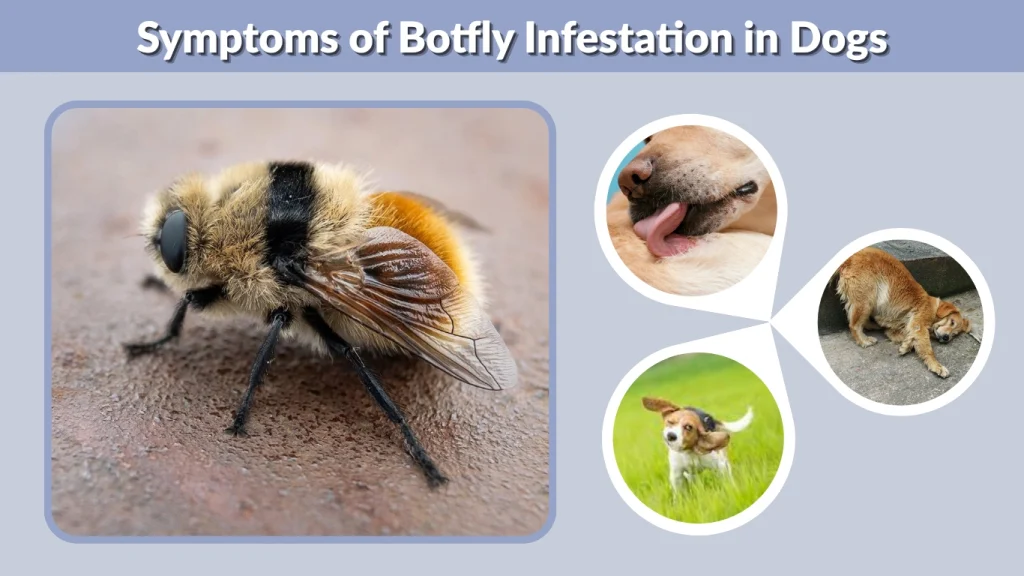
The most common symptom is a swollen lump that looks similar to an abscess or cyst. The key difference is the breathing hole, a tiny opening at the top of the lump that allows the larva inside to breathe. This hole may ooze fluid, crust over, or expand as the larva grows.
Movement under the skin is another defining sign. Owners may notice slight wiggling or pulsing in the area, which indicates that the larva is alive and active.
Behavioral Symptoms
In addition to visible signs, a dog may:
- Lick or chew the affected area
- Scratch or rub against surfaces
- Whine, shake, or pull away from touch
- Display irritability or lethargy
These responses typically stem from discomfort and inflammation around the warble.
When a Dog Is “Infested”
A dog is considered infested when it hosts multiple larvae. While a single botfly larva can cause significant discomfort, multiple warbles indicate heavy exposure to contaminated environments. In severe cases, swelling may spread, secondary infections may develop, and the dog may experience fever or reduced appetite. These cases require immediate veterinary attention.
Diagnosing Botfly Infestation

Veterinary Examination
Most veterinarians can diagnose a botfly infestation with a simple visual inspection. The breathing hole, swelling, and type of discharge typically confirm the presence of larvae. A vet may also gently palpate the area to determine the size and position of the larva.
If the location of the warble is unusual—such as near the eye, nose, throat, or inside the mouth—veterinarians may use imaging tools to assess the depth of the larva and determine the safest extraction method.
Differentiating Botflies from Other Conditions
Botfly warbles are often mistaken for:
- Ticks
- Infected wounds
- Abscesses
- Sebaceous cysts
Veterinarians distinguish botfly warbles by identifying the breathing hole and feeling the distinct structure of the larva beneath the skin.
How to Remove Botfly Larvae from Dogs

Professional Veterinary Removal
Veterinary removal is the safest and most reliable method for treating botfly larvae in dogs. A veterinarian begins by examining the warble and determining how deeply the larva is embedded. Because squeezing or applying excessive pressure can rupture the larva, professionals use sterile forceps and precise techniques to ensure the larva is removed whole.
In many cases, vets apply a local anesthetic to keep the dog calm and reduce pain. If the warble is in a sensitive location—such as near the eyes, nose, or inside the mouth—sedation may be necessary. Once the larva is removed, the wound is thoroughly cleaned, disinfected, and sometimes packed with antibiotics to prevent infection. A cone or protective collar is often recommended to keep the dog from licking or scratching the healing site.
Can You Remove Botflies at Home?
Although at-home removal is possible in mild cases, it must be approached with extreme caution. The breathing hole must be clearly visible, the larva should be near the skin surface, and sterile tools must be used.
A careful at-home removal typically involves:
- Applying a suffocating agent, such as petroleum jelly, to encourage the larva to move upward.
- Waiting several minutes until the larva begins to protrude from the breathing hole.
- Using sterile forceps to gently grasp the larva and pull steadily without twisting or squeezing.
- Cleaning the wound with antiseptic and monitoring closely for infection.
However, home removal is not recommended when the warble is on the head, neck, or near any vital organs—or when the dog is restless, stressed, or aggressive. If the larva ruptures during removal, the risk of infection increases significantly, and a vet visit becomes necessary anyway.
Complications if Botflies Are Not Removed
Infections & Abscesses
A botfly larva creates a pocket beneath the skin, and if left untreated, bacteria can quickly accumulate inside this space. As the larva grows, the surrounding tissue becomes more irritated, increasing the likelihood of infection. Pus-filled abscesses may form, often requiring antibiotics or minor surgical procedures.
Tissue Damage & Scarring
The longer a larva remains embedded, the more damage it inflicts. When the larva enlarges, the warble expands as well, stretching the skin and causing inflammation. After removal, larger warbles take longer to heal and may leave permanent scars. Sensitive locations—such as the lips, eyelids, or neck—are especially prone to long-term tissue damage.
Systemic Risks
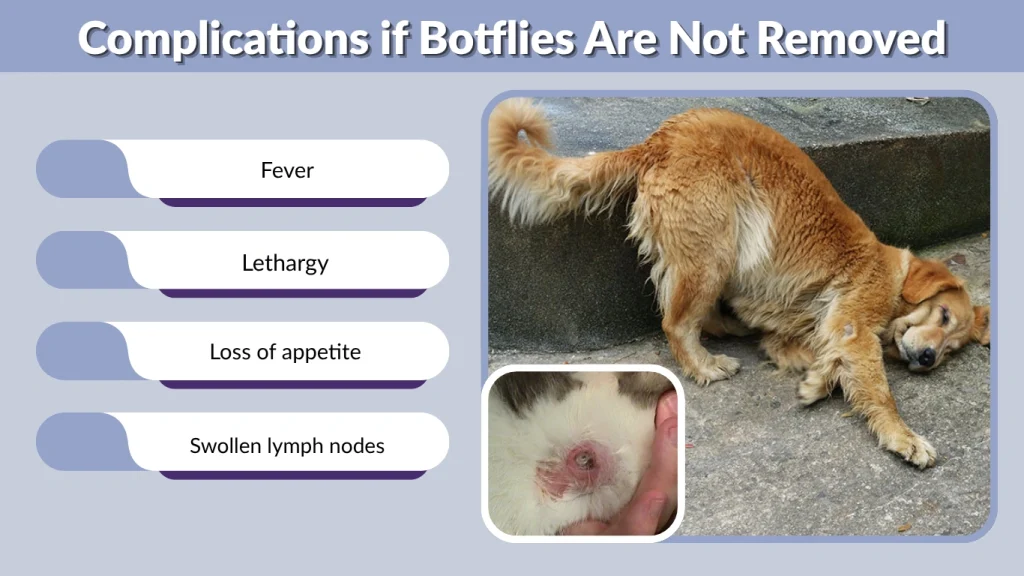
In rare but severe cases, a dog may develop systemic symptoms, including:
- Fever
- Lethargy
- Loss of appetite
- Swollen lymph nodes
These signs indicate that the infection or inflammation has spread and immediate veterinary attention is needed.
Aftercare Following Botfly Removal
Cleaning the Wound
After removal, the wound left behind is essentially an open pocket that must be kept clean. Owners should gently cleanse the area with a veterinarian-approved antiseptic solution. Most vets recommend avoiding alcohol or hydrogen peroxide, as these can slow healing by irritating the tissue.
Monitoring for Infection
Within the first 48 hours, the site should begin to shrink and dry. Redness, warmth, or any foul-smelling discharge may signal infection. If the area becomes significantly swollen or the dog starts showing signs of pain, a follow-up visit is necessary. Persistent licking can also reopen the wound, so a protective collar is often essential.
Healing Time & Normal Recovery
Most botfly wounds heal within 7–14 days. Small warbles close quickly, while larger ones may take longer and form small scabs before fully sealing. A minor scar is not uncommon, especially if the larva was large or deeply embedded. By the end of recovery, the dog should return to normal behavior with no discomfort.
Preventing Botfly Infestation in Dogs
Environmental Controls
Prevention begins with controlling where dogs roam. Areas near rabbit or rodent burrows are high-risk zones. If possible, limit access to overgrown fields, woodpiles, and brushy terrain during peak botfly season. Keeping your yard trimmed and free of debris also reduces the chances of encountering botfly eggs.
Grooming & Skin Checks
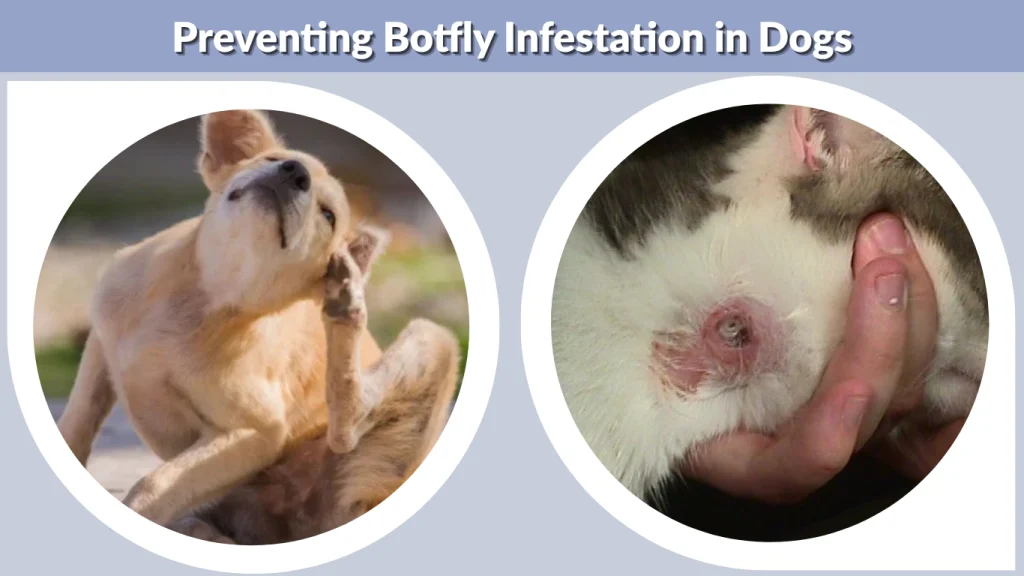
Dogs that spend a lot of time outdoors should be checked regularly for unusual lumps. Brushing the dog’s coat helps you feel for bumps and inspect the skin more closely. Early discovery of a warble makes removal easier and minimizes complications.
Protective Measures
Veterinarians may suggest repellents or topical treatments during botfly season. Although no product guarantees complete protection, they reduce the likelihood of carrier insects depositing botfly eggs. Awareness is key—if you live in a region where Cuterebra infestations are common, seasonal caution is essential.
When to Seek Emergency Care
Danger Zones
A botfly larva located near the eye, nose, throat, or mouth is considered high-risk and should never be removed at home. These areas contain delicate structures, and improper removal may cause serious damage.
Severe Infestations
Dogs with multiple larvae, large warbles, or widespread swelling require urgent veterinary care. Heavy infestations can quickly escalate into systemic infections or intense pain, making professional intervention critical.
Myths and Misunderstandings About Botflies
Common Myths
Several myths circulate among pet owners, including the belief that squeezing the warble is the best way to remove the larva. This is extremely dangerous and almost always leads to infection. Others believe botflies will die and fall out on their own, but this is inaccurate—larvae grow larger over time, making removal more painful.
What Owners Should Really Know
Botflies must be removed intact, using proper technique and sterile tools. Early detection is the best prevention against complications. While online videos may make removal look simple, real-life situations vary, and pets often react unpredictably.
FAQs
How do I know if my dog has a botfly larva?
A botfly larva usually appears as a swollen lump with a small breathing hole at the top. You may notice discharge, redness, or slight movement beneath the skin. Dogs often lick, scratch, or react sensitively when the area is touched. A veterinarian can confirm the diagnosis quickly with a simple examination.
Can I remove a botfly from my dog at home?
It’s possible but not ideal. Home removal should only be attempted when the breathing hole is visible, the dog is calm, and sterile tools are available. Squeezing the bump is dangerous and can rupture the larva. If the warble is on the face, neck, or near vital areas, professional removal is the safest choice.
What happens if a botfly larva isn’t removed?
If left untreated, the larva continues to grow, causing increased pain, swelling, and tissue damage. Infection can develop, leading to pus, fever, and even systemic illness. Although larvae eventually emerge on their own, waiting is risky and may result in more severe complications that require medical intervention.
Does botfly removal hurt dogs?
Botfly removal can cause mild to moderate discomfort. Veterinarians often use local anesthesia or sedation to minimize pain and keep the dog still. At-home removal is more stressful because the dog may react suddenly. Proper technique and gentle handling reduce discomfort and prevent unnecessary injury.
How long does it take for a dog to heal after botfly removal?
Most dogs heal within one to two weeks. Smaller warbles close quickly, while larger ones may take longer and form minor scabs. During healing, it’s important to keep the wound clean, prevent licking, and watch for signs of infection. With proper aftercare, scarring is usually minimal.
