
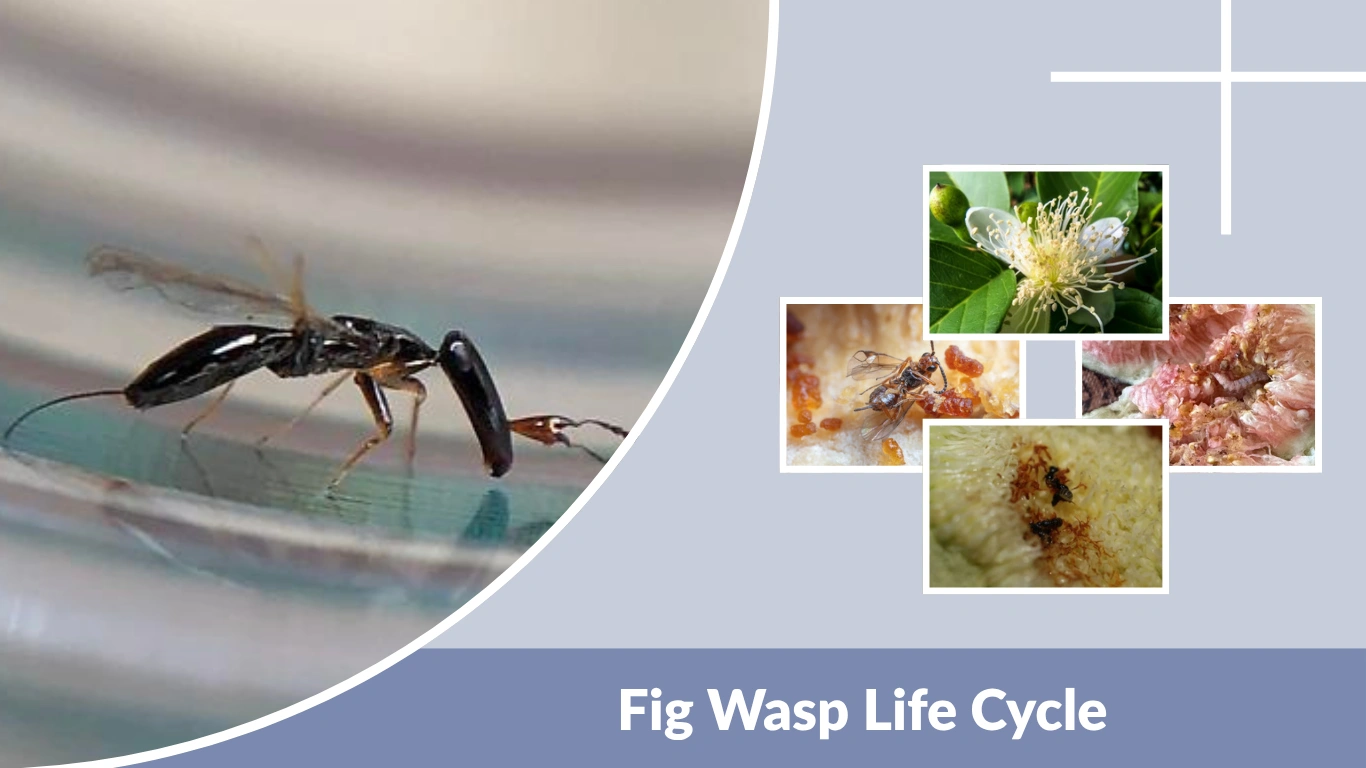
The fig wasp’s life cycle represents one of nature’s most intricate partnerships. These minute insects, often no larger than a pinhead, live almost their entire lives inside figs. Their existence is tied closely to the reproduction of fig trees, forming a unique mutualistic bond where both species depend on one another for survival.
Identification
Physical Characteristics
Fig wasps are incredibly small, usually between 1–2 millimeters in length. Females possess narrow wings and powerful jaws to bore through the fig’s opening, known as the ostiole, while males are wingless and smaller, adapted for movement inside the fig. Their delicate structure suits their brief but vital role in pollination.
Species Diversity
There are over 750 known fig wasp species, and almost every fig species has its own wasp partner. This specificity ensures that only a particular wasp can pollinate a particular fig, preventing cross-species interference and maintaining ecological balance.
Life Cycle of a Fig Wasp

Egg Stage
The cycle begins when a fertilized female fig wasp enters a fig through the ostiole, carrying pollen from a previous fig. As she moves inside, she lays her eggs inside tiny flowers within the fig. During this process, she transfers pollen to some flowers, fertilizing them to produce seeds.
Larval Stage
After a few days, the eggs hatch into larvae. These larvae feed on gall tissues within the fig, developing safely inside its enclosed structure. Their diet and growth occur unnoticed, shielded from predators and environmental stress by the fig’s tough outer layer.
Pupal Stage
The larvae eventually pupate, transforming into adult wasps. Males typically emerge first, moving around inside the fig to locate females still enclosed in their galls. Once found, mating occurs within the fig itself, continuing the species’ cycle in secrecy.
Adult Stage and Pollination
After mating, the males perform their final duties—chewing exit tunnels for the females before dying inside the fig. The fertilized females, now covered in pollen, leave the fig to search for another receptive fig in which to deposit their eggs. This act completes the pollination process, as they carry fig pollen to new trees, enabling fruit and seed development.
The fig and fig wasp’s synchronization is extraordinary: the fig provides a habitat and breeding ground, while the wasp ensures its pollination and continuation. Without each other, neither could reproduce successfully.
Lifespan of a Fig Wasp
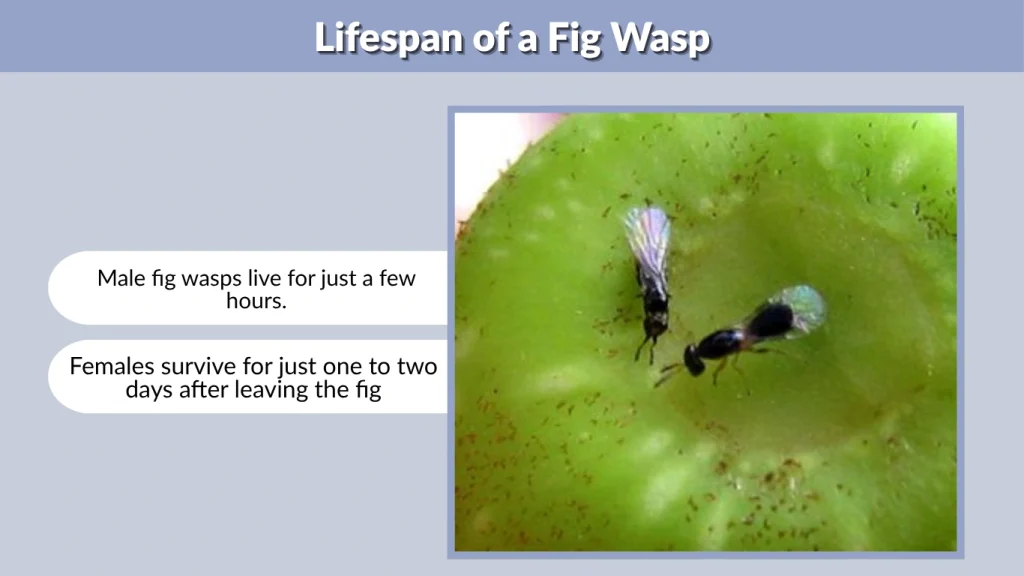
The fig wasp’s lifespan is remarkably short.
- Male fig wasps live for just a few hours, dying soon after mating and creating exit holes for females.
- Female fig wasps survive for about one to two days after leaving the fig, just long enough to locate a new fig, enter it, and restart the cycle.
Environmental conditions—especially humidity and temperature—can slightly extend or shorten their survival, but their lifecycle is biologically designed for brevity and precision.
Ecological Importance
The relationship between figs and fig wasps is a cornerstone of many tropical ecosystems. Figs fruit year-round, providing food to hundreds of bird and mammal species. Without fig wasps, these trees could not reproduce, disrupting entire food webs. The fig-wasp relationship showcases evolution’s intricate balance between species survival and environmental interdependence.
Mutualism Between Fig Wasps and Fig Trees

The relationship between fig wasps and fig trees is one of nature’s most remarkable examples of mutualism. Each species of fig tree depends on a specific wasp species for pollination, and the wasp relies on that fig species for reproduction. This close evolutionary partnership ensures both species thrive together, perfectly aligned in their life cycles.
How the Partnership Works
When a female wasp enters a fig, she not only lays her eggs but also transfers pollen collected from another fig. As a result, some flowers inside develop seeds instead of larvae, completing the pollination process. Once the next generation matures, they emerge and continue this endless cycle of cooperation and regeneration.
Environmental Influences on the Life Cycle
The life cycle of a fig wasp is sensitive to climate and environmental factors. Temperature and humidity can influence development speed, lifespan, and pollination success. In tropical climates, where figs are abundant year-round, wasp populations remain stable, ensuring continuous pollination. However, drought or habitat destruction can disrupt fig-wasp synchronization, threatening both species.
Adaptations for Survival
Despite their short lifespan, fig wasps have evolved impressive survival mechanisms:
- Females navigate vast distances to locate receptive figs.
- Their antennae detect chemical cues released by figs at the right developmental stage.
- The fig’s enclosed cavity shields eggs and larvae from external dangers.
Behavior and Reproduction

Female fig wasps display remarkable precision during reproduction. They select only figs in the right phase for egg-laying. Males, on the other hand, remain entirely within the fig. After mating, they carve exit holes for females and die inside the fruit, their purpose fulfilled. The females emerge carrying pollen to perpetuate the cycle.
Unique Evolutionary Strategy
This behavior ensures that pollination and reproduction occur simultaneously, strengthening the bond between tree and insect. The cycle is finely tuned — if figs and wasps fall out of sync, both species risk extinction. Such coevolution highlights the importance of timing and adaptation in natural ecosystems.
Ecological and Agricultural Importance
Figs are known as keystone species in many tropical ecosystems. Their ability to fruit continuously throughout the year provides sustenance for birds, bats, monkeys, and other animals. Since fig trees depend on wasps for pollination, fig wasps indirectly support the survival of numerous species that depend on figs as a food source.
In agriculture, understanding the fig-wasp relationship aids in cultivating certain commercial fig varieties. Some figs require wasp pollination for fruit formation, while others—like the common edible fig (Ficus carica)—are cultivated through parthenocarpy, meaning they develop fruit without pollination.
Evolutionary Significance
The fig-wasp relationship dates back over 60 million years, representing one of the oldest documented examples of coevolution. Genetic studies reveal how specific pairs of figs and wasps have evolved together, adapting to each other’s reproductive structures and timing. This long-term partnership demonstrates how cooperation, rather than competition, can drive evolutionary success.
FAQs
How long does a fig wasp live?
A fig wasp’s life is brief. Males live for only a few hours after mating, while females survive about one to two days after emerging from the fig. Their short lives are entirely dedicated to reproduction and pollination, ensuring the continuation of both their species and the fig tree.
Where do fig wasps lay their eggs?
Female fig wasps enter figs through a narrow opening called the ostiole. Inside, they lay their eggs within tiny flowers located in the fig’s cavity. This process not only allows reproduction but also pollinates the fig, ensuring both species benefit.
Do fig wasps die inside figs?
Yes. Most females die inside the fig after laying their eggs. Over time, their bodies decompose naturally and are absorbed into the fig tissue. This process is completely natural and harmless to humans consuming edible fig species.
Are all fig wasps pollinators?
Not all fig wasps pollinate figs. Some species are non-pollinating wasps that take advantage of the fig’s structure to lay eggs without aiding pollination. However, the majority are pollinators, maintaining the essential balance of the fig-wasp ecosystem.
When does pollination occur in the fig wasp life cycle?
Pollination occurs during the egg-laying stage. As the female wasp moves inside the fig to deposit her eggs, pollen from her previous fig rubs off onto the fig’s internal flowers, leading to seed development and successful fertilization.
