

The blue mud dauber wasp is one of the most distinctive and beneficial wasps found in North America. Known for its metallic-blue body and calm behavior, this species is both a natural predator of spiders and a harmless visitor around homes. Despite its intimidating appearance, the blue mud dauber is non-aggressive, rarely stings, and plays a crucial role in keeping spider populations — especially black widows — under control.
Identification

Scientific Classification
- Scientific Name: Chalybion californicum
- Common Names: Blue Mud Dauber, Nearctic Blue Mud-Dauber Wasp
- Family: Sphecidae (Thread-waisted wasps)
- Size: Around ½ to 1 inch long (12–25 mm)
- Color: Metallic blue or blue-black with a smooth, reflective sheen
The blue mud dauber has a slender body and a characteristic narrow “thread waist” connecting its thorax and abdomen. Its long, delicate legs and dark translucent wings give it a graceful appearance in flight. This wasp is easily recognized by its shimmering blue body, which glints in sunlight.
Distribution and Range
The species is found throughout North America, including the United States, Canada (Ontario), and Mexico. It is especially common in warmer regions such as California, Texas, Illinois, and Florida. Blue mud daubers thrive near gardens, attics, barns, and riverbanks, where both mud and spiders are abundant.
Nest and Life Cycle

Nesting Behavior
Unlike many other wasps, the blue mud dauber does not usually build new nests. Instead, it reuses abandoned nests created by the black and yellow mud dauber (Sceliphron caementarium). It cleans out the old cells, removing debris, old spider remains, or dead larvae before laying its own eggs.
The blue mud dauber’s efficiency in recycling old nests makes it an important part of nature’s cleanup system. By reusing existing structures, it conserves energy and reduces competition with other wasp species.
Nest Structure
The reused nests consist of mud tubes or clusters attached to walls, beams, or overhangs. Each tube contains several individual chambers. Inside each chamber:
- The female deposits one egg,
- Adds several paralyzed spiders as food,
- Then seals the chamber with mud.
The larvae hatch, feed on the immobilized spiders, and eventually pupate within the mud cell. When they reach adulthood, they chew a small round hole in the mud — the telltale sign of an empty, inactive nest.
Preferred Nesting Sites
Blue mud daubers favor sheltered, dry locations, such as:
- Eaves and soffits of houses
- Barn rafters and garage ceilings
- Inside attics or sheds
- Under bridges and decks
They are most active during the warmer months, typically from spring through late summer.
Behavior and Diet

Blue mud daubers are solitary and non-aggressive, spending most of their time hunting spiders or collecting nectar from flowers. Unlike hornets or yellowjackets, they do not live in colonies or defend their nests.
Hunting Habits
Their favorite prey includes black widow spiders, orb-weavers, and jumping spiders. The female wasp stings and paralyzes the spider, keeping it alive but motionless. She then carries it to her mud nest and stores it as food for her developing larvae.
A single nest may contain dozens of paralyzed spiders, depending on how many cells the female builds. This hunting behavior makes the blue mud dauber a valuable natural pest controller, especially around homes and barns.
Diet and Feeding
- Adults: Feed on flower nectar and occasionally honeydew from plants.
- Larvae: Feed exclusively on paralyzed spiders stored in the nest.
This diet benefits gardens by reducing spider populations while promoting pollination from adult nectar feeding.
Sting and Safety

Do Blue Mud Daubers Sting?
Yes, blue mud daubers have stingers, but they almost never use them on humans. Their sting is primarily used to paralyze spiders for their larvae. Because they are solitary and non-defensive, they will not attack even if someone approaches their nest.
Sting Reaction
If stung — which is rare — the effects are mild:
- Short, sharp pain similar to a bee sting
- Slight redness or swelling
- Itching that subsides within a few hours
The blue mud dauber’s sting is far less painful than that of hornets, yellowjackets, or social wasps. People with wasp allergies, however, should still take precautions.
Blue Mud Dauber vs Great Black Wasp
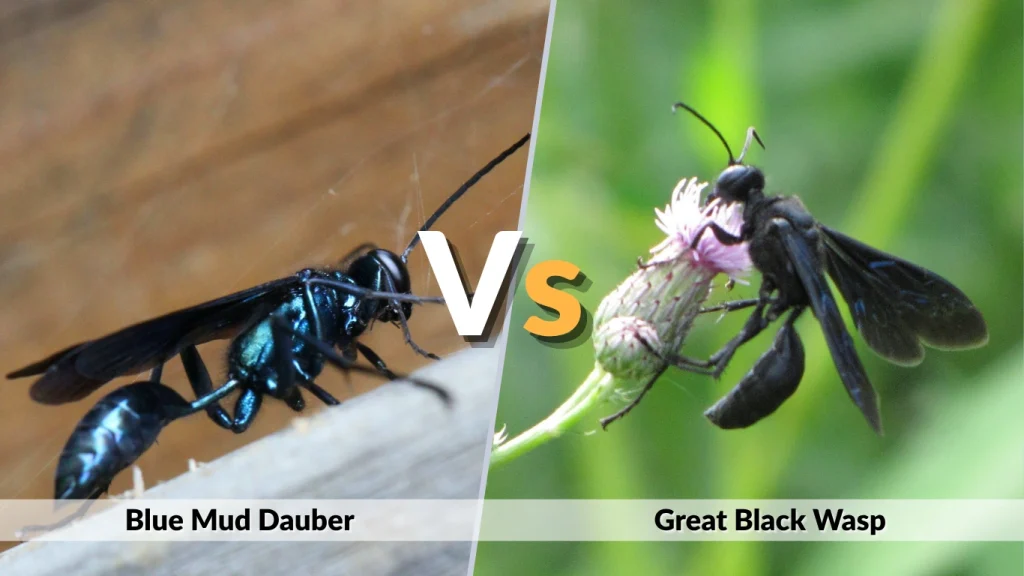
The blue mud dauber and the great black wasp are often mistaken for one another due to their dark, glossy bodies, but they are very different in appearance, nesting habits, and prey.
| Feature | Blue Mud Dauber (Chalybion californicum) | Great Black Wasp (Sphex pensylvanicus) |
| Color | Metallic blue or blue-black | Solid matte black |
| Body Shape | Slender with a thin waist | Larger, more robust |
| Nesting Type | Reuses old mud nests | Digs burrows in soil |
| Prey | Spiders (especially black widows) | Katydids and grasshoppers |
| Sting Use | Paralyzes spiders | Paralyzes insects |
| Aggression | Non-aggressive | Slightly defensive when handled |
The blue mud dauber’s habit of recycling old nests is unique among wasps. Meanwhile, the great black wasp builds underground burrows and is more likely to be encountered in gardens. Both are solitary, beneficial wasps, helping to control pest populations naturally.
Interaction with Black Widow Spiders
One of the most fascinating aspects of the blue mud dauber’s life is its specialized diet. It is among the few natural predators of black widow spiders, making it especially beneficial to humans.
When a female locates a black widow, she delivers a precise sting that paralyzes but does not kill. She then drags the immobilized spider back to her mud nest, where it will serve as food for her larvae. By doing this, blue mud daubers help keep dangerous spider populations under control in and around human dwellings.
This natural pest control ability makes them an important ecological ally, especially in warmer regions where black widows are common.
Are Blue Mud Dauber Wasps Dangerous?

Despite their size and metallic appearance, blue mud daubers are not dangerous. They do not defend their nests and will rarely sting unless grabbed or cornered. Their calm and solitary behavior makes them one of the most docile wasps in North America.
If you encounter one hovering near a wall or ceiling, it’s likely scouting for spiders or inspecting an old nest. They have no interest in humans or food and are unlikely to be aggressive.
Sting Treatment
If you are stung by a blue mud dauber — an unlikely event — treatment is simple:
- Wash the sting site with soap and water.
- Apply a cold compress or ice pack to reduce swelling.
- Use antihistamine cream or calamine lotion to ease itching.
- Seek medical attention only if you experience signs of an allergic reaction, such as difficulty breathing or dizziness.
Controlling and Preventing Blue Mud Dauber Nests
Although blue mud daubers are harmless, their nests can accumulate around buildings, leaving unsightly mud marks. To control them safely:
- Wait until evening when wasps are inactive.
- Scrape the dry nest gently using a putty knife or spatula.
- Clean the area with mild soap and water to remove residue.
- Seal cracks and holes in walls, soffits, or vents where nests could attach.
- Reduce spider populations, since fewer spiders mean fewer hunting opportunities for the wasps.
Avoid chemical sprays, as these wasps are beneficial predators and pose little threat to humans.
Ecological Importance
The blue mud dauber is an important contributor to natural pest control. By preying on spiders — especially venomous ones — it helps maintain ecological balance. The adult wasps also play a minor role in pollination, as they feed on nectar from flowers during hunting breaks.
Their calm, solitary nature and beneficial behavior make them one of the most welcome wasp species around human habitats. Encouraging their presence can actually help reduce the number of harmful spiders in barns, garages, and gardens.
FAQs
Do blue mud dauber wasps sting?
Yes, but only when handled roughly. Their sting is mild and mainly used to paralyze spiders for their larvae.
Are blue mud daubers aggressive?
No. They are solitary and non-aggressive. Unlike yellowjackets or hornets, they do not defend their nests or attack humans.
What do blue mud daubers eat?
Adult blue mud daubers feed on nectar from flowers. Their larvae eat paralyzed spiders stored inside mud chambers.
Where do blue mud daubers live?
They are common across North America, from Canada to Mexico, especially in warm, dry regions near mud sources and spider populations.
How can I get rid of blue mud dauber nests safely?
Wait until nighttime when they are inactive, remove nests gently with a tool, and clean the surface. Sealing cracks and managing spider populations can prevent re-nesting.
