
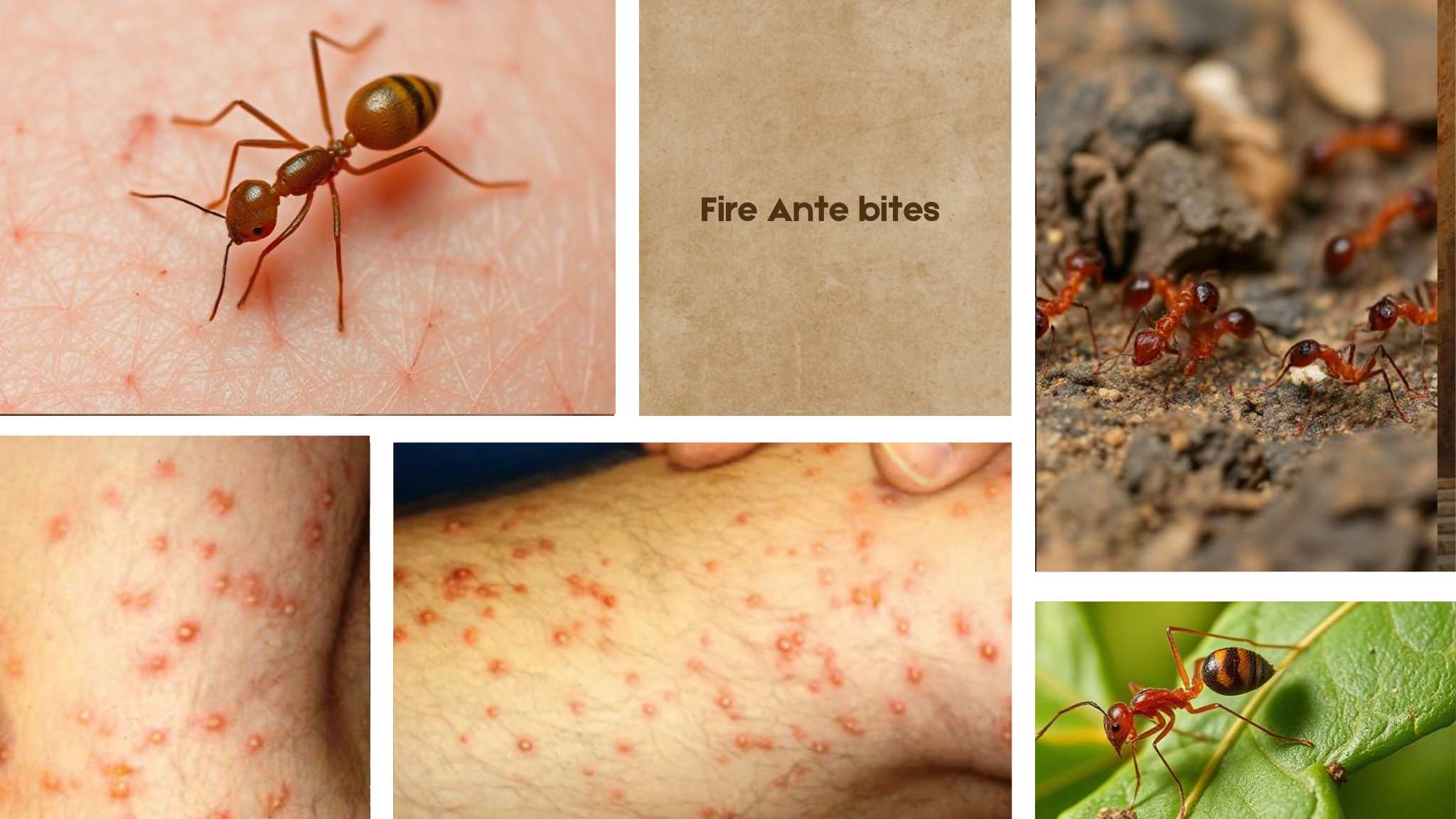
Fire ants are aggressive insects known for their painful bites and stings. Unlike many other ants, fire ants inject venom, causing intense burning sensations and itchy pustules. Understanding how to identify fire ant bites can help you take the right precautions and seek proper treatment. In this guide, we’ll provide detailed descriptions and images to help you recognize fire ant bites, understand their effects, and manage them effectively.
What Are Fire Ants?
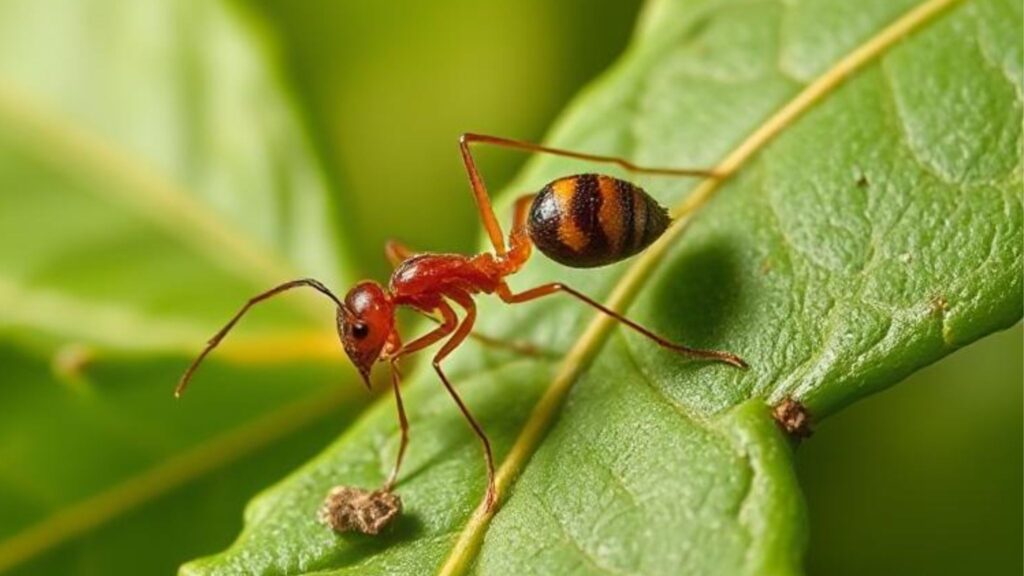
Fire ants (Solenopsis invicta) are small reddish-brown ants with a venomous sting. They are commonly found in warm climates such as the southern United States, Australia, and South America. These ants live in large colonies and are highly defensive when disturbed. Unlike many other ants, fire ants attack in groups, biting and stinging simultaneously.
Key Characteristics of Fire Ants:
- Size: 1/8 to 1/4 inch long
- Color: Reddish-brown with a darker abdomen
- Habitat: Found in grassy areas, yards, and near water sources
- Behavior: Highly aggressive and attack in swarms
How to Identify Fire Ant Bites (With Pictures)
What Do Fire Ant Bites Look Like?

Fire ant bites are unique compared to other insect bites. Here’s how you can recognize them:
- Initial Stage: The bite causes an immediate burning or stinging sensation.
- Red Bumps Appear: Affected areas develop small, red swollen spots.
- Pustule Formation: Within a few hours, a white pustule (fluid-filled blister) forms at the center.
- Healing Stage: The pustule may dry up and scab over within a week.
How Fire Ant Bites Differ from Other Bites
- Mosquito Bites: Usually appear as red, itchy bumps without pustules.
- Spider Bites: May cause larger swelling and skin necrosis in severe cases.
- Bee Stings: Typically cause instant pain, redness, and swelling but no pustule.
Symptoms & Reactions to Fire Ant Bites
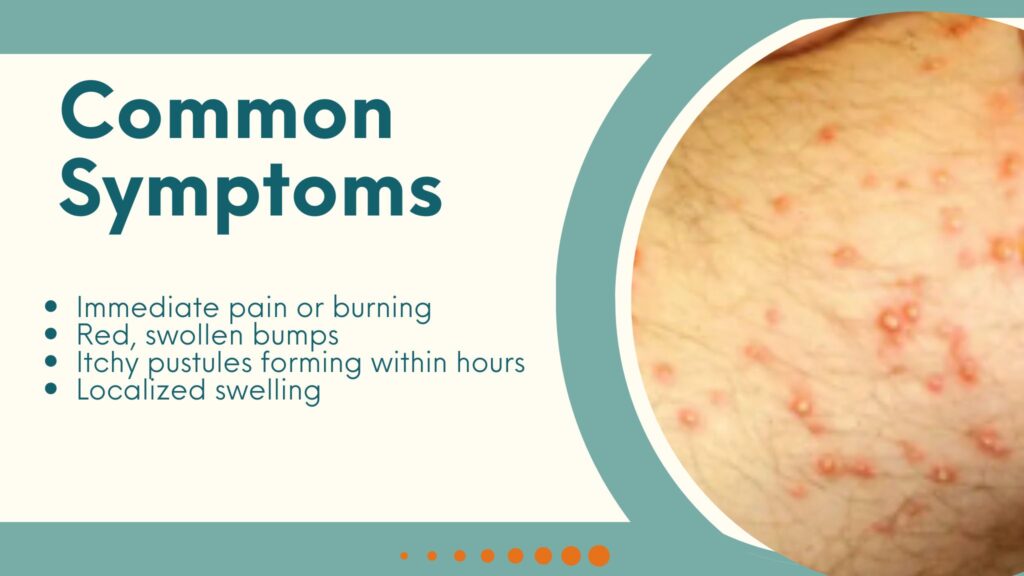
Common Symptoms
- Immediate pain or burning
- Red, swollen bumps
- Itchy pustules forming within hours
- Localized swelling
Severe Reactions & Allergic Responses
While most fire ant bites cause mild discomfort, some people experience severe allergic reactions, including:
- Severe swelling beyond the bite area
- Difficulty breathing or wheezing
- Dizziness or fainting
- Hives or rash across the body
First Aid & Home Remedies for Fire Ant Bites
Immediate Steps to Take
- Move Away from the Ants – Fire ants attack in swarms, so leave the area immediately.
- Wash the Area – Use soap and water to cleanse the bite site.
- Apply Cold Compress – Reduce swelling by applying ice wrapped in a cloth for 10 minutes.
- Avoid Scratching – Scratching may lead to infection.
Home Remedies for Relief
- Aloe Vera: Soothes irritation and reduces inflammation.
- Baking Soda Paste: Mix with water and apply to neutralize the venom.
- Apple Cider Vinegar: Helps reduce itchiness and swelling.
Over-the-Counter Treatments
- Antihistamines (Benadryl) for itching and swelling.
- Hydrocortisone cream for inflammation.
- Pain relievers like ibuprofen if the area is sore.
(Insert image of fire ant bite treatment methods.)
Preventing Fire Ant Bites
Fire ant bites can be painful and sometimes dangerous. Here’s how to prevent them:
Avoid Fire Ant Nests
- Fire ant mounds look like dome-shaped dirt piles.
- Do not disturb or step on them.
Wear Protective Clothing
- Wear boots and socks when in grassy areas.
- Use gloves when gardening in fire ant-infested areas.
Use Fire Ant Repellents
- Apply insect repellent with DEET to exposed skin.
- Sprinkle diatomaceous earth around your yard to deter fire ants.
Control Fire Ant Infestations
- Use fire ant bait treatments to eliminate colonies.
- Hire pest control professionals if the infestation is severe.
Conclusion
Fire ant bites can be painful, but understanding their appearance and symptoms can help you manage them effectively. If you get bitten, quick first aid and proper treatment can prevent complications. Preventing fire ant bites is the best strategy, so stay aware of your surroundings and take precautions when spending time outdoors.
