

Giant water bugs, often nicknamed “toe biters,” are among the largest and most fascinating aquatic insects in the world. Known for their powerful bite, impressive hunting skills, and unique parenting behaviors, these predators play a vital role in freshwater ecosystems. Found in ponds, lakes, and slow-moving rivers worldwide, they are both feared and admired for their size, strength, and adaptability. This guide explores their identification, anatomy, habitat, diet, life cycle, bite, and interesting facts, giving you a complete understanding of these remarkable insects.
Identification of Giant Water Bugs

Giant water bugs belong to the family Belostomatidae and are among the largest insects living in freshwater habitats. Their strong, predatory nature and distinctive appearance make them easy to recognize once you know their key traits.
Giant Water Bug Scientific Name and Species
The scientific name for the most well-known North American species is Lethocerus americanus, commonly called the American giant water bug. However, the family Belostomatidae includes multiple species worldwide, each varying in size and range. These insects are sometimes referred to by other names like “toe biters” due to their painful bite, and “electric light bugs” because of their attraction to lights at night.
Giant Water Bug Anatomy
Giant water bugs have a flat, oval body that allows them to move easily through water. Their forelegs are thick and raptorial, designed for grasping prey firmly. At the back of their abdomen, they have a short breathing tube, which they extend to the water surface to take in air. Their strong wings allow them to fly between water sources, especially during warm, humid nights.
Giant Water Bug Size
One of their most notable features is their size. Depending on the species, giant water bugs can measure anywhere from 1.5 inches to an impressive 4 inches long, making them some of the largest aquatic insects in the world. The Asian species (Lethocerus indicus) is among the biggest, often exceeding the length of a human thumb.
Giant Water Bug Images and Pictures
Pictures of giant water bugs show their distinctive brown, flat bodies and large forelegs. Close-up images highlight their piercing mouthparts, which are used to inject digestive saliva into prey. These photographs often reveal how well they blend into aquatic vegetation, making them expert ambush hunters.
Giant Water Bug Habitat and Range
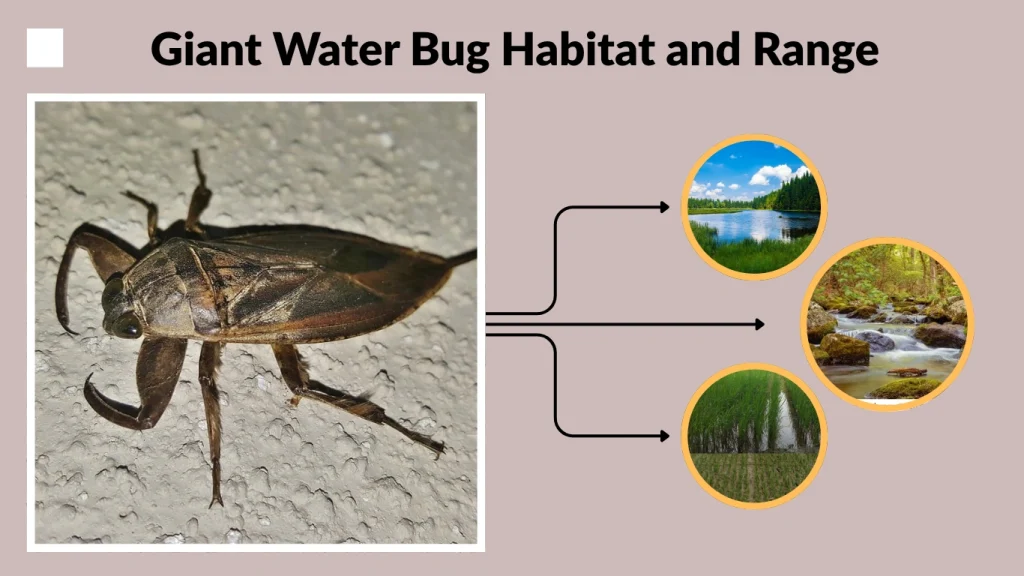
Giant water bugs are primarily found in freshwater environments such as ponds, lakes, marshes, rice paddies, and slow-moving rivers. They prefer areas with dense aquatic vegetation, which offers both cover from predators and ideal hunting grounds for ambushing prey. They often rest on submerged plants or bury themselves in mud and debris to remain undetected.
Where Do Giant Water Bugs Live?
These insects are distributed across North America, South America, Asia, and parts of Australia, with some species also found in Europe and Africa. In the United States, they are especially common in southern and eastern states, with Florida being a well-known hotspot. Tropical and subtropical regions tend to host larger species due to warmer climates and abundant food sources.
Giant Water Bugs Range
The range of giant water bugs is vast, spanning from temperate zones to tropical wetlands. While they thrive in natural bodies of water, they can also be found in man-made habitats like irrigation canals and reservoirs. Seasonal flooding in some regions can expand their range temporarily, allowing them to colonize new areas before waters recede.
Giant Water Bug Diet and Feeding
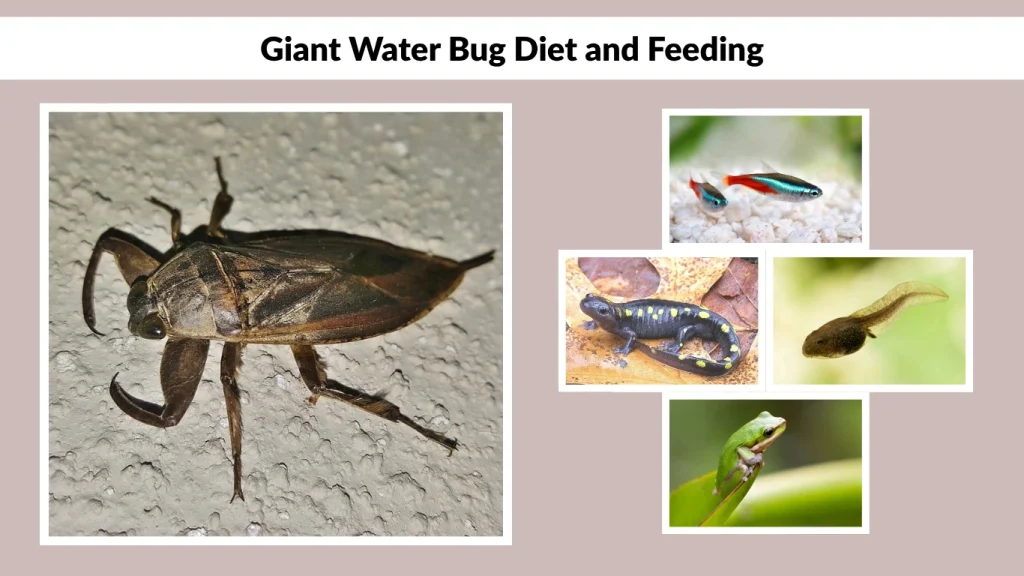
Giant water bugs are opportunistic predators and feed on a variety of aquatic and semi-aquatic creatures. Their diet includes fish, tadpoles, frogs, salamanders, aquatic insects, and even small snakes in rare cases.
What Do Giant Water Bugs Eat?
They are capable of taking down prey much larger than themselves. When hunting, they use their strong forelegs to grab the victim and insert a sharp, beak-like mouthpart into the body. They then inject digestive enzymes, which liquefy the prey’s internal tissues for easy consumption.
Giant Water Bug Food Capture
Their hunting strategy is typically sit-and-wait ambush. They remain motionless among aquatic plants until an unsuspecting prey item comes within reach. Some species are capable of short bursts of swimming speed to pursue prey actively. The combination of stealth and quick strikes makes them efficient hunters in the water.
Giant Water Bug Life Cycle and Reproduction
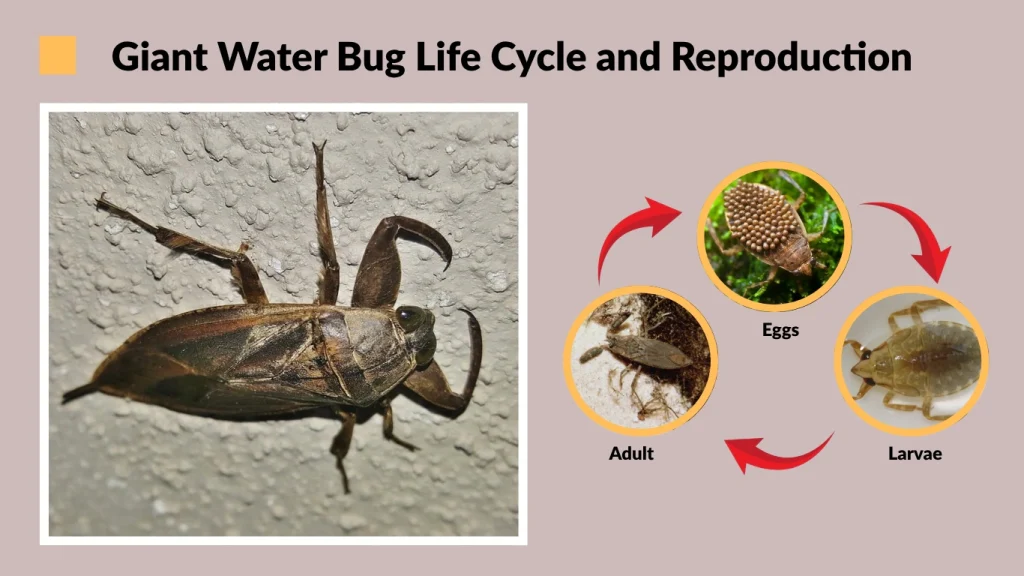
Giant water bugs undergo incomplete metamorphosis, meaning they progress through three main stages: egg, nymph, and adult.
Giant Water Bug Eggs
Female giant water bugs lay eggs either on vegetation above the water or, in certain species, directly on the backs of males. This unique adaptation ensures the eggs remain aerated and protected from predators.
Giant Water Bug With Eggs
In species where males carry the eggs, the male’s role is critical. He regularly surfaces to keep the eggs oxygenated and guards them until they hatch. This male parental care is rare among insects and increases the survival rate of the offspring.
Giant Water Bug Larvae
Larvae resemble smaller adults but lack fully developed wings. They are active predators from the moment they hatch, feeding on tiny aquatic organisms and growing through several molts before reaching maturity.
Giant Water Bug Life Cycle
From egg to adult, the life cycle can take several months, depending on water temperature and food availability. Adults can live for more than a year in favorable conditions, with reproduction typically occurring during warmer months.
Giant Water Bug Bite and Venom

Giant water bugs are infamous for their painful bite, which has earned them the nickname “toe biters.” While they rarely bite humans unless threatened or mishandled, the pain is intense and often compared to a sharp stab.
Giant Water Bug Bite
When a giant water bug bites, it uses its needle-like mouthpart (rostrum) to pierce the skin and inject saliva. This saliva contains digestive enzymes designed to break down prey tissue, which is what causes the intense burning sensation in humans.
Giant Water Bugs Bite Pictures
Images of bites often show localized redness, swelling, and sometimes a small puncture mark. In most cases, symptoms subside within a few hours, though mild allergic reactions can occur in sensitive individuals.
Are Giant Water Bugs Dangerous?
They are not deadly to humans, but their bite can cause short-term pain and discomfort. For most people, the injury is minor, though medical attention may be needed if there’s significant swelling or signs of infection.
Are Giant Water Bugs Poisonous or Venomous?
Technically, they are venomous rather than poisonous. Their venom-like saliva is intended to immobilize and digest prey but is not harmful in small doses to humans.
Giant Water Bug Venom
The enzymes in their venom break down soft tissues rapidly, allowing the bug to consume liquidized prey. While unpleasant for humans, it is an essential tool for their survival as apex aquatic predators.
Giant Water Bug Behavior and Abilities
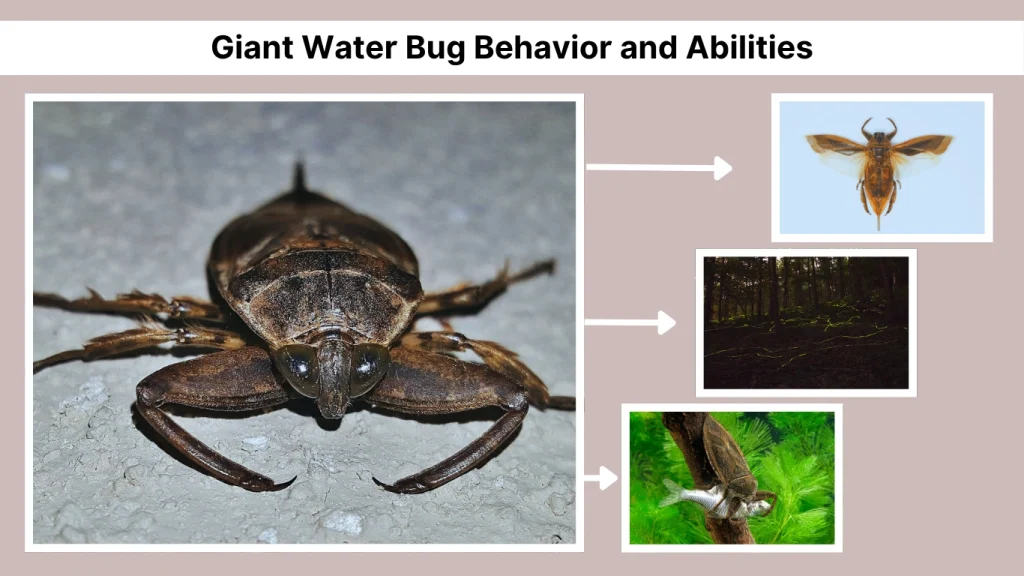
Giant water bugs are versatile in both water and air, making them successful in a variety of environments.
Can Giant Water Bugs Fly?
Yes, adults have fully developed wings and can fly short to moderate distances, usually at night when searching for new habitats. This is why they are often found under streetlights or near illuminated buildings — a behavior that has earned some species the name “electric light bugs.”
Big Black Water Bug vs. Giant Water Bug
Many people confuse large black cockroaches (often called water bugs in households) with true giant water bugs. Unlike cockroaches, giant water bugs are aquatic predators with raptorial front legs, live in freshwater, and have a powerful bite.
Additional Behavioral Traits
- They can “play dead” when threatened, lying motionless until danger passes.
- They breathe air through a tube-like siphon at the end of their abdomen.
- They are capable of ambushing prey much larger than themselves.
Giant Water Bug Facts
Giant water bugs are not only fascinating hunters but also full of surprising traits that make them unique among insects. Here are some notable facts:
- Male parental care is rare in insects, yet some giant water bug species carry eggs on their backs until they hatch.
- They are among the largest aquatic insects in the world, with some species exceeding 4 inches in length.
- In parts of Southeast Asia, giant water bugs are considered a culinary delicacy and are eaten roasted, boiled, or ground into sauces.
- Their strong forelegs allow them to tackle prey much larger than themselves, including small fish and amphibians.
- They are a vital part of freshwater ecosystems, controlling populations of other aquatic insects and small vertebrates.
American Giant Water Bug (Lethocerus americanus)

The American giant water bug is one of the most well-known species in North America. It is slightly smaller than some of its Asian relatives but is still an impressive predator.
Appearance
Brown, flat body with large, strong forelegs and a short breathing tube. Adults can reach up to 2.5 inches in length.
Range
Widespread across the United States and southern Canada, particularly in calm freshwater habitats.
Behavior
Known for its “toe biter” reputation, this species also exhibits the typical ambush hunting strategy and can be seen flying to lights at night during the summer months.
A Giant Water Balloon – Misconceptions
The term “giant water balloon” sometimes appears in search results when people mean “giant water bug,” but they are not related. A giant water balloon is simply an object for recreation, not an insect. This confusion often happens because both terms start with “giant water,” but they refer to completely different things.
Conclusion
Giant water bugs are incredible predators, skilled hunters, and important members of freshwater ecosystems. While their bite can be painful, they pose little real danger to humans and are more interested in hunting their natural prey. Their fascinating life cycle, diverse species, and adaptability make them one of the most interesting aquatic insects in the world.
FAQs
1. What is the biggest species of giant water bug?
The Asian giant water bug (Lethocerus indicus) can grow over 4 inches long, making it one of the largest aquatic insects in the world.
2. Can giant water bugs hurt humans?
Yes, their bite is painful, but it is not deadly. Pain and swelling usually subside within a few hours.
3. How long do giant water bugs live?
Most live around one year in the wild, though this can vary with environmental conditions.
4. Do giant water bugs have predators?
Yes, they are eaten by fish, birds, and even larger aquatic insects. Humans also consume them in some cultures.
5. Are giant water bugs found in Florida year-round?
Yes, Florida’s warm climate allows giant water bugs to remain active year-round, especially in ponds and marshes.
