

Water bugs are a diverse group of aquatic insects that inhabit ponds, lakes, rivers, and marshes worldwide. While some are fierce predators that hunt fish and amphibians, others feed on plants or decaying matter, playing an essential role in aquatic ecosystems. This guide covers 25 common types of water bugs, highlighting their unique features, habitats, diets, and behaviors.
1. Giant Water Bug
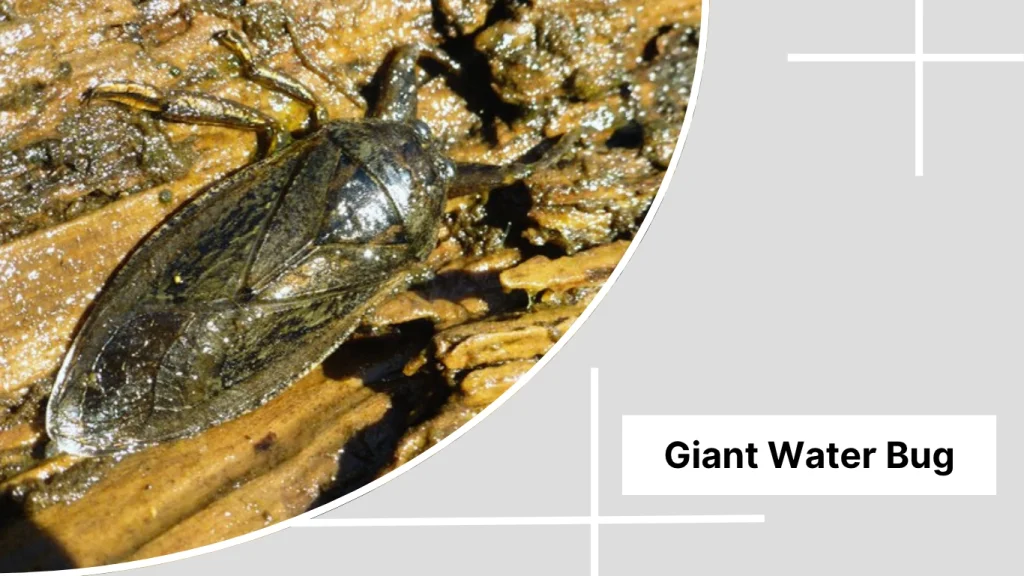
Giant water bugs are large, predatory aquatic insects found in freshwater habitats like ponds, lakes, and slow-moving streams. Known for their powerful front legs and painful bite, they play an important role in controlling aquatic insect and small animal populations.
Identification
- Size: 1.5 to 4 inches long
- Color: Brown to dark brown, flat body
- Distinctive feature: Large raptorial forelegs for grabbing prey
- Habitat: Freshwater bodies with vegetation
- Wings: Fully developed, allowing short flights
Habitat and Distribution
They are widely distributed across North America, Asia, and parts of South America, preferring calm, shallow waters with plenty of vegetation for hunting and hiding.
Diet
Giant water bugs are fierce predators, feeding on fish, tadpoles, insects, and sometimes small amphibians. They inject digestive saliva to liquefy the prey before consumption.
Behavior
These insects are ambush hunters, lying still until prey comes within reach. They are also known to fly to new water sources during warm, humid nights.
2. Water Scorpion

Water scorpions are slender, elongated aquatic insects that resemble scorpions due to their long, tail-like breathing tube. They are slow movers but skilled ambush predators in still or slow-moving waters.
Identification
- Size: 0.8 to 1.5 inches long
- Color: Brown to dark brown
- Distinctive feature: Long breathing tube extending from the abdomen
- Habitat: Shallow, vegetated freshwater areas
- Body shape: Stick-like or leaf-like depending on the species
Habitat and Distribution
They are found in ponds, marshes, and streams across North America, Europe, and Asia, where they hide among plants to surprise their prey.
Diet
Their diet mainly consists of small aquatic insects, larvae, and tiny fish, which they capture with their raptorial forelegs.
Behavior
Water scorpions are stealth hunters, relying on their camouflage and patience to catch unsuspecting prey.
3. Backswimmer
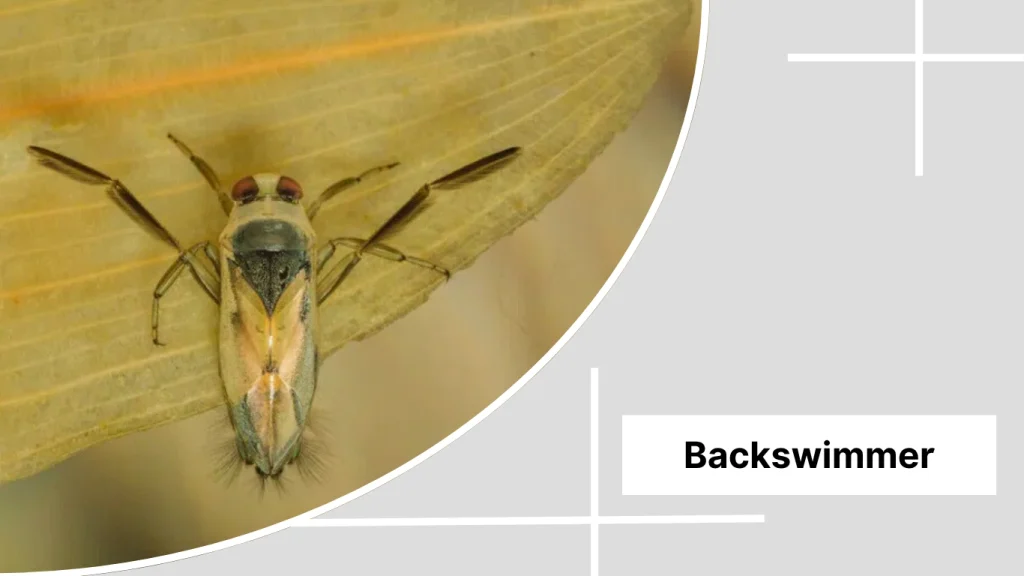
Backswimmers are agile aquatic insects known for swimming upside down with their pale bellies facing upward. They are strong predators and can deliver a painful bite to humans if handled.
Identification
- Size: 0.2 to 0.6 inches long
- Color: Dark-colored back, light-colored underside
- Distinctive feature: Long, oar-like hind legs covered with hairs
- Habitat: Freshwater ponds, lakes, and ditches
- Body position: Swims on its back
Habitat and Distribution
They inhabit calm freshwater areas worldwide, often staying near the water surface to hunt and breathe.
Diet
Backswimmers feed on mosquito larvae, aquatic insects, and even small fish or tadpoles, making them useful in pest control.
Behavior
These insects are fast swimmers and often come to the surface for air, trapping an air bubble on their body to breathe underwater.
4. Water Boatman

Water boatmen are small aquatic insects known for their flattened bodies and long, oar-like hind legs. Unlike most predatory water bugs, many species feed on algae and detritus, making them important for maintaining water quality.
Identification
- Size: 0.2 to 0.6 inches long
- Color: Brown or greenish with fine patterns
- Distinctive feature: Oar-shaped hind legs for swimming
- Habitat: Freshwater ponds, lakes, and slow-moving streams
- Body position: Swims right-side up
Habitat and Distribution
Water boatmen are found worldwide in still or slow-moving freshwater bodies. They prefer habitats rich in aquatic plants and organic matter, where they can feed and hide from predators. They are particularly abundant in temperate and tropical regions.
Diet
Their diet primarily consists of algae, organic detritus, and plant material. Some species also consume small aquatic invertebrates. By feeding on decaying matter, they help recycle nutrients and keep water ecosystems balanced.
Behavior
Water boatmen are peaceful swimmers that use their hind legs in a rowing motion. They store air under their wings for breathing and are active both day and night, often diving to the bottom to feed.
5. Water Strider

Water striders are slender insects famous for their ability to walk on the surface of water using surface tension. They are fast and efficient predators, hunting insects trapped on the water surface.
Identification
- Size: 0.2 to 0.8 inches long
- Color: Dark brown or black body
- Distinctive feature: Long, thin legs adapted for gliding on water
- Habitat: Freshwater ponds, lakes, rivers, and streams
- Body position: Always stays on the water surface
Habitat and Distribution
Water striders are found on calm water surfaces worldwide, from small puddles to large lakes. They prefer still or slow-moving waters with minimal disturbance, often staying near shorelines where insects are abundant.
Diet
Their diet includes small insects, larvae, and other invertebrates that fall or are trapped on the water surface. They use their front legs to seize prey and pierce it with their sharp mouthparts to suck out body fluids.
Behavior
Water striders are agile hunters that use ripples on the water to detect prey. They can move quickly in any direction and even leap across the surface to avoid predators. They are active hunters both during the day and night.
6. Creeping Water Bug
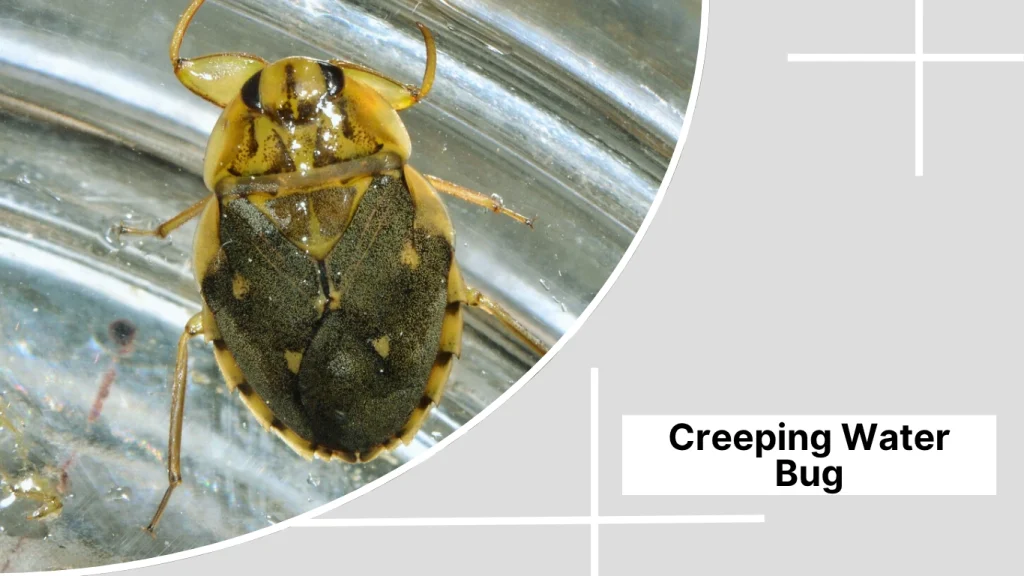
Creeping water bugs are small, slow-moving aquatic insects that stay close to submerged plants and debris. They are stealthy hunters, often mistaken for water beetles due to their oval bodies.
Identification
- Size: 0.3 to 0.5 inches long
- Color: Brown or dark gray
- Distinctive feature: Flattened oval body with short legs
- Habitat: Freshwater ponds, lakes, and marshes
- Body position: Swims right-side up
Habitat and Distribution
They inhabit calm, shallow freshwater environments across North America, Europe, and Asia. Creeping water bugs prefer areas rich in vegetation, where they can cling to plants and hide from predators while waiting for prey to pass by.
Diet
Their diet consists of small aquatic insects, larvae, and tiny crustaceans. They often capture prey by creeping slowly and striking quickly, using their piercing mouthparts to consume it.
Behavior
These bugs are patient ambush hunters, using slow movements to remain unnoticed. They rarely swim in open water, preferring to walk along plants or debris to stay hidden from predators and unsuspecting prey.
7. Lesser Water Boatman
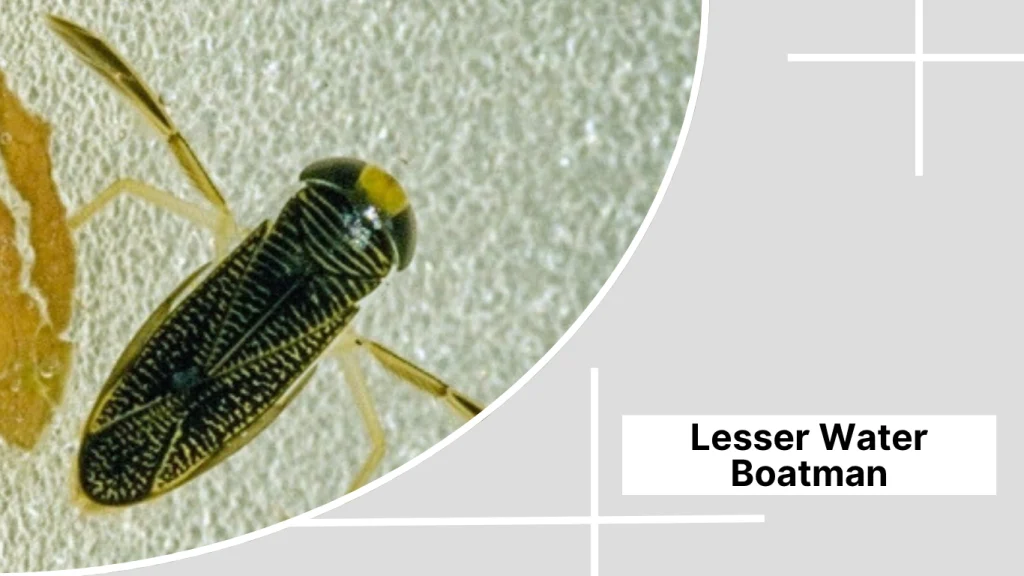
Lesser water boatmen are small aquatic insects related to the larger water boatmen but with slightly different feeding habits and body shapes. They are common in freshwater habitats with plenty of vegetation.
Identification
- Size: 0.1 to 0.4 inches long
- Color: Brown or yellowish-brown with fine markings
- Distinctive feature: Shorter, more rounded body compared to other boatmen
- Habitat: Ponds, lakes, and ditches
- Body position: Swims right-side up
Habitat and Distribution
They are widely distributed across Europe, Asia, and North America, thriving in slow-moving or still waters rich in aquatic plants. They are often found in large numbers in nutrient-rich ponds and marshes.
Diet
Lesser water boatmen primarily feed on algae, microscopic plants, and detritus. Their scraping mouthparts allow them to gather food from submerged plants and surfaces, helping maintain a balanced aquatic ecosystem.
Behavior
These insects are peaceful swimmers, spending much of their time near the bottom of ponds or clinging to plants. They surface regularly to replenish their air supply and are most active in warm, sunny conditions.
8. Brown Water Scavenger Beetle

Brown water scavenger beetles are aquatic beetles often mistaken for predatory bugs, but many species feed on decaying matter and plants. They are strong swimmers and important in cleaning aquatic ecosystems.
Identification
- Size: 0.2 to 0.6 inches long
- Color: Brown to dark brown, shiny body
- Distinctive feature: Smooth oval body with clubbed antennae
- Habitat: Freshwater ponds, lakes, and marshes
- Body position: Swims right-side up
Habitat and Distribution
They are found in freshwater habitats worldwide, especially in stagnant or slow-moving waters rich in organic debris. They are often abundant in ponds with dense vegetation where they can hide and feed.
Diet
Their diet mainly consists of decaying plants, algae, and sometimes small aquatic organisms. As scavengers, they help break down organic material, contributing to nutrient recycling in water bodies.
Behavior
Brown water scavenger beetles are mostly active at night, hiding during the day under debris. They frequently swim to the surface to trap air under their wings, allowing them to breathe while submerged.
9. Predaceous Diving Beetle
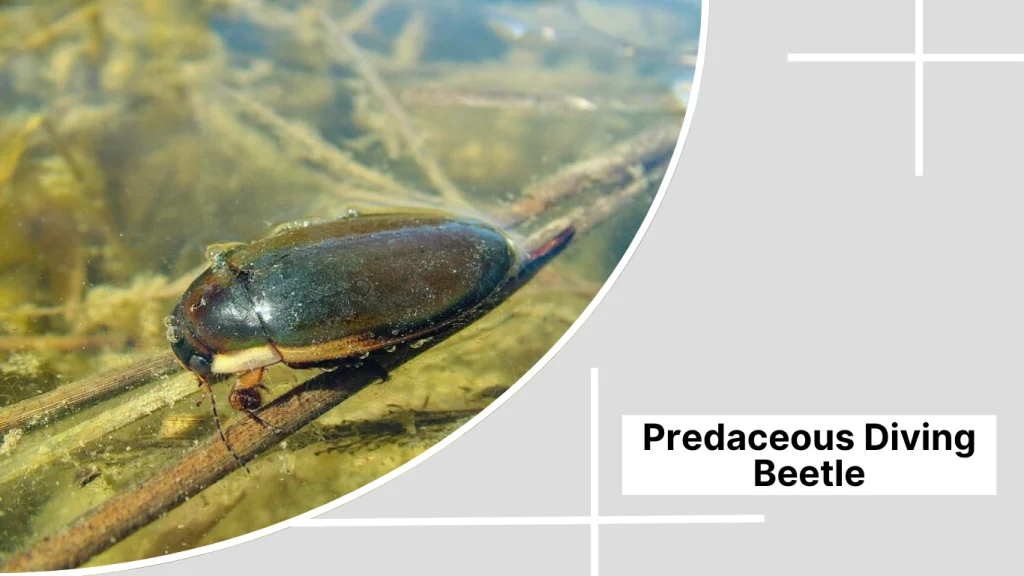
Predaceous diving beetles are aggressive aquatic predators with streamlined bodies built for fast swimming. Both larvae and adults are skilled hunters, preying on various aquatic animals.
Identification
- Size: 0.4 to 1.6 inches long
- Color: Dark brown to black with smooth, shiny bodies
- Distinctive feature: Long hind legs fringed with hairs for swimming
- Habitat: Ponds, lakes, and slow rivers
- Body position: Swims right-side up
Habitat and Distribution
These beetles are common in freshwater habitats across the globe, especially in temperate and tropical regions. They prefer clean, still, or slow-moving waters with abundant plant cover for hiding and hunting.
Diet
Their diet includes fish fry, tadpoles, aquatic insects, and other small creatures. Larvae, nicknamed “water tigers,” are particularly ferocious, injecting digestive enzymes into prey before consuming it.
Behavior
Predaceous diving beetles are active hunters, using speed and stealth to catch prey. They frequently surface for air, storing it under their wing covers, and are capable of flying to new water sources when necessary.
10. Whirligig Beetle

Whirligig beetles are unique aquatic insects known for swimming rapidly in circles on the water’s surface. Their divided eyes allow them to see both above and below the water simultaneously.
Identification
- Size: 0.1 to 0.6 inches long
- Color: Dark brown to black, shiny body
- Distinctive feature: Divided compound eyes for dual vision
- Habitat: Freshwater ponds, lakes, and slow streams
- Body position: Stays on water surface
Habitat and Distribution
Whirligig beetles are found worldwide in calm or slow-moving freshwater habitats. They often gather in large groups on the surface of ponds or lakes, especially near shorelines where floating debris attracts prey.
Diet
They primarily feed on insects and other small organisms that fall onto the water surface. They detect ripples to locate food, seizing it quickly before it sinks.
Behavior
Whirligig beetles are social insects that swim in tight, rapid circles, confusing predators and aiding in group feeding. They dive underwater when threatened and trap air beneath their bodies for breathing.
11. Saucer Bug
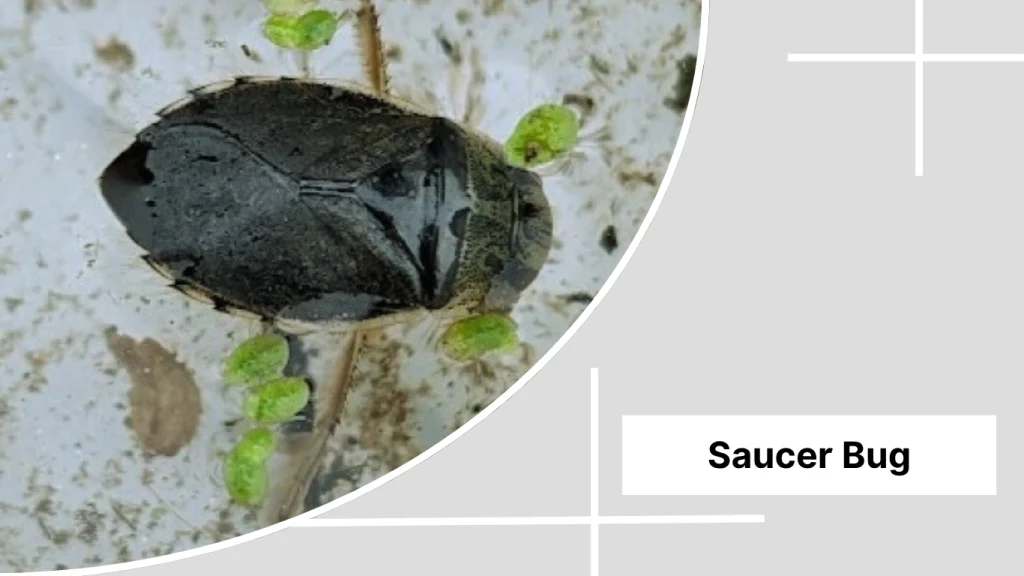
Saucer bugs are small, oval-shaped aquatic insects that are adept at clinging to submerged vegetation. They are known for their flattened bodies and stealthy hunting style.
Identification
- Size: 0.2 to 0.4 inches long
- Color: Brown or greenish-brown
- Distinctive feature: Flattened, disc-like body shape
- Habitat: Ponds, marshes, and slow-moving streams
- Body position: Swims right-side up
Habitat and Distribution
Saucer bugs inhabit calm freshwater areas in Europe, Asia, and parts of North America. They prefer vegetated zones in ponds and marshes where they can stay hidden while hunting.
Diet
Their diet consists mainly of small aquatic invertebrates, larvae, and sometimes tiny crustaceans. They pierce their prey with needle-like mouthparts and suck out body fluids.
Behavior
Saucer bugs are quiet hunters, often staying motionless until prey approaches. They are excellent at hiding among plants and can survive in shallow, temporary pools that may dry out seasonally.
12. Broad-Shouldered Water Strider

Broad-shouldered water striders are larger and more robust than common water striders, giving them better strength for tackling bigger prey. They glide effortlessly across water surfaces using surface tension.
Identification
- Size: 0.3 to 0.8 inches long
- Color: Dark brown or black with a slightly wider thorax
- Distinctive feature: Broad thorax compared to other striders
- Habitat: Freshwater ponds, lakes, and slow rivers
- Body position: Stays on the water surface
Habitat and Distribution
They are widely distributed in North America, Europe, and Asia, thriving in still or slow-moving waters. These striders prefer sunny shorelines and backwaters where prey is abundant, and disturbances are minimal.
Diet
Their diet includes small insects, larvae, and other invertebrates trapped on the water surface. They detect prey using ripples and vibrations, then grab it quickly with their front legs.
Behavior
Broad-shouldered water striders are quick and efficient hunters, capable of darting across the surface to chase prey. They are active during warm daylight hours but may also hunt at dusk.
13. Water Measurer

Water measurers are slender, stick-like insects that move slowly across the water surface, giving them their name. They are less predatory than other surface-dwelling bugs.
Identification
- Size: 0.2 to 0.5 inches long
- Color: Brown or gray, thin elongated body
- Distinctive feature: Very long legs in proportion to body size
- Habitat: Ponds, streams, and marshes
- Body position: Walks slowly on the water surface
Habitat and Distribution
They are found in temperate and tropical regions worldwide, especially in shallow, vegetated areas of freshwater bodies. They prefer calm surfaces where their slow movements don’t break surface tension.
Diet
Water measurers feed on small insects and organic matter found on the water surface. They are opportunistic feeders, taking advantage of dead or weak insects.
Behavior
These insects move with deliberate, measured steps, avoiding sudden splashes. They rely on stealth and patience rather than speed to find food, making them some of the least aggressive water-surface dwellers.
14. True Water Bug

True water bugs are members of the family Belostomatidae, known for their large size and powerful predatory abilities. They are strong swimmers and can deliver a painful bite if handled.
Identification
- Size: 1 to 4 inches long
- Color: Brown to dark brown, flat body
- Distinctive feature: Large raptorial front legs for grasping prey
- Habitat: Freshwater ponds, lakes, and slow rivers
- Body position: Swims right-side up
Habitat and Distribution
True water bugs are found in freshwater habitats across North America, South America, Asia, and Australia. They prefer still or slow-moving waters with plenty of aquatic plants to hide among while hunting.
Diet
They feed on fish, tadpoles, aquatic insects, and other small vertebrates. They inject digestive enzymes into their prey, liquefying it for easy consumption.
Behavior
True water bugs are ambush predators, often lying motionless until prey comes within range. They can also fly, often traveling to new water sources during warm, humid nights.
15. Marsh Treader
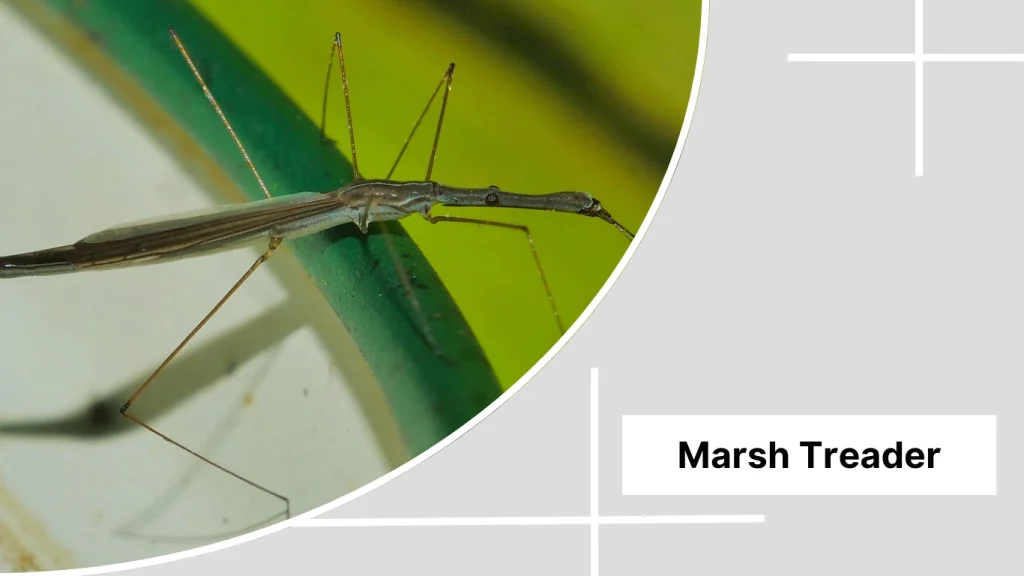
Marsh treaders are delicate, long-legged aquatic insects that live in marshy environments, where they move slowly over water and mud. They are related to water striders but much smaller.
Identification
- Size: 0.1 to 0.3 inches long
- Color: Brown or tan, slender body
- Distinctive feature: Long legs adapted for walking on water and wet surfaces
- Habitat: Marshes, swamps, and edges of ponds
- Body position: Walks slowly on surface
Habitat and Distribution
They are found in North America and parts of Central America, thriving in wetland environments with abundant vegetation. They often inhabit areas with shallow, stagnant water or wet mud.
Diet
Marsh treaders feed on tiny insects and organic matter found on the water’s surface. They are not strong hunters but instead consume what they encounter in their slow movements.
Behavior
They move cautiously over water and mud, avoiding open areas where predators are more likely to strike. They rely on camouflage to remain unnoticed by both prey and predators.
16. Water Cricket
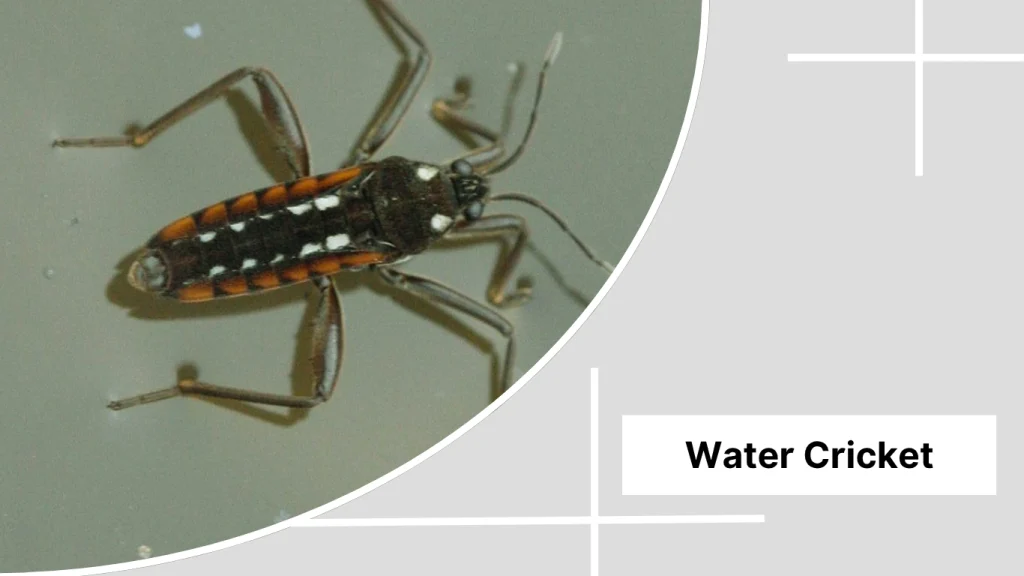
Water crickets are small aquatic insects that resemble terrestrial crickets in body shape but are adapted for life in the water. They are quick movers along the water’s edge and in shallow pools.
Identification
- Size: 0.2 to 0.4 inches long
- Color: Dark brown or black
- Distinctive feature: Cricket-like body with short legs
- Habitat: Shallow ponds, marshes, and stream edges
- Body position: Moves along surface and shallow water
Habitat and Distribution
Water crickets are found in freshwater habitats across Europe, Asia, and North America, often in marshes or stream margins with dense vegetation. They prefer shallow waters where they can easily hide among plants and debris.
Diet
Their diet consists of small insects, larvae, and organic debris. They feed opportunistically, taking advantage of stranded insects and decaying matter near the shore.
Behavior
Water crickets are fast movers, darting quickly to escape predators. They are most active during warm daylight hours and rely on speed and agility rather than stealth for survival.
17. Water Scavenger Beetle
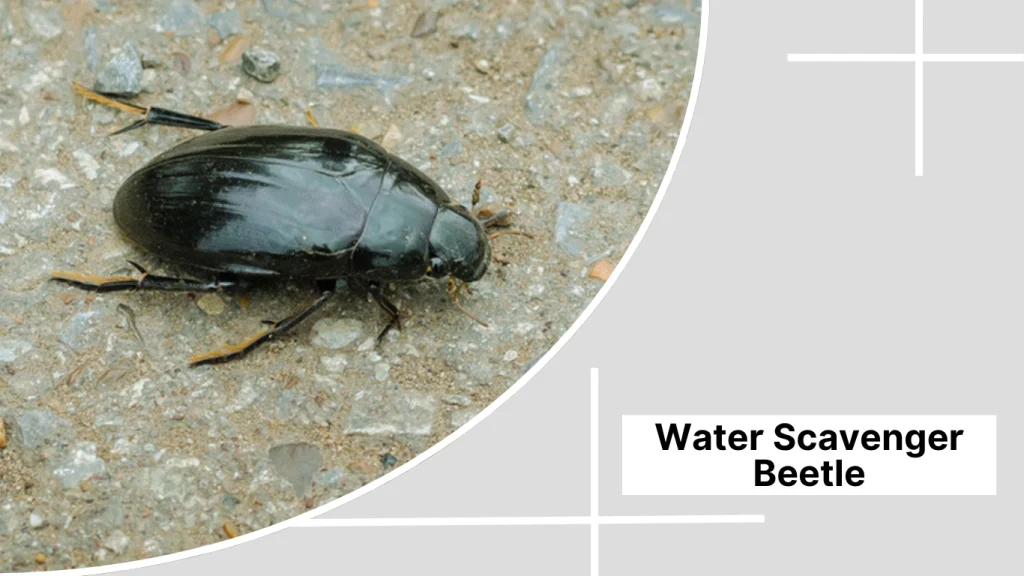
Water scavenger beetles are common aquatic beetles that, despite their name, may feed on both decaying material and live prey. They are among the most widespread water beetles in the world.
Identification
- Size: 0.2 to 1.5 inches long
- Color: Black or dark brown, shiny body
- Distinctive feature: Smooth, oval shape with short antennae
- Habitat: Ponds, lakes, marshes, and slow-moving streams
- Body position: Swims right-side up
Habitat and Distribution
They occur worldwide, inhabiting both permanent and temporary freshwater bodies. They are especially abundant in nutrient-rich ponds and wetlands where decaying plant material is plentiful.
Diet
Their diet varies by species, with some feeding on algae and decaying vegetation, while others prey on small aquatic animals. This versatility allows them to thrive in a variety of habitats.
Behavior
Water scavenger beetles are strong swimmers and frequent divers. They carry an air bubble under their bodies for breathing and are capable of short flights to move between water sources.
18. Hydrometra Water Bug

Hydrometra water bugs, also known as water measurer bugs, are slender surface-dwelling insects that move slowly over calm water. They are related to water striders but have an even narrower body.
Identification
- Size: 0.3 to 0.5 inches long
- Color: Dark brown or black
- Distinctive feature: Very slender body with long, thin legs
- Habitat: Ponds, marshes, and slow-moving streams
- Body position: Walks on water surface
Habitat and Distribution
Hydrometra water bugs are found in freshwater habitats across North America, Europe, Asia, and parts of Africa. They prefer still or slow-moving waters with dense vegetation near the shore, where they can remain hidden from predators.
Diet
They feed mainly on small insects trapped on the water surface, such as mosquito larvae or other invertebrates. They use their front legs to grab prey and pierce it with sharp mouthparts to suck out fluids.
Behavior
Hydrometra bugs move slowly and deliberately, relying on stealth rather than speed. They can remain motionless for long periods, waiting for vibrations on the surface to signal nearby prey.
19. Belostomatid Water Bug

Belostomatid water bugs, often called giant water bugs, are among the largest true water bugs and powerful aquatic predators. They are well known for their painful bite and unique parental care in some species.
Identification
- Size: 1.5 to 4 inches long
- Color: Brown to dark brown, flat body
- Distinctive feature: Raptorial forelegs for grasping prey
- Habitat: Freshwater ponds, lakes, and marshes
- Body position: Swims right-side up
Habitat and Distribution
They are found across North America, South America, Asia, and parts of Australia. They prefer still or slow-moving waters with abundant plant life to provide cover while hunting.
Diet
Belostomatids feed on fish, amphibians, and large aquatic insects. They inject digestive saliva into their prey, breaking down tissues so they can suck out the liquefied contents.
Behavior
These bugs are ambush hunters, lying in wait for prey to approach. Some species exhibit male parental care, with eggs laid on the male’s back until they hatch. They can also fly to relocate to new water sources.
20. Electric Light Bug

Electric light bugs are large predatory aquatic insects that are attracted to artificial lights at night. They are members of the giant water bug family and are known for their painful bite.
Identification
- Size: 1.5 to 4 inches long
- Color: Brown to dark brown, flat body
- Distinctive feature: Strong forelegs for catching prey and broad, flat body
- Habitat: Freshwater ponds, lakes, and rice paddies
- Body position: Swims right-side up
Habitat and Distribution
They are found in Asia, North America, and parts of South America, particularly in tropical and subtropical regions. They thrive in calm freshwater environments rich in aquatic plants, but at night, they often fly toward bright lights in nearby towns and villages.
Diet
Their diet includes fish, tadpoles, frogs, and aquatic insects. They capture prey with powerful forelegs, injecting digestive enzymes to liquefy tissues before consuming them.
Behavior
Electric light bugs are ambush hunters during the day and strong fliers at night. They are often collected and eaten as a delicacy in some countries, such as Thailand and the Philippines.
21. Small Water Strider

Small water striders are miniature relatives of common water striders, adapted for gliding on the surface of calm water. They are agile predators despite their tiny size.
Identification
- Size: 0.1 to 0.3 inches long
- Color: Dark brown or black
- Distinctive feature: Slender body with proportionally long legs
- Habitat: Ponds, puddles, and slow-moving streams
- Body position: Glides on water surface
Habitat and Distribution
They occur worldwide in calm, shallow water bodies, including temporary rain pools. They prefer areas near the shore where food sources such as stranded insects are abundant.
Diet
Their diet consists of small insects and larvae trapped on the water’s surface. They quickly seize prey and use piercing mouthparts to feed on body fluids.
Behavior
Small water striders are swift movers, able to dart in any direction to catch prey or escape danger. They are active during warm weather and rely on their light weight to stay atop the water without breaking surface tension.
22. Corixid Water Bug

Corixid water bugs, often referred to as water boatmen of the family Corixidae, are small aquatic insects that are mostly herbivorous, unlike many other predatory water bugs.
Identification
- Size: 0.1 to 0.6 inches long
- Color: Brown or greenish with fine, pale markings
- Distinctive feature: Flattened body with oar-like hind legs
- Habitat: Freshwater ponds, lakes, and ditches
- Body position: Swims right-side up
Habitat and Distribution
They are found in freshwater environments worldwide, especially in slow-moving or still waters with abundant plant life. They are common in both natural wetlands and man-made water bodies, such as irrigation ponds.
Diet
Corixids primarily feed on algae, detritus, and other plant material. Some species may consume small invertebrates, but their role in the ecosystem is mainly as plant feeders and detritus recyclers.
Behavior
These bugs are strong swimmers, often moving between the bottom and the surface to feed. They store air in a bubble beneath their wings to breathe underwater.
23. Ranatra Water Bug

Ranatra water bugs, also called needle bugs or stick water bugs, are slender aquatic predators that resemble underwater walking sticks. Their elongated bodies and breathing tubes make them well-adapted for stealth.
Identification
- Size: 0.8 to 1.5 inches long
- Color: Brown or tan, stick-like body shape
- Distinctive feature: Long, thin body with raptorial forelegs and breathing tube
- Habitat: Ponds, lakes, marshes, and slow streams
- Body position: Swims right-side up or clings to vegetation
Habitat and Distribution
Ranatra water bugs are found worldwide in still or slow-moving freshwater habitats. They prefer areas with dense submerged vegetation, which they use for camouflage while waiting for prey.
Diet
They prey on small fish, tadpoles, insects, and larvae, using their front legs to seize prey before injecting digestive fluids to liquefy tissues.
Behavior
Ranatra water bugs are patient ambush predators, remaining motionless for long periods. They breathe through their tail-like siphon, extending it to the water’s surface while staying hidden among plants.
24. Pelocoris Water Bug

Pelocoris water bugs are medium-sized aquatic predators belonging to the creeping water bug family. They are strong hunters and are often seen clinging to submerged vegetation or slowly swimming in calm waters.
Identification
- Size: 0.3 to 0.6 inches long
- Color: Brown to olive green with mottled patterns
- Distinctive feature: Oval, flattened body with short, strong legs
- Habitat: Freshwater ponds, lakes, marshes, and ditches
- Body position: Swims right-side up
Habitat and Distribution
They are found across North and Central America, thriving in shallow, still waters rich in aquatic plants. They are especially common in warm, vegetated wetlands where prey is abundant.
Diet
Their diet includes insect larvae, small crustaceans, and tiny fish. They capture prey using their forelegs and inject saliva to dissolve the tissues before feeding.
Behavior
Pelocoris water bugs are slow movers but deadly ambush predators. They spend much of their time clinging to plants, waiting for prey to pass within striking distance.
25. Lethocerus Water Bug

Lethocerus water bugs are among the largest insects in the world, belonging to the giant water bug group. They are powerful predators and strong fliers, capable of covering long distances in search of new habitats.
Identification
- Size: 2.5 to 4.5 inches long
- Color: Brown to dark brown, flat, elongated body
- Distinctive feature: Large, powerful forelegs for grasping prey
- Habitat: Freshwater ponds, lakes, slow rivers, and rice paddies
- Body position: Swims right-side up
Habitat and Distribution
Lethocerus species are found in North America, South America, and Asia, favoring warm, slow-moving freshwater habitats. They are especially common in tropical and subtropical regions, often hiding among aquatic plants during the day.
Diet
Their diet includes fish, frogs, tadpoles, and large aquatic insects. They ambush prey, inject digestive enzymes, and suck out liquefied tissues.
Behavior
Lethocerus water bugs are strong swimmers and capable fliers, often traveling to lights at night. In some cultures, they are harvested and eaten as a delicacy, valued for their unique flavor.
