
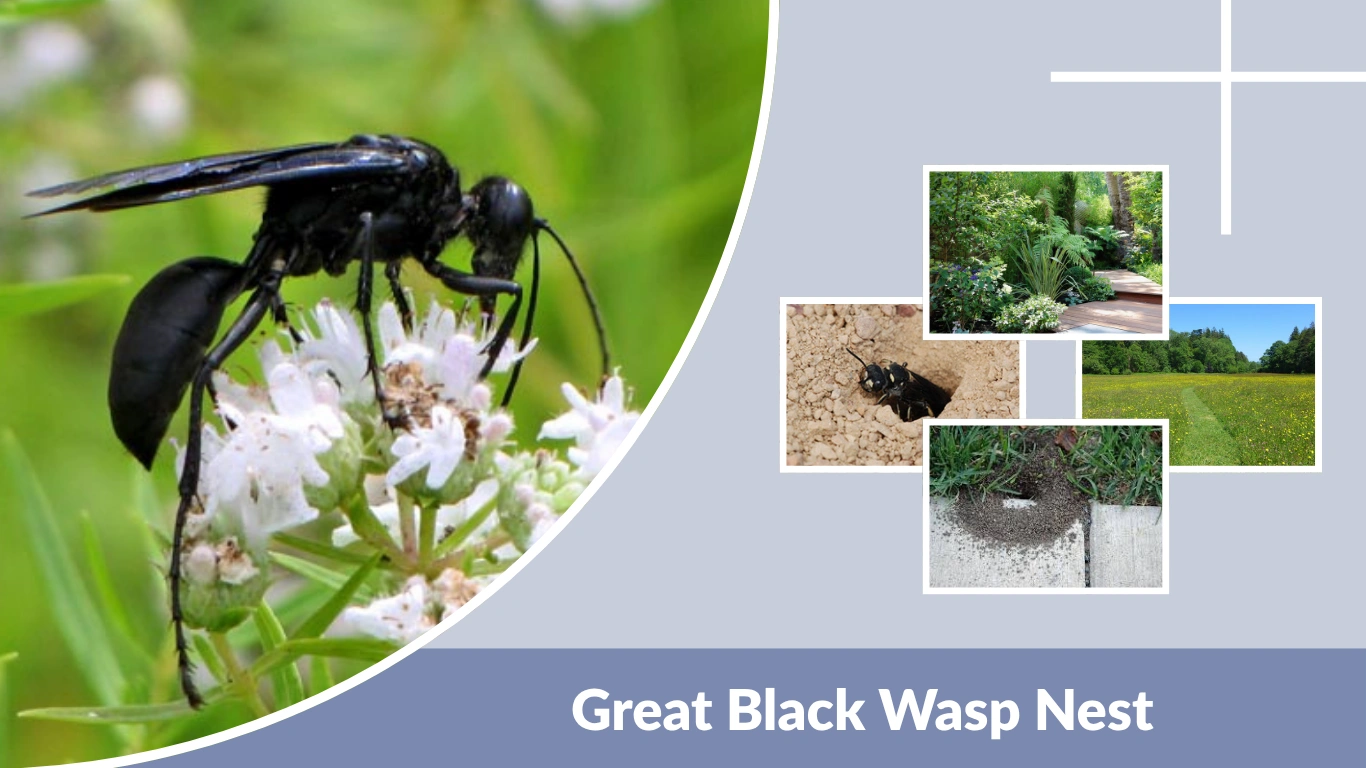
The great black wasp (Sphex pensylvanicus) is a large, solitary wasp known for its striking black body and blue-tinged wings. Though intimidating in appearance, it is a gentle and beneficial species that helps control pests and pollinate plants. Understanding its nesting habits, identifying nest locations, and knowing how to manage them safely are key to coexisting peacefully with these valuable insects.
Identification
What Does a Great Black Wasp Nest Look Like?
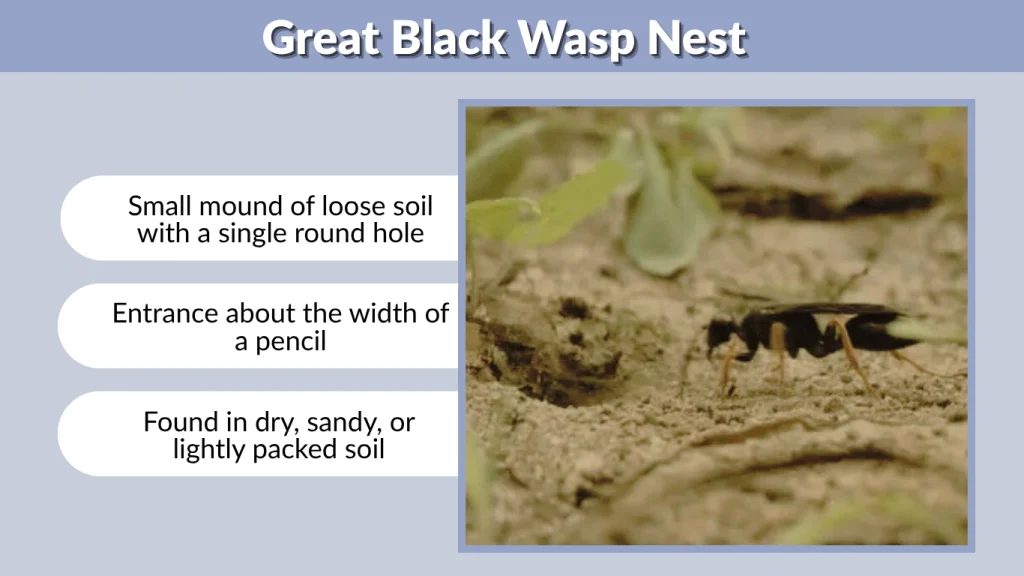
- Small mound of loose soil with a single round hole
- Entrance about the width of a pencil
- Found in dry, sandy, or lightly packed soil
- No visible paper or leaf material used
- Often surrounded by tiny dirt pellets or fresh soil
- Hidden in gardens, lawns, or near stones and pathways
Great Black Wasp Nest Pictures
- Show small soil piles or open burrow holes
- May reveal tunnels reaching 8–12 inches deep
- Contain several side chambers for larvae
- Chambers stocked with paralyzed insects (grasshoppers, katydids)
- Fresh digging signs indicate an active nest
Nesting Habits
Where Do Great Black Wasps Nest?
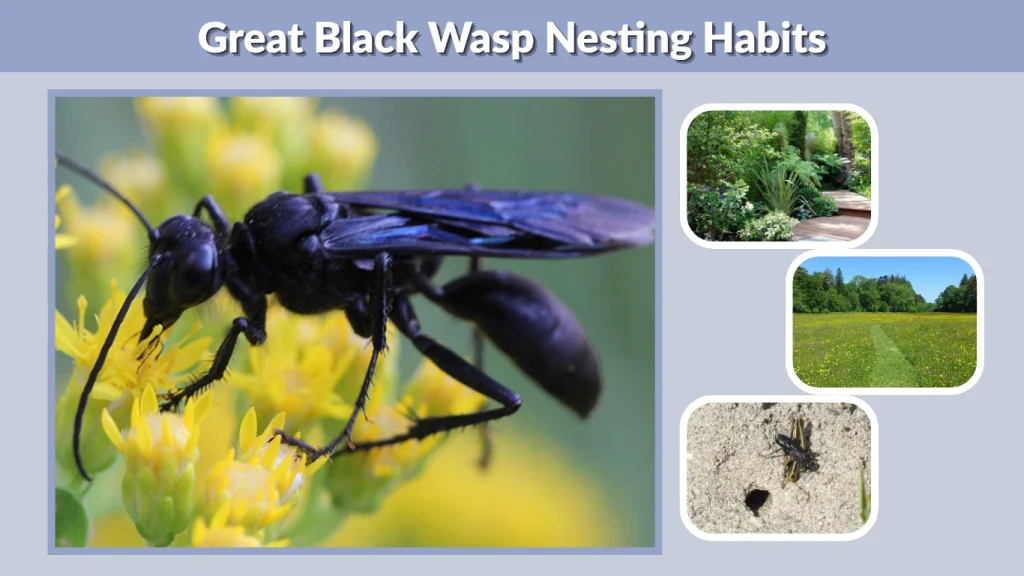
These wasps prefer open, sunlit areas with loose soil for easy burrowing. Gardens, meadows, and dirt paths are common nesting spots. They avoid overly wet soil or densely packed ground. Great black wasps are found throughout North America, especially in the Midwest and Eastern United States, including Michigan, Pennsylvania, and Minnesota.
Each female builds her own burrow, working alone and never sharing her nest. Because they are solitary insects, great black wasps don’t form colonies or hives like social wasps. Their nests are temporary, serving only as nurseries for the next generation.
Great Black Digger Wasp Nest
The great black digger wasp is a fitting name for this species due to its impressive tunneling behavior. A single nest can have multiple side chambers, each containing a paralyzed prey insect and one egg. Once the chamber is stocked, the female seals it with soil before digging another. Over her lifetime, she may build several nests, ensuring her offspring have food when they hatch.
Underground and Above-Ground Nests
Most great black wasp nests are built underground, but occasionally they use cracks in wooden structures, bee barns, or between rocks when soft soil isn’t available. Above-ground nests are rare and usually temporary. These wasps choose nesting spots with minimal human disturbance, though they sometimes appear near houses, driveways, or garden edges.
Great Black Wasp Nests Around Humans
Great Black Wasp Nest in the Ground
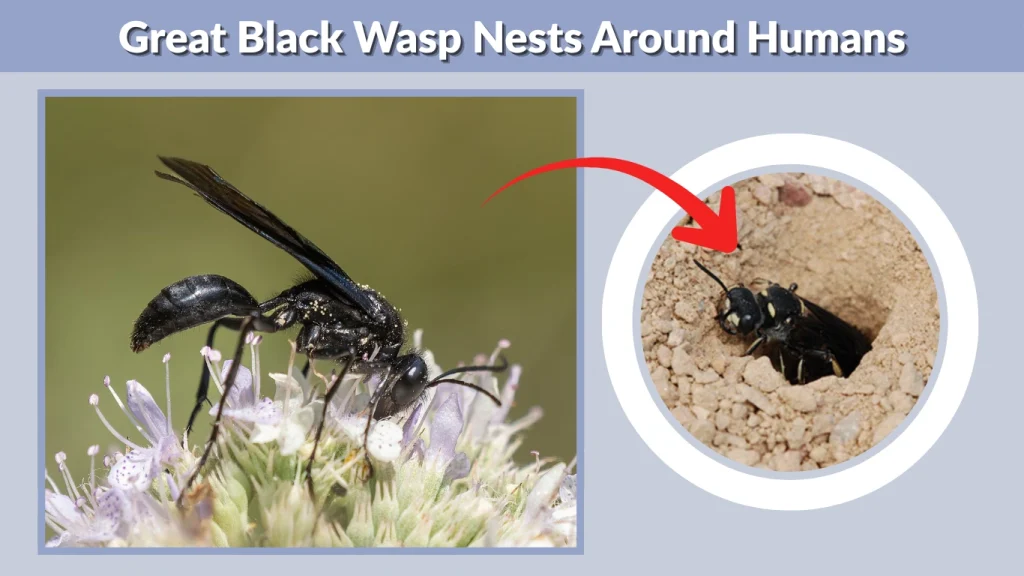
When a great black wasp nests in your yard, you may notice small holes surrounded by scattered dirt. The female can often be seen flying in and out of the same location, carrying prey to her underground chambers. She poses little threat unless disturbed. It’s best to observe from a safe distance rather than attempting to remove the nest immediately.
Ground nests are harmless and short-lived. Once the larvae mature and the new wasps emerge, the nest is abandoned. Rain and natural soil movement soon cover the entrance, leaving little sign of its existence.
Great Black Wasp Nest in the House or Shed
It’s uncommon for great black wasps to nest inside homes. However, they may occasionally choose attics, wooden sheds, or wall crevices if suitable soil is unavailable. Indoor nests usually occur in warm, dry environments with cracks or soft material to burrow into. While these situations can be unsettling, they are temporary. Removing the wasp gently or consulting a pest specialist ensures safe relocation without harm to the insect.
House and Garden Encounters
Seeing great black wasps around homes often leads to alarm, but they are actually beneficial. They hunt pest insects and pollinate flowering plants. Avoiding direct interference with their nests allows them to complete their short life cycle peacefully. If you must garden near their nesting area, wear gloves and move slowly—quick motions may trigger defensive behavior.
Nest Facts and Structure
Great Black Wasp Nest with Larvae
Inside each chamber of the nest lies a fascinating sight: a paralyzed grasshopper or katydid, still alive but immobilized, and a single egg attached to it. When the larva hatches, it feeds on the prey, ensuring nourishment until it pupates. After completing development, the adult wasp emerges, leaving the nest permanently. The abandoned burrows then naturally collapse over time.
Great Black Wasp Nest Size
A typical nest is about 8–12 inches deep and may spread several inches horizontally with multiple cells. Each cell holds one larva and its stored food supply. From above, you’ll usually see only a small hole—evidence of a much more complex tunnel system below.
Locating a Great Black Wasp Nest
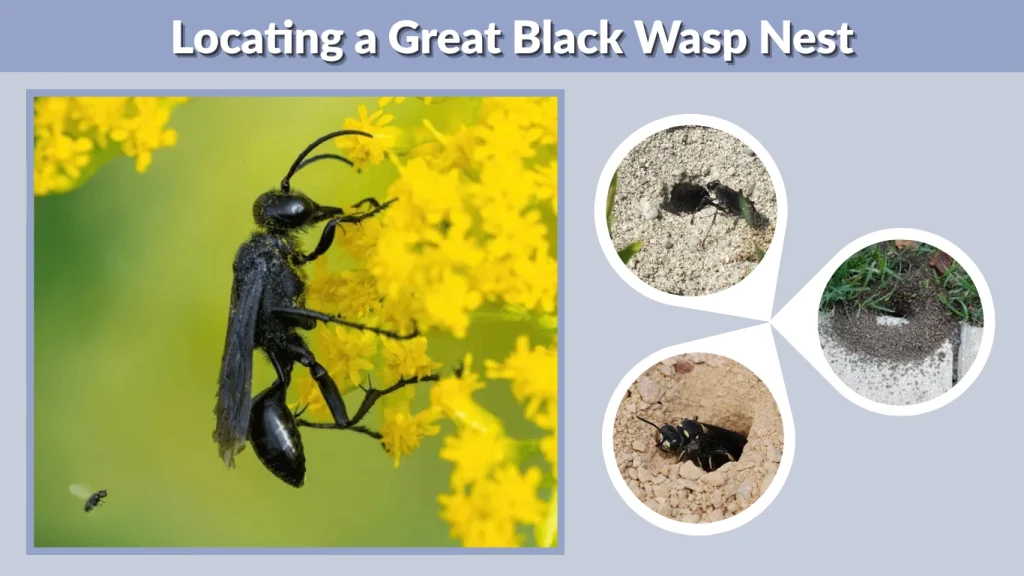
How to Find a Great Black Wasp Nest
Finding a great black wasp nest requires patience and observation. The best time to locate nests is during midday in summer, when females are actively hunting. Watch for a wasp repeatedly flying to and from the same spot in the ground while carrying a paralyzed insect. This behavior almost always indicates a nest entrance.
Freshly dug soil, small piles of dirt, or tiny holes near plants or rocks can also reveal their presence. If you gently observe from a distance, you might see the wasp backing out of the hole while pushing soil with her hind legs. Avoid disturbing her, as she is focused on protecting her larvae and will only sting if provoked.
Great Black Wasp Nest Location by Region
These wasps are distributed across much of North America, with dense populations in states like Michigan, Minnesota, Pennsylvania, and Ohio. They prefer sandy or loose soils found in meadows, lawns, and gardens.
- Midwest (Michigan, Minnesota): Commonly found in flower beds and vegetable gardens.
- Northeast (Pennsylvania, Ohio): Often seen nesting along garden edges or driveways.
- Southern regions: Active for longer periods due to warmer climates, creating multiple nests per season.
Their nests are typically in areas with low vegetation and minimal foot traffic, making them difficult to notice unless you look closely.
Nest Removal and Safety
How to Get Rid of a Great Black Wasp Nest
If a nest is too close to human activity, you can remove it safely without harming the wasp. The best time to do so is early morning or late evening, when the wasp is less active. Start by identifying the nest entrance and marking the spot during the day. Once it’s cooler, gently cover the entrance with a bowl or container, then dig up the soil and relocate it to a more natural area like a field or forest edge.
Natural repellents such as peppermint oil, vinegar spray, or citrus peels can discourage wasps from nesting nearby. Avoid using toxic insecticides, as great black wasps are important pollinators and pest controllers.
Great Black Wasp Nest Removal Precautions
Always wear protective clothing, including long sleeves, gloves, and closed shoes, when handling any wasp nest. Move calmly and avoid sudden movements that might trigger defensive behavior. If you’re allergic to insect stings or unsure about removal, contact a licensed pest control professional for assistance.
When removing soil nests, remember that females are solitary. Eliminating one nest won’t affect nearby populations, but it’s unnecessary to destroy them unless absolutely needed. The nests collapse naturally after the young emerge, posing no long-term issue.
Do Great Black Wasps Use Leaves to Make Their Nests?
No, great black wasps do not use leaves, paper, or wood fibers to make nests. Unlike paper wasps, they are ground nesters, using soil to form tunnels and chambers. The female uses her mandibles and legs to dig, then lines each chamber with smooth soil before sealing it. This method protects the larvae from predators and extreme temperatures, ensuring a higher survival rate.
Behavior and Environmental Role
Are Great Black Wasps Dangerous?
Despite their large size and loud buzz, great black wasps are not aggressive. Males lack stingers entirely, and females only sting if handled or threatened. They are beneficial garden allies, preying on pest insects like grasshoppers, crickets, and katydids. Their presence in a garden indicates a healthy, balanced ecosystem.
Ecological Importance of Great Black Wasp Nests
These wasps contribute to the environment in several ways:
- Pest control: By hunting and paralyzing insects, they naturally reduce pest populations.
- Pollination: Adults feed on nectar and pollinate flowers while foraging.
- Soil aeration: Their digging improves soil structure and promotes drainage.
Allowing them to nest undisturbed benefits both plants and other wildlife. Once their short breeding season ends, the nests are abandoned, leaving behind aerated soil and fewer pests.
FAQs
What does a great black wasp nest look like?
A great black wasp nest appears as a small dirt mound with a single round entrance hole. It’s usually built in dry, sandy soil and may show signs of fresh digging. Underground tunnels lead to chambers containing paralyzed insects for larvae to feed on.
Where do great black wasps usually nest?
They typically nest in open, sunlit areas with soft soil—such as gardens, lawns, and fields. Some may choose spaces near homes or driveways, but they avoid heavy foot traffic and shaded, wet soil.
How deep is a great black digger wasp nest?
Most burrows are 8–12 inches deep, though some may extend deeper depending on soil type. Each nest includes multiple side chambers where females store paralyzed prey and lay eggs.
Can great black wasps nest inside homes?
Indoor nesting is rare but possible in dry, wooden structures or cracks within sheds, attics, or barns. If found, nests can be relocated safely without using chemicals. They do not chew wood or cause structural damage.
How can you safely remove a great black wasp nest?
The safest removal method is relocation during cooler hours when the wasp is inactive. Use gloves and a container to move soil from the nest to a distant natural area. Alternatively, contact pest control for professional handling if allergic or uncomfortable.
