
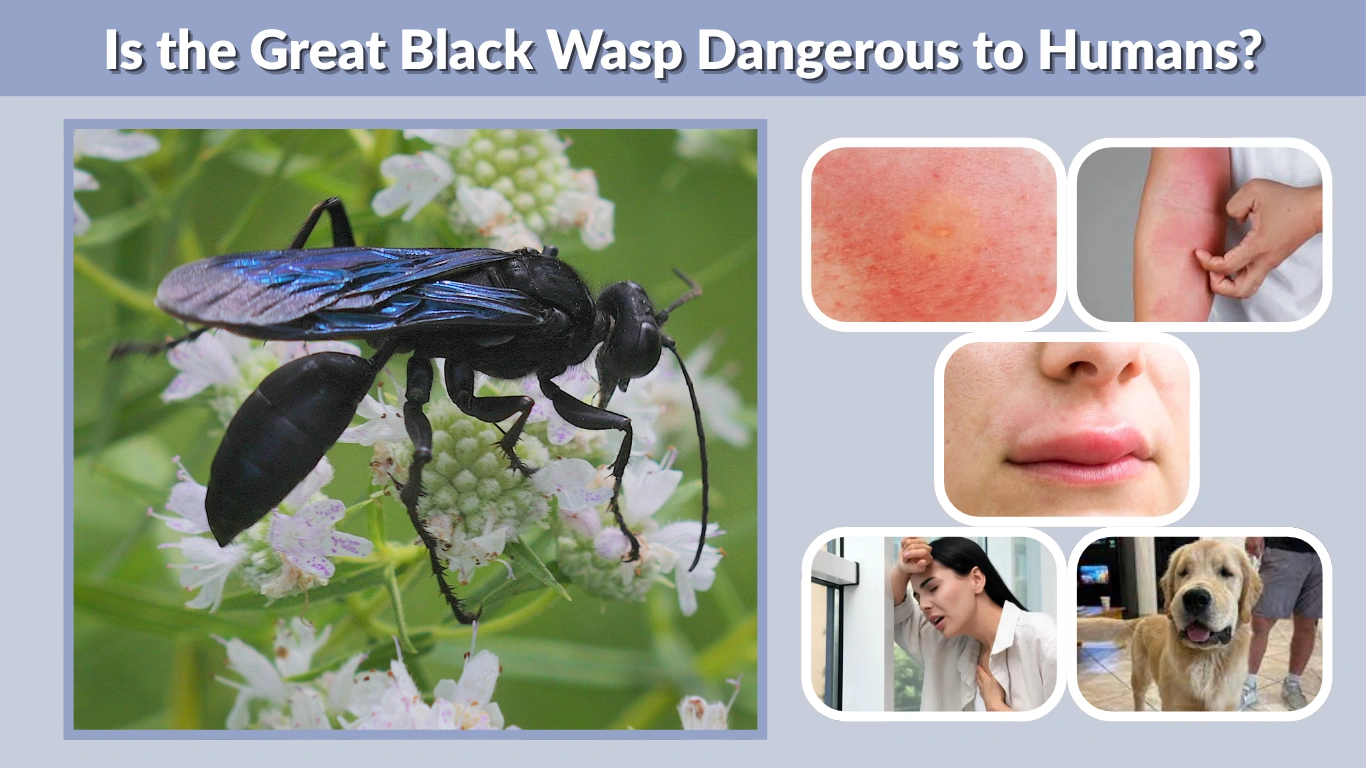
The great black wasp (Sphex pensylvanicus) is a large, solitary wasp easily recognized by its glossy black body and loud buzzing flight. Its intimidating size often leads to fear, but in truth, this insect is more of a helper than a hazard. Although capable of stinging, it rarely does so unless directly threatened. Understanding its behavior, sting, and ecological role reveals that this wasp is largely harmless to humans and beneficial to nature.
Identification
Physical Appearance
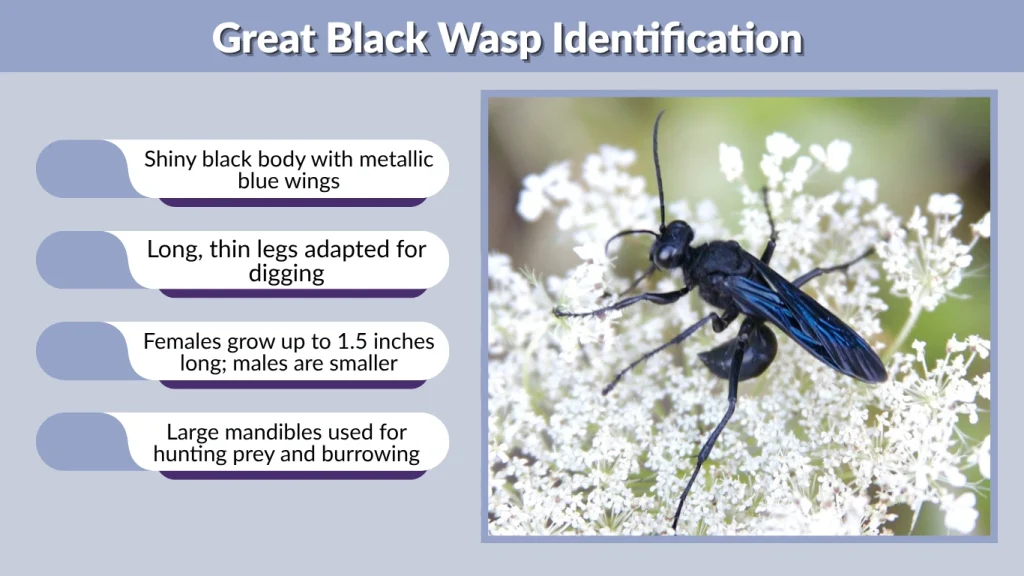
The great black wasp is striking in both color and size.
- Shiny black body with metallic blue wings
- Long, thin legs adapted for digging
- Females grow up to 1.5 inches long; males are smaller
- Narrow “wasp waist” connecting thorax and abdomen
- Large mandibles used for hunting prey and burrowing
Behavior Overview
- Solitary—each female builds and tends her own nest
- Feeds mainly on nectar from flowers like milkweed and goldenrod
- Hunts katydids, grasshoppers, and crickets for her larvae
- Active during sunny summer days
- Non-aggressive and avoids human contact unless provoked
Can the Great Black Wasp Sting Humans?
Sting Mechanics
Yes, the female great black wasp can sting, but only in self-defense. Males lack stingers entirely. The female’s stinger is a dual-purpose organ—used both for laying eggs and injecting venom into prey. When hunting, she paralyzes her prey rather than killing it, providing fresh food for her larvae underground.
Human stings are extremely rare because these wasps do not guard nests or swarm like social species. Most stings happen accidentally when a person steps on or handles one.
What the Sting Feels Like
Those who have been stung describe the pain as sharp and burning at first, followed by mild throbbing. According to the Schmidt Pain Index, the great black wasp’s sting ranks around 1.5 to 2, similar to that of a paper wasp. The discomfort typically fades within an hour, and swelling remains minimal.
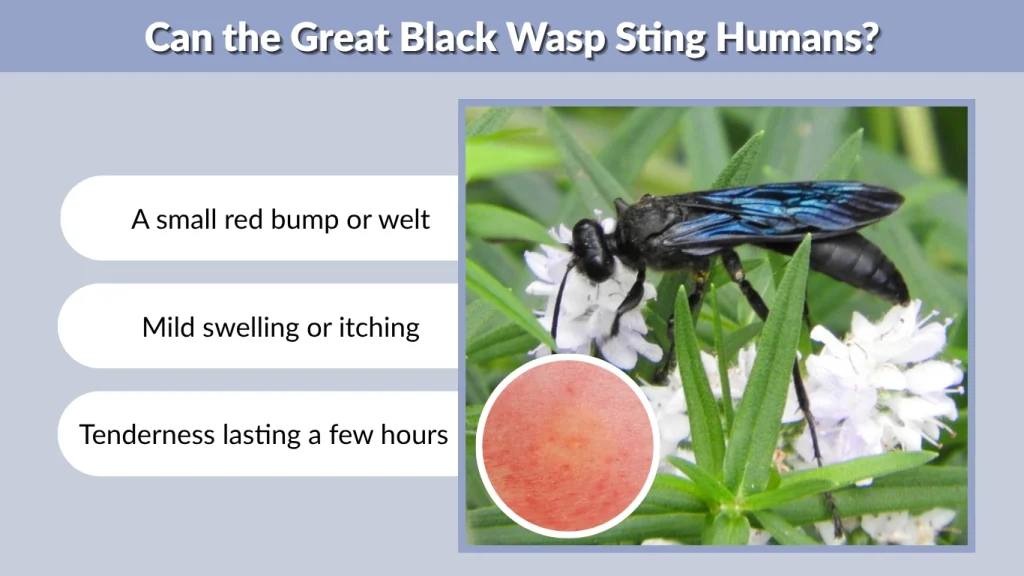
For most people, symptoms include:
- A small red bump or welt
- Mild swelling or itching
- Tenderness lasting a few hours
People allergic to wasp venom may experience stronger reactions and should monitor symptoms carefully.
Is the Great Black Wasp Dangerous to Humans?
Actual Danger Level
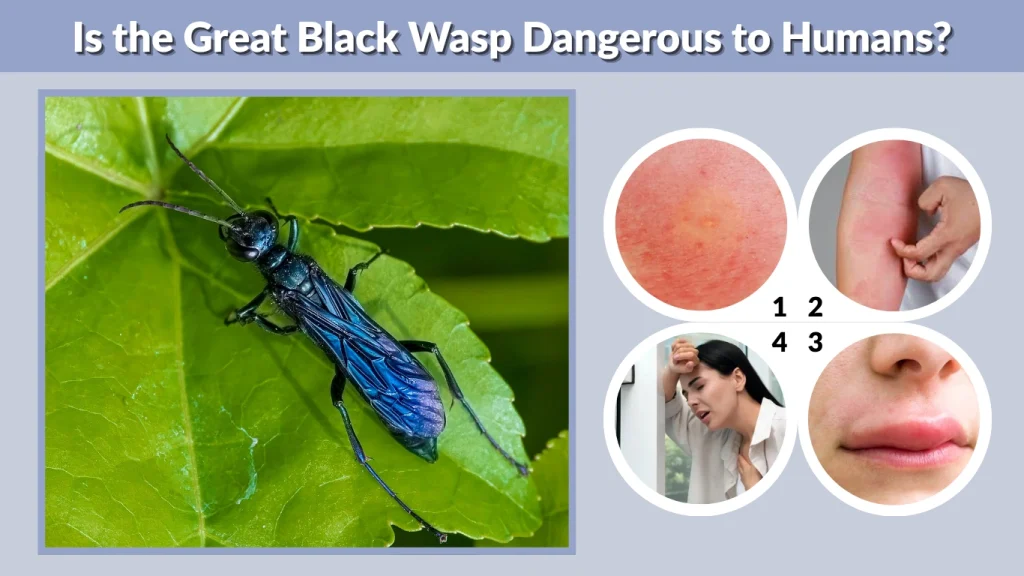
Despite its menacing appearance, the great black wasp poses very little danger to humans. Its solitary nature means there’s no colony to defend, and females are focused on hunting rather than aggression. The sting is uncomfortable but not medically serious for most individuals. Only those with venom allergies face a real risk.
Because the wasp is non-territorial, it rarely notices people nearby. You could stand within a few feet of a nesting female, and she would continue her work undisturbed. She only becomes defensive when trapped or accidentally pressed against the skin.
Typical Human Reactions
Most stings result in only mild local irritation. The area may appear slightly swollen or red, sometimes with an itchy patch that resolves in 24–48 hours. Severe reactions are rare but possible in allergic individuals. Signs of an allergy include:
- Widespread hives or itching
- Swelling of the face or throat
- Dizziness or difficulty breathing
If any of these occur, seek medical attention immediately. For everyone else, simple first aid is enough.
How to Respond Calmly
When encountering a great black wasp, stay still and avoid waving your hands. Fast or aggressive movements can make any insect feel threatened. Step away slowly, and it will lose interest quickly. If one lands on you, it’s likely just exploring—wait a moment, and it will fly off without harm.
Is the Great Black Wasp Dangerous to Pets?
Effects on Dogs and Cats
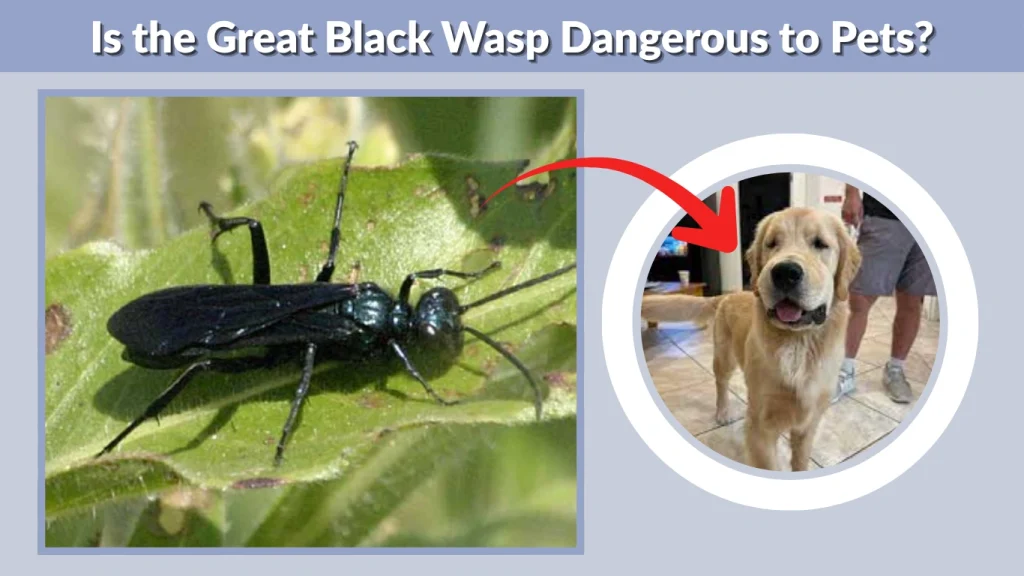
Dogs and cats that wander through gardens may occasionally encounter these wasps. While a sting could cause temporary pain or swelling, it’s rarely dangerous. Most pets recover quickly without treatment. However, if your pet is stung multiple times or begins showing signs of distress, such as heavy breathing or excessive licking, consult a veterinarian.
Prevention Tips for Pet Owners
To minimize the risk of stings:
- Keep pets away from visible ground burrows or sandy soil mounds
- Avoid letting them dig near flower beds where wasps may nest
- Supervise pets outdoors during peak activity hours (10 a.m.–4 p.m.)
- Use caution when mowing lawns or turning over soil during summer
Pets, like humans, are more likely to encounter these wasps accidentally than through any aggressive behavior.
Why the Great Black Wasp Is Not Aggressive
Solitary Nature
Unlike hornets or yellowjackets, great black wasps live alone and have no colony to defend. Without a social structure or queen to protect, they lack the aggressive instincts of social wasps. Each female tends her own burrow and focuses on hunting prey rather than attacking intruders.
Defensive vs. Offensive Stinging
The great black wasp stings only defensively. It will not chase or swarm humans, even when its nest is disturbed. Most human stings occur when someone accidentally steps on one barefoot or brushes against it while gardening. Its calm behavior makes it one of the least threatening large wasp species in North America.
Benefits and Ecological Importance
Natural Pest Control
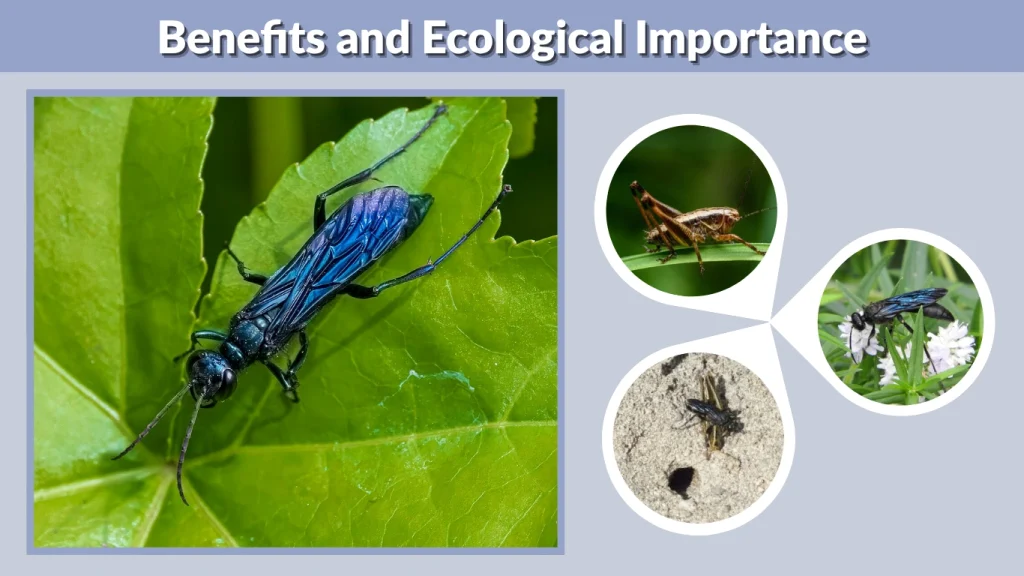
The great black wasp plays an essential role in nature by hunting pest insects such as grasshoppers, crickets, and katydids. Females paralyze these insects and carry them into their underground nests as food for their larvae. This behavior naturally reduces pest populations that can damage crops, gardens, and native vegetation. Unlike chemical pesticides, their method is entirely organic, helping maintain ecological balance.
Pollination Role
Adult great black wasps rely on flower nectar for energy. While feeding, they pollinate many flowering plants, including milkweed, goldenrod, and mountain mint. This pollination supports biodiversity and contributes to healthy garden ecosystems. Having great black wasps around is a sign of a thriving, balanced environment rich in pollinators.
Soil Improvement
As excellent diggers, these wasps contribute to soil aeration. Their burrows increase air and water flow in the ground, benefiting plant roots. When nests are abandoned, they decompose naturally, enriching the soil structure. In this way, even their nesting habits promote environmental health.
Safety and Prevention
Avoiding Stings
Though great black wasps are peaceful, prevention ensures safety for both humans and wasps.
- Avoid disturbing nests: Look for small soil mounds or holes before gardening.
- Wear shoes outdoors: Protect your feet from accidental contact with ground nests.
- Move slowly: Sudden motions can startle them, even though they rarely attack.
- Avoid strong scents: Perfumes and floral deodorants can attract nectar-feeding wasps.
- Do not swat: Calmly step away; aggression provokes defensive behavior.
Allowing them to nest undisturbed ensures a short coexistence—females abandon their burrows once the larvae mature, and new adults emerge the following year.
What to Do if You’re Stung
Even careful individuals may occasionally get stung. Follow these steps to relieve pain and prevent infection:
- Clean the sting site with soap and water.
- Apply an ice pack for 10–15 minutes to reduce pain and swelling.
- Use hydrocortisone cream or an antihistamine for itching.
- Avoid scratching to prevent irritation.
- Seek medical care if severe allergic reactions occur (such as hives or trouble breathing).
Most stings heal naturally within a day or two without complications.
Myths vs. Facts
| Myth | Fact |
| Great black wasps are aggressive like hornets. | They are solitary and calm, stinging only when handled. |
| Their sting is deadly to humans. | It’s mildly painful and short-lived, rarely causing medical issues. |
| They build paper nests near homes. | They dig burrows underground instead of constructing paper nests. |
| They harm flowers and plants. | They pollinate and help gardens thrive. |
| They attack in groups. | Each wasp lives and hunts alone—no swarming behavior. |
These facts show that the great black wasp’s fearsome reputation is mostly undeserved. They are beneficial insects that contribute to garden and ecosystem health.
Regional Encounters and Seasonal Behavior
Where They’re Common
The great black wasp is widely distributed across North America, from southern Canada to northern Mexico. They thrive in areas with loose, dry soil, such as gardens, fields, and grassy slopes. States like Michigan, Pennsylvania, Ohio, and Minnesota report frequent sightings during summer months.
Seasonal Activity
Adults typically emerge in June and remain active through September. The female’s life cycle centers around nesting and provisioning her larvae with prey. By late summer, nests are sealed, and adults die off naturally. The larvae remain underground through winter, emerging as adults the following year.
This seasonal rhythm means their presence is temporary—by early autumn, most activity ceases, leaving no lasting disturbance.
Coexisting Peacefully
Why You Shouldn’t Kill Them
Killing great black wasps disrupts local ecosystems. These wasps control pests and pollinate flowers, performing vital roles that benefit both agriculture and home gardens. Because they don’t form colonies or attack humans, there’s no reason to eliminate them. Instead, viewing them as allies fosters a healthier outdoor environment.
Encouraging Safe Coexistence
- Allow nests in remote garden areas where human activity is minimal.
- Plant nectar-rich flowers to support their pollination behavior.
- Educate others about their harmless nature.
- Observing from a distance—watching them hunt and dig can be fascinating and completely safe.
By respecting their space and life cycle, you promote biodiversity and reduce reliance on pesticides.
FAQs
Is the great black wasp aggressive toward people?
No, great black wasps are solitary and calm. They avoid humans and only sting when physically threatened or handled.
Can its sting cause serious harm or death?
For most people, the sting causes mild pain and redness that fades within an hour. Fatal reactions are extremely rare and occur only in cases of severe allergies.
How painful is a great black wasp sting?
The pain is sharp and short-lived, rated about 1.5–2.0 on the Schmidt Pain Index—less painful than hornet or bee stings.
Are they helpful or harmful in gardens?
They are very helpful. Great black wasps pollinate flowers and control pest insects naturally, benefiting gardens and crops.
Should you remove their nests near homes?
If the nest is not in a high-traffic area, it’s best to leave it alone. The nest will naturally collapse after summer when the adult dies. If removal is necessary, do so at night and relocate it gently.
