
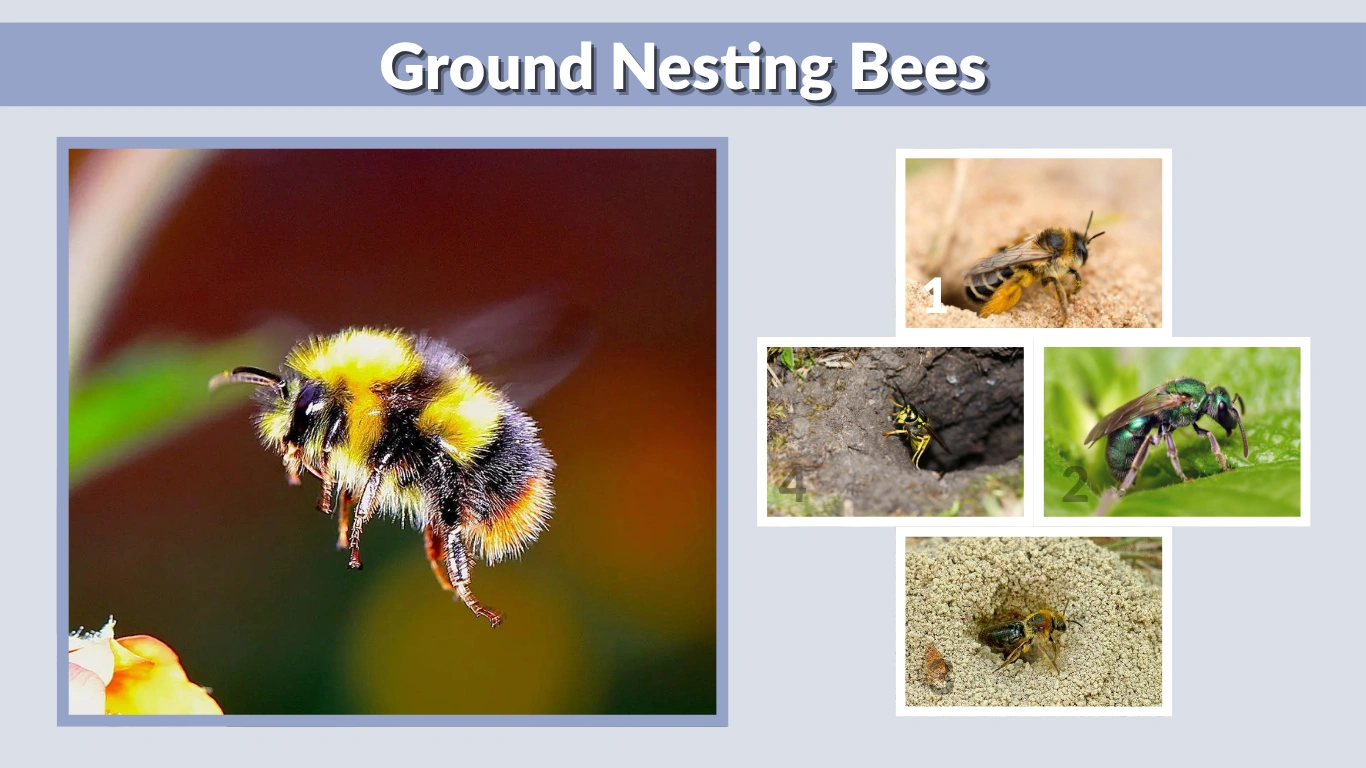
Ground nesting bees are fascinating pollinators that build their homes underground rather than in tree cavities or hives. While their presence often alarms homeowners, these insects are vital for the ecosystem. Understanding their behavior, identification features, and safe removal methods helps protect both your property and the environment.
What Are Ground Nesting Bees?
Ground nesting bees are species that prefer dry, loose soil for burrowing and nesting. They create small tunnels and chambers beneath the ground’s surface where they lay eggs and store pollen. Unlike honey bees, many of these species are solitary, meaning each female builds and maintains her own nest.
These bees are active during spring and summer when the soil is warm and dry. They usually avoid human contact, stinging only when directly threatened. Their presence often indicates healthy soil and a thriving natural habitat nearby.
Common Types of Ground Nesting Bees
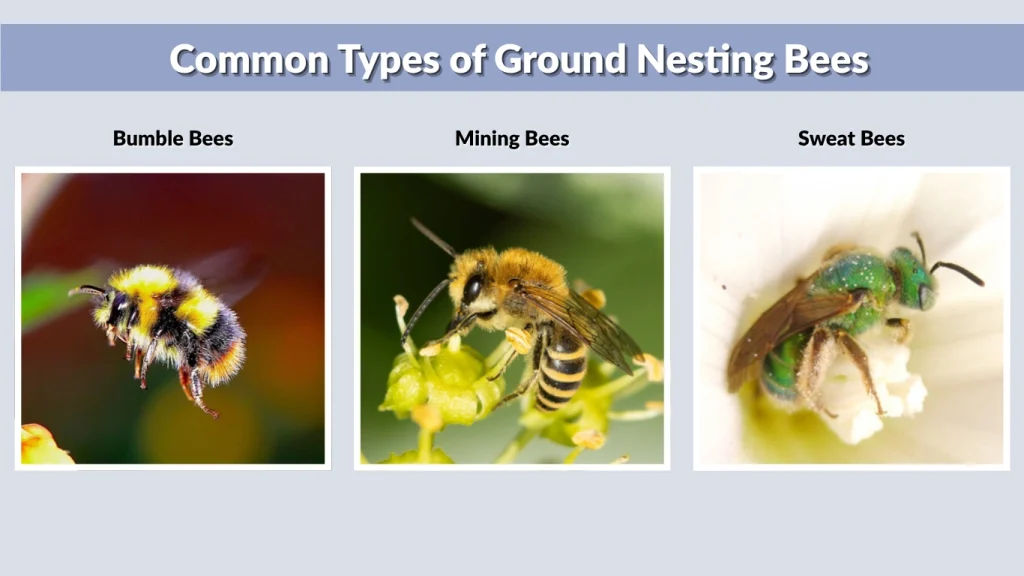
Bumble Bees
Bumble bees are among the most recognizable ground nesters. They form small colonies, usually containing 50–400 bees, and often reuse abandoned rodent burrows. Their large, fuzzy bodies and buzzing flight make them easy to spot near lawns, gardens, and compost piles.
Mining Bees (Andrena Species)
Mining bees are solitary insects that dig small tunnels in sandy soil. They appear in early spring and are harmless to humans. Each female creates a single tunnel with several chambers to store pollen and nectar for her offspring. You might notice tiny mounds of soil with pencil-sized holes—clear signs of their nests.
Sweat Bees and Digger Bees
Sweat bees are smaller and metallic in color, often green or blue. They are attracted to human sweat due to its salt content but rarely sting. Digger bees, on the other hand, are more robust and prefer dry, sunny areas with little vegetation. Both play important roles in pollination.
Ground Nesting Bees Identification
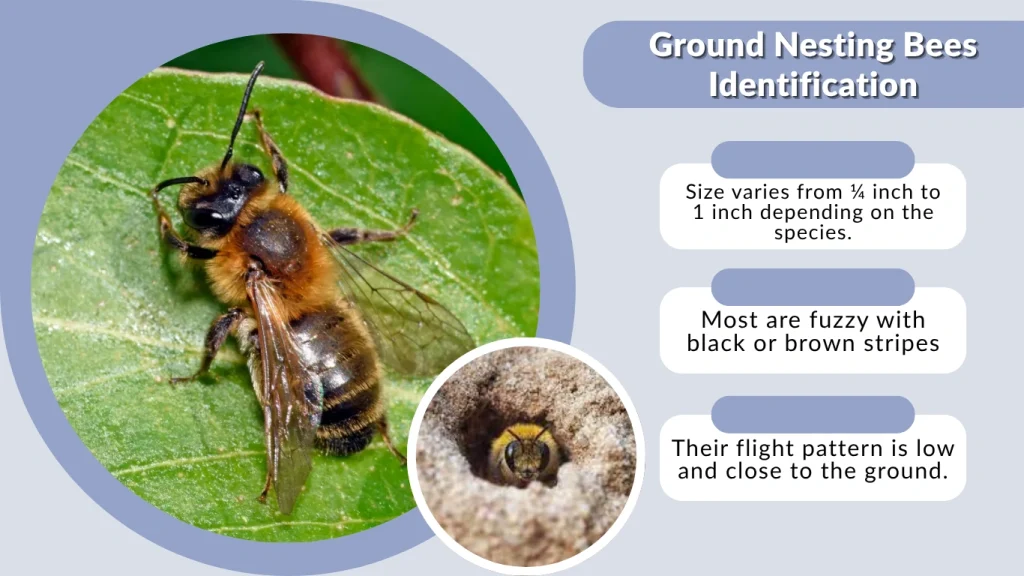
Identifying ground nesting bees involves observing both their physical appearance and nesting behavior.
Physical Traits:
- Size varies from ¼ inch to 1 inch depending on the species.
- Most are fuzzy with black or brown stripes; some have metallic coloring.
- Their flight pattern is low and close to the ground.
Nesting Signs:
- Small round holes in bare or patchy soil.
- Mounds of loose dirt resembling ant hills but with a single entrance.
- Bees flying in and out repeatedly from one spot.
Ground nesting bees are often mistaken for wasps or yellow jackets. However, bees have fuzzier bodies and collect pollen, while wasps have smooth bodies and are more aggressive.
Do Honey Bees Nest in the Ground?
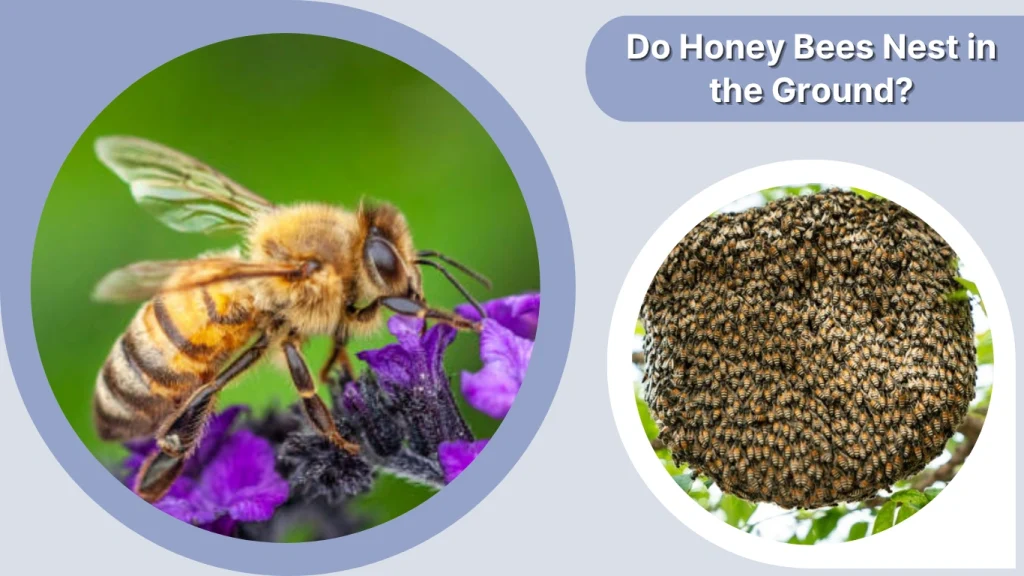
Honey bees rarely build nests underground. They typically prefer hollow trees, wall cavities, or artificial hives where they can store honey and protect their colony. If you see a large, buzzing nest in the soil, it’s more likely to be bumble bees or yellow jackets, not honey bees.
Occasionally, honey bees may temporarily gather on the ground when swarming or searching for a new home, but they don’t create permanent underground nests. Misidentifying them can lead to unnecessary extermination, so proper identification is essential.
Bumble Bee Ground Nests
Bumble bees are among the most beneficial ground nesters due to their role in pollinating fruits, vegetables, and flowers. They often occupy old burrows of small mammals or build nests beneath thick grass or compost heaps. A typical bumble bee nest is about the size of a grapefruit, containing wax pots for storing pollen and nectar.
You can identify their nests by observing frequent buzzing activity near one spot in your lawn or garden. Despite their intimidating appearance, bumble bees are generally non-aggressive and sting only when disturbed. Allowing them to complete their nesting cycle ensures a healthier garden and supports local pollination.
Yellow Jackets and Ground Nests
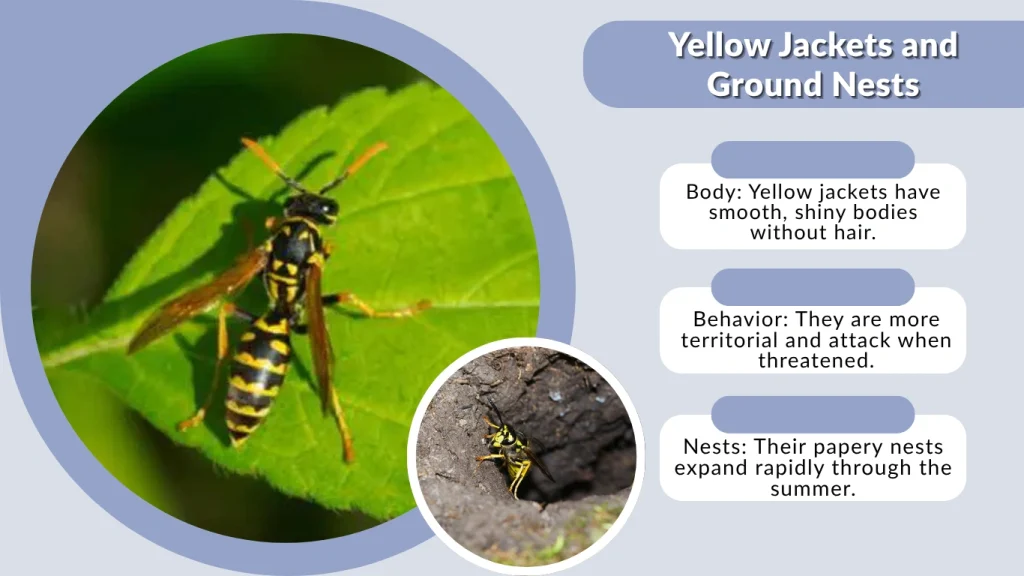
Yellow jackets often cause confusion because they, too, build nests underground. However, unlike bees, they are wasps—more aggressive and capable of multiple stings. Their nests can house thousands of individuals, making them dangerous to disturb.
Key Differences Between Bees and Yellow Jackets:
- Body: Yellow jackets have smooth, shiny bodies without hair.
- Behavior: They are more territorial and attack when threatened.
- Nests: Their papery nests expand rapidly through the summer.
If you see rapid, aggressive flight near a hole in the ground, keep a safe distance. Ground-nesting yellow jackets often require professional removal due to their defensive behavior.
Ground Nesting Bees vs Carpenter Bees
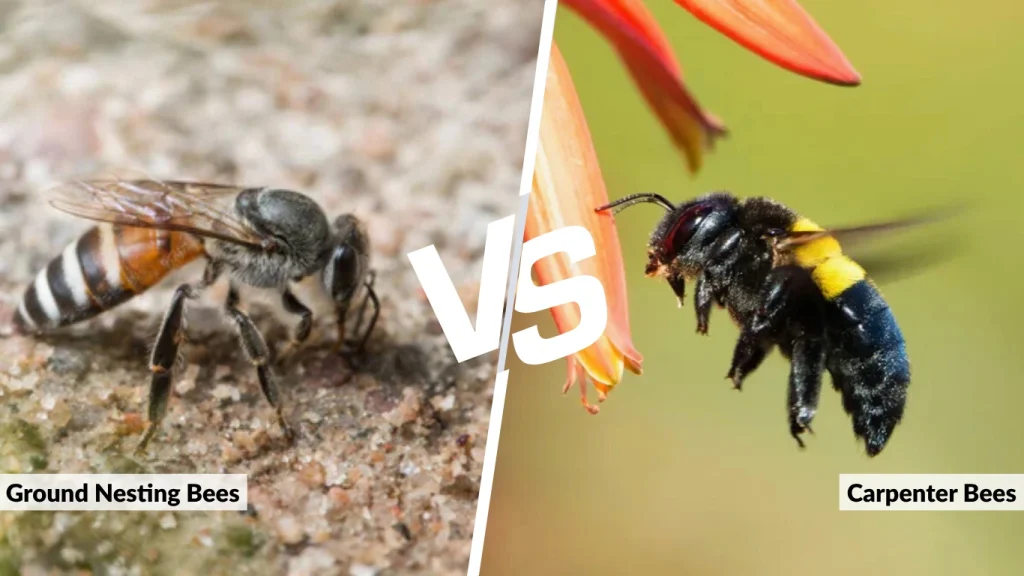
Carpenter bees are often mistaken for ground bees, but they prefer wood, not soil. They bore perfect round holes into wooden structures, decks, or fences to lay eggs. The presence of sawdust piles and perfectly round entry holes indicates carpenter bee activity.
Comparison Overview:
- Ground Bees: Nest in soil; solitary or semi-social; rarely sting.
- Carpenter Bees: Bore into wood; reuse tunnels; males hover but do not sting.
Proper identification is crucial before applying treatments to avoid harming beneficial species that don’t cause structural damage.
Are Ground Nesting Bees Dangerous?
Most ground nesting bees are harmless. They rarely sting unless stepped on or directly provoked. Unlike yellow jackets, they are non-aggressive and prefer to focus on foraging and caring for their young. In fact, their pollination activity benefits gardens and flowering plants immensely.
However, certain situations—like having a large number of nests near walkways or children’s play areas—can become a concern. In such cases, gentle relocation or natural deterrents are better than chemical extermination. Maintaining balance ensures both safety and ecological health.
How to Get Rid of Ground Bees Naturally
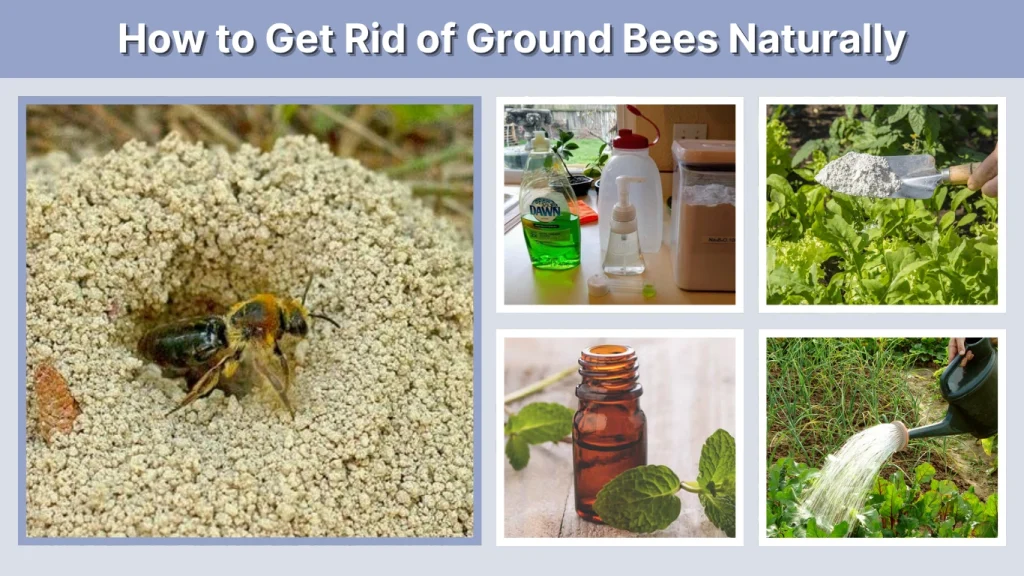
Before using chemicals, try eco-friendly ways to discourage bees from nesting in your yard.
Effective Natural Methods:
- Soapy Water Solution: Mix two tablespoons of dish soap per gallon of water and pour it directly into the nest entrance at night.
- Diatomaceous Earth: Sprinkle around nest entrances; it dehydrates bees without toxic chemicals.
- Peppermint Oil Spray: Mix peppermint oil with water and spray affected areas to repel bees naturally.
- Regular Watering: Ground bees prefer dry soil. Frequent watering discourages nesting by making the area unsuitable.
- Cover Bare Soil: Plant grass or use mulch to reduce open ground where bees might burrow.
Natural control methods maintain garden health while preventing harm to pollinators. Always apply solutions at night when bees are less active.
Safe Chemical and Professional Removal Methods
When natural methods don’t work or when dealing with aggressive yellow jackets, chemical options or professional help become necessary. Insecticidal foams such as Spectracide Carpenter Bee & Ground Nesting Yellowjacket Killer are designed to penetrate deep into nests and eliminate colonies effectively.
Safety Tips:
- Always wear protective clothing and apply treatments after sunset.
- Never block the entrance immediately; wait 24–48 hours to ensure full nest exposure.
- For large infestations, hire a licensed pest control expert to handle removal safely and humanely.
Professional extermination ensures the proper identification of species and the use of appropriate methods without harming beneficial bees unnecessarily.
Preventing Future Ground Bee Nests
After removing or relocating ground bees, prevention becomes the key to keeping them from returning. These bees prefer dry, loose, and bare soil with minimal vegetation, so altering those conditions discourages future nesting.
Effective Prevention Tips:
- Moisture Management: Keep your lawn and soil consistently moist during nesting season. Bees avoid damp environments.
- Soil Coverage: Apply mulch or plant ground-covering vegetation to eliminate open patches of soil.
- Regular Lawn Care: Mow regularly and aerate compact soil to prevent bees from digging easily.
- Close Burrows: After bees vacate old nests, fill in holes and cover them with gravel or topsoil.
- Reduce Attractants: Avoid leaving decomposing wood, dry compost, or rodent burrows exposed in your yard.
Consistent maintenance is the most sustainable approach to controlling future infestations without harming pollinators.
Pictures and Visual Identification
Ground nesting bee activity is easier to identify with visual references. Observing their nests and behavior helps distinguish between bees, wasps, and yellow jackets.
Common Visual Cues:
- Small, round holes surrounded by loose mounds of dry soil.
- Bees flying low to the ground or entering/exiting the same hole repeatedly.
- Gentle buzzing sounds near lawns or garden borders.
- Multiple holes spaced a few inches apart, indicating several solitary nests.
Examples of Different Nests
- Bumble Bee Ground Nest: Found under logs or old burrows, covered with grass or leaves.
- Mining Bee Nest: Tiny soil mounds with single pencil-sized holes.
- Yellow Jacket Nest: Larger, papery structure hidden beneath the surface, with frequent aggressive flight activity.
Photographic identification is helpful when seeking professional pest advice. Clear photos allow experts to determine whether removal is necessary or if the species should be preserved.
FAQs
What kind of bees make nests in the ground?
Several species including bumble bees, mining bees, sweat bees, and digger bees build their nests underground. They prefer sandy or loose soil in sunny, dry areas. Most are solitary and play a major role in pollinating crops, flowers, and fruit trees while posing little threat to humans.
How do I safely remove a ground bee nest?
Start with natural methods like watering the area daily or using soapy water solutions to encourage them to leave. For persistent or large colonies, apply insecticidal foam at night. If you’re dealing with yellow jackets or multiple nests, contact professional pest control to ensure safe and complete removal.
Do honey bees ever build nests underground?
Honey bees rarely nest underground. They prefer sheltered spaces like tree hollows, walls, or man-made hives. If you find an underground nest, it’s most likely a bumble bee or yellow jacket colony. Always confirm identification before attempting removal, as honey bees are protected pollinators in many regions.
Are ground nesting bees dangerous to humans or pets?
Most ground nesting bees are harmless. They sting only if provoked or accidentally stepped on. These bees are less defensive than wasps and contribute significantly to garden health through pollination. However, yellow jackets—often mistaken for bees—can be dangerous and should be handled by professionals.
How can I prevent ground bees from returning?
You can discourage future nests by keeping soil moist, planting grass, and covering bare patches with mulch. Bees prefer dry, exposed soil, so modifying these conditions naturally deters them. Regular maintenance and sealing old holes make your lawn less attractive to ground-nesting bees.
