

Ground bees are beneficial insects, but they can become a nuisance when they start nesting in your lawn or garden. These bees prefer dry, loose soil for burrowing, creating small tunnels beneath the ground. While they play an important role in pollination, their sudden appearance can cause concern for homeowners—especially when nests appear near play areas or walkways. Knowing how to remove them safely and naturally can help you protect both your family and the bees.
What Are Ground Bees?
Ground bees are solitary insects that build nests underground rather than in hives or trees. Unlike honey bees, they don’t live in colonies or produce honey. Common types include bumble bees, mining bees, digger bees, and sweat bees. They prefer dry, sandy, or loose soil that’s easy to dig into. These bees often emerge in early spring when the weather warms, remaining active for only a few weeks.
Ground bees are not typically aggressive unless provoked. In most cases, females handle nesting duties, while males hover around the entrances. Recognizing their gentle nature is important before you decide on removal methods.
Identifying Ground Bee Nests

Identifying ground bees correctly is the first step before taking any action. Their nests are easy to spot once you know what to look for. You’ll often see small mounds of loose soil with a tiny central hole—similar to an anthill but larger and less structured.
Ground bees tend to prefer sunny, dry areas with minimal grass cover, such as lawns, garden beds, or sandy patches. If you notice bees flying low over the ground, circling around these holes, or buzzing near mulch or sand, it’s likely a ground bee nest.
To confirm they are bees and not wasps, observe their behavior—bees move slowly and are less aggressive, while wasps are quick and defensive. Ground bees also appear fuzzy, unlike the smooth-bodied wasps.
Are Ground Bees Harmful?
Ground bees are mostly harmless to humans. Female ground bees can sting, but they rarely do unless directly threatened. Male bees lack stingers altogether. Their presence is usually temporary—lasting only a few weeks each year during nesting season.
However, if you have children or pets that frequently play in the yard, or if multiple nests appear in high-traffic areas, removal becomes necessary for safety. In such cases, humane and natural methods are the best approach.
Reasons to Remove Ground Bees
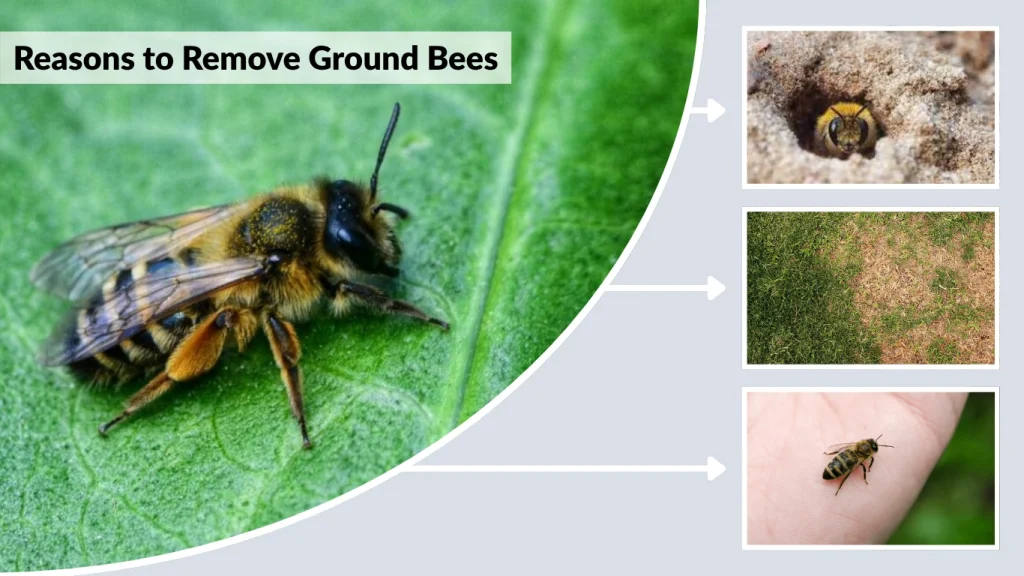
While they are helpful pollinators, ground bees can create several problems for homeowners. The main reasons for removing them include:
- Safety concerns if nests are near entrances or play zones.
- Lawn damage, since repeated burrowing can loosen soil and kill patches of grass.
- Fear of stings, especially for those allergic to bee venom.
Removing them properly ensures your yard remains both safe and eco-friendly.
Natural Ways to Get Rid of Ground Bees
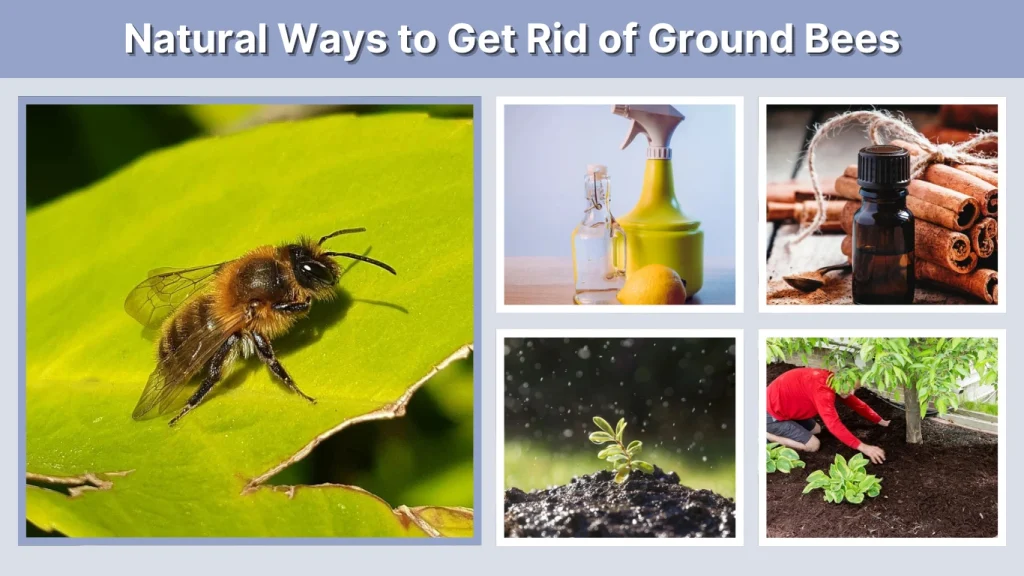
If you want to eliminate ground bees without chemicals, several natural remedies are both safe and effective:
- Vinegar Spray: Mix equal parts vinegar and water, then spray directly around nest openings. The scent discourages bees from returning.
- Cinnamon or Peppermint Oil: These strong natural scents repel bees. Sprinkle cinnamon powder or mix peppermint oil with water and spray near their burrows.
- Moist Soil: Ground bees dislike damp environments. Water the affected area daily for a week to make the soil unsuitable for nesting.
- Mulch or Fabric Covering: Place a breathable fabric or layer of mulch over the nest entrances. This restricts airflow and forces bees to relocate.
These methods are non-toxic, environmentally friendly, and effective if used consistently over several days.
How to Get Rid of Ground Bees Without Killing Them
For those who prefer a completely humane approach, several strategies allow you to relocate or repel bees without harm:
- Relocate at Night: Bees are less active after dark. Gently cover their nest with a cardboard box or breathable cloth to encourage them to move.
- Smoke Deterrent: Light a small smoky fire near the nest entrance for a few minutes. Bees dislike smoke and will naturally relocate.
- Call a Beekeeper: Local beekeepers often help remove bees safely. They can relocate the nest to a controlled environment for pollination use.
These methods ensure the bees are unharmed while protecting your home environment.
Effective Home Remedies for Ground Bees
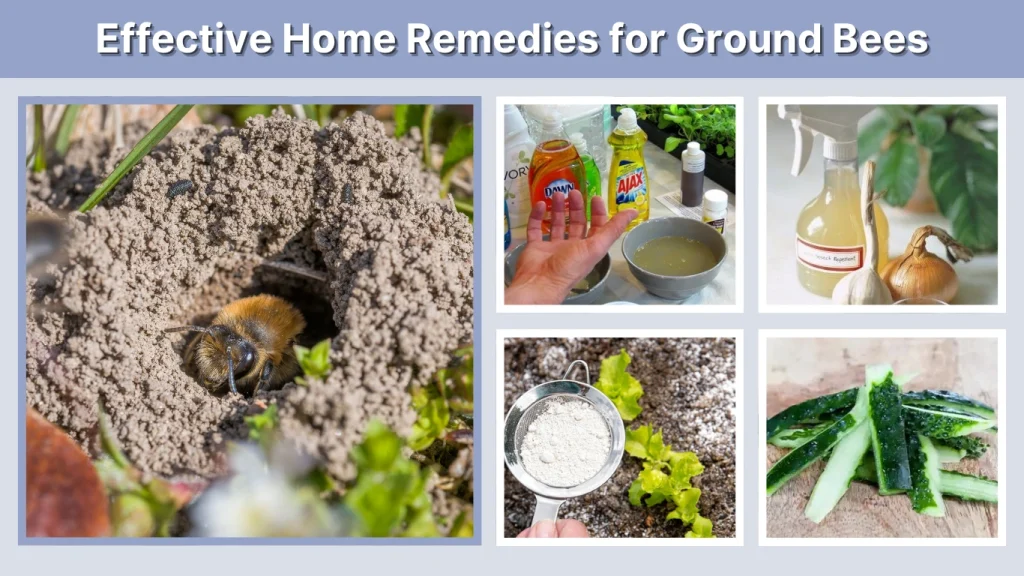
If you want to handle a ground bee problem with everyday items, a few simple home remedies can help. These solutions are non-toxic, budget-friendly, and won’t harm your garden ecosystem.
- Soapy Water Solution: Mix two tablespoons of dish soap with a gallon of water. Pour it gently into the bee holes during the evening when bees are less active. The soap clogs their breathing pores, encouraging them to relocate without using chemicals.
- Citrus or Garlic Spray: Boil citrus peels or crushed garlic in water, let it cool, and spray the liquid near nests. The smell naturally drives bees away without harming them or the soil.
- Diatomaceous Earth: Sprinkle food-grade diatomaceous earth near the nest openings. It dries out the soil and deters bees from burrowing again. This method is entirely safe for plants and pets.
- Cucumber Peels: Laying fresh cucumber peels near holes releases bitterness that bees dislike, making them leave naturally.
Using these home remedies consistently for a few days ensures the bees relocate and prevents them from rebuilding in the same spot.
Preventing Ground Bees from Returning
Once you’ve removed the bees, the next step is to prevent them from nesting again. Ground bees prefer dry, loose, and bare soil. By changing these conditions, you make your yard less inviting.
- Keep the Soil Moist: Watering your lawn regularly discourages bees from digging. They avoid wet ground for nesting.
- Reduce Bare Patches: Grow thick grass or ground cover plants to block access to soil. The less open space, the fewer nesting spots.
- Add Mulch Layers: Cover exposed garden beds or dry patches with mulch, gravel, or bark to eliminate entry points.
- Regular Maintenance: Mow the lawn frequently and aerate the soil. Regular activity discourages bee settlement.
- Use Natural Repellents: Spray peppermint or cinnamon oil around your yard every few weeks during spring. This deters returning bees naturally.
Prevention is the best long-term strategy. A well-watered, lush lawn not only enhances your landscape but also keeps ground bees from settling again.
Special Cases: Bumble Bees, Digger Bees, and Mining Bees

Not all ground bees behave the same. Knowing which type you’re dealing with helps you choose the safest approach.
- Bumble Bees: These are larger and often live in small colonies. If the nest is not disturbing your activities, it’s best to leave them, as they die off naturally after the season. To remove them safely, call a professional or beekeeper.
- Digger Bees: They create small piles of soil with holes in the center. Digger bees are solitary and non-aggressive. Keeping the soil damp for several days usually forces them to leave.
- Mining Bees: Common in sandy yards, mining bees are harmless pollinators. Reseeding the area and adding compost or mulch will prevent future nesting.
- Sweat Bees: These tiny bees are attracted to sweat and moisture. Using citronella or peppermint oil around garden areas helps deter them without killing them.
Each species plays a role in pollination, so removal methods should always aim for relocation or gentle deterrence rather than extermination.
When to Call a Professional
Sometimes, ground bee infestations can grow beyond what home remedies can handle—especially if you notice multiple nests or large colonies. Professional pest control or local beekeepers can remove nests safely using non-toxic techniques.
Call a professional if:
- The nest is large or spreading across multiple areas.
- You or your family members are allergic to bee stings.
- Bees are aggressive or near high-traffic zones like doorways.
A professional will assess whether the bees are solitary species or part of a colony, then choose an appropriate removal plan. In most cases, eco-friendly pest services relocate the bees instead of exterminating them, maintaining environmental balance.
FAQs
How can I naturally remove ground bees from my yard?
You can use natural repellents like vinegar, cinnamon, peppermint oil, or soapy water. Keeping the soil moist and covering exposed areas with mulch or fabric helps encourage bees to move without harm.
Do ground bees sting or attack humans?
Most ground bees are solitary and rarely sting unless directly provoked. Male bees cannot sting at all, while females only sting when handled or stepped on. They are generally gentle and non-aggressive.
What household ingredients repel ground bees?
Vinegar, peppermint oil, garlic water, citrus peels, and cinnamon powder are strong natural repellents. Their scents irritate bees, prompting them to leave their nesting sites within a few days.
How long do ground bees stay in one place?
Ground bees usually remain active for four to six weeks during spring. Once their nesting period ends and new bees emerge, the adults die, leaving behind vacant tunnels that can be sealed or reused by others.
How can I prevent ground bees from nesting again next year?
Water your lawn regularly, plant dense grass or ground cover, and use natural repellents during early spring. Covering dry, sandy patches with mulch or gravel ensures bees won’t return to the same area.
