

Horse flies are among the most troublesome biting insects for humans. Their bites are far more painful than those of mosquitoes or gnats, often leaving large red welts and causing persistent itching. People who spend time outdoors near farms, wetlands, or wooded areas are especially at risk. Understanding how horse flies bite, the symptoms they cause, and how to treat them is essential for minimizing discomfort and avoiding complications.
What Are Horse Flies?
Horse flies belong to the family Tabanidae, a group of large, fast-flying insects found worldwide, especially in warm and humid regions. Unlike many other biting insects, only the female horse flies feed on blood. They use specialized mouthparts like tiny scissors to slice the skin, which explains why their bites are sharp and painful. Males, on the other hand, primarily feed on nectar and plant juices.
These flies are not just a nuisance to humans; they are also known for bothering livestock such as horses, cattle, and dogs. Their aggressive biting behavior makes them particularly frustrating, as they often return repeatedly after being swatted away.
Why Do Horse Flies Bite Humans?
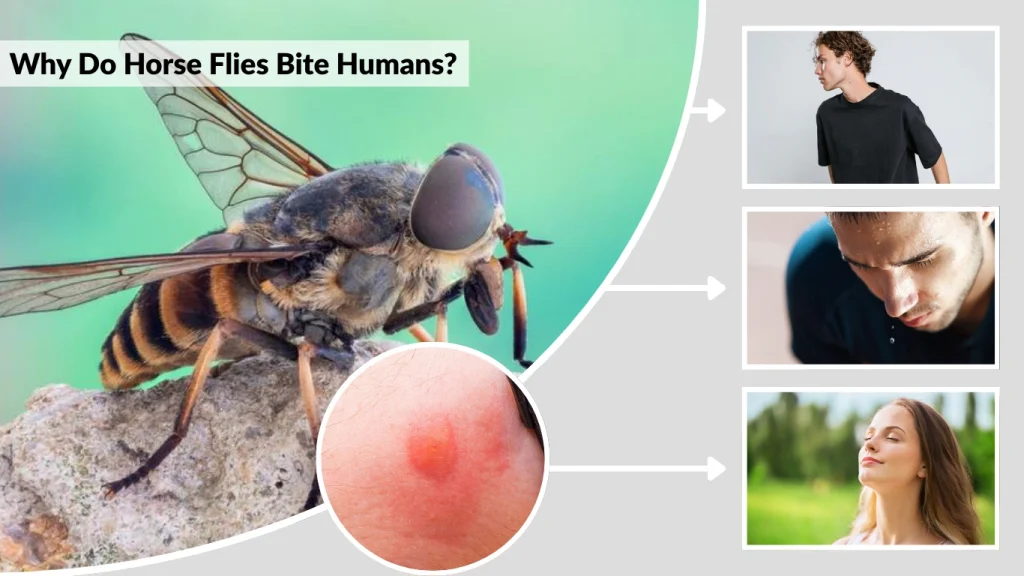
Female horse flies require a blood meal to develop eggs. This is why they are persistent in seeking out humans and animals as hosts. They are strongly attracted to certain signals, which include:
- Movement and dark colors – people wearing black or dark clothing are more likely to be targeted.
- Body heat and sweat – warm skin and perspiration draw horse flies from a distance.
- Carbon dioxide – exhaled breath acts as a powerful attractant.
Because of these triggers, horse flies often become a problem during outdoor activities like hiking, fishing, or working on farms in the summer months.
Symptoms of Horse Fly Bites

The effects of horse fly bites can vary depending on the person’s sensitivity, but they are almost always painful and more intense than common insect bites.
Immediate Symptoms
When a horse fly bites, the pain is felt instantly due to the cutting action of its mouthparts. People typically describe it as a sharp sting or pinch, followed by:
- Redness at the bite site
- Swelling and localized heat
- Burning or stinging sensation
Delayed Symptoms
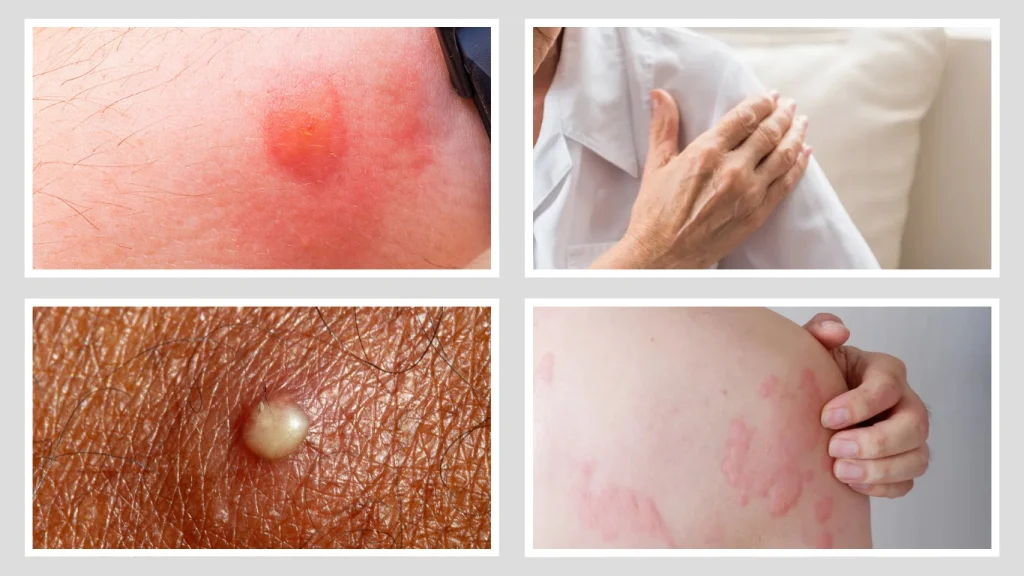
Within a few hours, the bite may develop into a raised welt or lump. The area often becomes itchy and tender, sometimes lasting several days. In some cases, bruising may appear around the bite mark due to tissue damage from the slicing wound.
Allergic Reactions (Rare Cases)
While uncommon, some individuals experience stronger allergic responses. This can include widespread hives, rashes extending beyond the bite area, or swelling in sensitive regions such as the lips, eyelids, or throat. In extreme cases, difficulty breathing or dizziness may signal a severe allergic reaction known as anaphylaxis, which requires immediate medical care.
Body’s Reaction to Horse Fly Bites
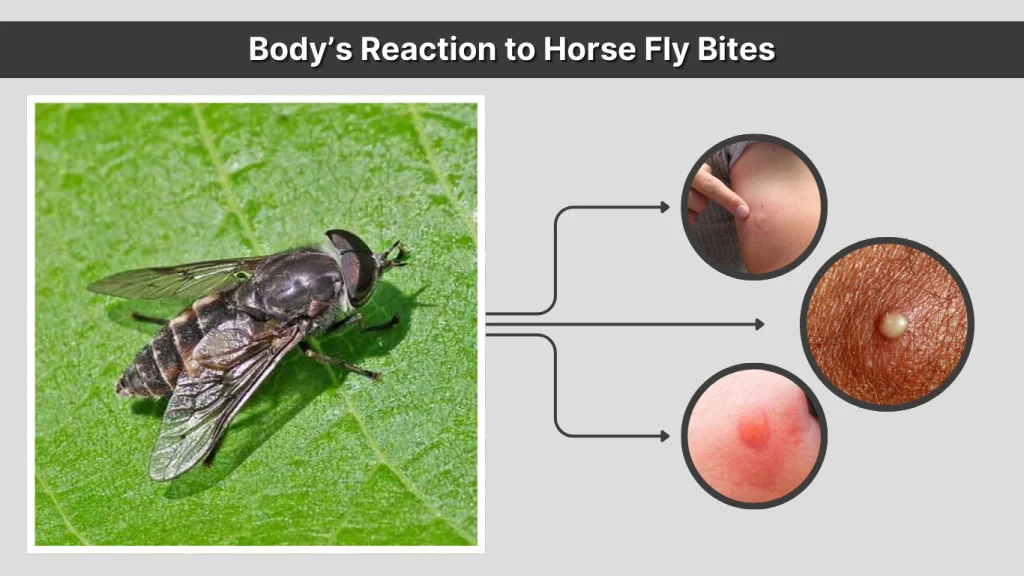
The severity of a horse fly bite is tied to the body’s immune response.
Immune System Response
Horse flies inject saliva containing anticoagulants and enzymes that prevent blood from clotting. These substances trigger the body’s defense system, releasing histamines that cause itching, redness, and swelling. Unlike mosquito bites, which are more subtle, horse fly saliva causes a much stronger inflammatory reaction, making the bite more painful.
Risk of Secondary Infection
One of the main concerns with horse fly bites is the risk of infection. Because the wound is open and larger than that of many other insect bites, scratching it with dirty hands can allow bacteria to enter. Signs of infection include:
- Increased pain or tenderness
- Pus or yellowish discharge
- Expanding redness and swelling around the bite site
Long-Term Reactions
Most bites heal within a week, but in sensitive individuals, the itching may persist longer. Excessive scratching can damage the skin and, in rare cases, leave scars. People with compromised immune systems may also experience prolonged healing times.
Treatment for Horse Fly Bites

Horse fly bites usually heal without medical attention, but proper treatment can reduce pain, speed up recovery, and prevent complications.
Immediate First Aid
The first step is to wash the affected area thoroughly with soap and water. This helps remove any bacteria and reduces the chance of infection. Applying a cold compress or ice pack can lessen swelling and provide relief from the initial burning sensation. It’s important to resist the urge to scratch, as this only worsens irritation.
Over-the-Counter Treatments
Pharmacies carry several remedies that help manage symptoms:
- Antihistamine creams or gels reduce itching and inflammation.
- Hydrocortisone cream can calm irritation and redness.
- Oral antihistamines like cetirizine or loratadine may be helpful for people who experience stronger allergic reactions.
Natural & Home Remedies

For those who prefer gentle, home-based solutions, several natural remedies can ease discomfort from horse fly bites:
- Aloe vera gel: Its cooling properties help reduce burning and promote healing.
- Baking soda paste: Mixing baking soda with a few drops of water creates a soothing paste that relieves itching.
- Honey: Known for its antibacterial qualities, honey can both reduce swelling and prevent infection.
- Tea tree oil or lavender oil: When diluted with a carrier oil, these essential oils provide antiseptic benefits and calm skin irritation.
- Cold cucumber slices: Applying chilled cucumber slices to the bite can provide temporary relief from itching and swelling.
While these remedies are effective for mild bites, they should not replace medical treatment if symptoms worsen.
When to See a Doctor
Most horse fly bites improve within a few days, but some situations require professional medical attention. You should contact a doctor if you notice:
- Severe swelling spreading beyond the bite site
- Increasing pain that does not improve with home care
- Signs of infection such as pus, fever, or chills
- Allergic symptoms including hives, dizziness, or trouble breathing
Prompt medical care ensures the bite does not develop into a more serious problem. In rare cases, a doctor may prescribe antibiotics or stronger anti-inflammatory medication.
Preventing Horse Fly Bites
Horse fly prevention is just as important as treatment, especially for those who spend time outdoors in summer.
Protective Measures
- Wear light-colored clothing: Horse flies are attracted to dark shades. Loose, long sleeves and pants provide a physical barrier.
- Use insect repellent: Products containing DEET, picaridin, or oil of lemon eucalyptus are effective. Reapply regularly when outdoors.
- Avoid perfumes and scented lotions: Strong fragrances can attract horse flies.
Environmental Tips
- Stay away from infested areas: Horse flies are commonly found near lakes, rivers, marshes, and stables.
- Use fans in outdoor spaces: Horse flies dislike strong airflow, so setting up fans while dining outside can reduce bites.
- Protect livestock: Using fly sheets, sprays, and proper shelter for horses and cattle helps reduce infestations around farms, which in turn lowers human exposure.
By combining protective clothing, repellents, and environmental management, you can significantly reduce the risk of being bitten.
FAQs
What does a horse fly bite look like?
A horse fly bite usually appears as a large, red, swollen welt with a noticeable puncture mark. The swelling may be firm to the touch and often feels hotter than surrounding skin.
How long do horse fly bites last?
Most bites heal in 2–3 days, though swelling and itching can last up to a week. In some cases, irritation may linger longer if scratched excessively.
Are horse fly bites dangerous?
Horse fly bites are usually not dangerous, but they are painful and can become infected if not cared for properly. Rarely, allergic reactions may cause serious complications requiring emergency attention.
Can horse flies transmit diseases?
Horse flies are capable of spreading diseases to livestock, such as equine infectious anemia, but disease transmission to humans is extremely rare. The main concern for humans is infection from scratching.
How can I stop the itching quickly?
The quickest ways to ease itching are to apply a cold compress, use an antihistamine cream, or apply soothing natural remedies like aloe vera or honey.
