
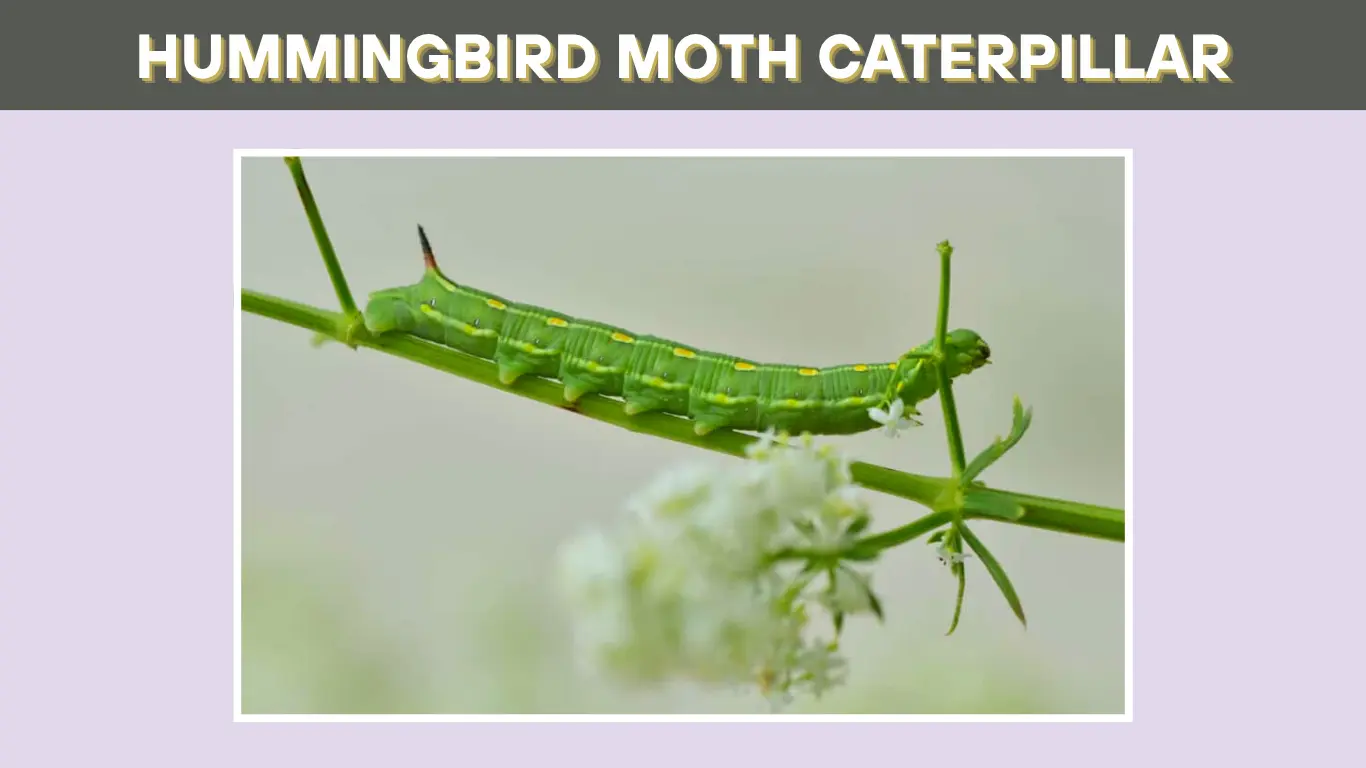
If you’ve ever stumbled across a plump green caterpillar with a horn-like tail in your garden, you may have encountered the larval form of the beautiful and elusive hummingbird moth. Often confused with tomato hornworms, hummingbird moth caterpillars are an important part of their species’ life cycle—and a wonder to observe in nature.
In this comprehensive guide, we’ll explore every aspect of hummingbird moth caterpillars, including identification, diet, host plants, geographic range, lookalikes, and life stages. Whether you’re a gardener, a wildlife enthusiast, or a student, you’ll find valuable insight into this fascinating insect larva.
What Is a Hummingbird Moth Caterpillar?

The hummingbird moth caterpillar is the larval stage of various moths in the Sphingidae family, including the hummingbird hawk-moth, hummingbird clearwing, and white-lined sphinx moth. These caterpillars eventually metamorphose into fast-flying, day-active moths that mimic hummingbirds in their behavior and appearance.
While their adult form receives all the visual glory—buzzing from flower to flower with rapid wingbeats—the caterpillar phase is equally important, representing the primary feeding and growth period of the moth’s life cycle.
Appearance and Identification

Hummingbird moth caterpillars vary slightly by species, but they share some defining traits that help with identification.
Size and Shape
- They typically grow up to 3–4 inches (7.5–10 cm) in length.
- The body is smooth, elongated, and slightly tapered at both ends.
Colors
- Most species are bright green to help blend in with host plants.
- Some can appear brown, yellowish, or even blackish as camouflage or in preparation for pupation.
Markings and Features
- A characteristic “horn” or spike on the tail end, known as a caudal horn, which is harmless.
- Side striping or dotted markings, especially diagonal white lines in hornworm-type caterpillars.
- Small black or pale spots scattered across the body.
Tomato Hornworm Confusion
The tomato hornworm is often mistaken for a hummingbird moth caterpillar. Though technically it is a larva of the five-spotted hawk moth, it belongs to the same moth family and has a similar appearance.
Host Plants: What Do They Feed On?
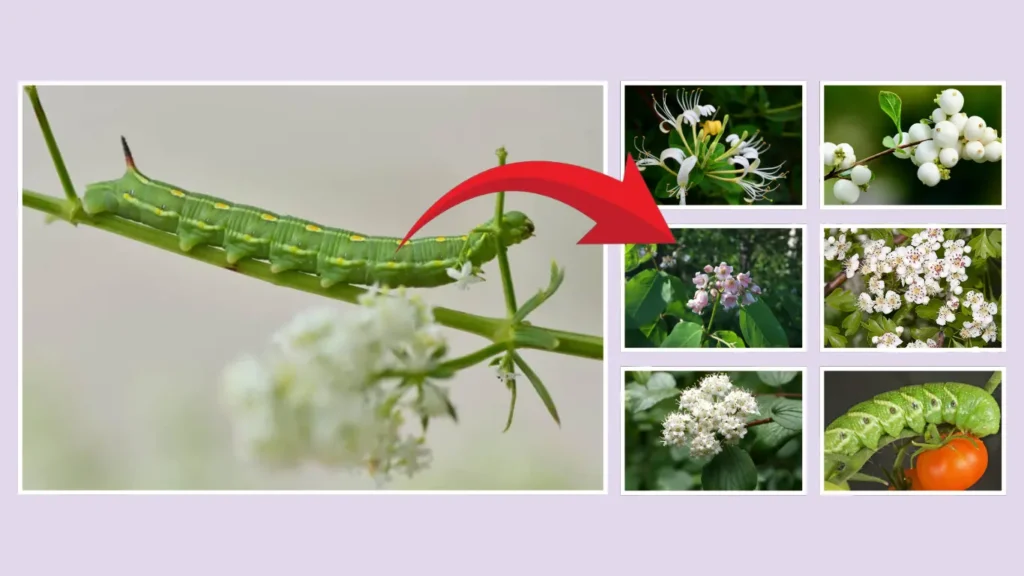
Hummingbird moth caterpillars rely heavily on specific plants to survive. These are known as their host plants, which they consume during their larval stage.
Most Common Host Plants Include:
- Honeysuckle
- Snowberry
- Dogbane
- Bedstraw (Galium)
- Cherry trees
- Hawthorn
- Viburnum
- Tomato plants (mostly for hornworm species)
- Willowherb
The choice of host plant varies by moth species and geographic location. For example, the hummingbird hawk-moth caterpillar in the UK prefers bedstraw, while the clearwing caterpillar in North America tends to favor honeysuckle and snowberry.
What Do Hummingbird Moth Caterpillars Eat?

Their diet is entirely plant-based and consists of:
- Tender green leaves (their primary food source)
- Occasionally new shoots or stem tissue
- Rarely flower petals if other food is scarce
Despite their voracious appetite, they typically don’t cause extensive damage unless present in large numbers—unlike tomato hornworms, which can devastate vegetable crops quickly.
Life Cycle Stages

The hummingbird moth’s transformation from egg to adult is a textbook example of complete metamorphosis. Here’s how it works:
1. Egg Stage
- Female moths lay single eggs on the underside of host plant leaves.
- Eggs are tiny (about 1 mm), pale green or white, and usually hatch in 5–10 days.
2. Caterpillar Stage (Larva)
- The caterpillar hatches and begins feeding immediately.
- It molts several times as it grows, going through 5 instars (growth stages).
- This stage lasts 2–4 weeks depending on temperature and food availability.
3. Pupation
- Once fully grown, the caterpillar leaves the plant and burrows into soil or leaf litter.
- It forms a brown, hardened shell called a pupa, where internal transformation takes place.
- Pupation can last a few weeks or overwinter in colder climates.
4. Adult Moth Emergence
- The moth emerges with a wingspan of 1.5 to 2 inches and begins its nectar-feeding adult life.
- Adults only live for 7 to 21 days, focusing on feeding and reproduction.
Types of Hummingbird Moth Caterpillar
1. Hummingbird Hawk Moth Caterpillar (UK & Europe)

Found across Europe and the UK, the hummingbird hawk moth caterpillar typically has a green or brown body with pale diagonal lines along its sides. It blends well with foliage, making it hard to spot in the wild.
A dark caudal horn sits at the rear of its body. Although it looks threatening, the horn is harmless and mainly used to deter predators. The caterpillar grows steadily before moving underground to pupate.
Its preferred host plants include bedstraw and other wild species. These caterpillars pose no threat to gardens and are usually found in meadows and along hedgerows.
2. Hummingbird Clearwing Moth Caterpillar (North America)

This North American species is bright green with a smooth, soft-looking body. It features yellow spiracles and a reddish tail horn, giving it a striking appearance even in its camouflaged environment.
The horn is non-stinging and used for protection. As the caterpillar develops, its body structure remains fairly consistent while increasing in size.
It feeds on honeysuckle, snowberry, and viburnum—plants commonly found in both gardens and wild spaces. Unlike the hornworm, it doesn’t damage crops or flowers.
3. White-Lined Sphinx Caterpillar

This caterpillar is known for its wide range of colors—green, yellow, or black with vibrant orange or yellow spots. It’s often spotted in deserts or meadows where wildflowers grow.
Despite the color variations, all white-lined sphinx caterpillars have the classic horn at the tail and a smooth body. They’re usually active during late summer.
They feed on plants like evening primrose and fuchsia. While large groups can defoliate wild patches, they’re not considered harmful to cultivated gardens.
4. Tomato Hornworm (Five-Spotted Hawk Moth Larva)

The tomato hornworm is pale green with white diagonal stripes and a prominent, curved horn on its back. It closely resembles other hummingbird moth caterpillars but is far more destructive.
This species is notorious for damaging tomato, eggplant, and pepper plants. In a single day, it can strip multiple leaves, making it a common garden pest.
Despite its impact on crops, it eventually becomes the impressive five-spotted hawk moth. Because of its aggressive feeding habits, it’s often managed manually or with organic pest control.
Hummingbird Moth Caterpillars in the UK
In the UK, the most common type is the hummingbird hawk-moth caterpillar, especially in the southern regions. They’re often spotted feeding on wildflowers and low shrubs. Unlike North American species, they rarely affect cultivated gardens and are considered harmless.
Can You Buy Hummingbird Moth Caterpillars?
Yes, in some countries, caterpillars like hornworms or sphinx moth larvae are sold online for educational or pet feeding purposes. However:
- Always check your local wildlife and agricultural laws.
- Buy only from certified sellers who provide legally sourced, non-invasive species.
- Avoid introducing them into the wild if they’re non-native to your area.
Popular search terms include:
- “Hummingbird moth caterpillar for sale”
- “Buy tomato hornworm live”
- “Pet food hornworms”
Defensive Behaviors
While hummingbird moth caterpillars are harmless to humans, they have some passive defense mechanisms:
- Their horned tails may look threatening but don’t sting.
- Some species will rear their head and thrash when disturbed.
- Cryptic coloration helps them blend in with leaves and stems, avoiding predators.
Birds, spiders, and parasitic wasps are the main natural threats.
Quick Comparison Table
| Feature | Hummingbird Hawk Moth | Clearwing Moth | Tomato Hornworm |
| Common Location | UK, Europe | North America | Worldwide |
| Main Host Plants | Bedstraw, willowherb | Honeysuckle, snowberry | Tomato, pepper |
| Color | Green/Brown | Green/Yellowish | Green |
| Tail Horn | Yes | Yes | Yes |
| Garden Pest | No | No | Yes |
Final Thoughts
The hummingbird moth caterpillar may not get as much attention as its adult form, but it plays a crucial role in the ecosystem. These quiet, leafy feeders are fascinating to observe, especially as they go through one of nature’s most stunning transformations. Whether you find one munching on honeysuckle or mistaking a hornworm for a pest, you now have the knowledge to understand and appreciate this incredible insect from larva to moth.
