
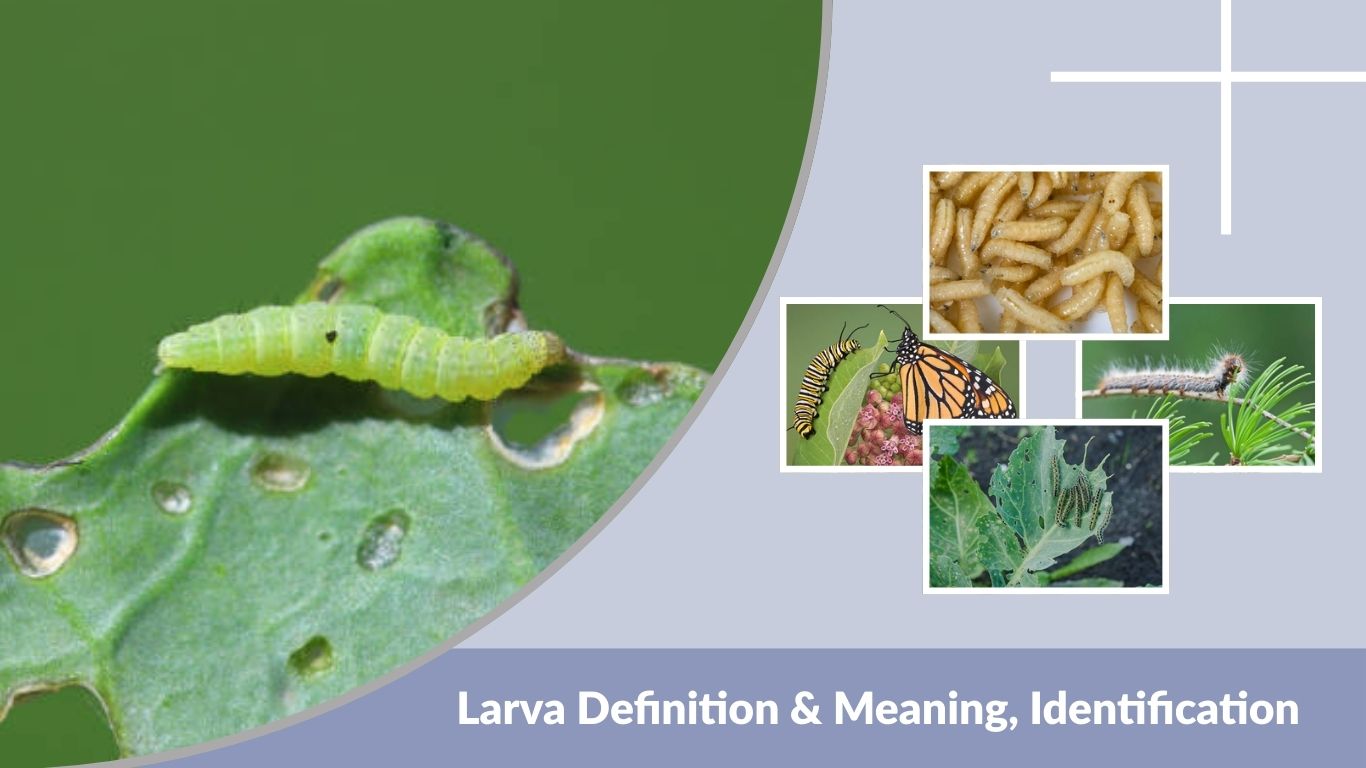
A larva is the immature stage of many animals, especially insects, that hatch from eggs and undergo significant transformation before becoming adults. Larvae often look completely different from their adult form and are primarily focused on feeding and growth. From caterpillars and maggots to tadpoles, larval stages play a critical role in development and survival. Understanding what a larva is, how to identify it, and how it fits into the life cycle of animals helps clarify many common misconceptions.
Larva Definition and Meaning
What Is a Larva?
A larva is the early, immature stage in the life cycle of certain animals that undergo metamorphosis. It appears after the egg stage and before the adult stage. In species with complete metamorphosis, the larva also passes through a pupal stage before becoming an adult.
The main purpose of a larva is growth. Unlike adults, which focus on reproduction, larvae spend most of their time feeding and storing energy. During this stage, they may molt multiple times as they increase in size.
Origin of the Word “Larva”
The word larva comes from Latin, where it originally meant “ghost” or “mask.” Early scientists used the term because the immature stage of many insects looked so different from the adult that it seemed like a hidden or disguised form.
The plural form of larva is larvae, pronounced lar-vee.
What Is the Purpose of the Larval Stage?
The larval stage serves several important biological functions:
- Rapid growth and development
- Nutrient accumulation
- Preparation for metamorphosis
- Increased survival chances
In many species, larvae live in different environments than adults. For example, butterfly larvae (caterpillars) eat leaves, while adult butterflies drink nectar. This separation reduces competition for food within the same species.
Because larvae are specialized for feeding, their bodies are often designed for eating rather than moving long distances or reproducing.
Types of Larvae
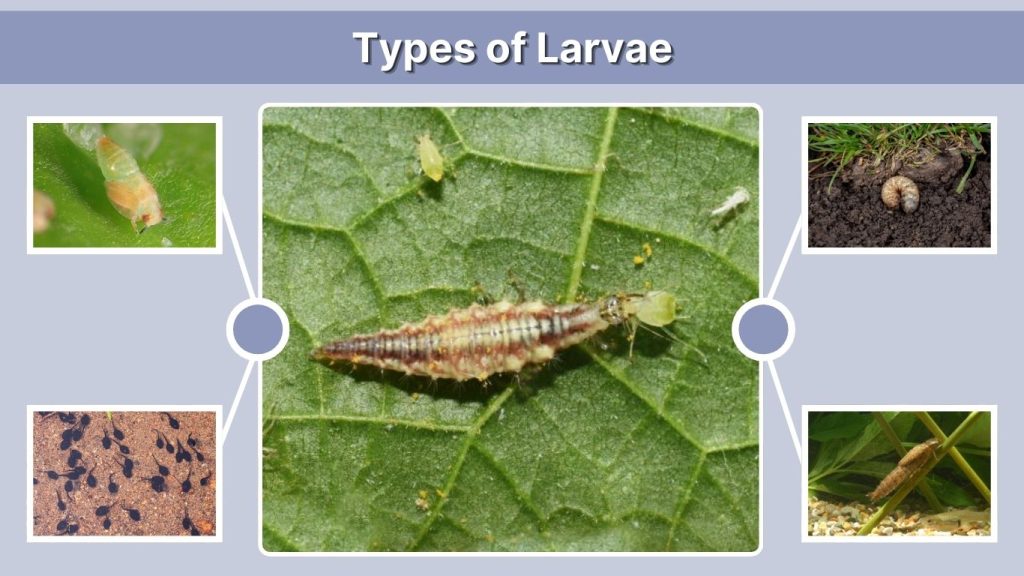
Not all larvae look alike. Their appearance depends on the species.
Insect Larvae
Many insects undergo complete metamorphosis, meaning they have a distinct larval stage.
Common examples include:
- Caterpillars – butterfly and moth larvae
- Maggots – fly larvae
- Grubs – beetle larvae
Caterpillars typically have visible heads and small legs, while maggots are legless and more tapered in shape. Beetle grubs are often C-shaped and found in soil.
Aquatic Larvae
Some larvae develop in water.
Examples include:
- Mosquito larvae
- Mayfly larvae
- Dragonfly larvae
Aquatic larvae often have special breathing structures that allow them to survive underwater.
Marine Larvae
Many ocean animals have larval stages that drift in water before settling.
Examples include:
- Crab larvae
- Starfish larvae
- Coral larvae
These larvae may look nothing like their adult forms and often have microscopic or transparent bodies.
Amphibian Larvae
Amphibians such as frogs and salamanders also have larval stages.
The most familiar example is the tadpole, which has gills and a tail before eventually developing legs and lungs.
Complete vs Incomplete Metamorphosis
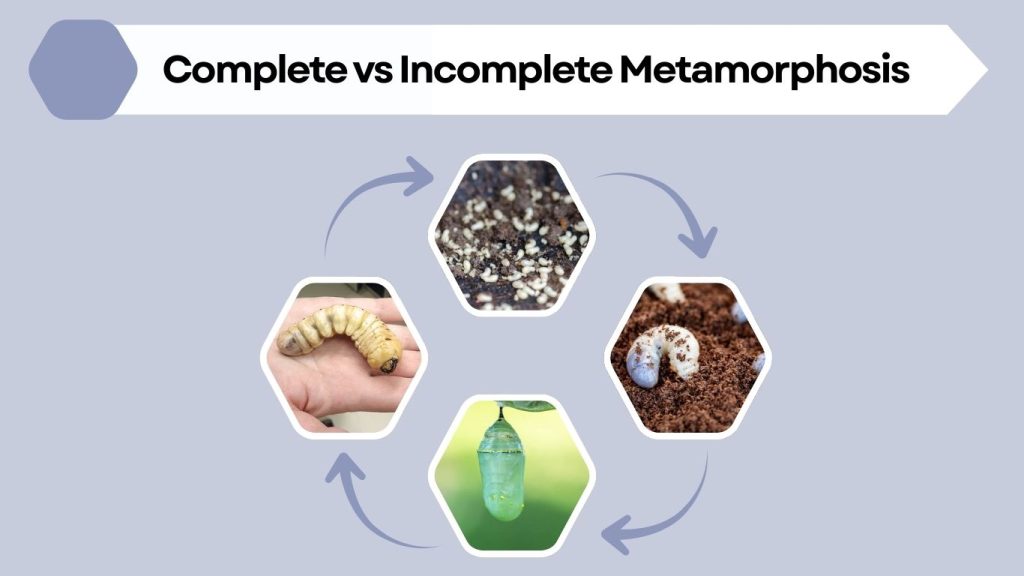
Understanding metamorphosis helps explain how larvae fit into an animal’s life cycle.
Complete Metamorphosis
In complete metamorphosis, the life cycle follows this pattern:
Egg → Larva → Pupa → Adult
Animals that undergo complete metamorphosis include:
- Butterflies
- Beetles
- Flies
- Bees
In this process, the larva looks entirely different from the adult. For example, a caterpillar becomes a butterfly after the pupal stage.
Incomplete Metamorphosis
In incomplete metamorphosis, the life cycle follows this pattern:
Egg → Nymph → Adult
In this case, there is no true larval stage. Instead, the immature form (called a nymph) resembles a smaller version of the adult.
Grasshoppers and cockroaches develop this way.
The key difference is that larvae in complete metamorphosis look completely different from adults, while nymphs in incomplete metamorphosis look similar.
How to Identify a Larva
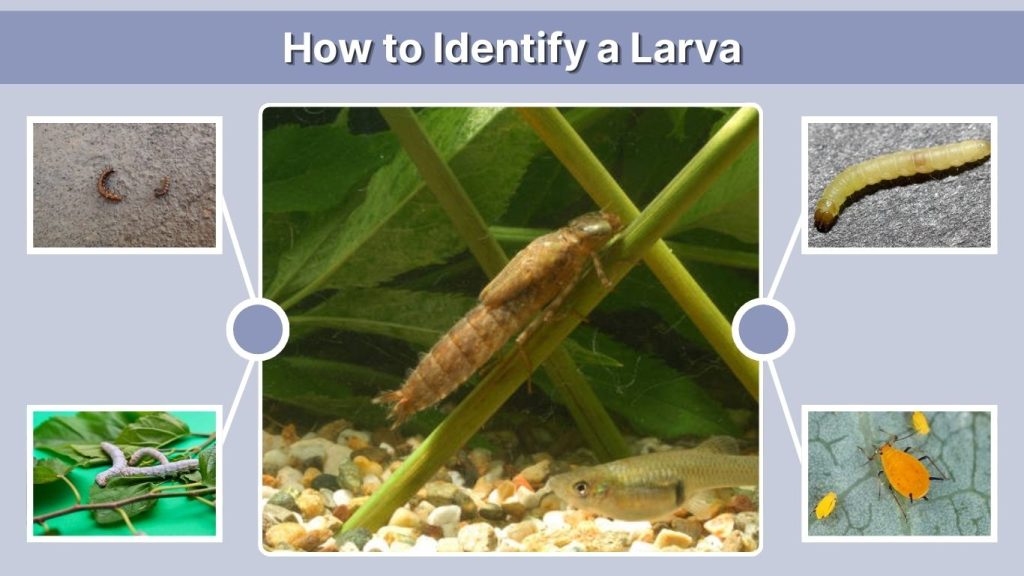
Identifying a larva depends on observing physical characteristics.
General Physical Features
Most larvae share several traits:
- Soft-bodied
- Wingless
- Often worm-like
- Focused on feeding
- Rapid growth
Many have distinct body segments. Some have visible heads with chewing mouthparts, while others appear smooth and legless.
Body Structure
In insect larvae, the body is usually divided into:
- Head
- Thorax
- Abdomen
Some larvae have small, jointed legs near the head. Caterpillars also have fleshy extensions called prolegs that help them grip surfaces.
Maggots, on the other hand, do not have true legs.
Color and Size
Larvae come in a wide range of colors:
- White or cream
- Green
- Brown
- Black
- Translucent
Some species use camouflage to blend into leaves or soil. Others may be brightly colored as a warning to predators.
Their size can vary from microscopic marine larvae to caterpillars several inches long.
Larva vs Maggot vs Caterpillar
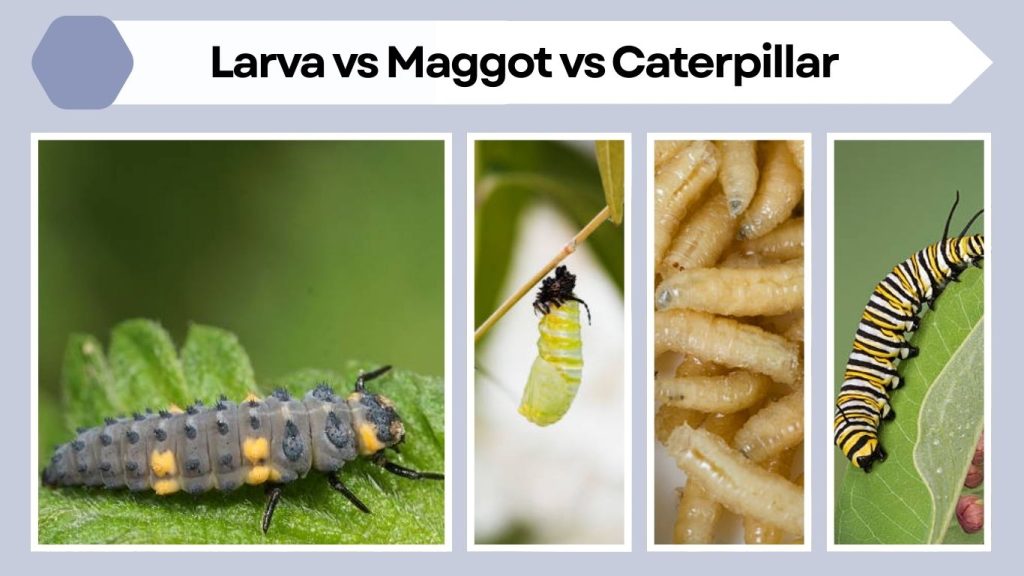
Many people use these terms interchangeably, but they are not identical.
A maggot is specifically the larval stage of a fly. Maggots are legless and often found in decaying material.
A caterpillar is the larval stage of butterflies and moths. Caterpillars have visible heads and multiple pairs of legs.
The term larva is broader and refers to any immature stage in animals that undergo metamorphosis.
Where Do Larvae Live?
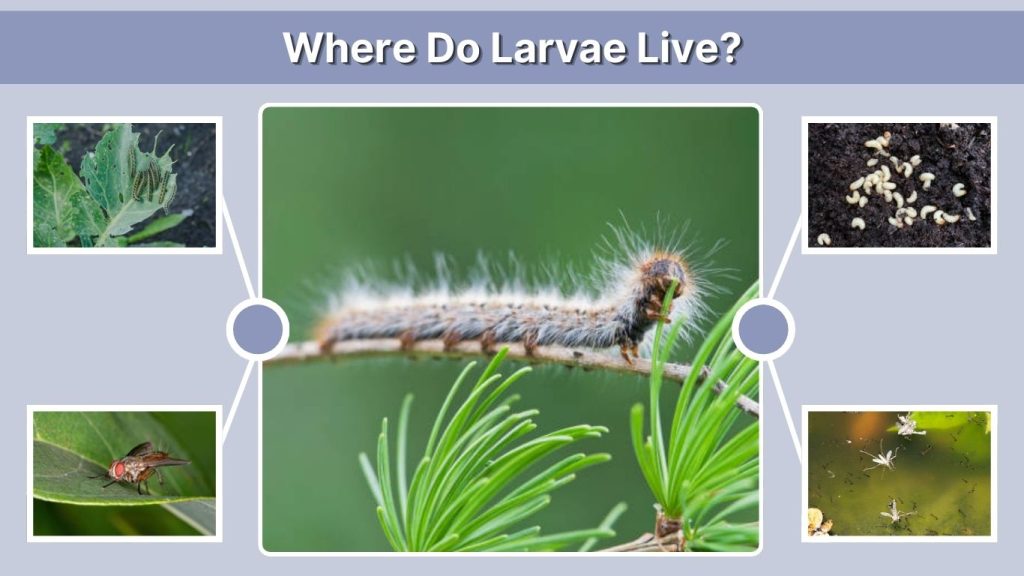
Larvae can be found in a wide range of environments depending on the species. Their habitat is usually chosen to provide easy access to food and protection during growth.
Soil
Many beetle larvae, commonly called grubs, live underground. They feed on plant roots, decaying organic matter, or other small organisms in the soil. Some species can damage lawns and crops by feeding on root systems.
Water
Aquatic environments are common for larvae. Mosquito larvae, for example, live in standing water such as ponds, buckets, or birdbaths. They feed on microorganisms and organic debris in the water.
Other aquatic larvae, like dragonflies and mayflies, are important parts of freshwater ecosystems and serve as food for fish.
Plants
Some larvae live directly on or inside plants. Caterpillars feed on leaves, while certain beetle or moth larvae may burrow into stems, fruit, or wood. These plant-feeding larvae can sometimes become agricultural pests.
Inside Hosts (Parasitic Larvae)
A small number of larvae develop inside animal hosts. For example, botfly larvae can grow beneath the skin of mammals. While such cases are uncommon, they demonstrate how diverse larval strategies can be.
What Do Larvae Eat?
Most larvae are specialized feeders. Their diet depends entirely on the species.
Common larval food sources include:
- Decaying organic matter
- Leaves and plant tissue
- Wood
- Microorganisms in water
- Other insects
Because the larval stage focuses on growth, feeding is often constant and intensive. Some caterpillars can eat several times their body weight in a single day. This rapid feeding allows them to store enough energy for the dramatic transformation into adulthood.
In contrast, some adult insects eat very little or not at all. In those species, the larval stage is the primary feeding phase of life.
Life Cycle of a Larva
The larval stage is only one part of a larger developmental process.
Egg Stage
The life cycle begins when an adult lays eggs in a suitable environment. The location is carefully chosen to ensure that larvae will have immediate access to food once they hatch.
Eggs may hatch within hours, days, or even weeks depending on the species and environmental conditions.
Larval Growth Stages (Instars)
As larvae grow, they often shed their outer covering in a process called molting. Each stage between molts is known as an instar.
Some species pass through three or four instars, while others may go through more. During each instar, the larva increases in size and continues feeding.
Molting is necessary because the outer layer of the body does not stretch enough to accommodate continuous growth.
Transition to Pupa or Adult
In insects with complete metamorphosis, the larva eventually enters the pupal stage. During this stage, major body transformation occurs.
For example, inside a butterfly’s chrysalis, the caterpillar’s body breaks down and reorganizes into wings, legs, and adult structures.
After metamorphosis is complete, the adult emerges.
Are Larvae Harmful?
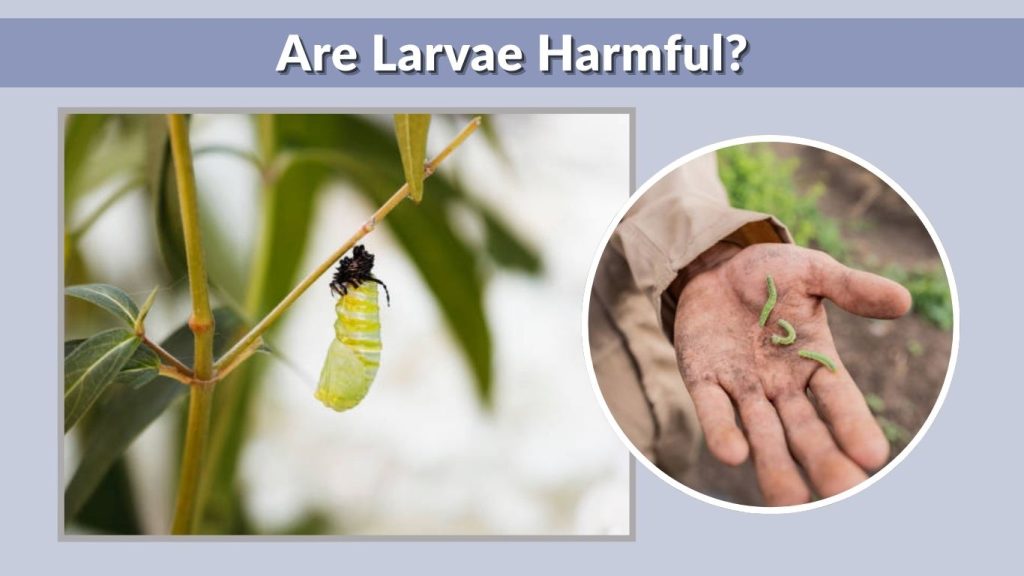
Whether larvae are harmful depends on the species.
Harmful to Humans?
Most larvae are harmless to humans. They do not bite or sting during this stage. However, certain species may contaminate food or cause sanitation concerns if present in large numbers.
Rare parasitic species can infect humans or animals, but these cases are uncommon and usually occur in specific environmental conditions.
Harmful to Crops?
Some larvae are serious agricultural pests. Caterpillars, beetle grubs, and other plant-feeding larvae can damage crops, trees, and ornamental plants by consuming leaves, roots, or fruit.
Farmers often focus on controlling larvae because preventing damage at this stage can stop future adult populations.
Harmful to Pets?
Accidental ingestion of larvae by pets typically causes little harm. However, parasitic species or larvae found in unsanitary environments may require veterinary attention.
Interesting Facts About Larvae
- Some larvae look completely different from their adult form. A caterpillar and butterfly share the same DNA yet appear unrelated.
- Certain marine larvae are microscopic and drift in ocean currents before settling.
- Glowworms are actually larvae of beetles and can produce light.
- Some insects spend years in the larval stage but only weeks as adults.
- Dragonfly larvae are skilled underwater predators.
These examples show how diverse and adaptable larval forms can be.
FAQs
What is the difference between larva and larvae?
A larva is a single immature organism in a metamorphic life cycle. Larvae is the plural form. For example, one caterpillar is a larva, but a group of caterpillars are larvae.
Do all insects have a larval stage?
No. Only insects that undergo complete metamorphosis have a true larval stage. Insects with incomplete metamorphosis develop through a nymph stage instead.
Are larvae always worms?
Not always, but many appear worm-like. Some have legs and visible heads, while others are legless. Their appearance depends on species and habitat.
How long does the larval stage last?
The duration varies widely. Some larvae develop in days, while others may remain in the larval stage for months or even years before transforming into adults.
Can larvae bite or sting?
Most larvae do not bite or sting humans. However, some caterpillars have irritating hairs or spines that can cause mild skin reactions if touched.
Conclusion
A larva is the growth-focused, immature stage in the life cycle of animals that undergo metamorphosis. Although they may look simple or worm-like, larvae are biologically complex and highly specialized for feeding and development. Found in soil, water, plants, and even marine environments, they play essential roles in ecosystems.
Understanding what a larva is, how to identify it, and how it develops helps clarify its importance in nature and its impact on humans, agriculture, and the environment.
