

Mayflies are fascinating insects that belong to one of the oldest insect groups on Earth, dating back more than 300 million years. They are best known for their incredibly short adult lifespan, with some species surviving only a few hours after reaching maturity. Despite their fleeting presence in the air, mayflies play an essential role in freshwater ecosystems, serving as a vital food source for fish and birds. To understand their importance, it’s helpful to explore their lifecycle step by step.
Egg Stage
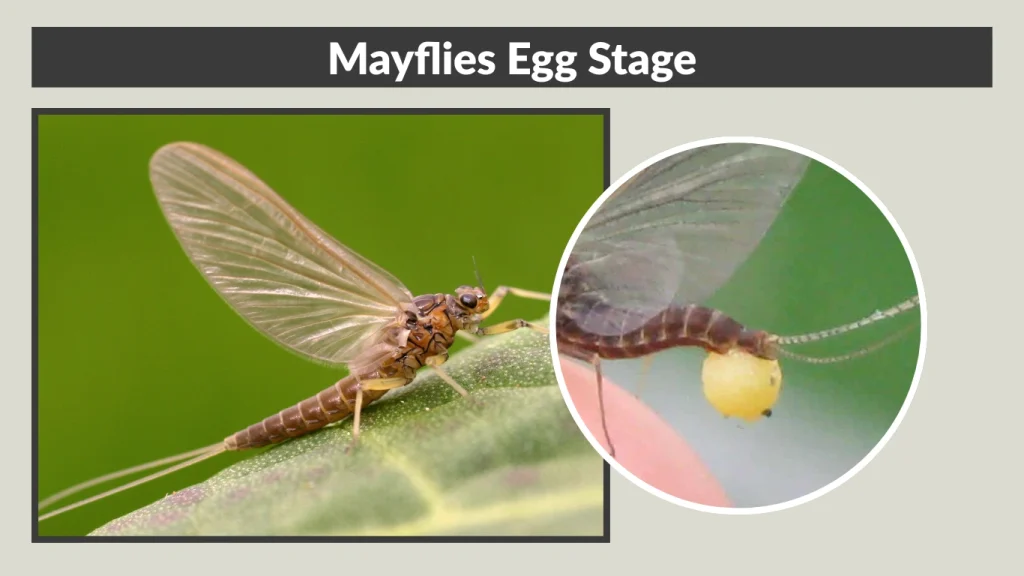
Where Eggs Are Laid
The lifecycle of a mayfly begins in water. After mating, female mayflies release their eggs directly onto the surface of lakes, ponds, or streams. Some females drop thousands of eggs in clusters from the air, while others land on the water before releasing them. A few species even dive below the surface to attach eggs to rocks or aquatic plants, ensuring they remain anchored in place. This egg-laying strategy ensures survival despite the high risk of predators and water currents.
Duration of Egg Stage
Mayfly eggs typically take between one and three weeks to hatch, although this can vary depending on temperature and water conditions. Warmer waters often accelerate development, while colder climates slow it down. During this stage, the eggs are vulnerable to being eaten by fish or other aquatic animals, but the sheer number of eggs laid increases the chances of survival for at least some of the offspring.
Nymph Stage (Aquatic Life)
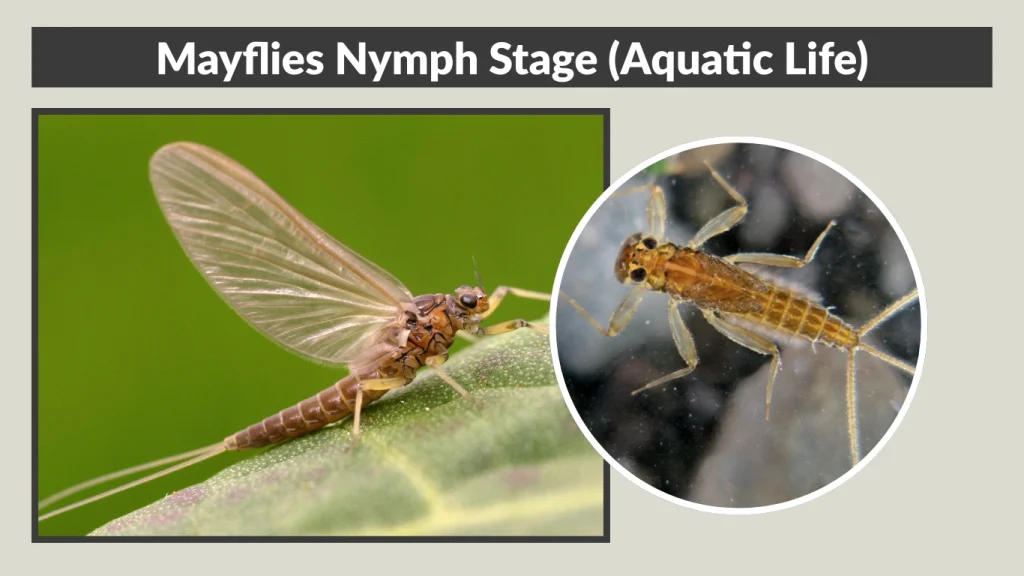
Appearance and Identification
Once the eggs hatch, mayfly nymphs—also called naiads—emerge. Nymphs are aquatic insects that look very different from their delicate adult form. They have elongated bodies, six legs, large eyes, and three long tails, although some species have only two. Their most distinctive feature is the presence of gills along their abdomen, which they use to breathe underwater. These gills are feathery and move with the water, helping the nymph extract oxygen efficiently.
Habitat and Feeding
Mayfly nymphs spend the majority of their lives underwater. They are commonly found in freshwater environments such as streams, rivers, ponds, and lakes, especially where the water is clean and rich in oxygen. Nymphs feed on algae, decaying plant matter, and tiny microorganisms. By grazing on organic material, they play a key role in breaking down nutrients and maintaining the balance of aquatic ecosystems.
Growth and Molting
The nymph stage is the longest phase in a mayfly’s lifecycle, lasting from several months to up to two years, depending on the species and environmental conditions. During this time, nymphs undergo multiple molts—shedding their exoskeletons as they grow. In some species, they molt as many as 20 to 30 times. Each molt brings them closer to adulthood, with their wing pads gradually developing and becoming more visible.
Subimago Stage (Unique to Mayflies)

What Makes Subimago Unique
Unlike other insects, mayflies go through a transitional stage called the subimago. After leaving the water as nymphs, they transform into winged pre-adults. The subimago stage is a rare phenomenon in the insect world—mayflies are the only insects that molt again after developing wings. Subimagoes have dull, opaque wings and a fragile body covered with fine hairs.
Transition to Adult
This stage typically lasts only a few hours, though in rare cases it may extend up to a day. The purpose of the subimago stage is to give the insect time to mature before reproduction. Eventually, the subimago molts one final time, emerging as the fully developed adult, or imago. This final molt usually takes place on nearby vegetation or other surfaces just above the water.
Adult Stage (Imago)

Appearance and Behavior
The adult mayfly, known as the imago, is a delicate insect with transparent wings held upright like those of a butterfly. Its body is slender, and it retains the long, filament-like tails seen in the nymph stage. Adult mayflies cannot feed because their mouthparts are underdeveloped, and their digestive system is essentially nonfunctional. Their sole purpose is reproduction, which is why their time in the adult stage is so short.
Mating Swarms
One of the most spectacular sights in nature is the mating swarm of mayflies. At dusk or dawn, males gather in large groups, swarming above water surfaces or nearby vegetation. When females enter these swarms, mating takes place quickly in midair. This synchronized behavior ensures the continuation of their species, even though the adults only live for a very brief time.
Egg-Laying and Death
After mating, female mayflies immediately begin the final step of their short adult life—laying eggs. Depending on the species, this can involve dropping eggs onto the water surface, releasing them while flying low, or submerging briefly to attach them directly to underwater surfaces. Once the eggs are deposited, the adult’s role is complete. Both males and females die shortly afterward, often within the same day. This rapid end to their lifecycle is why mayflies are sometimes nicknamed “ephemerals,” meaning short-lived.
Lifespan of Mayflies

Total Lifecycle Duration
When viewed as a whole, the mayfly lifecycle is surprisingly long, despite the adult’s fleeting existence. On average, the stages break down as follows:
- Egg stage: 1–3 weeks.
- Nymph stage: Several months to 2 years (depending on species).
- Subimago stage: A few hours to 1 day.
- Adult stage: From a few hours to a maximum of 3 days.
Thus, although the adult mayfly is famous for its brevity, the entire lifecycle can span from a few months to several years in certain species.
Why Adults Live So Briefly
The short adult lifespan is an evolutionary adaptation. Because mayflies have no functional mouthparts, they cannot feed as adults. All their stored energy comes from the food they consumed during the nymph stage. By focusing exclusively on reproduction, mayflies ensure the survival of their species without investing resources in extended adult life.
Environmental Influences on Lifecycle
Temperature and Climate
Water temperature is one of the most significant factors influencing development. Warmer water speeds up hatching and nymphal growth, while colder environments slow it down. In colder regions, some mayflies remain as nymphs for nearly two years before emerging.
Water Quality and Oxygen
Mayflies are highly sensitive to pollution. Their nymphs require clean, oxygen-rich water to survive, which is why their presence is often used as an indicator of good water quality. In polluted or low-oxygen environments, mayfly populations decline dramatically, disrupting local ecosystems.
Importance of Mayfly Lifecycle to Ecosystems
Food Web Role
Throughout their lifecycle, mayflies are an essential food source for many animals. Nymphs are preyed upon by fish such as trout and bass, while birds, frogs, and insects consume both nymphs and adults. During mass emergences, adult mayflies provide an enormous feast for predators, sometimes influencing fish and bird feeding behaviors.
Bioindicators of Water Quality
Because they are so sensitive to environmental changes, mayflies are considered excellent bioindicators. Scientists often study mayfly populations to assess the health of freshwater habitats. A thriving mayfly population usually signals clean, oxygen-rich water, while a decline can warn of pollution or habitat stress.
Comparison with Other Insects’ Lifespan
When compared with other insects, mayflies stand out as truly unique. Dragonflies and damselflies also spend much of their lives as aquatic nymphs, but their adult stages can last several months. Butterflies may live from weeks to months as adults, and even mosquitoes survive longer than mayflies once they emerge. The subimago stage is another unique feature—no other insect has a winged pre-adult phase, making the mayfly’s lifecycle distinct in the insect world.
FAQs
How long do mayflies live as adults?
Most adult mayflies live only for a few hours to two days, depending on the species. Their short lifespan is dedicated solely to reproduction.
Can mayflies bite or sting during their short lifespan?
No, mayflies cannot bite or sting. They have non-functional mouthparts and are completely harmless to humans.
Do all mayflies live only 24 hours?
Not exactly. While many species survive less than a day, others may live up to three days as adults. However, none live longer than that in their final stage.
Why do mayflies emerge in swarms?
Synchronized swarming increases the chances of successful mating. By emerging together, mayflies also overwhelm predators, ensuring that at least some individuals survive to reproduce.
What is the longest lifespan recorded for mayflies?
Some mayfly species can live up to two years as nymphs. However, once they reach adulthood, even the longest-lived species only survive about three days.
