
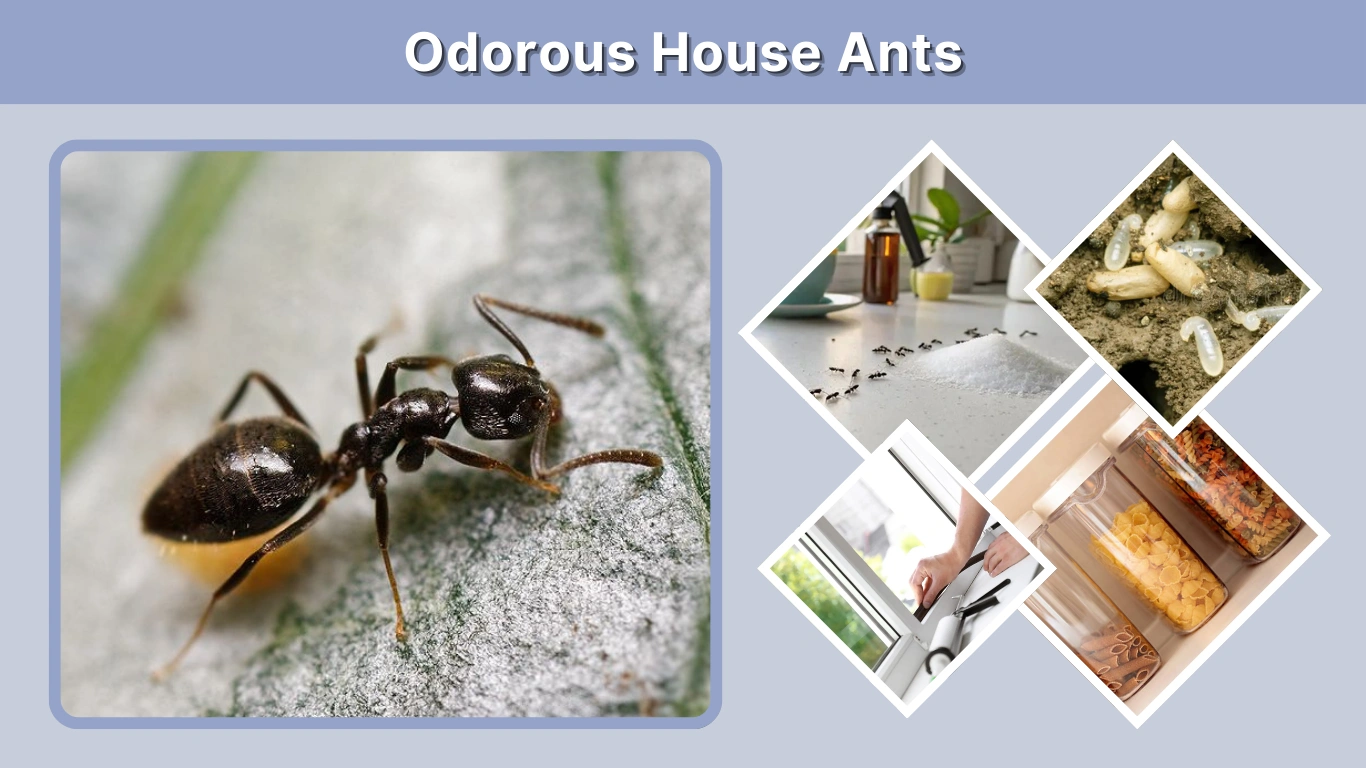
Odorous house ants (Tapinoma sessile) are small, invasive ants that commonly infest homes across North America. They are named for the strong, distinctive odor they emit when crushed, often described as rotten coconut or blue cheese. While not aggressive like fire ants, odorous house ants can be a serious nuisance due to their ability to establish multiple satellite nests, forage for food indoors, and contaminate stored items. Understanding their identification, behavior, habitat, and control methods is essential for effective management.
What Are Odorous House Ants?
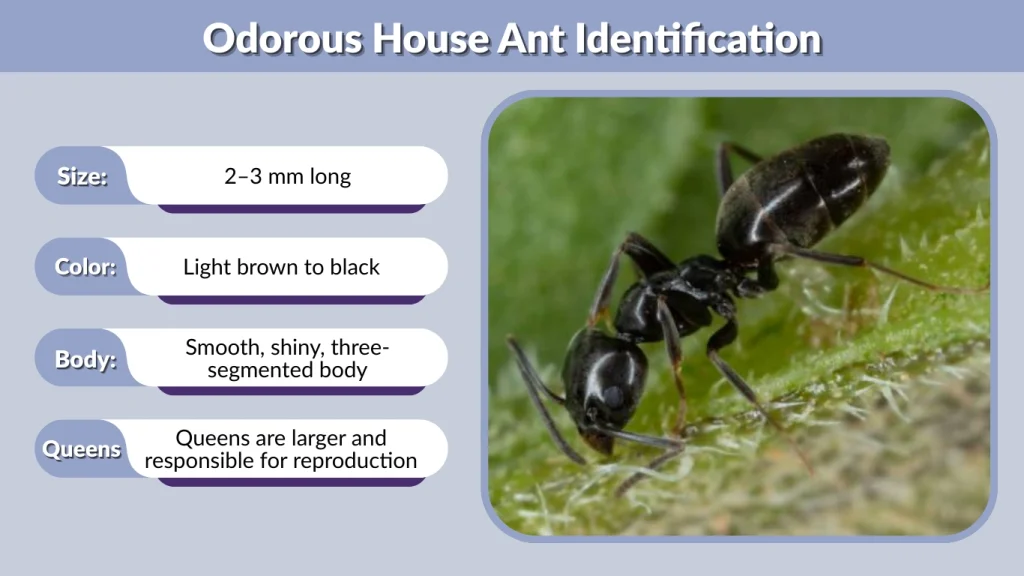
Odorous house ants are tiny ants, typically measuring 2–3 mm in length. Their bodies are smooth, shiny, and light brown to black in color. These ants are social insects that live in polygynous colonies, meaning a single colony can have multiple queens. This allows colonies to grow rapidly and survive even if part of the colony is disturbed.
Odorous house ants are omnivorous and highly adaptable. They are commonly found in kitchens, bathrooms, and pantries, as well as outdoors under mulch, stones, and potted plants. Their ability to nest in both indoor and outdoor environments makes them particularly challenging to control, especially in urban and suburban settings.
Odorous House Ant Identification
Correct identification is key to effectively controlling infestations.
Physical Characteristics
- Size: 2–3 mm long
- Color: Light brown to black
- Body: Smooth, shiny, three-segmented body with elbowed antennae
- Queens vs Workers: Queens are larger and responsible for reproduction, while workers forage and maintain the nest
Unique Traits
Odorous house ants are best known for the strong odor they emit when crushed, often described as a smell similar to rotten coconut or blue cheese. They move relatively slowly and form organized foraging trails to food sources, which are often visible along baseboards, countertops, and wall edges.
Odorous House Ant vs Other Ants
- Pavement ants: Darker and slightly larger, often nest outdoors
- Carpenter ants: Much larger, do not form multiple satellite nests indoors
- Argentine ants: Smaller, light brown but do not produce the distinctive odor
Recognizing these differences helps homeowners choose the right control strategies and avoid ineffective treatments.
Odorous House Ant Habitat and Range
Indoor Environments
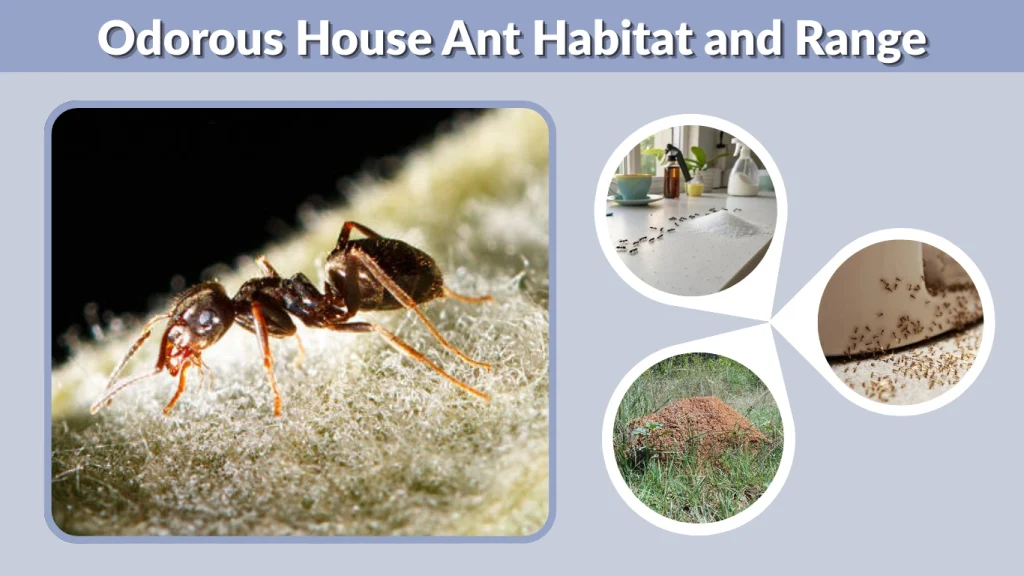
Odorous house ants are highly adaptable and can thrive indoors, especially in areas with food and moisture. Common indoor habitats include:
- Kitchens and pantries near sugary foods and proteins
- Bathrooms and laundry areas with moisture
- Wall voids, baseboards, and behind cabinets
- Under appliances and in cracks or crevices
Outdoor Environments
- Soil, mulch, and potted plants
- Under rocks and debris
- Gardens and landscaped areas with moisture
Geographic Range
Odorous house ants are widespread across North America, including the United States and southern Canada. They are particularly common in urban and suburban areas, where warm indoor environments and abundant food sources allow colonies to thrive year-round. Activity tends to increase during warmer months when ants forage more extensively indoors.
Behavior of Odorous House Ants
Colony Structure
Odorous house ants are polygynous, with multiple queens per colony. This structure allows colonies to survive partial eradication and quickly recover. Colonies consist of:
- Queens: Lay eggs continuously, ensuring colony growth
- Workers: Forage for food, defend the nest, and care for brood
- Males: Produced during mating season, short-lived
Foraging and Diet
Odorous house ants are omnivorous and highly organized foragers. They establish trails to food sources, using pheromones to communicate with other workers. Their diet includes:
- Sugary foods: honey, syrup, and fruit juices
- Proteins: dead insects, pet food, grease
- Plant material: seeds or small organic matter
They can switch between food types based on colony needs, which increases their survival in indoor environments.
Social and Defensive Behavior
While odorous house ants are not aggressive toward humans, they release pheromones to alert the colony when threatened. Their odor serves as a defensive mechanism, deterring predators and signaling danger to other ants in the nest.
Odorous House Ant Life Cycle
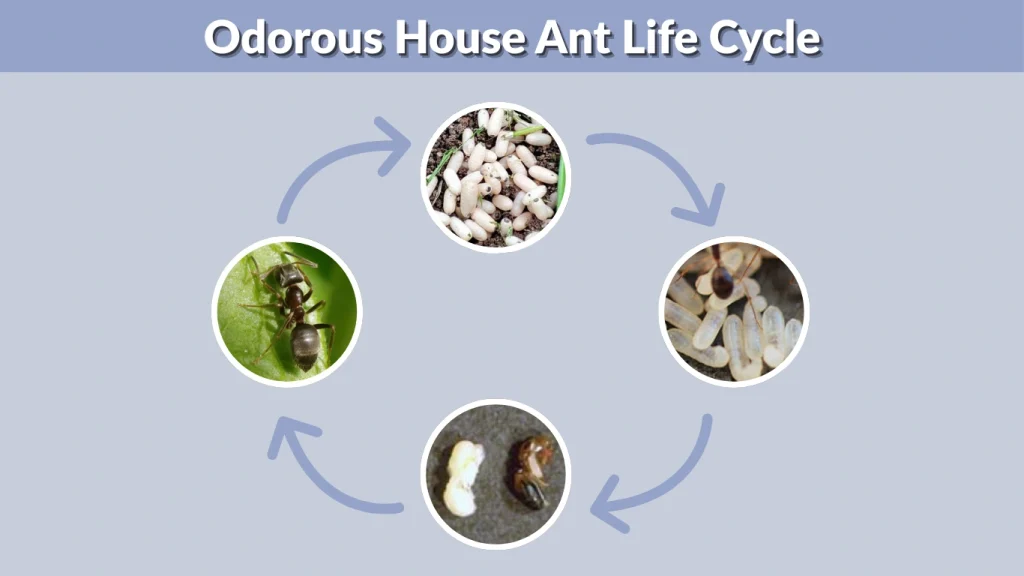
Understanding the life cycle of odorous house ants helps explain why they are difficult to control.
Egg Stage
Queens lay tiny, oval, white eggs inside protected nest chambers. Egg development depends on temperature and humidity, with warmer, moist conditions speeding up hatching.
Larva and Pupa Stage
Eggs hatch into larvae, which are soft-bodied and fully dependent on worker ants for feeding and care. Larvae molt multiple times before entering the pupal stage. Pupae develop into fully formed adult ants while remaining protected in the nest.
Adult Stage
Adults include workers, males, and queens. Workers forage for food, maintain the nest, and care for the young, while queens focus on reproduction. Colonies can persist for years, with multiple queens ensuring rapid recovery and colony expansion if part of the nest is disturbed.
Signs of Odorous House Ant Infestation
Early detection is key to controlling odorous house ants. Look for:
- Visible ant trails: Organized lines of small ants along walls, counters, and baseboards
- Presence in food areas: Kitchens, pantries, and around sugary or protein-rich foods
- Satellite nests: Hidden colonies in wall voids, behind cabinets, or under appliances
- Odor: Faint smell of rotten coconut or blue cheese when ants are crushed
- Increased activity: Especially during warm months, when ants forage more extensively
How to Get Rid of Odorous House Ants
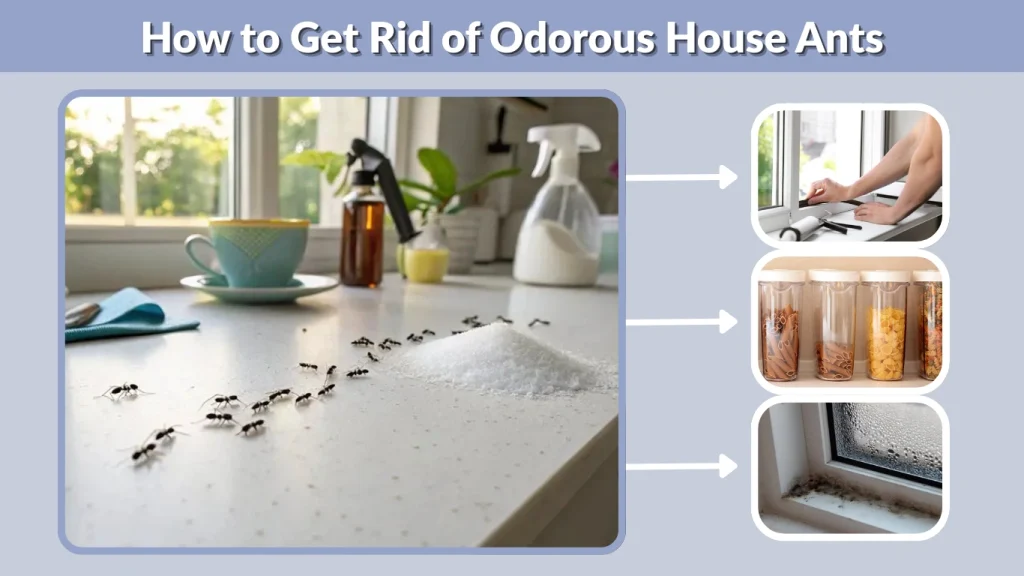
Effective control requires a combination of baiting, environmental management, and sometimes professional intervention.
Prevention Strategies
- Seal cracks, gaps, and entry points in walls, windows, and doors
- Store food in airtight containers and clean up spills promptly
- Reduce indoor moisture by fixing leaks and maintaining proper ventilation
- Remove clutter and debris that provide nesting sites
Treatment Options
- Targeted baiting: Sugar-based or protein-based baits placed along trails and near nests
- Avoid sprays on trails: Spraying visible ants disperses colonies and worsens infestations
- Environmental modification: Remove mulch or soil near building foundations, limit moisture, and declutter storage areas
Professional Pest Control
For large or persistent infestations, professional exterminators can:
- Identify all active nests, including hidden satellite colonies
- Apply baits strategically to reach queens and larvae
- Monitor the property for reinfestation over time
Odorous House Ant Control Tips
- Consistency is critical: regularly monitor and reapply baits if needed
- Avoid direct spraying, which fragments the colony
- Keep kitchen and pantry areas clean, and store pet food properly
- Seal nesting areas and maintain low-moisture conditions
Proper implementation of these strategies ensures long-term management and prevents new colonies from establishing.
Interesting Facts About Odorous House Ants
- They are polygynous, allowing colonies to grow quickly and survive disturbances
- Odorous house ants are found throughout North America and thrive in urban and suburban environments
- The distinct odor is a defense mechanism and a useful identification feature
- Despite being small, they can cause significant nuisance by contaminating food and creating trails in homes
- They are capable of forming multiple satellite nests indoors, complicating control
FAQs
What do odorous house ants look like?
They are small, 2–3 mm long, brown to black ants with elbowed antennae and a smooth, shiny body. Queens are larger and reproductive.
Do odorous house ants bite or sting?
They are not aggressive and rarely bite. They do not sting, and their primary concern is food contamination.
How do I get rid of odorous house ants indoors?
Use targeted baits, maintain cleanliness, seal cracks and entry points, reduce moisture, and consider professional pest control for persistent infestations.
What is the scientific name of odorous house ants?
The scientific name is Tapinoma sessile.
How are odorous house ants different from other small ants?
They emit a distinct odor when crushed, form polygynous colonies, and nest both indoors and outdoors. Other small ants may lack the odor or have different nesting habits.
