

The peacock butterfly (Aglais io) is one of the most recognizable butterflies in the world, famous for its dramatic eye-spot wings that resemble the feathers of a peacock. Found widely across Europe and parts of Asia, this striking insect is a common visitor to gardens, meadows, and woodland edges. Beyond its beauty, the peacock butterfly plays an important ecological role as a pollinator and as part of the natural food chain. Its unusual ability to hibernate as an adult also makes it especially fascinating.
Scientific Classification and Natural Identity
The peacock butterfly belongs to the family Nymphalidae, a large group often called the brush-footed butterflies. Its scientific name, Aglais io, comes from Greek mythology, where “Io” was associated with watchful eyes—an appropriate reference to the bold eye-spots on its wings.
This species is closely related to tortoiseshell butterflies, and at first glance, its underwings can look surprisingly dark and plain. However, once the wings open, the peacock butterfly reveals one of the most vivid displays in the insect world. These eye-like patterns are not only decorative but also serve an important defensive function.
Naturalists often describe the peacock butterfly as both resilient and adaptable. It thrives in a wide range of habitats and is one of the few butterflies able to survive winter in adult form, giving it a longer visible lifespan than many other species.
Physical Appearance and Wing Structure

The peacock butterfly’s appearance is its most defining feature. Its wings are designed not just for flight, but also for survival.
Key physical characteristics include:
- Wing coloration and eye-spots: Deep red wings with large blue, yellow, and black eye-spots on each wing, creating a startling visual effect.
- Wingspan and size: Typically ranges between 50 and 55 mm, making it a medium-sized butterfly.
- Upperwing vs underwing contrast: The upper wings are bright and patterned, while the underwings are dark brown to black, providing camouflage.
- Body and antennae: The body is dark and fuzzy, with slender antennae used for sensing the environment.
- Male and female similarities: Both sexes look very similar, with only subtle differences in size and wing shape.
When resting with wings closed, the butterfly blends into tree bark or dark surfaces. When threatened, it suddenly opens its wings, exposing the eye-spots in a dramatic display meant to scare predators.
Habitat and Geographic Distribution
Native Range
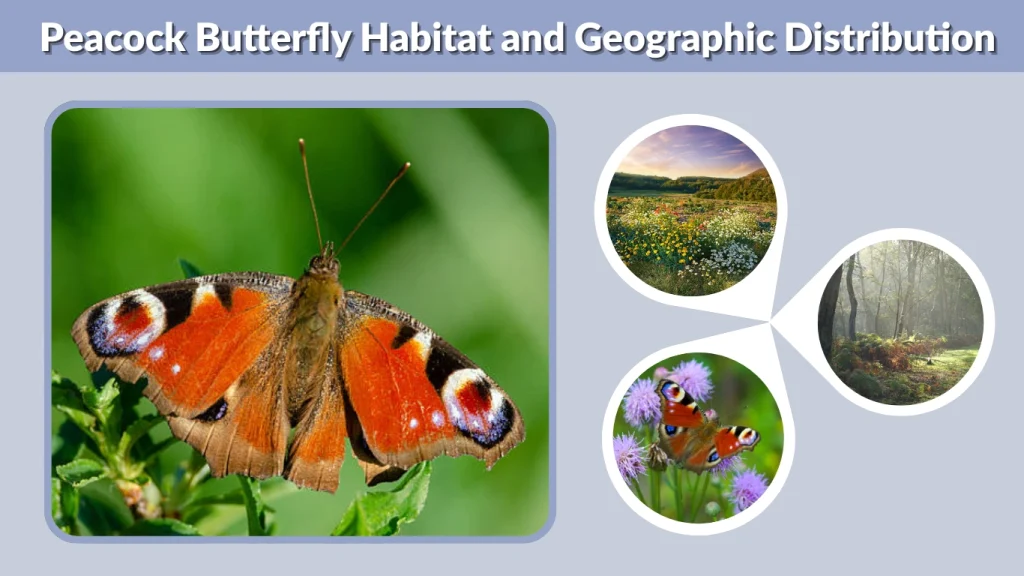
The peacock butterfly is native to Europe and temperate Asia, stretching from the British Isles across Scandinavia and central Europe into parts of northern Asia. Over time, it has adapted well to both rural and urban landscapes.
Preferred Habitats
Peacock butterflies favor flower-rich environments such as meadows, woodland clearings, hedgerows, parks, and home gardens. They are often seen basking in sunny spots, feeding on nectar, or resting on walls and tree trunks.
During colder months, they seek out sheltered locations including hollow trees, woodpiles, attics, sheds, and even quiet indoor spaces to survive the winter.
Climate and Environmental Tolerance
This species is particularly tolerant of cooler climates. Its ability to overwinter as an adult allows it to emerge early in spring, often making it one of the first butterflies people see after winter ends.
Behavior and Daily Activity
Peacock butterflies are diurnal, meaning they are active during the day. They are frequently observed basking in sunlight with wings open, absorbing heat to raise their body temperature before flight.
They are also known to be territorial, especially males, which may chase away other butterflies from favored feeding or basking spots. Their flight is strong and direct, often mixed with short glides.
When disturbed, a peacock butterfly may remain still, relying on camouflage. If the threat continues, it suddenly flashes its wings open, sometimes accompanied by a faint hissing sound produced by rubbing its wings together. This sudden display can startle birds and small mammals, giving the butterfly a chance to escape.
Diet and Feeding Habits

Peacock butterflies feed differently depending on their life stage, and their diet plays a major role in their survival and reproduction.
Their feeding habits include:
- Nectar sources: Buddleia, thistles, dandelions, marigolds, and wildflowers.
- Garden favorites: Lavender, asters, sedum, and ivy blossoms in late season.
- Tree sap and fallen fruit: Especially important in late summer and autumn.
- Mineral feeding: Occasionally from damp soil to obtain salts.
- Caterpillar host plants: Primarily stinging nettle (Urtica dioica), which is essential for larval growth.
Because they often rely on wild plants like nettles, peacock butterflies benefit from less manicured, pesticide-free environments.
Complete Life Cycle of the Peacock Butterfly
Egg Stage
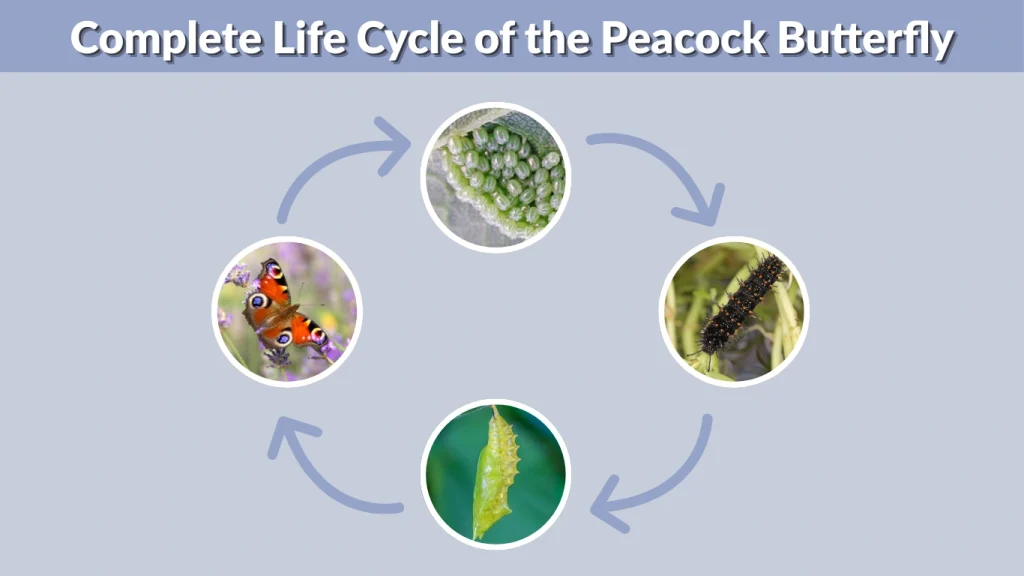
Female peacock butterflies lay clusters of tiny green eggs on the underside of nettle leaves. This placement protects the eggs from direct sunlight and some predators while ensuring newly hatched caterpillars have immediate access to food.
Caterpillar Stage
The caterpillars hatch in groups and are instantly recognizable by their black bodies covered in spines. They feed together on nettle leaves, growing rapidly and molting several times. Group living helps improve survival by overwhelming predators and maintaining warmth.
Chrysalis Stage
After several weeks of feeding and growth, the caterpillars leave their host plant and attach themselves to a sheltered surface such as a stem, fence, or wall. They form a chrysalis that is usually grey, brown, or greenish with subtle metallic spots. Inside this protective casing, the caterpillar undergoes a remarkable transformation. Over the next one to two weeks, its body is reorganized into the adult butterfly form, including wings, antennae, and compound eyes.
Adult Stage
When development is complete, the adult peacock butterfly emerges from the chrysalis with soft, crumpled wings. It rests nearby while its wings expand and harden before taking its first flight. Adults feed actively to build energy reserves, especially toward late summer and autumn, when they must prepare for hibernation. After mating, females lay eggs to begin the cycle again.
Caterpillar Identification and Growth Patterns
Peacock butterfly caterpillars are among the easiest to recognize in Europe. They are jet black with rows of branching spines along the body and tiny white speckles scattered across their skin. The head capsule is dark and glossy, blending with the rest of the body.
These caterpillars often live in large communal groups, covering nettle plants with silken webbing. Group feeding increases efficiency and reduces the risk of predation. As they grow, they shed their skin several times, a process known as molting. With each molt, the caterpillars become larger, darker, and more heavily spined.
Their striking appearance serves as a warning. The spines, while not venomous, make them difficult and unpleasant for predators to eat. After reaching full size, the caterpillars disperse to find suitable pupation sites.
Defense Mechanisms and Survival Strategies
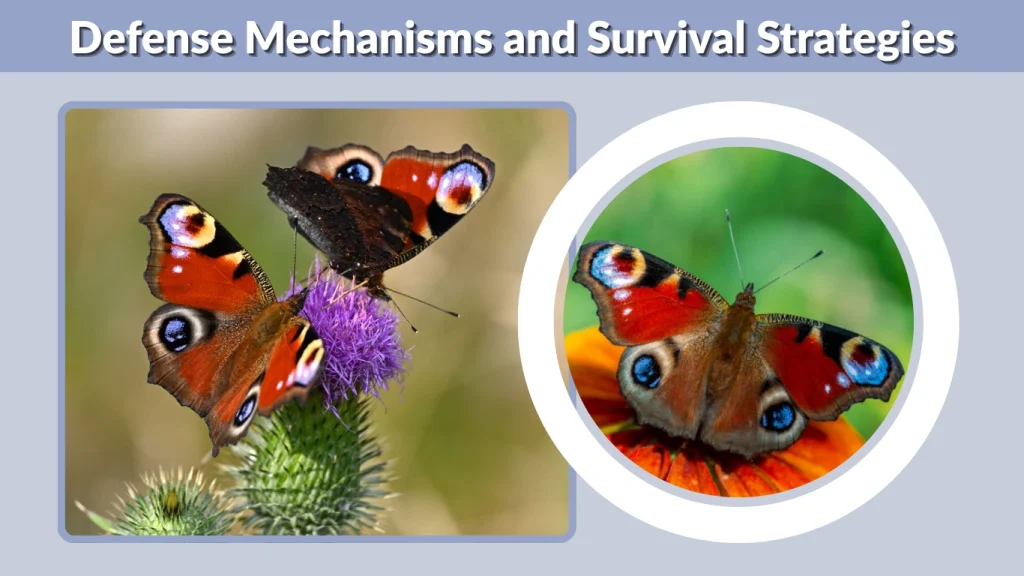
The peacock butterfly has evolved several highly effective defenses to protect itself at different life stages.
Key survival strategies include:
- Eye-spot intimidation: Large eye markings resemble the eyes of much larger animals, deterring birds.
- Sudden wing flashing: Rapid opening of wings startles predators.
- Camouflage: Dark underwings blend into bark, soil, and shadow.
- Hibernation advantage: Overwintering as adults reduces seasonal vulnerability.
- Unpalatable appearance: Spiny caterpillars discourage predators.
Together, these defenses make the peacock butterfly one of the more successful and long-lived butterflies in temperate regions.
Hibernation and Seasonal Adaptations
Unlike most butterflies that die before winter, peacock butterflies hibernate as adults. As temperatures drop, they search for dark, dry, and undisturbed shelters such as tree hollows, old buildings, sheds, or roof spaces.
During hibernation, their metabolism slows dramatically. They survive on fat reserves built up during late summer and autumn feeding. When spring sunlight warms the air, they awaken and become active, often appearing as one of the first butterflies of the year.
This overwintering strategy gives the peacock butterfly a longer lifespan than many species, sometimes allowing individuals to live close to a year.
Role in the Ecosystem
Peacock butterflies contribute significantly to pollination, visiting a wide range of flowering plants. While not as specialized as bees, they help transfer pollen between blooms, supporting plant reproduction.
They also serve as a food source for birds, spiders, and small mammals, especially during their egg and larval stages. Because their caterpillars rely heavily on nettles, their presence helps maintain balanced wild plant communities.
Ecologists often consider the peacock butterfly an indicator species, meaning healthy populations suggest diverse and functioning habitats.
Peacock Butterflies in Gardens and Conservation
Why They Visit Gardens
Gardens provide rich nectar sources, warm basking spots, and sheltered places for rest and hibernation. Flower beds, hedges, compost piles, and even walls can create ideal microhabitats.
How to Attract Peacock Butterflies
Planting nectar-rich flowers such as buddleia, lavender, marjoram, and sedum encourages visits. Leaving small patches of nettles allows females to lay eggs and supports future generations.
Conservation Status and Threats
Although still common in many regions, peacock butterflies face threats from pesticide use, habitat loss, and climate change. Wildlife-friendly gardening, reduced chemical use, and preservation of wild spaces are key to their long-term survival.
Symbolism, Cultural Meaning, and Interesting Facts
The peacock butterfly is often associated with protection, renewal, and awareness, inspired by its eye-like wing patterns. In folklore, these markings were believed to ward off evil or misfortune.
Interestingly, peacock butterflies can make a faint hissing or clicking sound when threatened, produced by rubbing their wings together. They also possess excellent color vision, helping them locate nectar-rich flowers and suitable mates.
Their combination of beauty, resilience, and survival skill has made them one of the most admired butterflies across Europe.
FAQs
What makes the peacock butterfly unique?
The peacock butterfly is famous for its large, colorful eye-spots that resemble the eyes of a much larger animal. These markings help scare predators. It is also unique because it hibernates as an adult, allowing it to appear early in spring.
Where are peacock butterflies commonly found?
Peacock butterflies are most commonly found across Europe and temperate parts of Asia. They thrive in gardens, meadows, woodland edges, and parks where flowering plants and nettles grow.
What do peacock butterfly caterpillars eat?
Peacock butterfly caterpillars feed almost exclusively on stinging nettles. These plants provide the nutrients needed for rapid growth and help protect caterpillars from predators that avoid nettles.
Do peacock butterflies really hibernate?
Yes, peacock butterflies hibernate as adults. They hide in dark, sheltered places such as sheds, hollow trees, and roof spaces, slowing their metabolism until warmer spring temperatures return.
How long does a peacock butterfly live?
Because they hibernate, peacock butterflies can live up to 10–12 months. This is longer than many butterfly species, which often survive only a few weeks in adult form.
