

The Cabbage White butterfly (Pieris rapae) is one of the most familiar butterflies in the world, especially in gardens, farms, and urban green spaces. With its simple white wings marked by black tips and spots, it is easily recognized even by beginners. This species is closely linked to cabbages and other mustard plants, where its green caterpillars commonly feed. In this guide, you will explore its identification traits, physical features, habitat range, feeding habits, and early life stages.
Cabbage White Butterfly Overview
The Cabbage White belongs to the family Pieridae, a group often called the whites and yellows. Members of this family are known for their light-colored wings, strong flight, and close association with flowering plants. Pieris rapae is one of the most widespread butterflies in this family.
Originally native to Europe, the Cabbage White has spread to nearly every continent through human trade and agriculture. Today it is found across Asia, North America, Africa, and Australia. Its success is linked to its rapid life cycle, wide choice of host plants, and ability to live in disturbed environments.
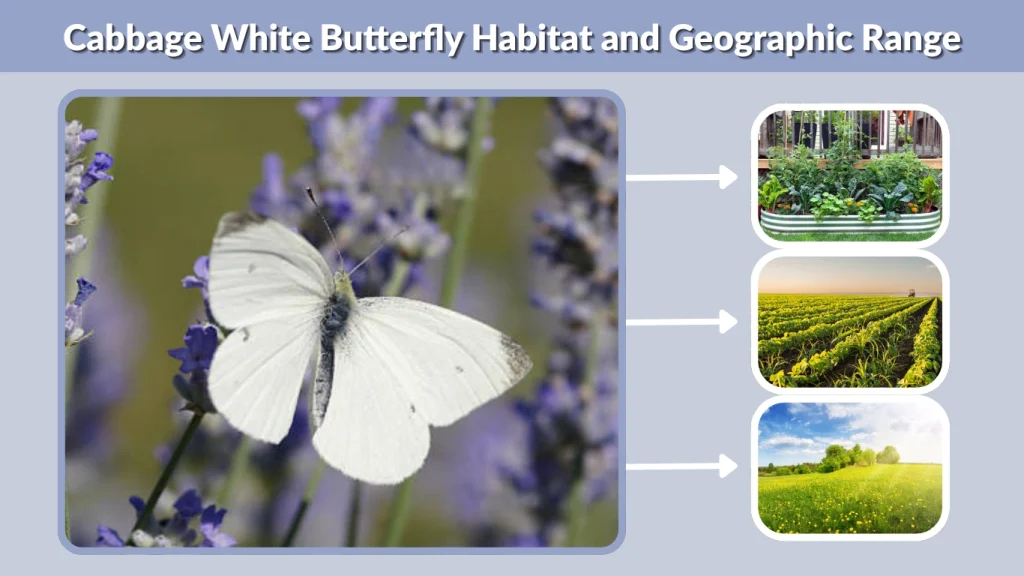
Cabbage Whites thrive in open, sunny landscapes. They are common in vegetable gardens, farmland, meadows, roadsides, and city parks. Their constant movement between flowers and crops makes them highly visible throughout the warmer months.
Ecologically, the Cabbage White plays a mixed role. Adults act as pollinators, while caterpillars are important food for birds, wasps, and predatory insects. At the same time, heavy caterpillar feeding can damage crops, giving the species its reputation as a garden pest.
Identification of the Cabbage White Butterfly

The Cabbage White butterfly is small, pale, and active, with features that make it easy to identify. Key identification traits include:
- Scientific Name: Pieris rapae
- Common Names: Cabbage White, Small White, Imported Cabbageworm Butterfly
- Wingspan Range: About 1.5 to 2.2 inches (3.8–5.6 cm)
- Primary Wing Color: White to creamy white
- Black Wing Markings: Black tips on forewings and round black spots
- Male vs Female Differences: Females usually have two black spots, males one
- Underside Wing Appearance: Pale yellow with soft dark speckling
- Body Color and Antennae: Grayish body, black-and-white banded antennae
- Caterpillar Appearance: Velvety green caterpillars with faint yellow lines
- Chrysalis Description: Greenish or brown, angular and well camouflaged
These features separate the Cabbage White from larger white butterflies and other light-colored species.
Physical Features and Wing Patterns
The wings of the Cabbage White butterfly are simple yet effective in design. The upper surface is white or slightly creamy, with black markings concentrated at the tips of the forewings. Females usually display two round black spots on each forewing, while males typically have only one.
The underside of the wings is more yellowish, especially on the hindwings. This pale yellow tone, combined with fine speckling, helps the butterfly blend into flowers and foliage when resting with wings closed. This camouflage reduces visibility to predators such as birds.
Structurally, the wings are narrow and built for steady, continuous flight. Cabbage Whites are rarely still, often fluttering from plant to plant. Their flight is low and wandering, making them common visitors to both wildflowers and crop plants.
Despite their delicate appearance, Cabbage Whites are strong and persistent fliers. They can cover long distances and are capable of colonizing new habitats quickly, contributing to their global spread.
Habitat and Geographic Range
Natural Habitats
Cabbage White butterflies occupy a wide variety of open habitats. These include vegetable gardens, agricultural fields, grassy meadows, parks, roadside verges, and vacant lots. Any environment that supports flowering plants and mustard-family host plants can attract them.
Global Distribution
Originally from Europe, the Cabbage White has spread worldwide and is now found across Asia, North America, Africa, and Australia. It is one of the most widely distributed butterflies on Earth.
Seasonal Occurrence
In warm climates, Cabbage Whites may fly year-round. In temperate regions, they appear from spring through autumn, producing multiple generations each year. Populations often peak in mid to late summer.
Diet and Feeding Behavior
Adult Cabbage Whites feed mainly on nectar but also visit a variety of plants. Their diet includes:
- Nectar Sources: Dandelion, clover, thistle, mustard flowers
- Favorite Garden Flowers: Zinnia, marigold, alyssum, cosmos
- Wildflower and Weed Feeding: Milkweed relatives and roadside blooms
- Role as a Pollinator: Transfers pollen between flowering plants
- Adult Feeding Patterns: Frequent short visits to many flowers
- Larval Host Plants: Cabbage, broccoli, kale, cauliflower, mustard, radish
This broad diet supports large populations in both natural and cultivated landscapes.
Life Cycle of the Cabbage White Butterfly
Egg Stage
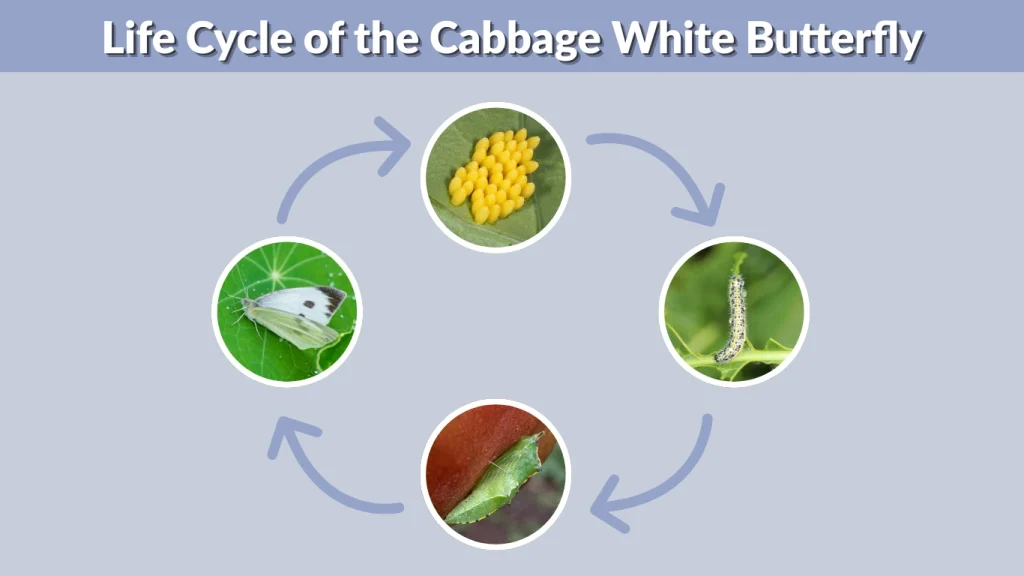
Female Cabbage Whites lay their small, bullet-shaped yellow eggs singly on the leaves of host plants. These eggs usually hatch within three to seven days, depending on temperature.
Caterpillar (Larval) Stage
The newly hatched caterpillars feed immediately on leaf tissue. They grow rapidly, molting several times and becoming thicker, greener, and more visible as they develop.
Chrysalis (Pupal) Stage
When the caterpillar reaches full size, it attaches itself to a stem, wall, fence, or leaf using a silk pad and a supporting silk “girdle.” The chrysalis is angular and usually green or brown, allowing it to blend into its surroundings. Inside this casing, the caterpillar undergoes complete transformation. Depending on temperature, the pupal stage may last one to three weeks, or overwinter in colder regions.
Adult Butterfly Stage
The adult Cabbage White emerges from the chrysalis with soft, folded wings. Over the next few hours, the wings expand and harden. Once ready, the butterfly begins feeding, mating, and laying eggs. Adults usually live several weeks. In warm climates, many overlapping generations can occur in a single year.
Cabbage White Caterpillar and Host Plants

Cabbage White caterpillars are smooth, velvety green, and well camouflaged against leaves. A faint yellow stripe often runs along the body, making them difficult to notice until feeding damage appears.
Their primary host plants belong to the mustard family (Brassicaceae). These include cabbage, broccoli, kale, cauliflower, Brussels sprouts, mustard greens, radish, and many wild mustards. Females locate these plants by scent and color, laying eggs directly on suitable leaves.
Because the caterpillars feed continuously and often in large numbers, they can cause extensive leaf damage. For this reason, they are widely known as “imported cabbageworms” and are considered major garden and agricultural pests.
Behavior and Daily Activity
Cabbage White butterflies show simple but effective daily behaviors:
- Basking and Sun Flight: Warm themselves in sunlight before active flight.
- Low, Wandering Flight Style: Flutter slowly over gardens and fields.
- Egg-Laying Behavior: Females inspect leaves carefully before laying eggs.
- Courtship and Mating: Males patrol open areas searching for females.
- Seasonal Population Booms: Numbers increase rapidly in warm months.
These habits help them locate food plants, reproduce efficiently, and spread quickly.
Predators, Threats, and Survival Strategies
Cabbage Whites face many natural enemies. Birds, spiders, beetles, and especially parasitic wasps prey on eggs and caterpillars. Many caterpillars never reach adulthood because of these natural controls.
Their main survival strategy is camouflage. Caterpillars blend into leaves, while adults’ pale wings reflect light and make them harder to track. Rapid reproduction also ensures that some individuals survive despite heavy losses.
Human control methods, including netting, biological treatments, and habitat changes, strongly influence populations. Climate change may further affect their breeding cycles and geographic spread.
Cabbage White Butterfly in Gardens and Ecosystems
Ecological Role
Adult Cabbage Whites contribute to pollination by visiting many flowers. They also serve as food for insect-eating birds and beneficial predatory insects.
Managing Cabbage Whites in Gardens
Gardeners often use protective netting, hand removal, and encouragement of natural predators such as wasps and birds. These methods help control caterpillar numbers without harming other pollinators.
Conservation Perspective
Although common, the Cabbage White still plays an important role in food webs. Balanced management helps protect crops while maintaining ecological diversity.
Interesting Facts About the Cabbage White Butterfly
The Cabbage White is one of the most successful butterflies in the world and has followed human agriculture across continents. It was introduced accidentally to North America in the 1800s and spread rapidly.
Females can lay hundreds of eggs during their lifetime, allowing populations to increase quickly. Despite its reputation as a pest, it remains one of the best-studied butterflies in science.
FAQs
What does a Cabbage White butterfly look like?
The Cabbage White butterfly has white wings with black tips on the forewings and black spots, especially noticeable on females. The underside of the wings is pale yellow with fine speckling, helping the butterfly blend into flowers and foliage.
Where are Cabbage White butterflies found?
Cabbage White butterflies are found worldwide, including Europe, Asia, North America, Africa, and Australia. They are especially common in gardens, farms, parks, and roadsides where cabbage-family plants and flowers are abundant.
What do Cabbage White butterflies eat?
Adult Cabbage Whites feed mainly on nectar from flowers such as clover, dandelion, and mustard. Their caterpillars feed on cabbage, broccoli, kale, and other mustard-family plants, which supply the nutrients needed for growth.
What plants do Cabbage White caterpillars live on?
Cabbage White caterpillars live on plants in the mustard family, including cabbage, cauliflower, kale, broccoli, mustard, radish, and wild brassicas. These plants serve as both egg-laying sites and larval food sources.
Why are Cabbage White caterpillars considered pests?
They are considered pests because the caterpillars eat large amounts of leaf tissue on vegetable crops. Heavy infestations can reduce plant growth and crop yield, making them a major concern in home gardens and agriculture.
