

Red ant bites are not only painful but can also trigger allergic reactions in sensitive individuals. While most people experience mild itching, redness, and swelling, some develop serious symptoms that require immediate medical care. Understanding how allergic reactions occur, what signs to watch for, and how to manage them is essential for staying safe after an encounter with red ants. This guide explains everything you need to know about red ant bites and allergies, from symptoms to prevention.
Why Red Ant Bites Cause Allergic Reactions
Red ants, particularly fire ants and imported fire ants, inject venom through their stingers. This venom contains alkaloid toxins and proteins that affect the skin and immune system. For many, the result is localized irritation and pustule formation. However, in some people, the immune system overreacts, causing an allergic response that can range from mild to life-threatening.
Common Symptoms of Red Ant Bite Allergy

Localized Allergic Reactions
- Redness and swelling around the bite site
- Severe itching or burning sensation
- Small blisters or pustules that may ooze fluid
Moderate Allergic Reactions
- Swelling spreading beyond the bite area (arms, legs, or face)
- Warmth and tenderness in the skin
- Hives or raised red patches on other parts of the body
Severe Allergic Reactions (Anaphylaxis)
- Difficulty breathing or wheezing
- Swelling of lips, tongue, or throat
- Dizziness, confusion, or fainting
- Rapid heartbeat or low blood pressure
Anaphylaxis is a medical emergency. Without treatment, it can become life-threatening within minutes.
Pictures and Appearance of Allergic Red Ant Bites
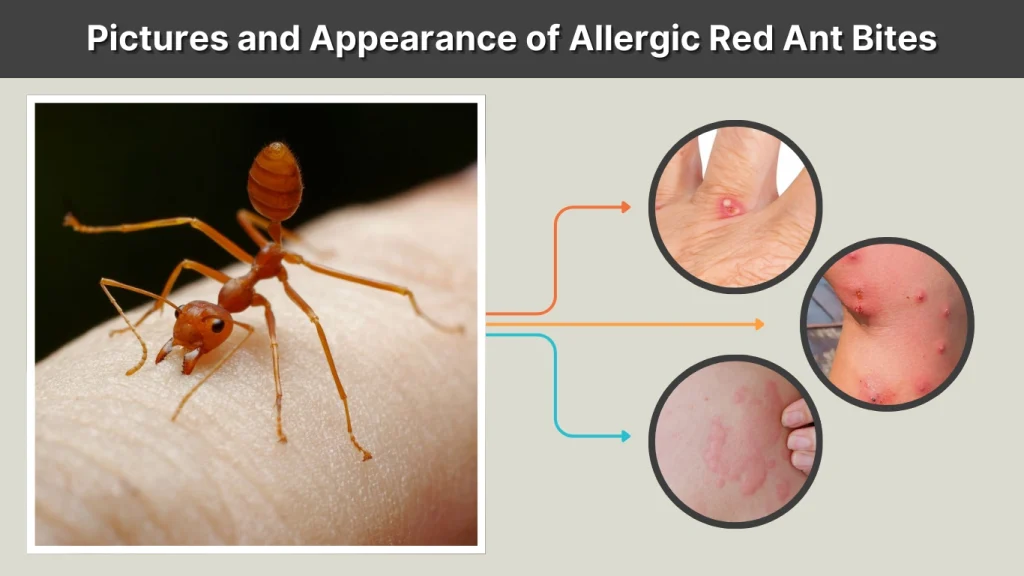
Allergic reactions often make red ant bites look worse than standard ones. Instead of small pustules, the bites may appear as:
- Large swollen patches that extend several inches
- Clusters of red bumps with intense redness
- Blisters filled with clear or yellowish fluid
- Spreading hives away from the bite site
How Long Do Allergic Reactions to Red Ant Bites Last?
- Mild reactions: Usually subside within 3–7 days with proper care.
- Moderate reactions: May take 1–2 weeks to fully heal, especially if blisters form.
- Severe allergic reactions: Require immediate treatment and can recur in future bites, sometimes lasting several weeks if untreated.
People who are allergic often experience stronger reactions each time they are bitten.
Treatment for Allergic Reaction to Red Ant Bites
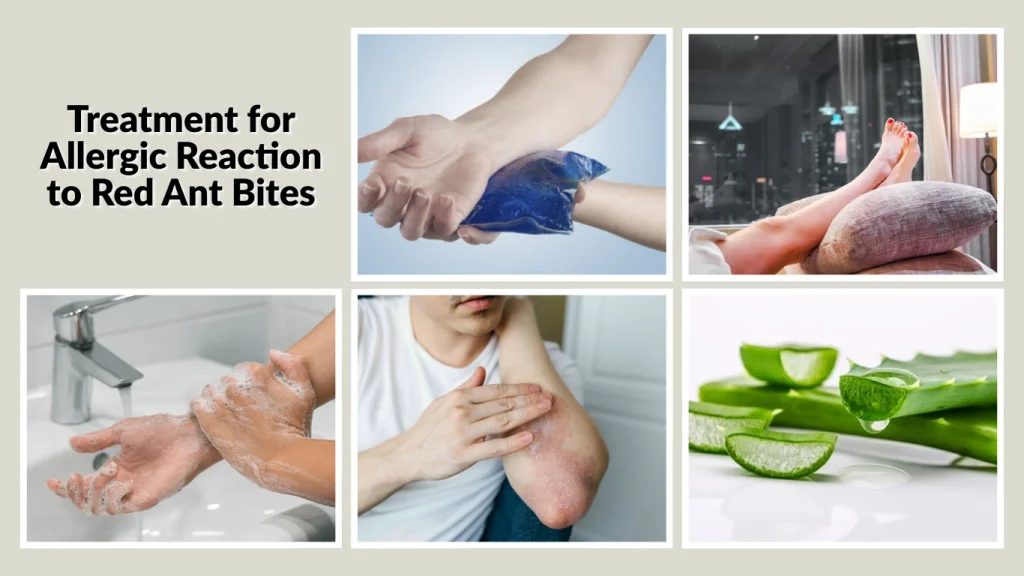
First Aid for Mild Reactions
- Wash the area with soap and cool water.
- Apply a cold compress or ice pack for 10 minutes.
- Elevate the affected limb to reduce swelling.
- Avoid scratching to prevent infection.
Home Remedies for Relief
- Aloe vera gel to cool the skin
- Baking soda paste to neutralize itching
- Honey or tea tree oil for antibacterial protection
- Oatmeal paste or bath to soothe irritation
Over-the-Counter Treatments
- Antihistamines (diphenhydramine, loratadine, cetirizine) to control itching and swelling
- Hydrocortisone cream to reduce inflammation
- Pain relievers such as ibuprofen for discomfort
Emergency Medical Treatment
For severe allergic reactions:
- Epinephrine injection (EpiPen) is the first line of treatment for anaphylaxis.
- Intravenous antihistamines and corticosteroids may be administered in a hospital.
- Oxygen and IV fluids may be required in extreme cases.
Complications of Red Ant Bite Allergies
While many red ant bites heal without issues, allergic individuals may experience complications that go beyond normal itching and swelling. Recognizing these risks helps ensure proper treatment and faster recovery.
Infected Bites
Scratching a red ant bite may provide temporary relief but can break the skin, allowing bacteria to enter. Once infected, the bite area may become increasingly red, swollen, and warm to the touch. Pus or yellow fluid may develop, and fever can occur in more serious cases. Infections should be evaluated by a doctor, as untreated bacterial infections can spread and require antibiotics.
Swollen Red Ant Bites
Some swelling around the bite is normal, but when it extends well beyond the bite site—such as an entire hand, foot, or limb—it often signals a more severe allergic reaction. This type of swelling is uncomfortable, may limit mobility, and increases the risk of infection if the skin becomes stretched or damaged. Persistent or spreading swelling should be checked by a healthcare provider.
Blisters and Scarring
In many allergic cases, painful fluid-filled blisters form at the site of red ant stings. If left alone, these blisters usually dry out and heal within days to weeks. However, popping or scratching them can cause open wounds, which may scar or leave behind dark patches of skin (hyperpigmentation). In people with sensitive skin, scars may last for months.
Recurring Allergic Reactions
For those with a known allergy, each new bite may trigger stronger reactions. The immune system becomes more sensitive to ant venom over time, which means future bites can bring more severe swelling, hives, or even anaphylaxis. People who have experienced an allergic reaction once should take precautions and carry emergency medication when outdoors.
Red Ant Allergies in Children and Pets
Children
Children’s skin is delicate and reacts more strongly to ant venom. Their bites may swell larger, itch more intensely, and take longer to heal compared to adults. Since children are more likely to scratch, the risk of infection is also higher. Parents should avoid using strong steroid creams unless prescribed by a doctor. Safer options include cold compresses, aloe vera, and pediatric antihistamines. If a child develops widespread swelling, difficulty breathing, or unusual drowsiness, seek immediate medical help.
Dogs and Pets
Red ants often attack dogs on vulnerable areas such as the paws, belly, nose, or face. Pets may react by paw licking, whining, restlessness, or refusing to eat. Severe cases may cause swelling of the muzzle, vomiting, or breathing difficulties, which require urgent veterinary care. For minor bites, rinsing the affected area with cool water and preventing licking can help. However, allergic pets should be monitored closely, as repeated bites may cause more severe reactions in the future.
Prevention of Allergic Reactions from Red Ant Bites
Avoiding red ant bites is the best way to prevent allergic reactions. With a combination of personal protection, home control, and preparedness, the risks can be greatly reduced.
Personal Protection
- Wear closed shoes, socks, and long pants when working in gardens, parks, or wooded areas.
- Avoid sitting or lying directly on grass where ant colonies are common.
- Shake out clothing, shoes, and blankets before use, especially if left outside.
Home and Yard Control
- Keep your yard clean by removing food scraps and pet food that attract ants.
- Treat ant mounds by pouring boiling water, vinegar, or using commercial ant baits.
- For severe infestations, call professional pest control services to eliminate colonies safely.
Allergy Preparedness
- Carry an EpiPen or epinephrine injector if you have a history of severe allergic reactions.
- Inform family members, friends, or coworkers about your allergy so they know what to do in an emergency.
- Wear a medical alert bracelet indicating your allergy to red ant bites for quick identification in case of anaphylaxis.
FAQs About Allergic Reactions to Red Ant Bites
Can red ant bites cause death?
Yes, although rare. Severe allergic reactions, especially anaphylaxis, can become life-threatening within minutes. Without epinephrine or emergency treatment, swelling in the throat or a sharp drop in blood pressure can be fatal.
How fast do allergic reactions start after a bite?
Most reactions occur within minutes of being bitten or stung, but some may be delayed for several hours. This is why it’s important to monitor symptoms closely for at least 24 hours after being bitten by red ants.
Should you pop red ant bite blisters?
No. Popping blisters increases the risk of infection and slows down healing. Instead, keep the blister clean, covered if needed, and allow it to heal naturally.
How can I tell if my bite is infected or allergic?
An infection is usually marked by pus, increased pain, fever, or red streaks on the skin, while an allergic reaction spreads swelling, hives, and itching beyond the bite site. If you are unsure, it’s safest to seek medical advice.
Can allergies get worse with repeated bites?
Yes. With each new bite, the immune system may become more reactive to red ant venom. Someone who once had only mild swelling could develop hives or even anaphylaxis in the future. That’s why people with known allergies must always be prepared.
