

Rice weevils are one of the most common pantry pests found in stored grains like rice, wheat, and corn. Scientifically known as Sitophilus oryzae, these tiny beetles are capable of causing serious food damage—both at home and in large-scale grain storage. Despite their small size, a single pair can multiply rapidly and infest entire containers of rice before you even notice them.
In this article, we’ll explore everything you need to know about rice weevils: what they look like, how their life cycle works, how to identify signs of infestation, and most importantly—how to control and eliminate them. Whether you’re dealing with weevils in rice at home or researching their agricultural impact, this guide covers it all.
What Is a Rice Weevil?
The rice weevil (Sitophilus oryzae) is a small, reddish-brown to nearly black beetle that infests stored grains such as rice, wheat, corn, and pasta. It belongs to the family Curculionidae and is one of the most destructive pests in both household pantries and grain storage facilities worldwide.
Unlike many other pantry pests that feed on the surface, rice weevils can bore into whole grains. The females lay eggs inside the grain kernels, where the larvae hatch and develop, making early infestations difficult to detect.
Although they pose no direct threat to human health, their presence in food can lead to waste, contamination, and financial loss.
Rice Weevil in Australia and Other Regions
Rice weevils are found globally, including in warm and humid parts of Australia, where they thrive in improperly stored grains. Their presence often goes unnoticed until grain damage becomes visible or adult beetles emerge.
Rice Weevil Identification

Identifying a rice weevil early is crucial for stopping an infestation before it spreads. These beetles are often confused with similar weevils like the corn weevil, but a few distinct features can help you tell them apart.
Rice weevils typically measure around 2.5–4 mm in length. They have a hard-shelled body with four faint reddish or yellowish spots on the back. Their most notable feature is the long snout (or “rostrum”) extending forward from the head, which they use to chew into grains.
While similar in size, rice weevils vs corn weevils can be differentiated under magnification by subtle differences in size and snout shape. Also, black rice weevils is a term sometimes used when adults appear very dark or when lighting affects their appearance.
You may also notice:
- Tiny holes in rice grains or kernels
- Fine dust collecting at the bottom of storage containers
- Movement of adult beetles crawling near food packages
High-resolution pictures or close-up images of rice weevils can help with confirmation, especially if you’re unsure whether you’re dealing with weevils or another pantry pest.
Rice Weevil Size and Appearance
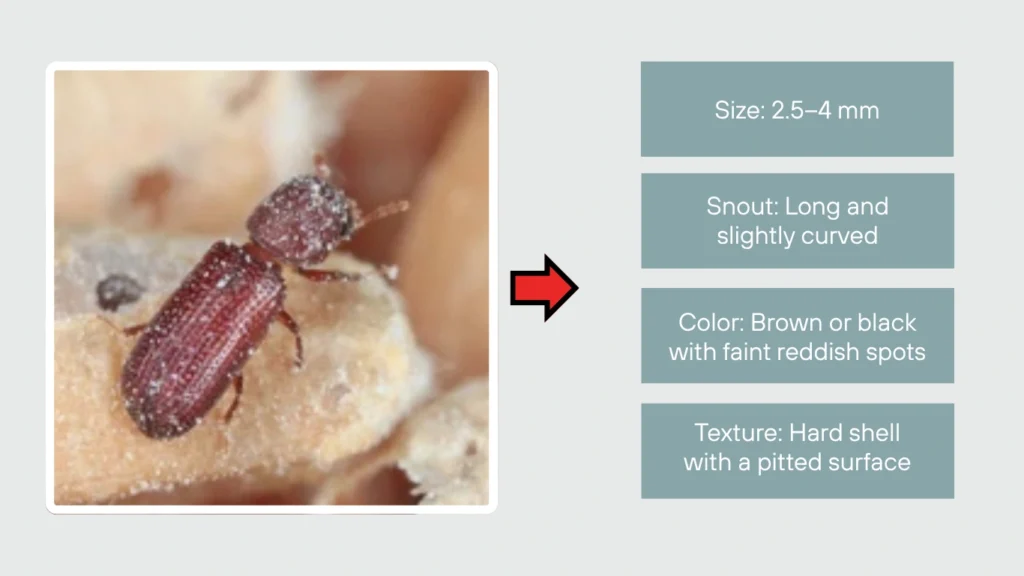
Rice weevils are small but easy to identify when you know what to look for. Adult rice weevils typically measure between 2.5 to 4 millimeters in length (about 1/8 inch). They have a hard, elongated body and a distinct curved snout, which they use for boring into grains.
The body color ranges from reddish-brown to nearly black, often with four lighter yellow or reddish spots on the back. These spots help distinguish rice weevils from similar species, such as the corn weevil.
Their antennae are elbowed and arise from the snout, and they can fly short distances—helping them move between nearby grain containers or shelves.
Key Identification Features:
- Size: 2.5–4 mm
- Snout: Long and slightly curved
- Color: Brown or black with faint reddish spots
- Texture: Hard shell with a pitted surface
Early detection is easier when you recognize these features and examine both the rice and the pantry environment carefully.
Life Cycle of Rice Weevil

The rice weevil has a complete metamorphosis consisting of four main stages: egg, larva, pupa, and adult. This lifecycle occurs entirely inside a single grain kernel, making infestations difficult to detect in the early stages.
Stage 1: Egg
A female rice weevil chews a hole into a whole grain—typically a rice or wheat kernel—and lays a single egg inside. She then seals the hole with a gelatinous secretion. One female can lay between 300 and 400 eggs during her lifetime.
Stage 2: Larva
The egg hatches within 3 to 5 days, and a white, legless larva begins feeding inside the grain. This larval stage causes the most internal damage, hollowing out the grain from within.
Stage 3: Pupa
After feeding for 10 to 14 days, the larva enters the pupal stage. It transforms inside the grain without any external signs. This stage lasts around 4 to 6 days.
Stage 4: Adult
The fully developed adult chews its way out of the grain and emerges. Adult rice weevils can live for 4 to 5 months, continuing the cycle by mating and laying eggs.
Under warm and humid conditions, the entire life cycle may complete in just 25 to 30 days, allowing rapid population growth.
Rice Weevil Infestation

Rice weevil infestations usually begin unnoticed, especially when buying pre-packaged rice or grains already carrying eggs or larvae. Over time, the infestation becomes visible as adults emerge or damage signs appear in the grains.
Common Signs of Infestation:
- Small, round holes in grains or rice kernels
- Accumulation of grain dust or powder at the bottom of containers
- Live adult weevils crawling in rice, pantry shelves, or near storage bins
- Rice that smells musty or has reduced weight
These pests can also spread to nearby food items like flour, cornmeal, or pasta, especially if stored in open or poorly sealed containers.
If you find rice weevils in your rice or house, it’s important to act quickly. A few unnoticed insects can lead to a major infestation in just a few weeks due to their fast reproductive cycle.
Why Are Rice Weevils Dangerous?
Rice weevils are not dangerous in the traditional sense—they don’t bite, sting, or transmit disease—but they are considered highly destructive pests due to the economic and food-related damage they cause.
They burrow deep into rice grains to lay eggs, and their larvae consume the interior of each grain, rendering it hollow and nutritionally worthless. If left unchecked, a single infestation can spoil entire batches of rice or grain products.
The real concern is food waste and contamination. Infested rice often smells musty, appears dusty, and may contain broken or discolored grains. This not only reduces the food’s quality but can also deter buyers in commercial settings.
Can You Eat Rice with Weevils?
While it is technically possible to eat rice that contains weevils or their larvae, it is not recommended. Consuming contaminated grains is unappetizing, and in some cases, could cause mild stomach upset. Most people choose to discard the affected rice or clean it thoroughly.
Rice Weevil Behavior and Feeding
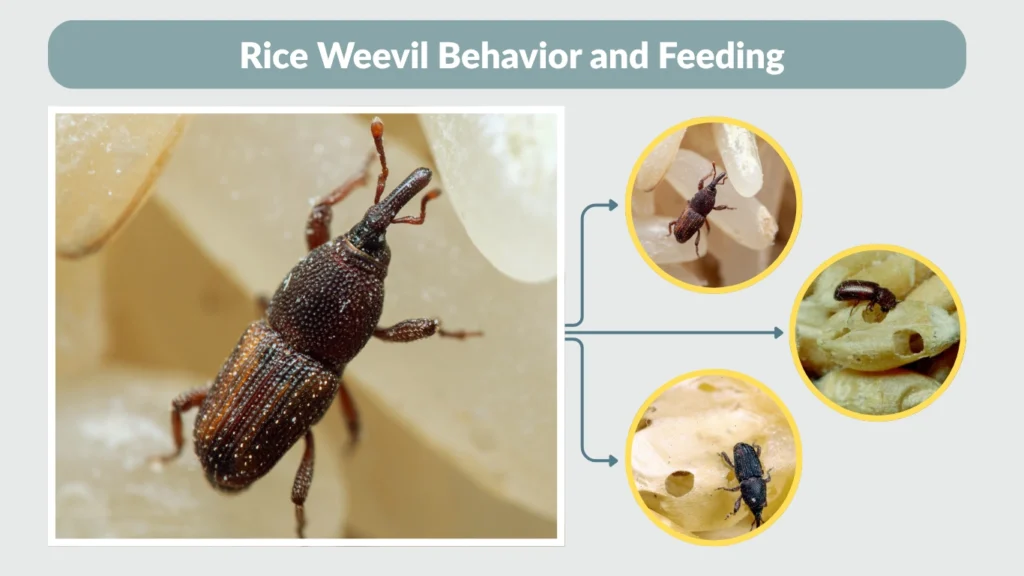
Rice weevils are stealthy and efficient grain feeders. They prefer whole grains, especially rice, but will also infest wheat, maize, barley, and even pasta if stored long enough in warm, humid conditions.
Unlike other pantry pests that feed externally, rice weevils feed from inside the grain, making detection harder during the early stages of infestation. They can chew through packaging materials like paper, plastic bags, or cardboard to access food sources.
Their specialized mouthparts are located on a long snout, which they use for both feeding and boring holes into grains. This allows the female to lay her eggs inside the kernels—completely hidden from view until adults emerge.
How to Get Rid of Rice Weevils
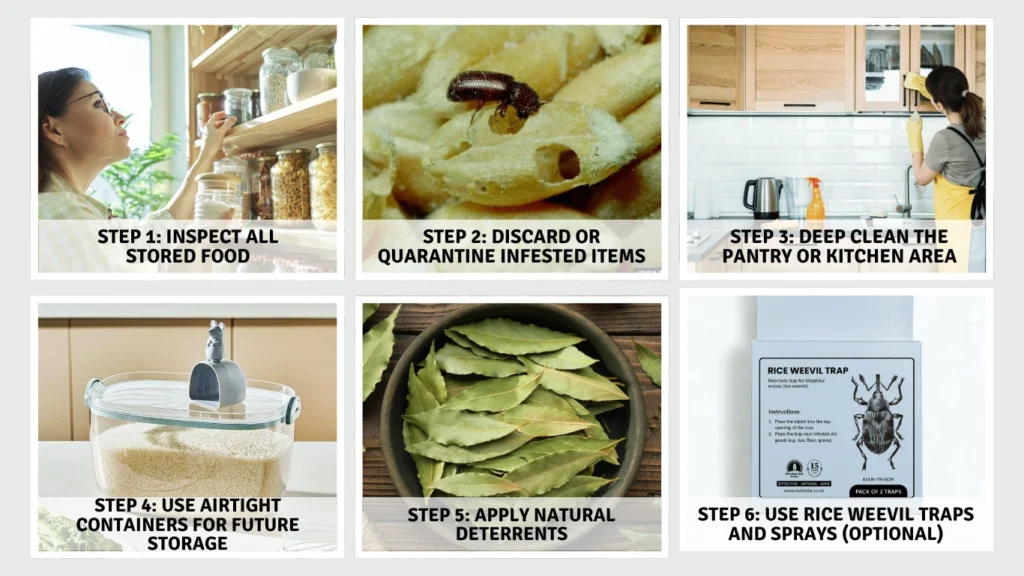
Eliminating rice weevils involves a multi-step process that tackles both visible adults and hidden eggs or larvae that may still be in your food or storage area. Since rice weevils can multiply rapidly and infest other dry goods, acting quickly and thoroughly is essential. Below is a complete, step-by-step approach for getting rid of rice weevils effectively.
Step 1: Inspect All Stored Food
Start by checking all dry foods, especially:
- Rice (white, brown, basmati, etc.)
- Grains (wheat, oats, barley, millet)
- Pasta, noodles, and cereal
- Flour and cornmeal
- Dried beans and lentils
Even if rice weevils are only seen in one container, they may have spread to nearby items. Look for fine dust, webbing, exit holes in grains, or live crawling insects.
Step 2: Discard or Quarantine Infested Items
If the infestation is severe or larvae are actively feeding inside grains, the safest option is to throw the infested rice away in a sealed plastic bag and dispose of it outside your home.
For lightly infested items or if you want to salvage the rice:
- Freeze the rice at −18°C (0°F) for at least 4 days to kill all stages of the weevil.
- Heat-treat the rice by placing it in an oven at 120°F (49°C) for 30 minutes.
These methods will stop further development of eggs or larvae inside the grains.
Step 3: Deep Clean the Pantry or Kitchen Area
Weevils often hide in corners, cracks, and tiny food crumbs, so it’s crucial to clean your storage areas thoroughly.
- Vacuum all pantry shelves, corners, and gaps, especially near the infested items.
- Remove shelf liners and replace them with new ones after cleaning.
- Wash shelves and containers with hot, soapy water, and then wipe with vinegar or a mild disinfectant.
- Don’t forget small storage bins, drawers, and even spice racks, where overlooked grains may attract new pests.
Step 4: Use Airtight Containers for Future Storage
To prevent re-infestation:
- Transfer rice and dry foods into airtight containers made of plastic, glass, or metal with tight-fitting lids.
- Avoid keeping grains in open bags or loosely closed boxes.
- If buying in bulk, divide into smaller containers and store in cool, dry places.
Proper storage cuts off weevils’ access to oxygen and limits their ability to breed.
Step 5: Apply Natural Deterrents
Certain natural products help repel or discourage weevils from entering your pantry:
- Bay leaves: Place a few dry bay leaves in rice containers or on pantry shelves.
- Clove or neem leaves: Their strong aroma is disliked by many pantry pests.
- Diatomaceous earth (food-grade): Sprinkle lightly in pantry cracks (not directly on food) to damage weevil exoskeletons and prevent movement.
These options are non-toxic and safe to use around stored food items.
Step 6: Use Rice Weevil Traps and Sprays (Optional)
For ongoing problems:
- Set up pheromone traps in your pantry to capture adult weevils.
- Use rice weevil killer sprays labeled safe for pantry use, but only after removing food from the area.
- In commercial or severe cases, consult a pest control professional for fumigation or targeted treatment.
Rice Weevil Control and Management

Controlling rice weevils is not a one-time action—it requires continuous attention to storage habits and surroundings. Once you’ve eliminated an infestation, implementing a strong management strategy will help keep weevils from returning.
Long-Term Storage Practices
Store rice, flour, and other grains in airtight, insect-proof containers made of glass, thick plastic, or metal. Avoid leaving products in their original bags, especially paper or thin plastic, as rice weevils can easily chew through them.
Choose cool, dry storage areas. Rice weevils thrive in warm, humid conditions, so keeping your pantry well-ventilated and dry discourages growth.
Smart Purchasing
Buy grains in smaller quantities that can be consumed within a reasonable time. Check packaging dates and inspect rice for damage or dust before purchasing. If buying in bulk, consider freezing portions that won’t be used within 2–3 weeks.
Regular Pantry Maintenance
Clean shelves and storage bins regularly to remove crumbs and hidden eggs. Wipe surfaces with a mixture of vinegar and water for added sanitation. Set routine monthly checks to catch issues early before they spread.
Rice Weevil Traps and Products
When facing repeated or hard-to-control infestations, commercial traps and control products can be helpful. These are particularly useful in bulk storage settings or large households where grains are stored for months.
Traps
Pheromone-based rice weevil traps lure adult weevils using scent attractants. They are:
- Non-toxic
- Easy to use
- Effective at monitoring infestation levels
Place them near storage bins or on pantry shelves, but away from air vents or direct sunlight.
Sprays and Dusts
Use rice weevil killer sprays labeled safe for pantry use only after removing food items. Never spray directly onto grains. For inaccessible cracks, food-safe diatomaceous earth or silica dust can be sprinkled lightly.
While sprays help in adult weevil control, they won’t eliminate eggs or larvae hidden in rice. Always combine with sanitation and proper storage for full effectiveness.
Are Rice Weevils Found in Homes?
Yes—rice weevils are commonly found in household pantries, especially where grains, rice, or pasta are stored in warm and moist environments. Their presence doesn’t mean your home is dirty; it often means a package was already infested when purchased.
Common Household Sources:
- Bulk rice bags left open or loosely tied
- Long-forgotten rice packets at the back of the shelf
- Flour, cereal, or pasta stored for several months without inspection
Once in your home, they can spread quickly and move between cupboards and containers. It’s important to inspect not only rice but other grain-based foods nearby. Even pet food, birdseed, or forgotten snacks can become breeding grounds if left unchecked.
FAQs
What causes rice weevils in stored rice?
Most infestations start from eggs or larvae already present in the rice at the time of purchase. Warm, humid conditions accelerate their development.
Can rice weevils spread to other food?
Yes, rice weevils can infest other grains such as wheat, pasta, oats, cornmeal, flour, and even birdseed or dry pet food if left in open containers.
Are rice weevils harmful if eaten accidentally?
They are not toxic and pose no known health risks to humans. However, eating weevil-infested rice is generally considered unappetizing and may cause minor digestive discomfort for some people.
How do rice weevils reproduce so fast?
Females can lay up to 400 eggs in their lifetime. Under warm conditions, their full life cycle completes in 30 days, leading to rapid population growth if left uncontrolled.
Can I still eat rice if I find weevils in it?
Technically yes, after thorough cleaning or freezing. But most people prefer to discard or heat-treat it. Freezing for 3–4 days can kill all weevil stages and salvage the grains if infestation is light.
