
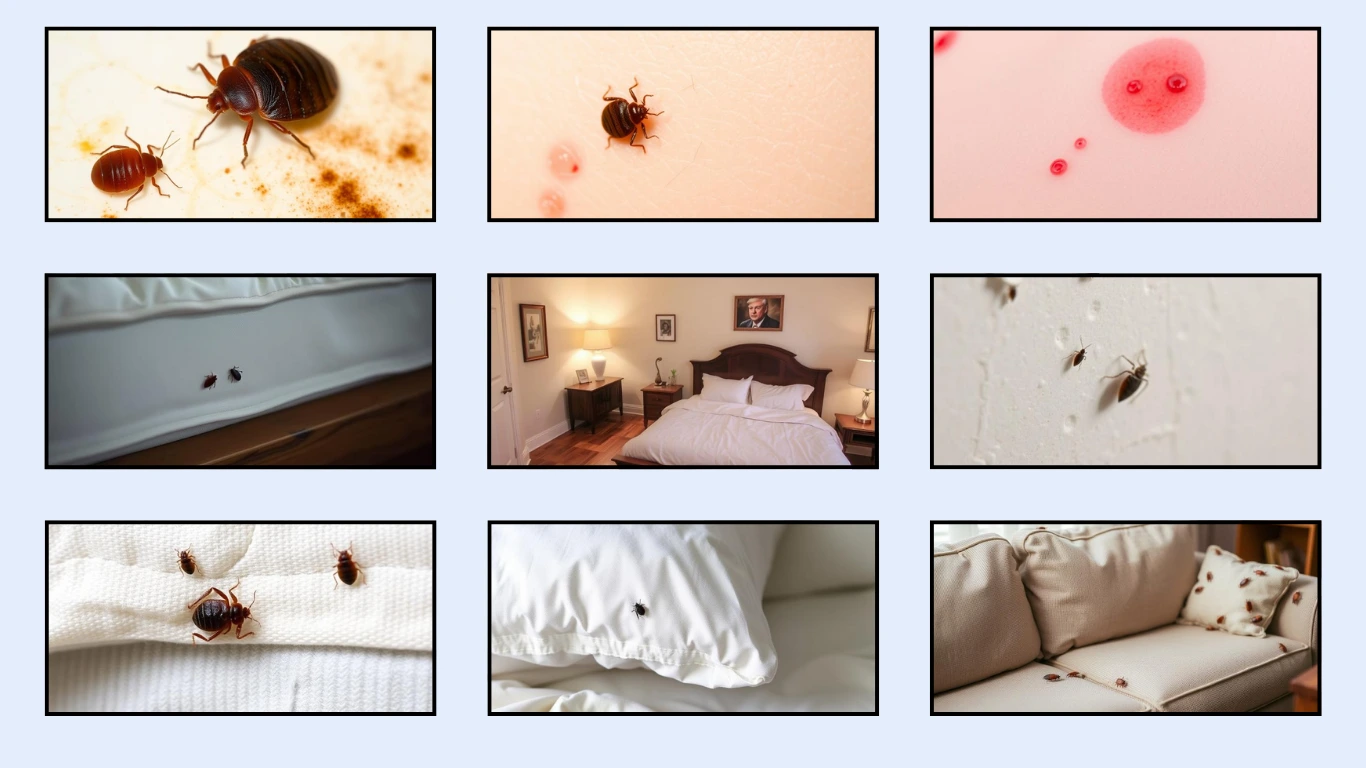
Bed bugs are sneaky pests that hide in cracks, crevices, and bedding, making them difficult to detect early. They come out at night to feed on human blood, leaving behind telltale signs like bites, stains, and a musty odor. Whether they are in your sheets, mattress, walls, or furniture, identifying them early is crucial to preventing a full-blown infestation.
This guide covers the 10 key signs of bed bugs in different areas of your home so you can take action before the problem worsens.
1. General Signs of Bed Bugs

Signs of Bed Bugs
Bed bugs are small, reddish-brown insects that hide in cracks and crevices. They come out at night to feed on human blood. If you wake up with itchy bites or notice small rust-colored stains on your bedding, you might have bed bugs.
Symptoms of Bed Bugs
The most common symptom is itchy, red welts on your skin, often in a line or cluster. Some people may not react to bites, making detection harder. Other symptoms include a musty odor in the room and tiny eggs or shed skins in mattress seams.
Signs That You Have Bed Bugs
Check for small, dark fecal spots on sheets, pillowcases, or walls. You may also find live bed bugs hiding in mattress seams, bed frames, or furniture cracks. If you see tiny white eggs or shed exoskeletons, it’s a clear sign of infestation.
Signs of Bed Bug Infestation
A large infestation will have multiple signs—live bugs, strong musty odors, bloodstains on sheets, and increased bites. Bed bugs reproduce quickly, so early detection is crucial to prevent a full-blown infestation. If you notice these signs, take action immediately.
2. Early Signs of Bed Bugs

Early Signs of Bed Bugs
Bed bugs are difficult to spot at first because they hide during the day. One of the earliest signs is waking up with small, red, itchy bites, often in a straight line or cluster. You might also notice a mild, musty odor in the room, caused by bed bug secretions.
Early Signs of Bed Bugs on Sheets
Check your sheets for tiny rust-colored stains. These occur when bed bugs are crushed while feeding or from small blood spots left behind after a bite. You may also find tiny dark fecal spots that look like ink smudges.
Early Signs of Bed Bugs on a Mattress
Inspect the seams, edges, and tags of your mattress for tiny white eggs, shed skins, or live bed bugs. You might also see dark stains or small holes where they hide. If you notice these early signs, act quickly to prevent a full infestation.
3. Signs of Bed Bugs on Sheets

Bed bugs leave noticeable signs on bed sheets, especially after feeding. Look for:
- Blood stains – Small, rust-colored spots from crushed bugs or bites.
- Dark fecal spots – Tiny black specks that smear when touched with a damp cloth.
- Shed skins – Pale-yellow, paper-thin exoskeletons from growing bed bugs.
- Tiny white eggs – Usually found along seams or in fabric folds.
Check your pillowcases, blankets, and surrounding areas, as bed bugs can move around while feeding. If you notice any of these signs, inspect your mattress and bed frame for further evidence.
4. Signs of Bed Bugs on a Mattress

Your mattress is a prime hiding spot for bed bugs. They prefer dark, tight spaces, making the seams and edges of the mattress their favorite place to stay. Signs to look for include:
- Black or brown stains – Fecal spots along seams and corners.
- Live bugs – Small, reddish-brown insects, about the size of an apple seed.
- Eggs and shells – Tiny, pearly-white eggs, often clustered in hidden areas.
- A musty odor – A sweet, sickly smell caused by bed bug pheromones.
Lift your mattress and check underneath. Bed bugs can also hide in the box spring or bed frame.
5. Signs of Bed Bugs in the House

Bed bugs don’t just stay in the bedroom; they spread to other areas of the house. Common hiding spots include:
- Couches and chairs – Check cushions, seams, and under the fabric.
- Curtains and carpets – Look for tiny dark stains near the floor.
- Electrical outlets – Bed bugs may hide inside wall outlets or baseboards.
- Closets and clothing – Infested clothes may have eggs or skins attached.
If bites persist despite sleeping in different rooms, the infestation has likely spread. Early detection helps prevent further spread.
6. Signs of Bed Bugs on Walls

Though not their primary hiding spot, bed bugs can use walls to move between rooms. Check for:
- Tiny dark stains – Fecal spots near baseboards, wall corners, or picture frames.
- Cracks and crevices – Bugs may squeeze into small gaps in drywall.
- Wall hangings – Behind paintings, mirrors, or wallpaper edges.
If you see bed bug signs on walls, inspect nearby furniture and the floor for more evidence.
7. Signs of Bed Bugs on a Bed

Bed bugs hide in different parts of the bed, not just the mattress. Inspect these areas:
- Headboard – Especially if it’s wooden, with cracks or decorative carvings.
- Bed frame joints – Small gaps where bugs can squeeze in.
- Under the bed – If you store items there, check for bugs inside boxes or fabric folds.
If you find bed bugs on your bed, act fast. Wash bedding in hot water, vacuum your mattress, and consider professional pest control to eliminate them before they spread further.
8. Signs of Bed Bugs on Pillows

Bed bugs can hide in pillows, especially in the seams and fabric folds. Since pillows are close to your head, bites on your face, neck, or shoulders could indicate their presence. Signs to look for:
- Small blood stains – Tiny red or rust-colored spots from bites or crushed bugs.
- Dark fecal spots – Small black specks that smear when wiped with a damp cloth.
- Shed skins or eggs – Tiny, pale-yellow skins or pearly white eggs along pillow seams.
- A musty odor – A strong, unpleasant smell from bed bug secretions.
Check pillowcases, pillow seams, and the surrounding bed area for further evidence. Washing pillows in hot water and drying them on high heat can help eliminate bed bugs.
9.Signs of Bed Bugs on Furniture

Bed bugs don’t just stay in beds; they also infest furniture, especially cushioned pieces like sofas and chairs. Look for:
- Dark stains – Fecal spots along seams, cushions, and under furniture.
- Eggs and shed skins – Found in fabric folds, seams, and crevices.
- Live bed bugs – Tiny, reddish-brown insects hiding in cracks or beneath upholstery.
- A musty odor – A strong, musty smell may indicate an infestation.
Check under furniture, inside drawers, and along the seams of upholstered pieces. Vacuuming and steam-cleaning furniture can help reduce bed bug activity.
10. Signs of Bed Bugs on Clothes
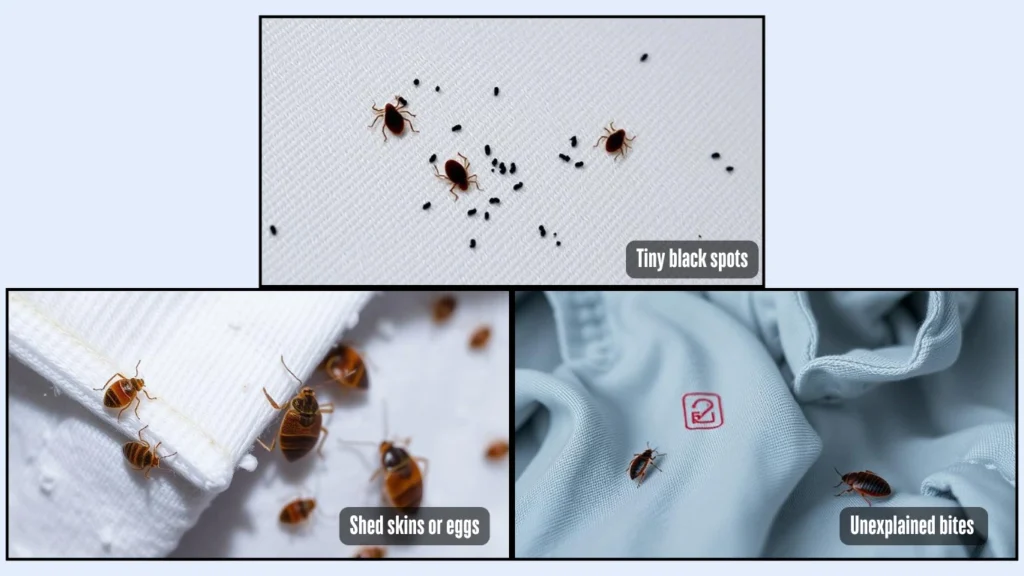
Bed bugs can cling to clothing, especially if infested laundry is stored near the bed. Signs include:
- Tiny black spots – Bed bug feces on fabric.
- Shed skins or eggs – Found in clothing folds or along seams.
- Unexplained bites – If you notice bites after wearing certain clothes, they might be infested.
To prevent spread, store clothes in sealed plastic bags and wash them in hot water. Drying on high heat for at least 30 minutes kills bed bugs and their eggs.
