

The Striped Bark Scorpion (Centruroides vittatus) is one of the most frequently encountered scorpions in the southern United States. Its distinctive striped body, ability to glow under black light, and painful sting make it both fascinating and feared. Found in Texas, Missouri, and surrounding states, this scorpion has adapted to survive in wild and urban environments. Whether you’ve spotted one in your yard or want to know more about this desert dweller, this guide breaks down everything from its appearance and sting to safety tips and fun facts.
Species Overview

The Striped Bark Scorpion belongs to the family Buthidae, which includes many of the world’s venomous scorpions. It’s easily recognized by the two dark stripes running along its back and a pale yellow to tan body. Measuring around 2.5 to 3 inches, it’s medium-sized compared to other scorpions but far more common in populated areas.
It has slender pincers and a thin tail with a curved stinger at the tip. Despite its intimidating appearance, it’s not aggressive toward humans and usually stings only when threatened or accidentally disturbed.
Like most scorpions, it fluoresces under UV light, glowing a bright greenish-blue. This trait is useful for researchers and homeowners looking to locate them at night.
Range and Habitat

The Striped Bark Scorpion has one of the widest ranges of any North American scorpion. It is found throughout:
- Texas
- Oklahoma
- Missouri
- Kansas
- Arkansas
- Parts of New Mexico and Arizona
It prefers warm, dry environments but has adapted to more humid regions as well. In the wild, it hides under rocks, tree bark, fallen logs, or leaf litter during the day. In suburban and urban areas, it’s often discovered in garages, basements, behind furniture, or even in beds and shoes.
These scorpions can climb and squeeze into tight spaces, making them hard to detect without knowing their hiding spots.
Behavior and Lifestyle

Striped Bark Scorpions are nocturnal, which means they are most active at night. During the day, they remain hidden to avoid dehydration and predators. At night, they emerge to hunt for insects and other small prey.
They rely on tiny sensory hairs on their pincers and legs to detect movement and vibrations. This allows them to locate prey in complete darkness. Once they detect prey, they grab it with their pincers and may sting to inject venom if needed.
While generally solitary, they may gather in warm, sheltered areas—especially during colder months. It’s not unusual to find several sharing a hiding spot.
Diet and Feeding Habits

The diet of the Striped Bark Scorpion consists mainly of:
- Crickets
- Small spiders
- Beetles
- Moths
- Roaches
They are efficient hunters, preferring to ambush their prey rather than chase it. In captivity, they can be fed live insects two or three times a week. Overfeeding is discouraged, as these scorpions can survive on minimal food and may become stressed if crowded or overfed.
Occasionally, they exhibit cannibalistic behavior, especially when food is scarce or hiding spaces are limited.
Sting, Symptoms, and Treatment
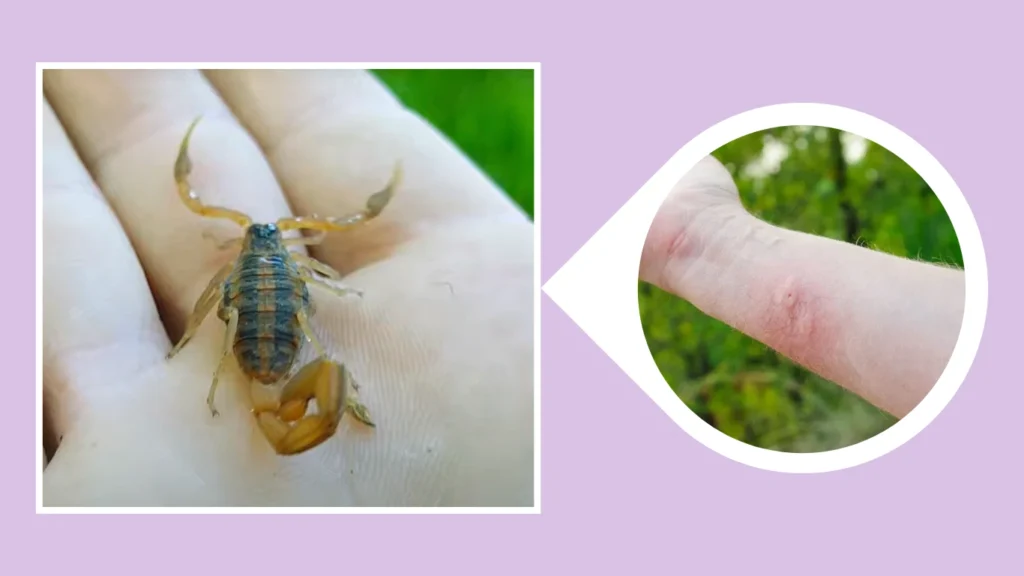
What Does a Striped Bark Scorpion Sting Feel Like?
A sting from a Striped Bark Scorpion is often described as a sharp prick or a bee sting, followed by a burning or tingling sensation. The pain is usually localized but can be intense, depending on the individual’s sensitivity.
Common Symptoms After a Sting
Most healthy adults will experience mild to moderate symptoms, such as:
- Localized pain or burning at the sting site
- Swelling or redness
- Tingling or numbness around the affected area
These symptoms typically fade within a few hours, but discomfort may persist for up to a day in some cases.
Who Is at Greater Risk?

While most stings are not serious, some individuals may experience stronger reactions, including:
- Young children – due to their smaller body size
- Elderly individuals – especially with underlying health conditions
- People with allergies or immune sensitivities
- Pets (dogs and cats) – who may display distress or unusual behavior
First Aid and Sting Treatment
For most stings, basic first aid is enough. Follow these steps:
- Clean the sting site with mild soap and water to prevent infection.
- Apply a cold compress to the area for 10–15 minutes at a time to reduce swelling and numb the pain.
- Take over-the-counter medication like acetaminophen or an antihistamine to manage discomfort. Avoid aspirin in children.
- Monitor symptoms, especially if the sting occurred on the face, neck, or in sensitive individuals.
Identification Tips
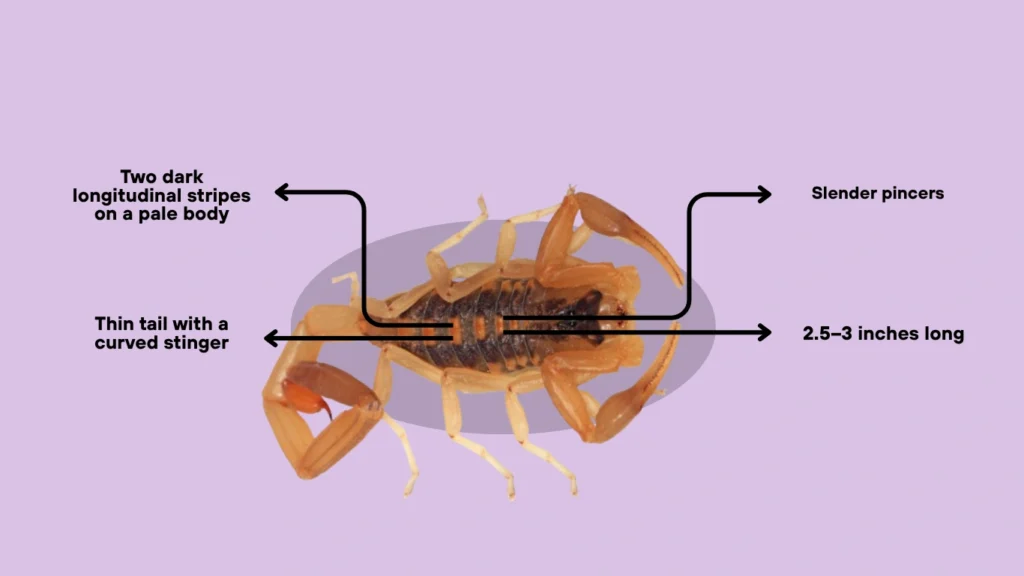
Identifying a Striped Bark Scorpion is simple if you know what to look for:
- Two dark longitudinal stripes on a pale body
- Thin tail with a curved stinger
- Slender pincers
- 2.5–3 inches long
They’re most commonly confused with the Arizona Bark Scorpion, which has thinner pincers, is more venomous, and is largely found in southwestern states like Arizona and Nevada.
In Texas and surrounding areas, the Striped Bark Scorpion is the dominant bark species and most frequently responsible for household encounters.
Dangers and Safety Tips
While they aren’t deadly, Striped Bark Scorpions can still cause panic and pain when found indoors. They’re excellent climbers and can enter through small gaps in foundations, windows, and doors.
To keep them out of your home:

- Seal all wall and floor cracks
- Install door sweeps and window screens
- Keep outdoor woodpiles away from walls
- Declutter indoor storage spaces
- Don’t leave shoes, clothes, or towels on the floor
- Use sticky traps in suspected hiding areas
UV flashlights can be very effective for nighttime detection, especially around entry points, baseboards, or behind furniture.
5 Fun Facts
- They glow under black light due to compounds in their exoskeleton.
- Mothers give birth to live young and carry them on their back until the first molt.
- They can survive without food for months, conserving energy through low activity.
- Despite their sting, they are non-aggressive and usually retreat when disturbed.
- They don’t burrow, unlike some other scorpion species—instead, they hide in cracks and debris.
FAQs
Are Striped Bark Scorpions poisonous?
Yes, they are venomous, but not usually dangerous to healthy adults. Their sting may cause pain, swelling, and tingling that typically fades within hours without serious medical complications.
What do Striped Bark Scorpions eat?
They feed on small insects like crickets, spiders, beetles, and roaches. As nocturnal hunters, they rely on vibration-sensing hairs to detect and ambush prey in the dark.
Where are Striped Bark Scorpions commonly found?
They are most common in Texas, Oklahoma, and Missouri. Indoors, they hide in dark, quiet areas like closets, shoes, under beds, and behind furniture—especially during hot or dry weather.
What should I do if I’m stung?
Wash the sting area with soap and water, apply a cold compress, and monitor symptoms. Seek medical care if the person stung is a child, elderly, allergic, or if symptoms worsen.
How can I keep them out of my house?
Seal cracks in walls and doors, use door sweeps, clear debris near foundations, and store shoes and clothing off the floor. UV flashlights can help spot them at night.
Conclusion
The Striped Bark Scorpion is a resilient, adaptable species that has learned to thrive in both natural and human environments. While its sting is painful, it’s rarely dangerous and can be easily managed with care and awareness. By understanding its behavior and taking preventive measures, you can greatly reduce the chances of an encounter—and appreciate this desert survivor from a safe distance.
