

Tiny lines of sugar ants marching across the kitchen counter are a frustrating sight for many homeowners. These small ants are highly attracted to anything sweet, from spilled juice and honey jars to fruit left on the table. While they may not be as destructive as carpenter ants or as aggressive as fire ants, sugar ants can form large colonies inside homes, making them one of the most common household pests. To control them effectively, it’s important to understand how they get inside, what causes them to stay, and what their sudden appearance may mean.
Understanding Sugar Ants in the House
The term “sugar ants” is commonly used to describe tiny household ants that prefer sugary substances. While there is a true sugar ant species (Camponotus consobrinus), in most countries, people use this name for odorous house ants, pavement ants, pharaoh ants, or black ants that appear indoors.
These ants are typically small—about 1/16 to 1/8 inch long—and often black, brown, or reddish. Their defining trait is their attraction to sweets, although they also consume proteins and greasy foods when available. Because of their flexible diet and ability to nest in hidden places, sugar ants can thrive inside walls, floors, and even houseplants.
How Do Sugar Ants Get in Your House?

Sugar ants are masters of finding tiny entry points into homes. A few scout ants may discover food, and once a trail is established, hundreds can follow within hours. Common entryways include:
- Cracks in walls or foundations – Even the smallest gap is enough for ants to squeeze through.
- Doors and windows – Poorly sealed frames give them easy access.
- Plumbing and utility lines – Ants often use pipes and wiring to travel between outdoors and indoors.
- Ventilation or crawl spaces – Moist, hidden areas encourage nesting and foraging.
Their activity often increases during warm and rainy seasons. In spring, ants emerge from outdoor nests to forage indoors. In summer, they invade kitchens in search of sugary foods. In winter, they may move inside entirely to escape the cold, creating permanent colonies within walls.
What Causes Sugar Ants in the House?
Ant infestations don’t happen randomly. Certain conditions attract and sustain sugar ants inside your home.
- Food sources left unsealed – Sugar, honey, cookies, pet food, and fruit are magnets for ants. Even small crumbs can sustain a colony.
- Dirty dishes or spills – Leftover residue on plates or sticky countertops provides easy feeding opportunities.
- Moisture problems – Leaky faucets, damp basements, and humid bathrooms are ideal for nesting.
- Houseplants – Moist soil in pots often shelters sugar ant colonies.
- Warmth and shelter – Indoor spaces provide protection from predators and seasonal weather.
A house that offers both food and water can quickly become home to an entire colony.
Signs of a Sugar Ant Infestation

It’s easy to miss the first signs of sugar ants until they’ve multiplied. Recognizing them early helps you act before the colony grows too large.
- Ant trails – The most obvious sign is a steady line of tiny ants moving between food and their nest.
- Nests inside – Small cavities in walls, floors, and potted plants may serve as nests.
- Winged sugar ants – The presence of ants with wings indoors signals a mature colony ready to reproduce and spread.
- Sudden appearance of ants everywhere – Seeing large numbers of ants in multiple rooms often means there is a serious infestation inside the house.
Because sugar ants are tiny, their nests are not always visible. Instead, you’ll notice their numbers increasing rapidly, especially in kitchens, pantries, and bathrooms.
Sugar Ant Nest in House
Sugar ants may choose various spots inside the home to establish their colonies. Their nests are often hidden and difficult to detect. Common nesting sites include:
- Inside walls and floorboards – Cavities provide safe, dark shelters.
- Near plumbing lines – Moisture makes these areas attractive.
- Under kitchen appliances – Ovens, refrigerators, and dishwashers hide food crumbs and warmth.
- In houseplants – Soil provides the perfect environment for small colonies.
Finding a nest involves following ant trails back to their source. Once the nest is located, treatments like bait or insecticide can be applied directly for better results.
Sugar Ant Infestation Meaning
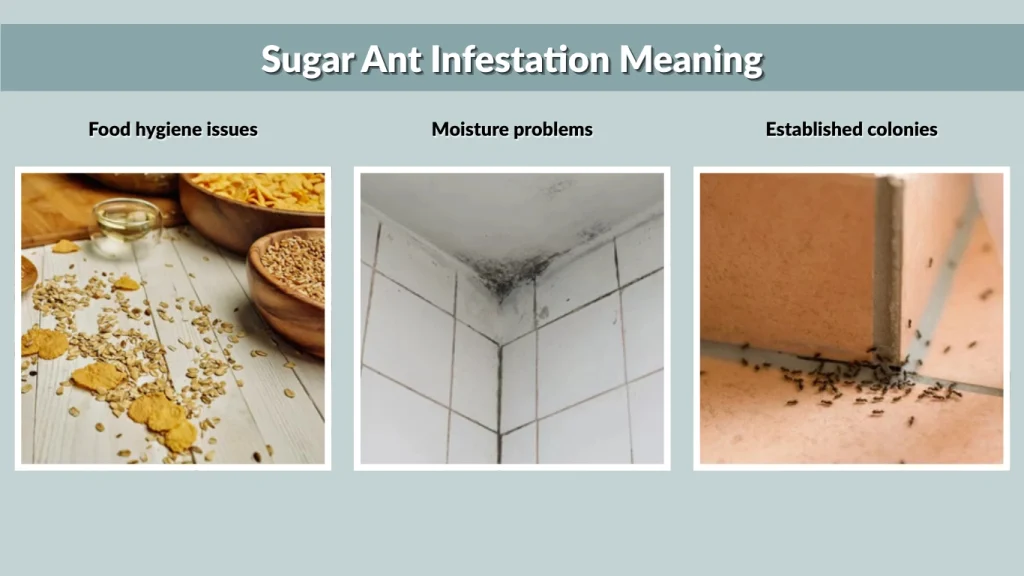
The sudden appearance of sugar ants often carries practical meaning, but in some cultures, it also holds symbolic or spiritual interpretations.
Practical Meaning
From a pest control perspective, sugar ants indoors signal:
- Food hygiene issues – Unsealed food, crumbs, or spills are attracting them.
- Moisture problems – Damp conditions in kitchens or bathrooms are supporting nesting.
- Established colonies – If you see them regularly, it usually means a nest is already inside the house.
Spiritual Meaning of Sugar Ants in the House
In some traditions, sugar ants are seen as messengers of resourcefulness, teamwork, and persistence. Their appearance is sometimes interpreted as a reminder to stay organized, manage resources wisely, and pay attention to small problems before they grow.
While cultural meanings vary, from a homeowner’s perspective, sugar ants are more likely a sign that immediate pest control steps are needed.
How to Get Rid of Sugar Ants in House
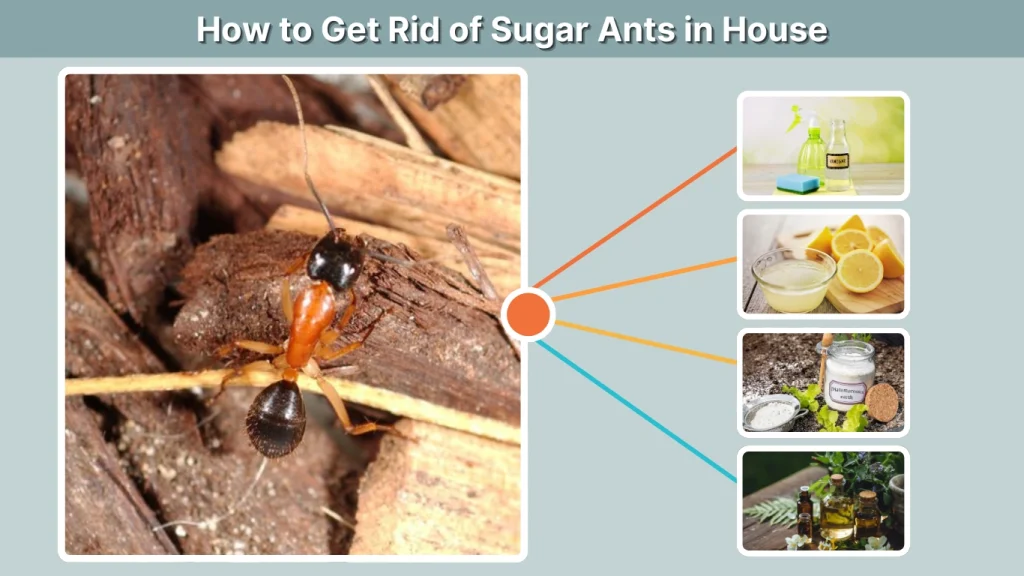
Once sugar ants find their way inside, they rarely leave on their own. The key to removal is not just killing the visible ants but targeting the nest and queen. Here are the most effective strategies.
Home Remedies for Sugar Ants
- Vinegar and Lemon Juice Spray
Ants rely on pheromone trails to communicate. A 50/50 mixture of vinegar and water sprayed on ant trails erases their scent paths, discouraging them from returning. Lemon juice works in a similar way, leaving a strong acidic smell ants avoid. - Baking Soda and Sugar Mix
Mixing baking soda with powdered sugar creates an effective homemade bait. Ants are drawn to the sugar but ingest the baking soda, which disrupts their internal systems and kills them. - Diatomaceous Earth (DE)
Food-grade DE is a safe, natural powder that damages ants’ exoskeletons, dehydrating them. Sprinkle around cracks, baseboards, or areas where you see ants. - Essential Oils
Peppermint, tea tree, or clove oil diluted in water makes an excellent repellent spray. These natural oils not only repel ants but also disinfect surfaces.
Best Way to Kill Sugar Ants
While natural remedies help, baits are the most reliable long-term solution. Worker ants carry the bait back to the colony, poisoning the queen and larvae. Options include:
- Boric Acid Bait – A sugar and boric acid mix works slowly but wipes out entire colonies.
- Store-Bought Bait Stations – Convenient and effective for hidden nests in walls.
- Gel Baits – Can be applied along ant trails for direct consumption.
Sprays may kill ants on contact but rarely solve the problem because they don’t reach the nest.
How to Kill Sugar Ants in the House Naturally vs. Chemically
Both approaches have benefits depending on the severity of the infestation.
- Natural methods are safer for children, pets, and the environment. They work well for light infestations or prevention.
- Chemical methods are stronger and necessary for large or recurring infestations. Insecticidal dust and sprays can penetrate walls and voids where natural remedies can’t reach.
A combination of both—using baits inside while sealing entry points and applying natural repellents—often delivers the best results.
How to Get Rid of Sugar Ants in House Plants
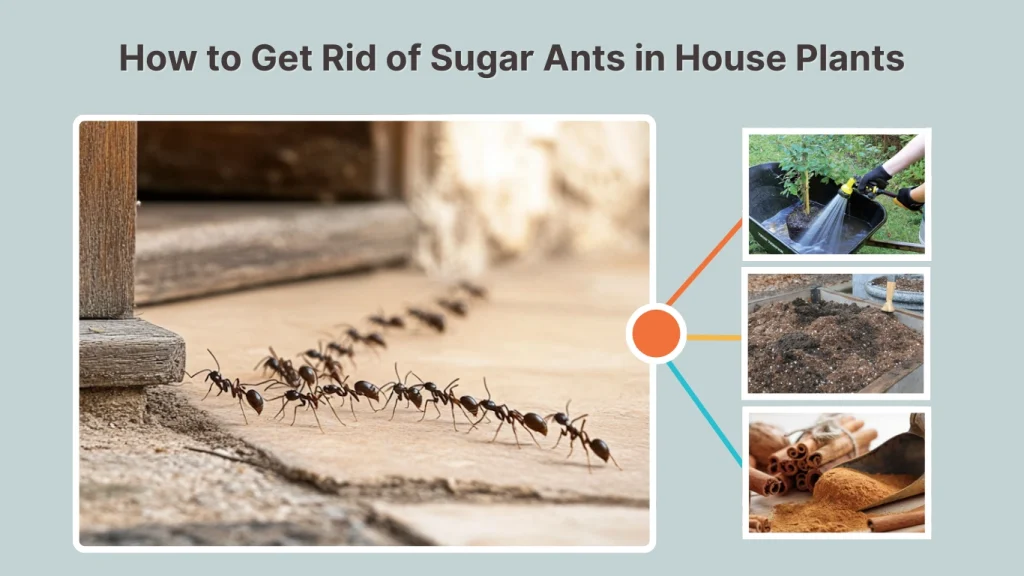
Houseplants are common nesting sites for sugar ants. You may notice ants crawling in and out of the soil or disturbing roots.
Steps to Remove Ants from Plants:
- Remove the plant from its pot and wash the roots with clean water.
- Replace old soil with fresh potting mix.
- Sprinkle cinnamon or coffee grounds on the surface as a natural deterrent.
- Place bait nearby to eliminate the colony rather than just the surface ants.
This approach protects your plant while dealing with the infestation at its source.
Seasonal Problems with Sugar Ants
Sugar ants are present year-round, but their behavior changes with the seasons.
Sugar Ants in Spring
Spring warmth wakes colonies from dormancy. Scouts actively search for food indoors, and this is when infestations often begin.
Sugar Ants in Summer
Summer is peak activity season. Outdoor food is abundant, but ants invade homes for sugary treats and cool shelter. Large infestations are most noticeable at this time.
Sugar Ants in Winter
Cold weather drives sugar ants indoors for warmth. Colonies may settle in walls, basements, or attics, becoming year-round residents if not controlled.
Understanding these seasonal cycles helps you anticipate and prevent infestations before they get out of hand.
How to Prevent Sugar Ants in the House
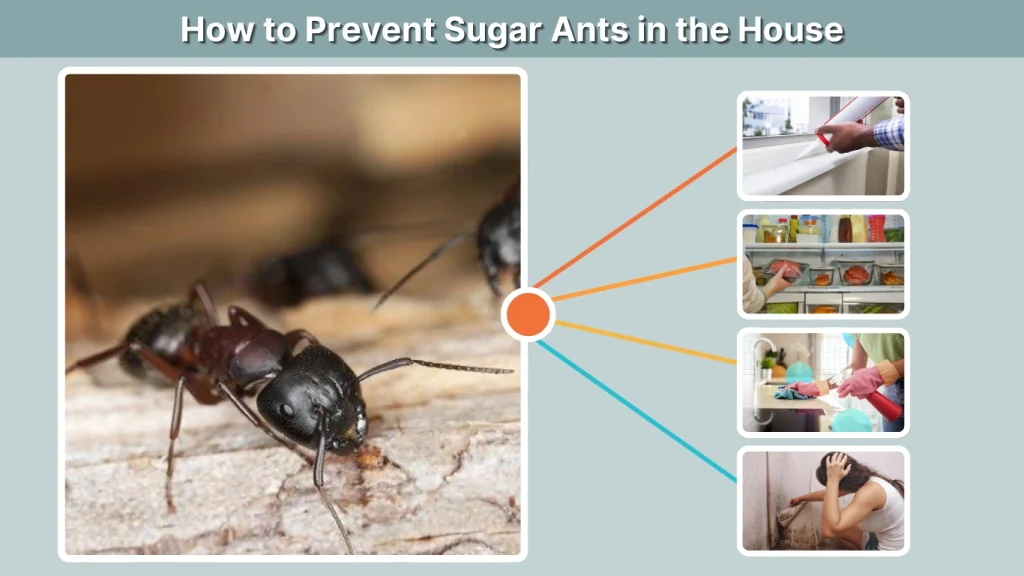
Eliminating an infestation is only part of the solution—prevention is equally important.
- Seal Entry Points – Caulk cracks, gaps, and holes around doors, windows, and walls.
- Store Food Properly – Keep sweets, cereals, and pet food in airtight containers.
- Clean Regularly – Wipe down counters, sweep floors, and avoid leaving dirty dishes overnight.
- Fix Leaks – Repair dripping faucets or damp basements that attract ants.
- Inspect Plants – Avoid overwatering and check soil for signs of ants.
By cutting off their food and water sources, you make your house far less appealing to sugar ants.
Best Way to Stop Sugar Ants from Coming in the House
The most effective long-term strategy combines prevention, baiting, and exclusion:
- Use bait traps to destroy active colonies.
- Clean thoroughly to remove attractants.
- Seal entryways to prevent new invasions.
- Apply repellents like essential oils in vulnerable areas.
Consistency is key—once ants find a reliable food source, they will return unless the environment is made unsuitable.
When to Call a Professional
Professional pest control may be necessary if:
- Infestations persist despite using baits and natural remedies.
- Ant nests are hidden deep inside walls or under foundations.
- You notice large numbers of winged sugar ants indoors, signaling mature colonies.
Experts use specialized baits and tools like thermal cameras to locate and eliminate nests that are impossible to reach otherwise.
FAQs
Why are there sugar ants in my house?
Sugar ants are drawn to food crumbs, sweet spills, and moisture. Once scouts find a food source, they leave trails that attract the entire colony.
What kills sugar ants instantly?
Contact sprays and boiling water kill ants immediately but won’t destroy the colony. For long-term results, baits are more effective.
Are sugar ants harmful?
Sugar ants don’t bite or spread diseases, but they contaminate food and can cause frustration when infestations grow.
Do sugar ants bite?
Most sugar ants don’t bite humans. If they do, the bite is harmless and not painful compared to fire ants or carpenter ants.
Can sugar ants damage my house?
They don’t damage wood or structures like carpenter ants or termites. However, they can infest walls and floors, creating unsanitary conditions.
