

The tarantula hawk spider wasp is both terrifying and fascinating—a brilliant metallic-blue wasp with fiery orange wings and a sting that ranks among the most painful in the animal kingdom. Despite its fearsome reputation, this insect is not aggressive and plays a vital ecological role. Known for hunting tarantulas much larger than itself, it has become one of nature’s most extraordinary examples of precision, strength, and survival strategy.
What Is the Tarantula Hawk Spider Wasp?

Description and Appearance
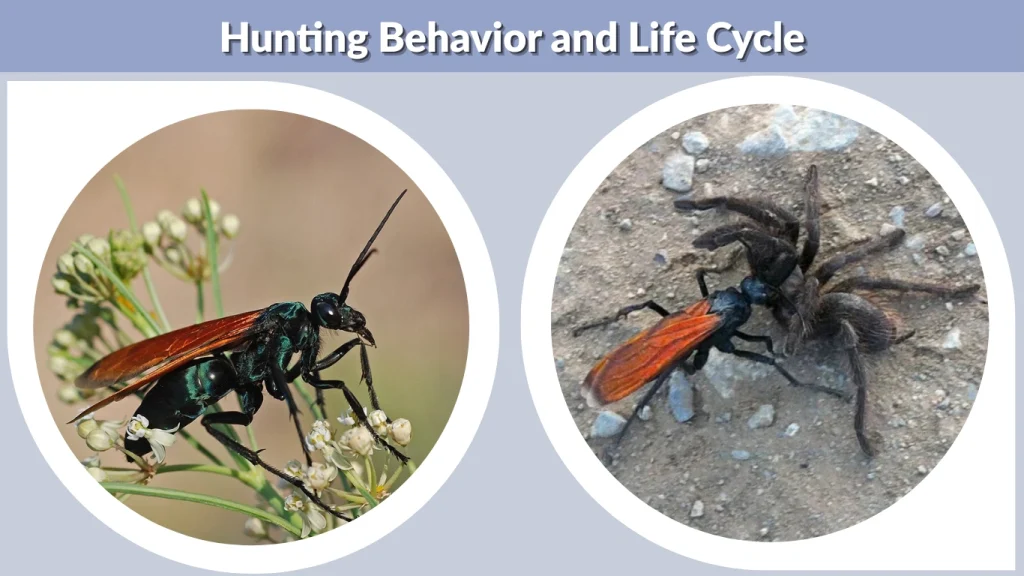
The tarantula hawk spider wasp belongs to the Pepsis genus within the Pompilidae family, commonly called spider wasps. These insects are among the largest wasps in the world, with females growing up to 2 inches long. They are instantly recognizable by their shiny black-blue bodies and vivid orange wings, which serve as a visual warning to predators.
Their long legs are equipped with hooked claws, helping them grasp struggling spiders during hunts. Males are slightly smaller and harmless—they lack the stingers that make the females so infamous.
Habitat and Distribution
Tarantula hawks thrive in warm, dry environments, from the deserts of Arizona and New Mexico to tropical regions of Central and South America. They are also found in Africa and Southeast Asia, where similar species hunt large spiders. These wasps spend much of their lives alone, searching for nectar and suitable prey sites. Interestingly, the tarantula hawk is the state insect of Arizona, admired for its strength and beauty.
Hunting Behavior and Life Cycle
The Tarantula Hunt
Few natural battles are as dramatic as the confrontation between a tarantula hawk wasp and its prey. The female wasp prowls the ground, tapping the surface with her antennae to detect vibrations from burrowing spiders. Once she locates a tarantula, she provokes it into a fight, dodging its fangs with remarkable agility.
When the moment is right, the wasp lunges and delivers a single precise sting to the spider’s abdomen. The venom paralyzes the tarantula instantly but does not kill it. The wasp then drags the motionless spider—often many times her weight—into a pre-dug burrow.
The Gruesome Nursery
Inside the burrow, the wasp lays one egg on the spider’s abdomen and seals the chamber shut. Within days, the egg hatches into a larva, which begins feeding on the still-living spider. The larva carefully avoids vital organs to keep the spider alive as long as possible, ensuring a fresh food supply. After consuming its host, the larva pupates and eventually emerges as a fully developed adult wasp ready to repeat the cycle.
This unique reproductive strategy, while brutal, is an incredible example of nature’s efficiency and the delicate balance of predator-prey relationships in ecosystems.
The Tarantula Hawk’s Sting

Sting Power and Venom
The sting of the tarantula hawk spider wasp is legendary. According to entomologist Justin O. Schmidt, who developed the Schmidt Sting Pain Index, it ranks near the top of all insect stings, rated Level 4—the highest pain classification. Schmidt described it as “blinding, fierce, and shockingly electric,” adding that all one can do is “lie down and scream.”
The sting delivers a potent neurotoxic venom that paralyzes spiders but is not lethal to humans. Its power lies in its overwhelming activation of pain receptors rather than tissue damage or toxicity.
Sting Reactions in Humans
Despite the fear it inspires, the tarantula hawk wasp is not dangerous to humans. The pain is intense but brief, lasting 3 to 5 minutes before fading completely. Victims may experience mild swelling, redness, or numbness at the sting site, but there are no long-term effects. Allergic reactions are extremely rare.
Most experts agree that while it’s one of the most painful stings in existence, it is not medically serious. The best advice after being stung is to remain still, avoid panic, and wait for the pain to subside.
Spider Battles — Nature’s Deadliest Matchups
Tarantula vs. Tarantula Hawk Wasp
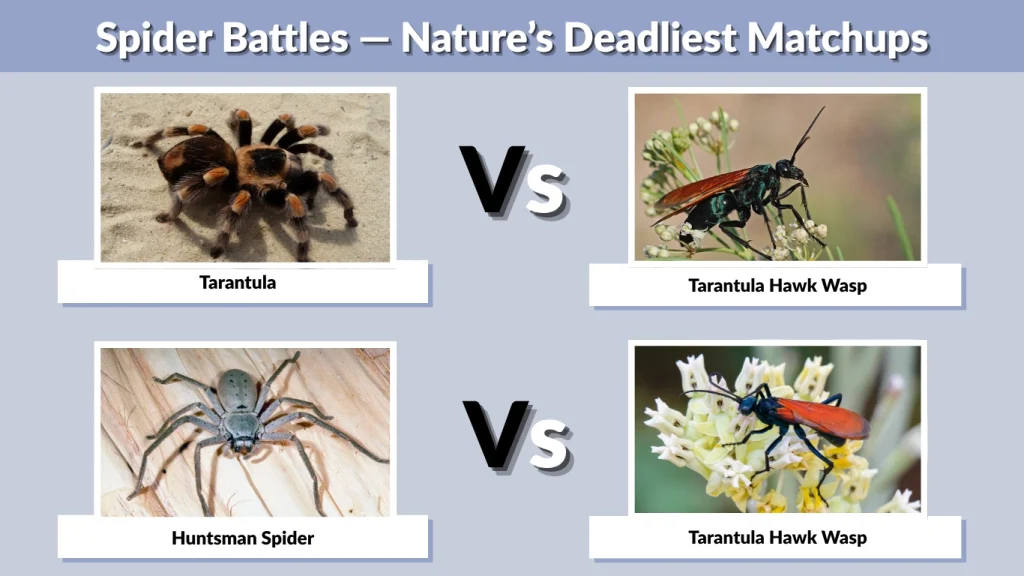
In nature, the wasp almost always wins. Its agility, accuracy, and venom give it a decisive advantage. Even massive tarantulas, including species like the Mexican redknee, fall victim within seconds once stung. The spider is then dragged helplessly to its underground tomb, where the wasp’s offspring will begin its life cycle.
Huntsman Spider vs. Tarantula Hawk Wasp
Encounters between the wasp and huntsman spiders have been recorded in Australia and tropical regions. While huntsman spiders are fast and defensive, they rarely survive a direct sting. The wasp’s venom is simply too effective. Witnesses often describe the huntsman’s brief resistance followed by complete paralysis as the wasp carries it away.
Goliath Bird-Eating Spider vs. Tarantula Hawk Wasp
Few natural matchups inspire more awe than the Goliath bird-eating spider facing the tarantula hawk wasp. The Goliath is the world’s largest spider by mass, with a leg span of up to 12 inches, while the tarantula hawk is among the most powerful wasps on Earth.
In rare encounters, the wasp uses agility to outmaneuver the massive spider. If it manages to land a sting, the outcome is swift—the Goliath becomes paralyzed and is dragged away for the wasp’s larva. However, due to the spider’s enormous size and defensive fangs, such victories are risky and uncommon in nature.
Why Is the Tarantula Hawk Spider Wasp Important?

Despite their frightening hunting methods, tarantula hawk wasps play a crucial ecological role. By controlling spider populations, they help maintain balance within their ecosystems. This natural regulation prevents tarantulas and other large spiders from overpopulating desert regions.
Additionally, adult tarantula hawks are pollinators. They feed on flower nectar, often visiting milkweed and mesquite blossoms, transferring pollen as they move from plant to plant. Their dual role as predator and pollinator makes them essential contributors to biodiversity.
Their bright coloration also serves as aposematic signaling—a warning to predators that they deliver a painful sting. This not only protects them but also teaches predators (such as birds and lizards) to avoid attacking other similar-looking insects.
Are Tarantula Hawk Wasps Dangerous to Humans?
Although their sting is legendary, tarantula hawk wasps are not dangerous to humans. They are non-aggressive and will only sting in self-defense. The venom is not toxic to people—it simply triggers extreme pain for a few minutes before subsiding.
Males cannot sting at all, and females only attack when threatened or trapped. There have been no recorded human fatalities from tarantula hawk stings. The greatest risk is the shock or sudden movement that can follow the pain—some victims report losing balance or falling due to the sting’s intensity.
In most cases, the best approach is to avoid touching or disturbing them. Their calm nature and preference for nectar mean that encounters with humans almost always end peacefully.
Tarantula Hawk vs. Other Spider Wasps

| Feature | Tarantula Hawk Wasp | Common Spider Wasp |
| Size | Up to 2 inches | 0.5–1 inch |
| Primary Prey | Tarantulas, huntsman spiders | Smaller spiders |
| Sting Intensity | Extremely painful (Level 4) | Mild to moderate |
| Aggression | Shy, non-aggressive | Moderate |
| Habitat | Deserts, tropics | Forests, gardens |
| Color | Blue-black with orange wings | Dark brown or black |
This comparison shows how specialized the tarantula hawk is compared to ordinary spider wasps. Its sting is stronger, its prey larger, and its behavior far more dramatic—making it a standout even among its own family.
Fascinating Facts About the Tarantula Hawk Spider Wasp
- Arizona’s State Insect: Chosen for its striking appearance and ecological significance.
- Powerful Sting: Rated among the top three most painful stings in the world.
- Peaceful Pollinator: Adults feed solely on nectar, helping desert flowers reproduce.
- Natural Pest Control: Keeps tarantula and large spider populations in check.
- Warning Colors: Bright orange wings signal danger to would-be predators.
FAQs
What is the tarantula hawk spider wasp known for?
This wasp is known for its enormous size, bright orange wings, and excruciating sting. It’s also famous for hunting tarantulas, paralyzing them, and using them as living hosts for its young.
Can a tarantula hawk wasp kill a human?
No. The sting is incredibly painful but not deadly. The venom’s purpose is to paralyze spiders, not kill larger animals. Humans fully recover from the sting within minutes.
How does a tarantula hawk wasp hunt spiders?
The wasp uses keen senses to locate burrowing spiders, then attacks with lightning speed, delivering a single paralyzing sting. The immobilized spider is dragged to a burrow as food for the wasp’s larva.
Who wins—tarantula hawk wasp or Goliath bird-eating spider?
While the Goliath has size on its side, the wasp usually wins if it lands the first sting. Once paralyzed, even the world’s largest spider cannot escape its fate.
Is the tarantula hawk wasp aggressive?
Not at all. These wasps avoid humans and only sting when handled or threatened. Their dazzling color serves as a warning, but in reality, they are calm and non-aggressive insects.
