
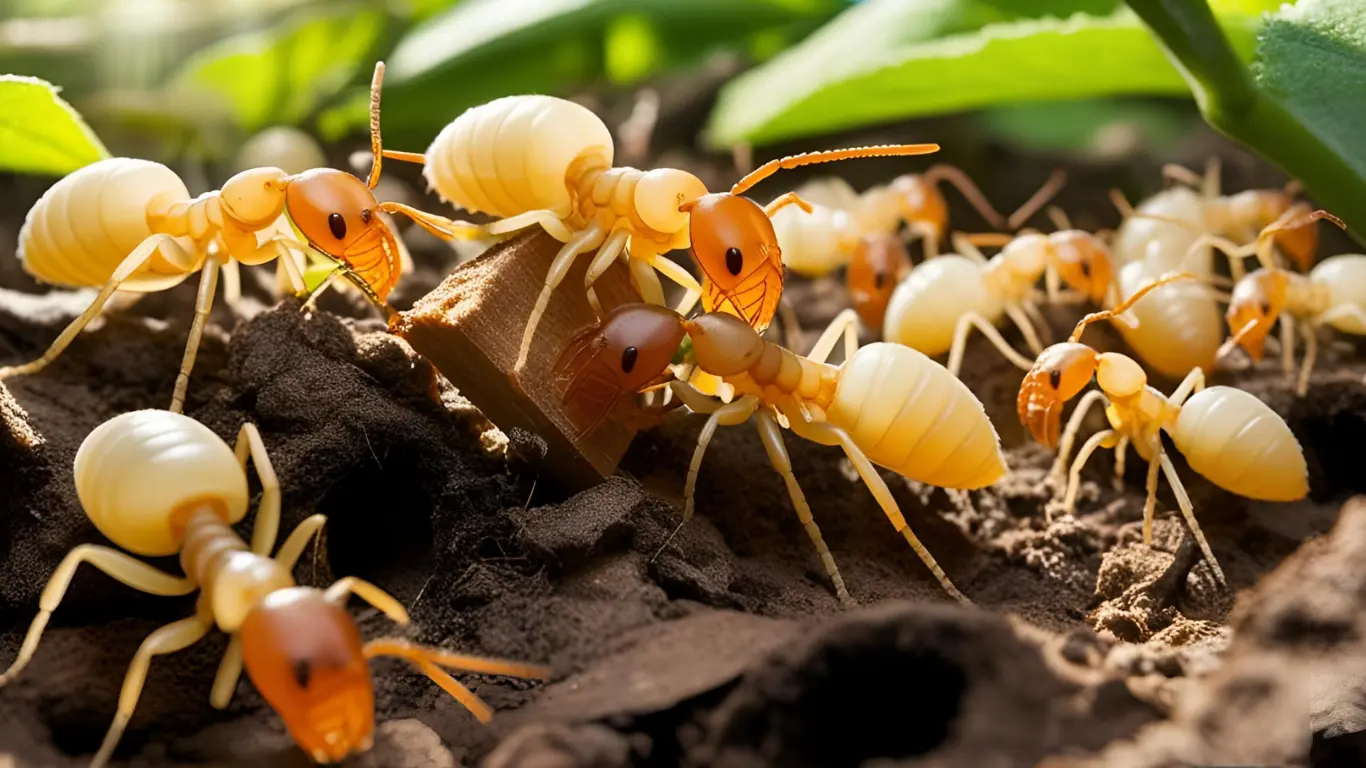
Termites are silent invaders that can cause serious damage to homes before you’re even aware of their presence. Identifying them early is crucial to prevent costly repairs. In this guide, you’ll learn how to recognize termites using visual clues, regional traits, and expert identification charts. Whether you’re in Florida, Texas, California, or Australia, this article will help you detect and respond to termite activity effectively.
General Termite Identification Guide
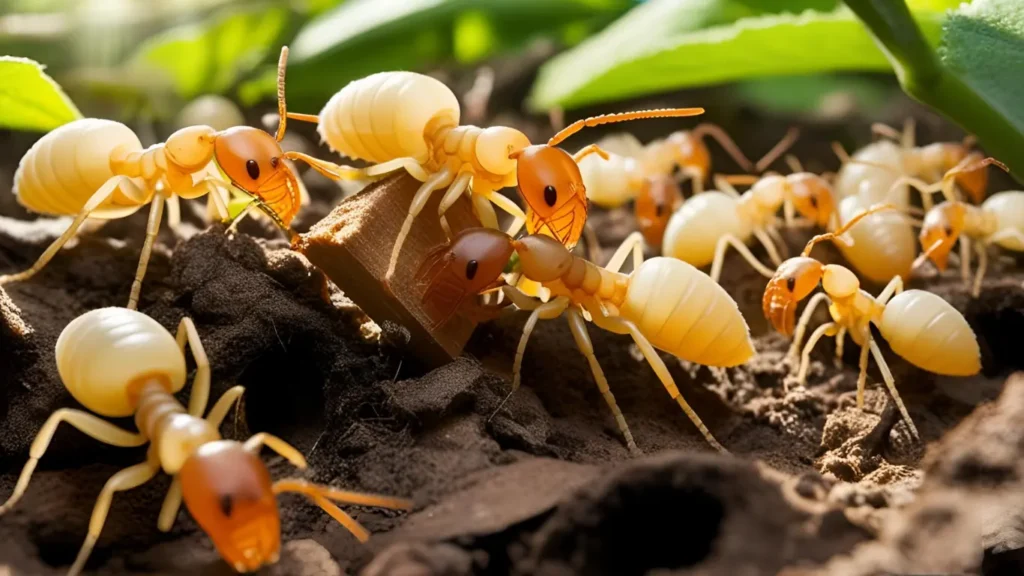
Termites come in many forms, but understanding their basic traits is the key to early detection. This section covers what termites look like, how they behave, where they live, and how to use charts and keys for identification.
Physical Traits of Termites
Termites are soft-bodied and range in color from creamy white to light brown. Their antennae are straight (not elbowed like ants), and winged termites have two pairs of wings of equal length. Workers are usually blind and small, while soldiers have enlarged heads with strong mandibles. Reproductives (swarmers) are darker and have long, clear wings.
Life Stages and Behavior
Termites grow through incomplete metamorphosis, starting as eggs and developing into nymphs, then becoming workers, soldiers, or reproductive swarmers. Workers forage for food, soldiers protect the colony, and swarmers are responsible for creating new colonies. Swarming often occurs after rain and signals a mature colony nearby.
Common Indoor vs Outdoor Species

- Indoor Invaders:
- Subterranean termites: Nest underground, enter through foundations.
- Drywood termites: Live inside wooden structures and furniture.
- Subterranean termites: Nest underground, enter through foundations.
- Outdoor Termites:
- Dampwood termites: Prefer decaying logs, stumps, and wet wood; rarely infest homes.
- Dampwood termites: Prefer decaying logs, stumps, and wet wood; rarely infest homes.
How to Use an Identification Chart
Termite identification charts visually compare species based on traits like color, wing shape, soldier head size, and regional occurrence. Look for diagrams that show top-down and side profiles of termites, and compare them with what you see near your home.
Termite Identification Key and Tests
Identification keys guide you step-by-step based on observed features. Some simple field tests include:
- Moist towel test: Place a wet towel near suspect wood; termites may gather overnight.
- Wood tap test: Tap beams or furniture—hollow sounds can indicate termite damage.
- Mud tube check: Look for thin brown tunnels on walls or foundations; a classic sign of subterranean termites.
Termites vs Flying Ants – Key Differences
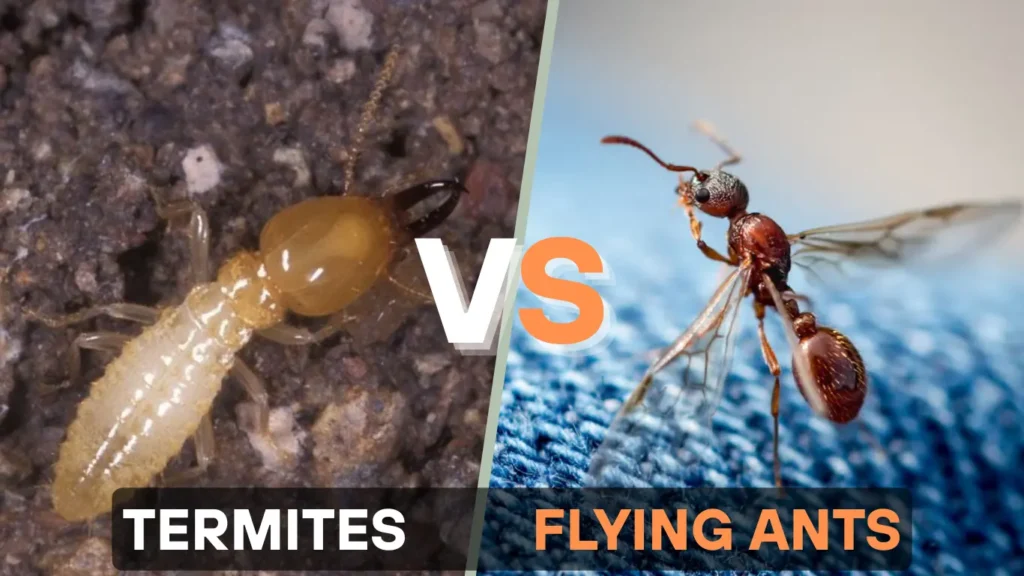
One of the most common termite identification mistakes is confusing them with flying ants. Both appear during the swarming season, but their body structures, wings, and behavior differ significantly. Correct identification is essential to avoid unnecessary treatment or to take action before structural damage occurs.
Comparison Table: Flying Ants vs Termites
| Feature | Termites | Flying Ants |
| Antennae | Straight | Elbowed (bent) |
| Waist Shape | Thick, uniform | Narrow, pinched |
| Wing Length | Two pairs, equal in size | Front wings larger than back wings |
| Wing Color | Transparent or slightly milky | Clear or brownish |
| Wing Position (at rest) | Laid flat or overlapped on back | Often held at an angle |
| Shedding Wings | Yes, soon after swarming | Rarely shed wings |
| Behavior | Silent, persistent wood feeders | Visible, aggressive, don’t eat wood |
Wing Shape and Length
Termites have two identical pairs of long, translucent wings. In contrast, flying ants have noticeably larger front wings than hind wings. Termite wings are delicate and easily shed, often found near windows or light sources.
Antennae and Body Segmentation
Termites have straight, bead-like antennae and a more uniform body shape without a visible waist. Flying ants have elbowed antennae and a distinct narrow waist between the thorax and abdomen.
Swarming Season Signs
Swarming often happens in spring or after rain. If you notice flying insects indoors or around the foundation, check for discarded wings. Swarming termites usually appear in large numbers for a short period.
Flying Termites in House – What to Do
If you find winged termites indoors, it likely means a mature colony is nesting within your home. Immediately:
- Collect a few specimens for identification.
- Check for mud tubes, frass, or hollow wood.
- Contact a pest control professional to inspect and confirm infestation.
Identification by Region
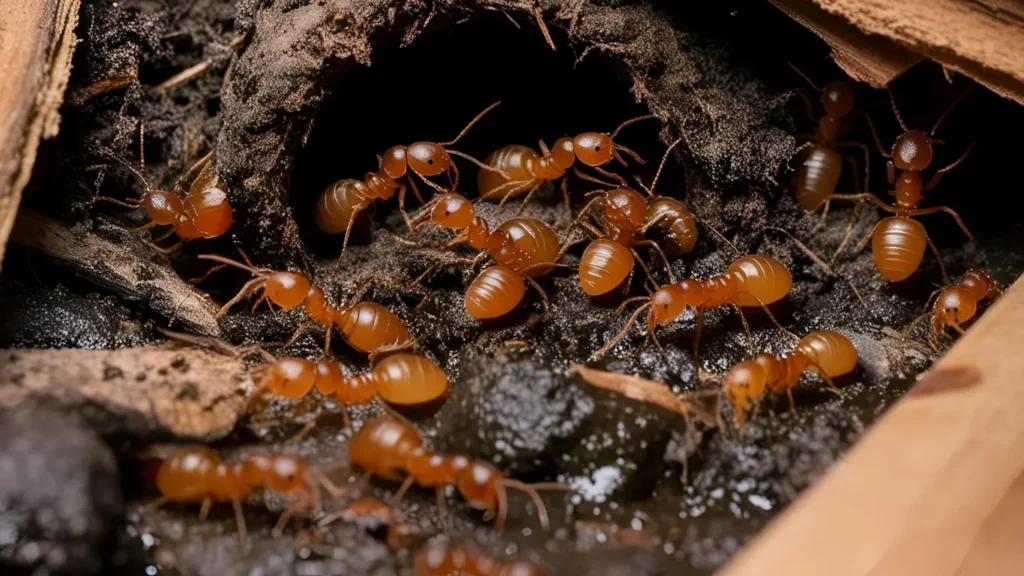
Termite species vary greatly depending on your geographic location. Different climates and environments support different types of termites, which also influence their behavior, nesting style, and risk level to your property. Below is a breakdown of termite identification by major regions.
Florida Termites – Common Species and Signs
Florida is home to both subterranean termites and the aggressive Formosan termites. These termites thrive in the state’s humid and warm climate.
Signs include:
- Mud tubes on foundations
- Swarmers around lights
- Hollow-sounding wood
- Frass (termite droppings) resembling sawdust
The most destructive species found in Florida is the Formosan subterranean termite, which can rapidly destroy wooden structures and is known to form large colonies.
Termites in Texas – Drywood vs Subterranean
Texas has two major termite types:
- Eastern subterranean termites: Common in the eastern and central parts
- Drywood termites: Common in warmer southern regions
Drywood termites in Texas are often found in attics and wooden furniture. They don’t need contact with soil, which makes them harder to detect early. Subterranean termites usually build their colonies underground and need moisture from the soil to survive.
California Termites – Coastal Termite Clues
California hosts a mix of Western subterranean termites, Dampwood termites, and Drywood termites, particularly in coastal and southern parts of the state.
Signs of infestation:
- Blistered wood surfaces
- Maze-like patterns inside wood
- Swarms in spring or fall
Dampwood termites are especially common in northern coastal forests and are attracted to moist wood, such as logs, decks, and fences.
Australian Termites and Local Chart Reference
In Australia, Coptotermes, Nasutitermes, and Schedorhinotermes are common.
- Coptotermes are the most destructive and found widely in urban areas.
- Nasutitermes build above-ground nests on trees or posts.
- Schedorhinotermes prefer hardwood structures and attack timbers in homes.
Australia often uses termite identification charts that highlight body size, head shape, and colony habits. These regional tools are helpful for homeowners and professionals alike.
Identification by Image and Chart
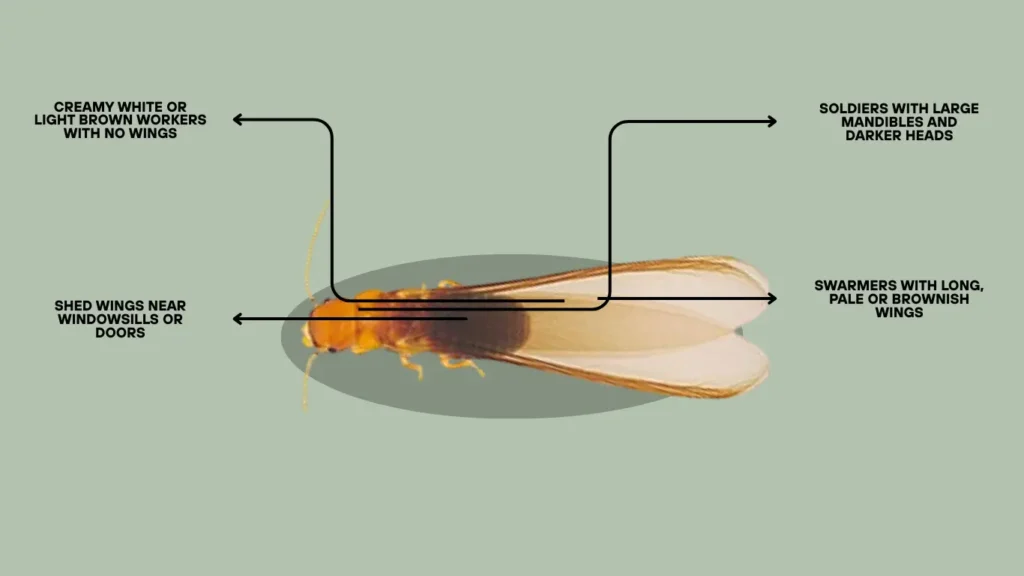
Visual identification plays a vital role when you’re trying to confirm the presence of termites. Images, diagrams, and comparison charts help quickly spot key differences between termite species and look-alikes. This section will guide you through recognizing termites using pictures, wing shapes, and illustrated comparison tools.
Termite Pictures for Quick Reference
Visual clues are often the first indicator of termite activity. Look for the following in reference pictures:
- Creamy white or light brown workers with no wings
- Soldiers with large mandibles and darker heads
- Swarmers with long, pale or brownish wings
- Shed wings near windowsills or doors
Using high-resolution termite identification pictures can help match what you’re seeing at home with real examples.
Termite Identification with Wings – A Photo Guide
Swarmers are often mistaken for flying ants. A clear image showing all four wings of equal length, lying flat or slightly overlapping, indicates a termite. Also, look closely at the wing veins — termite wings have fewer, more uniform veins compared to the more complex ant wing structure.
Include a labeled photo chart that compares:
- Termite vs Flying Ant
- Drywood vs Subterranean Termite
- Soldier vs Worker vs Swarmer
How to Read Termite Identification Images
When reviewing termite pictures, focus on:
- Waist shape – termite waists are broad and uniform
- Antennae – termites have straight antennae
- Wings – check size and number; termites have 4 wings of equal size
- Color tone – typically pale or light brown, darker only in swarmers
Termite Identification and Treatment
Once termites are identified, taking immediate action is essential to prevent structural damage. This section covers how to detect termite presence early, available treatment methods, and when to involve professionals.
Early Detection Methods
Catching termites early can save thousands in repair costs. Here are common signs to watch for:
- Mud Tubes: Subterranean termites build pencil-width tunnels along walls, foundations, or crawl spaces.
- Discarded Wings: After swarming, termites shed their wings, often found near doors or windows.
- Hollow Wood: Tap wooden beams or furniture—if it sounds hollow, termites may have eaten the inside.
- Frass: Drywood termites leave behind small, pellet-like droppings near infested wood.
Some homeowners also use bait stations or moisture meters to check for active colonies in hidden areas.
Treatment Options After Identification
Depending on the type and extent of the infestation, treatment methods vary:
- Liquid Termiticides
Applied to soil around the house to create a barrier. Effective for subterranean termites. - Baiting Systems
Slow-acting poisons are placed near termite paths. Workers carry poison back to the colony, killing it gradually. - Fumigation
Used mainly for Drywood termite infestations. Requires tenting the house and sealing it while gas is released. - Wood Treatments
Applying borate solutions to exposed wood prevents termites from feeding on it. - Localized Heat or Cold Treatments
Spot treatment using heat or freezing for small infestations, especially in furniture.
Professional pest control services often combine multiple methods after a thorough inspection to ensure all colonies are eliminated.
Final Thought
Identifying termites accurately is the first and most crucial step in protecting your home from costly damage. By learning the physical traits, understanding regional differences, using visual charts, and distinguishing them from similar insects like flying ants, you can take timely action. Whether you’re dealing with flying termites indoors or spotting signs near wooden structures, early detection followed by proper treatment can save you time, stress, and money. When in doubt, always consult a pest control professional to assess the risk and recommend the right solution.
