
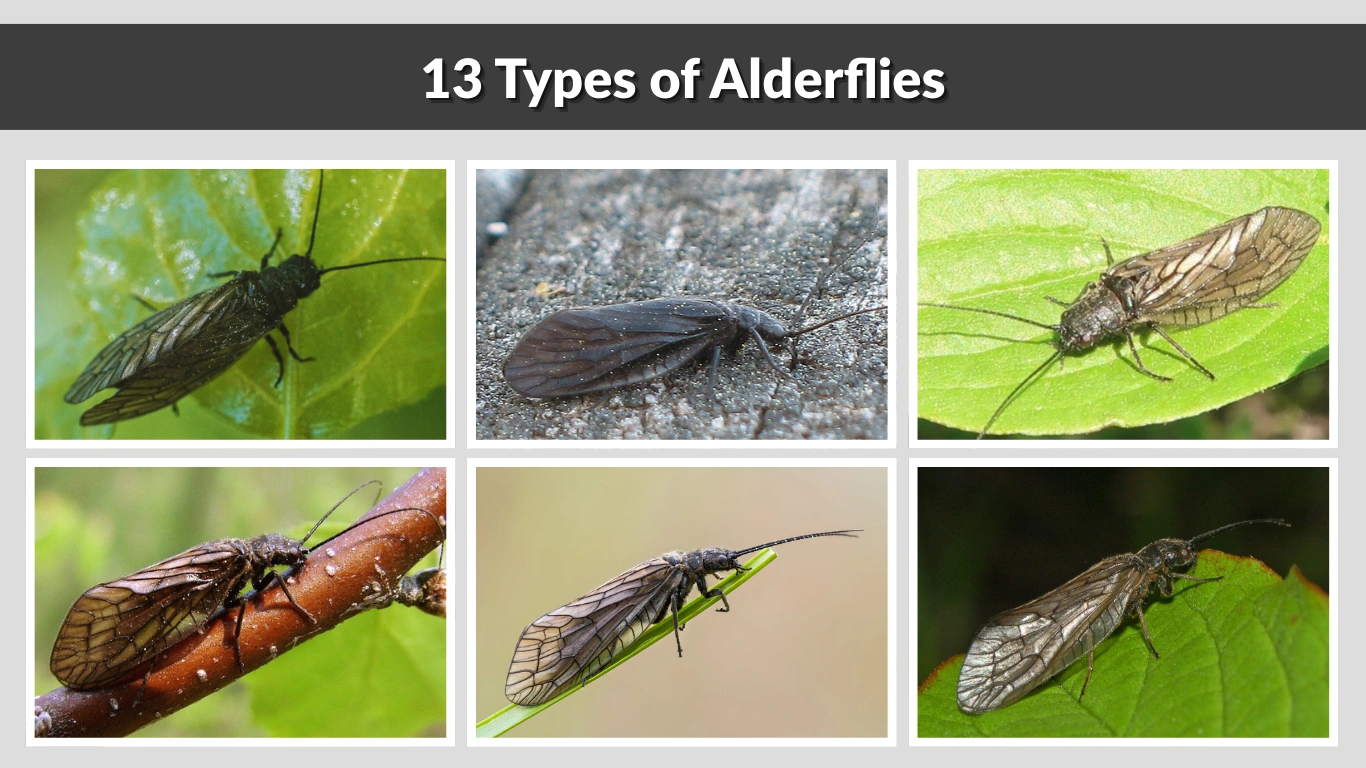
Alderflies (family Sialidae) are fascinating insects closely tied to freshwater habitats such as rivers, lakes, and ponds. Though short-lived as adults, they play an important ecological role, particularly in their aquatic larval stage where they act as predators of small invertebrates. With smoky wings, elongated antennae, and sluggish flight, alderflies are easily recognizable. In this guide, we’ll explore 13 distinct species of alderflies, highlighting their identification, habitats, diets, and behaviors.
1. Sialis lutaria

Sialis lutaria, commonly known as the common alderfly, is one of the most widespread species in Europe. It is often found near freshwater habitats such as rivers, ponds, and lakes, where its larvae play an important role in aquatic ecosystems. With its smoky wings and robust body, it is a recognizable insect during spring and early summer.
Identification
- Medium-sized insect, typically 10–15 mm long
- Dark brown to black body with smoky, net-veined wings
- Antennae long and slender
- Wings held roof-like over the body when at rest
Habitat
This species thrives near freshwater bodies, especially in areas with abundant vegetation along riverbanks, lakeshores, and ponds.
Diet
The larvae are aquatic predators, feeding on small invertebrates such as insect larvae, worms, and crustaceans. Adults rarely feed and are mostly short-lived.
Behavior
Adults are sluggish flyers, often seen resting on vegetation close to water. They are most active in late spring and early summer, when mating and egg-laying take place.
2. Sialis fuliginosa
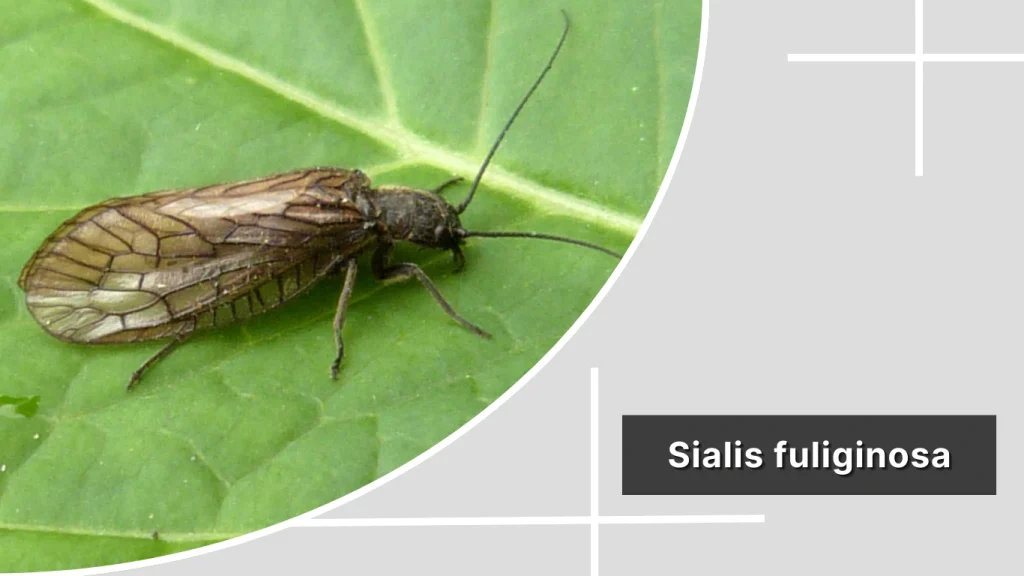
Sialis fuliginosa is another alderfly species commonly found across Europe, especially in freshwater-rich environments. It is very similar to Sialis lutaria but can be distinguished by subtle differences in wing pattern and body size. Like other alderflies, it has an aquatic larval stage that plays an important role in maintaining ecological balance in rivers and lakes.
Identification
- Body length around 12–18 mm, slightly larger than Sialis lutaria
- Dark brown to black body with more intensely smoky wings
- Distinct wing venation with darker markings compared to Sialis lutaria
- Long, thread-like antennae
Habitat
Sialis fuliginosa lives near rivers, streams, and ponds with slow-flowing or still water. It prefers areas with submerged vegetation, which provides cover for larvae.
Diet
The aquatic larvae are active predators, feeding on insect larvae, worms, and other soft-bodied invertebrates. Adults rarely feed and mainly focus on reproduction.
Behavior
Adults emerge in late spring and early summer, usually staying close to water bodies. They are weak fliers and often seen resting on plants and rocks near shorelines.
3. Sialis nigripes
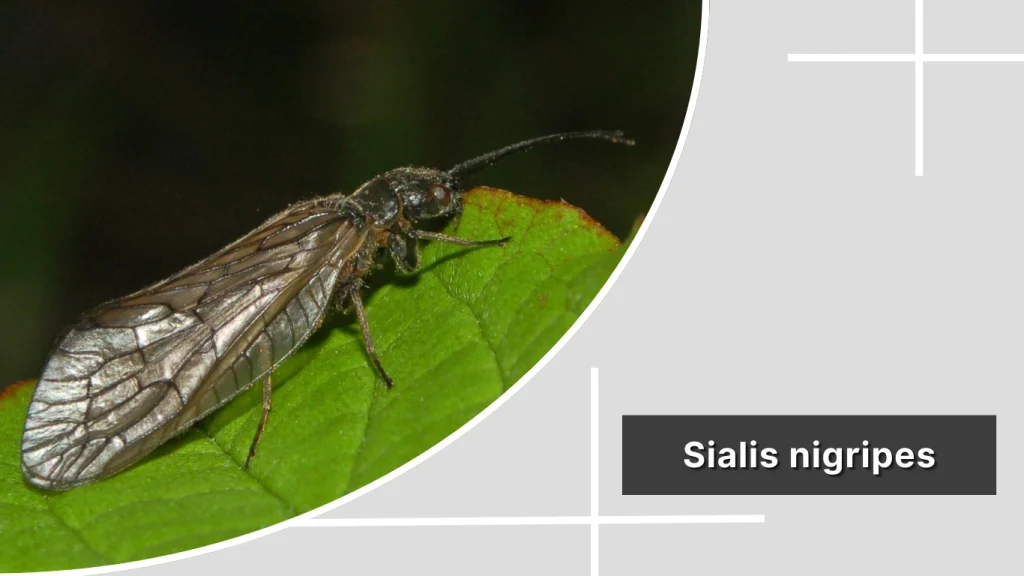
Sialis nigripes is a lesser-known alderfly species, mainly distributed in parts of Europe and Asia. It closely resembles other alderflies but is distinguished by its darker legs, which give the species its name “nigripes,” meaning black-footed. It is strongly tied to freshwater ecosystems where its larvae develop.
Identification
- Medium-sized body, usually 10–15 mm long
- Dark brown to black body with dusky, net-veined wings
- Legs distinctly darker than related species
- Antennae long and filamentous
Habitat
This species inhabits freshwater environments such as rivers, streams, and lakeshores, especially in cooler regions with clean water.
Diet
Larvae are aquatic predators, feeding on insect larvae, small worms, and crustaceans. Adults consume little or nothing during their short lifespan.
Behavior
Adults emerge during late spring and early summer. They remain close to water, flying weakly and often perching on grasses or shrubs near riverbanks.
4. Sialis sordida
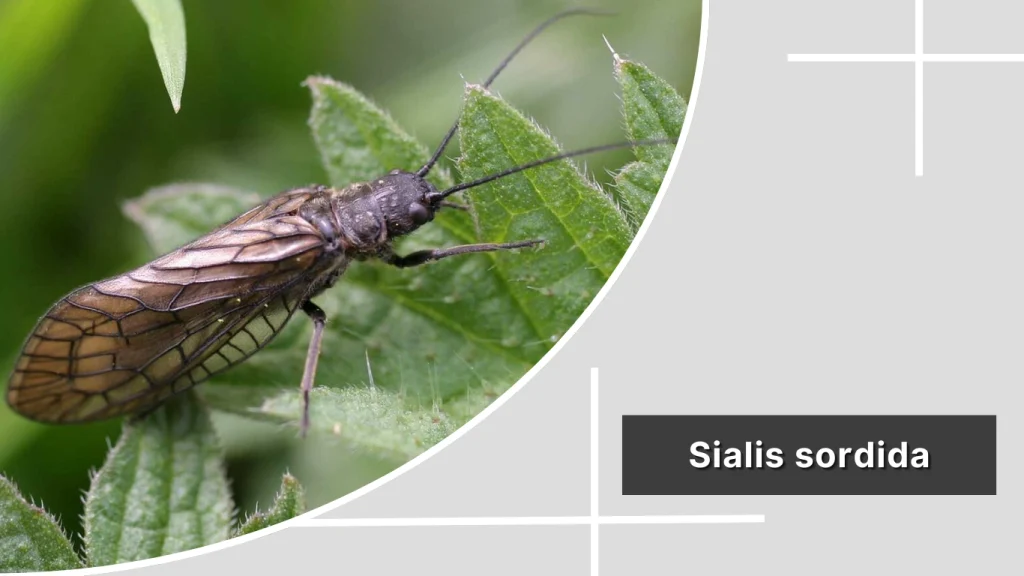
Sialis sordida is a moderately distributed alderfly species found in parts of Europe and Asia. It is often confused with other members of the Sialidae family but can be identified by its slightly lighter wing coloration and more slender body. Like all alderflies, it depends on aquatic environments for its larval stage.
Identification
- Body length about 10–14 mm
- Dark brown body with lighter, smoky-brown wings
- Wings display fine net-like venation, less dark than in Sialis fuliginosa
- Long, thread-like antennae and slightly slimmer body shape
Habitat
This species prefers calm freshwater habitats such as slow-moving rivers, ponds, and lakes with well-developed aquatic vegetation.
Diet
Larvae are aquatic predators that feed on insect larvae, small worms, and other invertebrates living in the sediment. Adults feed little or not at all.
Behavior
Adults emerge in spring and are active through early summer. They are weak fliers, usually staying close to water, resting on grasses, shrubs, or stones along the shoreline.
5. Sialis infumata
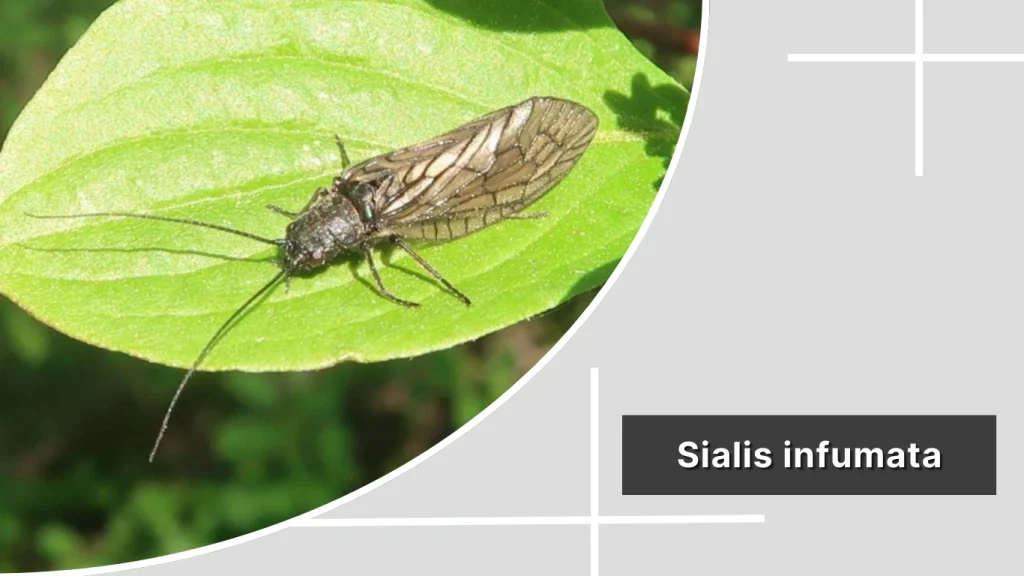
Sialis infumata is a species of alderfly recognized by its particularly dark, smoke-tinted wings. Found in certain regions of Europe and Asia, it shares many similarities with related species but is set apart by its more intensely shaded wing membranes. Like others in the family, its life cycle is closely tied to freshwater ecosystems.
Identification
- Medium-sized body, usually 12–16 mm long
- Dark brown to nearly black body
- Wings heavily infumated (smoke-colored), giving the species its name
- Antennae long and slender, typical of alderflies
Habitat
This species inhabits rivers, ponds, and lakes with slow-moving or still water. It thrives in areas with abundant aquatic vegetation that provides cover for larvae.
Diet
The aquatic larvae prey on insect larvae, worms, and small aquatic invertebrates. Adults, short-lived and weak fliers, rarely feed.
Behavior
Adults emerge during late spring to early summer. They are sluggish fliers, often found resting on reeds, shrubs, or stones close to water, especially during warm daylight hours.
6. Sialis arvalis

Sialis arvalis is a relatively rare alderfly species, occurring in select parts of Europe and Asia. It is closely associated with freshwater environments, where its larvae live as active predators. Adults are short-lived and are most often seen in the spring months near rivers and lakeshores.
Identification
- Body length around 11–15 mm
- Dark brown to black body with slightly translucent smoky wings
- Fine wing venation typical of alderflies
- Long, thin antennae; body somewhat more slender than in common species
Habitat
This species is usually found near calm rivers, lakes, and ponds, particularly where aquatic vegetation is dense and water quality is high.
Diet
Aquatic larvae feed on insect larvae, worms, and small soft-bodied invertebrates. Adults typically do not feed, surviving mainly to reproduce.
Behavior
Adults are weak fliers, usually remaining close to water. They are most active in late spring, often resting on grasses, shrubs, and stones near the shoreline.
7. Sialis mohri

Sialis mohri is a North American alderfly species commonly found near freshwater habitats. It is distinguished from European species by its regional distribution and slight differences in wing venation. Like all alderflies, it spends most of its life as an aquatic larva before briefly emerging as an adult.
Identification
- Medium-sized insect, body length 12–16 mm
- Dark brown to black body with dusky, net-veined wings
- Antennae long and thread-like
- Wings usually broader and darker compared to some related species
Habitat
Sialis mohri lives along rivers, streams, ponds, and lakes in North America, preferring areas with submerged vegetation and soft sediment for larvae.
Diet
Larvae are aquatic predators that consume insect larvae, worms, and other small invertebrates. Adults rarely feed, focusing mainly on reproduction.
Behavior
Adults emerge in late spring and early summer. They are weak fliers and are most often seen resting on vegetation or rocks near the water’s edge.
8. Sialis vagans
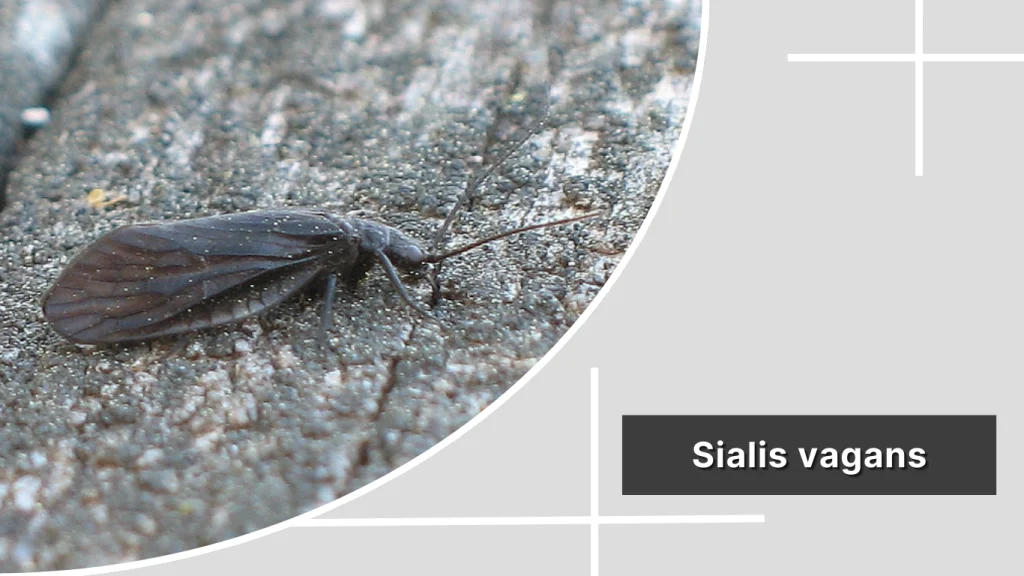
Sialis vagans is a species of alderfly distributed across parts of North America. It is often found in association with calm or slow-flowing freshwater habitats, where its larvae play an important ecological role as predators of small aquatic organisms.
Identification
- Medium-sized insect, body length about 12–15 mm
- Dark brown to black body with dusky, smoky wings
- Wings with net-like venation, slightly narrower than some related species
- Long, slender antennae typical of alderflies
Habitat
This species inhabits lakes, ponds, and sluggish streams, preferring areas with aquatic vegetation and soft substrates for larval development.
Diet
Larvae are predatory, feeding on insect larvae, small crustaceans, and worms. Adults feed little or not at all and live only briefly.
Behavior
Adults emerge in late spring and remain close to the water’s edge. They are weak fliers, often perching on vegetation, stones, or damp ground along shorelines.
9. Sialis hasta

Sialis hasta is a North American alderfly species, commonly associated with freshwater environments such as rivers, lakes, and streams. It is recognized for its robust body and smoky-colored wings, and like other alderflies, its larvae are aquatic predators that contribute to the balance of aquatic ecosystems.
Identification
- Body length around 12–16 mm
- Dark brown to nearly black body
- Dusky, smoke-tinted wings with fine venation
- Long, thread-like antennae extending forward
Habitat
This species is typically found along lakeshores, ponds, and slow-moving rivers where aquatic vegetation is abundant.
Diet
The aquatic larvae prey on small invertebrates, including insect larvae and worms. Adults feed very little and live only briefly to mate and lay eggs.
Behavior
Adults appear in late spring and early summer, often resting on vegetation near water. They are weak fliers and rarely stray far from the aquatic habitats that support their larvae.
10. Sialis velata

Sialis velata is a widespread alderfly species in North America, particularly noted for its association with slow-moving freshwater habitats. It is one of the more commonly encountered species and is often observed near ponds and rivers during the warmer months.
Identification
- Medium-sized insect, body length 12–17 mm
- Dark brown to black body with smoky, net-veined wings
- Wings broader and slightly lighter than in some related species
- Long, filamentous antennae
Habitat
This species is abundant near ponds, lakes, and sluggish rivers. It favors areas with aquatic vegetation and muddy or sandy substrates where larvae can thrive.
Diet
Aquatic larvae prey on insect larvae, worms, and small aquatic invertebrates. Adults generally do not feed and survive only a short time for reproduction.
Behavior
Adults emerge in late spring, often gathering near water on grasses, shrubs, or stones. They are weak fliers, staying close to aquatic habitats and usually seen during warm daylight hours.
11. Sialis joppa
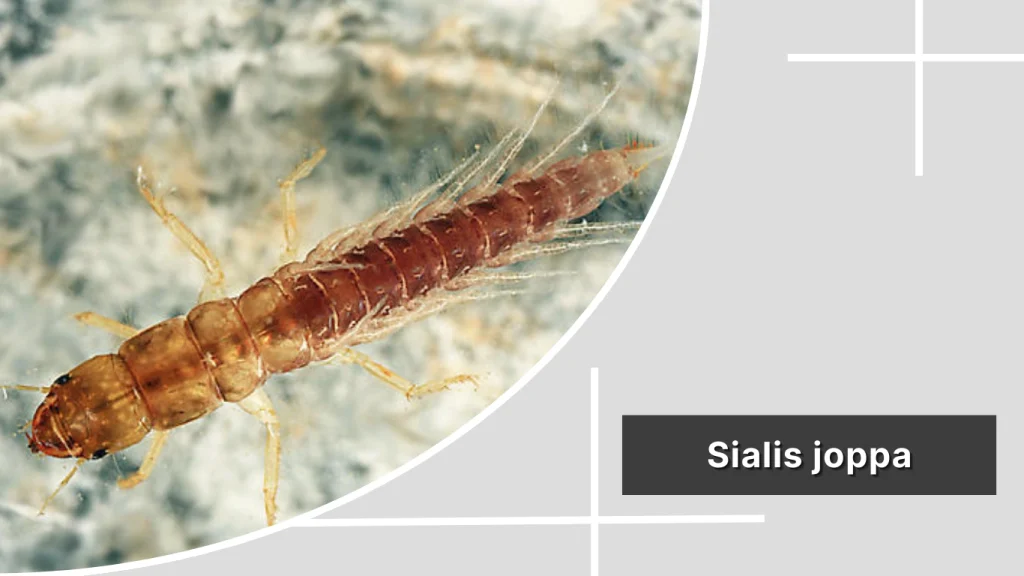
Sialis joppa is a North American alderfly species that inhabits freshwater environments such as rivers, streams, and lakeshores. It is less widespread compared to some other alderflies but follows the same ecological patterns, with aquatic larvae and short-lived adults.
Identification
- Body length typically 11–15 mm
- Dark brown to black body with smoky, translucent wings
- Distinct wing venation with slightly narrower wings than in related species
- Long, thread-like antennae
Habitat
This species is usually found along rivers and lakes with slow-moving or still waters. Aquatic vegetation provides shelter for its developing larvae.
Diet
The larvae are active aquatic predators, feeding on insect larvae, worms, and small invertebrates. Adults consume little or no food, focusing mainly on reproduction.
Behavior
Adults appear in spring and early summer, often resting on vegetation and rocks near shorelines. They are weak fliers and rarely venture far from water.
12. Sialis concava

Sialis concava is a North American alderfly species recognized for its preference for freshwater habitats such as rivers, ponds, and slow-moving streams. It is less commonly encountered than widespread species like Sialis velata but shares the same ecological role as an aquatic predator during its larval stage.
Identification
- Medium-sized insect, body length around 12–16 mm
- Dark brown to nearly black body with smoky, concave-patterned wings
- Wing venation slightly distinctive, with a subtle concave curve in the outer margin
- Long, slender antennae
Habitat
This species inhabits lakes, ponds, and rivers with calm or moderately flowing waters. It prefers areas with vegetation along the banks where adults can rest and larvae can thrive.
Diet
Larvae feed on small aquatic invertebrates, including insect larvae, worms, and tiny crustaceans. Adults consume little or nothing and live mainly to reproduce.
Behavior
Adults are weak fliers, appearing in spring and early summer. They spend much of their time resting on vegetation, stones, or damp surfaces near water bodies.
13. Sialis californica
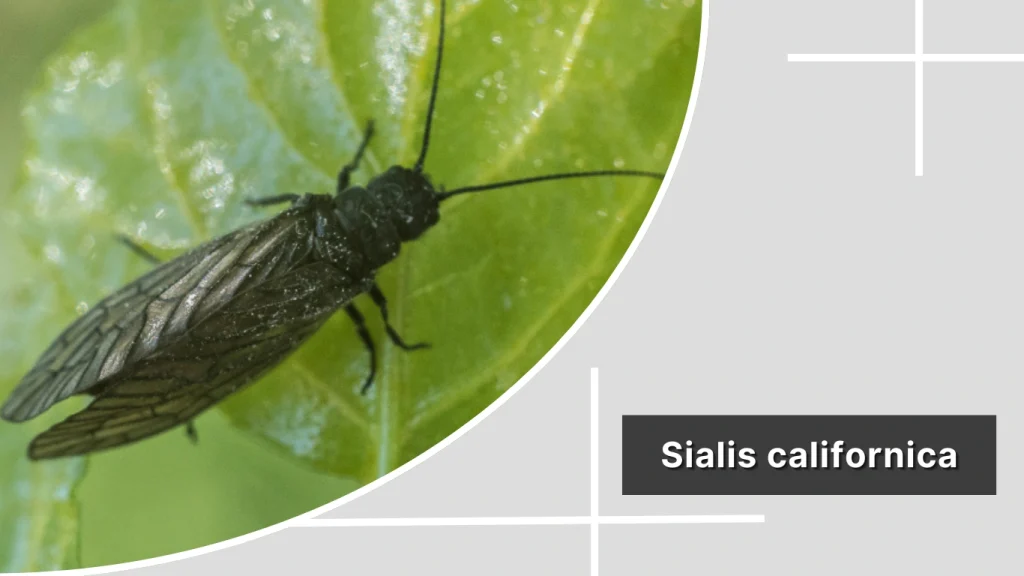
Sialis californica is a North American alderfly species, most often found in the western regions of the continent. It is associated with freshwater ecosystems such as rivers, lakes, and streams, where its aquatic larvae play a vital role as predators of smaller invertebrates.
Identification
- Medium-sized body, usually 12–16 mm in length
- Dark brown to black coloration with smoky, net-veined wings
- Wings slightly broader than in some related species
- Long, thread-like antennae characteristic of alderflies
Habitat
This species is most common along freshwater systems in western North America, including lakeshores, ponds, and riverbanks with vegetation and soft sediment.
Diet
Aquatic larvae are predatory, consuming insect larvae, worms, and other small aquatic creatures. Adults generally do not feed and live only briefly for reproduction.
Behavior
Adults are weak fliers and usually remain close to water. They are active in late spring and early summer, often seen resting on reeds, grasses, or rocks at the water’s edge.
