

Asia is home to a wide variety of cockroach species, ranging from notorious household pests to harmless outdoor dwellers. While some, like the German and Brown-banded cockroaches, thrive indoors and spread rapidly in kitchens and bathrooms, others such as the Asian and Harlequin cockroaches prefer outdoor habitats. These insects are highly adaptable, feeding on everything from decaying plants to food scraps. In this article, we explore 10 types of Asian cockroaches, their unique traits, habitats, diets, and lifecycles in detail.
1. Asian Cockroach (Blattella asahinai)
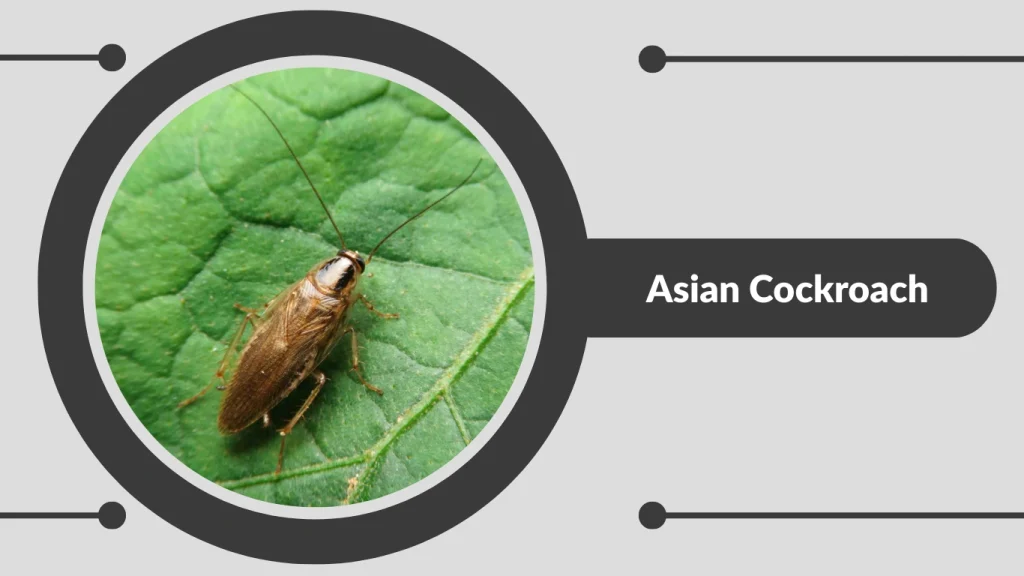
The Asian Cockroach is a small, fast-moving species native to Asia but also introduced to other regions, including the southern United States. It is often confused with the German cockroach due to its similar appearance, though its behavior and habitat are quite different. Unlike most pest roaches, the Asian cockroach is strongly attracted to light and is more commonly found outdoors.
Identification
- Adults are small, usually 12–16 mm in length
- Light brown to tan body with two parallel dark stripes running down the pronotum (like the German cockroach)
- Fully winged in both sexes, with wings longer than the body; excellent fliers
- Antennae are long and slender, aiding in quick navigation
- Nymphs resemble German cockroach nymphs but are more likely found outdoors
Habitat
Asian Cockroaches prefer outdoor environments such as leaf litter, mulch, grass, compost heaps, and gardens. They thrive in warm, humid climates and are often seen flying toward lights at dusk. Unlike German cockroaches, they rarely infest kitchens or bathrooms but may fly into homes attracted by indoor lighting.
Diet
This species feeds on a wide variety of organic material including decaying plant matter, fungi, seeds, and small scraps of human food if available. Their feeding helps recycle nutrients in garden and forest ecosystems.
Lifecycle
The lifecycle consists of egg, nymph, and adult stages. Females produce oothecae that contain 30–40 eggs, often deposited in soil or mulch. Nymphs undergo several molts over 2–3 months before reaching adulthood. Adults live about 3–6 months, with populations peaking in warm and humid seasons.
2. German Cockroach (Blattella germanica)
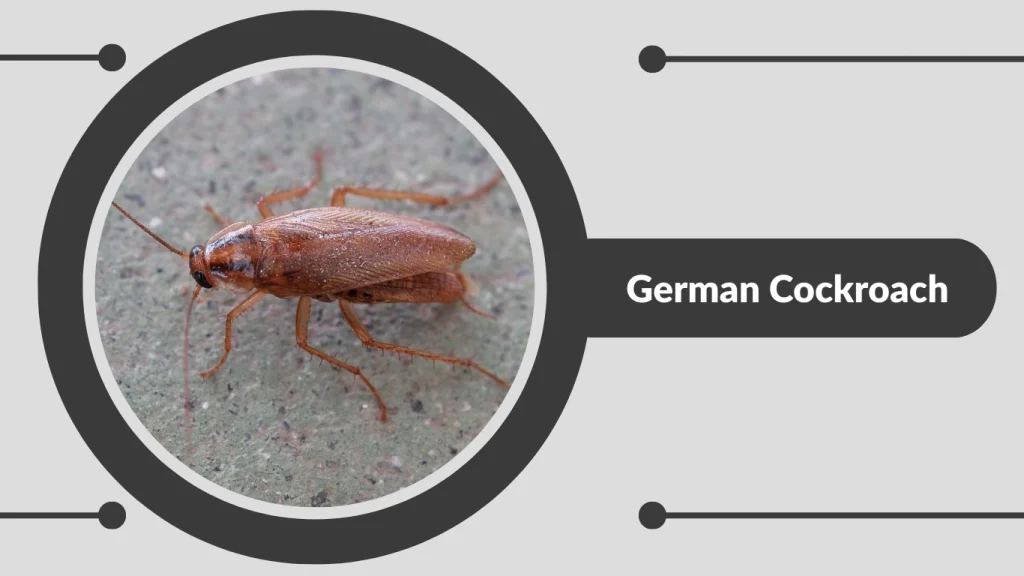
The German Cockroach is one of the most widespread cockroach species across Asia and the world. It is considered the most notorious household pest due to its ability to thrive indoors, reproduce quickly, and adapt to human environments. Unlike the Asian cockroach, which prefers outdoor habitats, the German cockroach almost exclusively lives inside homes, apartments, and commercial buildings.
Identification
- Small-sized, about 12–15 mm in length
- Light brown to tan coloration with two distinctive dark stripes running lengthwise on the pronotum
- Both sexes are fully winged, but they rarely fly and instead move quickly on foot
- Antennae are long and sensitive, helping them detect food and danger
- Nymphs are darker, smaller, and wingless but show the same characteristic stripes
Habitat
German Cockroaches are highly adapted to indoor environments. They thrive in kitchens, bathrooms, restaurants, food storage areas, and any place with warmth and moisture. Common hiding spots include cracks, crevices, behind stoves, under sinks, inside cupboards, and within electrical appliances.
Diet
Omnivorous and opportunistic, German Cockroaches eat food crumbs, grease, garbage, soap, paper, glue, and even dead insects. Their ability to survive on a wide range of food sources makes them one of the hardest pests to control.
Lifecycle
The lifecycle progresses through egg, nymph, and adult stages. Females carry an ootheca containing 30–40 eggs until they are close to hatching, ensuring higher survival rates. Nymphs grow rapidly, molting several times before reaching adulthood in about 2 months under favorable conditions. Adults live 6–7 months, and their fast reproduction cycle leads to rapid infestations if uncontrolled.
3. Brown-banded Cockroach (Supella longipalpa)

The Brown-banded Cockroach is a smaller cockroach species that is widespread across Asia and other tropical to temperate regions. Unlike German cockroaches, it does not require high humidity to survive, making it more versatile in drier indoor areas. Its distinctive banded markings make it easy to identify.
Identification
- Adults are small, usually 10–15 mm in length
- Light brown to tan body with two pale yellowish bands running across the wings and abdomen
- Males are fully winged and capable of flying, while females have shorter wings that do not cover the abdomen completely
- Antennae are long and slender
- Nymphs are darker with more obvious banding compared to adults
Habitat
Brown-banded Cockroaches thrive in warm, dry indoor environments. They are commonly found in homes, offices, and hotels, hiding in furniture, ceilings, electrical appliances, picture frames, and behind wall decorations. They prefer higher locations compared to German cockroaches, which stay close to kitchens and bathrooms.
Diet
This species feeds on a wide variety of materials including food scraps, starch, glue, wallpaper paste, and even non-food items. Because of their adaptability, they are often found in areas without consistent access to water sources.
Lifecycle
The lifecycle includes egg, nymph, and adult stages. Females produce oothecae containing about 14–18 eggs, which they attach to hidden surfaces like furniture, walls, or ceilings. Nymphs undergo several molts before reaching adulthood in 2–4 months. Adults live about 5–6 months, making them capable of producing multiple generations in a year.
4. American Cockroach (Periplaneta americana)

The American Cockroach is one of the largest and most widely distributed cockroach species in Asia. Though originally native to Africa, it has spread globally through trade and human activity. It thrives in warm, humid environments and is a well-known pest species in urban areas.
Identification
- Adults are very large, usually 35–40 mm in length
- Reddish-brown body with a yellowish margin around the pronotum (the shield-like plate behind the head)
- Both sexes are fully winged; wings extend beyond the abdomen and allow for strong flight
- Antennae are long, often longer than the body, aiding in navigation and sensing food
- Nymphs are smaller, darker, and wingless, gradually developing wing pads as they mature
Habitat
In Asia, American Cockroaches are commonly found in sewers, drains, basements, and garbage collection areas. They also live in mulch beds, woodpiles, and compost heaps outdoors. In urban settings, they infest commercial kitchens, food storage areas, and damp residential spaces.
Diet
Highly omnivorous, American Cockroaches feed on decaying organic matter, garbage, food scraps, dead insects, paper, and even clothing. Their adaptability allows them to thrive in human environments, making them one of the most difficult cockroaches to control once indoors.
Lifecycle
The lifecycle includes egg, nymph, and adult stages. Females produce oothecae containing up to 16 eggs, which they deposit in warm, protected crevices. Nymphs molt 10–13 times before adulthood, with development taking 6–12 months depending on conditions. Adults can live more than a year, enabling them to build large populations if uncontrolled.
5. Smokybrown Cockroach (Periplaneta fuliginosa)

The Smokybrown Cockroach is a large species that is widely distributed across Asia, particularly in warm and humid regions. It is often mistaken for the American cockroach but can be identified by its uniform, darker coloration. This species is strongly attracted to light and is known for flying readily at night.
Identification
- Adults measure about 30–35 mm in length
- Entire body is a glossy, dark mahogany-brown to nearly black, without lighter markings
- Both males and females are fully winged, with wings extending past the abdomen and allowing strong flight
- Antennae are long, thin, and usually longer than the body itself
- Nymphs are wingless, dark brown, and resemble smaller adults until maturity
Habitat
Smokybrown Cockroaches prefer moist, outdoor environments and are often found in mulch, compost piles, drains, roof gutters, and woodpiles. In Asia, they are common in urban gardens and can sometimes enter houses attracted by lights, though they do not breed as successfully indoors as German cockroaches.
Diet
These cockroaches are omnivorous, feeding on decaying vegetation, fungi, organic litter, and household waste if accessible. Their scavenging role makes them efficient decomposers in natural habitats but also occasional nuisances in human settlements.
Lifecycle
The lifecycle includes egg, nymph, and adult stages. Females produce oothecae containing about 20–24 eggs, which are often placed in sheltered, moist locations. Nymphs pass through several molts before reaching adulthood in about 6–12 months, depending on temperature and humidity. Adults live several months, with peak activity during warm, humid nights.
6. Oriental Cockroach (Blatta orientalis)

The Oriental Cockroach is a large, dark-colored cockroach species that is found in many parts of Asia. It is often referred to as the “water bug” because of its preference for cool, damp places. Unlike German or Asian cockroaches that thrive indoors, this species is more commonly seen outdoors but may enter basements, drains, and other moist areas of buildings.
Identification
- Adults measure 20–27 mm in length
- Body is shiny dark brown to nearly black
- Males have wings that cover about three-quarters of the abdomen; females have very short wings and cannot fly
- Both sexes are poor climbers compared to other cockroaches
- Nymphs are dark brown to black, wingless, and rounded in shape
Habitat
Oriental Cockroaches prefer damp, cool, and dark environments. In Asia, they are often found in drains, sewers, basements, leaf litter, and under stones. Around human settlements, they infest bathrooms, kitchens, and storage areas with poor ventilation and high moisture.
Diet
They feed primarily on decaying organic matter, garbage, starchy materials, and sometimes food scraps. Oriental Cockroaches are less attracted to fresh food than German cockroaches but can survive on a variety of waste products.
Lifecycle
The lifecycle includes egg, nymph, and adult stages. Females produce oothecae containing about 16 eggs, which are usually deposited in sheltered, moist environments. Nymphs take a relatively long time to mature—up to 6–12 months. Adults live several months, with activity peaking in cooler and damper conditions.
7. Australian Cockroach (Periplaneta australasiae)

The Australian Cockroach is a large cockroach species commonly found across Asia and other tropical regions, despite its name. It is closely related to the American cockroach but can be distinguished by its unique markings. This species prefers warm, moist climates and is often seen both outdoors and indoors in suitable environments.
Identification
- Adults measure 30–35 mm in length
- Reddish-brown body with a distinctive yellow band around the thorax (pronotum)
- Yellow markings on the upper part of the forewings (near the wing base)
- Both sexes are fully winged and capable of strong flight
- Nymphs are darker, smaller, and gradually develop yellow markings as they mature
Habitat
Australian Cockroaches thrive in warm and humid conditions. In Asia, they are found in gardens, mulch piles, compost heaps, and woodpiles. Indoors, they are often seen in kitchens, bathrooms, and basements where food and moisture are available. They can also be found around drains, crawl spaces, and attics.
Diet
This species is omnivorous, feeding on decaying plant matter, fungi, and organic waste. Indoors, it consumes food scraps, crumbs, paper, fabric, and even glue. Their versatility makes them persistent pests in human settlements.
Lifecycle
The lifecycle includes egg, nymph, and adult stages. Females produce oothecae containing 20–24 eggs, which they place in hidden, moist areas. Nymphs molt several times over 6–12 months before reaching adulthood. Adults live for several months, with breeding occurring continuously in warm, humid climates.
8. Harlequin Cockroach (Neostylopyga rhombifolia)

The Harlequin Cockroach is one of the most colorful cockroach species found across Asia. Unlike pest cockroaches that infest kitchens and bathrooms, this species is mostly an outdoor dweller and is recognized for its striking patterns and attractive appearance. Its distinct look makes it easy to identify compared to more uniformly colored roaches.
Identification
- Adults measure about 20–30 mm in length
- Body is reddish-brown to orange with bold black triangular or diamond-shaped markings on the wings
- Both sexes are fully winged and capable of flight, though they are not strong fliers
- Antennae are long and slender, often extending beyond body length
- Nymphs are patterned as well, but darker, with markings becoming more vivid as they mature
Habitat
This species prefers gardens, forests, mulch piles, and moist vegetation in warm regions of Asia. It can often be found under bark, in compost heaps, and around leaf litter. In suburban areas, it may be seen in gardens and parks but rarely establishes itself indoors.
Diet
The Harlequin Cockroach feeds on decaying organic matter, fungi, fruits, and occasionally sugary substances. Unlike household pest species, it does not typically scavenge human food or garbage, making it a harmless species in most cases.
Lifecycle
Their lifecycle includes egg, nymph, and adult stages. Females produce oothecae containing multiple eggs, which they deposit in soil or moist debris. Nymphs undergo several molts before becoming adults, with full development taking several months. Adults live for several months and are most active in warm, humid climates.
9. Surinam Cockroach (Pycnoscelus surinamensis)

The Surinam Cockroach is a burrowing species commonly found across Asia, especially in tropical and subtropical regions. It is unique among cockroaches because it reproduces almost entirely through parthenogenesis (females producing offspring without mating). This species is often found in soil and gardens, making it different from typical household cockroaches.
Identification
- Adults are medium-sized, usually 18–25 mm long
- Body is dark brown to black with lighter brown wings covering the back
- Females are fully winged but rarely fly; males are extremely rare or absent in most populations
- Antennae are long and slender
- Nymphs are wingless, smaller, and dark brown, often resembling beetle larvae when seen in soil
Habitat
The Surinam Cockroach is strongly associated with soil habitats. It lives in gardens, potted plants, greenhouses, compost piles, and agricultural fields. In Asia, it is often found burrowed in loose, moist soil and is a known pest in plant nurseries. Unlike German or American cockroaches, it rarely invades kitchens or bathrooms.
Diet
This species primarily feeds on decaying organic matter, roots, and other plant materials. In agricultural areas, it can damage seedlings and potted plants, which makes it a minor pest in horticulture. However, in natural environments, it contributes to soil nutrient recycling.
Lifecycle
The Surinam Cockroach has a unique reproductive cycle. Females produce oothecae but do not drop them; instead, they carry the egg case internally until nymphs hatch, giving the appearance of live birth. Nymphs molt several times before reaching adulthood in about 3–4 months. Since reproduction is almost entirely parthenogenetic, populations can grow rapidly without the presence of males.
10. Turkestan Cockroach (Shelfordella lateralis)
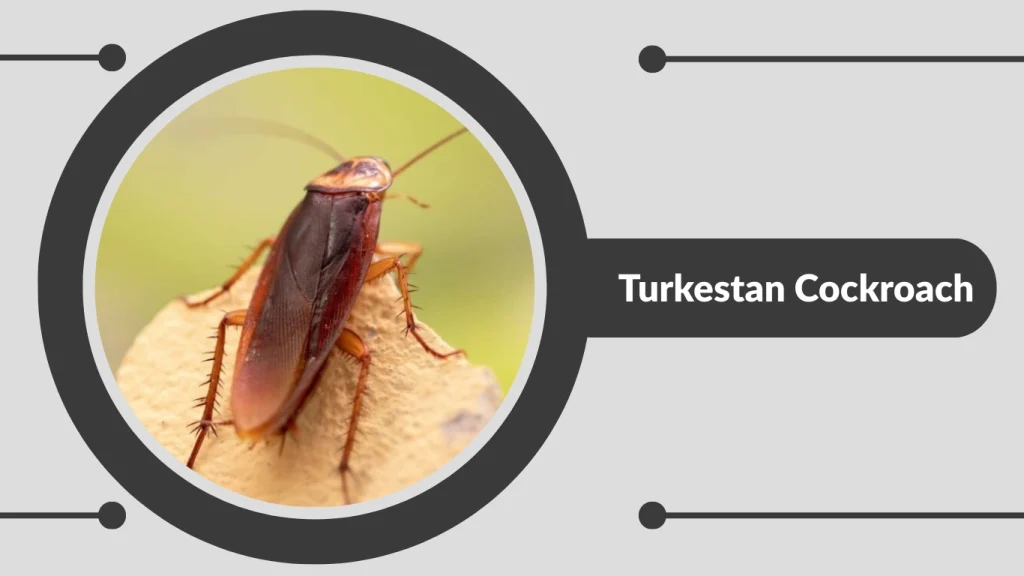
The Turkestan Cockroach is a species native to Central Asia and the Middle East but has spread to many parts of Asia due to trade and human activity. It is now frequently encountered in urban areas and is often considered a competitor to the Oriental cockroach. Its faster reproduction and adaptability make it a species of growing concern in some regions.
Identification
- Adults are medium-sized, measuring 20–30 mm in length
- Males are reddish-brown with long, narrow wings that extend beyond the abdomen and allow flight
- Females are darker, broader-bodied, and have much shorter wings that do not cover the abdomen
- Antennae are long and thin, aiding in navigation
- Nymphs are dark brown to black, wingless, and resemble Oriental cockroach nymphs but develop faster
Habitat
Turkestan Cockroaches thrive in warm, dry climates and are often found in urban environments. Common habitats include cracks in sidewalks, sewers, crawl spaces, basements, drains, and outdoor leaf litter. They are more adapted to drier conditions compared to Oriental cockroaches and often displace them in shared habitats.
Diet
This species feeds on a wide variety of decaying organic matter, garbage, food scraps, and plant debris. In urban areas, it scavenges from trash, sewage, and waste materials, making it well suited to city environments.
Lifecycle
The lifecycle includes egg, nymph, and adult stages. Females produce oothecae containing around 18–20 eggs, which are hidden in sheltered, dry places. Nymphs molt several times before adulthood, usually developing within 6–8 months. Adults live about 6–12 months, with populations growing rapidly in warm climates.
