
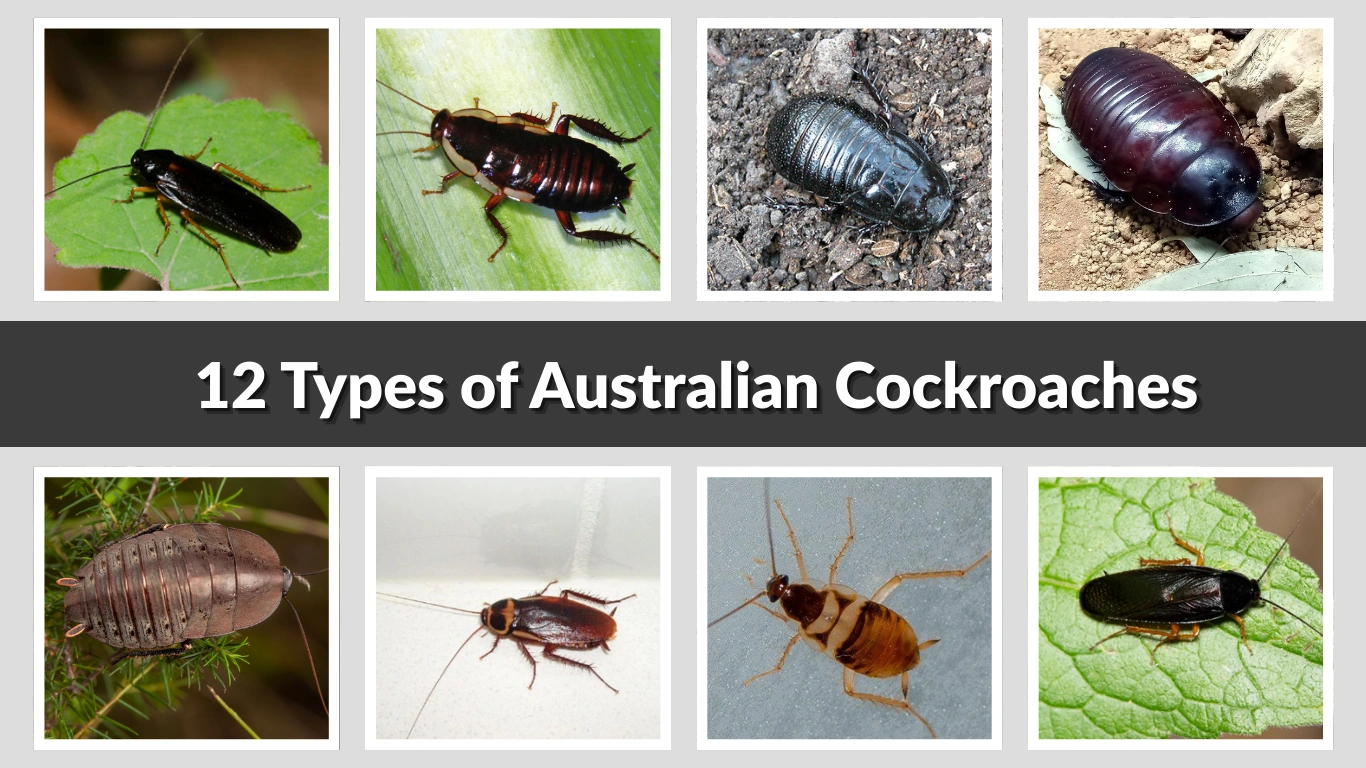
Australia is home to a wide variety of cockroach species, ranging from notorious household pests to harmless native bush-dwellers. While some species such as the German and Australian cockroach are well known for infesting homes, many others—including the Giant Burrowing and Bush Cockroaches—live entirely outdoors and play important ecological roles. In this article, we explore 12 different types of cockroaches found in Australia, covering their unique identification traits, habitats, diets, and lifecycles in detail.
1. Australian Cockroach (Periplaneta australasiae)
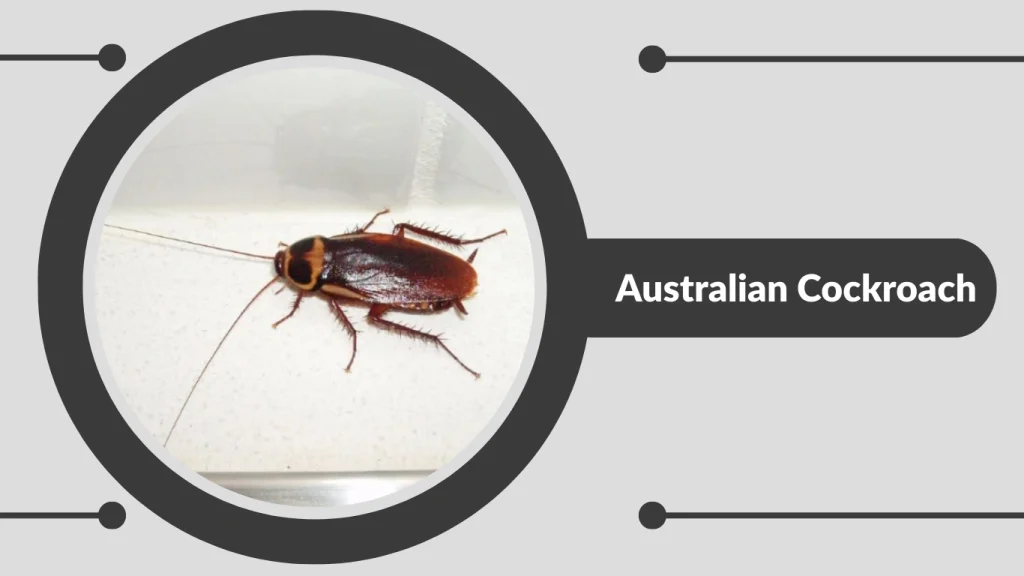
The Australian Cockroach is one of the most recognizable roaches in Australia and other tropical regions worldwide. Despite its name, it is not native to Australia but is widely distributed due to global trade and warm climates. It is commonly found outdoors but will enter homes in search of food or water.
Identification
- Adults are large, usually 30–35 mm in length
- Body is reddish-brown with a yellow margin around the thorax (pronotum)
- Distinctive yellow markings on the upper part of the forewings (near the wing base)
- Both males and females are fully winged and capable of flight
- Nymphs are smaller, darker, and gradually develop wing patterns as they molt
Habitat
The Australian Cockroach prefers warm, humid environments. It thrives outdoors in gardens, woodpiles, mulch, and compost heaps. Indoors, it is often found in kitchens, bathrooms, and basements, particularly in homes with high humidity or poor ventilation.
Diet
This species feeds on a wide variety of materials, including plant matter, fungi, organic debris, and human food scraps. They are known to be opportunistic feeders, consuming paper, clothing, and even glue if food is scarce.
Lifecycle
The lifecycle consists of egg, nymph, and adult stages. Females produce oothecae (egg cases) that contain about 20–24 eggs. Eggs hatch into nymphs that pass through multiple molts before becoming adults, a process that usually takes 6–12 months depending on environmental conditions. Adults live several months and reproduce rapidly in favorable climates.
2. American Cockroach (Periplaneta americana)

The American Cockroach is one of the largest cockroach species found in Australia, though it is originally from Africa. It has spread worldwide and is common in warm, humid environments, often thriving in urban areas. Despite being an outdoor species, it can become a serious pest indoors, particularly in commercial buildings and food storage areas.
Identification
- Adults are very large, measuring 35–40 mm in length
- Reddish-brown body with a lighter yellowish margin around the pronotum (shield behind the head)
- Fully winged in both sexes, with wings extending beyond the abdomen; capable of sustained flight
- Long, slender antennae longer than the body length
- Nymphs are smaller, darker, and wingless but gradually develop wing pads with age
Habitat
The American Cockroach thrives in warm, damp environments such as sewers, drains, basements, boiler rooms, and storage areas. Outdoors, it hides in mulch beds, woodpiles, and compost heaps. In Australia, they are especially common in cities and coastal regions where humidity is high.
Diet
Highly omnivorous, this cockroach consumes decaying organic matter, garbage, human food scraps, dead insects, and even non-food items like paper and cloth when food is scarce. Its feeding habits make it a serious pest in food-handling areas.
Lifecycle
The lifecycle includes egg, nymph, and adult stages. Females produce oothecae containing up to 16 eggs, often deposited in warm, hidden crevices. Nymphs hatch and undergo 10–13 molts before reaching adulthood, a process that may take 6–12 months. Adults can live for over a year, making them one of the most resilient cockroach species.
3. Smokybrown Cockroach (Periplaneta fuliginosa)

The Smokybrown Cockroach is another large species that occurs in Australia, though it is more commonly associated with tropical and subtropical climates. Known for its uniform dark coloration, it is often mistaken for the American cockroach. Unlike some other species, it is strongly attracted to light and frequently seen flying on warm nights.
Identification
- Adults measure 30–35 mm in length
- Entire body is glossy, dark mahogany-brown to almost black
- Both males and females are fully winged, with wings extending beyond the abdomen and enabling flight
- Antennae are long, thin, and usually longer than the body
- Nymphs are dark, wingless, and resemble smaller versions of adults until they develop wings
Habitat
Smokybrown Cockroaches thrive in warm, humid outdoor environments. They are commonly found in mulch piles, woodpiles, compost heaps, drains, roof gutters, and tree hollows. In urban areas, they may invade attics, crawl spaces, and bathrooms when moisture attracts them indoors.
Diet
This species feeds on a wide range of organic matter, including decaying vegetation, fungi, fruits, and food scraps. In human settings, it scavenges garbage, pet food, and leftovers, making it a nuisance pest around homes.
Lifecycle
The lifecycle includes egg, nymph, and adult stages. Females produce oothecae containing about 20–24 eggs, typically deposited in hidden, moist places. Nymphs undergo several molts before reaching adulthood, a process that may take 6–12 months depending on temperature and humidity. Adults can live up to 6–8 months, with peak activity during warm and rainy seasons.
4. Brown-banded Cockroach (Supella longipalpa)

The Brown-banded Cockroach is a smaller cockroach species found in Australia and many other parts of the world. Unlike larger species such as the American or Australian cockroach, it is well adapted to living indoors, making it a frequent household pest. Its name comes from the distinctive light bands across its wings and abdomen.
Identification
- Adults are small, measuring only 10–15 mm in length
- Light brown to tan body with two pale yellowish bands running across the wings and abdomen
- Males are fully winged and capable of flying; females have shorter wings that do not cover the abdomen completely
- Antennae are long and slender
- Nymphs are darker with more obvious banding compared to adults
Habitat
Brown-banded Cockroaches prefer warm, dry environments and are often found indoors rather than outdoors. They commonly infest kitchens, bathrooms, living rooms, and bedrooms, hiding in cracks, electrical appliances, behind picture frames, and in furniture. They are more widespread in heated homes and apartments.
Diet
This species feeds on a wide variety of food sources, including crumbs, starches, glue, paper, and household scraps. Unlike German cockroaches, they do not require as much moisture and can survive in drier areas of the home.
Lifecycle
The lifecycle includes egg, nymph, and adult stages. Females produce oothecae containing 14–18 eggs, which they attach to hidden surfaces such as furniture or walls. Nymphs hatch and undergo several molts before reaching adulthood, a process that usually takes 2–4 months. Adults live about 5–6 months, reproducing quickly under warm indoor conditions.
5. German Cockroach (Blattella germanica)
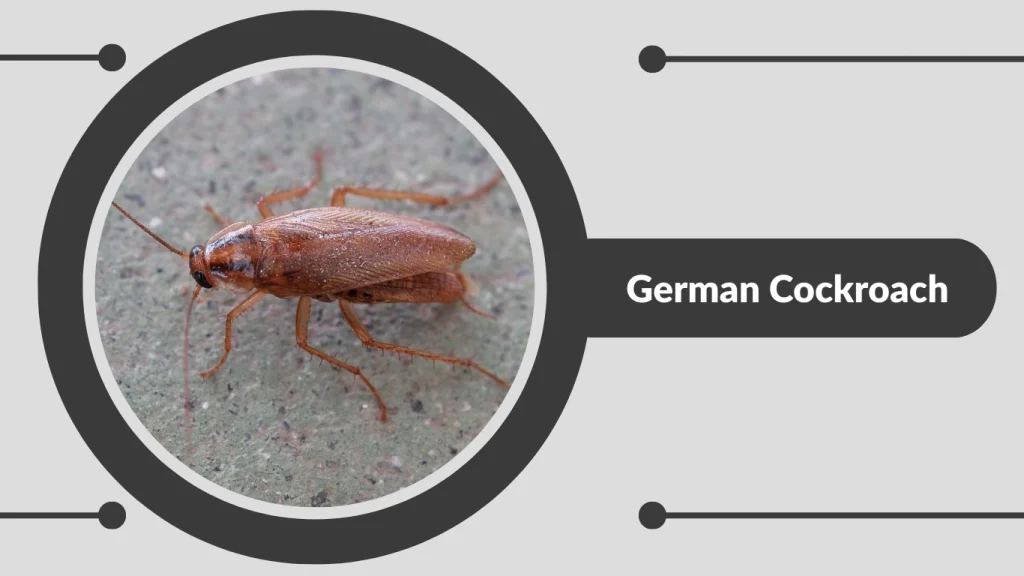
The German Cockroach is one of the most common household pests in Australia and worldwide. Unlike larger cockroach species that mostly live outdoors, this species is highly adapted to indoor environments, where it can quickly become a major problem. It reproduces rapidly and thrives in kitchens, bathrooms, and anywhere food and moisture are available.
Identification
- Small-sized cockroach, typically 12–15 mm in length
- Light brown to tan body with two dark parallel stripes running lengthwise on the pronotum (behind the head)
- Both sexes have wings, though they rarely fly; they mainly run quickly when disturbed
- Antennae are long and whip-like, aiding in navigation and sensing food
- Nymphs are darker, smaller, and lack wings, with the two stripes often more pronounced
Habitat
German Cockroaches prefer warm, humid, and indoor environments. They are most commonly found in kitchens, pantries, bathrooms, restaurants, and food storage areas. They hide in cracks, crevices, behind appliances, under sinks, and inside cabinets, emerging mainly at night to feed.
Diet
Highly omnivorous, German Cockroaches eat food scraps, crumbs, grease, garbage, and even non-food items such as soap, glue, and paper. Their ability to survive on minimal resources makes them persistent and difficult to control once indoors.
Lifecycle
The lifecycle progresses through egg, nymph, and adult stages. Females produce oothecae that contain 30–40 eggs, one of the highest among cockroach species. The eggs hatch into nymphs, which molt several times before adulthood. Development takes around 2 months in warm environments, allowing rapid population growth. Adults live about 6–7 months, and infestations can escalate quickly if not controlled.
6. Oriental Cockroach (Blatta orientalis)

The Oriental Cockroach is a large, dark species that is sometimes encountered in Australia, particularly in cool, damp environments. Unlike German or Australian cockroaches, it prefers outdoor habitats and is less common indoors, though it can invade basements, bathrooms, and drains. It is sometimes called the “water bug” due to its attraction to moisture.
Identification
- Adults measure 20–27 mm in length
- Shiny, dark brown to almost black body coloration
- Males have wings that cover about three-quarters of the abdomen, while females have very short, stub-like wings and cannot fly
- Both sexes are poor climbers compared to other cockroach species
- Nymphs are wingless, dark, and rounded in shape
Habitat
Oriental Cockroaches thrive in cool, damp, and dark places. They are often found outdoors in leaf litter, mulch, sewers, drains, and under stones or logs. Indoors, they are typically seen in basements, bathrooms, and kitchens where moisture is present.
Diet
This species feeds on decaying organic matter, garbage, and starchy materials. It is less attracted to fresh food than other cockroaches but can feed on a wide variety of household waste and organic debris.
Lifecycle
The lifecycle includes egg, nymph, and adult stages. Females produce oothecae containing around 16 eggs, often deposited in sheltered, damp environments. Nymphs take longer to develop compared to other cockroach species, requiring 6–12 months to reach adulthood. Adults live for several months and reproduce most actively in moist conditions.
7. Native Australian Bush Cockroach (Ellipsidion australe)

The Native Australian Bush Cockroach is a harmless species found across many parts of Australia. Unlike pest cockroaches that infest homes, this species lives entirely outdoors and plays a beneficial role in the ecosystem. It is often considered attractive due to its colorful markings compared to other darker roaches.
Identification
- Adults are small to medium-sized, around 10–15 mm in length
- Distinct reddish-brown to orange body with lighter markings along the edges
- Wings are present, but they rarely fly; more often they are seen walking on plants and ground litter
- Nymphs are smaller, similarly colored, and wingless, with markings that become more defined as they grow
Habitat
This cockroach lives in bushland, gardens, forests, and grassy areas. It is commonly found in leaf litter, under bark, and in natural ground cover. Unlike pest species, it does not invade homes or seek indoor environments, making it a truly outdoor insect.
Diet
The Native Australian Bush Cockroach feeds on decaying vegetation, fungi, pollen, and plant matter. Its diet makes it an important decomposer, contributing to nutrient cycling in natural habitats.
Lifecycle
The lifecycle follows egg, nymph, and adult stages. Females lay oothecae in soil or hidden under natural debris. Nymphs pass through several molts before becoming adults. Development time varies with climate, but populations remain stable outdoors and never reach the pest-level infestations seen in invasive cockroach species.
8. Giant Burrowing Cockroach (Macropanesthia rhinoceros)

The Giant Burrowing Cockroach, also known as the Rhinoceros Cockroach or Queensland Giant Cockroach, is the heaviest cockroach species in the world and is native to Australia. Unlike pest cockroaches, it is harmless, non-invasive, and plays an important ecological role. Many Australians even keep it as a pet due to its large size and docile nature.
Identification
- Adults can reach up to 60–80 mm in length and weigh more than 30 grams, making them the heaviest cockroach species
- Broad, robust body with a dark brown to black coloration
- Wingless in both sexes, unlike most cockroach species
- Equipped with strong front legs designed for digging and burrowing
- Nymphs are smaller, wingless, and gradually grow through multiple molts over several years
Habitat
This species is found in Queensland and northern parts of Australia, particularly in dry eucalyptus forests. It lives underground in deep burrows, sometimes extending up to a meter in length. Burrows provide protection from predators and temperature extremes.
Diet
The Giant Burrowing Cockroach feeds almost exclusively on dry eucalyptus leaves. It collects leaf litter, drags it into its burrow, and consumes it slowly, recycling nutrients back into the soil. Its diet makes it an important contributor to the ecosystem.
Lifecycle
The lifecycle of this cockroach is unusually long. Females give birth to live young (unlike many cockroaches that lay oothecae). Nymphs remain in the burrow with their mother for protection and feeding before becoming independent. Development to adulthood may take up to 3–5 years. Adults can live for more than 10 years, making it one of the longest-living cockroach species in the world.
9. Queensland Wood Cockroach (Ellipsidion humerale)

The Queensland Wood Cockroach, sometimes called the “Harlequin Cockroach” due to its colorful patterns, is a striking native species found across northern and eastern Australia. Unlike pest cockroaches, it does not infest homes and is considered beneficial in the environment.
Identification
- Small to medium size, usually 12–20 mm in length
- Distinctive markings: reddish-brown body with bright orange and white bands or spots along the edges
- Wings are present and cover the body, giving it a glossy patterned look
- Both sexes are winged, though flight is rarely observed
- Nymphs are patterned as well but with darker tones until maturity
Habitat
This cockroach is found in bushland, forests, and suburban gardens throughout Queensland and surrounding areas. It lives under bark, within leaf litter, and in moist vegetation. It is commonly seen outdoors during the day, unlike many nocturnal cockroach species.
Diet
The Queensland Wood Cockroach feeds on decaying plant matter, pollen, and fungi. It is not attracted to household food and does not scavenge garbage, making it ecologically important but not a pest.
Lifecycle
The lifecycle follows egg, nymph, and adult stages. Females produce oothecae that are hidden in soil or leaf litter. Nymphs undergo multiple molts before reaching adulthood, typically over several months. Populations remain stable outdoors and never form infestations indoors.
10. Harlequin Cockroach (Neostylopyga rhombifolia)

The Harlequin Cockroach is one of the most colorful cockroach species in Australia, often admired for its striking patterns. Unlike pest cockroaches, it is not considered invasive indoors and is more commonly seen outdoors in gardens and natural environments. Its bright appearance makes it easy to distinguish from other species.
Identification
- Medium-sized, usually 20–30 mm in length
- Distinctive reddish-brown to orange body with bold black markings arranged in a harlequin-like pattern
- Wings cover the body and display unique triangular or diamond-shaped patterns
- Both sexes are winged and capable of flight, though they are not strong fliers
- Nymphs are patterned but darker, with markings becoming brighter as they mature
Habitat
This species is found across many parts of Australia, especially in Queensland and New South Wales. It lives in gardens, under bark, in compost heaps, and within moist ground litter. It is frequently seen in suburban areas where vegetation provides suitable shelter.
Diet
Harlequin Cockroaches feed on decaying plant material, fungi, and organic debris. They are also attracted to fruit and sugary substances. Since they rarely scavenge household food or garbage, they are not considered a pest species indoors.
Lifecycle
Their lifecycle includes egg, nymph, and adult stages. Females produce oothecae containing eggs, which are often hidden in soil or organic debris. Nymphs develop slowly, molting multiple times before reaching adulthood. Adults live several months, with peak activity in warm and humid seasons.
11. Gisborne Cockroach (Drymaplaneta semivitta)

The Gisborne Cockroach, also known as the New Zealand or Shining Cockroach, is an introduced species that is now well established in parts of Australia. Unlike pest cockroaches, it is considered harmless and usually lives outdoors. It is distinctive for its shiny appearance and large size compared to many native species.
Identification
- Adults are large, usually 30–35 mm in length
- Body is dark brown to black with a glossy, shining surface
- Wings are absent in both sexes, giving it a stout, wingless appearance
- Antennae are long and slender, often longer than the body
- Nymphs resemble adults but are smaller, with the same glossy appearance
Habitat
The Gisborne Cockroach is commonly found in gardens, bushland, and damp outdoor areas. It shelters under logs, stones, leaf litter, and bark. In suburban areas, it may wander into homes but does not breed indoors and is not a pest species.
Diet
This cockroach feeds mainly on decaying plant matter, wood debris, and organic litter. Its diet contributes to nutrient recycling in natural and garden environments. Unlike pest species, it is not attracted to stored human food.
Lifecycle
The lifecycle follows egg, nymph, and adult stages. Females produce oothecae that are hidden in moist soil or leaf litter. Nymphs molt several times before reaching adulthood, with development usually taking several months. Adults live up to a year or more in stable conditions.
12. Black Wood Cockroach (Platyzosteria melanaria)

The Black Wood Cockroach is a native Australian species that is commonly found in bushland and gardens. Unlike invasive cockroach species that infest homes, this one lives entirely outdoors and is considered harmless. Its robust build and glossy black body make it easily distinguishable from other types of cockroaches.
Identification
- Adults are medium to large, usually 25–35 mm in length
- Body is broad, wingless, and uniformly shiny black
- Both sexes are completely wingless, which makes them non-flying
- Antennae are long and fine, extending beyond body length
- Nymphs are similar in appearance to adults but smaller and softer-bodied
Habitat
Black Wood Cockroaches inhabit forests, bushland, and suburban gardens across much of southern Australia. They are commonly found under bark, logs, rocks, and within leaf litter. Around homes, they may be seen in gardens or outdoor wood piles but do not enter houses as pests.
Diet
They feed on decomposing plant material, leaf litter, fungi, and organic matter found on the forest floor. Their feeding helps break down natural waste and enrich the soil, playing an important role in ecosystem health.
Lifecycle
The lifecycle progresses through egg, nymph, and adult stages. Females produce oothecae that are hidden in soil, under bark, or within rotting vegetation. Nymphs take several months to mature, molting multiple times before becoming adults. Adults can live up to a year, continuing the cycle in natural outdoor habitats.
