
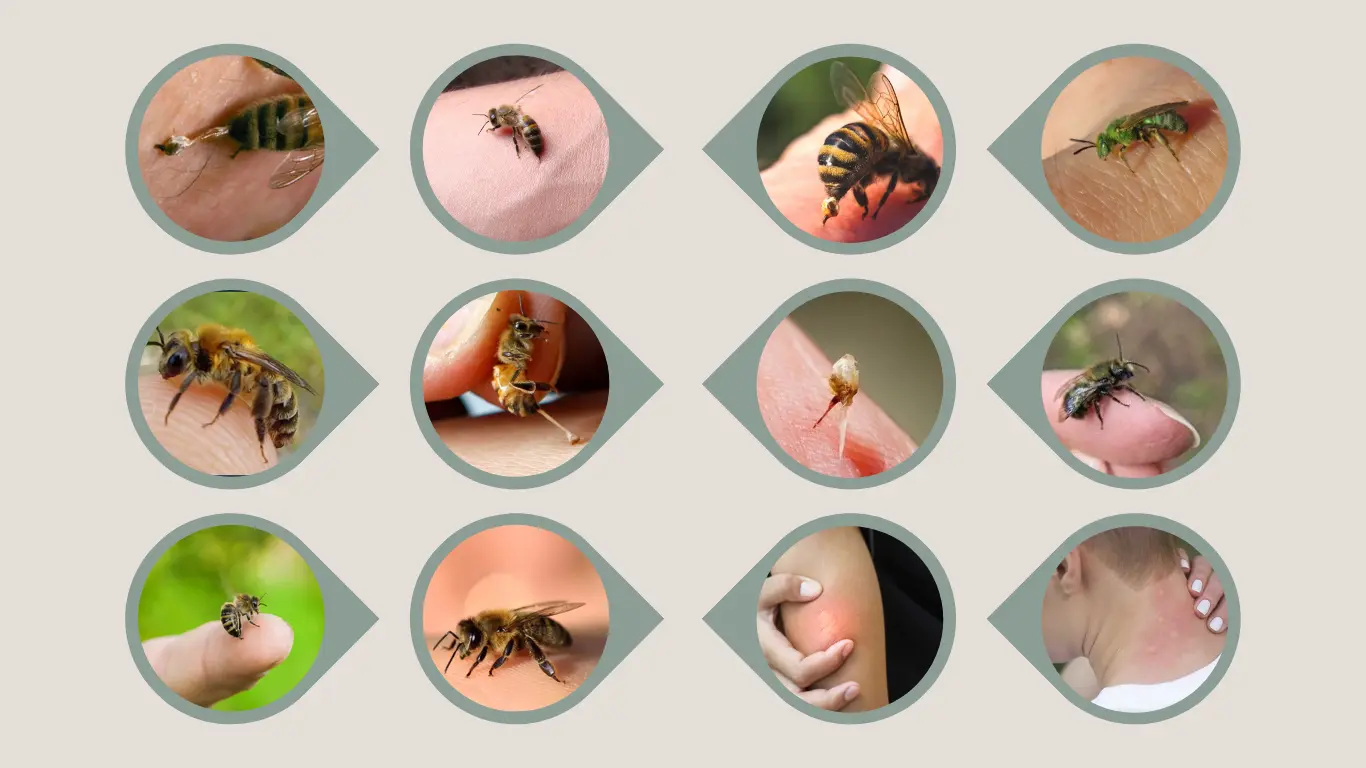
Bee stings may seem simple at first, but not all stings are the same. Depending on the type of bee and how your body reacts, a sting can range from a harmless prick to a life-threatening emergency. In this guide, I’ve covered 17 different types of bee stings—based on species behavior, sting mechanisms, and human reactions. Whether you’re dealing with a mild sweat bee sting or concerned about multiple stings or allergic symptoms, this article helps you understand what to expect and how to respond safely.
1. Honey Bee Sting
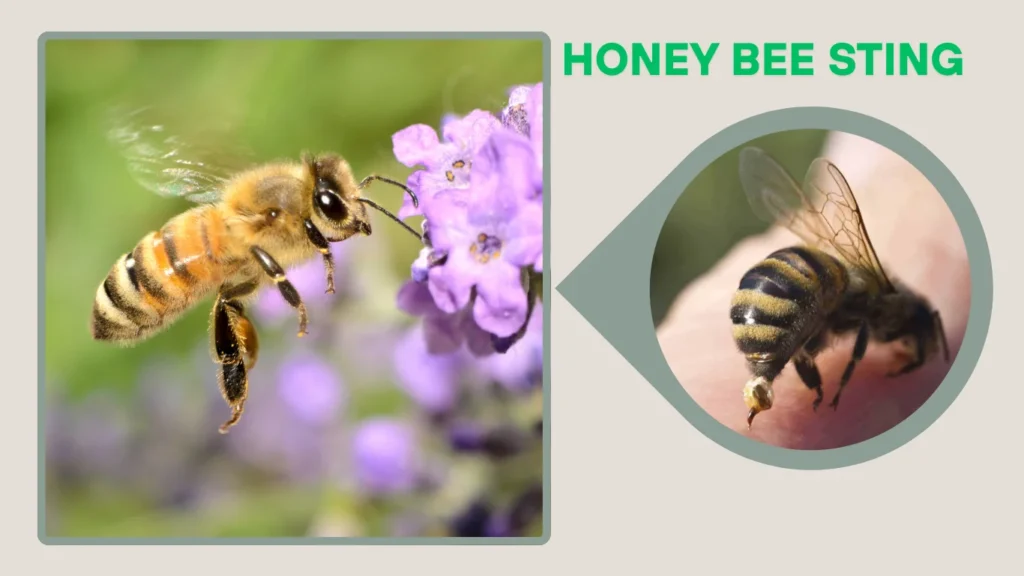
Honey bees (Apis mellifera) are the most common stinging bees people encounter. They are generally not aggressive and sting only when they feel threatened or their hive is disturbed.
Stinger Characteristics
Honey bees have a barbed stinger. When they sting, the stinger lodges in the skin and detaches from the bee’s body, pulling out internal organs with it. This causes the bee to die shortly after stinging. The barbed stinger acts like a tiny harpoon, which continues to pump venom into the skin even after detachment.
Pain Level
The sting is moderately painful, causing a sharp burning sensation that usually subsides within a few hours.
Venom Effects
The venom contains melittin, which affects cell membranes, causing pain and inflammation. It also contains proteins that affect the immune system, triggering pain, swelling, and redness.
Common Symptoms
- Sharp, immediate pain
- Redness and swelling around the sting site
- Itching or mild burning sensation
- In some cases, a white spot where the stinger entered
First Aid Tips
- Remove the stinger quickly by scraping it out with a flat object (credit card or fingernail)—do not squeeze.
- Wash the area with soap and water.
- Apply ice to reduce swelling and pain.
- Use antihistamines or hydrocortisone cream for itching.
2. Africanized Honey Bee Sting (Killer Bee Sting)
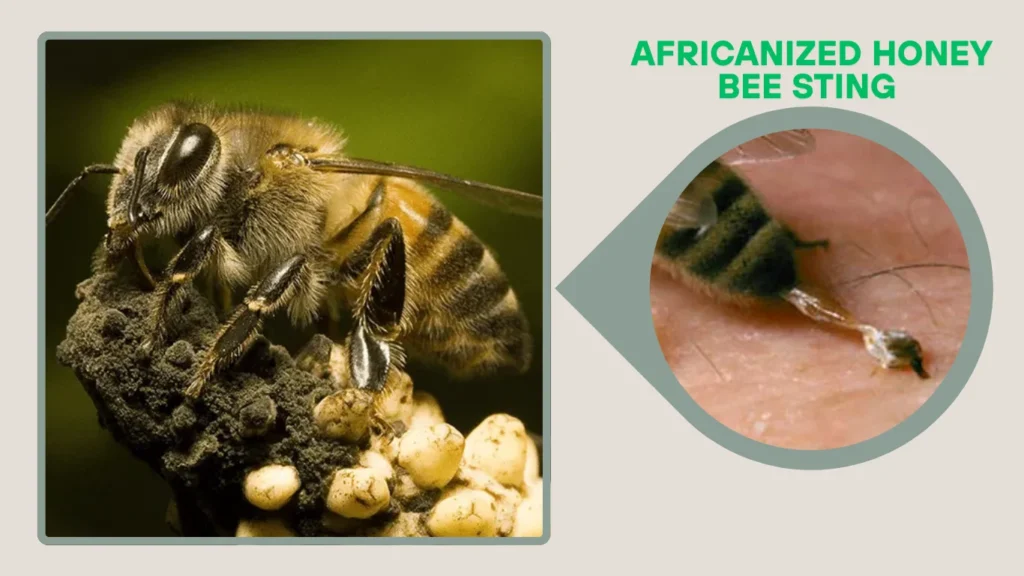
Africanized honey bees (a hybrid of African and European honey bees) are often called “killer bees” because of their extreme aggression. While their venom is similar to that of regular honey bees, the danger lies in their behavior.
Behavior and Aggression
These bees respond in large numbers to threats. If one bee stings, dozens or hundreds more may follow. They chase perceived threats for up to a quarter mile, making them especially dangerous.
Stinger Characteristics
Like the European honey bee, Africanized bees have a barbed stinger and die after a single sting.
Pain Level
Each sting is as painful as a honey bee’s. But multiple stings in a short time amplify the danger, especially for children, pets, or allergic individuals.
Common Symptoms
- Swarm of painful stings
- Rapid swelling and inflammation
- Increased risk of toxic reaction from multiple stings
- In extreme cases, breathing difficulty or collapse
First Aid Tips
- Run to shelter immediately if being chased—do not swat at the bees.
- Remove stingers quickly, as described for honey bee stings.
- Seek emergency help if stung multiple times or if allergic symptoms appear.
- Treat swelling and pain as per honey bee sting.
3. Bumblebee Sting
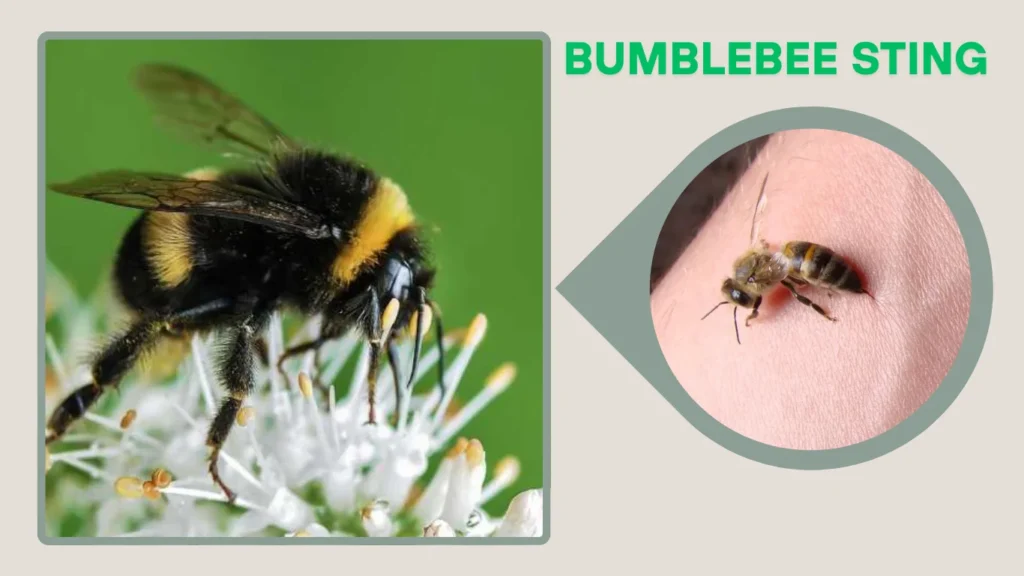
Bumblebees are large, fuzzy, and gentle by nature. They usually sting only when their nest is disturbed or if they’re grabbed or stepped on.
Stinger Characteristics
Bumblebees have a smooth stinger, so unlike honey bees, they can sting multiple times without dying. Their sting is stronger and longer-lasting than that of a honey bee.
Pain Level
A bumblebee sting is typically more painful and causes more swelling. The pain can last for several hours.
Venom Effects
Their venom contains a different protein mix from honey bees, which may lead to stronger allergic reactions in sensitive individuals.
Common Symptoms
- Deep stinging pain
- Redness and swelling lasting several hours
- Possible bruising near the sting site
- Rarely, allergic reactions (hives, itching, trouble breathing)
First Aid Tips
- Apply ice to control swelling.
- Clean the area well to prevent infection.
- Take oral antihistamines for itching or swelling.
- Seek medical attention for signs of allergy or if stung multiple times.
4. Carpenter Bee Sting

Carpenter bees look like bumblebees but have a shiny, black abdomen and less body hair. They’re known for boring into wood to create nests.
Stinger Characteristics
- Only females sting; males are aggressive in flight but cannot sting.
- The female’s stinger is smooth, allowing her to sting multiple times if needed, though she rarely does unless directly provoked or handled.
Pain Level
The sting is moderate to sharp, similar to a bumblebee sting, but less common.
Behavior
Carpenter bees are solitary and not very defensive. You’ll often see them hovering near wooden eaves or decks. Male carpenter bees might dive at you, but it’s a bluff.
Common Symptoms
- Sharp pain and slight swelling
- Localized redness
- Rare allergic reaction
First Aid Tips
- Clean the sting site with soap and water.
- Apply cold compresses to reduce pain.
- Use an over-the-counter antihistamine if there’s swelling or itching.
- Monitor for signs of allergy, especially if stung on the face or neck.
5. Sweat Bee Sting
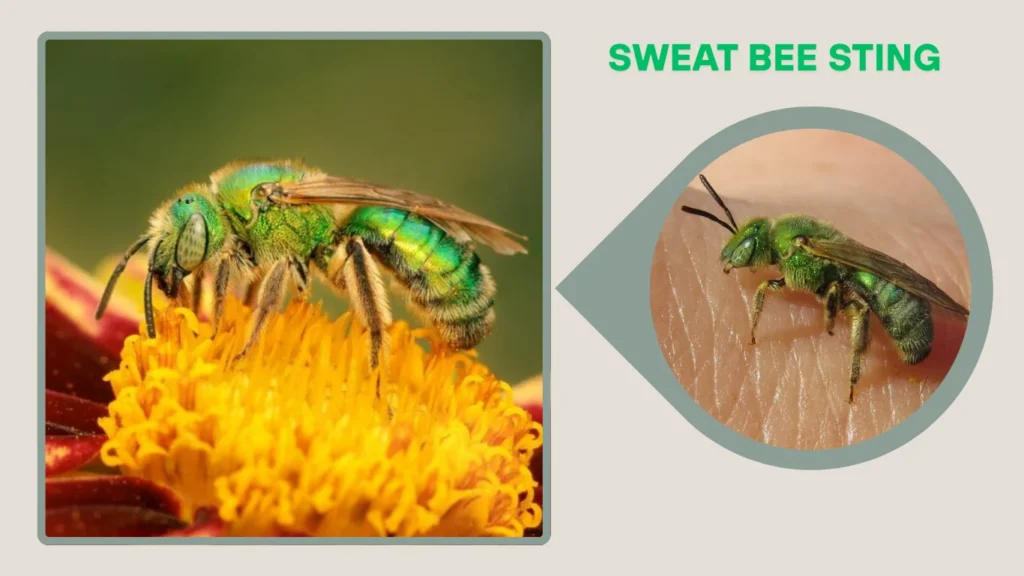
Sweat bees are small, often metallic green or blue, and are attracted to human sweat. They’re not aggressive, but may sting if brushed away or trapped against skin.
Stinger Characteristics
Sweat bees have small, smooth stingers. They can sting more than once, but usually don’t.
Pain Level
Sweat bee stings are very mild—often described as a small prick or slight burning that goes away quickly.
Behavior
They are generally harmless and sting only when threatened. Many people don’t even realize they’ve been stung unless they feel a small pinch while sweating outdoors.
Common Symptoms
- Minor sting sensation
- Slight redness or swelling
- Quick resolution without treatment
First Aid Tips
- Rinse the area with water and soap.
- Apply a cold compress if there’s slight swelling.
- Use soothing creams (like aloe vera or calamine) if itching occurs.
- No special treatment usually needed unless there’s a rare allergic reaction.
6. Mining Bee Sting

Mining bees are solitary ground-nesting bees often seen in spring. They’re small, fuzzy, and usually mistaken for honey bees.
Stinger Characteristics
Female mining bees can sting, but their stinger is weak and rarely used. Their sting is very mild, and these bees are known for being extremely non-aggressive.
Pain Level
The sting is typically barely noticeable or comparable to a small pinch.
Behavior
Mining bees dig small tunnels in bare soil or lawns. They prefer to flee than fight and will only sting if handled roughly.
Common Symptoms
- Very slight pain or itching
- Minimal swelling, if any
- Often mistaken for an ant bite
First Aid Tips
- Wash the sting site to avoid infection.
- Apply ice only if there’s mild discomfort.
- No medication usually needed, unless itching occurs.
- Safe for children and pets—sting is not dangerous.
7. Leafcutter Bee Sting

Leafcutter bees are solitary bees known for cutting neat circles out of leaves to build their nests. They are beneficial pollinators and rarely sting.
Stinger Characteristics
Leafcutter bees have a smooth stinger but almost never use it. They sting only under intense provocation.
Pain Level
Their sting is mild to moderate but short-lasting. Most people describe it as less painful than a honey bee sting.
Behavior
They do not defend nests like social bees and are non-aggressive. They often nest in wood, plant stems, or bee hotels.
Common Symptoms
- Mild, brief pain
- Localized swelling or redness
- Itching or tenderness may follow
First Aid Tips
- Clean the area gently with soap and water.
- Apply a cool compress if there’s redness.
- Use topical creams if needed for itching.
- No emergency treatment required unless allergic.
8. Mason Bee Sting

Mason bees are solitary, blue-black bees that nest in small holes, cracks, or “bee hotels.” They’re among the most gentle bee species and are excellent early-spring pollinators.
Stinger Characteristics
Female mason bees have a very weak, smooth stinger. It’s capable of stinging but rarely used—even when the bee is handled. Most mason bees prefer escape over confrontation.
Pain Level
Their sting is extremely mild, often going unnoticed. Most people don’t feel more than a small prick, and some may not feel it at all.
Behavior
Mason bees are non-aggressive. They do not defend their nest. Even in dense populations (like stacked bee houses), sting incidents are rare.
Common Symptoms
- Tiny red spot or dot where stung
- No significant swelling
- Itching or tenderness is rare
- Almost never triggers allergic reaction
First Aid Tips
- No stinger removal needed—they don’t leave it behind.
- Rinse with water, apply soap.
- No medication is usually necessary, though aloe gel can soothe.
- Safe for homes, gardens, and even for children to be around.
9. Cuckoo Bee Sting

Cuckoo bees are parasitic bees that lay their eggs in other bees’ nests. Because they don’t build or defend nests, they have little reason to sting.
Stinger Characteristics
Female cuckoo bees do have stingers, but they are used more for fighting other bees than humans. The stinger is smooth and flexible, allowing them to sting more than once—but they rarely do.
Pain Level
Their sting is mild to moderate, often described as slightly sharper than a sweat bee but not as intense as a honey bee.
Behavior
They are reclusive and spend most of their time searching for host nests. Because they don’t defend hives or territories, they are very unlikely to sting humans.
Common Symptoms
- Brief, sharp pain
- Minimal swelling or reaction
- Very low risk of allergy
First Aid Tips
- Clean with soap and water to prevent infection.
- Apply cold compress if you feel irritation.
- Use antihistamine cream only if there’s itching.
- No emergency treatment needed.
10. Long-Horned Bee Sting

Long-horned bees belong to the Eucerini tribe and are named for the males’ long antennae. They’re solitary bees often seen on sunflowers and other summer-blooming plants. These bees are fast, active pollinators and generally non-aggressive.
Stinger Characteristics
- Only females sting, and the stinger is smooth, allowing repeated use.
- However, stings are extremely rare, even when disturbed.
- Males cannot sting but may fly close to humans in curiosity.
Pain Level
The sting is mild to moderate—slightly stronger than a sweat bee but still less painful than a honey bee.
Behavior
Long-horned bees are solitary and non-territorial. They don’t protect a colony, so they have little reason to sting. They may sting if trapped or squeezed, but in most cases, they quickly flee.
Common Symptoms
- Mild sting pain, often a small pinch
- Temporary redness or swelling
- Minimal itching
- No significant allergic reports from long-horned bee stings
First Aid Tips
- Wash the area with soap and water to prevent infection.
- Apply an ice pack for swelling or discomfort.
- Use calamine lotion or antihistamine cream for any itching.
- Observe for 15–30 minutes—but reactions are usually minimal.
11. Normal Human Reaction to a Bee Sting
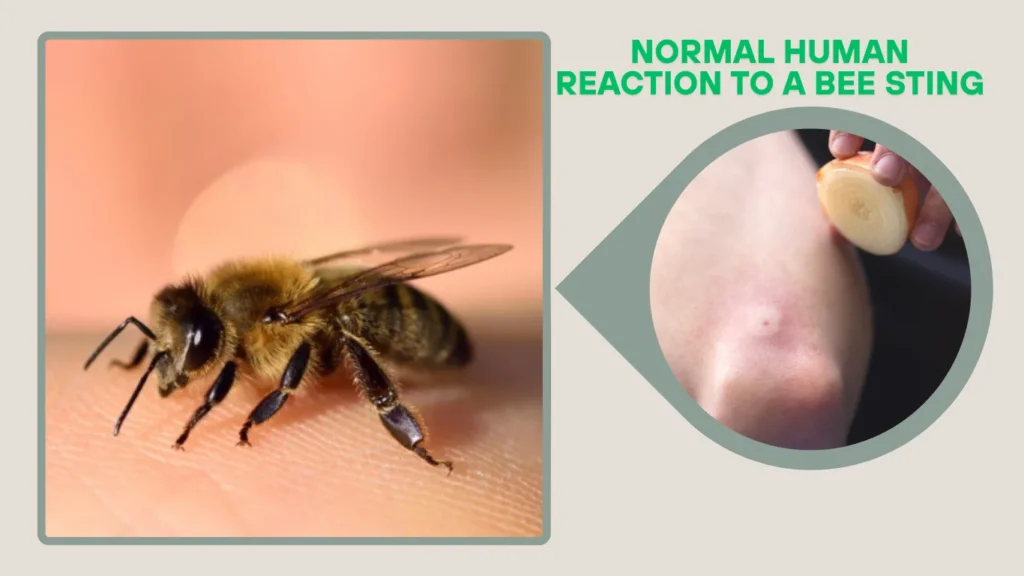
A normal reaction to a bee sting refers to the body’s typical, non-allergic response to bee venom. It’s the most common outcome after being stung and usually resolves within a few hours to a few days with basic care.
What Happens During a Normal Reaction?
When a bee stings, it injects venom into the skin. The immune system recognizes this venom as foreign and reacts by releasing histamines and other chemicals. These cause pain, swelling, and redness around the sting site.
Common Symptoms
- Immediate sharp pain or burning
- Redness around the area
- Mild swelling, usually about 1–2 inches wide
- Itching at the site within a few hours
- A small white spot in the center where the stinger entered (for honey bee stings)
These symptoms are localized and don’t spread to other parts of the body.
Duration
- Pain: typically lasts a few minutes to 1–2 hours
- Swelling/itching: may persist for 1–3 days
- No long-term effects
What’s Not Included in a Normal Reaction
- No hives away from the sting
- No difficulty breathing
- No swelling of the face, tongue, or throat
- No dizziness or nausea
If any of these symptoms occur, it may be an allergic or systemic reaction and requires medical help.
First Aid Tips
- Remove the stinger if it’s still present (scrape, don’t pinch).
- Wash the area with soap and water.
- Apply ice for 10–15 minutes to reduce swelling.
- Use oral antihistamines (like Benadryl) for itching.
- Apply calamine lotion or hydrocortisone cream for skin relief.
When to See a Doctor
- If swelling lasts more than 3 days
- If signs of infection (pus, increased redness, warmth) appear
- If you’ve been stung near the eye, inside the mouth, or on the throat
12. Large Local Reaction to a Bee Sting
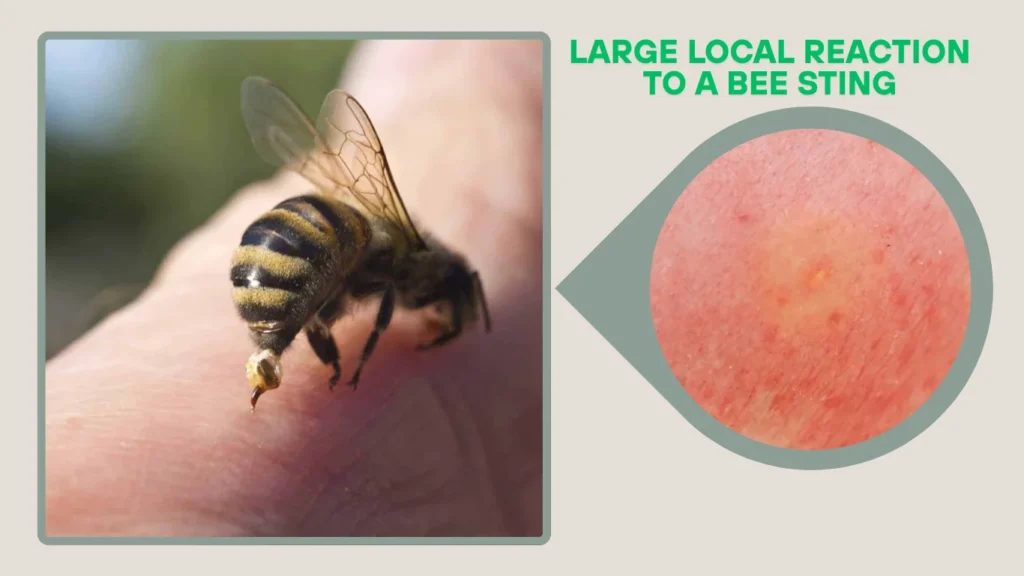
A large local reaction (LLR) is a more intense version of the normal sting response. It is not an allergic reaction, but the swelling and symptoms can be dramatic and uncomfortable. These reactions typically appear 12–24 hours after the sting and can last for several days.
What Happens in a Large Local Reaction?
The immune system responds strongly to bee venom at the sting site. This response causes extended swelling—sometimes covering an entire arm or leg—without affecting other body systems.
Common Symptoms
- Swelling extending beyond 4 inches from the sting
- Redness that spreads over a wide area
- Warmth or tightness in the affected limb
- Itching and pain that lasts for several days
- The reaction remains localized and doesn’t involve breathing issues
Pain Level
Moderate to high discomfort due to the size of the swelling. Movement of the area may be limited temporarily.
Duration
- Swelling may peak within 48 hours
- Symptoms often last 5–10 days
First Aid Tips
- Apply cold compresses several times daily.
- Elevate the affected limb to reduce swelling.
- Use antihistamines and anti-inflammatory medications like ibuprofen.
- Avoid scratching, which may lead to infection.
- Seek medical attention if swelling worsens or infection develops.
When to Worry
- If swelling becomes painful or hot to the touch (signs of infection)
- If the sting is near joints, eyes, or sensitive areas
- If the swelling interferes with circulation
13. Systemic Allergic Reaction (Anaphylaxis)

A systemic allergic reaction, also called anaphylaxis, is the most dangerous type of bee sting response. It happens when the immune system overreacts to bee venom and affects multiple body systems.
What Happens in Anaphylaxis?
The body releases a flood of chemicals like histamines, causing blood vessels to dilate, airways to constrict, and blood pressure to drop. It can be life-threatening and requires emergency treatment.
Symptoms Usually Begin Within Minutes:
- Difficulty breathing or wheezing
- Swelling of lips, tongue, throat, or face
- Hives or rash over the body
- Nausea, vomiting, diarrhea
- Dizziness or fainting
- Rapid heartbeat or weak pulse
- Sense of doom or confusion
Pain Level
The sting may or may not feel more painful than usual. The life-threatening symptoms come from the body’s reaction, not the venom itself.
Who’s at Risk?
- People with known bee sting allergies
- Those with previous anaphylactic reactions
- People stung multiple times at once
Emergency First Aid Tips
- Call emergency services immediately.
- Use an epinephrine auto-injector (EpiPen) if available.
- Keep the person lying down with legs elevated if possible.
- Do not give oral medication unless instructed by a professional.
- Monitor breathing and heart rate until help arrives.
Aftercare
- Individuals should be evaluated in the ER even after using epinephrine.
- May require allergy testing and prescription of an epinephrine auto-injector for future use.
14. Multiple Stings Reaction
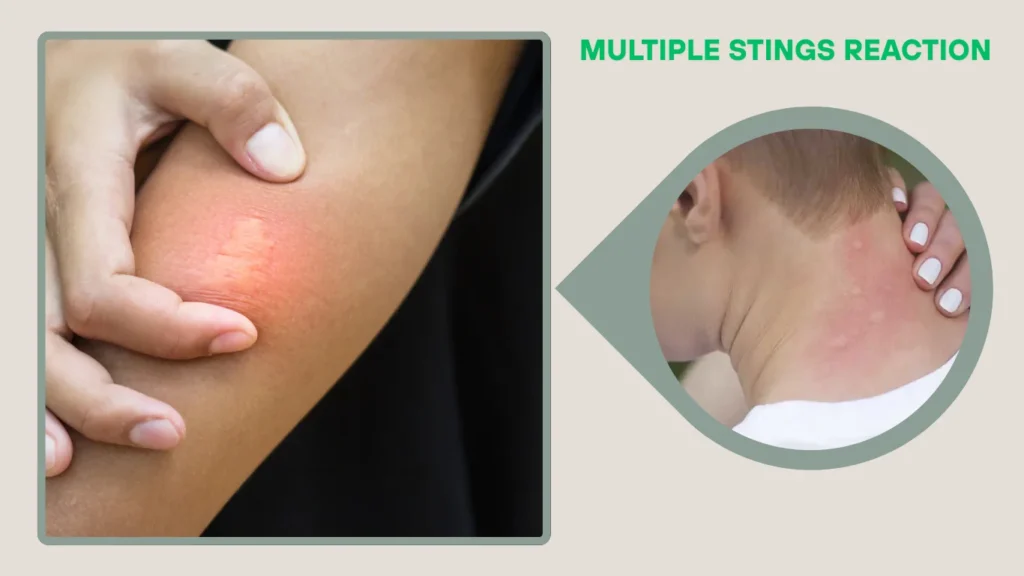
Being stung by multiple bees at once—especially more than 10 stings—is far more dangerous than a single sting, even for people without allergies. This situation is most common with aggressive bees like Africanized honey bees or if someone disturbs a nest or hive.
What Happens in a Multiple Sting Event?
Each sting injects venom. When dozens or hundreds of bees sting, the venom builds up in the body, potentially leading to toxic effects and organ stress, particularly in children, the elderly, or those with existing health conditions.
Common Symptoms
- Intense pain at multiple sting sites
- Severe swelling across large areas of the body
- Headache, fever, or fatigue within hours
- Nausea, vomiting, or diarrhea
- In severe cases: muscle breakdown, kidney failure, or seizures
Danger Level
- Over 50 stings in adults or 10+ in children can be life-threatening due to venom overload.
- No allergy needed—this is a toxic rather than allergic reaction.
Immediate First Aid Tips
- Get away from the bees immediately.
- Remove visible stingers quickly to stop more venom entering.
- Call emergency services if there are more than a few stings.
- Apply ice and stay calm.
- Hydrate well and avoid exertion to protect the kidneys.
Medical Treatment
- Hospital monitoring for organ damage
- IV fluids, anti-inflammatory meds, and possibly oxygen
15. Delayed Reaction to Bee Sting
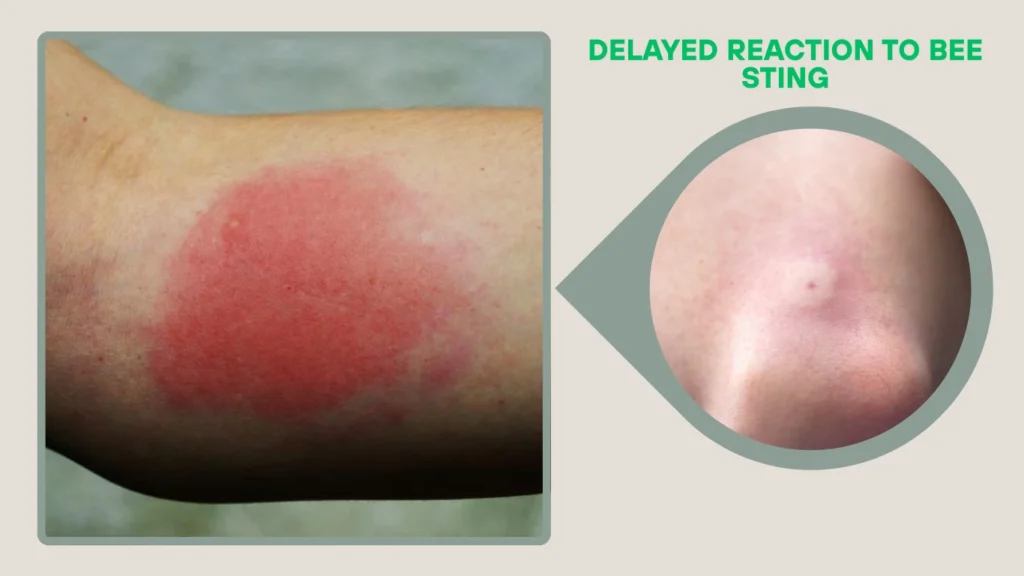
Sometimes, people experience symptoms hours or even days after a bee sting. This is called a delayed hypersensitivity reaction, and it’s more common in people who have been stung multiple times or have a history of allergic sensitivity.
What Happens in a Delayed Reaction?
Instead of reacting immediately, the immune system takes time to respond. The reaction may show up as skin issues, joint pain, or flu-like symptoms—days after the sting occurred.
Common Symptoms (24–72 Hours Later):
- Swollen lymph nodes
- Fever or chills
- Headache
- Joint pain or stiffness
- Fatigue
- Rash at or near the sting site
Severity
Most delayed reactions are uncomfortable but not dangerous. However, it can be confusing because the sting site may look healed while the symptoms occur elsewhere.
First Aid and Medical Care
- Monitor for symptoms for several days after being stung.
- Use over-the-counter pain relief for fever and aches.
- Consult a doctor if the symptoms worsen or affect breathing or heart rate.
- Antibiotics may be needed if an infection is suspected.
16. Toxic Reaction from Bee Venom

A toxic reaction happens when a large dose of bee venom overwhelms the body—not due to allergy, but simply from the sheer amount of venom. This usually occurs after being stung by dozens or hundreds of bees, especially in areas with Africanized or disturbed honey bee hives.
What Happens in a Toxic Reaction?
The venom affects multiple body systems—muscles, kidneys, nerves, and even the blood. It’s similar to venom poisoning and can lead to serious complications if untreated.
Common Symptoms
- Nausea and vomiting
- Headache
- Fever and weakness
- Seizures (in extreme cases)
- Drop in blood pressure
- Dark-colored urine (a sign of muscle breakdown)
- Kidney failure in severe cases
Difference from Allergic Reaction
Unlike anaphylaxis, there are no hives or airway swelling. The issue is toxic overload, not an immune system response.
Who’s Most at Risk?
- Children
- Elderly individuals
- People with heart, liver, or kidney issues
First Aid Tips
- Call emergency services immediately.
- Remove all stingers quickly.
- Lie down and stay still—movement spreads venom faster.
- Do not give fluids unless instructed by professionals (may harm kidney function in severe cases).
Medical Treatment
- IV fluids, pain relief, and anti-venom support
- Monitoring kidney, liver, and heart function
- Hospitalization for severe cases
17. Infection After Bee Sting
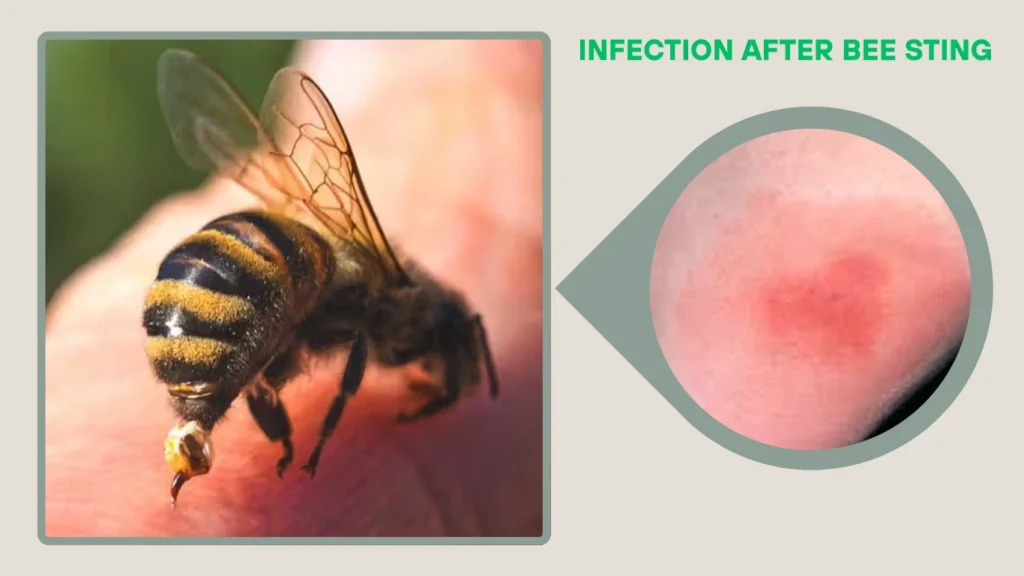
Although bee venom is sterile, an infection can occur if bacteria enter the skin through the sting wound—especially if the site is scratched or not properly cleaned.
How It Happens
- Scratching the sting introduces bacteria from fingernails.
- Stinger removal with dirty tools can spread infection.
- Occurs more often with stings in moist or dirty skin areas (e.g., hands, feet, joints).
Common Symptoms of Infection (24–72 hours later):
- Increased redness spreading around the sting site
- Swelling that worsens instead of improving
- Warmth or pus at the sting site
- Fever or chills
Severity
Most infections are mild and treatable with antibiotics, but in rare cases, infection may spread (cellulitis) or become more serious.
First Aid and Treatment
- Clean the sting site immediately with soap and water.
- Apply antibiotic ointment if the skin breaks.
- Avoid scratching, even if it itches.
- See a doctor if redness expands or fever develops.
When to Seek Medical Help
- Swelling spreads rapidly
- Pus forms at the site
- Fever appears
- Red streaks move up the limb (a sign of cellulitis)
Summary
Bee stings vary greatly depending on the type of bee and the body’s reaction to the venom. From mild stings by solitary bees like mason or sweat bees to more serious responses like anaphylaxis or toxic reactions from multiple stings, it’s important to understand the differences. While most bee stings cause only temporary discomfort, some can lead to severe health issues if not treated properly. Recognizing the sting type and responding quickly with the right care can make all the difference in staying safe.
