
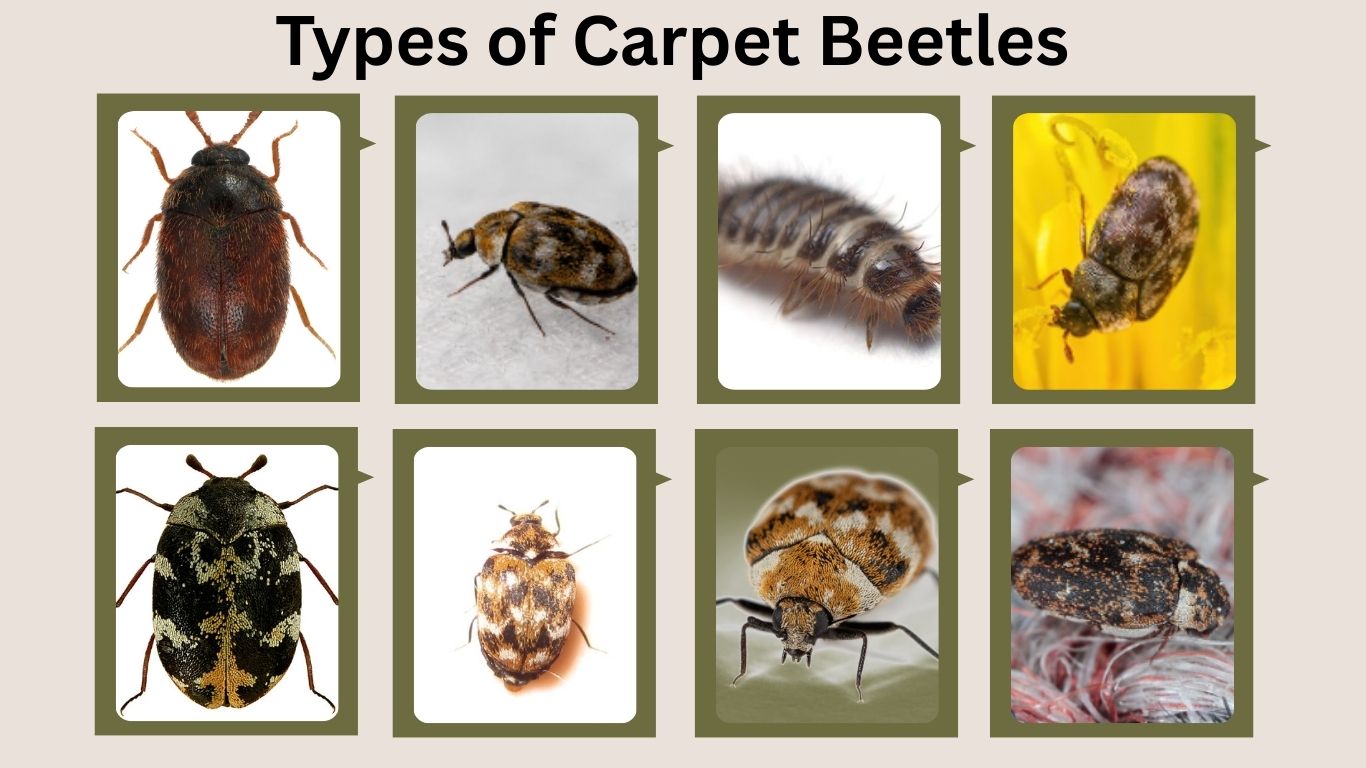
Carpet beetles are tiny insects that can cause big problems in your home. From wool rugs to stored clothes, these pests feed on natural fibers and often go unnoticed until the damage is done.
In this guide, I’ll help you identify 13 common types of carpet beetles, explain where they hide, and show you simple steps to get rid of them for good.
1. Varied Carpet Beetle
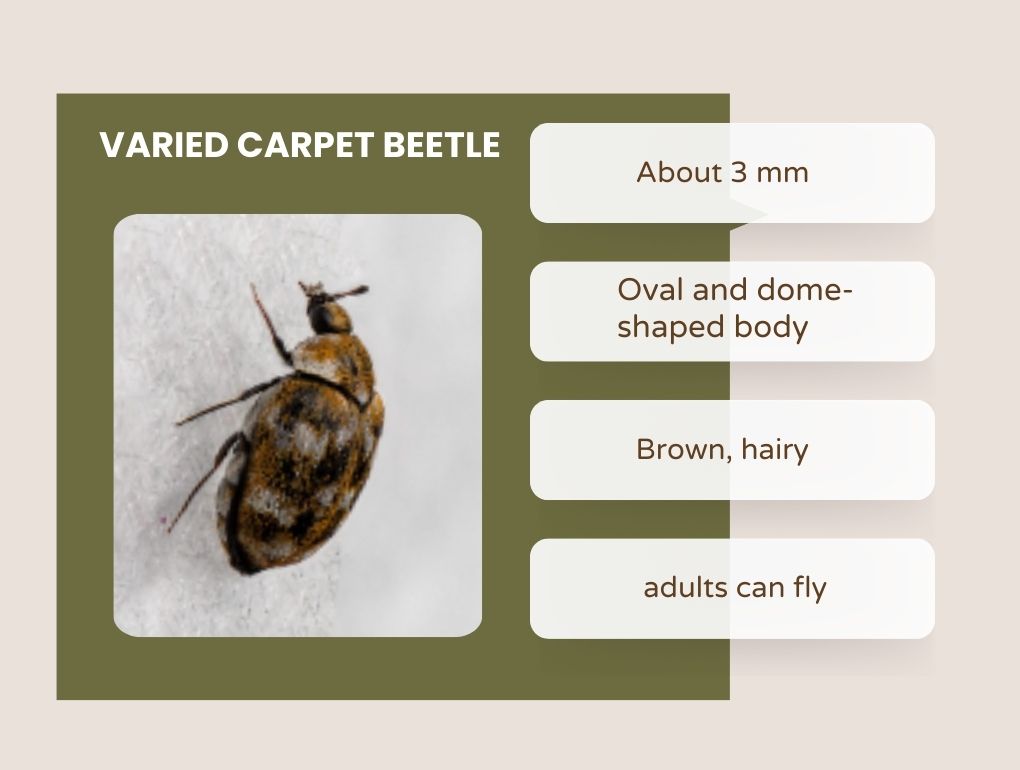
The Varied Carpet Beetle is one of the most common household beetles. It may be small, but it can cause big damage to natural fabrics like wool, silk, and even feathers. People often don’t notice them until they see signs of damage or tiny beetles near windows.
Appearance
The adult Varied Carpet Beetle is very small, about 3 mm long. It has a rounded body with a mix of white, brown, and yellow scales on its back, giving it a speckled appearance. The larvae are bigger than the adults and look like tiny, hairy worms with light and dark brown stripes.
Identification
- Size: About 3 mm (adult)
- Color: Speckled pattern – white, brown, and yellow
- Shape: Oval and dome-shaped body
- Larvae: Brown, hairy, and striped with bristles at the end
- Wings: Yes, adults can fly
- Movement: Often seen near windows or lights
Habitat
Varied Carpet Beetles are found both indoors and outdoors. Outside, they live in flowers and feed on pollen. Inside homes, they like dark, quiet places like under carpets, behind furniture, in air vents, or inside storage boxes. They are especially attracted to natural fibers.
Lifecycle
Adult beetles lay eggs in hidden areas with food sources like wool or pet hair. The eggs hatch into larvae, which feed for several weeks or even months. Once they grow enough, the larvae turn into pupae and then into adult beetles.
Why You Should Care
Even though adult beetles don’t damage fabrics, the larvae can cause serious harm to clothes, carpets, and upholstery. They are hard to spot at first, so regular cleaning and inspection help keep them under control.
2. Black Carpet Beetle
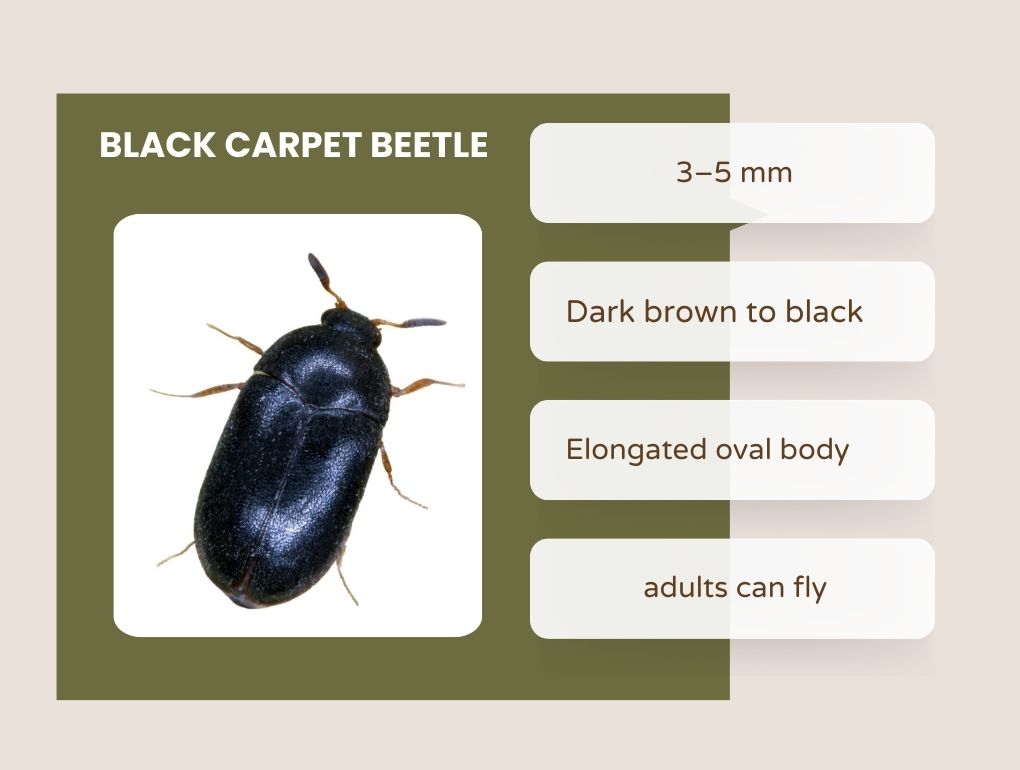
Black Carpet Beetles are another very common pest found in homes. They are known for causing damage to fabrics, carpets, and even stored food products. Their larvae are especially destructive and can be hard to find until damage is done.
Appearance
Adult Black Carpet Beetles are dark brown to shiny black and about 3 to 5 mm long. Their bodies are longer and more slender compared to Varied Carpet Beetles. The larvae are reddish-brown, carrot-shaped, and covered in short bristles with a tuft of hairs at the end.
Identification
- Size: 3–5 mm (adult)
- Color: Dark brown to black
- Shape: Elongated oval body
- Larvae: Long, reddish-brown with tapered ends and bristly tail
- Wings: Yes, adults can fly
- Movement: Attracted to light, often seen near windows
Habitat
Black Carpet Beetles are often found in attics, basements, closets, and behind baseboards. They are drawn to dark, dry areas where food like wool, feathers, and leather is available. Sometimes, they’re also found in stored grains and cereals.
Lifecycle
A female beetle lays up to 100 eggs near food sources. The larvae hatch and feed for several months before turning into adults. Their complete lifecycle may take several months to over a year, depending on conditions.
Why You Should Care
These beetles can quietly damage your belongings before you even notice them. Larvae can chew holes in clothing, carpets, and stored food. Vacuuming regularly and checking dark storage areas can help prevent infestations.
3. Furniture Carpet Beetle
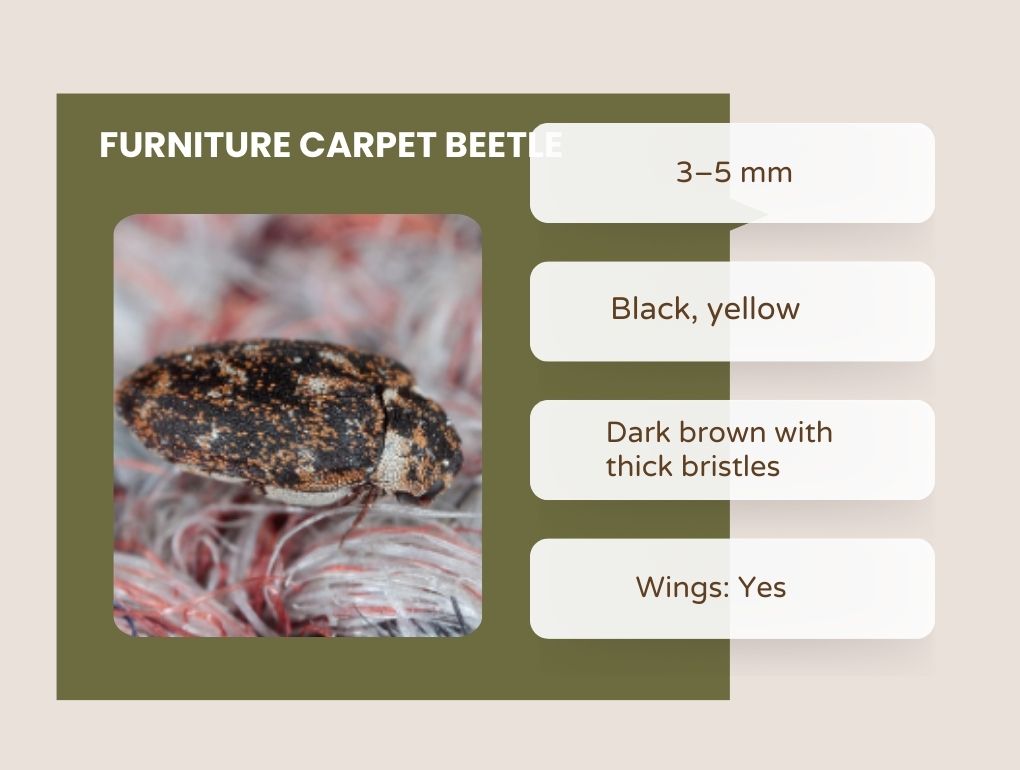
The Furniture Carpet Beetle is closely related to the Varied Carpet Beetle but slightly different in appearance. It often infests upholstered furniture, rugs, and wool clothing.
Appearance
This beetle is small, about 2 to 3.5 mm long. The adult has a round body with a mix of white, yellow, and black scales that form irregular patterns. Larvae are dark brown and covered with stiff hairs, looking similar to other carpet beetle larvae.
Identification
- Size: 2–3.5 mm (adult)
- Color: Black, yellow, and white patterned scales
- Shape: Oval and compact
- Larvae: Dark brown with thick bristles
- Wings: Yes
- Movement: Usually found crawling near infested furniture
Habitat
Furniture Carpet Beetles like to live in and around soft furnishings such as chairs, sofas, cushions, and carpets. They also infest closets and storage areas with wool or silk items.
Lifecycle
Adults feed on pollen outdoors but return indoors to lay eggs on natural materials. The larvae feed and grow over several weeks or months. Once mature, they pupate and turn into adult beetles, ready to repeat the cycle.
Why You Should Care
Infestations can result in damaged furniture fabrics and clothing. If not controlled, they can spread to other rooms quickly. Early detection and deep cleaning are key to keeping them out.
4. Common Carpet Beetle
The Common Carpet Beetle is another species often found inside homes. Although its name may sound similar to the Varied Carpet Beetle, it has a slightly different pattern and can be just as damaging to natural fibers.
Appearance
Adult Common Carpet Beetles are tiny, about 2.5 to 3.5 mm long. They have a round, dome-shaped body with a mottled color pattern of white, black, and orange or yellow scales. The larvae are longer than adults, reddish-brown in color, and covered in stiff hairs with bristle-like tails.
Identification
- Size: 2.5–3.5 mm (adult)
- Color: Mottled white, black, and orange/yellow
- Shape: Oval and dome-like
- Larvae: Long, reddish-brown, and hairy
- Wings: Yes
- Movement: Adults fly and are often found near windows or lights
Habitat
Common Carpet Beetles are often found in carpets, baseboards, upholstered furniture, and clothing. They prefer quiet, undisturbed areas with access to wool, silk, leather, feathers, and even pet hair. Outdoors, adults are found on flowering plants.
Lifecycle
Females lay eggs in hidden spots near natural fibers. Eggs hatch into larvae that feed on fabrics and other organic materials for several weeks to months. They then pupate and turn into adults, continuing the cycle.
Why You Should Care
Though small, Common Carpet Beetles can cause noticeable damage to carpets, clothes, and stored items. Regular cleaning, checking dark corners, and storing clothes in sealed containers help keep them under control.
5. Anthrenus verbasci (Varied Carpet Beetle species)
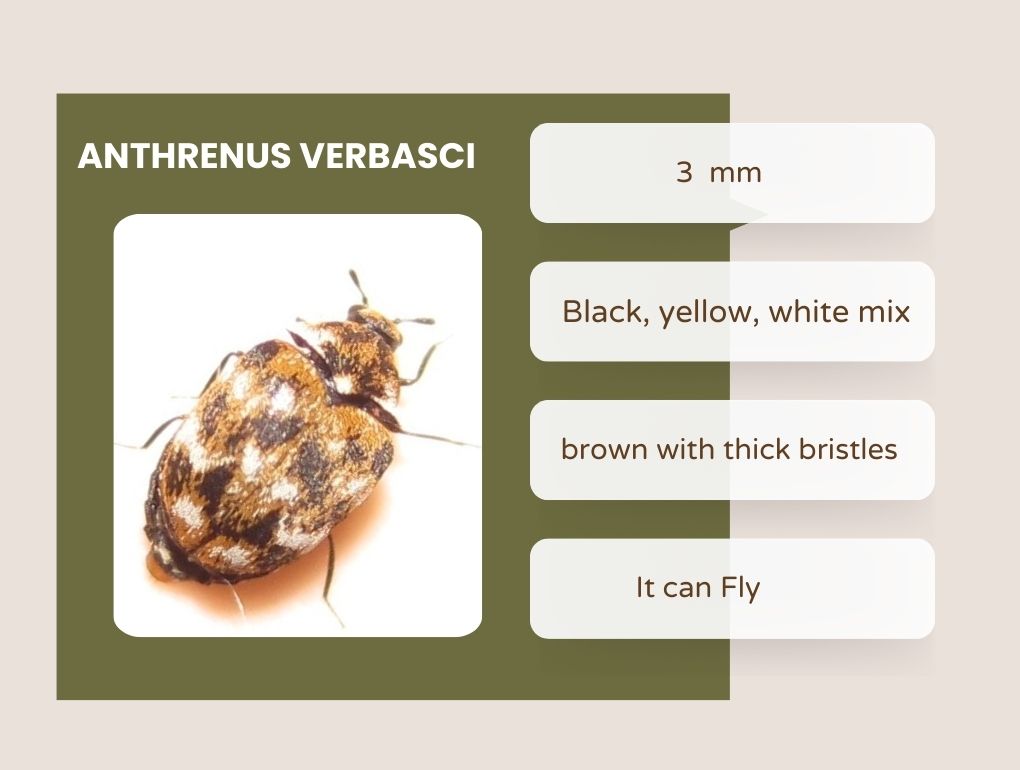
Anthrenus verbasci is the scientific name for the Varied Carpet Beetle, but it’s often mentioned separately because it is the most researched and globally recognized species of carpet beetle. It’s known for its highly patterned appearance and damaging larvae.
Appearance
Adults are about 3 mm long with a rounded shell covered in colorful scales—typically white, brown, and yellow. The scales may fade over time, making the beetle look darker. The larvae are carrot-shaped, covered in hairs, and often move slowly in a crawling motion.
Identification
- Size: About 3 mm
- Color: Patterned scales (white, brown, yellow)
- Shape: Oval and compact
- Larvae: Brown with three tufts of hair on rear end
- Wings: Yes, capable of flight
- Movement: Adults are often seen near windows and light sources
Habitat
Anthrenus verbasci lives both indoors and outdoors. Outside, they are found on flowers where they feed on pollen and nectar. Indoors, they prefer hidden places like under furniture, inside air vents, in closets, and behind wall hangings.
Lifecycle
This beetle’s life cycle includes egg, larva, pupa, and adult stages. The larval stage is the most destructive. Larvae feed on natural fibers and shed their skin several times before pupating. Adults typically live for a few weeks and don’t feed on fabrics.
Why You Should Care
Because this beetle is so widespread, it’s one of the top causes of fabric damage in homes. You may not notice them until you find holes in your clothes or see the tiny beetles flying around. Preventive cleaning and monitoring can help stop infestations early.
6. Anthrenus scrophulariae (Buffalo Carpet Beetle)
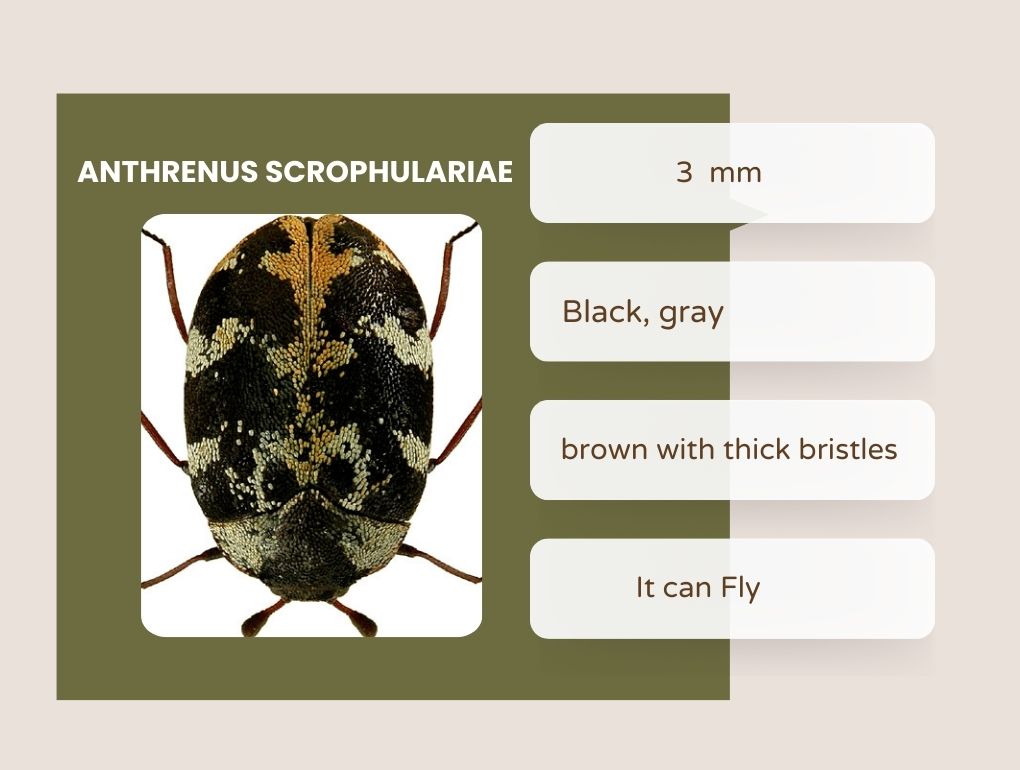
The Buffalo Carpet Beetle, scientifically known as Anthrenus scrophulariae, is another fabric-damaging pest often confused with other carpet beetles. It gets its name from the bumpy, furry appearance of its larvae, which resemble tiny buffalo in shape.
Appearance
Adult Buffalo Carpet Beetles are small—about 3 mm long—with an oval shape and dark body covered in white, yellow, and dark brown scales. Their patterns can fade over time. The larvae are reddish-brown, oval, and have dense, dark bristles all over their bodies.
Identification
- Size: Around 3 mm
- Color: Brown, yellow, and white scales
- Shape: Round or oval body
- Larvae: Reddish-brown and very hairy
- Wings: Yes
- Movement: Slow crawlers; adults often found on windowsills
Habitat
These beetles prefer quiet, hidden areas like air ducts, furniture seams, under rugs, or in storage boxes. Outdoors, adults feed on flower pollen and nectar. Indoors, their larvae feed on wool, silk, feathers, and other organic materials.
Lifecycle
The female lays her eggs close to food sources. The larvae hatch and feed for months, depending on conditions. After pupating in hidden crevices, they become adults and live for a short time. Most of the life cycle damage happens during the larval stage.
Why You Should Care
Buffalo Carpet Beetles can destroy natural fabrics in a short time. Infestations often go unnoticed until damage appears. Regular vacuuming, cleaning unused clothes, and sealing cracks help prevent them from spreading.
7. Anthrenus flavipes (Yellow Carpet Beetle)
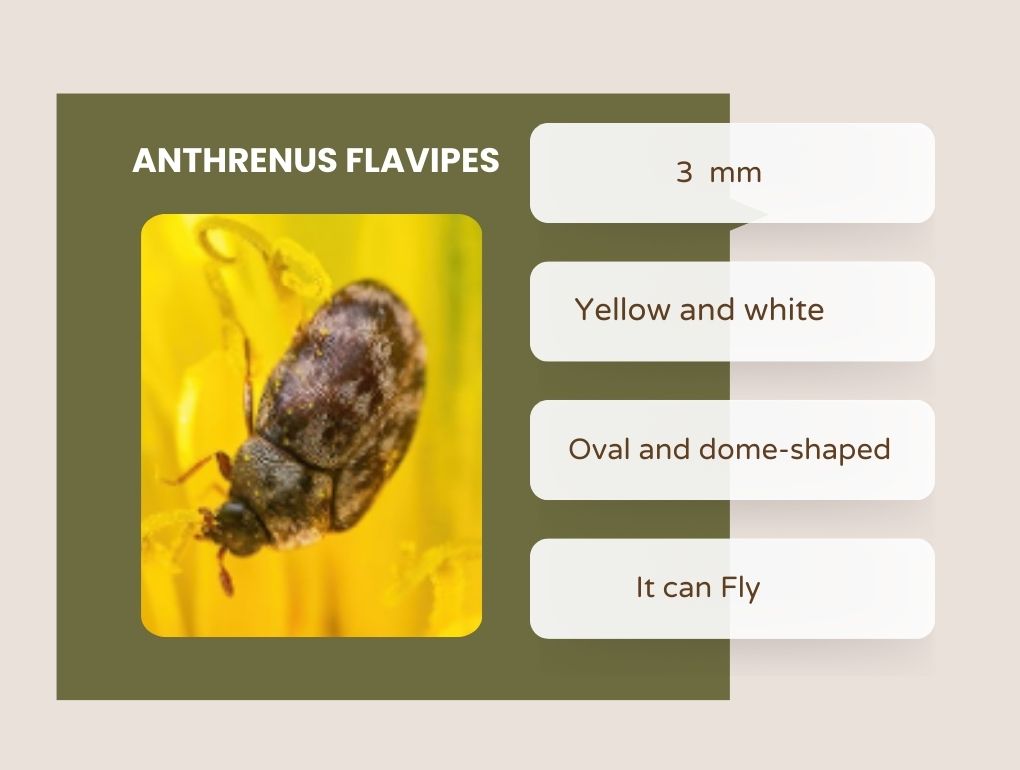
The Yellow Carpet Beetle, or Anthrenus flavipes, is a less common but still destructive pest in homes. Its name comes from the pale yellow scales that cover its body, making it easy to recognize.
Appearance
Adults are very small, about 2.5 to 3 mm long. Their rounded bodies are covered with yellow and white scales, often with a dark spot near the center. Larvae are light brown to golden and very hairy with bristle-like tails.
Identification
- Size: 2.5–3 mm
- Color: Yellow and white scales with dark markings
- Shape: Oval and dome-shaped
- Larvae: Golden-brown, fuzzy, and bristled
- Wings: Yes
- Movement: Adults are active flyers
Habitat
They are mostly found in attics, under baseboards, and inside old furniture or closets. They prefer dark, undisturbed areas with access to wool, fur, or feathers. Outdoors, they’re seen on flowers, especially during warmer months.
Lifecycle
Females lay eggs on or near natural fibers. The larvae hatch and begin feeding immediately. Their development period varies depending on temperature and food, but it can take several months before they become adults.
Why You Should Care
Yellow Carpet Beetle larvae can damage valuable items like stored clothes, antique fabrics, or wool rugs. They are small but persistent. Keeping living spaces clean and clutter-free reduces the chance of infestation.
8. Attagenus unicolor (Black Carpet Beetle)
Attagenus unicolor is the scientific name for the Black Carpet Beetle. This species is one of the most damaging types, especially in homes with stored clothing, fabrics, and dry food. Its larvae are long-lived and cause most of the damage.
Appearance
Adult Black Carpet Beetles are 3 to 5 mm long with a shiny black or very dark brown body. They are more elongated than other carpet beetles. The larvae are carrot-shaped, reddish-brown, and can grow much longer than adults. Their tail ends in a tuft of stiff hairs.
Identification
- Size: 3–5 mm (adult)
- Color: Shiny black or dark brown
- Shape: Long and oval
- Larvae: Reddish-brown, elongated, with bristle tail
- Wings: Yes
- Movement: Often crawl slowly but adults can fly
Habitat
They live in dark, dry places like attics, basements, air vents, and storage cabinets. They are attracted to natural materials such as wool, fur, silk, leather, and also stored food products like grains and cereals.
Lifecycle
A female may lay up to 100 eggs near food sources. The larval stage can last from several months to over a year. After feeding and growing, the larvae pupate and turn into adults, which live for a few weeks.
Why You Should Care
This beetle’s larvae can chew holes in fabrics and contaminate food supplies. They are harder to remove because of their long lifecycle and ability to survive in tough environments. Deep cleaning and pest control may be necessary for severe infestations.
9. Attagenus pellio (Fur Carpet Beetle)
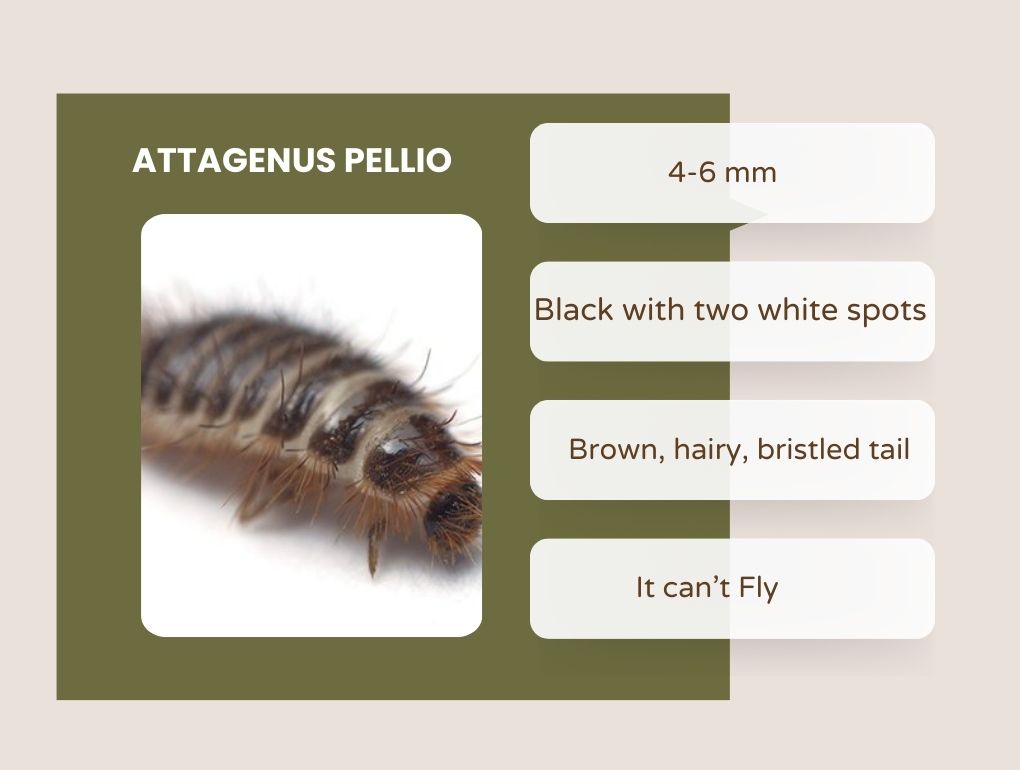
Attagenus pellio, commonly known as the Fur Carpet Beetle, is named for its love of feeding on fur, feathers, and wool. It’s less common than other species but still causes damage in homes with natural fabrics or animal-based items.
Appearance
Adult Fur Carpet Beetles are black with one white spot on each wing cover. They measure about 4–6 mm in length. Larvae are brown and covered in thick hairs with a short, dense tail of bristles.
Identification
- Size: 4–6 mm
- Color: Black with two white spots (one per wing cover)
- Shape: Oval and compact
- Larvae: Brown, hairy, bristled tail
- Wings: Yes
- Movement: Found crawling on fabrics or near baseboards
Habitat
These beetles prefer areas where fur, feathers, wool, or taxidermy items are stored. They are often found in old furniture, rugs, and even animal nests in attics. Outdoors, adults feed on flower pollen before entering homes.
Lifecycle
Females lay eggs on or near organic materials like wool or fur. Larvae hatch and feed quietly for several months before pupating. Adults don’t live long indoors and are mostly seen near windows while trying to escape.
Why You Should Care
Although less common, Fur Carpet Beetles can ruin valuable fur coats, wool carpets, and feathered items. Infestations can grow unnoticed if storage areas are not checked regularly. Preventive measures like sealing fabrics and using pest deterrents are important.
10. Attagenus smirnovi (Brown Carpet Beetle)
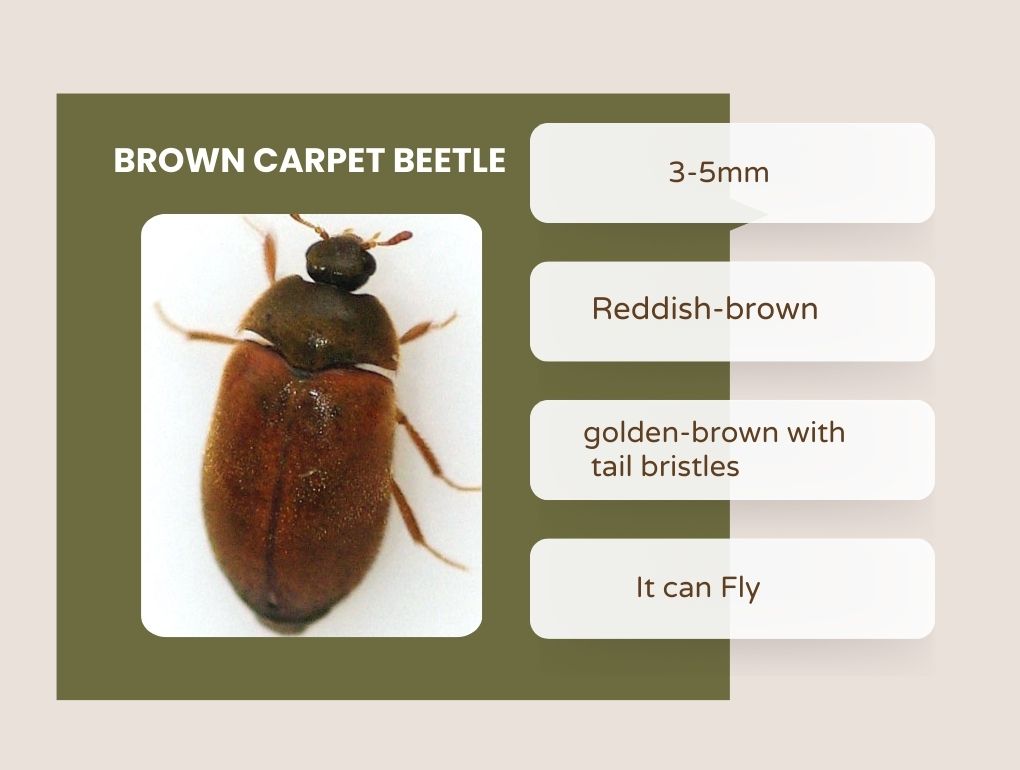
Attagenus smirnovi, also called the Brown Carpet Beetle, is a growing concern in homes and museums across Europe and other parts of the world. It thrives indoors and is well-known for damaging textiles, especially wool, leather, and animal-based materials.
Appearance
Adult Brown Carpet Beetles are about 3 to 5 mm long. They have an oval-shaped body with a reddish-brown to golden-brown color and fine, short hairs. Larvae are elongated, golden-brown, and covered in thick hairs, with a brush-like tail at the end.
Identification
- Size: 3–5 mm
- Color: Reddish-brown or golden-brown
- Shape: Oval and slightly flattened
- Larvae: Hairy, golden-brown with tail bristles
- Wings: Yes
- Movement: Adults often found near windows; larvae hide in fabrics
Habitat
They live indoors, preferring warm environments like apartments, storage rooms, and behind furniture. Common hiding spots include baseboards, under carpets, inside wardrobes, and in upholstered furniture. Outdoors, they are rarely seen.
Lifecycle
Females lay their eggs in undisturbed, dark areas with food sources. Larvae feed on organic materials such as wool, fur, feathers, and sometimes even dried animal remains. The life cycle may take several months to a year, depending on temperature and food.
Why You Should Care
Though not as widespread as some species, Brown Carpet Beetles can cause extensive textile damage if left unnoticed. Regular cleaning, inspecting stored items, and sealing cracks in walls and floors help control them.
11. Trogoderma variabile (Warehouse Beetle)
Trogoderma variabile, commonly known as the Warehouse Beetle, is often mistaken for a carpet beetle due to its similar feeding behavior. It’s a serious pest in both homes and food storage areas, where it feeds on dry goods and animal-based materials.
Appearance
Adult Warehouse Beetles are small—about 2.5 to 4 mm long. They are dark brown with lighter brown stripes or patches across their wing covers. The larvae are golden to reddish-brown, hairy, and grow larger than the adults, often with a curved body shape.
Identification
- Size: 2.5–4 mm (adult)
- Color: Dark brown with lighter markings
- Shape: Elongated and oval
- Larvae: Fuzzy, reddish-brown, curved with tail hairs
- Wings: Yes
- Movement: Active and often found near dry goods or stored food
Habitat
Warehouse Beetles are most often found in stored food products like grains, cereals, dried pet food, and spices. In homes, they may hide in kitchen cabinets, pantries, or storage boxes. Larvae can also damage wool, leather, and silk items.
Lifecycle
A female lays dozens of eggs in or near stored products. Larvae feed, molt several times, and eventually pupate into adults. Their entire life cycle can be completed in just a few months under warm conditions.
Why You Should Care
Besides fabric damage, they can infest and ruin stored food products. Larval hairs may also cause allergic reactions in some people. Regular inspection of food storage areas and good hygiene are essential to avoid infestations.
12. Trogoderma granarium (Khapra Beetle)
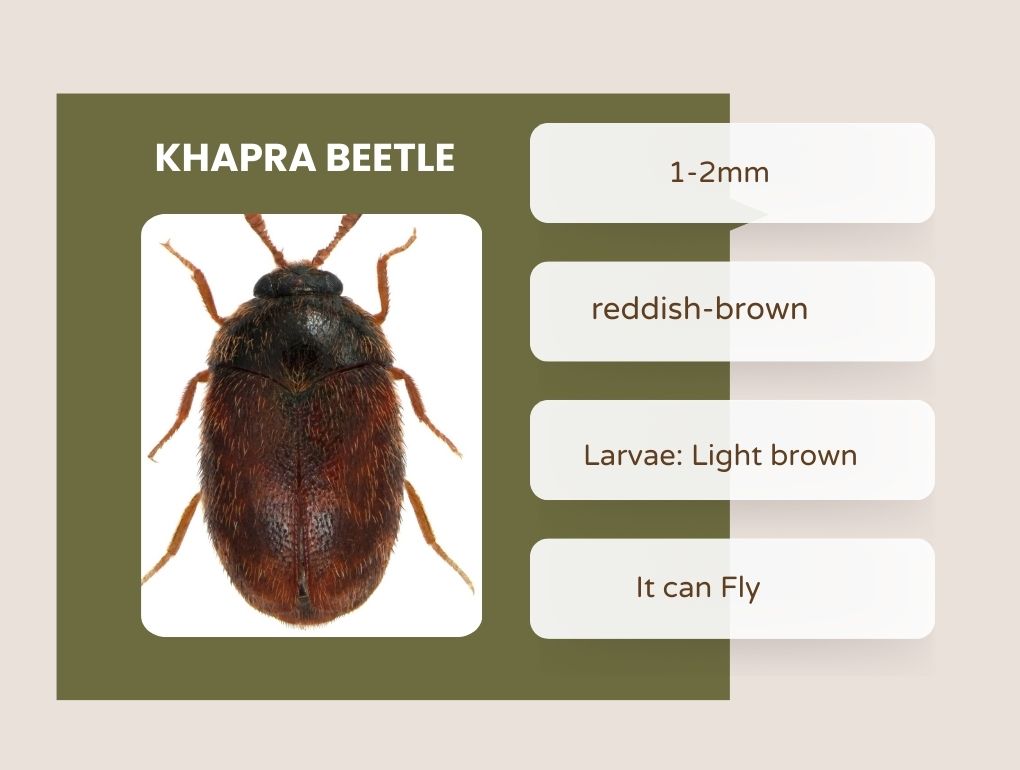
Trogoderma granarium, also known as the Khapra Beetle, is one of the world’s most destructive stored-product pests. Though it’s not a typical fabric-eating carpet beetle, it’s sometimes grouped with them due to its similar larval damage patterns. It’s a regulated quarantine pest in many countries.
Appearance
Adult Khapra Beetles are very small, about 1.6 to 3 mm long. They are brownish in color with a slightly oval and hairy body. The larvae are light brown, very hairy, and can grow up to 5 mm long with a characteristic tuft of hairs at the rear.
Identification
- Size: 1.6–3 mm (adult)
- Color: Brown or reddish-brown
- Shape: Oval and covered with fine hairs
- Larvae: Light brown, hairy with long tail bristles
- Wings: Adults have wings but do not fly
- Movement: Mostly found in food storage and dark, undisturbed areas
Habitat
Khapra Beetles are mainly found in dry food storage areas, warehouses, and pantries. They infest grains, cereals, nuts, spices, and even packaged goods. In warm climates, they may survive indoors and cause long-term problems.
Lifecycle
Eggs are laid in dry food products. The larvae hatch and feed aggressively, entering a dormant state during poor conditions. They can survive for long periods without food and are extremely difficult to eliminate once established.
Why You Should Care
This beetle is a serious threat to stored food, banned in many countries. If found, government agencies often require strict containment or destruction. It doesn’t usually damage fabric, but it’s vital to recognize and report it immediately if detected.
13. Anthrenus pimpinellae
Anthrenus pimpinellae is a lesser-known but still significant member of the carpet beetle family. It shares many traits with the Varied Carpet Beetle and is found in both homes and museums, where it feeds on organic materials like wool, fur, and insect collections.
Appearance
Adults are small, about 2 to 3 mm long, and have rounded, dome-like bodies. Their wing covers are decorated with patterns of white, yellow, and dark brown scales. The larvae are brown and covered in long hairs, similar to other Anthrenus species.
Identification
- Size: 2–3 mm
- Color: Brown with white and yellow scales
- Shape: Oval and dome-shaped
- Larvae: Hairy, brown, and bristle-tailed
- Wings: Yes
- Movement: Adults seen near windows; larvae crawl slowly in fabric
Habitat
They are found in dark, quiet spaces like inside wall voids, under carpets, or within stored clothes and animal products. In museums, they can feed on dried insects, taxidermy, and preserved animal items.
Lifecycle
Females lay eggs in areas where organic matter is present. Larvae feed for several weeks to months, depending on conditions. They then pupate in sheltered areas before emerging as adults. Adults typically live a few weeks and are attracted to light.
Why You Should Care
Though not as widespread as others, Anthrenus pimpinellae can still cause serious damage to textiles and stored natural materials. Regular inspection, sealing of entry points, and cleaning of storage areas are key to prevention.
How to Get Rid of Carpet Beetles
Step 1: Find the Source
Look for signs of larvae or adult beetles in dark, undisturbed places—closets, under carpets, furniture, inside storage boxes, and air vents. Also check near windows where adult beetles gather.
Step 2: Deep Clean the Area
- Vacuum thoroughly: Focus on carpets, baseboards, cracks, under furniture, and upholstered items.
- Wash fabrics: Hot wash clothes, blankets, and curtains that may be infested.
- Steam clean rugs and upholstery: Heat kills both larvae and eggs.
Step 3: Remove Infested Items
Throw away badly damaged or heavily infested items that can’t be cleaned. This stops the life cycle and prevents spread.
Step 4: Use Insecticides
- Apply insecticide spray or dust in crevices, baseboards, and other hidden areas.
- Use boric acid powder in cracks or edges of carpets (keep away from pets and children).
- Avoid spraying directly on clothing or bedding.
Step 5: Set Traps
Place sticky traps near windows or problem areas to catch adult beetles. This also helps monitor infestation levels.
Step 6: Seal Entry Points
Seal cracks, gaps, or vents where beetles may enter. Install tight-fitting screens on windows and doors.
Step 7: Use Natural Deterrents
- Place cedar chips or lavender sachets in closets and drawers to repel beetles.
- Regularly clean out pet hair, wool dust, and fabric scraps.
Step 8: Prevent Reinfestation
- Store clothes in sealed plastic bins or bags.
- Vacuum and clean regularly, especially in storage and fabric-heavy areas.
- Avoid long-term storage of wool or fur without protection.
