
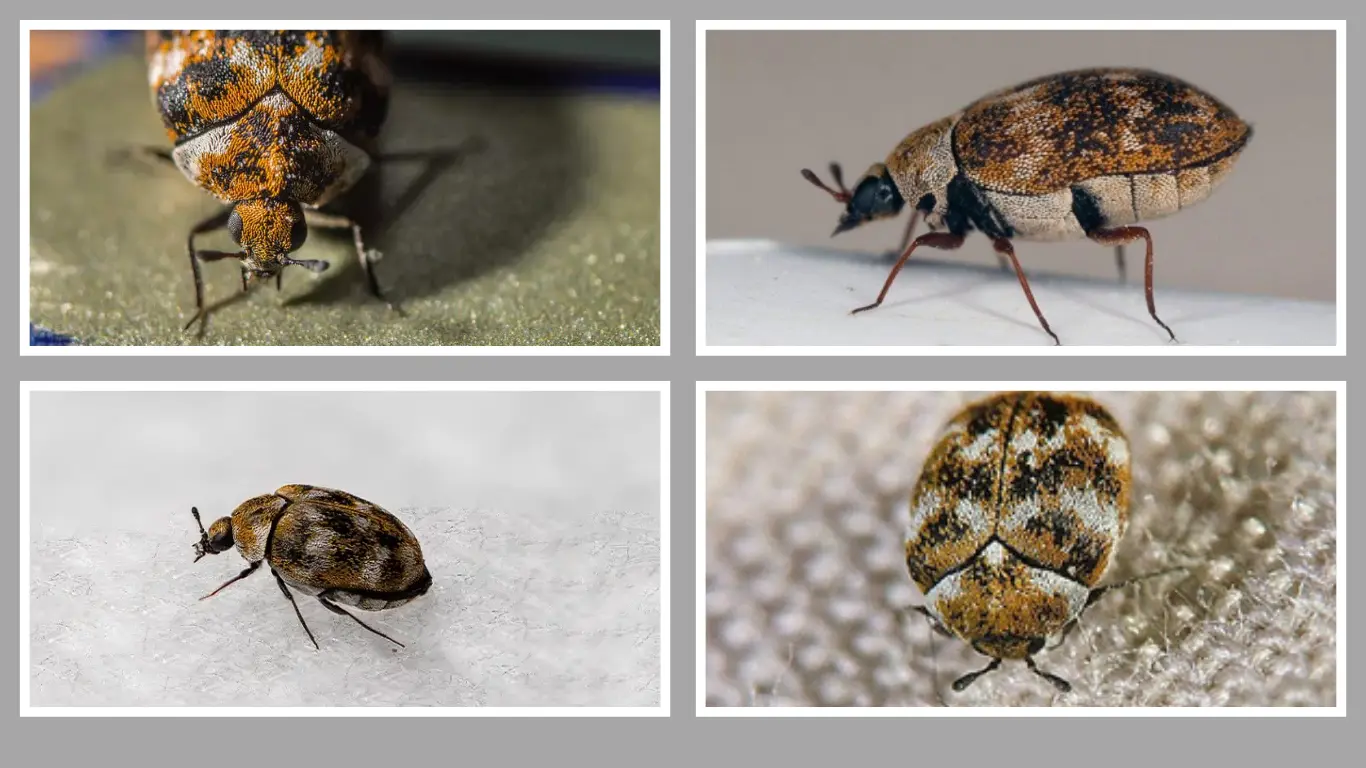
Varied carpet beetles are small pests that feed on natural materials like wool, silk, and feathers. While adults are harmless, their larvae can damage fabrics and furniture. This guide covers their appearance, life cycle, behavior, and how to get rid of them effectively.
What Is a Varied Carpet Beetle?
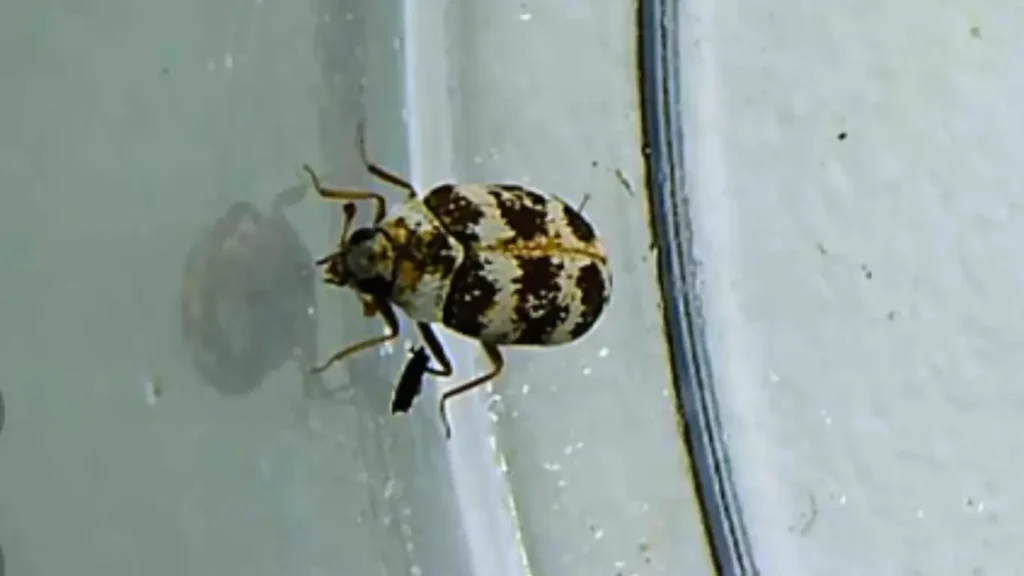
The varied carpet beetle is a very small insect, only about 2 to 3.5 millimeters long. It has a round, dome-shaped body and is covered with tiny scales that create a mix of white, yellow, brown, and black colors. This colorful, speckled look is what gives it the name “varied.” Over time, these scales may fall off, making the beetle look plain or dark.
These beetles are often confused with ladybugs because of their similar shape and size, but their patchy pattern and duller colors set them apart. Unlike ants, flies, or cockroaches that move quickly and search for food scraps, varied carpet beetles are slow and usually stay hidden. They are often seen near windows because they’re attracted to sunlight.
One of the most important things to know is that adult beetles don’t cause damage. The real problem comes from their larvae. The larvae feed on natural materials like wool, silk, feathers, and leather. This makes them a hidden threat to clothing, carpets, and furniture in the home.
Identification of Varied Carpet Beetles
To spot a varied carpet beetle infestation, it’s important to recognize both the adult beetles and their larvae. Early detection can help prevent damage to fabrics and furniture.
Key signs to look for:
- Small, oval-shaped adult beetles (2–3.5 mm) with speckled patterns
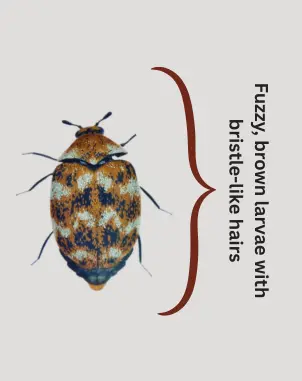
- Fuzzy, brown larvae with bristle-like hairs
- Shed larval skins in corners or fabric folds
- Tiny holes or damage in wool, silk, or leather items
- Adult beetles gathering near windows or light sources
Varied Carpet Beetle Habitat
Varied carpet beetles can live both indoors and outdoors, but they often find their way into homes through windows, doors, or small cracks. Outside, they are usually found in bird nests, tree bark, or on flowers, where they feed on pollen and nectar. These outdoor areas give them perfect spots to lay eggs and grow.
Once inside a house, they look for quiet, dark places to hide and reproduce. Common hiding spots include under carpets, behind furniture, in air ducts, or inside closets and storage boxes. They are especially drawn to places where natural fabrics or animal-based items are stored, such as wool blankets, feather pillows, or leather bags.
Their presence often goes unnoticed at first because the adults are tiny and the larvae stay hidden in corners or fabric folds. But over time, they can cause serious damage to household items if not discovered and removed early.
Varied Carpet Beetle Life Cycle

The life cycle of a varied carpet beetle has four main stages: egg, larva, pupa, and adult. This entire cycle can take several months to over a year, depending on temperature, food availability, and the environment.
Female beetles lay their eggs in hidden places, often close to a food source like wool, feathers, or stored clothing. The eggs are very small and white, making them hard to spot. After about 1 to 2 weeks, the eggs hatch into larvae.
The larval stage is the longest and most damaging. Larvae are brown, fuzzy, and carrot-shaped with bristle-like hairs on their bodies. They feed on natural materials and can live in this stage for several months. After feeding and growing, the larvae enter the pupal stage, where they transform into adult beetles.
Adult beetles live for only a few weeks. During this time, they usually fly toward light sources and mate. Then the cycle begins again, often going unnoticed until damage becomes visible.
Varied Carpet Beetle Larvae

The larvae of the varied carpet beetle are the main cause of damage in homes. They are small, about 4 to 5 millimeters long, and have a brown, fuzzy body covered in tiny bristle-like hairs. Their shape is somewhat like a carrot, and they move slowly, hiding deep inside fabrics, cracks, or dark storage areas.
Unlike adult beetles that feed on pollen, the larvae feed on natural animal-based materials. This includes wool, silk, leather, feathers, fur, and even pet hair. They can chew through clothing, carpets, furniture coverings, and old books. The damage usually appears as irregular holes in fabrics or shredded edges on rugs and upholstery.
The larvae prefer quiet and undisturbed places, which is why infestations often go unnoticed for a long time. They can live for several months, sometimes up to a year, feeding and growing before turning into adult beetles. Regular cleaning and inspection of stored items can help catch them early.
5 Facts About Varied Carpet Beetles
- Tiny but Destructive – Adult beetles are only 2 to 3.5 mm long, but their larvae can cause serious damage to clothes, carpets, and furniture.
- Colorful Appearance – They have a speckled look with white, yellow, brown, and black scales on their shell.
- Larvae Do the Damage – Adults feed on pollen, while the larvae feed on natural fabrics and animal-based materials.
- Common in Homes – They often enter houses through open windows and hide in dark, undisturbed places.
- Often Mistaken for Ladybugs – Due to their round shape and size, varied carpet beetles are sometimes confused with harmless ladybugs.
What Does Varied Carpet Beetle Eat?
Adult varied carpet beetles feed on flower pollen and nectar, so they are not harmful indoors. The damage comes from the larvae, which eat natural materials like wool, silk, leather, feathers, fur, and pet hair.
They often attack clothes, carpets, blankets, and furniture made from animal-based fabrics. In rare cases, they may also feed on stored grains or dry food. Their feeding causes holes, shredded edges, and fabric thinning over time.
Are Varied Carpet Beetles Dangerous?
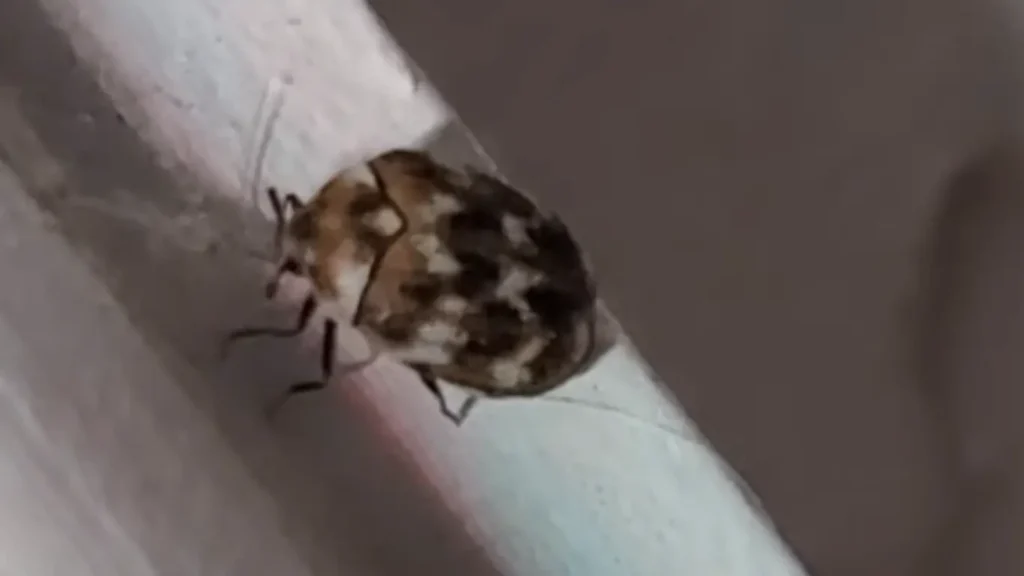
Varied carpet beetles are not dangerous to humans in the way that biting or stinging insects are. Adult beetles do not bite, sting, or spread disease. However, their larvae can cause problems—not by biting, but by triggering allergic reactions in some people.
Some people may experience skin irritation, rashes, or red bumps after coming into contact with the tiny hairs on the larvae. These symptoms are often mistaken for insect bites, which is why many ask about varied carpet beetle bites, even though the larvae don’t actually bite.
The real danger is to household items. The larvae feed on natural materials and can damage clothing, carpets, and upholstery if left unchecked. So while they’re not directly harmful to people, they can still be a serious nuisance in the home.
Varied Carpet Beetle Treatment
Getting rid of varied carpet beetles starts with cleaning. Vacuum carpets, rugs, furniture, and corners where dust collects. Pay special attention to areas under furniture and along baseboards. Washing fabrics in hot water can also help remove eggs and larvae.
Use insecticide sprays or dust in cracks and storage areas where beetles or larvae might hide. For natural treatment, some people use diatomaceous earth, which kills insects by drying them out. Always follow safety instructions when using any product indoors.
If the infestation is large or keeps coming back, calling a pest control professional may be the best solution. They can inspect your home and use stronger treatments if needed.
How to Get Rid of Varied Carpet Beetles
Step 1: Inspect Your Home
Look for signs of infestation such as adult beetles near windows, larvae in carpets or closets, and damage to fabrics like wool, leather, or feathers.
Step 2: Deep Clean Affected Areas
Vacuum carpets, rugs, furniture, and corners thoroughly. Use a nozzle to reach cracks and hidden spots. Empty the vacuum outside to avoid re-contamination.
Step 3: Wash or Remove Infested Items
Wash clothes, blankets, or curtains in hot water and dry them on high heat. Heavily damaged items should be thrown away to stop the spread.
Step 4: Apply Treatments
Use insecticide sprays or powders in storage spaces, vents, and baseboards. Natural options like diatomaceous earth also work well in dry, undisturbed areas.
Step 5: Store Fabrics Safely
Keep wool, silk, and leather items in sealed containers. Avoid leaving natural fabrics exposed in closets or open shelves.
Step 6: Block Entry Points
Seal cracks and gaps around windows, doors, and walls to prevent new beetles from entering your home.
Step 7: Monitor and Repeat if Needed
Continue vacuuming weekly and keep checking for signs of beetles or larvae. Use traps to monitor activity. If the problem persists, contact pest control.
FAQs
Do varied carpet beetles bite?
No. They don’t bite. Skin irritation usually comes from larval hairs.
What attracts varied carpet beetles?
They are attracted to light, natural fabrics, pet hair, and dust.
Can they live in beds?
Yes, if bedsheets or blankets are made of wool or other natural materials.
How long do they live?
Adults live a few weeks. Larvae can live several months, depending on the environment.
How can I prevent them?
Vacuum often, store fabrics in sealed containers, and check for early signs of larvae.
