

Fungus gnats are small, dark flies commonly found in moist soils, compost, and greenhouses. While they play an important role in breaking down organic matter, many species are also notorious plant pests, damaging roots and spreading fungal diseases. This article highlights 25 different types of fungus gnats, covering their identification, habitats, life cycles, and impacts on plants, giving growers and gardeners a deeper understanding of these persistent insects.
1. Bradysia coprophila
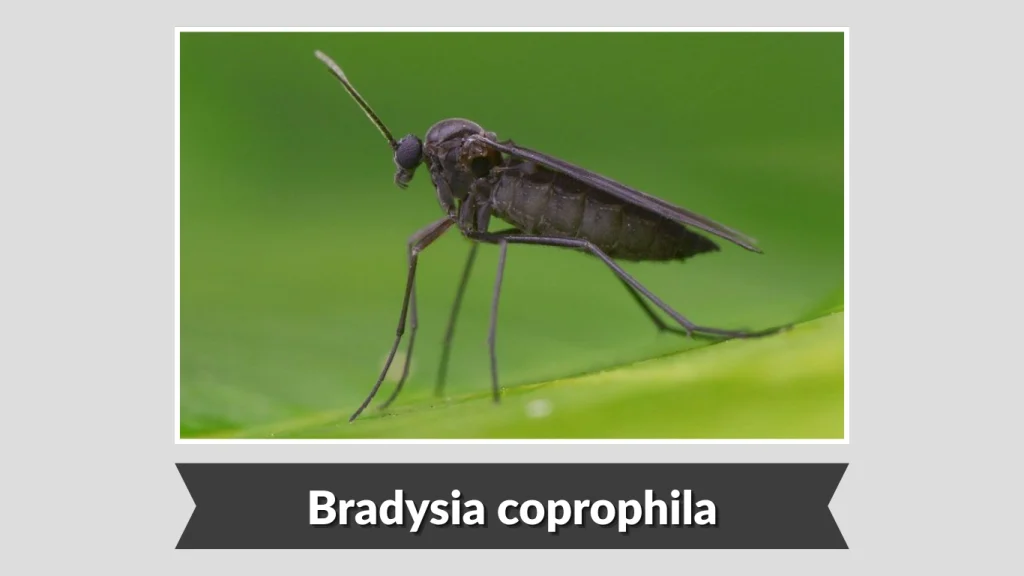
Bradysia coprophila is one of the most studied fungus gnat species, often found in greenhouses, potted plants, and damp soil environments. This gnat plays a role in decomposing organic matter but is also known as a serious pest in horticulture, damaging roots and spreading plant diseases.
Identification
- Small, dark-bodied fly, usually 2–4 mm long
- Long slender legs and antennae
- Distinct Y-shaped wing vein visible under magnification
- Larvae are translucent with black head capsules
Habitat and Host Plant
This species thrives in moist soil rich in organic matter. It is frequently associated with greenhouse crops, mushrooms, and indoor potted plants.
Life Cycle
Bradysia coprophila undergoes complete metamorphosis: egg, larva, pupa, and adult. The larval stage is the most destructive, feeding on plant roots and fungi.
Behavior and Impact
While adults are weak fliers and often hover near soil surfaces, the larvae can cause serious damage to seedlings and transmit fungal pathogens like Pythium and Fusarium.
2. Bradysia impatiens
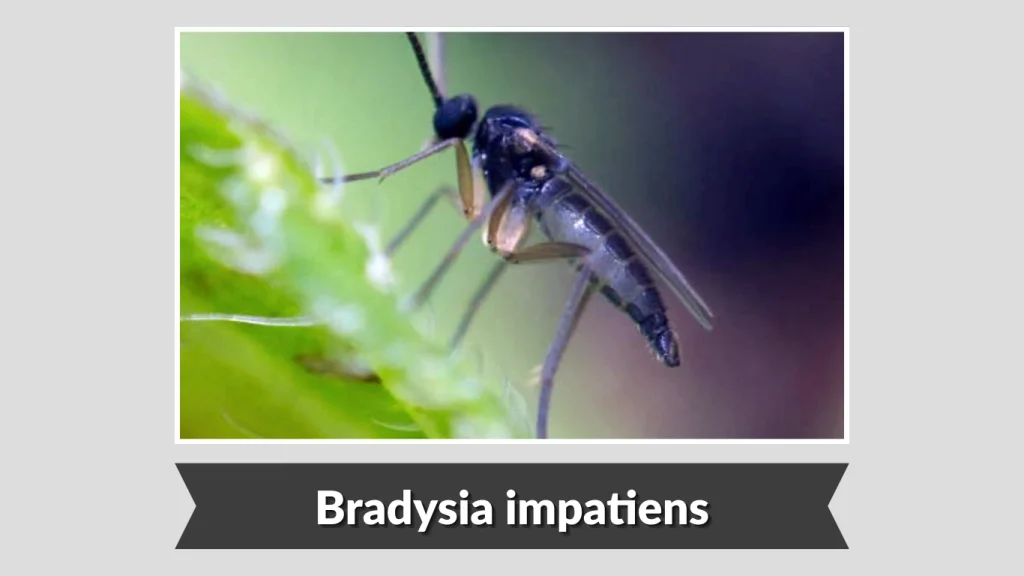
Bradysia impatiens is a common greenhouse pest, frequently encountered in ornamental plant production and mushroom cultivation. It is considered one of the most damaging fungus gnat species due to its ability to harm plant roots and spread plant pathogens.
Identification
- Adult size ranges from 2–3 mm in length
- Dark gray to black body with long antennae
- Clear wings with distinctive Y-shaped vein
- Larvae are whitish, slender, with shiny black head capsules
Habitat and Host Plant
This species thrives in moist environments such as greenhouses, nurseries, and indoor potted plants. It commonly targets crops like poinsettias, chrysanthemums, and bedding plants.
Life Cycle
Bradysia impatiens completes its life cycle in about 3–4 weeks under warm conditions. The larvae are root feeders, while the adults emerge to reproduce near soil surfaces.
Behavior and Impact
The larvae damage root systems and can introduce fungal pathogens, especially Pythium and Rhizoctonia, leading to damping-off disease in seedlings. This makes them highly destructive in commercial plant production.
3. Bradysia ocellaris
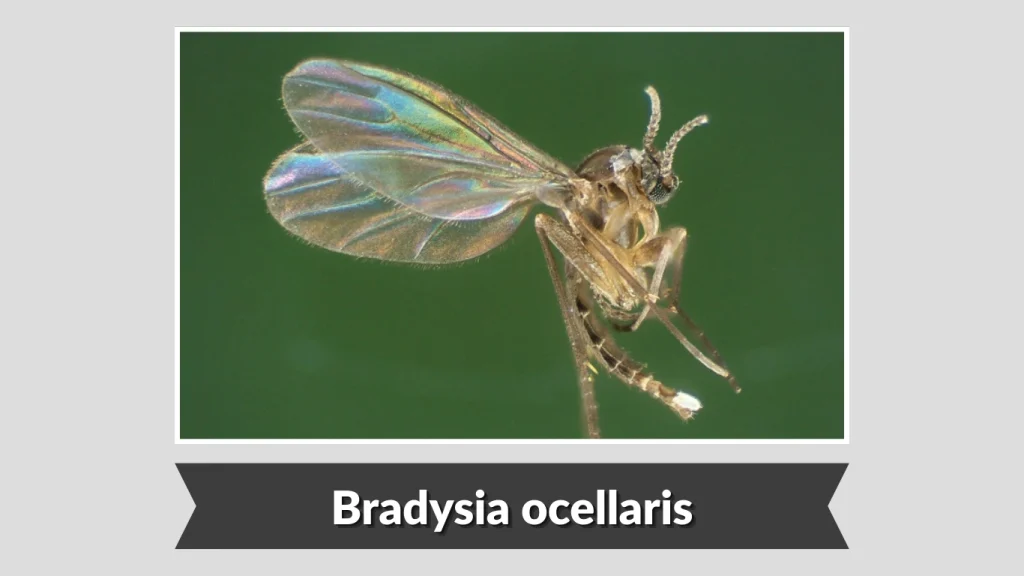
Bradysia ocellaris is another widespread species of fungus gnat, frequently found in greenhouses and indoor plant settings. It is regarded as both a decomposer of organic matter and a pest, capable of weakening young plants by feeding on their roots.
Identification
- Adults measure about 2–4 mm in length
- Dark-colored body with long legs and antennae
- Clear wings with the characteristic Y-shaped vein
- Larvae are translucent white with a distinct black head capsule
Habitat and Host Plant
This species favors damp, organic-rich soil and is often associated with ornamental plants, vegetables, and mushroom beds in greenhouse conditions.
Life Cycle
Bradysia ocellaris develops rapidly in warm, moist environments. The larval stage feeds on fungi, algae, and tender plant roots, before pupating in the soil and emerging as adults.
Behavior and Impact
While adults are mainly nuisance fliers, the larvae can severely damage seedlings and young plants, making them a significant pest for horticulture and mushroom cultivation.
4. Bradysia difformis
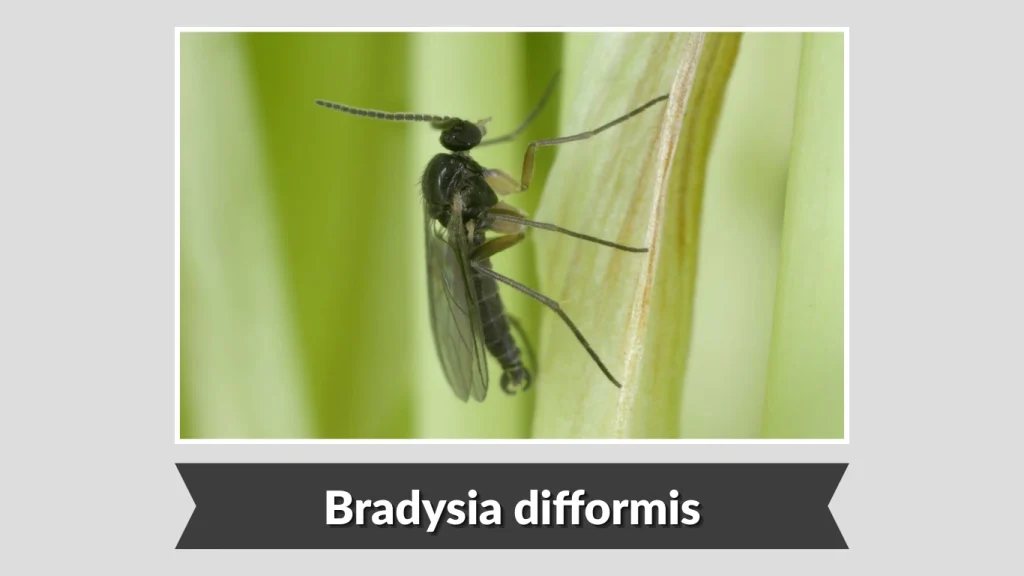
Bradysia difformis is a destructive fungus gnat species commonly found in greenhouses, nurseries, and mushroom farms. It is particularly problematic in commercial horticulture, where its larvae damage plant roots and spread harmful pathogens.
Identification
- Small adult, about 2–3 mm long
- Dark brown to black body with long antennae
- Transparent wings with a Y-shaped vein
- Larvae are slender, translucent, with a black head capsule
Habitat and Host Plant
This species thrives in moist potting soil and decomposing organic matter. It is often associated with greenhouse crops such as cucumbers, lettuce, ornamentals, and mushrooms.
Life Cycle
Bradysia difformis has a short generation time of 3–4 weeks under optimal conditions. Larvae cause the most damage by feeding on fungi and young plant roots before pupating in soil.
Behavior and Impact
Larval feeding weakens seedlings, making them more susceptible to damping-off diseases. They are known vectors of plant pathogens including Pythium and Fusarium, making them highly concerning for growers.
5. Bradysia agrestis
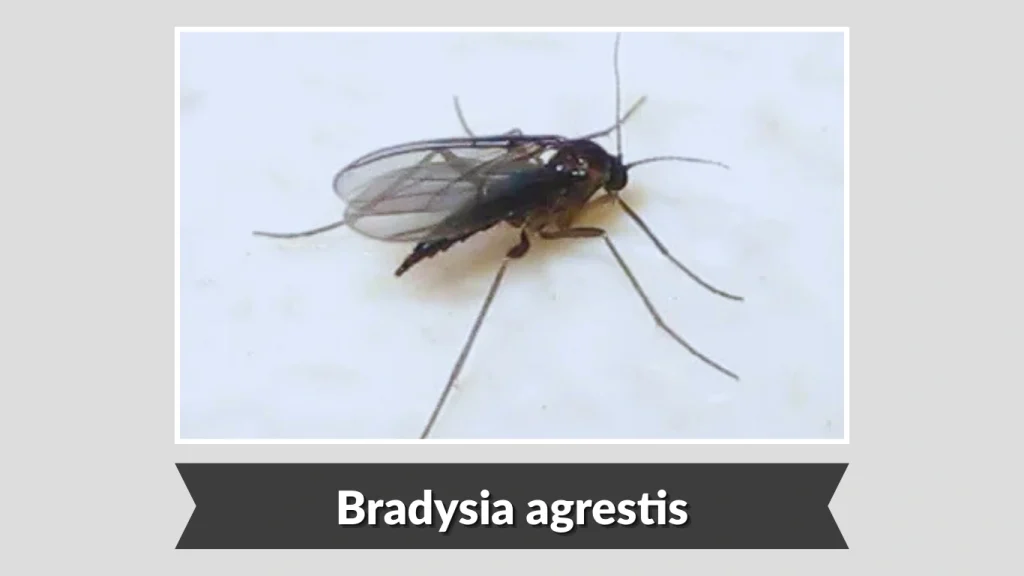
Bradysia agrestis is a lesser-known but impactful species of fungus gnat that inhabits moist soils and organic matter. While not as widespread as some other species, it still poses risks to seedlings and greenhouse plants.
Identification
- Adult size around 2–3 mm long
- Dark-colored body with elongated antennae
- Transparent wings showing the classic Y-shaped vein
- Larvae are whitish, slender, with a black head capsule
Habitat and Host Plant
This species is associated with damp soil in nurseries, greenhouses, and natural habitats. It feeds on decaying plant matter and fungi, and may also attack the roots of ornamental and vegetable crops.
Life Cycle
The life cycle includes egg, larva, pupa, and adult stages. Larvae remain active in moist soil, consuming organic debris and tender root hairs before transforming into pupae.
Behavior and Impact
Though not the most aggressive fungus gnat, Bradysia agrestis larvae can stress young plants and contribute to fungal disease outbreaks, making it a pest of concern in controlled growing environments.
6. Bradysia tilicola
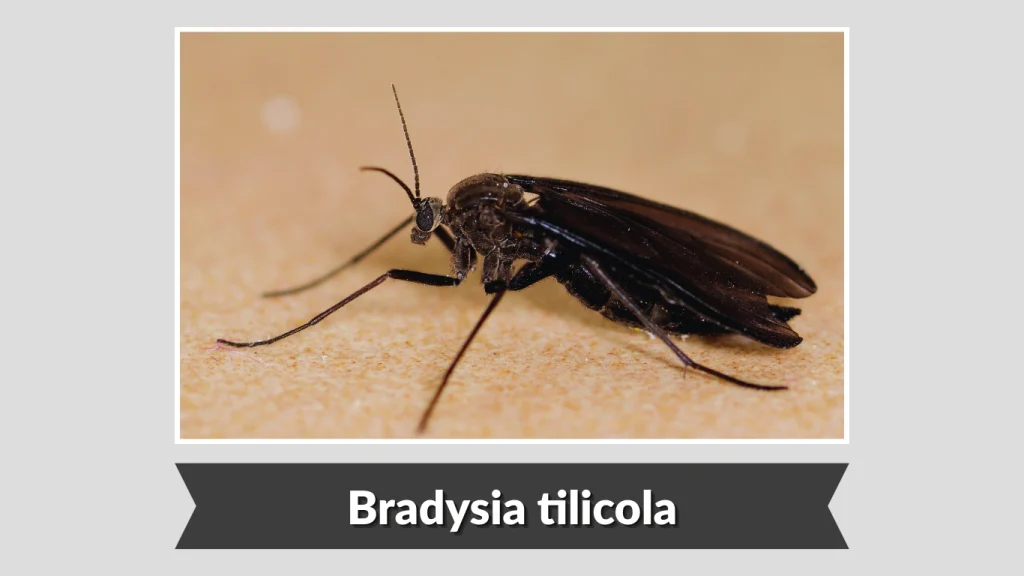
Bradysia tilicola is a soil-dwelling fungus gnat species often detected in greenhouses and nurseries. It feeds on organic matter but also targets delicate root systems, creating challenges for growers of ornamental and vegetable plants.
Identification
- Adult length about 2–3 mm
- Dark body with long legs and antennae
- Clear wings with Y-shaped venation pattern
- Larvae are translucent white with a shiny black head capsule
Habitat and Host Plant
This species prefers damp, organic-rich soils, commonly found in potted plants, seedbeds, and greenhouse crops. It may also be seen in association with decaying plant debris.
Life Cycle
Bradysia tilicola develops quickly in warm, moist environments. Eggs hatch into larvae that feed on fungi and tender roots before pupating in the soil and emerging as adults.
Behavior and Impact
The larvae damage young seedlings by chewing root hairs and transmitting fungal pathogens. In large numbers, they can severely reduce crop vigor and cause plant loss.
7. Bradysia nigrispina
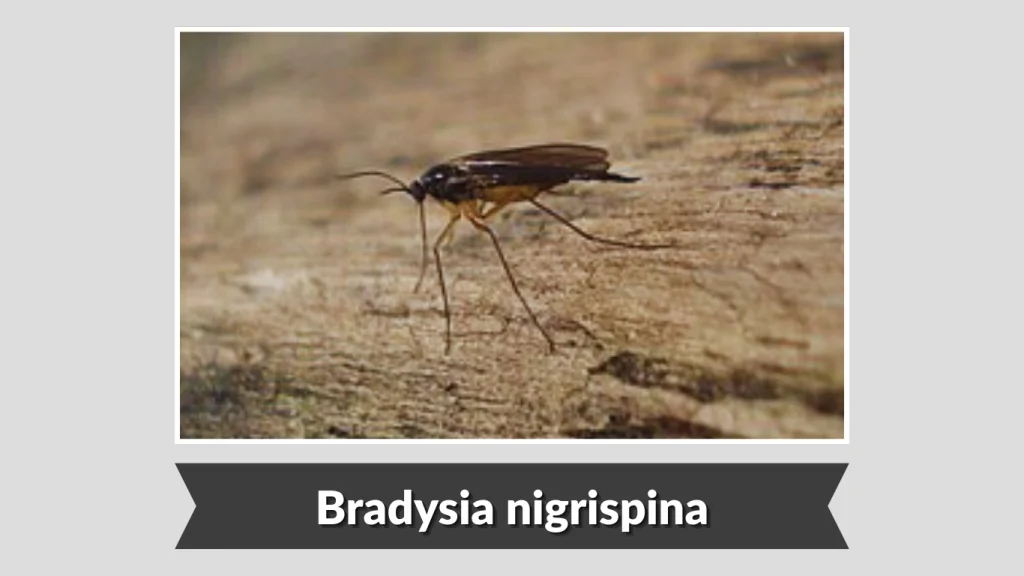
Bradysia nigrispina is a fungus gnat species commonly found in damp soils and organic matter. Although less frequently studied compared to major pest species, it can still cause damage to seedlings and greenhouse plants when populations are high.
Identification
- Adult size about 2–3 mm long
- Dark brown to black slender body with long antennae
- Wings transparent, showing the characteristic Y-shaped vein
- Larvae are white, elongated, with a distinct black head capsule
Habitat and Host Plant
This species inhabits moist environments rich in organic matter. It is frequently found in greenhouse soils, compost, and plant pots containing ornamental or vegetable crops.
Life Cycle
Bradysia nigrispina undergoes a complete metamorphosis from egg to adult. Larvae are active in soil, feeding on fungi and root tissues before pupating underground.
Behavior and Impact
While adults mainly serve as nuisance fliers, larval feeding weakens seedlings and increases their susceptibility to fungal diseases such as damping-off, making this species a concern for plant nurseries and growers.
8. Bradysia confinis
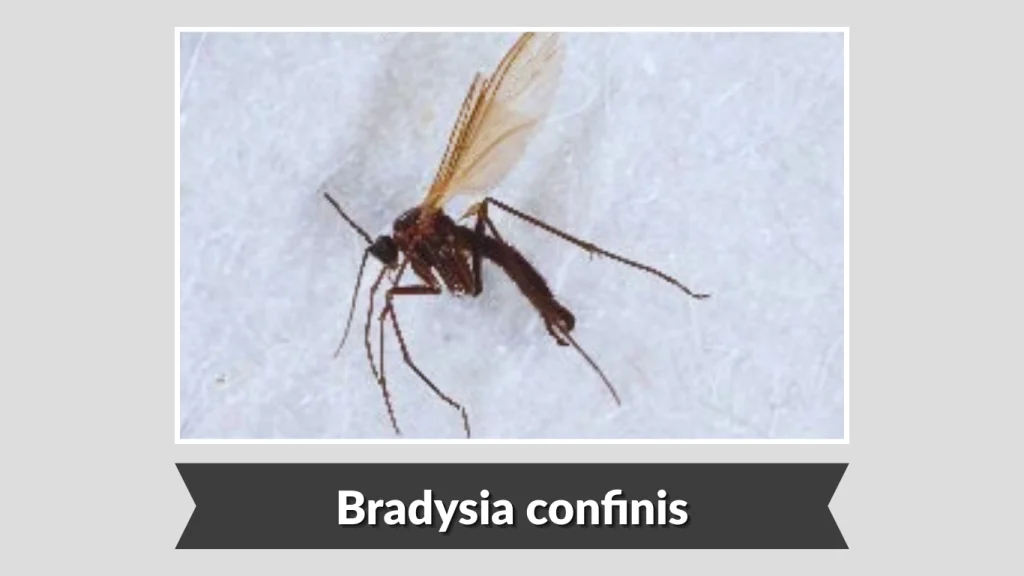
Bradysia confinis is a widely distributed fungus gnat species often associated with damp soils and decaying vegetation. It is considered both a decomposer and a minor pest, depending on population density and growing conditions.
Identification
- Adults measure 2–3 mm in length
- Slender, dark-colored body with long legs and antennae
- Wings are clear with the typical Y-shaped vein pattern
- Larvae are translucent, cylindrical, with a black head capsule
Habitat and Host Plant
This species thrives in moist, organic-rich soils, compost, and greenhouse potting media. It is often encountered in association with ornamental plants, vegetables, and fungi.
Life Cycle
Bradysia confinis develops through egg, larval, pupal, and adult stages. The larval stage is the most active, feeding on soil fungi, algae, and delicate plant roots.
Behavior and Impact
Although not the most destructive species, high larval populations can weaken seedlings, interfere with plant growth, and contribute to the spread of soil-borne fungal pathogens.
9. Bradysia fungicola
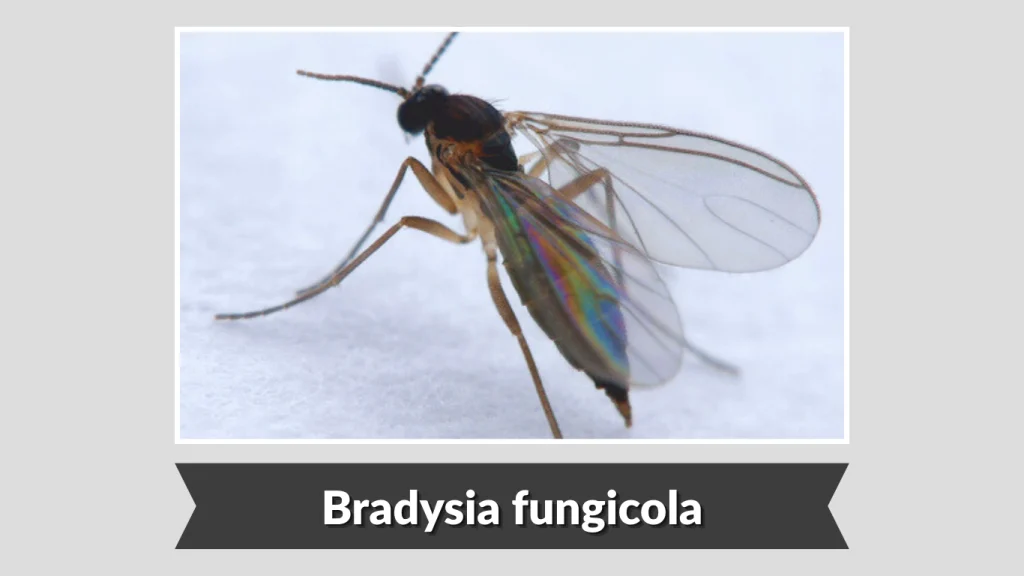
Bradysia fungicola is a fungus gnat strongly associated with mushroom cultivation, where it becomes a major pest. It thrives in moist organic matter and feeds heavily on fungi, making it a serious concern for commercial growers.
Identification
- Adult body length 2–3 mm
- Dark brown to black slender body with long antennae
- Clear wings marked by the characteristic Y-shaped vein
- Larvae are whitish and translucent with a black head capsule
Habitat and Host Plant
This species is most commonly found in mushroom houses, compost heaps, and damp soils enriched with organic debris. It thrives in humid conditions where fungi are abundant.
Life Cycle
Bradysia fungicola develops rapidly in mushroom farms, with larvae feeding on fungal mycelium and fruiting bodies before pupating in soil. Adults emerge to reproduce near the fungal substrate.
Behavior and Impact
Larvae cause significant economic losses by damaging mushroom crops, reducing yield, and spreading fungal diseases. This makes Bradysia fungicola one of the most troublesome fungus gnat species for mushroom growers.
10. Bradysia tritici
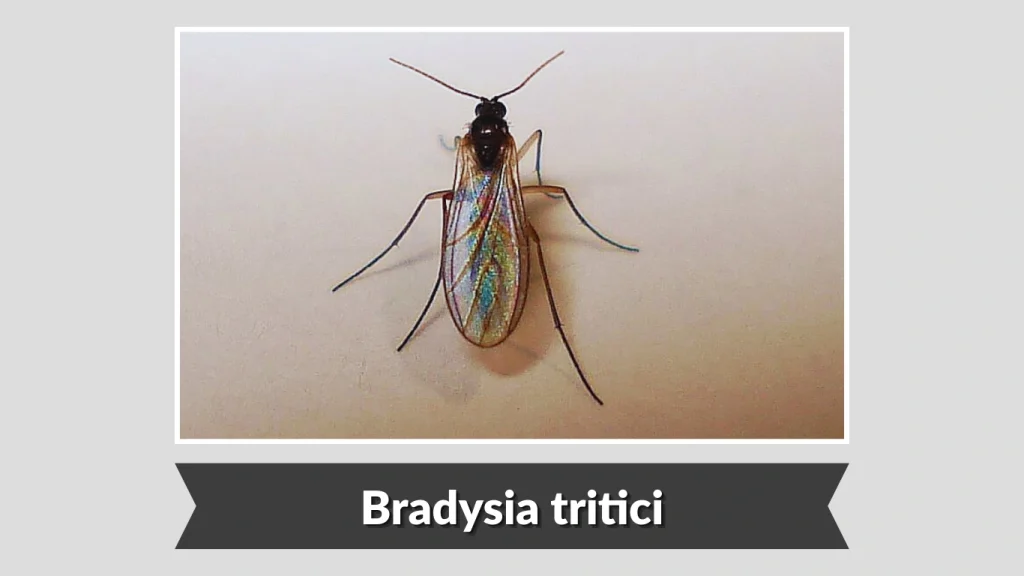
Bradysia tritici is a fungus gnat species often linked with cereal crops and greenhouse plants. While it naturally feeds on soil fungi and decaying matter, its larvae can also damage the tender roots of young plants.
Identification
- Adults measure around 2–3 mm long
- Dark-colored slender body with long antennae
- Transparent wings showing the characteristic Y-shaped vein
- Larvae are elongated, whitish, with a black head capsule
Habitat and Host Plant
This species is found in moist soils, compost, and agricultural fields. It is particularly associated with cereals like wheat (Triticum spp.), from which it gets its name, as well as greenhouse ornamentals.
Life Cycle
Bradysia tritici undergoes complete metamorphosis, with the larval stage being the most destructive. Larvae feed on soil fungi and root hairs before pupating and emerging as adults.
Behavior and Impact
Although not the most aggressive pest, high populations of Bradysia tritici can weaken seedlings, reduce crop vigor, and increase vulnerability to fungal diseases, posing risks in both agricultural and greenhouse settings.
11. Bradysia odoriphaga
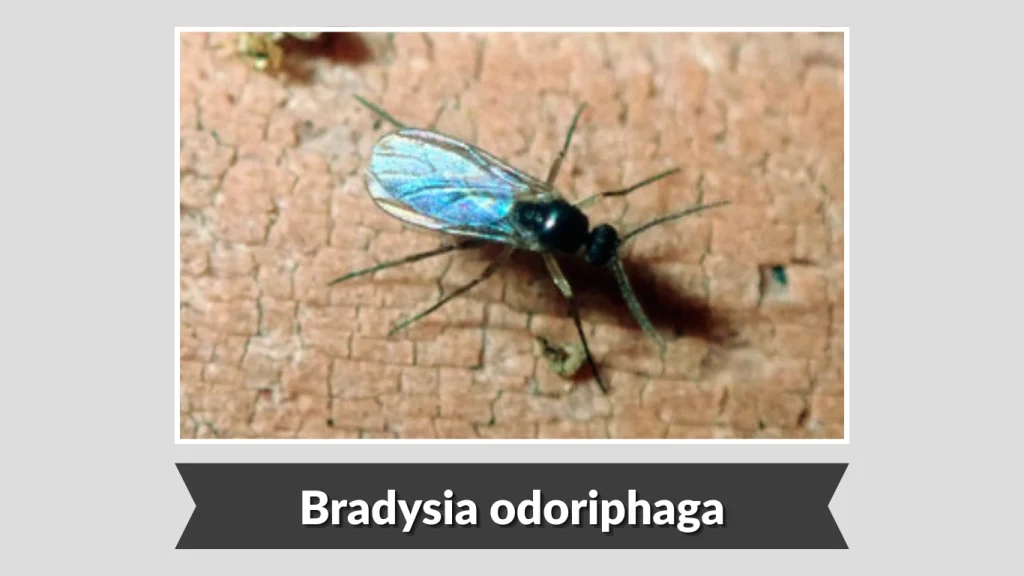
Bradysia odoriphaga is one of the most economically important fungus gnat species, particularly in Asia, where it is a major pest of Chinese chive and other Allium crops. Its larvae cause severe root damage and reduce crop yields significantly.
Identification
- Adult size about 3–4 mm, slightly larger than many related species
- Dark gray to black body with long legs and antennae
- Wings are transparent with the typical Y-shaped vein
- Larvae are whitish, slender, with a shiny black head capsule
Habitat and Host Plant
This species is strongly associated with Chinese chive (Allium tuberosum), garlic, onion, and other Allium plants. It thrives in moist agricultural soils enriched with organic matter.
Life Cycle
Bradysia odoriphaga develops quickly in warm, humid environments. Eggs hatch in soil, and larvae feed directly on Allium roots and bulbs before pupating underground. Adults emerge to reproduce near host crops.
Behavior and Impact
This species is considered a major agricultural pest. Larval feeding damages root systems, stunts plant growth, and leads to significant yield losses in Allium crops, making it a serious concern for farmers.
12. Bradysia paupera
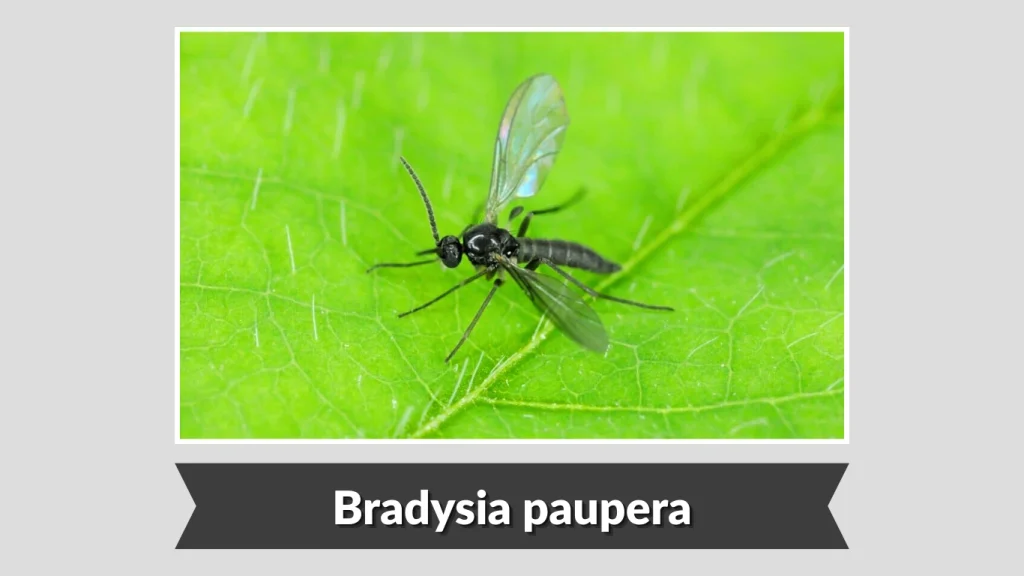
Bradysia paupera is a common fungus gnat species frequently found in damp soils, compost, and greenhouses. While often regarded as a decomposer of organic matter, it can also become a pest by attacking young plant roots.
Identification
- Adult length about 2–3 mm
- Slender dark body with long legs and antennae
- Clear wings featuring the typical Y-shaped venation
- Larvae are translucent white with a distinct black head capsule
Habitat and Host Plant
This species inhabits moist, organic-rich environments such as potting soils, compost, and seedling trays. It can be associated with a variety of ornamental plants and vegetables.
Life Cycle
Bradysia paupera completes its life cycle in a few weeks under favorable conditions. The larval stage is the most harmful, feeding on fungi, algae, and delicate root hairs before pupating in soil.
Behavior and Impact
Although not as aggressive as some other Bradysia species, high populations of larvae can weaken seedlings, cause slow plant growth, and create conditions favorable for fungal pathogens like Pythium.
13. Bradysia spania
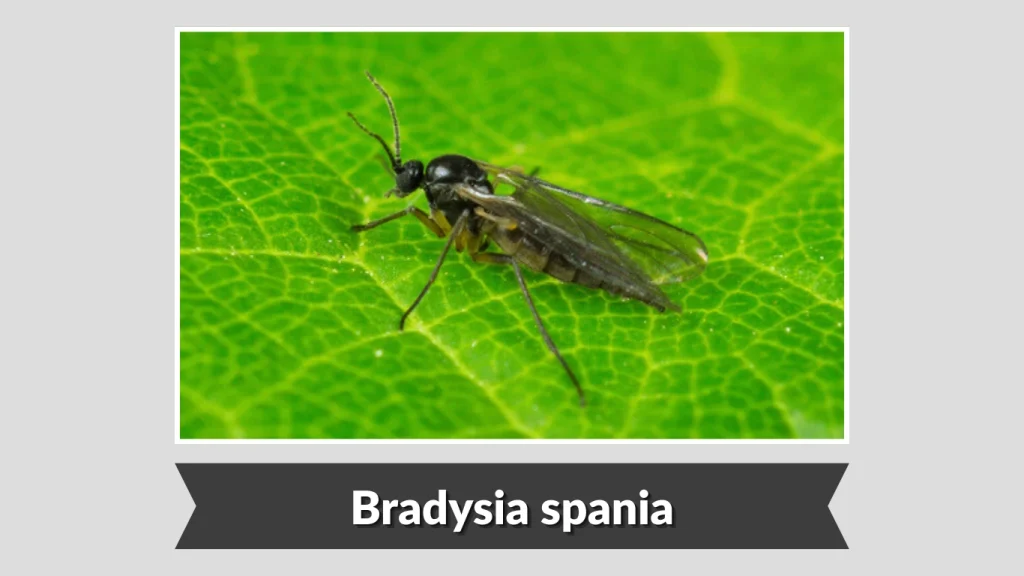
Bradysia spania is a lesser-documented species of fungus gnat that inhabits moist soils and decaying plant matter. While it is not as widely studied as other species, it follows a similar ecological pattern of feeding on fungi and organic material, with potential to harm seedlings.
Identification
- Adults measure about 2–3 mm in length
- Slender, dark body with long legs and antennae
- Transparent wings with the characteristic Y-shaped vein
- Larvae are whitish and slender with a black head capsule
Habitat and Host Plant
This species prefers damp, shaded areas with abundant organic debris. It is commonly associated with greenhouse soils, compost piles, and decaying vegetation.
Life Cycle
Bradysia spania undergoes complete metamorphosis, with larvae actively feeding on soil fungi and tender plant roots before pupating in the soil.
Behavior and Impact
While not considered a primary pest, under favorable conditions this species can multiply rapidly and weaken seedlings, especially in greenhouse and nursery environments.
14. Bradysia guttata
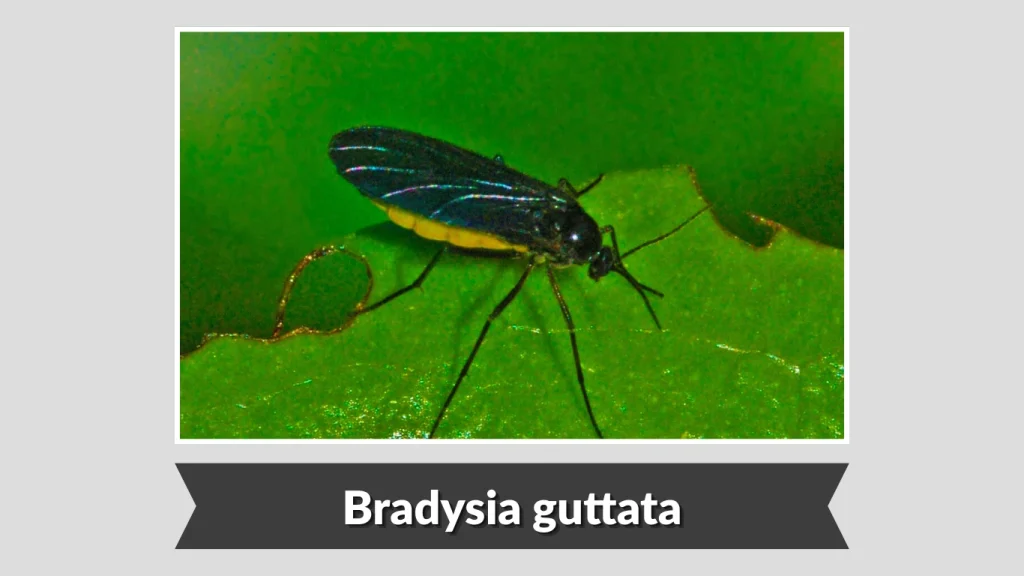
Bradysia guttata is a fungus gnat species found in damp, organic-rich soils where fungi thrive. Though not among the most destructive species, it can still cause damage to seedlings when larval populations rise.
Identification
- Adults about 2–3 mm long
- Slender dark body with elongated antennae
- Clear wings with the characteristic Y-shaped vein
- Larvae are whitish, translucent, with a small black head capsule
Habitat and Host Plant
This species is commonly found in greenhouses, potted plants, and compost where moisture and organic matter are abundant. It feeds primarily on fungi and decaying vegetation but may also attack tender roots.
Life Cycle
Bradysia guttata completes its life cycle in soil, with eggs hatching into larvae that feed on fungi and root tissues before pupating. Adults emerge after a short pupal stage to reproduce.
Behavior and Impact
While not as aggressive as species like Bradysia odoriphaga, large numbers of larvae can still reduce seedling vigor and promote the spread of fungal pathogens in nursery and greenhouse environments.
15. Bradysia hemerocallis
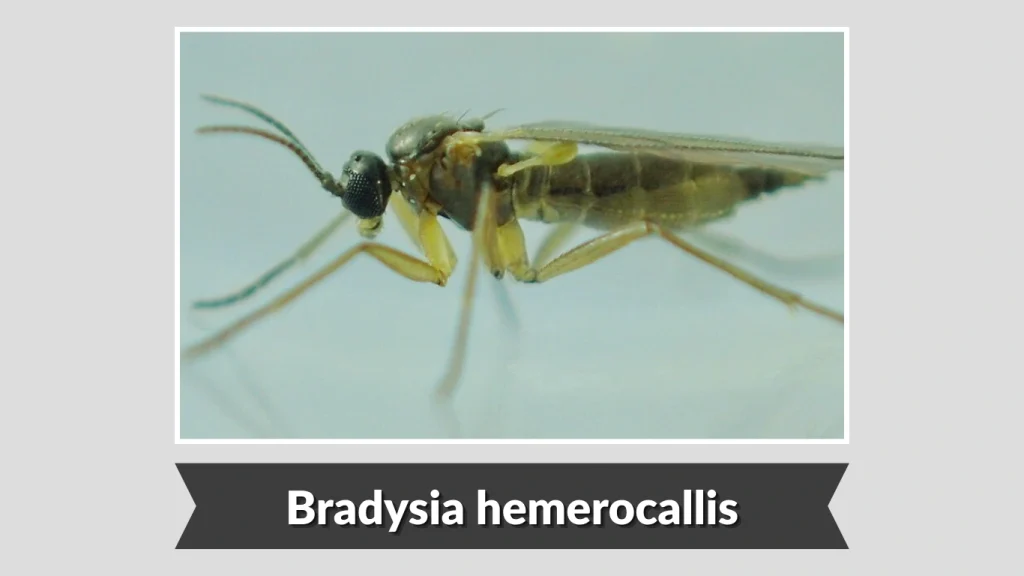
Bradysia hemerocallis is a fungus gnat species often associated with ornamental plants, particularly daylilies (Hemerocallis), from which it gets its name. It thrives in moist soils and can be both a decomposer and a pest in horticultural settings.
Identification
- Adults measure about 2–3 mm in length
- Slender, dark body with long antennae
- Transparent wings featuring the distinctive Y-shaped vein
- Larvae are slender, whitish, with shiny black head capsules
Habitat and Host Plant
This species is commonly linked to ornamental gardens and greenhouses. It favors plants grown in damp soil, especially daylilies, but may also occur in association with other ornamentals.
Life Cycle
Bradysia hemerocallis develops through the usual egg, larva, pupa, and adult stages. Larvae feed on fungi and root tissues, then pupate in the soil before emerging as adults.
Behavior and Impact
Though not as widely studied as other fungus gnat species, heavy larval infestations can stress ornamental plants, reducing their vigor and potentially spreading soil-borne fungal diseases.
16. Bradysia floricola
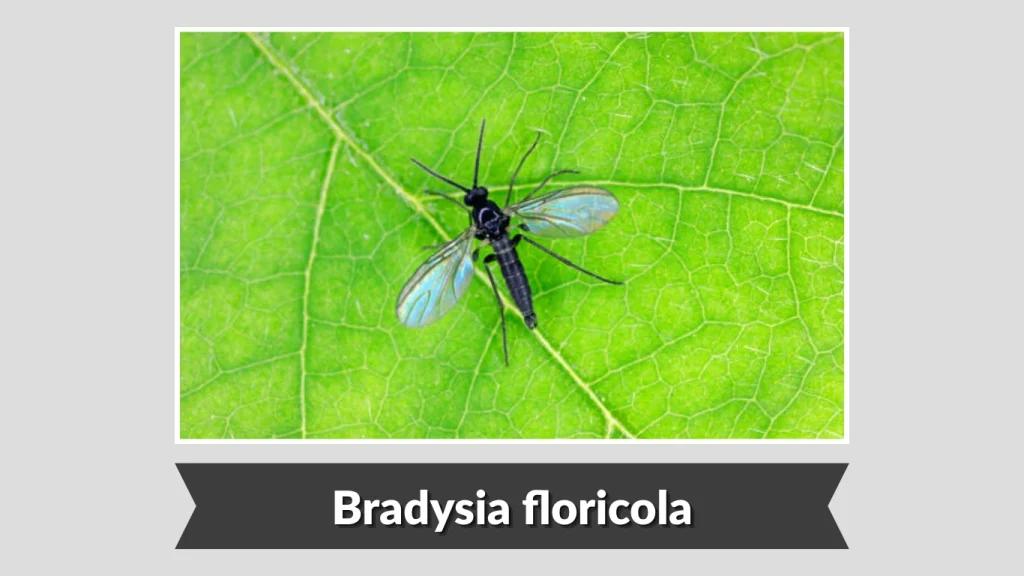
Bradysia floricola is a fungus gnat species often found in association with flowering plants, especially in greenhouse environments. Its name reflects its connection with ornamental flowers, where it can become a pest if populations are high.
Identification
- Adults about 2–3 mm long
- Dark slender body with long antennae
- Clear wings showing the characteristic Y-shaped vein
- Larvae are translucent white with a small black head capsule
Habitat and Host Plant
This species thrives in damp, organic soils, particularly around ornamental flowers and potted plants. It is commonly encountered in nurseries and greenhouses with high humidity.
Life Cycle
Bradysia floricola undergoes complete metamorphosis, with larvae feeding on fungi, algae, and tender root hairs before pupating in the soil.
Behavior and Impact
While adults are harmless, the larvae can reduce the health and growth of ornamental flowers by damaging root systems and introducing fungal pathogens, making this species a nuisance in horticultural production.
17. Bradysia amoena
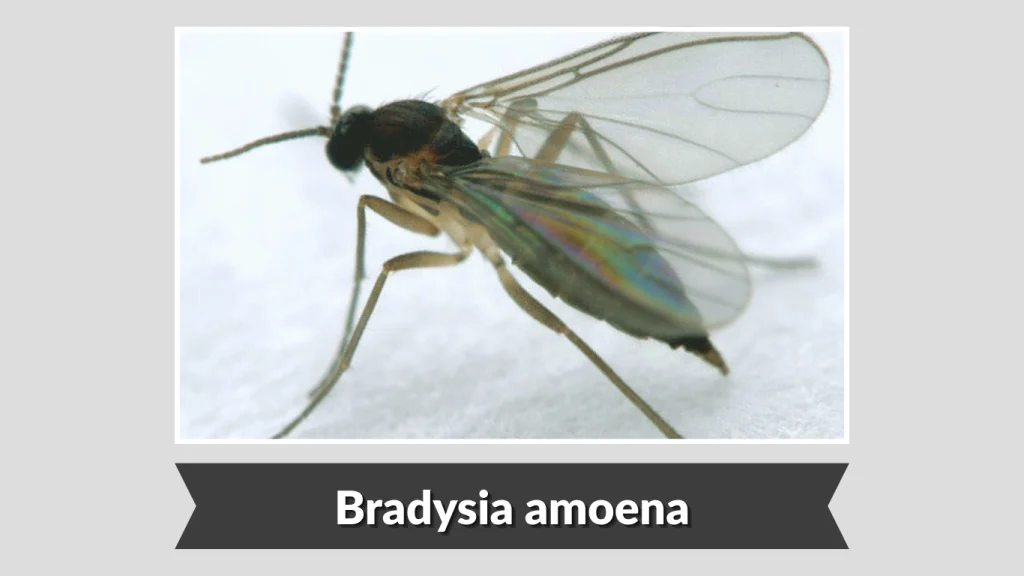
Bradysia amoena is a soil-dwelling fungus gnat species that inhabits moist, organic-rich environments. Though less studied than some major pest species, it plays a dual role as both a decomposer and a minor plant pest.
Identification
- Adults reach about 2–3 mm in length
- Dark, slender body with elongated legs and antennae
- Clear wings featuring the classic Y-shaped vein
- Larvae are whitish, slender, with a distinct black head capsule
Habitat and Host Plant
This species thrives in damp soils of greenhouses, nurseries, and gardens. It is associated with ornamental plants and vegetables grown in rich organic media.
Life Cycle
Bradysia amoena follows the typical life cycle of fungus gnats: eggs hatch in soil, larvae feed on fungi and fine roots, pupation occurs in the soil, and adults emerge to reproduce.
Behavior and Impact
In normal numbers, larvae help recycle organic matter, but in high populations, they weaken seedlings and can promote fungal infections, posing risks in controlled growing environments.
18. Bradysia pratorum
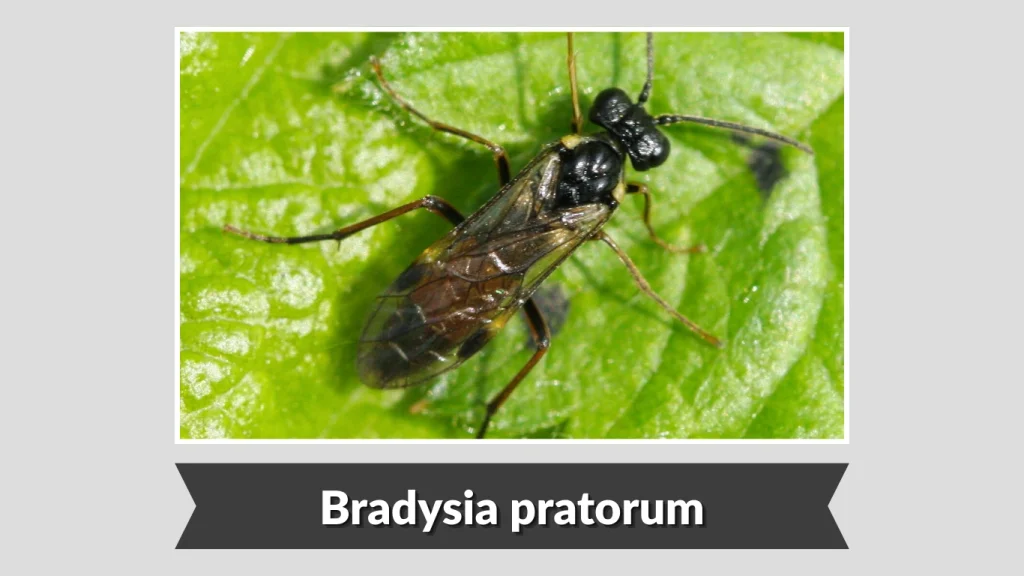
Bradysia pratorum is a common fungus gnat species that inhabits moist, organic soils and compost. While generally a decomposer, it can become problematic in nurseries and greenhouses when larval numbers increase.
Identification
- Adult size about 2–3 mm
- Slender, dark brown to black body with long legs and antennae
- Clear wings with the characteristic Y-shaped venation
- Larvae are whitish, cylindrical, with a shiny black head capsule
Habitat and Host Plant
This species is found in gardens, potted plants, compost piles, and greenhouse soils. It is often associated with ornamental flowers and vegetable seedlings.
Life Cycle
Bradysia pratorum completes its development in a few weeks under warm, humid conditions. Larvae feed on fungi and tender roots before pupating in soil and emerging as adults.
Behavior and Impact
Though not as destructive as major pest species, high larval populations can reduce seedling vigor, damage root hairs, and create entry points for soil-borne fungal pathogens.
19. Bradysia aequalis
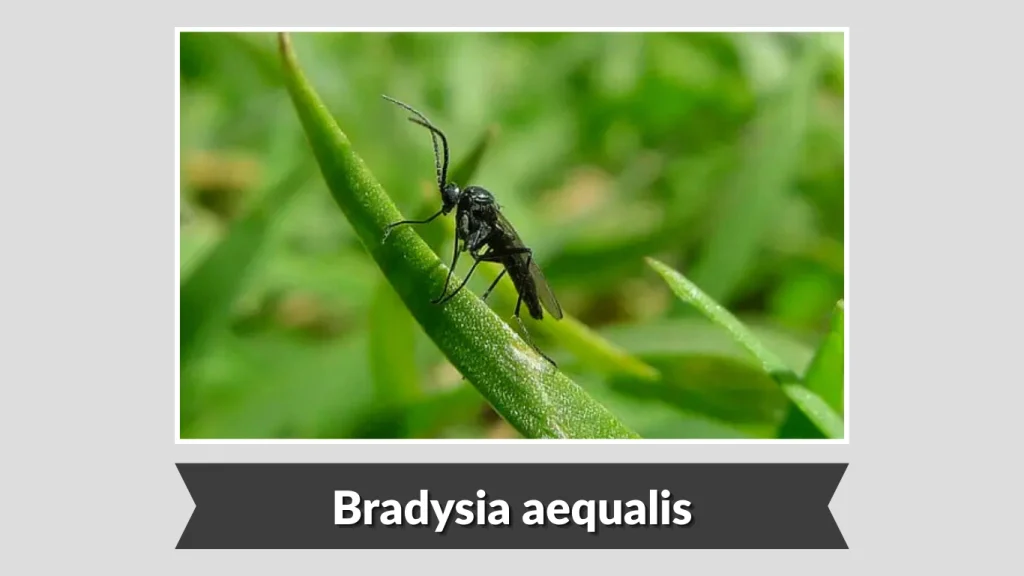
Bradysia aequalis is a fungus gnat species that thrives in damp, organic soils where fungi and decaying matter are abundant. It has been observed in greenhouses and nurseries, where it can shift from being a decomposer to a plant pest.
Identification
- Adults are 2–3 mm in length
- Dark, slender body with long legs and antennae
- Transparent wings with the distinct Y-shaped vein
- Larvae are whitish, slender, with shiny black head capsules
Habitat and Host Plant
This species inhabits moist soils, compost, and greenhouse potting media. It is commonly associated with ornamental plants and seedlings grown in organic-rich environments.
Life Cycle
Bradysia aequalis develops through egg, larval, pupal, and adult stages. Larvae live in the soil, feeding on fungi and delicate roots, then pupate before adults emerge.
Behavior and Impact
While typically not the most aggressive species, high larval numbers can damage seedlings, slow plant growth, and increase vulnerability to damping-off and other fungal infections.
20. Bradysia tecta

Bradysia tecta is a fungus gnat species commonly recorded in moist, organic-rich soils. Like other members of the genus, it acts as both a decomposer of fungi and organic matter and, under certain conditions, a pest of seedlings and greenhouse crops.
Identification
- Adults measure about 2–3 mm long
- Dark, slender body with elongated antennae
- Clear wings marked with the typical Y-shaped vein
- Larvae are slender, whitish, with distinct black head capsules
Habitat and Host Plant
This species inhabits damp soils in greenhouses, nurseries, and gardens. It is particularly associated with potted ornamentals and vegetable seedlings.
Life Cycle
Bradysia tecta develops quickly in warm, humid conditions. Eggs hatch into larvae that feed on fungi and fine root hairs, followed by pupation in soil before emerging as adults.
Behavior and Impact
Although not considered one of the most destructive fungus gnat species, in high numbers it can reduce seedling vigor, stress young plants, and contribute to the spread of soil-borne fungal pathogens.
21. Bradysia grandis
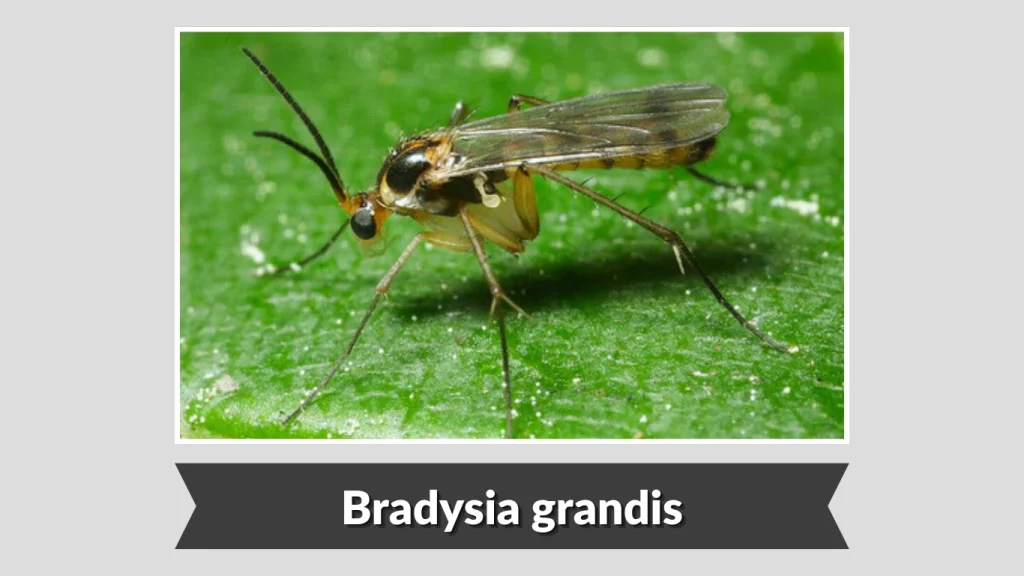
Bradysia grandis is a relatively larger fungus gnat species within its genus, often observed in moist, organic environments. While it naturally feeds on fungi and decomposing matter, it can also become a pest in nurseries and greenhouse plant production.
Identification
- Adults slightly larger than average, about 3–4 mm long
- Dark, slender body with long legs and antennae
- Transparent wings with the characteristic Y-shaped vein
- Larvae are elongated, whitish, with black head capsules
Habitat and Host Plant
This species is associated with damp, organic soils, compost heaps, and greenhouse potting media. It often targets young ornamental plants and vegetable seedlings.
Life Cycle
Bradysia grandis completes its development in soil, progressing through egg, larval, pupal, and adult stages. Larvae feed heavily on fungi and delicate root tissues before pupation.
Behavior and Impact
Due to its slightly larger size, Bradysia grandis larvae can cause more noticeable damage to root systems, stunting plant growth and increasing susceptibility to root diseases in greenhouse environments.
22. Bradysia planifrons

Bradysia planifrons is a soil-dwelling fungus gnat species that inhabits damp, organic matter–rich environments. While generally a decomposer, it can also stress seedlings and young plants in greenhouses when larval populations rise.
Identification
- Adults are about 2–3 mm in length
- Dark slender body with long legs and antennae
- Clear wings with the distinct Y-shaped vein
- Larvae are whitish, slender, with a shiny black head capsule
Habitat and Host Plant
This species is found in moist soils, compost piles, and greenhouse potting media. It is commonly associated with ornamental plants, vegetables, and seedlings grown in organic-rich substrates.
Life Cycle
Bradysia planifrons follows the complete metamorphosis cycle: egg, larva, pupa, and adult. The larval stage is the most harmful, feeding on fungi and tender root tissues.
Behavior and Impact
Although not one of the most aggressive pest species, dense populations can weaken seedlings, reduce plant vigor, and promote the spread of fungal pathogens in horticultural environments.
23. Bradysia flavifrons
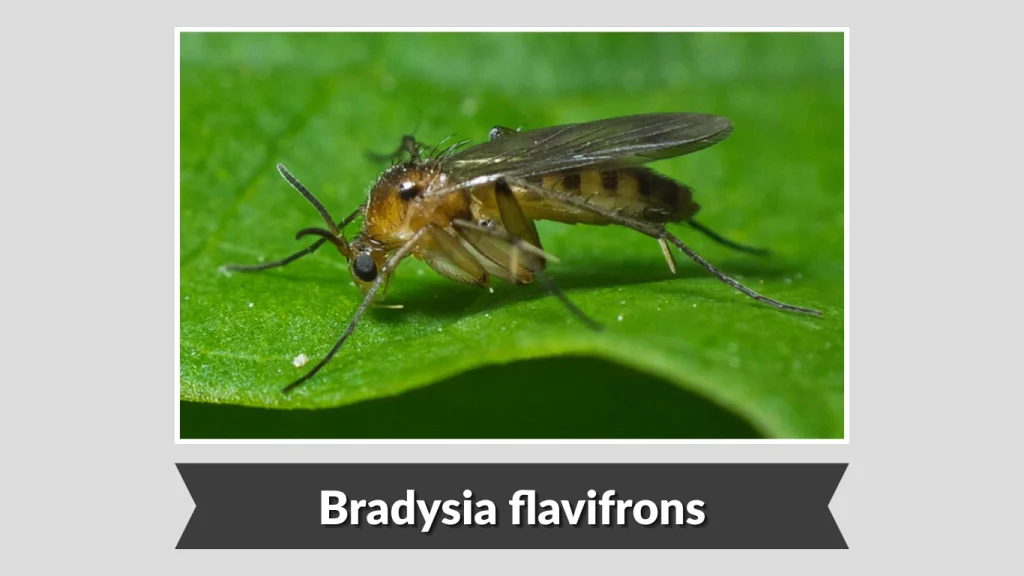
Bradysia flavifrons is a fungus gnat species recognized for its association with moist, organic soils. It is less commonly reported than major pest species but still follows the same ecological role of feeding on fungi and occasionally damaging roots.
Identification
- Adults measure about 2–3 mm long
- Dark, slender body with relatively long antennae
- Wings are transparent with the characteristic Y-shaped vein
- Larvae are whitish, thin, with small black head capsules
Habitat and Host Plant
This species thrives in damp greenhouse soils, compost, and potted plants. It is often associated with ornamental flowers and vegetable seedlings in nursery environments.
Life Cycle
Bradysia flavifrons develops quickly in humid conditions, passing through egg, larva, pupa, and adult stages. Larvae feed on fungi and organic matter before pupating in soil.
Behavior and Impact
Although not as destructive as some Bradysia species, high larval populations may damage tender roots, reduce plant vigor, and enhance the risk of fungal disease outbreaks in seedlings.
24. Bradysia pilostyla
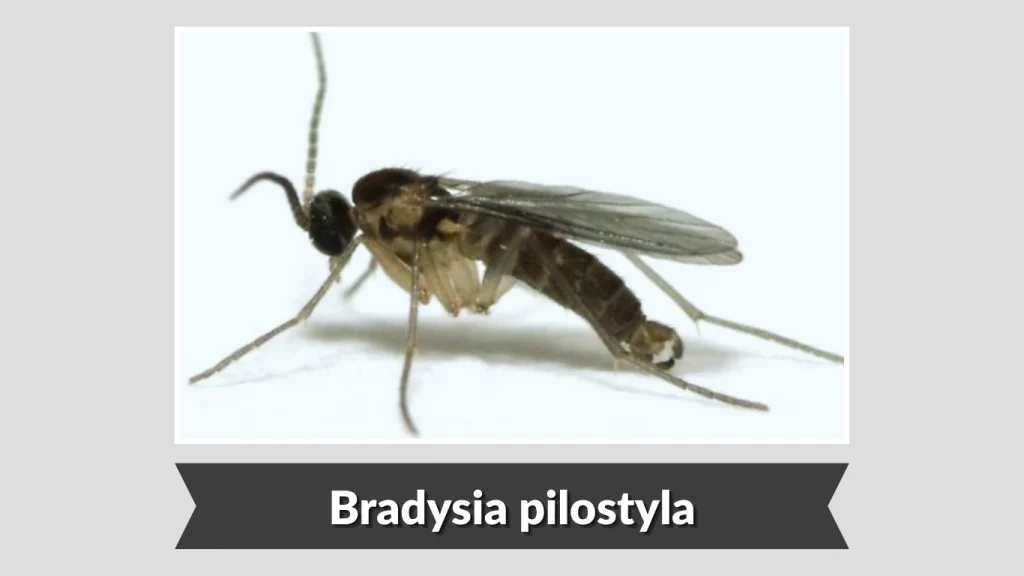
Bradysia pilostyla is a lesser-known species of fungus gnat that inhabits damp, organic-rich soils. Like its relatives, it contributes to the decomposition of fungi and organic matter but can also become harmful in greenhouse and nursery environments when abundant.
Identification
- Adults measure around 2–3 mm in length
- Dark, slender body with long legs and antennae
- Clear wings with the distinctive Y-shaped venation
- Larvae are whitish, slender, with shiny black head capsules
Habitat and Host Plant
This species is found in moist soils, compost piles, and greenhouse substrates. It may be associated with ornamental plants, vegetables, and fungi in controlled growing conditions.
Life Cycle
Bradysia pilostyla undergoes complete metamorphosis, with larvae feeding on fungi and root tissues before pupating in soil and emerging as adults.
Behavior and Impact
Though not considered a major pest species, large populations can stress young plants, damage root hairs, and contribute to fungal disease outbreaks, particularly in nursery seedlings.
25. Bradysia insignis
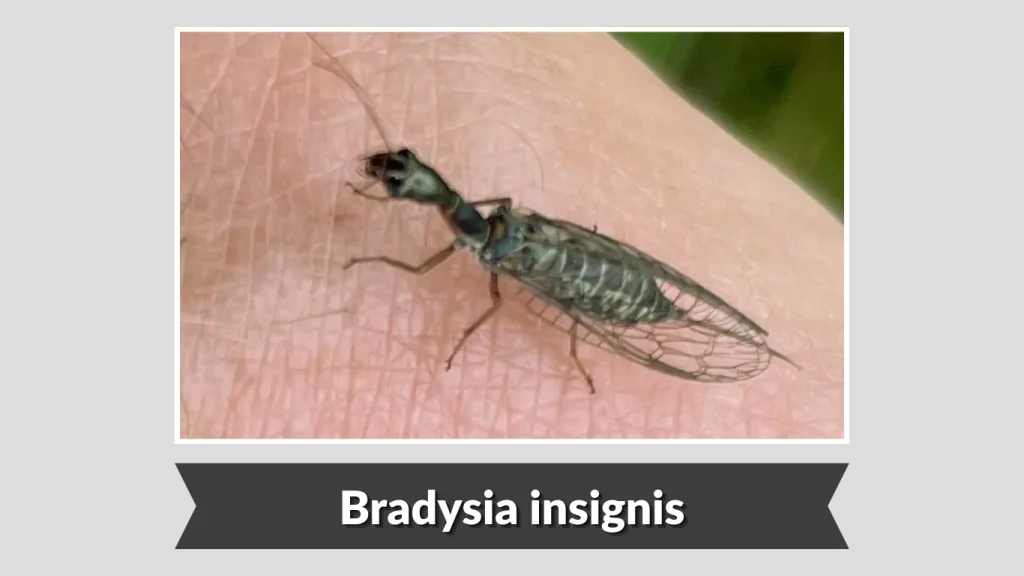
Bradysia insignis is a fungus gnat species typically found in damp, organic soils where fungi are abundant. While it plays a role in decomposition, it can also act as a minor pest in horticultural environments, especially when larval numbers are high.
Identification
- Adults about 2–3 mm long
- Dark, slender body with elongated legs and antennae
- Clear wings with the characteristic Y-shaped vein
- Larvae are whitish and slender with distinct black head capsules
Habitat and Host Plant
This species thrives in moist soils, compost heaps, and greenhouse potting media. It is often associated with ornamental flowers, seedlings, and vegetable crops.
Life Cycle
Bradysia insignis develops through the complete cycle of egg, larva, pupa, and adult. Larvae live in soil, feeding on fungi and delicate root tissues before pupating.
Behavior and Impact
While not one of the most aggressive species, heavy infestations of larvae can weaken seedlings, reduce plant vigor, and encourage soil-borne fungal infections, making it a potential concern for growers.
