
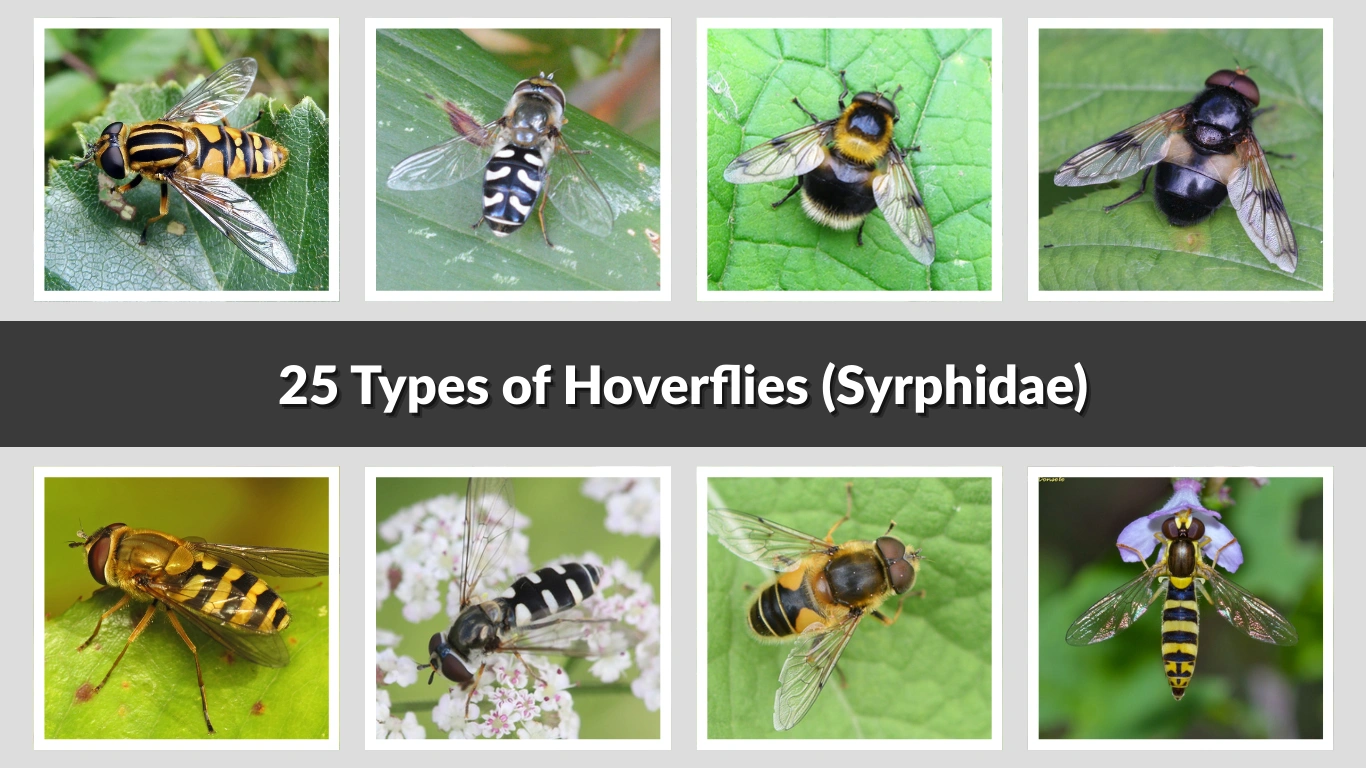
Hoverflies are fascinating insects admired for their mimicry of bees and wasps, yet they are harmless and highly beneficial to ecosystems. With their hovering flight and bright patterns, they play a vital role as pollinators and natural pest controllers. This guide explores 25 types of hoverflies, highlighting their unique traits, habitats, and ecological importance. From garden visitors to woodland specialists, each species showcases the beauty and diversity of these remarkable flies.
1. Marmalade Hoverfly

The Marmalade Hoverfly (Episyrphus balteatus) is one of the most widespread and recognizable hoverflies in the world. It is admired for its orange-and-black banded abdomen, which mimics a wasp, helping it deter predators. Despite its appearance, it is harmless and plays an important role in pollination.
Identification
- Small size, about 9–12 mm in length
- Orange abdomen with distinctive black double bands (marmalade-like pattern)
- Transparent wings with a slight dark tint
- Large reddish-brown compound eyes
Habitat and Range
Marmalade hoverflies are found in gardens, meadows, grasslands, and urban areas across Europe, Asia, and North America. They are especially common in summer when flowers are abundant.
Life Cycle
The larvae feed on aphids, making them highly beneficial for pest control in gardens and crops. Adults feed mainly on nectar and pollen, contributing to pollination.
Behavior and Role
They hover with precision, often near flowers, and are active fliers during warm, sunny days. Their mimicry of wasps helps them avoid predators, while their pollination role makes them ecologically valuable.
2. Drone Fly

The Drone Fly (Eristalis tenax) is a common hoverfly species that closely resembles a honeybee, especially in its flight pattern and body markings. Its mimicry provides protection from predators, but unlike bees, it cannot sting. This species is also a vital pollinator in both wild and cultivated landscapes.
Identification
- Medium-sized, about 10–14 mm long
- Brownish, hairy body resembling a honeybee
- Large compound eyes covering most of the head
- Distinct dark wing veins, giving a bee-like appearance
Habitat and Range
Drone flies are found worldwide in gardens, meadows, farmlands, and wetlands. They are frequent visitors to flowers and thrive in sunny areas with abundant nectar sources.
Life Cycle
The larvae are known as “rat-tailed maggots,” which live in stagnant water and feed on organic matter. Adults emerge to feed on nectar and pollen, playing an essential role in pollination.
Behavior and Role
Drone flies often hover around flowers, imitating the behavior of bees. They are harmless to humans and beneficial to ecosystems by pollinating crops and wild plants.
3. Tapered Drone Fly

The Tapered Drone Fly (Eristalis pertinax) is a bee-mimicking hoverfly that is very similar to the common drone fly but can be distinguished by its slimmer body and longer legs. It is widespread and often seen in gardens, fields, and woodlands where flowers are abundant.
Identification
- Medium to large hoverfly, about 12–15 mm long
- Slender body compared to the common drone fly
- Long yellowish-orange hind tibiae (back legs)
- Hairy thorax with dark brown coloration
- Transparent wings with distinct venation
Habitat and Range
This hoverfly inhabits gardens, woodland edges, grasslands, and hedgerows across Europe and other temperate regions. It prefers sunny environments rich in flowering plants.
Life Cycle
The larvae are aquatic, living in stagnant or muddy water and feeding on organic debris. Adults feed on nectar and pollen, contributing significantly to pollination.
Behavior and Role
The Tapered Drone Fly often hovers around flowers and can be mistaken for bees due to its buzzing flight. Its mimicry protects it from predators while ensuring its vital role as a pollinator.
4. Common Drone Fly
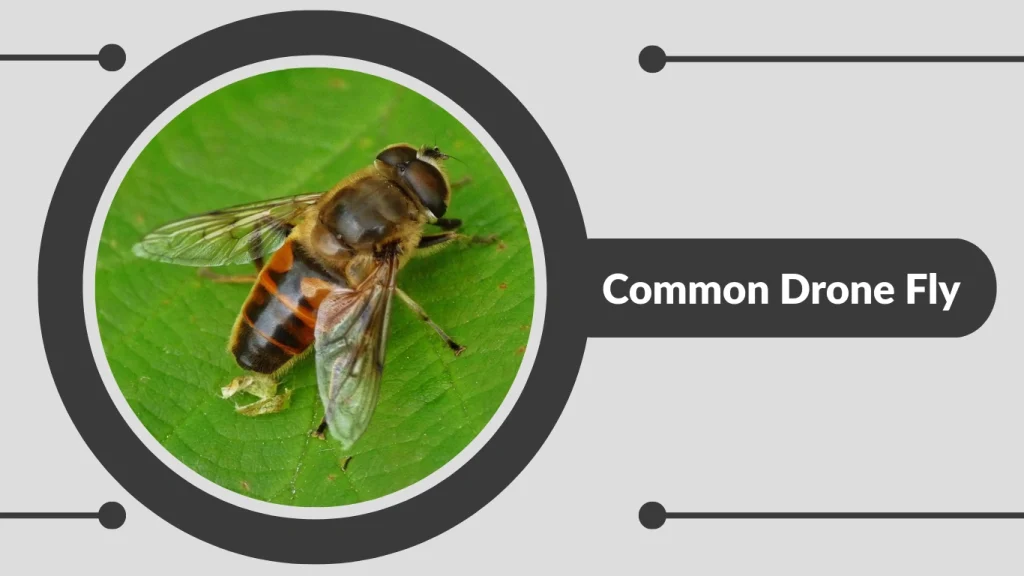
The Common Drone Fly (Eristalis arbustorum) is another bee-mimicking hoverfly widely distributed across Europe, Asia, and North America. It closely resembles the honeybee but is harmless and plays a valuable role as a pollinator in both natural and cultivated landscapes.
Identification
- Small to medium size, around 10–12 mm long
- Dark brown to black body with dense hair
- Large reddish-brown compound eyes
- Shorter legs compared to the Tapered Drone Fly
- Clear wings with typical drone fly venation
Habitat and Range
Found in gardens, farmland, wetlands, and urban green spaces, this species thrives wherever flowers are abundant. It is especially active during summer and early autumn.
Life Cycle
The larvae are aquatic rat-tailed maggots that develop in stagnant or nutrient-rich water. Adults rely heavily on nectar and pollen from a variety of flowers.
Behavior and Role
The Common Drone Fly mimics bees in both appearance and flight, which helps deter predators. It is harmless to humans and contributes significantly to pollination of crops and wild plants.
5. Greater Bulb Fly

The Greater Bulb Fly (Merodon equestris) is a chunky hoverfly that strongly resembles a bumblebee. Its mimicry is so convincing that it often fools predators and even gardeners. While adults are useful pollinators, the larvae are considered garden pests because they feed on the bulbs of plants.
Identification
- Robust body, 10–14 mm in length
- Covered with dense yellow, orange, or brown hairs, mimicking bumblebees
- Short antennae compared to real bees
- Clear wings with dark venation
- Fast, buzzing flight similar to bumblebees
Habitat and Range
This species is widespread in Europe and North America. It is commonly found in gardens, meadows, and woodland edges, especially in areas where bulb plants such as daffodils grow.
Life Cycle
Larvae develop inside the bulbs of plants like daffodils, tulips, and hyacinths, often causing damage. Adults emerge in spring and summer to feed on nectar and pollen.
Behavior and Role
The Greater Bulb Fly is a strong flier and can hover with precision. While the adult is an effective pollinator, the larval stage makes it an occasional pest in ornamental gardens.
6. Narcissus Bulb Fly

The Narcissus Bulb Fly (Merodon avidus) is another bumblebee mimic closely related to the Greater Bulb Fly. While it shares many similarities in appearance and behavior, this species is particularly known for its association with narcissus plants, where its larvae feed on bulbs and cause significant damage in gardens.
Identification
- Stout, hairy body about 10–13 mm long
- Mimics bumblebees with dense yellow or brown hairs
- Short, inconspicuous antennae
- Clear wings with dark venation
- Fast, buzzing flight often mistaken for bees
Habitat and Range
This hoverfly is found across Europe and in parts of North America. It prefers gardens, meadows, and woodland edges where narcissus and similar bulb plants are present.
Life Cycle
The larvae develop inside bulbs of narcissus, tulips, and related plants, consuming the inner tissue and often killing the host plant. Adults feed on nectar and pollen during spring and summer.
Behavior and Role
Although adults are important pollinators, their larval stage is destructive to ornamental bulb plants. Their strong mimicry of bumblebees helps them avoid predation.
7. Slender Melanostoma

The Slender Melanostoma (Melanostoma scalare) is a small, delicate hoverfly that is less colorful than many other species. Instead of bold bee-like patterns, it has a slender, dark body with subtle markings. Despite its modest appearance, it is widespread and commonly seen visiting flowers.
Identification
- Small size, about 6–9 mm long
- Slender black body with faint yellow markings on the abdomen
- Shiny thorax with a metallic sheen
- Clear wings with fine venation
- Males have narrower abdomens, females appear broader
Habitat and Range
This hoverfly is widespread across Europe, Asia, and North America. It is commonly found in gardens, meadows, and woodland edges, usually hovering low among flowers and vegetation.
Life Cycle
Larvae are thought to feed on small insects such as aphids, playing a beneficial role in natural pest control. Adults feed primarily on pollen and nectar, making them effective pollinators.
Behavior and Role
The Slender Melanostoma hovers gracefully near vegetation and flowers. Although not as striking as wasp or bee mimics, it is an important pollinator and contributes to controlling aphid populations.
8. Large Meadow Hoverfly
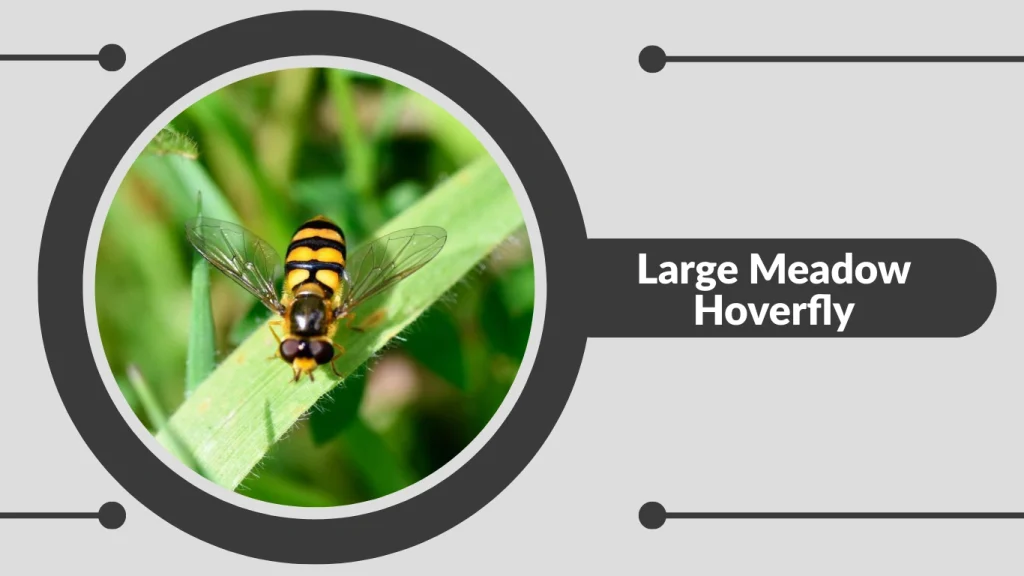
The Large Meadow Hoverfly (Melangyna quadrimaculata) is a medium-sized hoverfly that is often spotted in open grassy habitats. It is recognized for the four pale yellow spots on its dark abdomen, which give it a distinctive appearance compared to other hoverflies.
Identification
- Medium size, about 9–12 mm long
- Dark, shiny black abdomen with four distinct yellow spots
- Thorax metallic black with fine hairs
- Clear wings with noticeable venation
- Females generally have larger, more rounded abdomens
Habitat and Range
This hoverfly is found across Europe and parts of Asia. It thrives in meadows, fields, hedgerows, and gardens, especially during spring and summer when wildflowers are abundant.
Life Cycle
The larvae primarily feed on aphids, making them valuable allies in natural pest control. Adults visit a wide range of flowers for nectar and pollen, contributing significantly to pollination.
Behavior and Role
The Large Meadow Hoverfly hovers steadily above flowers before landing to feed. Its presence in meadows and gardens highlights its ecological importance as both a pollinator and an aphid predator through its larval stage.
9. Dusky Hoverfly

The Dusky Hoverfly (Melangyna lasiophthalma) is a widespread species that prefers wooded habitats. It is less brightly colored than many other hoverflies, with a more subdued appearance, which makes it blend into its surroundings while still being an active pollinator.
Identification
- Small to medium size, about 8–11 mm long
- Dark, glossy black abdomen with pale yellow side markings
- Thorax dark with fine hairs
- Clear wings with strong venation
- Eyes reddish-brown, slightly larger in males
Habitat and Range
This species is distributed across Europe, Asia, and parts of North America. It favors woodland edges, shaded gardens, and areas rich in flowering shrubs.
Life Cycle
Larvae feed on aphids found on shrubs and trees, making them beneficial for controlling pests. Adults feed on nectar and pollen, often visiting early spring flowers like willows.
Behavior and Role
Dusky Hoverflies are quick and agile fliers. They play a crucial role in pollinating woodland plants and contribute to natural aphid population control.
10. Eupeodes Hoverfly

The Eupeodes Hoverfly (Eupeodes corollae) is a very common species known for its distinctive yellow markings that resemble a wasp. It is an abundant pollinator found in gardens, farmland, and wildflower meadows, often seen hovering above blooms during warm months.
Identification
- Medium size, about 9–12 mm long
- Black abdomen with yellow comma-shaped markings on each segment
- Shiny black thorax with short hairs
- Clear wings with characteristic venation
- Males have more curved yellow spots than females
Habitat and Range
This hoverfly is widely distributed across Europe, Asia, North Africa, and has spread into parts of North America. It is highly adaptable, thriving in gardens, fields, and urban green spaces.
Life Cycle
Larvae are voracious predators of aphids, making them extremely valuable in agriculture and natural pest management. Adults feed on nectar and pollen, visiting a variety of flowers.
Behavior and Role
The Eupeodes Hoverfly is often seen in large numbers during summer. Its strong mimicry of wasps helps deter predators, while its pollination and pest-control roles make it ecologically important.
11. Long Hoverfly

The Long Hoverfly (Sphaerophoria scripta) is a slender hoverfly with an elongated body that makes it easily recognizable. Despite its small size, it is a highly active pollinator and one of the most widespread hoverflies across Europe and Asia.
Identification
- Small and slender, about 7–10 mm long
- Long, narrow yellow-and-black banded abdomen
- Thorax shiny black with fine hairs
- Clear wings with delicate venation
- Males have especially long abdomens compared to females
Habitat and Range
This species is found throughout Europe, North Africa, and Asia, and has also spread into North America. It thrives in meadows, gardens, fields, and roadsides where wildflowers are abundant.
Life Cycle
Larvae are important predators of aphids, playing a role in natural pest control. Adults feed on nectar and pollen, visiting a wide range of flowers including daisies and umbellifers.
Behavior and Role
The Long Hoverfly is often seen hovering above flowers in sunny weather. Its slender body and wasp-like pattern provide effective mimicry, while its ecological role as a pollinator and pest regulator is highly beneficial.
12. Thick-legged Hoverfly

The Thick-legged Hoverfly (Syritta pipiens) is a small but distinctive species recognized for its swollen hind femora, which give it a unique appearance compared to other hoverflies. It is widespread and common in many habitats, often seen feeding on flowers during summer.
Identification
- Small size, about 6–9 mm long
- Dark body with a shiny thorax
- Abdomen short with pale side spots
- Hind legs thickened and noticeably swollen (key feature)
- Clear wings with simple venation
Habitat and Range
This species is widely distributed across Europe, Asia, Africa, and North America. It thrives in gardens, meadows, farmland, and urban green spaces, showing a high tolerance for different environments.
Life Cycle
Larvae develop in decaying organic matter, including rotting plant material and compost. Adults feed mainly on nectar and pollen, making them useful pollinators.
Behavior and Role
The Thick-legged Hoverfly is very agile in flight and often visits a variety of flowers. While the larvae contribute to decomposition, the adults provide valuable pollination services.
13. Tiger Hoverfly

The Tiger Hoverfly (Helophilus pendulus) is a striking hoverfly species easily recognized by its bold yellow-and-black stripes, giving it a wasp-like appearance. It is a common and widespread species often found near water and in flowery meadows.
Identification
- Medium size, about 10–14 mm long
- Yellow-and-black striped thorax resembling a tiger pattern
- Abdomen with alternating yellow and black markings
- Clear wings with strong venation
- Large reddish-brown compound eyes
Habitat and Range
This species is widespread across Europe, Asia, and parts of North America. It prefers wetland areas, ponds, streams, and damp meadows, but it is also frequently found in gardens with flowering plants.
Life Cycle
Larvae are aquatic, developing in wet, decaying organic matter such as mud or rotting vegetation. Adults emerge in spring and are active through late summer, feeding on nectar and pollen.
Behavior and Role
The Tiger Hoverfly is a strong flier and often hovers around flowers in sunny weather. Its bold mimicry helps deter predators, while its role as a pollinator makes it ecologically significant.
14. Footballer Hoverfly

The Footballer Hoverfly (Helophilus trivittatus) is a large and colorful hoverfly that stands out due to its striped thorax, resembling the stripes on a football jersey. It is one of the bigger species within the Helophilus group and is frequently seen in sunny habitats.
Identification
- Large size, about 13–16 mm long
- Thorax with bold yellow-and-black longitudinal stripes
- Abdomen with alternating yellow and black bands
- Clear wings with distinct venation
- Long legs compared to many other hoverflies
Habitat and Range
This species is widespread across Europe, Asia, and parts of North Africa. It is commonly found in wetlands, meadows, gardens, and along hedgerows where flowers are abundant.
Life Cycle
Larvae develop in decaying organic material, often in damp and muddy environments. Adults are active during summer and early autumn, feeding mainly on nectar and pollen.
Behavior and Role
The Footballer Hoverfly is a strong and agile flier, frequently hovering near flowers. Its bold coloration makes it an effective wasp mimic, while its adult stage plays a vital role in pollination.
15. Rat-tailed Maggot Fly
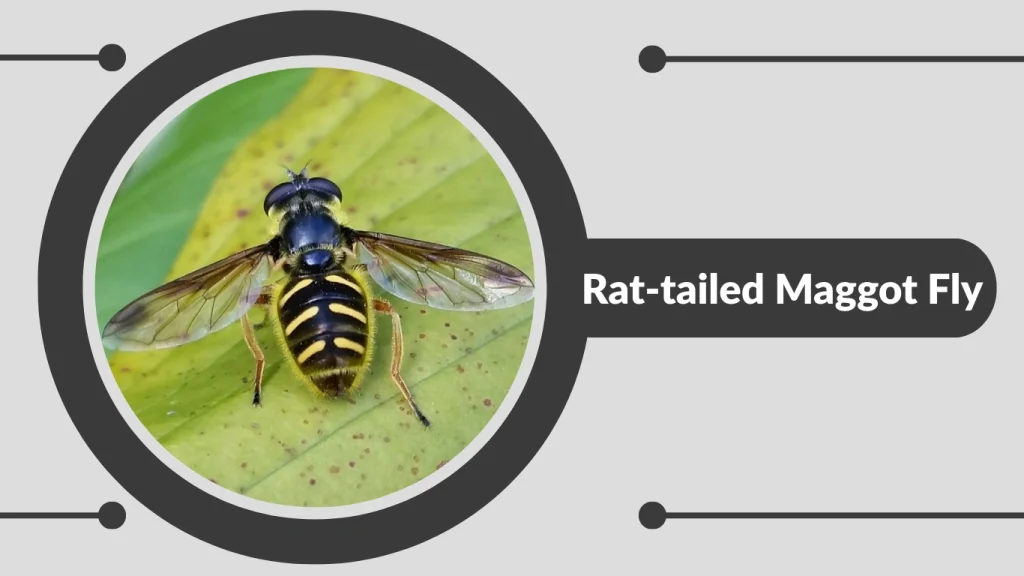
The Rat-tailed Maggot Fly (Eristalis intricaria) is a hoverfly species often confused with bumblebees due to its hairy body and coloration. Its larvae are well-known for their long tail-like breathing tube, earning them the name “rat-tailed maggots.”
Identification
- Medium to large size, about 11–15 mm long
- Hairy body with color variations: brown, black, or reddish with pale hairs
- Thick, bumblebee-like appearance
- Clear wings with drone fly venation
- Short antennae compared to real bees
Habitat and Range
Found across Europe and parts of Asia, this hoverfly inhabits woodlands, meadows, hedgerows, and wetlands. It is often spotted visiting flowers in spring and summer.
Life Cycle
Larvae live in stagnant or muddy water, feeding on decaying organic matter while breathing through their long tail-like siphon. Adults emerge in spring and are active through summer, feeding on nectar and pollen.
Behavior and Role
The Rat-tailed Maggot Fly mimics bumblebees in both flight and appearance, which protects it from predators. Adults are effective pollinators, while larvae contribute to the breakdown of organic waste.
16. Stripe-faced Drone Fly

The Stripe-faced Drone Fly (Eristalis horticola) is a bee-mimicking hoverfly notable for the striped patterns on its face. Like other members of the Eristalis group, it plays a dual role in ecosystems as both a pollinator and a decomposer through its larval stage.
Identification
- Medium size, about 10–13 mm long
- Face marked with distinct vertical stripes
- Thorax dark and shiny with fine hairs
- Abdomen with golden-brown markings resembling bees
- Clear wings with typical drone fly venation
Habitat and Range
This species is common across Europe, Asia, and North America. It thrives in gardens, meadows, farmland, and woodland edges, particularly where flowers are plentiful.
Life Cycle
Larvae are rat-tailed maggots, developing in stagnant, nutrient-rich water and feeding on organic debris. Adults feed on nectar and pollen from a variety of flowering plants.
Behavior and Role
The Stripe-faced Drone Fly often hovers around flowers in sunny weather. Its bee-like mimicry helps deter predators, while its adult and larval stages make it both an important pollinator and a contributor to decomposition.
17. Common Band Hoverfly

The Common Band Hoverfly (Syrphus ribesii) is one of the most widespread hoverflies, frequently seen in gardens and meadows. Its bright yellow bands make it look similar to a wasp, though it is completely harmless and highly beneficial as both a pollinator and natural pest controller.
Identification
- Medium size, about 9–12 mm long
- Black abdomen with bright yellow transverse bands
- Thorax shiny dark with fine hairs
- Clear wings with typical venation
- Females have entirely yellow hind legs, while males show some dark shading
Habitat and Range
This species is common across Europe, Asia, and North America. It thrives in gardens, fields, woodland edges, and hedgerows, particularly where flowers and aphids are abundant.
Life Cycle
Larvae are important predators of aphids, helping to control pest populations naturally. Adults feed on nectar and pollen, frequently visiting daisies, dandelions, and umbellifers.
Behavior and Role
The Common Band Hoverfly is active from spring through autumn. It hovers steadily near flowers and is an essential pollinator, making it both agriculturally and ecologically valuable.
18. Large White-band Hoverfly
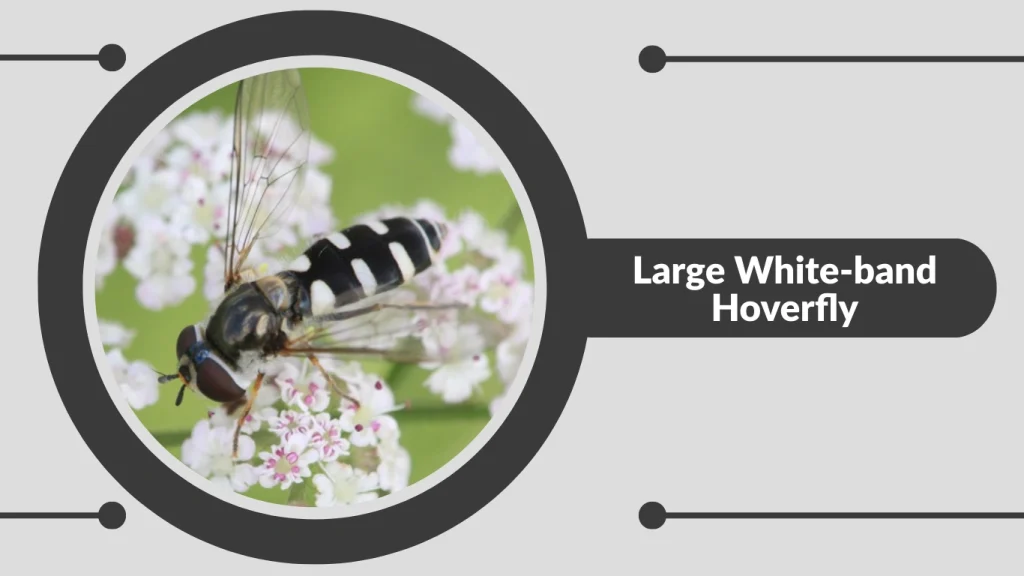
The Large White-band Hoverfly (Syrphus vitripennis) is a close relative of the Common Band Hoverfly and is often confused with it. Its distinctive bright yellow or whitish bands across the abdomen make it a striking mimic of wasps, but it is entirely harmless.
Identification
- Medium size, about 10–13 mm long
- Black abdomen with broad, pale yellow to whitish bands
- Thorax shiny and dark with fine hairs
- Clear wings with strong venation
- Females have yellow hind legs, while males may have partially darkened ones
Habitat and Range
Widely distributed across Europe, Asia, and North America, this hoverfly thrives in meadows, hedgerows, gardens, and woodland edges where flowers are abundant.
Life Cycle
Larvae are voracious predators of aphids, providing natural pest control in gardens and agricultural settings. Adults feed on nectar and pollen from a wide variety of flowering plants.
Behavior and Role
The Large White-band Hoverfly hovers actively around flowers in sunny weather. Its mimicry protects it from predators, while its dual role as a pollinator and aphid predator makes it highly beneficial to ecosystems.
19. Common Hoverfly
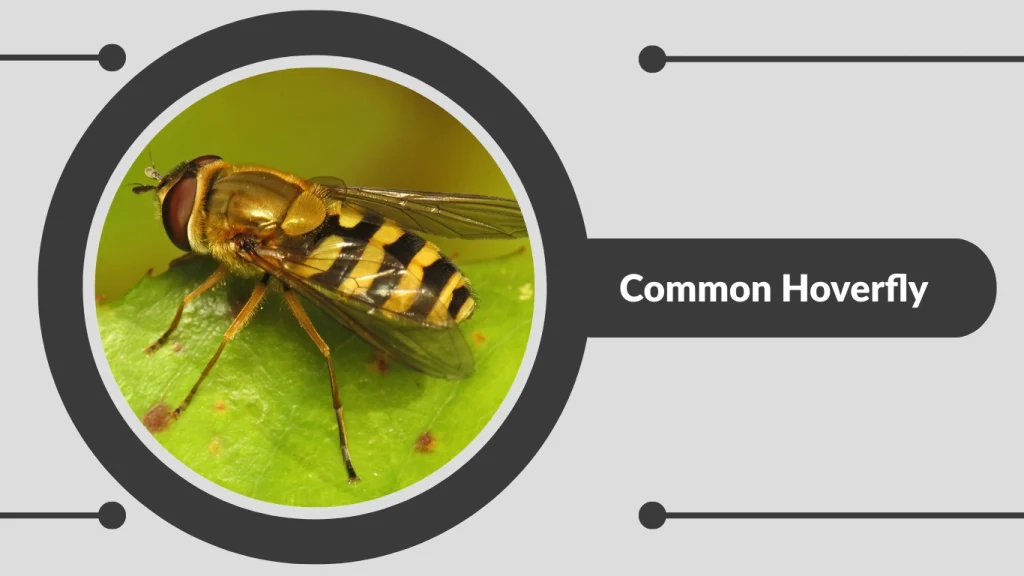
The Common Hoverfly (Syrphus torvus) is a widespread species recognized for its bold yellow bands and large, hairy eyes. It is one of the most abundant hoverflies in gardens and agricultural areas, contributing significantly to both pollination and pest control.
Identification
- Medium size, about 10–13 mm long
- Black abdomen with bright yellow transverse bands
- Large compound eyes, covered with fine hairs (unlike many similar species)
- Shiny, dark thorax with subtle hairs
- Clear wings with typical Syrphus venation
Habitat and Range
This species is found across Europe, Asia, and North America. It commonly inhabits gardens, farmland, hedgerows, and woodland clearings where flowers and aphids are plentiful.
Life Cycle
Larvae are important aphid predators, making them beneficial in agriculture and horticulture. Adults rely on nectar and pollen for energy and reproduction, frequenting wildflowers and cultivated plants.
Behavior and Role
The Common Hoverfly hovers steadily near flowers and is highly active during sunny weather. Its combination of mimicry, pollination, and pest control makes it ecologically valuable in both wild and managed landscapes.
20. Dark-bellied Hoverfly

The Dark-bellied Hoverfly (Volucella pellucens) is a large and striking species easily recognized by its bold body pattern. With its dark abdomen and broad white band, it stands out among hoverflies and is often seen gliding gracefully in woodland clearings and gardens.
Identification
- Large size, about 12–15 mm long
- Shiny black abdomen with a broad white band across the middle
- Thorax glossy and dark with fine hairs
- Clear wings that often reflect a slight iridescence
- Large reddish-brown compound eyes
Habitat and Range
This hoverfly is found widely across Europe and parts of Asia. It inhabits woodland clearings, hedgerows, meadows, and gardens, particularly in areas with plenty of flowering plants.
Life Cycle
Larvae live in the nests of social wasps, where they feed on detritus and sometimes wasp larvae. Adults, however, are peaceful nectar feeders and can often be seen visiting brambles, hogweed, and other summer flowers.
Behavior and Role
The Dark-bellied Hoverfly hovers gracefully and is often mistaken for a small bee or wasp due to its bold pattern. While larvae benefit from wasp colonies, adults are valuable pollinators across their habitats.
21. Hornet Hoverfly

The Hornet Hoverfly (Volucella zonaria) is the largest hoverfly in Europe and an impressive mimic of the European hornet. Its size and coloration make it a convincing copy, but unlike hornets, it is harmless and plays an important role as a pollinator.
Identification
- Very large size, about 18–22 mm long
- Yellow-and-brown striped abdomen resembling a hornet
- Chestnut-brown thorax with fine hairs
- Clear wings often tinged with orange near the base
- Large reddish-brown compound eyes
Habitat and Range
This species is native to southern Europe but has spread northward and is now established in parts of central and northern Europe. It prefers gardens, parks, hedgerows, and woodland edges where flowers and wasp nests are present.
Life Cycle
Larvae develop inside the nests of social wasps, where they live on debris and sometimes feed on wasp larvae. Adults emerge in summer and feed on nectar and pollen from a wide variety of flowers.
Behavior and Role
The Hornet Hoverfly is a strong flier and often startles people due to its hornet-like appearance. However, it is completely harmless and highly beneficial as a pollinator, contributing to the health of many wild and cultivated plants.
22. Bumblebee Hoverfly

The Bumblebee Hoverfly (Volucella bombylans) is a remarkable species known for its convincing mimicry of different bumblebee species. It has several color forms, each imitating specific bumblebees, which helps it avoid predators while freely accessing flowers.
Identification
- Large size, about 11–17 mm long
- Hairy body with color variations (red-tailed or white-tailed forms)
- Broad abdomen resembling bumblebees
- Clear wings with a slight smoky tint
- Large reddish-brown compound eyes
Habitat and Range
This species is widespread across Europe and parts of Asia. It is most often found in gardens, woodland edges, meadows, and hedgerows, particularly where both flowers and bumblebee nests are abundant.
Life Cycle
Larvae develop inside bumblebee nests, feeding on organic debris and sometimes bee larvae. Adults are active in summer and feed heavily on nectar and pollen from flowers like brambles and thistles.
Behavior and Role
The Bumblebee Hoverfly is a strong flier that often hovers around flowers. Its mimicry not only protects it from predators but also allows it to integrate into bumblebee environments. Adults are important pollinators, supporting both wild and garden ecosystems.
23. Pellucid Hoverfly

The Pellucid Hoverfly (Volucella pellucens) is a striking and easily recognized species with a bold white band across its otherwise dark body. It is one of the largest hoverflies and is often seen in sunny glades and gardens during summer.
Identification
- Large size, about 12–15 mm long
- Glossy black body with a broad white band across the abdomen
- Thorax dark and shiny with fine hairs
- Clear wings, sometimes with a faint smoky base
- Large reddish-brown compound eyes
Habitat and Range
This species is widespread across Europe and parts of Asia. It prefers woodland clearings, hedgerows, meadows, and gardens where flowers are abundant.
Life Cycle
Larvae live inside the nests of social wasps and bumblebees, feeding on waste material and sometimes on host larvae. Adults, in contrast, are peaceful nectar feeders, commonly visiting bramble, hogweed, and thistle flowers.
Behavior and Role
The Pellucid Hoverfly is an agile flier, often hovering around flowering shrubs in warm weather. Its bold color pattern deters predators, while adults play a vital role in pollination throughout the summer.
24. Pied Hoverfly

The Pied Hoverfly (Scaeva pyrastri) is a striking species recognized by its bold black-and-white markings. It is a migratory hoverfly, often arriving in large numbers during summer, and is highly valued for both pollination and aphid control.
Identification
- Medium to large size, about 10–15 mm long
- Black abdomen with three pairs of large, white crescent-shaped markings
- Shiny black thorax with fine hairs
- Clear wings with strong venation
- Eyes reddish-brown, slightly larger in males
Habitat and Range
This species is widely distributed across Europe, Asia, and North America. It prefers gardens, fields, and meadows with plenty of flowering plants and aphid colonies.
Life Cycle
Larvae are voracious predators of aphids, playing a key role in natural pest management. Adults feed on nectar and pollen, particularly from umbellifers, daisies, and other open flowers.
Behavior and Role
The Pied Hoverfly is a fast and active flier, often seen darting between flowers. Its migratory behavior allows it to appear in large numbers during peak flowering seasons, making it one of the most effective pollinators.
25. Sun Fly

The Sun Fly (Helophilus hybridus) is a hoverfly often associated with sunny, flower-rich habitats. It belongs to the Helophilus group, known for their striped thorax patterns, and is frequently observed visiting flowers near wetlands and meadows.
Identification
- Medium to large size, about 10–14 mm long
- Thorax with longitudinal yellow-and-black stripes
- Abdomen patterned with yellow and black bands
- Clear wings with strong venation
- Long legs adapted for steady hovering
Habitat and Range
The Sun Fly is found across Europe and parts of Asia, often in damp meadows, marshes, woodland edges, and gardens. It prefers habitats where both nectar sources and decaying organic matter are available.
Life Cycle
Larvae develop in wet, decaying organic matter, similar to other Helophilus species. Adults are active in summer, feeding mainly on nectar and pollen from wildflowers, especially those in open sunny areas.
Behavior and Role
The Sun Fly is an agile and active hoverer, often seen basking and feeding in bright sunlight. Its mimicry protects it from predators, while its pollination role makes it an important contributor to healthy ecosystems.
