
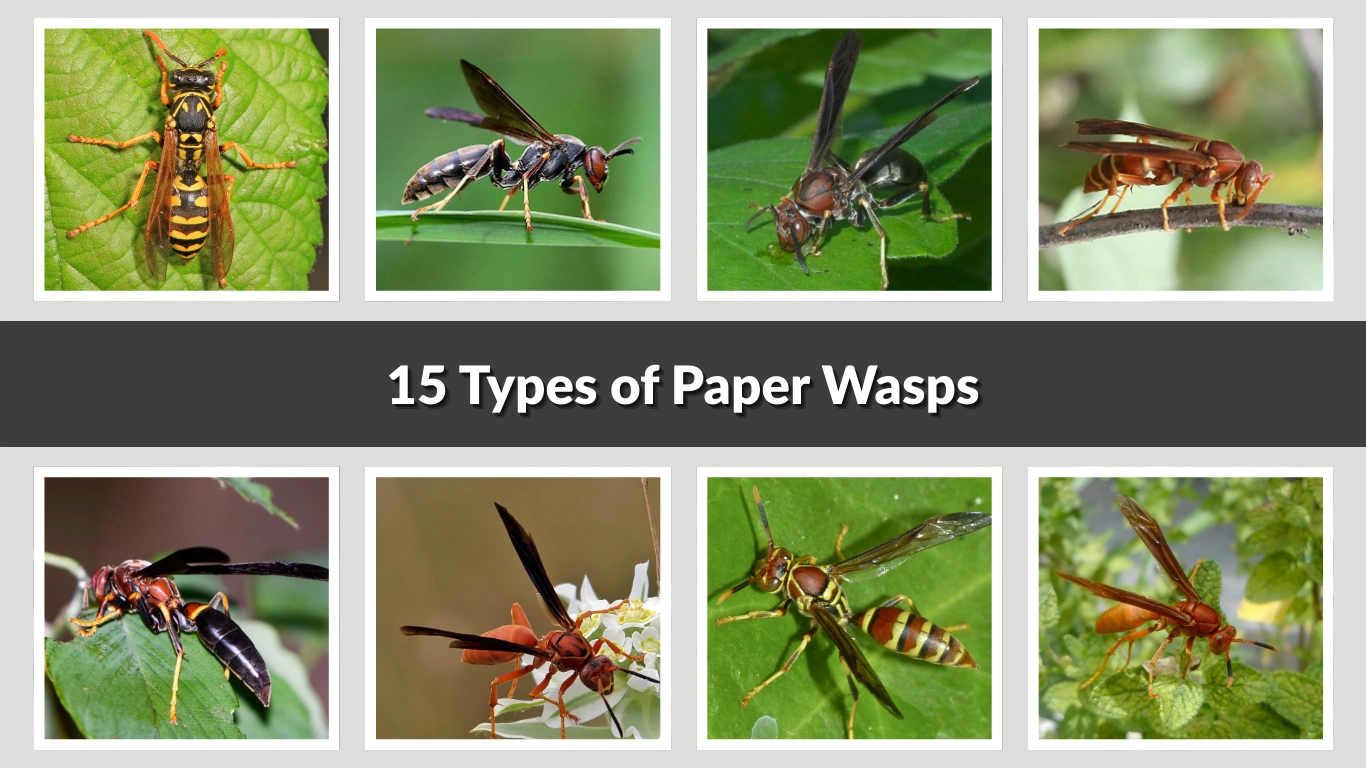
Paper wasps are a diverse group of insects belonging to the genus Polistes and related genera, known for their distinctive umbrella-shaped nests and important role in ecosystems. Found worldwide, these wasps vary in size, color, and behavior, with some species being gentle pollinators and others more defensive. In this guide, we’ll explore 15 different types of paper wasps, highlighting their unique features, habitats, and ecological importance.
1. Polistes dominula
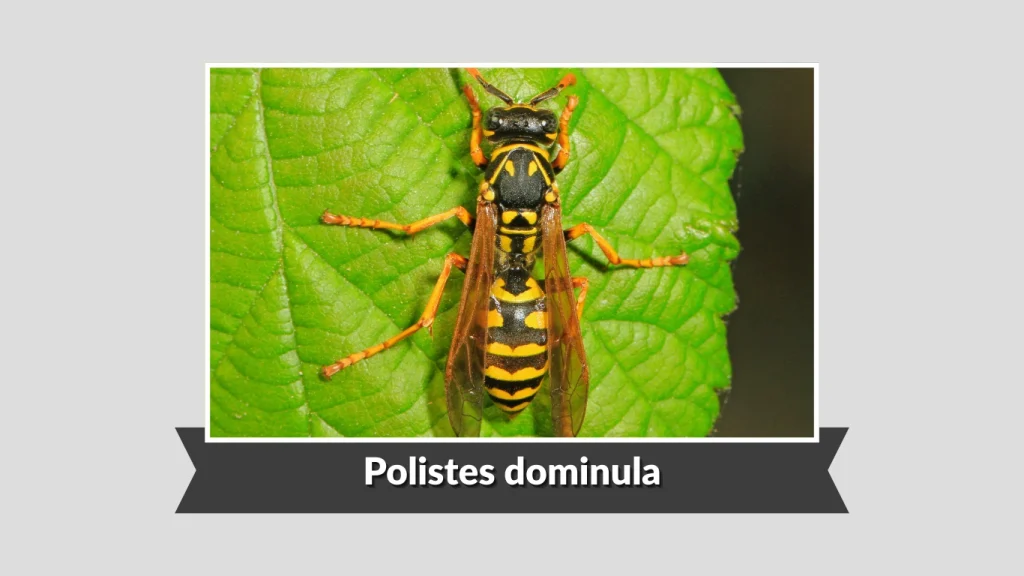
Polistes dominula, commonly known as the European paper wasp, is one of the most widespread and well-recognized paper wasp species in the world. Originally native to Europe and Asia, it has successfully spread to North America and other regions, often thriving in both natural and urban environments.
Identification
- Size: Adults measure between 10–15 mm in length
- Color: Black body with striking yellow markings; resembles yellowjackets but slimmer
- Antennae: Mostly black with orange tips (distinct trait)
- Wings: Long, narrow, and held folded when at rest
- Nest: Small, open comb nests built from paper-like material
Habitat
European paper wasps are highly adaptable and can be found in grasslands, forests, gardens, and urban areas. They commonly build their nests under eaves, roof edges, or inside sheltered cavities. Their ability to thrive in man-made structures has contributed to their rapid spread outside their native range.
Behavior
Polistes dominula are social insects, living in colonies with a clear hierarchy of queens, workers, and males. Unlike more aggressive wasps, they tend to be less defensive unless their nest is directly threatened. They feed on nectar and other sugary substances but also hunt caterpillars and soft-bodied insects to feed their larvae.
Importance
This species plays a dual role: it acts as a beneficial predator by controlling pest insects, but it can also be a nuisance when nesting too close to human dwellings. Because they resemble yellowjackets, they are often mistaken as being highly aggressive, though their temperament is generally milder.
2. Polistes fuscatus
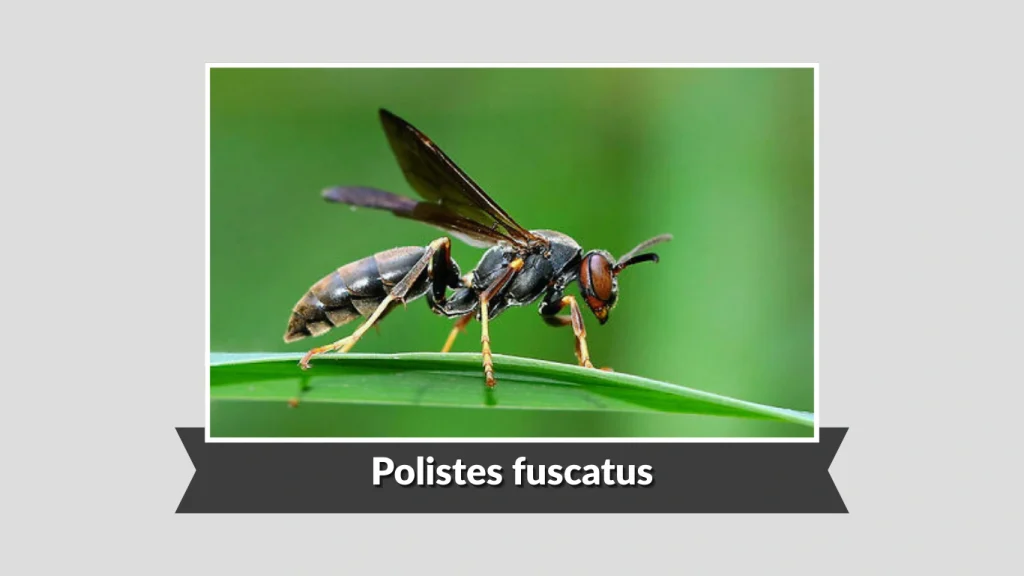
Polistes fuscatus, commonly known as the Northern paper wasp, is a widespread species across North America. It is particularly notable for its advanced social structure and the ability of colony members to recognize each other’s faces, a rare trait in insects. This species has been extensively studied for its behavior and role in ecological balance.
Identification
- Size: Typically 13–20 mm in length
- Color: Dark brown to black body with reddish-brown and yellow markings
- Antennae: Dark-colored, slightly curved
- Wings: Brownish and folded lengthwise when at rest
- Nest: Open comb nests with visible cells, usually attached to branches, eaves, or sheltered outdoor spaces
Habitat
Northern paper wasps are commonly found in woodlands, gardens, and areas with abundant vegetation. They build nests in protected spots such as tree branches, shrubs, and human-made structures like fences, sheds, and roof edges. Their adaptability allows them to thrive in both rural and urban environments.
Behavior
Polistes fuscatus colonies are highly social, consisting of a queen and numerous female workers. They are known for their remarkable facial recognition ability, which helps maintain order within the colony. Workers forage for nectar and hunt caterpillars, flies, and other insects to feed their larvae. Though generally not aggressive, they will defend their nests vigorously if disturbed.
Importance
This species plays a vital role in controlling pest insect populations, making them beneficial for gardens and agriculture. They also serve as pollinators while feeding on nectar. However, when nests are located too close to homes, they may pose a stinging risk, especially during late summer when colonies are at their peak.
3. Polistes metricus
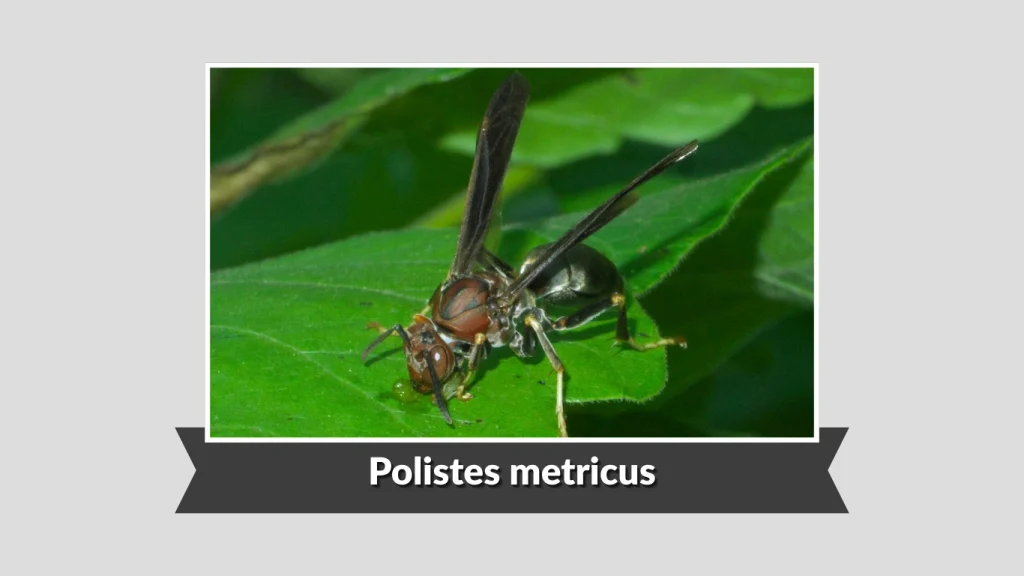
Polistes metricus, also known as the Metric paper wasp, is a native species of North America. It is widely studied for its colony structure and reproductive behavior, especially since it has a relatively simple social system compared to other wasp species. Its nests are often found in open, sunny areas, making it one of the more visible paper wasps.
Identification
- Size: Adults measure about 12–18 mm in length
- Color: Reddish-brown body with darker markings and yellow highlights
- Antennae: Slender and dark, sometimes with lighter tips
- Wings: Semi-transparent brown, folded along the body at rest
- Nest: Open comb nests without an envelope, usually attached to shrubs, branches, or man-made structures
Habitat
Polistes metricus is commonly found across eastern and central United States. Its preferred nesting sites include shrubs, tree branches, and sheltered structures such as porches, decks, and garden fences. Unlike some other species, it favors sunny and dry areas over shaded locations.
Behavior
This species exhibits a simpler colony hierarchy, often with fewer individuals compared to larger paper wasp colonies. Queens establish nests in spring and are supported by female workers who forage and care for the brood. They feed primarily on nectar but actively hunt caterpillars and other soft-bodied insects for their larvae. Colonies rarely exceed a few hundred individuals.
Importance
Polistes metricus plays a valuable ecological role as both a pollinator and a natural pest controller. Their preference for caterpillars makes them beneficial for gardens and crops. Although generally not aggressive, they will sting when their nests are threatened, so caution is needed when colonies are near human activity.
4. Polistes bellicosus
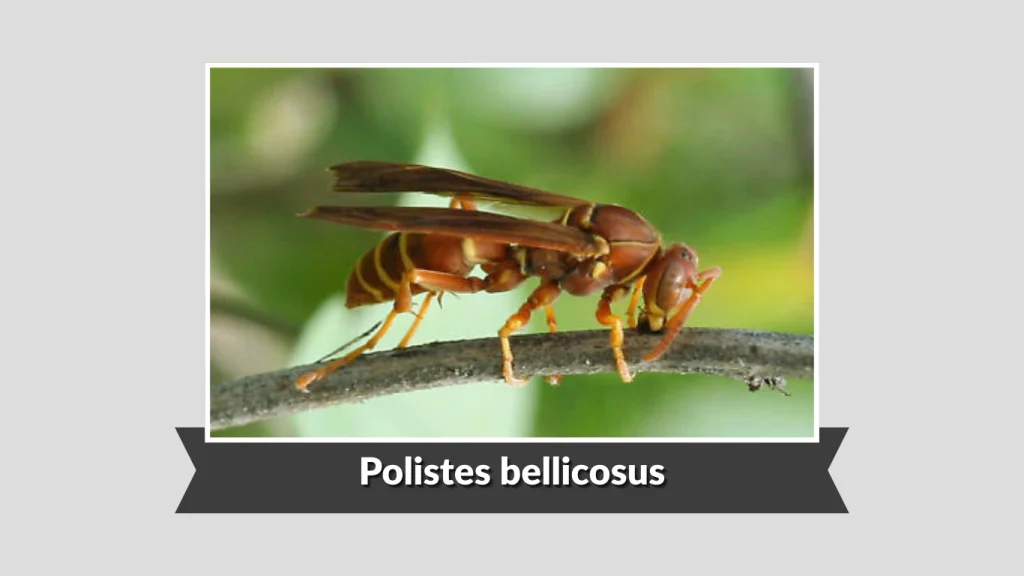
Polistes bellicosus, commonly called the Guinea paper wasp, is a striking species native to the southeastern United States. Known for its reddish coloration, it is often mistaken for related species but can be distinguished by its size and nest-building behavior. This wasp is less common than some of its relatives but still plays an important role in ecosystems.
Identification
- Size: Adults typically range from 15–20 mm in length
- Color: Predominantly reddish-brown with black markings and limited yellow accents
- Antennae: Slender and dark reddish
- Wings: Transparent to smoky brown, folded lengthwise when at rest
- Nest: Open comb nests, usually small to medium in size, attached to sheltered structures like eaves or branches
Habitat
Polistes bellicosus is distributed across the southeastern United States, particularly in warmer regions such as Florida, Georgia, and surrounding states. It prefers open woodlands, gardens, and urban areas where nesting sites are easily available. Nests are often built in shaded locations that provide some protection from weather.
Behavior
This species follows a typical paper wasp colony structure, with a queen establishing the nest and workers maintaining it throughout the season. Colonies tend to be moderate in size compared to other paper wasps. They are effective hunters, primarily targeting caterpillars and small insects to feed their larvae. While not overly aggressive, they will defend their nests when disturbed.
Importance
Polistes bellicosus serves as a natural pest controller, helping reduce populations of caterpillars and other crop-damaging insects. They also pollinate flowers while foraging for nectar. Their presence benefits ecosystems, but as with other paper wasps, nests located too close to human activity can pose stinging risks.
5. Polistes annularis
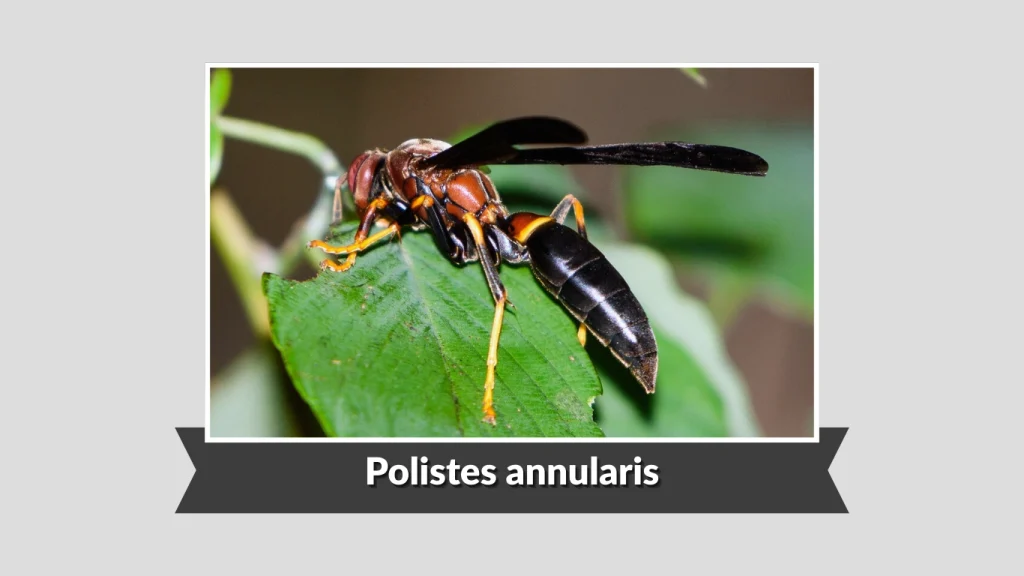
Polistes annularis, commonly known as the Red paper wasp, is a large and easily recognized paper wasp species in North America. Its striking reddish coloration makes it stand out from many other paper wasps. This species is also one of the most social among paper wasps, with colonies that often grow larger than many of its relatives.
Identification
- Size: Adults usually range from 18–21 mm in length
- Color: Deep reddish-brown body with black wings and occasional yellow markings
- Antennae: Reddish, long, and slightly curved
- Wings: Dark, often appearing smoky black when folded
- Nest: Large open comb nests, sometimes containing multiple queens
Habitat
Polistes annularis is widespread in the southeastern and central United States. It favors open habitats such as grasslands, woodlands, and human-made environments. Nests are commonly built under eaves, in barns, sheds, and other sheltered spots where they are protected from rain and direct sunlight.
Behavior
This species is one of the most cooperative paper wasps, often forming large colonies with multiple reproductive females. Workers forage for nectar and prey, mainly caterpillars and soft-bodied insects, to nourish the developing larvae. While they are not aggressive without provocation, they vigorously defend their nests when threatened, delivering painful stings.
Importance
Polistes annularis plays an important ecological role as both a pollinator and predator. They help control caterpillar populations, which benefits crops and gardens. Their large colonies, however, can be intimidating, especially when nests are close to human dwellings. Despite the risks, their contribution to pest control and pollination makes them beneficial to the environment.
6. Polistes carolina

Polistes carolina, commonly known as the Carolina paper wasp, is a large and visually striking species found mainly in the southeastern United States. It is one of the more recognizable paper wasps due to its reddish coloration and relatively large body size. This species often nests in both natural habitats and man-made structures, making it frequently encountered by people.
Identification
- Size: Adults measure about 18–25 mm in length
- Color: Reddish-brown overall, sometimes with darker markings on the abdomen
- Antennae: Long and reddish, slightly curved
- Wings: Dark smoky brown to black, folded lengthwise when resting
- Nest: Open comb nests, often medium to large, suspended in sheltered locations
Habitat
Polistes carolina inhabits the southeastern and central regions of the United States. It prefers warm environments and is commonly seen in gardens, forests, and open woodlands. Nests are usually attached to building eaves, sheds, barns, and hollow logs, where they are shielded from rain and direct sun.
Behavior
Carolina paper wasps live in colonies established by a queen during spring. Colonies are moderately large and well-organized, with workers foraging for nectar and prey such as caterpillars, flies, and beetle larvae. While generally non-aggressive when away from their nest, they can be highly defensive and deliver painful stings if the nest is threatened.
Importance
This species is ecologically valuable due to its role in controlling caterpillar and pest insect populations. It also contributes to pollination while feeding on nectar. Despite their benefits, they can become a nuisance when nests are close to homes or areas of high human activity. Many gardeners appreciate their natural pest control abilities but remain cautious of their defensive behavior.
7. Polistes rubiginosus

Polistes rubiginosus, commonly called the Rusty paper wasp, is a native species of the United States that closely resembles Polistes carolina. Its reddish-brown body and dark wings give it a distinctive appearance. Although it can be difficult to distinguish from related species, careful observation of physical traits helps in proper identification.
Identification
- Size: Adults generally measure 18–22 mm in length
- Color: Rusty reddish-brown body with darker brown to black wings
- Antennae: Reddish with a slightly darker tip, long and slender
- Wings: Smoky and folded lengthwise when at rest
- Nest: Open comb nests made of chewed plant fibers, often built in sheltered outdoor areas
Habitat
Polistes rubiginosus is found mainly in the eastern and southeastern United States. It prefers warm, humid environments such as forests, grasslands, and suburban areas. Nests are usually located under eaves, in barns, sheds, or other man-made structures that provide protection from weather.
Behavior
Rusty paper wasps live in cooperative colonies with a social hierarchy consisting of a queen and female workers. Colonies are moderate in size and expand throughout summer. Workers forage for nectar and hunt caterpillars and other small insects to feed developing larvae. While not overly aggressive, they will defend their nests with stings when disturbed.
Importance
Like other paper wasps, Polistes rubiginosus plays a vital role in natural pest control by preying on caterpillars and soft-bodied insects. It also contributes to pollination by feeding on nectar. However, its proximity to human dwellings can pose stinging risks, especially when colonies grow near doorways, patios, or garden areas.
8. Polistes exclamans

Polistes exclamans, commonly known as the Common paper wasp, is a widespread species across the United States and parts of Central America. It is easily recognized by its distinctive markings and is one of the most frequently studied paper wasps due to its broad distribution and social behavior.
Identification
- Size: Adults usually measure 13–18 mm in length
- Color: Black or dark brown body with bright yellow bands and markings
- Antennae: Dark with lighter bases, slender and slightly curved
- Wings: Brownish and semi-transparent, folded lengthwise when resting
- Nest: Small to medium-sized open comb nests, often exposed and attached to twigs, fences, or building structures
Habitat
Polistes exclamans is found in a wide range of habitats, including woodlands, grasslands, farmlands, and urban areas. It adapts well to human environments and often builds nests on porches, eaves, and other sheltered structures. They are also common in fields and meadows, where flowers and prey are abundant.
Behavior
This species forms colonies that typically last for one season, starting in spring and dying off in late summer or fall. Colonies are smaller compared to some other paper wasps, usually containing dozens rather than hundreds of individuals. Workers collect nectar for food and hunt caterpillars and soft-bodied insects to feed larvae. Though not highly aggressive, they will sting if the nest is disturbed.
Importance
Polistes exclamans plays an important ecological role by reducing pest insect populations, especially caterpillars that damage crops and gardens. They also contribute to pollination while feeding on nectar. Their frequent nesting near homes, however, can lead to human-wasp conflicts, particularly in summer when colonies are at their peak.
9. Polistes dorsalis
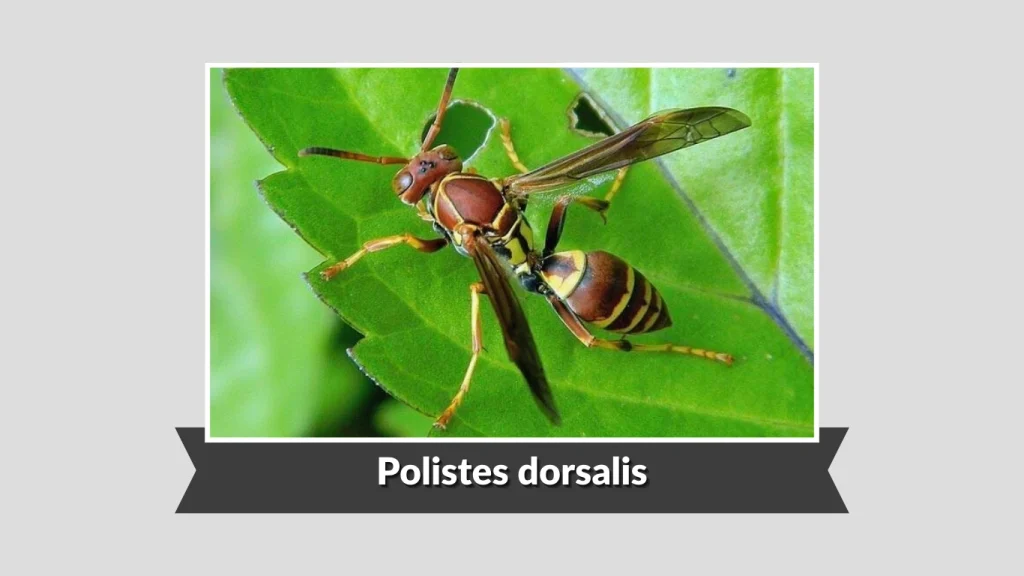
Polistes dorsalis, often referred to as the Ringed paper wasp, is a striking species native to North and Central America. Its bold coloration and distinctive banded abdomen make it easy to recognize. This wasp is highly adaptive and thrives in a variety of environments, including natural landscapes and urban areas.
Identification
- Size: Adults typically range from 12–18 mm in length
- Color: Reddish-brown body with bright yellow bands across the abdomen
- Antennae: Reddish-brown with darker tips, long and slender
- Wings: Transparent to smoky brown, folded when at rest
- Nest: Open comb nests, often small to medium-sized, attached to sheltered areas such as twigs, shrubs, or buildings
Habitat
Polistes dorsalis is widely distributed across the eastern and southern United States, extending into Central America. It prefers open habitats like fields, gardens, and forest edges but is also frequently found in suburban and agricultural environments. Nests are usually built in protected spots, including barns, porches, fences, and low tree branches.
Behavior
This species follows a typical paper wasp social structure, with a queen founding the nest in spring and workers supporting the colony throughout summer. Colonies are moderate in size and do not usually exceed a few hundred individuals. Workers forage for nectar and actively hunt caterpillars, beetle larvae, and flies to feed the larvae. While they are not overly aggressive, they defend their nests firmly if threatened.
Importance
Polistes dorsalis plays a vital role in controlling agricultural pests and is considered beneficial in farming regions. They also serve as pollinators when feeding on nectar. Despite their ecological benefits, their tendency to nest near human dwellings can lead to stinging incidents, especially in late summer when colonies are most active.
10. Polistes chinensis

Polistes chinensis, commonly known as the Asian paper wasp, is a well-known species native to East Asia but has also spread to regions like New Zealand and Australia. It is one of the more adaptable paper wasp species, capable of thriving in both rural and urban landscapes. Its distinctive black-and-yellow body makes it easily recognizable.
Identification
- Size: Adults typically measure 15–20 mm in length
- Color: Black body with bright yellow bands and markings, resembling a yellowjacket but slimmer
- Antennae: Black with slightly lighter tips, long and curved
- Wings: Smoky brown to black, folded lengthwise when resting
- Nest: Umbrella-shaped open comb nests, often exposed and attached to branches, fences, or sheltered structures
Habitat
Polistes chinensis is native to China, Japan, Korea, and surrounding Asian countries but has established populations in parts of Oceania, where it is considered invasive. It builds nests in open or semi-sheltered areas, including trees, shrubs, roof eaves, and garden sheds. Its ability to adapt to human-made environments has contributed to its rapid spread.
Behavior
Colonies are typically founded by a single queen in spring and grow through summer, with workers foraging for nectar and hunting caterpillars and other insects. Polistes chinensis is moderately aggressive, especially when defending its nest, and stings can be painful. They are social insects with a structured hierarchy, maintaining colonies that last one season.
Importance
This species plays a dual role in ecosystems: it helps control pest insect populations, but in regions where it is invasive, it competes with native pollinators and predators. In agriculture, they can be beneficial for pest management, but their presence near homes and gardens often makes them a concern due to their defensive nature.
11. Polistes olivaceus

Polistes olivaceus, commonly known as the Yellow paper wasp, is a widespread species found in Asia, Africa, and parts of Oceania. It is one of the most easily recognized paper wasps due to its bright yellow coloration and habit of nesting close to human dwellings. In some regions, it is considered invasive because of its rapid spread and competition with native insects.
Identification
- Size: Adults usually measure 15–20 mm in length
- Color: Predominantly yellow body with black bands and markings, giving it a wasp-like warning appearance
- Antennae: Yellowish with darker tips, long and slightly curved
- Wings: Transparent to light brown, folded lengthwise when at rest
- Nest: Small to medium umbrella-shaped comb nests, often built in exposed areas such as trees, porches, or wall corners
Habitat
Polistes olivaceus is native to tropical Asia and Africa but has spread to regions like Madagascar, Mauritius, and New Zealand. It prefers warm climates and is commonly found in gardens, forests, and urban settings. Nests are often attached to low vegetation, walls, fences, or beneath roofs, making them frequent in human-occupied areas.
Behavior
This species forms seasonal colonies, usually established by a single queen in spring. Workers forage for nectar and hunt caterpillars and flies to feed their larvae. While generally not aggressive when away from the nest, Polistes olivaceus can be highly defensive if its colony is threatened, stinging repeatedly. Colonies typically last only one season before dying out in cooler climates.
Importance
Polistes olivaceus plays a beneficial role in agriculture by preying on caterpillars and other pests. It also contributes to pollination, although not as significantly as bees. However, in regions where it is invasive, it poses risks to native pollinators and ecosystems. Its close association with human habitations also makes it a potential nuisance, especially when nests form in doorways or garden spaces.
12. Polistes canadensis
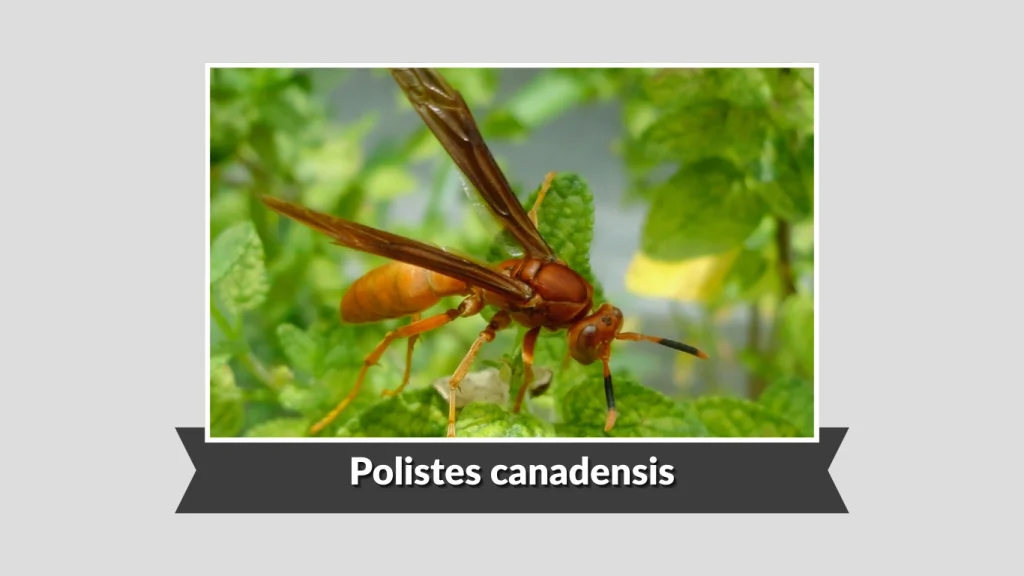
Polistes canadensis, commonly called the Tropical paper wasp, is a large and widespread species found throughout Central and South America, as well as the Caribbean. It is known for its reddish coloration and highly social nesting behavior, often forming some of the largest colonies among paper wasps.
Identification
- Size: Adults generally measure 18–25 mm in length
- Color: Reddish-brown to orange body with darker brown or black markings
- Antennae: Long, reddish, and slightly curved
- Wings: Transparent to smoky brown, folded along the body when at rest
- Nest: Large open comb nests that may include multiple queens and hundreds of individuals
Habitat
Polistes canadensis thrives in tropical and subtropical climates. It is widely distributed in Central America, South America, and the Caribbean islands. Nests are often built in sheltered spots such as tree branches, caves, house eaves, barns, and other man-made structures, providing protection from heavy rains and sun.
Behavior
Unlike many other paper wasps, Polistes canadensis colonies are perennial in warm climates, sometimes lasting for more than one season. Multiple queens may coexist within a single nest, creating large, complex colonies. Workers forage for nectar and actively hunt caterpillars, flies, and beetle larvae to feed their developing young. Though generally not aggressive when away from the nest, they fiercely defend their colonies if disturbed.
Importance
Polistes canadensis plays a significant role in pest control by reducing populations of caterpillars and other crop-damaging insects. Their large colonies also make them efficient pollinators of tropical plants while foraging for nectar. However, their size and colony strength can make them a greater stinging risk to humans if nests are built in residential areas.
13. Polistes major

Polistes major, commonly known as the Greater paper wasp, is one of the largest species of paper wasps found in the Americas. Its impressive size and striking yellow-and-brown coloration make it highly recognizable. This species is widespread across the southern United States, Central America, and South America, where it thrives in warm, open habitats.
Identification
- Size: Adults are large, ranging from 20–28 mm in length
- Color: Yellow and brown body with bold contrasting bands across the abdomen
- Antennae: Long and dark brown to yellowish, slightly curved
- Wings: Transparent to smoky brown, folded lengthwise when resting
- Nest: Medium to large open comb nests, usually suspended from tree branches or man-made structures
Habitat
Polistes major is found across the southern U.S., Mexico, Central America, and parts of South America. It prefers tropical and subtropical environments and often builds nests in trees, shrubs, caves, barns, and under eaves of buildings. In rural areas, nests are frequently seen on fences and wooden posts.
Behavior
This species is social, forming colonies with a queen and numerous workers. Colonies are typically larger than those of many other paper wasps, often containing several hundred individuals. Workers forage widely for nectar and actively hunt caterpillars, beetles, and other insects for their larvae. While they are not usually aggressive when foraging, they become defensive and will sting repeatedly if their nests are disturbed.
Importance
Polistes major is ecologically important as a predator of pest insects, helping control caterpillar populations in agricultural areas. It also contributes to pollination while feeding on nectar. Due to its large colonies and defensive behavior, however, it can pose a stinging hazard when nests are located near homes, farms, or gardens.
14. Polistes versicolor

Polistes versicolor, often referred to as the Brazilian paper wasp, is a highly adaptable and widespread species found throughout Central and South America. Known for its bold black and yellow coloration, it is one of the most recognizable and frequently encountered paper wasps in tropical regions.
Identification
- Size: Adults typically range from 15–22 mm in length
- Color: Black body with bright yellow bands and markings across the abdomen and thorax
- Antennae: Long, black with yellowish bases, slightly curved
- Wings: Smoky brown to transparent, folded lengthwise when at rest
- Nest: Large umbrella-shaped open comb nests, often exposed and hanging from trees, shrubs, or man-made structures
Habitat
Polistes versicolor is distributed across Brazil, Argentina, and much of Central and South America. It thrives in tropical and subtropical regions, adapting easily to both forests and urban areas. Nests are commonly found in gardens, on fences, under eaves, and sometimes in more exposed areas such as tree branches.
Behavior
This species is highly social, with colonies that may contain several hundred individuals. Nests are usually initiated by a single queen but grow rapidly during the summer. Workers forage actively for nectar and prey, especially caterpillars, flies, and beetle larvae. While not overly aggressive when foraging, they are quick to defend their nests and can deliver painful stings when threatened.
Importance
Polistes versicolor plays a valuable role in controlling pest insect populations, making them beneficial for agriculture and gardens. They also serve as pollinators, visiting a wide variety of flowers. However, their tendency to nest in exposed areas near human habitations increases the likelihood of conflict, especially during peak colony growth.
15. Polistes atrimandibularis

Polistes atrimandibularis, commonly called the Cuckoo paper wasp, is a rare and fascinating species native to southern Europe. Unlike most paper wasps, it is a social parasite, meaning it does not build its own nests but instead invades those of other paper wasp species. Its unique lifestyle makes it one of the most unusual members of the Polistes genus.
Identification
- Size: Adults usually measure 12–18 mm in length
- Color: Dark brown to black body with yellow markings on the abdomen and thorax
- Antennae: Long, mostly dark with lighter bases
- Wings: Brownish and narrow, folded lengthwise when at rest
- Distinct trait: Lacks the ability to build nests or rear its own larvae independently
Habitat
This species is mainly found in southern Europe, especially in Mediterranean regions. It prefers warm climates and is often associated with the nesting areas of its host species, such as Polistes dominula. Since it does not build its own nests, its habitat is directly linked to the colonies it parasitizes.
Behavior
Polistes atrimandibularis is an obligate social parasite. Instead of establishing its own colony, the female invades nests of other Polistes species, kills or subdues the resident queen, and takes over the colony. The host workers are then forced to rear the parasite’s offspring. Colonies are usually smaller compared to free-living paper wasps, since they depend entirely on the host population.
Importance
While not beneficial in terms of pest control like other paper wasps, Polistes atrimandibularis is scientifically important for studying insect social behavior and parasitism. Its unique life strategy provides insights into the evolution of social insects and colony dynamics. Due to its rarity, it has little direct impact on humans, but it remains an intriguing species for entomologists.
