
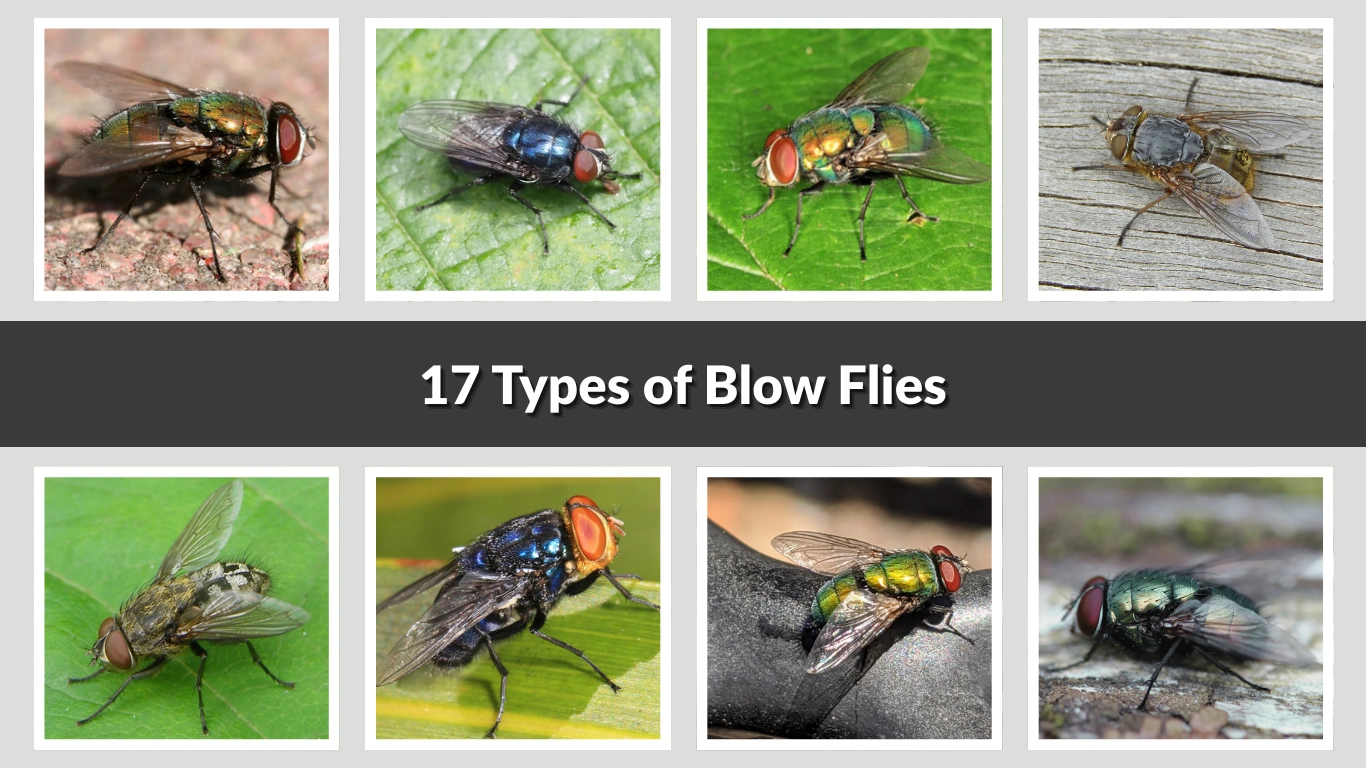
Blow flies (Calliphoridae) are a diverse family of metallic-colored flies commonly found around carrion, garbage, and decaying matter. While often viewed as pests, they play crucial ecological roles as decomposers and serve as important tools in forensic science for estimating post-mortem intervals. Some species are even used in medicine for wound cleaning through maggot therapy. This guide explores 17 notable types of blow flies, highlighting their unique traits, habitats, and ecological significance.
1. Bluebottle Fly (Calliphora vomitoria)

The Bluebottle Fly is one of the most common and recognizable blow flies, often seen buzzing around garbage, decaying matter, or open wounds. Its shiny metallic-blue body makes it stand out, and while it may be a nuisance in homes, it also plays an important ecological role in decomposition and forensic science, as its life cycle helps estimate time of death in investigations.
Identification
- Medium to large fly, about 6–12 mm long
- Metallic-blue body with a glossy sheen
- Large red compound eyes
- Clear wings with noticeable veins
- Bristly body, especially around the thorax
- Distinct buzzing sound in flight
Habitat and Distribution
The Bluebottle Fly is widely distributed across Europe, Asia, and North America. It thrives in both urban and rural areas, frequently found near garbage bins, carrion, feces, and decaying organic matter. In natural settings, it is an important decomposer in woodland and grassland ecosystems.
Behavior and Diet
Adult Bluebottle Flies feed on nectar, carrion, feces, and exposed meat. They are strongly attracted to decomposing material, where females lay clusters of eggs. The larvae (maggots) feed on decaying flesh, making them crucial for recycling nutrients. In forensic science, their rapid colonization of corpses makes them valuable indicators for estimating post-mortem intervals.
2. Common Green Bottle Fly (Lucilia sericata)

The Common Green Bottle Fly is one of the most widespread and well-known blow flies, easily identified by its metallic green body. While often considered a pest for its attraction to garbage and decaying matter, it also has important medical and ecological uses. In fact, its larvae are used in modern medicine for maggot therapy, as they clean wounds by consuming dead tissue.
Identification
- Medium-sized fly, about 10–14 mm long
- Bright metallic-green body with golden or coppery reflections
- Large reddish-brown compound eyes
- Transparent wings with distinct venation
- Bristly thorax and abdomen
- Distinct rapid buzzing flight
Habitat and Distribution
This species is found worldwide, especially in temperate regions of Europe, Asia, North America, and Australasia. It thrives in urban and rural settings, often near waste, carrion, and open food sources. It also frequents meadows, gardens, and areas where livestock are present.
Behavior and Diet
Adult Green Bottle Flies feed on nectar, feces, and carrion. Females lay eggs in decaying organic material, wounds, or carcasses, where the larvae develop. These maggots feed on necrotic tissue, which is why they are medically used in controlled maggot therapy. The species is also highly significant in forensic entomology, helping estimate time of death in crime investigations.
3. Bronze Bottle Fly (Phaenicia cuprina)
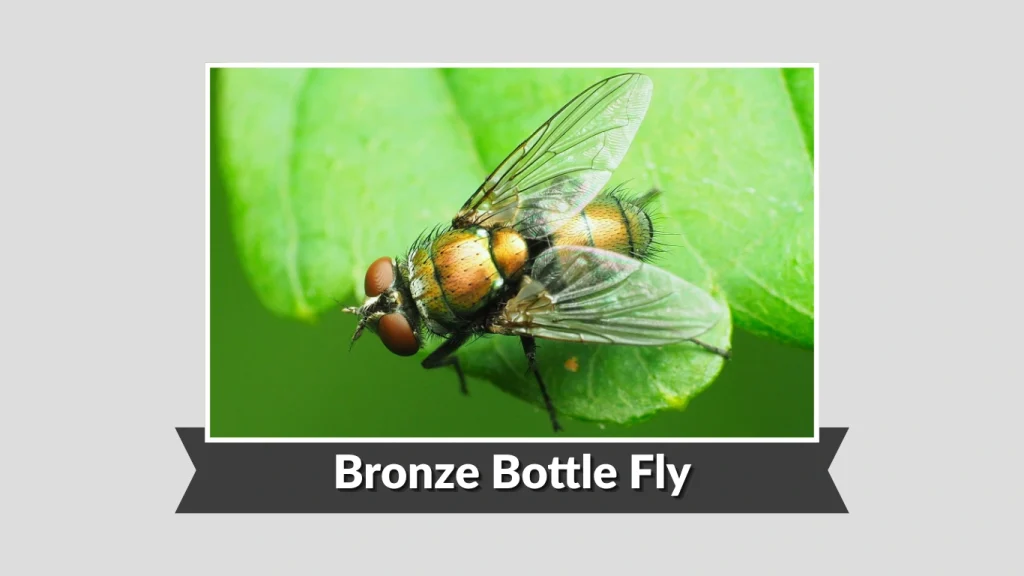
The Bronze Bottle Fly, also known as the Australian Sheep Blow Fly, is a significant species both ecologically and economically. While it is a vital decomposer in natural ecosystems, it is infamous in agriculture for causing flystrike in sheep, making it a major pest in livestock management. Its bronze-metallic body makes it distinctive among other blow flies.
Identification
- Medium-sized fly, about 6–12 mm in length
- Shiny metallic-bronze or copper-green body
- Large reddish compound eyes
- Bristly thorax and abdomen
- Transparent wings with clear venation
- Strong, fast flight with loud buzzing
Habitat and Distribution
The Bronze Bottle Fly is widespread in Australia, New Zealand, and has spread to parts of Asia, Africa, and the Americas. It thrives in warm climates and is found near decaying organic matter, garbage dumps, animal carcasses, and livestock farms.
Behavior and Diet
Adults feed on nectar, waste, carrion, and decaying matter. Females lay eggs in wounds or soiled wool of sheep, where the larvae develop, leading to a condition known as myiasis or flystrike. This causes severe damage in sheep farming. Despite its pest status, the species contributes to decomposition processes and is also studied in forensic science for estimating post-mortem intervals.
4. Black Blow Fly (Phormia regina)

The Black Blow Fly, also called the “Coffin Fly” in forensic contexts, is one of the most important blow fly species in both ecology and forensic science. With its shiny black to blue-green body, it is a common sight around carrion, garbage, and decaying organic matter. Its rapid colonization of corpses makes it a key species in determining post-mortem intervals.
Identification
- Medium-sized fly, about 6–9 mm in length
- Shiny metallic black to blue-green body
- Large red compound eyes
- Wings transparent with brownish veins
- Bristly thorax and abdomen
- Distinctive strong buzzing in flight
Habitat and Distribution
The Black Blow Fly is widely distributed across North America, Europe, and Asia, favoring temperate regions. It is found near garbage dumps, carrion, animal waste, and urban areas. In natural ecosystems, it plays an important role as an early colonizer of carcasses.
Behavior and Diet
Adult Black Blow Flies feed on nectar, carrion fluids, and decaying matter. Females lay eggs on carcasses or decaying tissue, with larvae (maggots) quickly feeding on the material. This species is one of the earliest to arrive at decomposing remains, which makes it vital in forensic entomology for estimating time of death. It also helps recycle nutrients back into the ecosystem.
5. European Greenbottle Fly (Lucilia caesar)
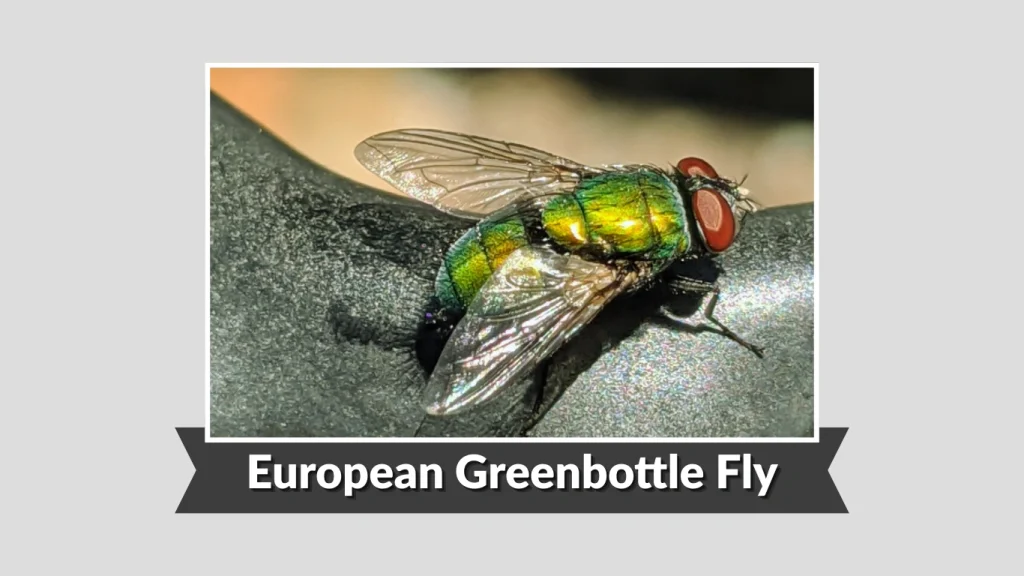
The European Greenbottle Fly is a metallic-green blow fly closely related to Lucilia sericata but slightly larger and more robust. It is one of the most common carrion-associated flies in Europe, often found in woodlands, meadows, and urban environments. Like other greenbottles, it plays a vital role in decomposition and forensic entomology while also contributing to pollination.
Identification
- Medium-sized fly, 10–14 mm long
- Brilliant metallic-green body with golden reflections
- Large reddish-brown compound eyes
- Clear wings with brownish veins
- Slightly bulkier appearance than Lucilia sericata
- Bristly thorax and abdomen
Habitat and Distribution
This species is widespread across Europe, extending into Asia and North Africa. It prefers woodland edges, meadows, gardens, and urban areas, where decaying organic matter is abundant. It is also found around carcasses, dung, and garbage, making it one of the most frequent colonizers of decomposing material.
Behavior and Diet
Adult flies feed on nectar, carrion fluids, and waste. Females lay eggs on carrion, feces, and wounds, where larvae develop and consume decaying tissue. This species is of great importance in forensic entomology because it is one of the earliest blow flies to arrive at corpses. It also contributes to pollination when visiting flowers for nectar.
6. Hairy Maggot Blow Fly (Chrysomya rufifacies)

The Hairy Maggot Blow Fly is a distinctive species within the blow fly family, easily recognized in its larval stage due to the spiny projections covering the maggots. This unique feature gives it its name and sets it apart from other blow flies. Native to Asia, it has now spread globally, becoming an important species in forensic studies.
Identification
- Medium-sized fly, 8–12 mm long
- Metallic blue-green body with bristly thorax
- Large reddish compound eyes
- Wings clear with prominent veins
- Larvae (maggots) covered in noticeable spines, unlike most smooth-bodied blow fly larvae
Habitat and Distribution
Originally found in tropical and subtropical Asia, this species has spread to Africa, Australia, the Americas, and parts of Europe. It inhabits warm, moist environments, often near decaying carcasses, garbage, and animal waste. Its global expansion has made it one of the most common blow flies encountered in forensic cases.
Behavior and Diet
Adults feed on nectar, carrion fluids, and waste. Females lay eggs on animal carcasses, where larvae develop. Unlike many other blow flies, the larvae of Chrysomya rufifacies are facultative predators, feeding not only on decomposing tissue but also on other fly larvae. This behavior makes them both ecologically significant and a complicating factor in forensic investigations, as they can delay or reduce the development of other species used to estimate time of death.
7. Oriental Latrine Fly (Chrysomya megacephala)

The Oriental Latrine Fly is one of the most abundant and widespread blow flies in tropical and subtropical regions. Known for its close association with human settlements, it is considered both a nuisance pest and an important species in public health and forensic science. Its ability to colonize quickly makes it a key decomposer in warm climates.
Identification
- Medium-sized blow fly, about 8–12 mm long
- Metallic blue-green body with a glossy sheen
- Large reddish compound eyes
- Clear wings with strong venation
- Bristly thorax and abdomen, typical of blow flies
- Fast, noisy flight often around garbage or feces
Habitat and Distribution
Native to Asia, the Oriental Latrine Fly has spread globally, now found in Africa, the Pacific Islands, Australia, and the Americas. It thrives in warm climates and is strongly linked with urban environments, especially near latrines, garbage dumps, markets, and decaying organic matter.
Behavior and Diet
Adults feed on feces, carrion fluids, garbage, and nectar. Females lay eggs on feces, carrion, and food waste, where larvae (maggots) develop rapidly. Its close contact with human waste makes it a vector of pathogens, contributing to the spread of diseases. In forensic science, its early colonization of corpses in tropical regions makes it an important species for estimating post-mortem intervals.
8. Screwworm Fly (Cochliomyia hominivorax)
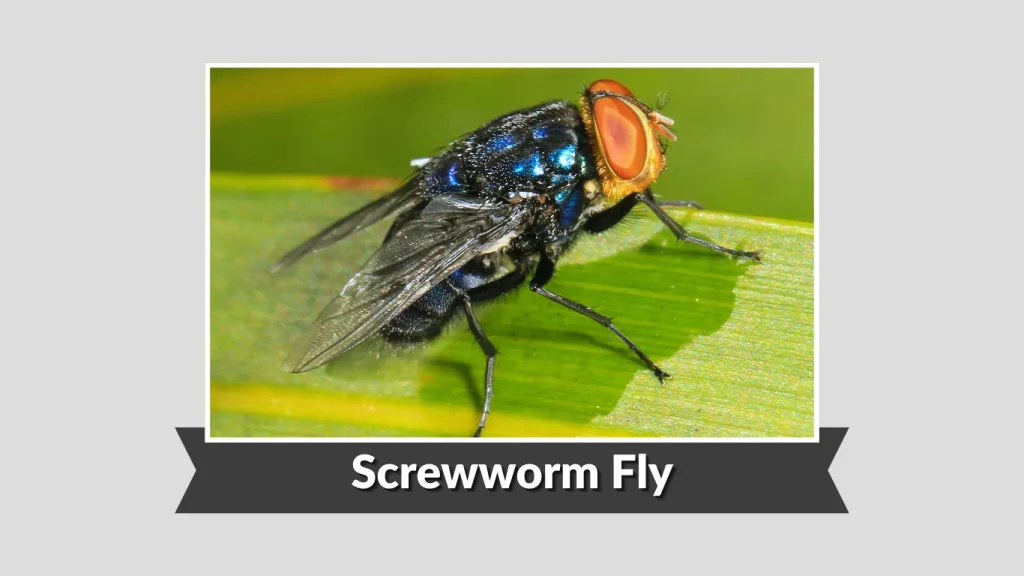
The Screwworm Fly is one of the most dangerous blow flies due to its parasitic larvae that feed on the living tissue of warm-blooded animals, including humans. Unlike most blow flies that target carrion, the Screwworm is an obligate parasite, making it a serious pest in livestock and a major concern for animal health.
Identification
- Medium-sized fly, 8–10 mm long
- Metallic blue-green body with a shiny appearance
- Three dark longitudinal stripes on the thorax
- Large reddish-orange compound eyes
- Clear wings with brownish veins
- Resembles other blow flies but distinguished by its life cycle
Habitat and Distribution
Native to the Americas, the Screwworm Fly was once widespread from the southern United States down to South America. Due to intensive eradication programs using sterile insect techniques, it has been eliminated from North and Central America but still occurs in parts of South America and the Caribbean.
Behavior and Diet
Adult flies feed on nectar and fluids, but the larvae (maggots) are obligate parasites, developing inside wounds or body orifices of mammals. Female flies lay eggs in wounds or moist openings, and larvae burrow into flesh, feeding on living tissue. This causes a serious condition called myiasis, which can be fatal if untreated. The species has immense importance in veterinary and medical entomology due to its devastating impact on livestock and humans.
9. Secondary Screwworm Fly (Cochliomyia macellaria)

The Secondary Screwworm Fly is a common blow fly in the Americas, closely related to the deadly Primary Screwworm (Cochliomyia hominivorax). Unlike its dangerous cousin, it typically infests wounds already colonized by other flies or decaying tissue, hence the name “secondary.” While less harmful, it still plays an important role in both veterinary contexts and forensic science.
Identification
- Medium-sized fly, about 8–10 mm long
- Metallic blue-green body with a shiny luster
- Three black longitudinal stripes on the thorax
- Large reddish eyes
- Transparent wings with visible venation
- Resembles the Primary Screwworm Fly but generally less aggressive in habits
Habitat and Distribution
The Secondary Screwworm Fly is widespread throughout North, Central, and South America. It is especially common in warmer climates and often found near livestock, carcasses, garbage, and decaying organic matter. Its abundance makes it a frequent subject of forensic entomology studies.
Behavior and Diet
Adults feed on carrion fluids, feces, and nectar. Females lay eggs in open wounds of animals, carcasses, or decaying tissue, but unlike C. hominivorax, its larvae do not usually feed on living flesh. Instead, they exploit necrotic tissue, often following infestations by other blow flies. This makes it an important decomposer, though it can still cause complications in livestock and wildlife when wounds become heavily infested.
10. Australian Sheep Blow Fly (Lucilia cuprina)

The Australian Sheep Blow Fly is one of the most notorious blow fly species due to its role in causing flystrike in sheep. This condition, where maggots infest the wool and skin, leads to severe economic losses in the livestock industry. Despite its pest status, this fly also serves as an important decomposer in natural ecosystems and a subject of forensic studies.
Identification
- Medium-sized blow fly, 6–10 mm long
- Metallic bronze-green or coppery body (duller than the bright green Lucilia sericata)
- Reddish-brown compound eyes
- Thorax and abdomen bristly with metallic sheen
- Transparent wings with brownish veins
- Distinct rapid flight, often near livestock
Habitat and Distribution
Native to Australia, this blow fly has spread to New Zealand, South Africa, parts of Asia, and the Americas. It thrives in warm climates, particularly in sheep-grazing regions, where soiled wool and wounds provide breeding grounds. It is also found in garbage dumps, carrion sites, and urban areas.
Behavior and Diet
Adult flies feed on nectar, carrion, and fecal matter. Females lay eggs in moist, soiled fleece or open wounds of sheep, where larvae burrow into the skin, causing flystrike (cutaneous myiasis). The maggots feed on living and necrotic tissue, leading to serious animal welfare issues. In forensic science, this species is significant in cases involving myiasis or decomposition.
11. Tropical African Blow Fly (Chrysomya albiceps)

The Tropical African Blow Fly is a widespread species across Africa, Asia, and parts of Europe. Known for its metallic body and aggressive maggots, this species is of great importance in both forensic and medical entomology. Its larvae are facultative predators, feeding not only on decaying tissue but also on other fly larvae, which gives them a competitive edge in colonizing carcasses.
Identification
- Medium-sized blow fly, 8–12 mm in length
- Metallic green to blue body with a bright sheen
- Distinct reddish or orange front part of the head (frons)
- Large reddish-brown compound eyes
- Wings clear with dark veins
- Bristly thorax and abdomen typical of blow flies
Habitat and Distribution
The Tropical African Blow Fly is widely distributed across sub-Saharan Africa, North Africa, the Middle East, and southern Europe, and it continues to expand its range. It thrives in warm climates and is frequently found near carrion, garbage, feces, and livestock.
Behavior and Diet
Adults feed on nectar, carrion fluids, and waste. Females lay eggs on animal carcasses, wounds, and decaying matter. The larvae develop quickly and are unusual because they can prey on the maggots of other blow fly species. This predatory habit makes them significant in forensic science, as their presence can alter the decomposition process and affect post-mortem interval estimates.
12. Gold-bottle Fly (Lucilia illustris)
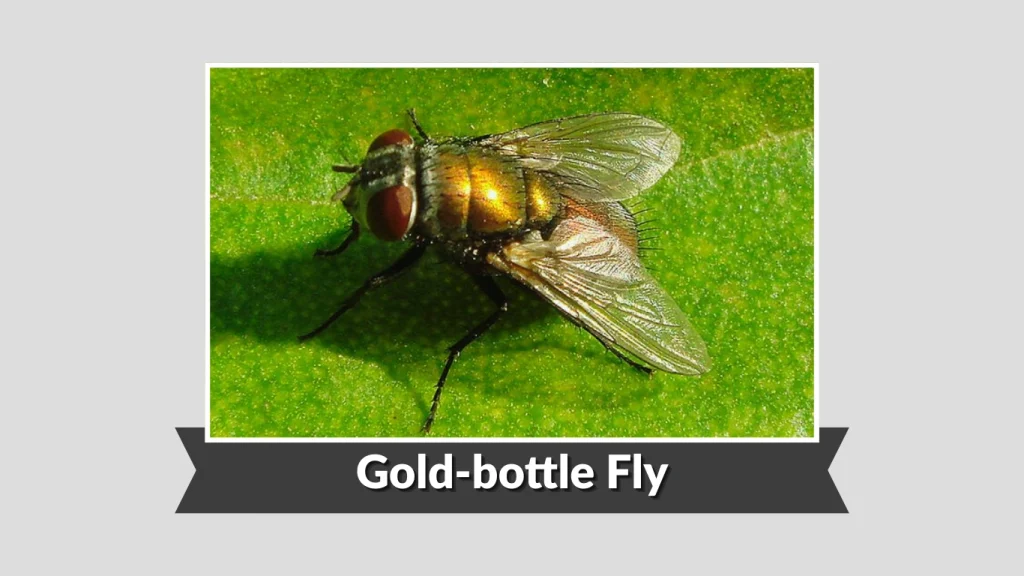
The Gold-bottle Fly is a metallic blow fly that plays an important role in decomposition and is frequently encountered in forensic entomology. Its golden-green sheen makes it stand out among other blow flies, and it is often one of the first species to colonize carcasses, particularly in cooler climates.
Identification
- Medium-sized blow fly, 8–14 mm in length
- Metallic golden-green body with shiny reflections
- Large reddish compound eyes
- Clear wings with light brownish veins
- Bristly thorax and abdomen, typical of Lucilia species
- Similar to Lucilia sericata but often larger and with a slightly duller sheen
Habitat and Distribution
This species is found widely across Europe, North America, and parts of Asia. It prefers cooler climates and is common in temperate regions. It is typically seen near carrion, garbage, feces, and decaying plant matter, but also visits flowers for nectar.
Behavior and Diet
Adults feed on nectar, carrion fluids, and waste. Females lay eggs in carcasses, open wounds, or decaying matter, where larvae develop quickly. Lucilia illustris is of particular importance in forensic science, as it is one of the first colonizers of decomposing bodies in cooler environments, making it useful in post-mortem interval estimations.
13. Cluster Blow Fly (Calliphora vicina)

The Cluster Blow Fly is a common species in temperate regions and one of the most frequently encountered blow flies in urban areas. It is especially important in forensic science because of its predictable development cycle and tendency to colonize bodies indoors. Its name comes from its habit of forming clusters when overwintering inside buildings.
Identification
- Medium to large blow fly, 6–12 mm in length
- Metallic blue-gray body with a dull sheen
- Large red compound eyes
- Wings clear with strong venation
- Bristly thorax and abdomen
- Distinctive sluggish flight when indoors, especially in cooler months
Habitat and Distribution
This species is widespread across Europe, North America, and parts of Asia. It is particularly common in cities and towns, where it enters houses and other buildings to overwinter. Outdoors, it is found near garbage, carcasses, and feces, similar to other blow flies.
Behavior and Diet
Adults feed on carrion, garbage, nectar, and feces. Females lay eggs on animal carcasses or decaying organic matter, and the larvae feed on tissue. Cluster Blow Flies are among the first insects to colonize corpses, making them important indicators in forensic investigations. Their tendency to overwinter inside buildings also brings them into frequent contact with humans.
14. Brown Blow Fly (Calliphora augur)

The Brown Blow Fly is a robust and distinctive species native to Australia, often noted for its loud buzzing flight. Unlike many blow flies, females of this species give birth to live larvae instead of laying eggs, which makes them particularly efficient at colonizing carcasses. This unique trait makes Calliphora augur an especially important species in forensic entomology.
Identification
- Large blow fly, 10–12 mm in length
- Metallic blue to bluish-black body with a brownish sheen
- Distinct bristly thorax and abdomen
- Large reddish compound eyes
- Transparent wings with strong venation
- Louder, deeper buzzing than many other blow flies
Habitat and Distribution
The Brown Blow Fly is widespread in Australia and also occurs in New Zealand. It is commonly found around carcasses, garbage, and animal waste in both urban and rural areas. Its preference for carrion makes it a frequent visitor to farms, woodlands, and suburban environments.
Behavior and Diet
Adult flies feed on nectar, waste, and carrion fluids. Unlike most blow flies, females are viviparous—they deposit live maggots directly onto carcasses or decaying organic matter. This allows rapid colonization, making them one of the first species to exploit a resource. Their larvae play an important role in decomposition and are of great significance in forensic cases for estimating time of death.
15. Greenbottle Blow Fly (Lucilia silvarum)

The Greenbottle Blow Fly is a widespread carrion-associated species that plays an essential role in decomposition and forensic science. Its metallic green sheen makes it similar to other Lucilia species, but L. silvarum is especially noted for laying eggs not only on carcasses but also in the wounds of living animals, occasionally causing myiasis.
Identification
- Medium-sized blow fly, 8–12 mm long
- Shiny metallic-green body, sometimes with bronze reflections
- Reddish-brown compound eyes
- Clear wings with light venation
- Bristly thorax and abdomen typical of blow flies
- Slightly more slender than Lucilia sericata
Habitat and Distribution
This species is common across Europe, Asia, and North America. It prefers woodland habitats, meadows, and urban areas with access to carrion, waste, or livestock. It is frequently found on animal carcasses and is also associated with wounds in sheep and other animals.
Behavior and Diet
Adults feed on nectar, carrion fluids, and excrement. Females lay eggs on carcasses and in the wounds of live animals, where maggots consume necrotic and occasionally living tissue. In forensic science, Lucilia silvarum is a valuable species because of its early arrival at corpses in temperate regions, helping estimate post-mortem intervals.
16. Small Bluebottle Blow Fly (Calliphora terraenovae)

The Small Bluebottle Blow Fly is a lesser-known but important species in the blow fly family, often confused with the larger bluebottles such as Calliphora vomitoria. As its name suggests, it is smaller in size yet still plays a significant role in decomposition and is frequently studied in forensic entomology for its predictable life cycle.
Identification
- Small to medium-sized blow fly, about 5–9 mm long
- Metallic blue body with a duller sheen compared to larger bluebottles
- Large reddish compound eyes
- Bristly thorax and abdomen with fine hairs
- Transparent wings with brownish veins
- Shorter and stockier build than Calliphora vomitoria
Habitat and Distribution
This species is distributed widely across Europe and parts of Asia, and it has also been reported in North America. It prefers cooler climates and is commonly found in urban areas, woodlands, and grasslands, especially near carrion and refuse.
Behavior and Diet
Adults feed on nectar, carrion, and organic waste. Females lay eggs on animal carcasses, decaying matter, and sometimes in open wounds of animals. Larvae play an essential role in decomposition, consuming soft tissue and recycling nutrients. Because it frequently colonizes bodies indoors and outdoors, Calliphora terraenovae is an important species in forensic investigations.
17. Western Greenbottle Fly (Lucilia mexicana)
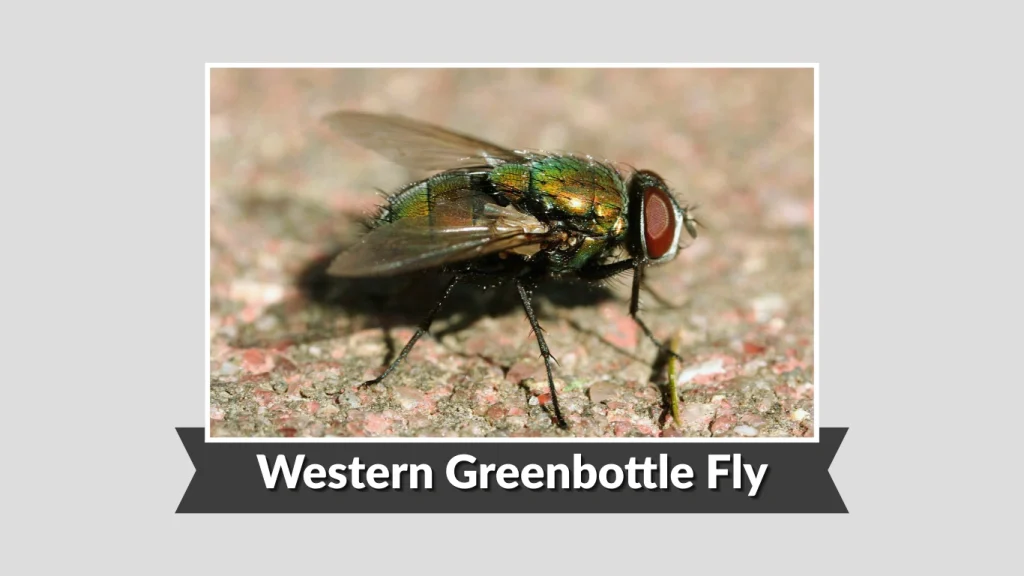
The Western Greenbottle Fly is a colorful blow fly native to the Americas, particularly found in warmer regions. Like other Lucilia species, it is easily recognized by its metallic sheen and is strongly associated with decomposition, making it an important species in both ecological recycling and forensic science.
Identification
- Medium-sized blow fly, about 7–12 mm long
- Metallic green body with golden or bluish reflections
- Reddish compound eyes prominent on the head
- Bristly thorax and abdomen typical of greenbottles
- Clear wings with faint brownish veins
- Often slightly brighter in coloration than European greenbottles
Habitat and Distribution
This species is distributed mainly across Mexico, Central America, and the southwestern United States. It thrives in warm climates and is commonly found near carrion, garbage, animal waste, and livestock facilities. It is also present in natural woodland and grassland ecosystems.
Behavior and Diet
Adult Western Greenbottle Flies feed on nectar, carrion fluids, and waste. Females lay eggs on animal carcasses or open wounds, where larvae develop rapidly. Like other greenbottles, its maggots are important decomposers, breaking down organic material. In forensic science, Lucilia mexicana is considered a valuable indicator species for estimating post-mortem intervals in warm environments.
