

Praying mantises are fascinating insects known for their predatory skills, camouflage, and unique appearance. With over 2,400 species worldwide, they vary greatly in size, color, and behavior. From the flower-mimicking Orchid Mantis to the formidable Giant Asian Mantis, each species has distinct traits that make it special. This guide explores 25 remarkable types of praying mantises, highlighting their identification, habitats, diets, and interesting behaviors.
1. Chinese Mantis

The Chinese Mantis (Tenodera sinensis) is one of the largest and most recognizable mantis species, originally from Asia but now common in North America due to intentional introductions. Known for its impressive hunting skills and long slender body, this mantis is often seen in gardens where it helps control pest insects.
Identification
- Large size, ranging from 7 to 11 cm in length
- Green or brown body with a narrow, elongated shape
- Distinctive green lateral stripe running along the edge of the forewing
- Triangular head with large compound eyes
- Long, spiny forelegs adapted for catching prey
Habitat
The Chinese Mantis thrives in gardens, meadows, agricultural fields, and forest edges. It prefers areas with tall grasses and shrubs that provide both camouflage and hunting grounds.
Diet
It is a voracious predator, feeding on a wide range of insects, including flies, moths, grasshoppers, and even other mantises. Larger individuals have been observed capturing small vertebrates such as frogs and hummingbirds.
Behavior
Chinese Mantises are ambush predators, remaining still and waiting for prey to come within reach before striking with lightning speed. They are solitary and territorial, often resorting to cannibalism, especially during mating when females may consume males.
2. European Mantis
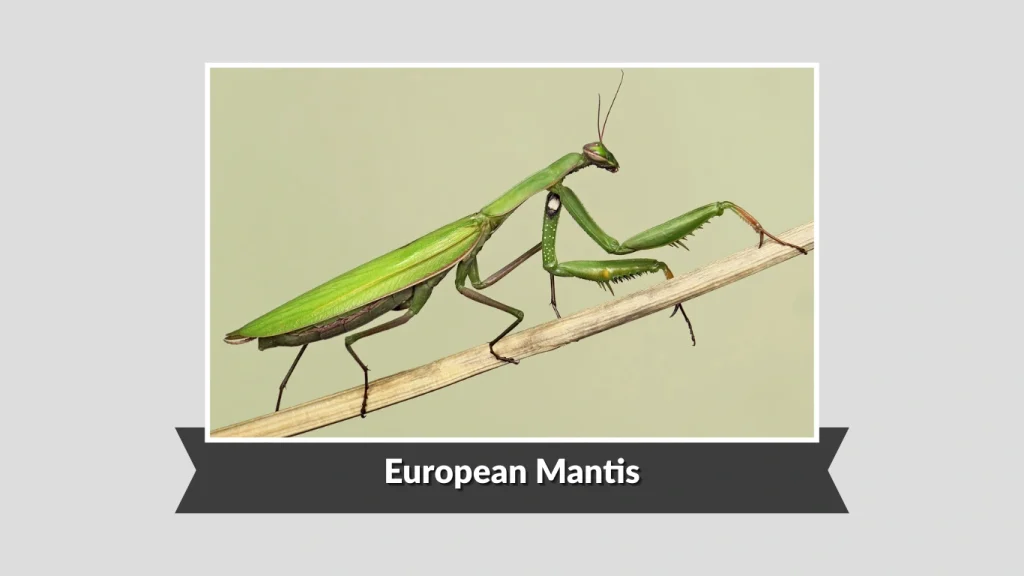
The European Mantis (Mantis religiosa) is one of the most widespread and well-known mantis species, recognized as the “classic praying mantis” in many cultures. Native to Europe, Asia, and Africa, it has also been introduced to North America. Its praying-like posture and patient hunting behavior make it one of the most iconic insects worldwide.
Identification
- Medium-sized mantis, usually 5 to 7.5 cm long
- Body color ranges from bright green to light brown, providing camouflage
- Characteristic black-ringed eyespots visible on the inside of forelegs
- Triangular head with flexible neck for scanning surroundings
- Long antennae and slender body with leathery forewings
Habitat
The European Mantis inhabits grasslands, gardens, shrubs, and meadows. It thrives in sunny and warm environments with plenty of vegetation, where it can hide and stalk prey effectively.
Diet
It primarily feeds on flies, crickets, grasshoppers, bees, and other small insects. Larger individuals may occasionally take on spiders, butterflies, or smaller mantises.
Behavior
This mantis is an ambush predator, staying motionless until prey comes within striking distance. It uses its spiny forelegs to snatch and hold its catch. Like many mantises, the female may cannibalize the male during or after mating, a well-documented behavior in this species.
3. Carolina Mantis

The Carolina Mantis (Stagmomantis carolina) is a small yet adaptable mantis species native to North and Central America. It is the state insect of South Carolina and is often welcomed in gardens due to its ability to control pest insects. Unlike some larger mantises, the Carolina Mantis shows great variation in color and size, making it an expert at camouflage.
Identification
- Smaller than many mantis species, about 4.5 to 6 cm in length
- Color varies widely: green, gray, or brown, blending into surroundings
- Females have shorter wings that do not extend to the tip of the abdomen
- Males have longer wings that cover the abdomen, making them better fliers
- Distinctive triangular head with prominent eyes and strong forelegs
Habitat
Carolina Mantises are highly adaptable and live in gardens, grasslands, shrubs, and woodlands. They are especially common in warmer regions and thrive in areas with dense vegetation.
Diet
Their diet consists of small insects such as flies, moths, crickets, and caterpillars. Although smaller than many mantises, they are efficient hunters and help control garden pests.
Behavior
Carolina Mantises are ambush predators, staying still for long periods before striking. They are solitary insects and exhibit sexual cannibalism, with females sometimes eating males after mating. This species is also known for its effective camouflage, adjusting its coloration to match the local environment.
4. Giant Asian Mantis

The Giant Asian Mantis (Hierodula membranacea) is one of the largest mantis species, admired for its impressive size and striking green coloration. Native to Southeast Asia, it has also been kept as a popular pet among insect enthusiasts due to its bold behavior and relatively easy care.
Identification
- Very large mantis, reaching 9 to 11 cm in length
- Bright green body, sometimes with yellowish or brown tones
- Strong, spiny forelegs designed for capturing larger prey
- Broad wings covering the abdomen, with slight translucence
- Distinctive triangular head with sharp mandibles and large compound eyes
Habitat
This mantis inhabits tropical and subtropical forests across Southeast Asia, including India, Malaysia, and Indonesia. It thrives in areas with dense vegetation, tall grasses, and shrubs, where it can blend into the greenery.
Diet
The Giant Asian Mantis is a powerful predator, feeding on a wide variety of insects such as grasshoppers, beetles, moths, and crickets. Due to its size, it can also catch small lizards, frogs, and other mantises.
Behavior
It is an active and aggressive species compared to smaller mantises. Rather than relying solely on ambush tactics, it often pursues prey more actively. Females, like most mantises, may cannibalize males after mating. In captivity, they are known for their boldness and willingness to take large prey.
5. Orchid Mantis

The Orchid Mantis (Hymenopus coronatus) is one of the most beautiful and famous mantis species, known for its extraordinary resemblance to orchid flowers. Native to Southeast Asia, this mantis uses its floral disguise to attract pollinators, making it one of nature’s most striking examples of aggressive mimicry.
Identification
- Medium-sized mantis, 4 to 7 cm in length
- Pink, white, or purple body resembling orchid petals
- Flattened, petal-like legs that blend with flowers
- Females are larger and more vividly colored than males
- Triangular head with large eyes, adapted for scanning prey
Habitat
The Orchid Mantis inhabits tropical forests in Malaysia, Indonesia, and surrounding regions. It prefers areas rich in flowering plants, where it can blend seamlessly with orchids and other blossoms.
Diet
Its diet mainly consists of pollinating insects such as bees, butterflies, and flies, which are drawn to its flower-like appearance. Larger individuals may also feed on other mantises and small vertebrates.
Behavior
The Orchid Mantis is a master of camouflage, staying motionless among flowers while waiting for prey to approach. Unlike many mantises that rely only on ambush, this species actively lures pollinators by mimicking flowers. Females often display cannibalistic behavior during mating.
6. Devil’s Flower Mantis

The Devil’s Flower Mantis (Idolomantis diabolica) is one of the largest and most striking flower-mimicking mantises in the world. Known for its vivid colors and dramatic threat displays, it is often called the “King of Mantises.” This rare species is highly sought after by insect enthusiasts due to its exotic appearance and fascinating behavior.
Identification
- Large mantis, growing up to 13 cm in length
- Body marked with white, green, red, and blue patterns
- Broad, leaf-like appendages on the legs enhance its flower mimicry
- Triangular head with large compound eyes and elongated antennae
- Adults display bright inner wings with vivid colors when threatened
Habitat
The Devil’s Flower Mantis inhabits dry scrublands and lowland forests of East Africa, including Ethiopia, Kenya, Malawi, and Tanzania. It thrives in warm climates where flowering vegetation is abundant.
Diet
This mantis primarily feeds on pollinating insects like bees, moths, and flies. Owing to its large size, it can also capture butterflies and other sizeable insects.
Behavior
The Devil’s Flower Mantis is famous for its elaborate threat display: when disturbed, it raises its body, spreads its colorful wings, and waves its raptorial legs to appear much larger and more intimidating. It is an ambush predator, relying on both camouflage and surprise to capture prey. Like other mantises, females may exhibit cannibalism during or after mating.
7. Ghost Mantis
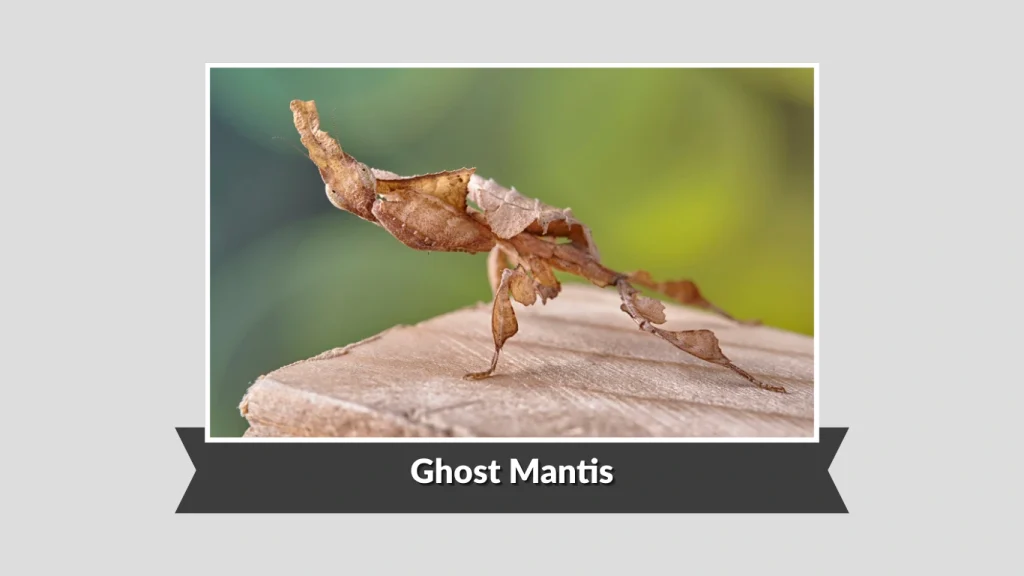
The Ghost Mantis (Phyllocrania paradoxa) is a small but extraordinary species known for its leaf-like appearance, which makes it one of the best-camouflaged mantises in the insect world. Its twisted body and ragged edges give it the look of a dried leaf, helping it blend seamlessly into its surroundings.
Identification
- Small mantis, about 4 to 5 cm in length
- Brown to dark brown coloration, mimicking dried leaves
- Elongated, twisted body with leaf-like extensions on head and thorax
- Wings shaped like crumpled leaves, aiding in camouflage
- Both males and females look similar, though males are slimmer and better fliers
Habitat
The Ghost Mantis is native to sub-Saharan Africa and Madagascar. It inhabits dry forests, scrublands, and savannas where leaf litter and twigs provide excellent camouflage.
Diet
This species feeds mainly on small insects such as fruit flies, gnats, moths, and crickets. Unlike larger mantises, it rarely hunts vertebrates due to its smaller size.
Behavior
Ghost Mantises are masters of stillness, swaying gently like dead leaves in the wind to avoid detection by predators and prey. They are generally less aggressive than other mantis species and rely heavily on ambush hunting. In captivity, they are prized for their unique appearance and calm temperament.
8. Spiny Flower Mantis
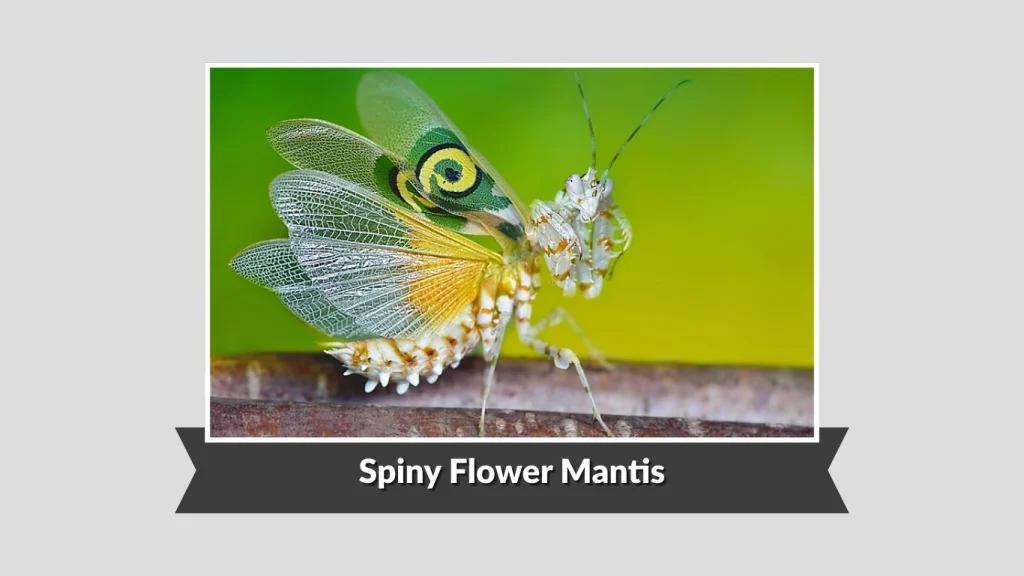
The Spiny Flower Mantis (Pseudocreobotra wahlbergii) is a small, colorful mantis native to Africa, famous for the striking spiral patterns on its wings. Its vivid markings and flower-like appearance not only provide camouflage but also serve as a defensive display against predators.
Identification
- Small species, about 3 to 5 cm long
- White body with green and pinkish highlights
- Distinctive circular spiral pattern on forewings, often yellow or orange with a black center
- Spiny projections on the thorax, giving it its name
- Males are slimmer with longer wings, while females are broader and sturdier
Habitat
The Spiny Flower Mantis is found across sub-Saharan Africa, inhabiting grasslands, savannas, and flowering bushes. It prefers areas rich in blooms where it can blend with petals.
Diet
Its diet includes flies, moths, bees, and other small insects. Despite its small size, it is an effective predator that captures prey with remarkable speed.
Behavior
This mantis is known for its defensive display: when threatened, it raises its wings to reveal the bold spiral pattern, startling predators. It is an ambush hunter, often waiting on flowers for pollinators to approach. Like other mantises, it exhibits sexual cannibalism in some cases.
9. Budwing Mantis

The Budwing Mantis (Parasphendale affinis) is a robust African mantis species known for its powerful build and aggressive hunting style. It is often recognized for its relatively short wings, which give it the name “budwing,” as they resemble undeveloped buds rather than full wings.
Identification
- Medium to large mantis, ranging from 7 to 9 cm in length
- Females have short, underdeveloped wings that do not cover the abdomen
- Males have longer wings but are still not strong fliers
- Typically brown or mottled in color, providing camouflage among dry vegetation
- Strong, spiny forelegs for grasping larger prey
Habitat
Budwing Mantises are native to East Africa, especially Tanzania and Kenya. They live in dry, open habitats such as grasslands, scrublands, and sparsely vegetated areas where their coloration provides excellent concealment.
Diet
They are voracious predators, feeding on a wide variety of insects, including crickets, moths, grasshoppers, and beetles. Due to their strength, they can handle larger prey than many other mantis species.
Behavior
Budwing Mantises are more aggressive and active hunters compared to smaller flower mantises. They rely less on camouflage and more on direct strikes to subdue prey. In captivity, females are known for being particularly territorial and prone to cannibalism.
10. African Twig Mantis

The African Twig Mantis (Popa spurca) is a master of camouflage, perfectly mimicking the appearance of dried twigs and branches. Its elongated body and angular features make it nearly invisible in its natural environment, helping it evade both predators and prey.
Identification
- Medium to large mantis, about 8 to 10 cm in length
- Slender, stick-like body with brown or gray coloration
- Angular thorax with extended spines that enhance its twig-like disguise
- Wings are narrow and align seamlessly with the body
- Males are smaller and lighter, while females are bulkier with shorter wings
Habitat
This species is found throughout sub-Saharan Africa, inhabiting woodlands, dry forests, and savannas. It prefers areas with plenty of twigs and branches, which complement its camouflage strategy.
Diet
The African Twig Mantis preys on moths, flies, grasshoppers, beetles, and other insects. Larger individuals can overpower small vertebrates, but their diet is primarily insect-based.
Behavior
True to its camouflage strategy, the African Twig Mantis remains motionless for long periods, resembling a broken twig. It sways gently in the breeze to enhance the illusion. It is an ambush predator, striking suddenly when prey comes within reach. Females are particularly territorial and may cannibalize mates during reproduction.
11. Shield Mantis

The Shield Mantis (Choeradodis rhombicollis) is one of the most unique mantises, easily recognized by its broad, flattened thorax that resembles a leafy shield. This adaptation allows it to blend perfectly into tropical foliage, making it one of the best-camouflaged mantis species.
Identification
- Medium-sized mantis, about 6 to 7.5 cm in length
- Distinctive large, flat pronotum shaped like a shield or leaf
- Bright green coloration with leaf-like veins on the body and wings
- Triangular head with large eyes for scanning prey
- Males are slimmer with longer wings, while females are broader and more robust
Habitat
The Shield Mantis is native to Central and South America, especially in tropical forests. It prefers lush, leafy environments where it can hide among broad leaves and vegetation.
Diet
Its diet consists mainly of flies, moths, butterflies, crickets, and other small insects. The camouflage allows it to remain undetected while waiting for pollinators and other prey.
Behavior
The Shield Mantis is a patient ambush predator, sitting motionless on leaves until prey comes close. When disturbed, it may flatten its body against a leaf to enhance its disguise. Like other mantises, females may consume males after mating.
12. Boxer Mantis
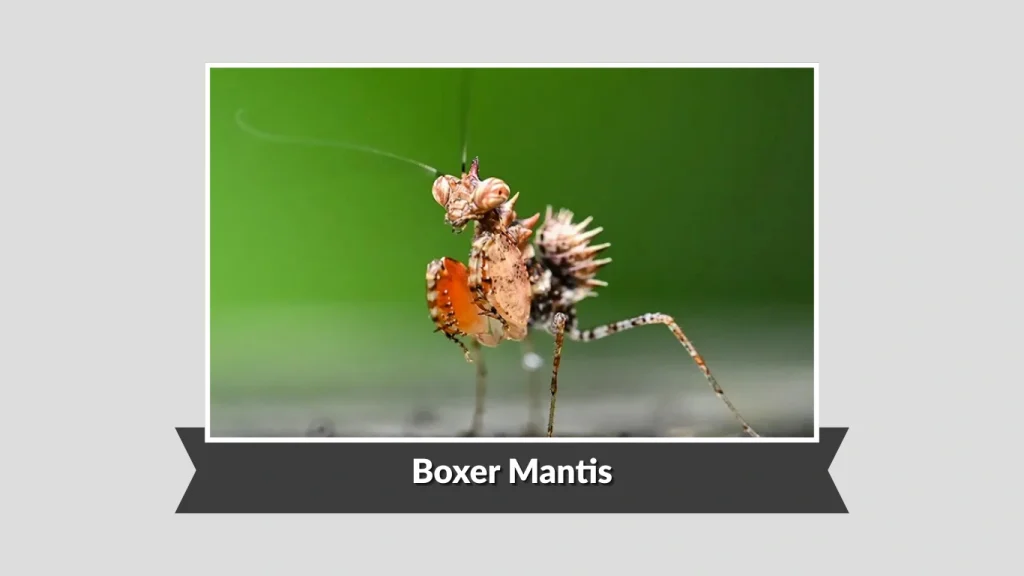
The Boxer Mantis (Acromantis gestri) is a small but fascinating species, named for its distinctive “boxing” behavior, where it raises and waves its forelegs in a way that resembles a fighter’s stance. Despite its small size, it is an agile and efficient predator.
Identification
- Small mantis, usually 2.5 to 3.5 cm in length
- Brown, tan, or green coloration with mottled patterns for camouflage
- Long, slender legs adapted for quick movements
- Triangular head with prominent eyes
- Forelegs often held high in a defensive or threatening posture
Habitat
The Boxer Mantis is found in Southeast Asia, particularly in Malaysia, Indonesia, and surrounding regions. It prefers tropical forests and gardens where it can camouflage among twigs and leaves.
Diet
Its diet consists mainly of small insects such as flies, gnats, moths, and tiny crickets. Due to its size, it relies on speed and precision to capture prey.
Behavior
This mantis is known for its characteristic threat display, where it raises its forelegs and sways, mimicking a boxer ready to fight. It is an ambush hunter, striking quickly at close-range prey. Though small, it exhibits the same predatory confidence seen in larger mantis species.
13. Gambian Spotted-eye Mantis

The Gambian Spotted-eye Mantis (Pseudoharpax virescens) is a small and delicate mantis species recognized for the distinctive spots on its eyes and vibrant green coloration. Its compact size and striking appearance make it a fascinating example of mantis diversity in Africa.
Identification
- Small mantis, about 3 to 4 cm in length
- Bright green body with a slender build
- Prominent white spot on the inside of each foreleg
- Distinctive eye markings, giving the species its name
- Females are slightly bulkier than males, while males are slimmer and better fliers
Habitat
Native to West Africa, particularly in regions like Gambia and surrounding countries, this mantis inhabits grasslands, gardens, and flowering plants. Its bright green body provides excellent camouflage among leaves and stems.
Diet
The Gambian Spotted-eye Mantis feeds primarily on small insects such as flies, mosquitoes, and moths. Its size limits its prey range, but it is an efficient predator in its environment.
Behavior
This species is an active hunter, often moving between flowers and leaves to catch prey. Unlike some mantises that rely solely on ambush tactics, it shows more movement and agility. Its spotted eyes and leg markings may also act as a defensive signal to confuse predators.
14. Arizona Unicorn Mantis

The Arizona Unicorn Mantis (Pseudovates arizonae) is a rare mantis species native to the southwestern United States. It gets its name from the unique horn-like projection on top of its head, giving it a “unicorn” appearance. This species is highly sought after by insect enthusiasts due to its unusual look and limited range.
Identification
- Small to medium mantis, about 4 to 5 cm in length
- Brown or gray coloration, excellent for blending into dry vegetation
- Distinct horn-like projection on the top of the head
- Long, slender body resembling twigs or stems
- Males are slimmer with longer wings, while females are stockier and less capable of flight
Habitat
The Arizona Unicorn Mantis is found in the deserts and scrublands of Arizona, Texas, and northern Mexico. It thrives in dry, arid environments with sparse vegetation, where its camouflage is highly effective.
Diet
Its diet consists of small insects such as flies, moths, crickets, and grasshoppers. It is a patient ambush predator, waiting motionlessly until prey ventures close.
Behavior
This mantis is well-camouflaged and relies heavily on its twig-like appearance to remain undetected. It is less aggressive than some larger mantis species, but it uses swift strikes to subdue prey. The horn-like feature may also act as a deterrent to predators.
15. Giant Asian Mantis
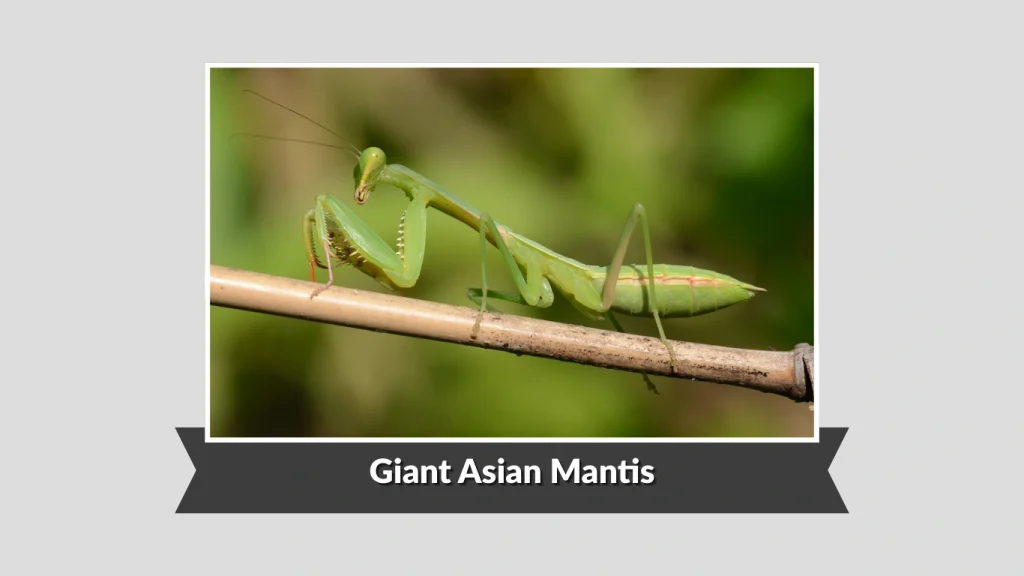
The Giant Asian Mantis (Hierodula patellifera) is a large and impressive species known for its size and hunting efficiency. Its vibrant green color and strong forelegs make it a formidable predator in gardens and forests across Asia.
Identification
- Large mantis, typically 8 to 10 cm in length
- Bright green body with occasional yellow or brown markings
- Broad, muscular forelegs adapted for capturing larger prey
- Triangular head with large, compound eyes
- Females are heavier and bulkier, while males are slimmer and more agile fliers
Habitat
Native to Southeast Asia, including countries like Thailand, Malaysia, and Indonesia, the Giant Asian Mantis prefers tropical and subtropical forests, gardens, and dense vegetation.
Diet
Its diet includes a wide range of insects such as crickets, grasshoppers, flies, and occasionally smaller vertebrates like frogs or lizards. Its size allows it to tackle relatively large prey compared to other mantis species.
Behavior
This mantis is an ambush predator but can also actively stalk prey if needed. It exhibits territorial behavior and, like many mantises, females may cannibalize males after mating. Its large size and strength make it one of the most dominant mantis species in its habitat.
16. Orchid Mantis

The Orchid Mantis (Hymenopus coronatus) is one of the most visually stunning mantis species, famous for its remarkable resemblance to orchid flowers. Its pink and white coloration allows it to blend seamlessly into flowering plants, making it an expert ambush predator.
Identification
- Medium-sized mantis, about 5 to 6 cm in length
- Pink and white body with petal-like extensions on legs and thorax
- Triangular head with prominent eyes
- Females are larger and more vividly colored than males
- Highly camouflaged, mimicking the shape and color of orchids
Habitat
Native to the rainforests of Southeast Asia, especially Malaysia and Indonesia, the Orchid Mantis is found on flowers and plants where it can hide from both predators and prey.
Diet
Its diet primarily consists of pollinating insects such as bees, butterflies, and flies. Its flower-like appearance allows it to lure unsuspecting insects close enough to strike.
Behavior
The Orchid Mantis is a patient ambush predator, remaining motionless for long periods while waiting for prey. It relies on its floral mimicry for both hunting and protection. Mating behavior includes typical mantis cannibalism, with females sometimes eating males after copulation.
17. Devil’s Flower Mantis

The Devil’s Flower Mantis (Idolomantis diabolica) is one of the largest and most strikingly beautiful mantises in the world. Known for its dramatic threat display and colorful appearance, it is often called the “giant devil mantis.”
Identification
- Very large mantis, 10 to 12 cm in length
- Coloration ranges from green to brown with purple, pink, and white accents
- Broad, ornate thorax and leg flaps resembling flower petals
- Triangular head with large, prominent eyes
- Females are heavier and larger, while males are slimmer and more agile
Habitat
Native to East Africa, particularly Kenya, Tanzania, and Malawi, the Devil’s Flower Mantis inhabits shrubs, bushes, and forest edges. It prefers areas where it can blend with flowers and foliage.
Diet
It preys on a wide variety of insects, including crickets, flies, moths, and occasionally small vertebrates. Its large size allows it to hunt bigger prey than most mantis species.
Behavior
This mantis is famous for its defensive display, where it spreads its forelegs and wings to reveal bright colors and intimidate predators. It is an ambush predator and exhibits typical mantis cannibalism during mating. Its aggressive hunting style makes it a dominant species in its habitat.
18. African Twig Mantis

The African Twig Mantis (Popa spurca) is a master of disguise, resembling twigs and sticks to evade predators and ambush prey. Its slender, elongated body and muted coloration make it one of the best-camouflaged mantises in Africa.
Identification
- Medium-sized mantis, about 6 to 7 cm in length
- Brown or gray body resembling a twig or branch
- Slender thorax and elongated legs
- Small head with large compound eyes
- Females are bulkier, while males are slimmer and better fliers
Habitat
Native to sub-Saharan Africa, particularly in dry forests, savannas, and gardens, the African Twig Mantis blends perfectly into branches and shrubs.
Diet
Its diet consists of small insects such as flies, moths, and grasshoppers. Its camouflage allows it to approach prey unnoticed and strike with precision.
Behavior
This mantis relies on its twig-like appearance for both protection and hunting. It remains motionless for extended periods, swaying slightly to mimic plant movement in the wind. During mating, females may cannibalize males, a common behavior among mantises.
19. Dead Leaf Mantis
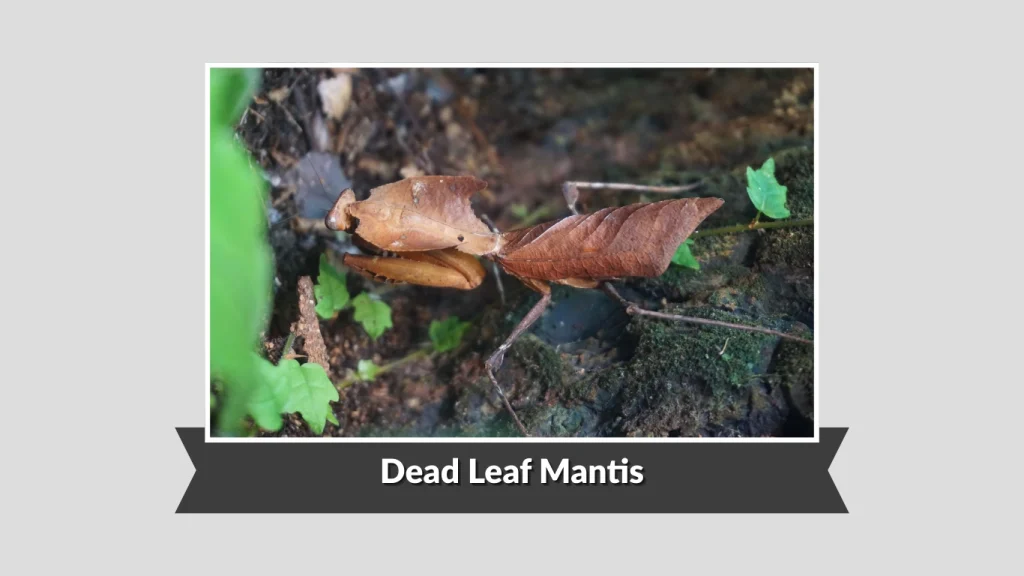
The Dead Leaf Mantis (Deroplatys desiccata) is one of the most extraordinary examples of insect camouflage. Its flattened, brown body and leaf-like wings allow it to blend perfectly with dead foliage, making it almost invisible to both predators and prey.
Identification
- Medium to large mantis, about 6 to 8 cm in length
- Body and wings mimic dead, curled leaves with brown and tan coloration
- Triangular head with prominent compound eyes
- Females are larger and heavier, males are slimmer and more agile
- Forelegs adapted for grasping prey quickly
Habitat
Native to Southeast Asia, including Malaysia, Indonesia, and Thailand, the Dead Leaf Mantis inhabits forest floors, leaf litter, and low vegetation where fallen leaves are abundant.
Diet
It preys on insects such as flies, moths, crickets, and grasshoppers. Its camouflage allows it to ambush unsuspecting insects that come too close.
Behavior
The Dead Leaf Mantis is a patient predator, often remaining completely motionless for hours. When threatened, it may sway slightly to mimic a leaf moving in the wind, enhancing its disguise. During mating, females may consume males, consistent with the mantis’ typical reproductive behavior.
20. Indian Flower Mantis

The Indian Flower Mantis (Creobroter gemmatus) is a small but brightly colored mantis species, known for its floral patterns that help it blend with blossoms. Its vibrant appearance makes it one of the most attractive mantises in Asia.
Identification
- Small mantis, about 3 to 4 cm in length
- Green or yellow body with white and purple floral markings
- Flattened thorax with petal-like extensions on legs
- Triangular head with large, prominent eyes
- Females are slightly larger and more robust than males
Habitat
Native to India and Southeast Asia, the Indian Flower Mantis is found on flowers, shrubs, and low vegetation where it can camouflage among blossoms.
Diet
Its diet includes small insects such as flies, bees, and other pollinators. The mantis uses its flower-like appearance to lure prey within striking distance.
Behavior
This species is a patient ambush predator, remaining still for long periods until prey approaches. It may also display mild threat postures when disturbed. Like most mantises, females may cannibalize males after mating.
21. Malaysian Dead Leaf Mantis
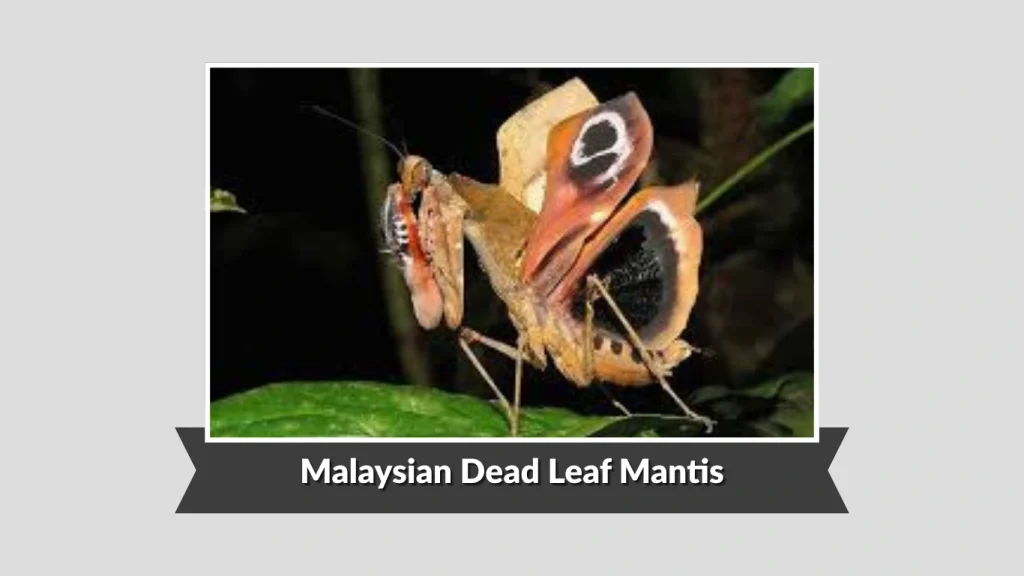
The Malaysian Dead Leaf Mantis (Deroplatys lobata) is an exceptional example of mimicry, resembling dead or decaying leaves to avoid predators and ambush prey. Its flattened body and jagged wing edges enhance its leaf-like appearance.
Identification
- Medium to large mantis, about 7 to 9 cm in length
- Brown or tan body with irregular, leaf-like edges on wings and thorax
- Triangular head with large, forward-facing eyes
- Females are larger and heavier; males are smaller and more agile
- Forelegs are adapted for fast and precise prey capture
Habitat
Native to Malaysia and surrounding Southeast Asian regions, it thrives in tropical forests, leaf litter, and low shrubs where dead foliage is abundant.
Diet
Feeds primarily on insects like crickets, moths, flies, and other small arthropods. Its camouflage allows it to remain undetected while waiting for prey.
Behavior
The Malaysian Dead Leaf Mantis is a master of stillness, often lying motionless for hours. It sways gently when disturbed to mimic leaves moving in the wind. Females may engage in sexual cannibalism after mating, which is typical in many mantis species.
22. Chinese Mantis

The Chinese Mantis (Tenodera sinensis) is one of the largest mantis species found in Asia and North America (introduced). Known for its impressive size and predatory skills, it is a dominant insect hunter in its habitat.
Identification
- Large mantis, 8 to 10 cm in length
- Green or brown body with long, slender thorax
- Triangular head with large, compound eyes and strong mandibles
- Females are larger and heavier, males are slimmer and more agile
- Strong raptorial forelegs for capturing large prey
Habitat
Native to China but introduced to the United States, the Chinese Mantis inhabits gardens, grasslands, and forests. It prefers areas with tall vegetation for ambush hunting.
Diet
It preys on a wide range of insects, including crickets, grasshoppers, flies, moths, and even smaller mantises. Its large size allows it to tackle prey larger than itself.
Behavior
The Chinese Mantis is an ambush predator, remaining motionless until prey comes within striking distance. It may display aggressive postures when threatened and exhibits sexual cannibalism in captivity and the wild. Its strong wings enable males to fly in search of mates, while females are mostly sedentary.
23. African Mantis
The African Mantis (Sphodromantis viridis) is a large and robust mantis species native to Africa, admired for its aggressive hunting style and adaptability to various habitats. It is a popular species among mantis enthusiasts.
Identification
- Large mantis, 7 to 10 cm in length
- Green or brown body with slightly flattened thorax
- Triangular head with prominent, forward-facing eyes
- Females are bulkier, males are slimmer and more agile
- Strong, spiny forelegs for capturing and holding prey
Habitat
Native to sub-Saharan Africa, the African Mantis is found in grasslands, gardens, and low shrubs, adapting well to both wild and urban environments.
Diet
Its diet consists of a wide variety of insects, including crickets, flies, moths, grasshoppers, and occasionally smaller mantises. Its size and strength allow it to subdue relatively large prey efficiently.
Behavior
The African Mantis is an active ambush predator, often remaining motionless to avoid detection before striking. It may display threat postures when disturbed. Females are known to practice sexual cannibalism, consuming males during or after mating. This mantis is resilient, capable of surviving in slightly drier conditions compared to other mantis species.
24. Giant Asian Mantis
The Giant Asian Mantis (Hierodula membranacea) is a large, powerful mantis species known for its striking size and hunting abilities. It is a dominant predator among insects in its native range.
Identification
- Very large mantis, 10 to 12 cm in length
- Green or light brown body with broad thorax and strong wings
- Triangular head with large compound eyes and powerful mandibles
- Females are heavier and more robust, males are smaller and more agile
- Strong, spiny forelegs for capturing large prey
Habitat
Native to Southeast Asia, including India, Thailand, and Indonesia, the Giant Asian Mantis inhabits forests, gardens, and tall grass areas. It prefers places with ample vegetation for camouflage and ambush hunting.
Diet
It preys on a variety of insects, including crickets, grasshoppers, flies, moths, and even smaller mantises. Its size allows it to tackle larger prey than most mantis species.
Behavior
The Giant Asian Mantis is an ambush predator, relying on stealth and patience. When threatened, it can display intimidating postures, spreading its forelegs and wings. Females may cannibalize males after mating. This species is highly adaptable and capable of thriving in both tropical forests and human-modified habitats.
25. Orchid Mantis
The Orchid Mantis (Hymenopus coronatus) is one of the most visually striking mantis species, renowned for its remarkable mimicry of orchid flowers. Its appearance allows it to ambush pollinators effectively.
Identification
- Small to medium mantis, 5 to 6 cm in length
- Bright white and pink body resembling orchid petals
- Flattened thorax with petal-like extensions on legs
- Triangular head with large, forward-facing eyes
- Females are larger and heavier than males
Habitat
Native to Southeast Asia, particularly Malaysia and Indonesia, the Orchid Mantis is found in tropical forests with abundant flowering plants where it can camouflage effectively.
Diet
It primarily feeds on pollinating insects such as flies, bees, and butterflies. Its flower-like appearance lures prey close enough for a rapid strike.
Behavior
The Orchid Mantis is a patient ambush predator, remaining motionless for long periods. It may sway gently to mimic flowers moving in the wind. Females are known to cannibalize males after mating, which is common in many mantis species. Its extraordinary camouflage makes it one of the most famous and photographed mantises in the world.
