

Wētā are some of New Zealand’s most fascinating insects, renowned for their size, diversity, and unique adaptations. Found only in New Zealand, these creatures include giant, tree, ground, and alpine species, each with their own special traits and habitats. From the massive Watauga to the freeze-tolerant alpine wētā, they play vital roles in ecosystems as seed dispersers, decomposers, and prey for native birds. Here are 25 distinct types of wētā.
1. Giant Wētā
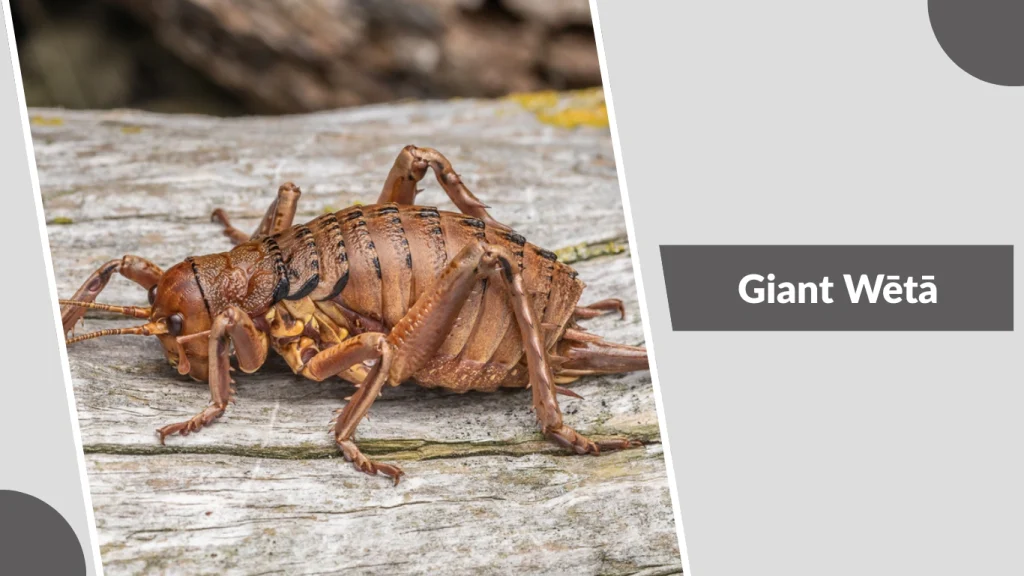
The Giant Wētā (Deinacrida heteracantha), often called the “Watauga,” is one of the heaviest insects in the world and is unique to New Zealand. These remarkable creatures are part of New Zealand’s natural heritage, known for their large size, nocturnal lifestyle, and importance in the ecosystem as decomposers and prey for native birds.
Identification
- Can grow up to 10 cm in body length
- Weight may exceed 70 grams, making it one of the heaviest insects
- Large, spiny legs for climbing and defense
- Antennae longer than the body
- Typically brownish or mottled for camouflage in forest habitats
Habitat
Giant Wētā are mostly found on offshore islands such as Little Barrier Island (Hauturu), where they are protected from introduced predators. They prefer dense vegetation, forest floors, and sheltered leaf litter.
Diet
These insects are primarily herbivorous, feeding on leaves, flowers, fruit, and seeds. Occasionally, they may consume smaller invertebrates if available.
Behavior
Giant Wētā are nocturnal and relatively slow-moving. Unlike smaller wētā species, they are less aggressive and rely on their size and spiny legs for defense. They play a vital role in the forest ecosystem by helping recycle plant material.
2. Little Barrier Island Giant Wētā

The Little Barrier Island Giant Wētā (Deinacrida heteracantha), also known as the Wetapunga, is a subspecies of the giant wētā found only on Hauturu (Little Barrier Island) in New Zealand. It is considered one of the rarest and largest insects, thriving in a predator-free sanctuary where conservation efforts have helped it survive.
Identification
- Can reach lengths of 8–10 cm
- Very heavy-bodied, weighing up to 70 grams
- Robust, spiny hind legs adapted for climbing and defense
- Antennae longer than the body, aiding navigation at night
- Brownish, mottled exoskeleton that blends with vegetation
Habitat
This wētā is restricted to Hauturu (Little Barrier Island) and has been translocated to other predator-free islands like Tiritiri Matangi as part of conservation programs. It prefers dense native forest with plenty of ground cover and rotting logs.
Diet
The Little Barrier Island Giant Wētā feeds mainly on leaves, flowers, and fruit, though it may occasionally consume fungi and small invertebrates.
Behavior
It is nocturnal and relatively docile compared to smaller wētā. Conservationists have worked to breed and release them to expand their populations. These insects are also important indicators of forest health.
3. Wetapunga

The Wetapunga is the common name given to the largest form of the Giant Wētā (Deinacrida heteracantha). Endemic to New Zealand, it holds the title of one of the heaviest insects on Earth. Its Māori name, Wetapunga, translates to “god of ugly things,” highlighting both its imposing appearance and cultural significance.
Identification
- Body length can reach up to 10 cm or more
- Exceptionally heavy, sometimes weighing as much as a sparrow
- Strong, spiny legs that act as a defense mechanism
- Antennae longer than the body for sensing surroundings
- Brown or mottled coloration, providing natural camouflage
Habitat
The Wetapunga is found on offshore islands like Hauturu (Little Barrier Island) and Tiritiri Matangi, where predator control programs have allowed populations to grow. It favors damp forest floors, logs, and leaf litter for shelter.
Diet
Primarily herbivorous, it feeds on a variety of plant material, including leaves, fruit, and flowers. Occasionally, it may nibble on fungi or small invertebrates if available.
Behavior
The Wetapunga is nocturnal, spending the day hidden and emerging at night to feed. Despite its intimidating size, it is relatively docile, relying on its size and spines rather than aggression. It plays an important role in nutrient cycling within the forest ecosystem.
4. Cook Strait Giant Wētā
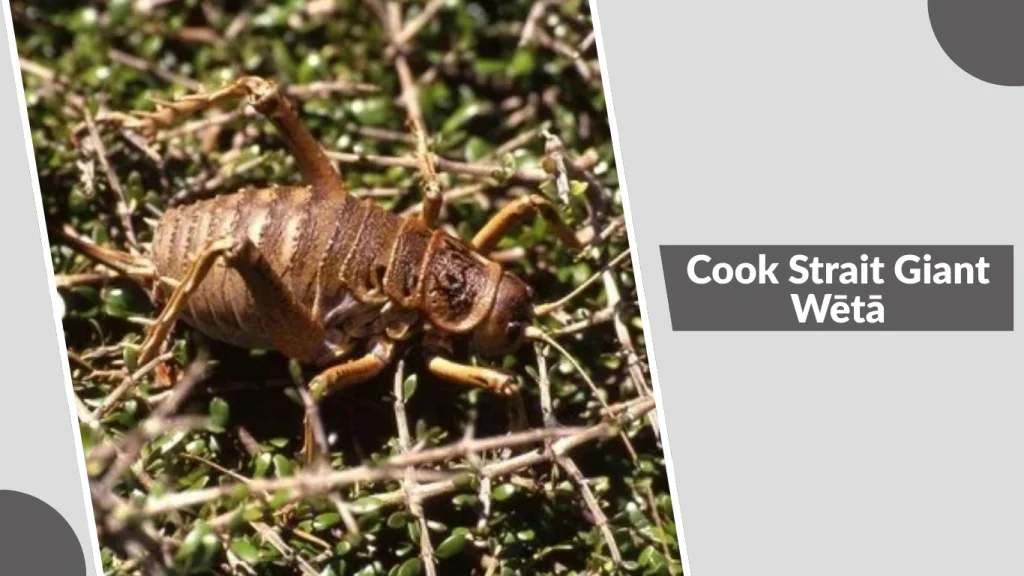
The Cook Strait Giant Wētā (Deinacrida rugosa) is another massive wētā species, found mainly on small predator-free islands around the Cook Strait of New Zealand. Known for its rugged body and spiny legs, it is among the largest insects, though slightly smaller than the Wetapunga. Conservation efforts have made this species a symbol of successful protection of New Zealand’s unique fauna.
Identification
- Body length typically 6–8 cm
- Heavy-bodied but lighter than the Wetapunga
- Prominent spiny legs for climbing and defense
- Antennae longer than the body, helping with nocturnal activity
- Dark brown to grey coloration, blending with forest litter and rocks
Habitat
The Cook Strait Giant Wētā survives on predator-free islands such as Mana Island, Maud Island, and Kapiti Island. It inhabits coastal scrub, grasslands, and forests, sheltering under rocks, logs, and vegetation.
Diet
This species feeds mainly on leaves, flowers, seeds, and fruit, making it primarily herbivorous. It contributes to the dispersal of seeds and recycling of plant matter in its ecosystem.
Behavior
Nocturnal and slow-moving, it avoids predators by hiding during the day. The species is less aggressive than smaller tree wētā, and conservation translocations have helped restore its numbers. Its survival demonstrates the effectiveness of predator eradication and sanctuary programs in New Zealand.
5. Wellington Tree Wētā

The Wellington Tree Wētā (Hemideina crassidens) is one of the most common and widely recognized wētā in New Zealand. Unlike the giant wētā, tree wētā are slimmer and more aggressive, often defending their tree holes vigorously. They are nocturnal and play an important role in the ecosystem as both prey and predator.
Identification
- Medium-sized, body length around 4–6 cm
- Slender build compared to giant wētā
- Strong mandibles, especially in males, used for fighting
- Long antennae, often longer than the body
- Brown or black with pale banding across the body
Habitat
The Wellington Tree Wētā is widespread across the southern North Island. It prefers forests, shrublands, and even suburban gardens. By day, it shelters in hollow branches, cracks, or specially made holes called “galleries.”
Diet
This species is omnivorous, feeding on leaves, fruit, flowers, small insects, and occasionally carrion. Its flexible diet helps it thrive in diverse environments.
Behavior
Wellington Tree Wētā are known for their aggressive temperament, particularly males that fight for dominance over tree holes and harems of females. They are nocturnal and emerge at night to feed. Their strong bite is used both in defense and in male-to-male combat.
6. Auckland Tree Wētā

The Auckland Tree Wētā (Hemideina thoracica) is one of the most widespread tree wētā species in New Zealand’s North Island. Known for its distinctive striped body, it is a tough and adaptable insect that thrives in both native forests and suburban areas.
Identification
- Medium-sized, body length about 3–6 cm
- Noticeable pale and dark stripes on the thorax
- Long, thin antennae, often longer than its body
- Strong jaws, with males having larger heads than females
- Brown to black coloration with banded markings for camouflage
Habitat
This species is abundant throughout the northern half of the North Island. It shelters in cracks, tree holes, and sometimes man-made crevices such as fence posts or firewood piles. It prefers bushy areas but can adapt well to gardens and urban environments.
Diet
The Auckland Tree Wētā is omnivorous, feeding on a mix of leaves, fruits, seeds, and small invertebrates. Its varied diet allows it to adapt to different food sources year-round.
Behavior
Auckland Tree Wētā are nocturnal and territorial. Males guard tree cavities that house several females, defending them from rival males. They are more aggressive than giant wētā, often using their jaws in fights. Despite this, they play an important ecological role as seed dispersers and as prey for native birds.
7. Northland Tree Wētā

The Northland Tree Wētā (Hemideina femorata) is a robust tree-dwelling species native to northern New Zealand. It is known for its strong hind legs and territorial behavior. Although similar in appearance to other tree wētā, it can be distinguished by its regional distribution and subtle physical traits.
Identification
- Medium-sized, with body length of 4–6 cm
- Males have larger heads and stronger jaws than females
- Long antennae, often longer than the body
- Brown to dark coloration with lighter banding on the body
- Strong femora (hind leg segments), giving the species its name
Habitat
Found mainly in the Northland region of New Zealand, this species shelters in holes within trees, under bark, or in logs. It can also adapt to scrublands and gardens where suitable hiding spaces are available.
Diet
The Northland Tree Wētā is omnivorous, eating a wide range of leaves, fruit, flowers, and small insects. Its ability to feed on multiple food sources helps it survive in varied environments.
Behavior
Nocturnal and territorial, males aggressively defend tree holes where multiple females may reside. They use their strong mandibles in combat, often locking jaws with rivals. Though sometimes considered aggressive, they are vital for forest health as both seed dispersers and a food source for native wildlife.
8. Canterbury Tree Wētā
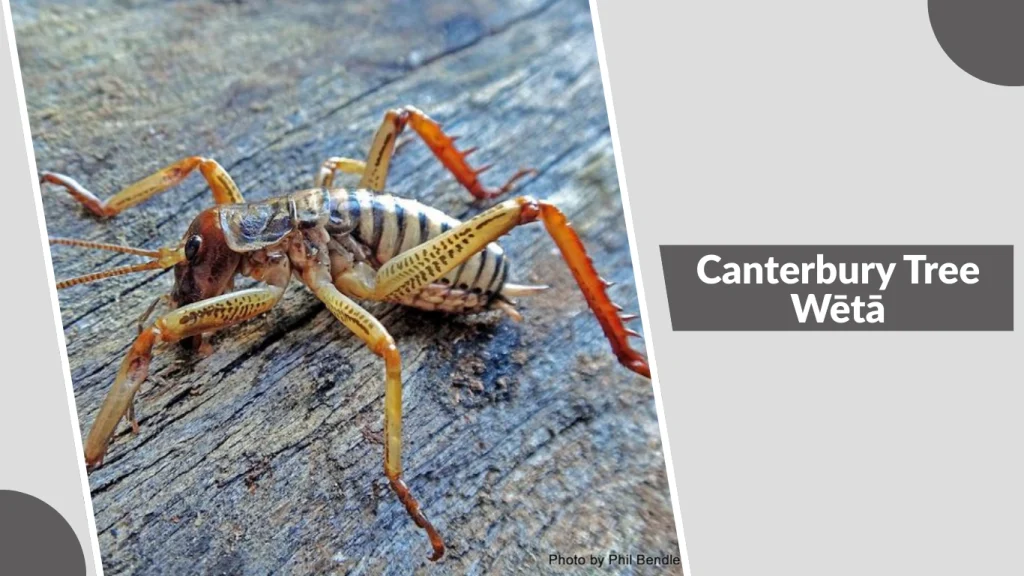
The Canterbury Tree Wētā (Hemideina femorata) is one of the most well-known wētā species in the South Island of New Zealand. It is easily recognized for its large size and aggressive temperament, particularly in males. This species is widespread across Canterbury and plays an important role in the region’s ecosystems.
Identification
- Medium to large size, body length 4–7 cm
- Males have noticeably larger heads and stronger jaws than females
- Long, whip-like antennae extending beyond body length
- Brown to dark coloration with lighter banding across the body
- Spiny legs used for climbing and defense
Habitat
The Canterbury Tree Wētā is found mainly in the eastern South Island, especially in Canterbury. It shelters in holes within trees, crevices, and logs, and it adapts to both native forests and modified landscapes, including farmlands and gardens.
Diet
Primarily omnivorous, the Canterbury Tree Wētā feeds on leaves, fruits, seeds, and small invertebrates. This diet helps it adapt to seasonal changes in food availability.
Behavior
This species is nocturnal and highly territorial. Males often guard harems of females within tree holes, engaging in fierce battles with rivals using their jaws. They are also known for their aggressive defensive behavior, hissing or biting when threatened. Despite this, they are a crucial part of New Zealand’s ecology.
9. Hawke’s Bay Tree Wētā

The Hawke’s Bay Tree Wētā (Hemideina trewicki) is a distinct tree-dwelling wētā species found in the central and eastern regions of New Zealand’s North Island. It was identified as a separate species relatively recently, highlighting the diversity of New Zealand’s wētā.
Identification
- Medium-sized, body length around 4–6 cm
- Males have large heads and strong jaws compared to females
- Long antennae extending beyond the body
- Brown to dark coloration with pale banding across the thorax and abdomen
- Robust legs with spines for climbing and defense
Habitat
This species is restricted mainly to the Hawke’s Bay region of the North Island. It prefers native forest habitats but can also survive in scrublands and semi-urban areas where tree hollows and crevices are available for shelter.
Diet
The Hawke’s Bay Tree Wētā has an omnivorous diet, eating leaves, fruit, seeds, and occasionally insects. This varied diet ensures its survival across different seasons.
Behavior
Nocturnal and territorial, males compete aggressively for tree holes that serve as refuges for themselves and groups of females. They use their jaws during combat and will defend their territory against rivals. Despite their fierce behavior, they play an important ecological role as decomposers and seed dispersers.
10. Mahoenui Giant Wētā

The Mahoenui Giant Wētā (Deinacrida mahoenui) is a rare species of giant wētā discovered in the Mahoenui district of New Zealand’s North Island. Known for its unusually high population density in gorse habitat, this species is an important success story in insect conservation, surviving in both native and introduced environments.
Identification
- Large-bodied, reaching 7–8 cm in length
- Heavily built, though smaller than the Wetapunga
- Brown to orange-brown coloration with mottled patterns
- Long antennae, often longer than its body
- Spiny legs adapted for climbing and protection
Habitat
Originally found in native forest habitats, the Mahoenui Giant Wētā now thrives in gorse (an introduced plant species) in the King Country region. It shelters in dense vegetation and ground cover, which provides protection from predators. Conservationists have also translocated populations to predator-free sanctuaries.
Diet
This giant wētā is herbivorous, feeding on leaves, fruit, and flowers. Its strong jaws allow it to chew tough vegetation, making it an important grazer in its environment.
Behavior
The Mahoenui Giant Wētā is nocturnal and relatively docile compared to tree wētā. It spends the day hiding in vegetation and emerges at night to feed. Its survival in gorse demonstrates remarkable adaptability, making it a key focus of conservation programs in New Zealand.
11. Bluff Wētā
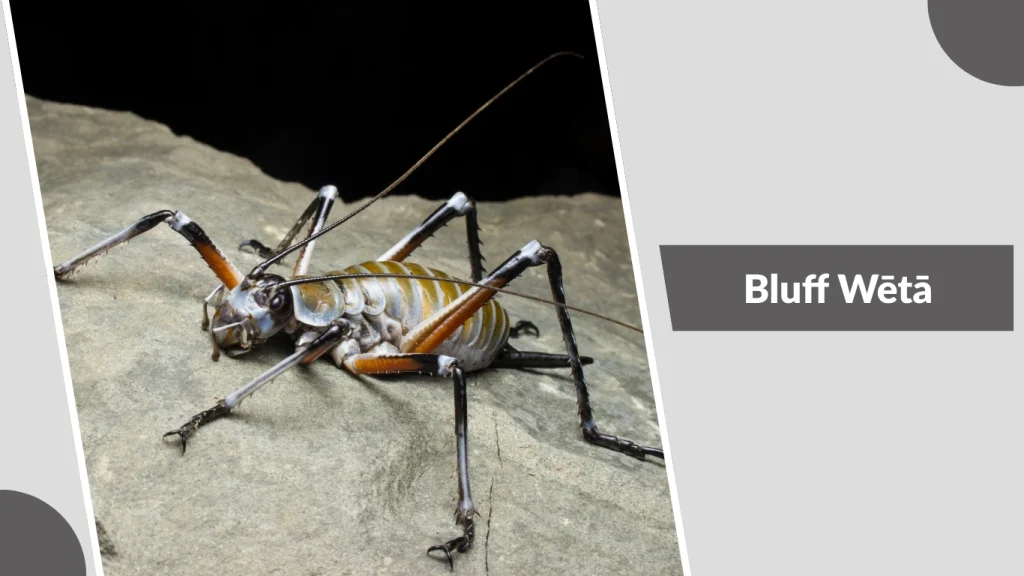
The Bluff Wētā (Deinacrida tibiospina) is a large and rare giant wētā species native to New Zealand’s South Island. It is named after its prominent leg spines and is considered one of the more secretive wētā, often found in rugged and isolated habitats.
Identification
- Medium to large size, body length 6–8 cm
- Heavy-bodied with strong, spiny hind legs
- Brown to grey mottled coloration for camouflage
- Long antennae that extend beyond body length
- Tibial spines (on the hind legs) are a distinctive feature
Habitat
The Bluff Wētā inhabits rocky outcrops, alpine grasslands, and shrublands in the South Island. It is most commonly found in Fiordland and other remote, predator-free or low-predator environments. Its preference for rugged terrain makes it less commonly seen than other wētā.
Diet
Primarily herbivorous, the Bluff Wētā feeds on alpine plants, leaves, and flowers. It may occasionally consume small invertebrates when plant food is scarce.
Behavior
This species is nocturnal and secretive, spending the day hidden among rocks and vegetation. It is less aggressive than tree wētā and relies on its spiny legs and camouflage for protection. The Bluff Wētā is considered vulnerable, with conservation efforts focused on monitoring isolated populations.
12. Mt Cook Flea Wētā

The Mt Cook Flea Wētā (Pharmacus montanus) is a remarkable alpine insect found in the harsh environments of New Zealand’s Southern Alps. Unlike the giant and tree wētā, this species is small, wingless, and highly adapted to survive freezing conditions at high elevations.
Identification
- Small size, usually less than 2 cm in length
- Wingless and compact body structure
- Brown to grey coloration for camouflage among alpine rocks
- Long legs built for jumping, resembling fleas, hence the name
- Reduced spines compared to larger wētā species
Habitat
This wētā lives in the alpine regions of the South Island, particularly around Aoraki/Mt Cook. It hides under rocks and in scree slopes, where temperatures can drop below freezing. Its distribution is limited to high-altitude environments.
Diet
The Mt Cook Flea Wētā feeds on alpine plants, lichens, moss, and decaying organic matter. Its simple herbivorous diet is well suited to the sparse vegetation of its habitat.
Behavior
This species is nocturnal and cold-adapted, remaining active even in icy conditions. It can tolerate partial freezing of its body fluids, a survival strategy known as freeze tolerance. These unique adaptations make it one of New Zealand’s most fascinating alpine insects.
13. Southern Alps Mountain Wētā

The Southern Alps Mountain Wētā (Hemideina maori) is a hardy alpine species adapted to survive the extreme conditions of New Zealand’s Southern Alps. It is one of the few insects in the world that can withstand being frozen solid for extended periods and revive once thawed.
Identification
- Medium-sized, body length 3–4 cm
- Robust build with long antennae
- Brown to grey coloration with darker banding for camouflage among alpine rocks
- Spiny hind legs for climbing and defense
- Distinct from other tree wētā by its alpine distribution
Habitat
This species inhabits rocky screes, tussock grasslands, and alpine zones of the Southern Alps, often above the tree line. It hides under rocks and in crevices where it avoids predators and extreme weather.
Diet
The Southern Alps Mountain Wētā is mainly herbivorous, feeding on alpine grasses, herbs, and mosses. In times of scarcity, it may consume small invertebrates.
Behavior
This insect is nocturnal and freeze-tolerant, able to survive winter temperatures by allowing its body fluids to freeze without damage. During summer nights, it emerges to feed and reproduce. Its resilience makes it a key example of insect adaptation to alpine ecosystems.
14. Fiordland Giant Wētā
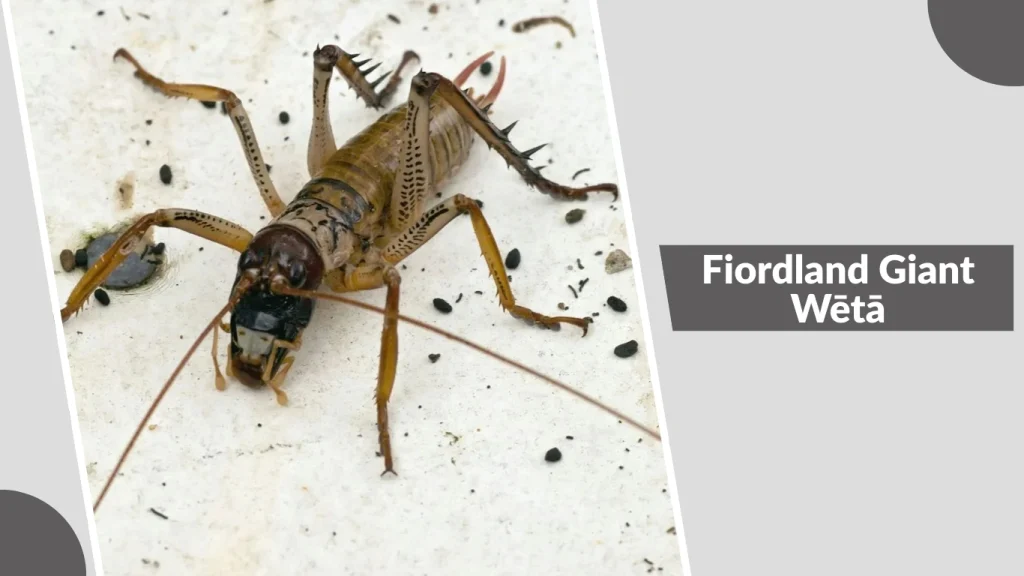
The Fiordland Giant Wētā (Deinacrida pluvialis) is a rare giant wētā species that lives in the remote Fiordland region of New Zealand’s South Island. Known for its large size and preference for damp, high-rainfall habitats, this species is among the most elusive of all wētā.
Identification
- Large body, typically 7–8 cm in length
- Heavy-bodied with strong, spiny hind legs
- Long antennae, often longer than its body
- Brown to mottled grey coloration for camouflage in wet forest environments
- Distinct robust form compared to tree wētā
Habitat
This species inhabits the rain-soaked Fiordland region, living in alpine grasslands, shrublands, and damp forest floors. It hides under rocks, logs, and dense vegetation, making it difficult to observe in the wild.
Diet
The Fiordland Giant Wētā feeds mainly on plant material, including leaves, flowers, seeds, and fruit. It may occasionally nibble on small invertebrates when available.
Behavior
Nocturnal and relatively slow-moving, this giant wētā is not aggressive. It relies on its size and spiny legs for defense while playing an important role in the ecosystem by helping recycle vegetation. Because of its isolated habitat, it is less threatened by introduced predators compared to lowland wētā.
15. Kaikoura Giant Wētā

The Kaikoura Giant Wētā (Deinacrida parva) is a localized species of giant wētā found in the Kaikoura region of New Zealand’s South Island. Though smaller than some of its giant relatives, it is still a large and impressive insect, well adapted to rocky alpine habitats.
Identification
- Medium to large size, body length 5–7 cm
- Stout body with spiny hind legs
- Brownish-grey coloration with darker mottling for camouflage
- Long, thread-like antennae often exceeding body length
- Slightly smaller and slimmer than other giant wētā species
Habitat
This species is restricted to rocky slopes, scree, and alpine tussock grasslands in the Kaikoura Ranges. It shelters under stones and within crevices, where it avoids both predators and extreme weather.
Diet
The Kaikoura Giant Wētā is mainly herbivorous, consuming alpine grasses, leaves, flowers, and mosses. It occasionally supplements its diet with small invertebrates.
Behavior
Nocturnal and relatively slow, the Kaikoura Giant Wētā is non-aggressive compared to tree wētā. It is well adapted to alpine climates, often remaining hidden during the day and emerging at night to feed. Its limited range makes it vulnerable, so conservation attention is important for this species.
16. Bounty Island Wētā

The Bounty Island Wētā (Deinacrida elegans) is a rare and distinctive giant wētā species found only on a few predator-free offshore islands of New Zealand. Its striking appearance and limited range make it one of the most unique and vulnerable members of the wētā family.
Identification
- Medium to large size, body length 5–7 cm
- Slender build compared to other giant wētā
- Beautifully patterned body with pale and dark markings
- Long, delicate antennae extending beyond body length
- Spiny legs adapted for climbing and protection
Habitat
This species inhabits predator-free offshore islands, including the Bounty Islands and some nearby rocky islets. It prefers rocky coastal habitats and dense vegetation where it can hide during the day.
Diet
The Bounty Island Wētā is primarily herbivorous, feeding on leaves, flowers, and fruits. It may also eat small invertebrates when plant matter is scarce.
Behavior
It is nocturnal and relatively slow-moving, emerging at night to forage. The species is non-aggressive and relies on camouflage and isolation for protection. Because of its limited range, it is considered vulnerable and is carefully monitored by conservationists.
17. Stephens Island Ground Wētā

The Stephens Island Ground Wētā (Hemiandrus maculifrons) is a ground-dwelling wētā species unique to Stephens Island in New Zealand. Unlike the giant and tree wētā, this species lives close to the ground and is less conspicuous, hiding under logs, rocks, and leaf litter during the day.
Identification
- Small to medium size, body length 2–4 cm
- Slim build with long antennae
- Brown to grey coloration with faint mottled patterns for camouflage
- Lacks the large spiny hind legs seen in giant wētā
- More compact body adapted for ground-dwelling habits
Habitat
The Stephens Island Ground Wētā lives in forests and scrubland on Stephens Island. It shelters under rocks, logs, and in soil burrows, where it avoids predators and extreme weather.
Diet
This species is omnivorous, feeding on leaves, fallen fruit, fungi, and small invertebrates. Its flexible diet makes it well adapted to the island environment.
Behavior
Stephens Island Ground Wētā are nocturnal and elusive. Unlike tree wētā, they do not use tree holes but instead remain hidden in soil or ground litter. They emerge at night to forage and are generally non-aggressive. Their restricted island distribution makes them vulnerable to habitat changes and predation.
18. North Island Ground Wētā

The North Island Ground Wētā (Hemiandrus pallitarsis) is one of the best-known ground wētā species in New Zealand. Unlike tree and giant wētā, it spends most of its life in underground burrows and emerges at night to feed. This species has also been studied extensively for its unusual reproductive behaviors.
Identification
- Small to medium size, body length 2–3.5 cm
- Slender build with long antennae
- Brownish to grey coloration with lighter banding
- Reduced spines on legs compared to tree and giant wētā
- Adapted for burrowing rather than climbing
Habitat
The North Island Ground Wētā is widely distributed across the North Island. It inhabits grasslands, forests, and gardens, where it digs burrows in soil or shelters under stones and logs.
Diet
This species is omnivorous, feeding on leaves, fallen fruit, seeds, and a variety of small invertebrates such as insects and worms. Its generalist diet helps it adapt to many habitats.
Behavior
Nocturnal and shy, the North Island Ground Wētā spends the day hidden underground and emerges at night to forage. It is notable for its maternal care: females guard their eggs and young in burrows, a rare trait among insects. This protective behavior increases survival rates for offspring.
19. South Island Ground Wētā

The South Island Ground Wētā (Hemiandrus bilobatus) is a burrowing species found across the South Island of New Zealand. Like its North Island relative, it is a ground-dweller that spends most of its life in soil burrows, coming out at night to feed. Its secretive lifestyle makes it less commonly seen than trees or giant wētā.
Identification
- Small to medium size, body length 2–3.5 cm
- Slender body with long, whip-like antennae
- Brown to grey coloration, often with subtle mottling
- Legs less spiny compared to giant and tree wētā
- Adapted for digging and living in soil burrows
Habitat
This species is widespread throughout the South Island, inhabiting forests, tussock grasslands, and sometimes alpine foothills. It constructs burrows in soil and also hides under stones, logs, or leaf litter.
Diet
The South Island Ground Wētā is omnivorous, feeding on leaves, grasses, fallen fruit, and small invertebrates. This flexibility allows it to thrive in varied ecosystems.
Behavior
Nocturnal and elusive, it spends the day inside burrows and emerges at night to forage. Like its North Island counterpart, the female provides maternal care by guarding eggs and nymphs in burrows until they are strong enough to survive alone. This behavior is unusual among insects and helps improve juvenile survival rates.
20. Raukumara Giant Wētā
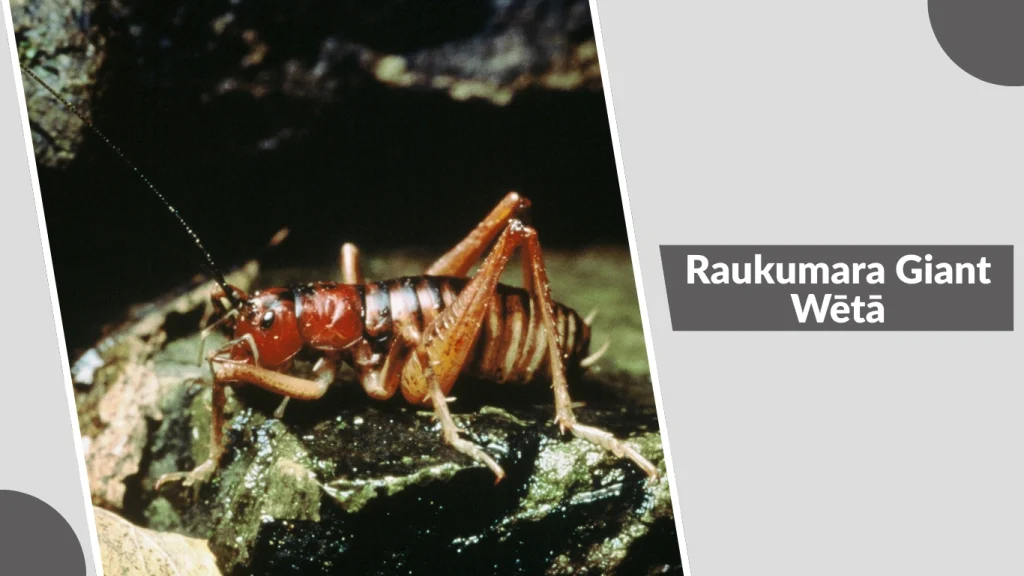
The Raukumara Giant Wētā (Deinacrida carinata) is a rare and localized giant wētā species native to the Raukumara Range in the eastern North Island of New Zealand. It is among the lesser-known giant wētā, adapted to remote and rugged forest habitats where human disturbance is minimal.
Identification
- Medium to large, body length around 6–7 cm
- Heavy-bodied with strong, spiny hind legs
- Brown to dark mottled coloration for camouflage among forest litter
- Long, thin antennae extending well beyond body length
- Slightly slimmer than the Wetapunga but still large compared to tree wētā
Habitat
The Raukumara Giant Wētā is confined to forested areas of the Raukumara Ranges. It shelters under logs, rocks, and dense vegetation, preferring cool, damp microhabitats where it avoids predators.
Diet
This species is primarily herbivorous, feeding on leaves, flowers, fruit, and seeds. It may occasionally consume small invertebrates when available, but plant material makes up the bulk of its diet.
Behavior
The Raukumara Giant Wētā is nocturnal and generally non-aggressive, relying on camouflage and its spiny legs for defense. It plays an important role in recycling plant material within its ecosystem. Due to its limited range, it is considered vulnerable to habitat loss and predation by introduced mammals.
21. Te Kakahu Skink Island Wētā

The Te Kakahu Skink Island Wētā (Deinacrida rugosa – island form) is a unique population of the Cook Strait Giant Wētā that survives on Te Kakahu-o-Tamatea (Chalky Island) in Fiordland. This island-dwelling variation has adapted to its isolated environment, making it an important example of localized conservation success.
Identification
- Large body, typically 6–8 cm in length
- Heavy build with spiny hind legs
- Brown to grey mottled coloration for camouflage
- Long antennae, often exceeding body length
- Closely resembles the Cook Strait Giant Wētā but is a distinct island form
Habitat
This wētā is restricted to Te Kakahu (Chalky Island), a predator-free sanctuary in Fiordland. It shelters under logs, rocks, and dense coastal vegetation, thriving in the island’s cool and damp climate.
Diet
Like its mainland relatives, the Te Kakahu Skink Island Wētā is mainly herbivorous, eating leaves, flowers, fruit, and seeds. It may also consume small invertebrates opportunistically.
Behavior
Nocturnal and slow-moving, this species avoids predators by remaining hidden during the day and emerging at night to feed. Its survival highlights the importance of island sanctuaries in protecting New Zealand’s endangered insects from introduced predators.
22. Poor Knights Island Wētā
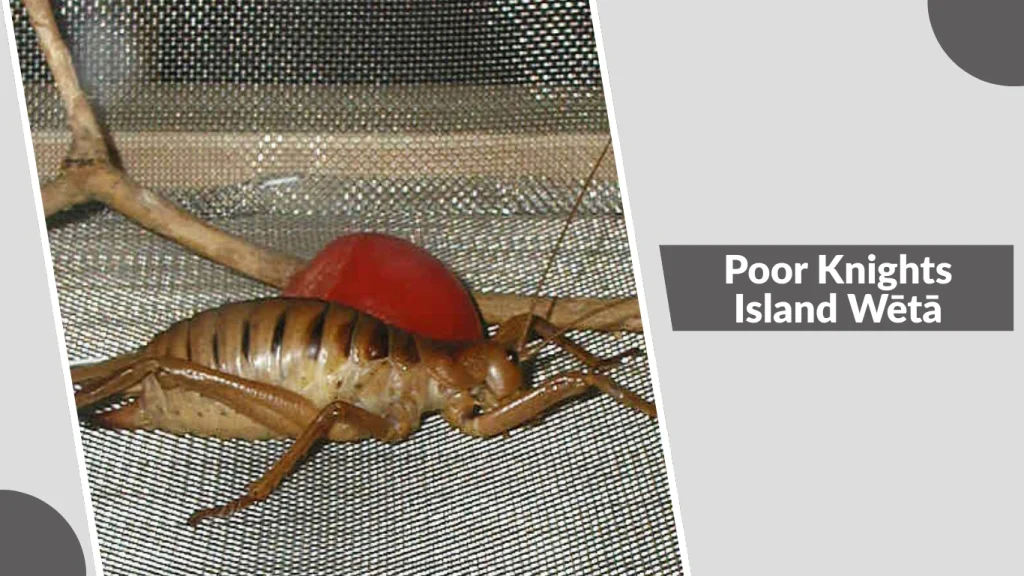
The Poor Knights Island Wētā (Deinacrida fallai) is a giant wētā species found only on the Poor Knights Islands, off the coast of northern New Zealand. It is one of the largest insects in the world and is notable for its striking size and restricted island range.
Identification
- Very large, body length 7–9 cm
- Heavy-bodied with powerful, spiny legs
- Brown to reddish-brown coloration with mottled patterns
- Long, slender antennae, often longer than its body
- Considered one of the largest of all giant wētā species
Habitat
This wētā is confined to the Poor Knights Islands, which are predator-free and covered in dense coastal forest and scrub. It shelters under logs, rocks, and thick vegetation, preferring humid microhabitats.
Diet
Primarily herbivorous, it feeds on leaves, flowers, fruit, and seeds. It occasionally supplements its diet with small invertebrates, especially when plant material is scarce.
Behavior
The Poor Knights Island Wētā is nocturnal and non-aggressive. Its large size helps deter predators, while its camouflage makes it hard to spot among leaf litter and branches. As a seed disperser and recycler of vegetation, it contributes significantly to the island’s ecosystem balance.
23. Banks Peninsula Tree Wētā

The Banks Peninsula Tree Wētā (Hemideina ricta) is a relatively small and localized tree wētā species found only in Banks Peninsula on New Zealand’s South Island. It is one of the rarer tree wētā and has a restricted distribution compared to its close relatives.
Identification
- Small to medium size, body length around 3–4.5 cm
- Slim build compared to other tree wētā
- Brownish to dark coloration with lighter banding
- Long antennae, often exceeding body length
- Less robust and aggressive than larger tree wētā species
Habitat
This species is limited to Banks Peninsula, inhabiting forest remnants, scrubland, and sometimes farmland edges. It shelters in tree cavities, under bark, or in crevices, making it highly dependent on native vegetation and old-growth trees.
Diet
The Banks Peninsula Tree Wētā is omnivorous, feeding on leaves, fruit, flowers, and small invertebrates. Its adaptable diet supports survival in fragmented habitats.
Behavior
Nocturnal and relatively shy compared to other tree wētā, this species emerges at night to forage. Males guard tree cavities containing females but are less aggressive in defending them than larger relatives. Due to its limited range and habitat fragmentation, conservation of native forest areas is critical for its survival.
24. Middle Island Tree Wētā

The Middle Island Tree Wētā (Hemideina insularis) is an island-dwelling species restricted to Middle Island, part of the Mercury Islands group off the coast of New Zealand’s North Island. It is one of the lesser-known trees wētā, surviving in a predator-free environment that has helped preserve its population.
Identification
- Small to medium size, body length about 3–5 cm
- Slim build with long, whip-like antennae
- Brown to dark coloration with faint banding across the thorax and abdomen
- Spiny hind legs for climbing and defense
- Closely resembles other tree wētā but distinguished by its island range
Habitat
This wētā is confined to Middle Island, where it inhabits coastal forest, scrubland, and rocky areas. It shelters in tree holes, under bark, and in crevices, relying on the predator-free sanctuary of the island for survival.
Diet
The Middle Island Tree Wētā is omnivorous, consuming leaves, fruit, flowers, seeds, and small invertebrates. Its generalist diet allows it to thrive in the limited food sources of island ecosystems.
Behavior
Nocturnal and reclusive, the Middle Island Tree Wētā spends the day hidden and emerges at night to forage. Males guard tree cavities where females reside, though they are generally less aggressive than mainland relatives. Its restricted range makes it vulnerable, but the absence of mammalian predators offers protection.
25. Scree Wētā

The Scree Wētā (Deinacrida connectens) is a remarkable giant wētā species adapted to the cold, rocky alpine environments of New Zealand’s South Island. Unlike forest-dwelling wētā, this species thrives in harsh scree slopes where few other insects can survive.
Identification
- Medium to large, body length 5–7 cm
- Slender compared to other giant wētā species
- Grey to brown mottled coloration that blends with alpine rocks
- Long, thin antennae extending beyond body length
- Hind legs spiny but less robust than lowland giant wētā
Habitat
The Scree Wētā is found in alpine scree slopes and rocky habitats throughout the Southern Alps. It shelters under rocks and within crevices, avoiding predators and extreme daytime temperatures.
Diet
This species feeds mainly on alpine vegetation, including grasses, herbs, and mosses. It may also scavenge decaying plant matter and occasionally small invertebrates.
Behavior
The Scree Wētā is nocturnal and cold-adapted, emerging at night to feed. It has developed freeze tolerance, allowing it to survive sub-zero alpine temperatures. This adaptation makes it one of the hardiest wētā, well suited to the demanding conditions of high-altitude ecosystems.
