
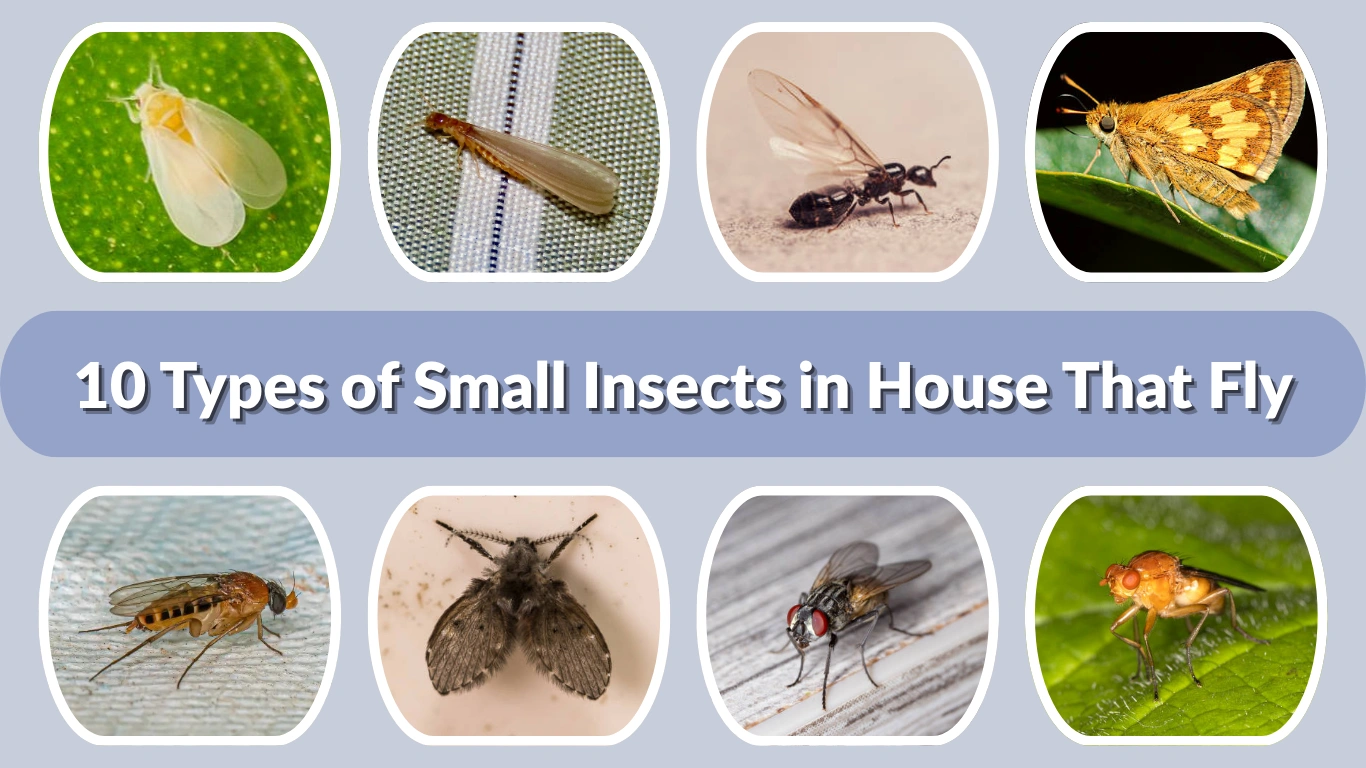
Small flying insects inside the house are a common problem that many people face, especially in warm and humid conditions. These pests are usually attracted to food, moisture, and organic waste, making kitchens, bathrooms, and indoor plant areas their favorite spots. While most of them are harmless, their presence can be annoying and sometimes unhygienic.
Understanding the different types of flying insects in your home is important for proper identification and control. Each insect has its own habits, breeding areas, and food preferences, which means the solution may vary. In this guide, you’ll find 10 common types of small flying insects found in houses, along with key details to help you recognize and deal with them effectively.
1. Fruit Flies
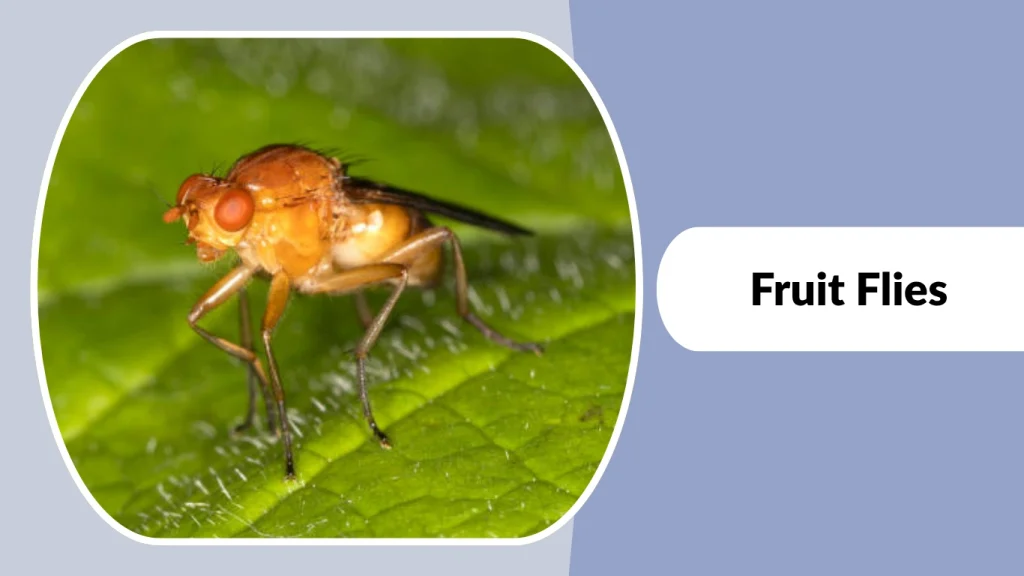
Fruit flies are tiny flying insects commonly found inside homes, especially around ripe or decaying food. They thrive in warm indoor environments and are most noticeable in kitchens, garbage areas, or anywhere sugary substances are exposed. Due to their rapid reproduction, even a small problem can quickly turn into an infestation if not controlled.
Identification
- Very small size (about 2–4 mm long)
- Light brown, yellowish, or tan body color
- Distinct bright red eyes (in common species)
- Transparent wings with a rounded shape
- Slow, hovering flight and tendency to cluster
Habitat
Fruit flies prefer moist, warm environments where organic material is readily available. Inside homes, they are commonly found around ripened or rotting fruits, vegetables, and food scraps. Drains, garbage bins, recycling containers, and damp mops can also serve as ideal breeding spots. Even small residues of juice or sticky spills can attract them.
They are especially active in kitchens but can also spread to other areas if food sources exist. Poor sanitation or uncovered food increases the likelihood of infestation. Because they can breed in very small amounts of organic matter, they are difficult to eliminate without thorough cleaning.
Behaviors
Fruit flies are highly attracted to fermenting substances and often gather in groups around food sources. They are most active during the daytime and tend to hover in small swarms. Their movement is slow and erratic, making them easy to spot.
They are also persistent and will continue returning to the same food source unless it is removed. Once inside a home, they quickly multiply and spread, making early control important.
Diet
Fruit flies primarily feed on sugars and fermenting organic materials. Their diet includes overripe fruits, vegetables, sugary liquids, alcohol, and decomposing food waste. They are not feeding on the solid fruit itself but rather on the yeast and microorganisms that grow on it.
Because of this, even invisible residues—like a drop of juice or a sticky surface—can sustain them. Their feeding habits are closely tied to their breeding behavior, as they lay eggs directly on these food sources.
Lifecycle
Fruit flies have a very fast lifecycle, which is one reason they become a nuisance so quickly. Females lay eggs on moist, decaying organic material, and these eggs hatch within 24–48 hours into larvae. The larvae feed continuously before entering the pupal stage.
Under ideal conditions, the entire lifecycle—from egg to adult—can be completed in about 7 to 10 days. This rapid reproduction allows populations to grow exponentially in a short time, especially in warm indoor environments with abundant food sources.
2. Houseflies
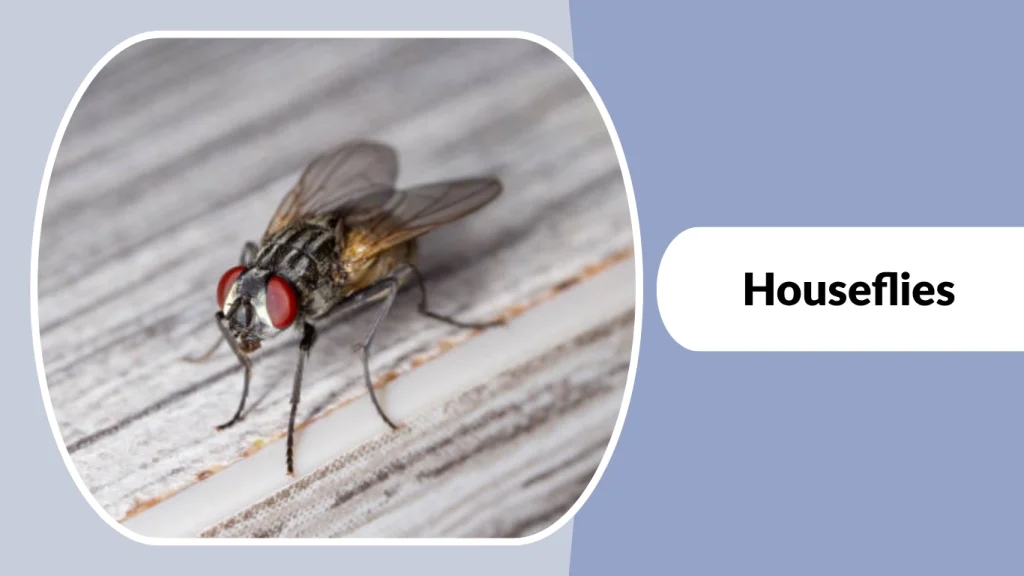
Houseflies are one of the most common flying insects found indoors. They are larger than many other household flies and are often seen buzzing around living spaces, especially where food, waste, or open windows are present. Besides being annoying, they can carry and spread germs due to their feeding habits.
Identification
- Medium size (about 6–7 mm long)
- Gray body with four dark stripes on the thorax
- Large reddish compound eyes
- Transparent wings held flat over the back
- Fast, direct flight with frequent buzzing
Habitat
Houseflies thrive in environments where food and waste are easily accessible. Inside homes, they are commonly found in kitchens, dining areas, and near garbage bins. They are also attracted to animal waste, compost, and decaying organic matter.
They typically enter homes through open doors, windows, or small gaps. Warm temperatures and poor sanitation increase their presence. Houseflies often rest on walls, ceilings, or surfaces near food sources.
Behaviors
Houseflies are active during the daytime and are constantly moving between surfaces and food sources. They are attracted to strong odors and can quickly locate food, even from a distance.
They frequently land on different surfaces, including garbage, food, and human skin, which increases the risk of contamination. Their rapid movement and buzzing sound make them easy to notice but sometimes difficult to catch.
Diet
Houseflies feed on a wide range of organic materials. Their diet includes human food, food waste, animal feces, and other decaying matter. Since they cannot chew, they release digestive enzymes onto food to liquefy it before feeding.
This feeding process makes them potential carriers of bacteria and pathogens, as they often move between contaminated materials and clean surfaces.
Lifecycle
Houseflies reproduce quickly under favorable conditions. Females lay eggs in moist organic material such as garbage, manure, or rotting food. The eggs hatch into larvae (maggots) within a day.
The larvae feed and grow before entering the pupal stage. Under warm conditions, the full lifecycle from egg to adult can be completed in about 7 to 10 days, allowing populations to grow rapidly indoors.
3. Drain Flies
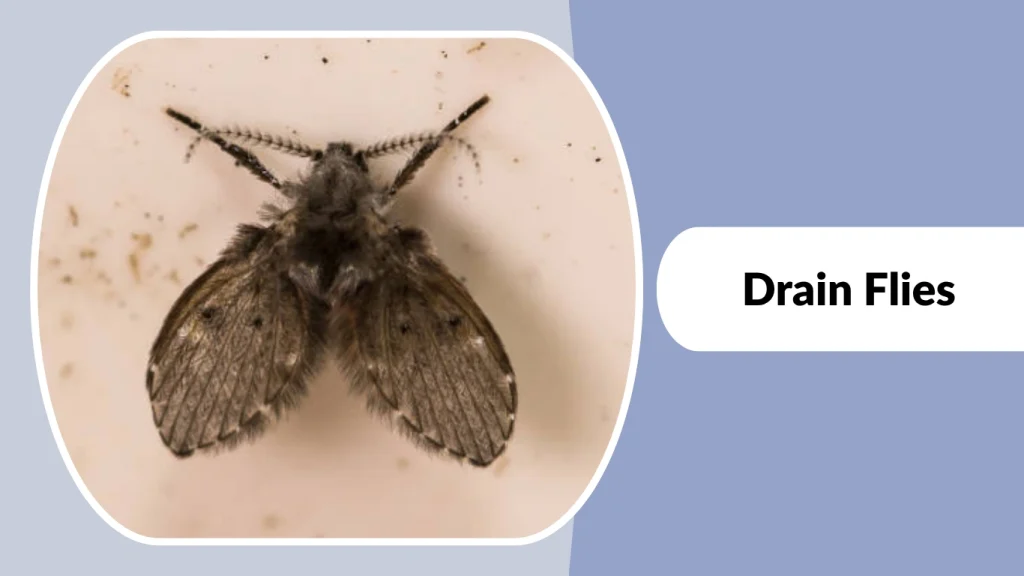
Drain flies, also known as moth flies, are small flying insects commonly found in bathrooms, kitchens, and other damp areas of the home. They are often seen resting on walls near drains and are known for their fuzzy appearance and slow, weak flight.
Identification
- Very small size (about 2–5 mm long)
- Gray, black, or tan fuzzy body
- Wings covered with fine hairs, giving a moth-like look
- Heart-shaped wings when at rest
- Weak, short, hopping flight pattern
Habitat
Drain flies thrive in moist, organic-rich environments. They are most commonly found in sink drains, floor drains, showers, and sewage systems where slime and organic buildup accumulate. These areas provide the perfect breeding ground for their larvae.
Inside homes, they are usually spotted near bathroom sinks, kitchen drains, or basements with poor drainage. Standing water and neglected plumbing systems can significantly increase their population.
They tend to stay close to their breeding sites and rarely travel far, which makes their presence a clear sign of a drainage issue nearby.
Behaviors
Drain flies are mostly active during the evening and nighttime, although they can be seen during the day resting on walls or ceilings. They are weak fliers and often move in short, erratic bursts rather than long flights.
They are not aggressive and do not bite, but they can become a nuisance when their numbers increase. Their tendency to gather near drains makes them easy to identify.
Diet
Drain fly larvae feed on organic matter found in the slimy buildup inside pipes and drains. This includes decaying food particles, grease, and other waste materials.
Adult drain flies do not feed heavily and primarily focus on reproduction. Their lifecycle is closely tied to the availability of organic sludge in damp environments.
Lifecycle
Drain flies lay their eggs in the gelatinous film that forms inside drains. The eggs hatch into larvae within a few days, and the larvae feed on the organic material present in the slime layer.
The full lifecycle—from egg to adult—usually takes about 1 to 3 weeks, depending on environmental conditions. Because they breed in hidden areas, infestations can persist until the source is properly cleaned.
4. Fungus Gnats
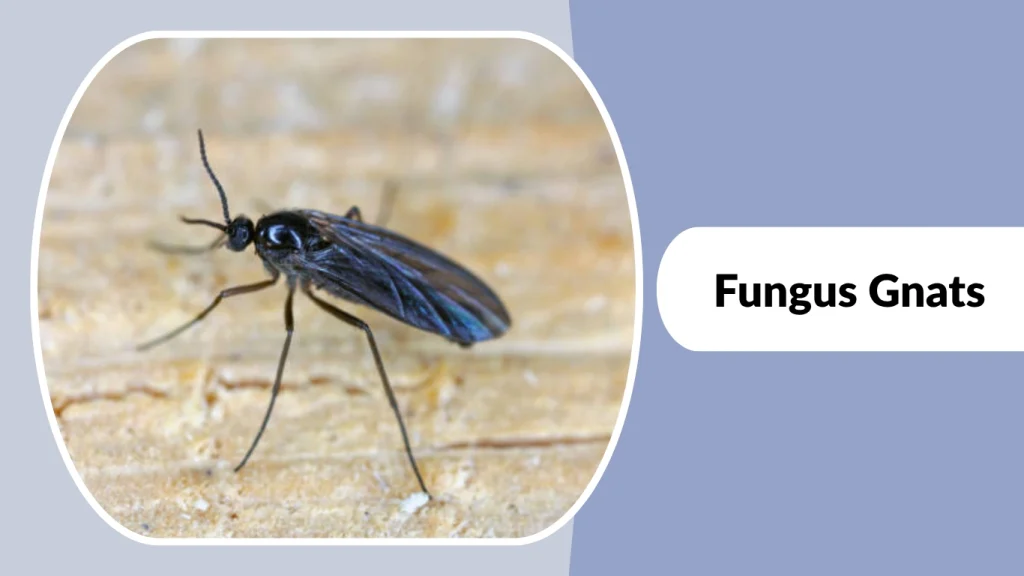
Fungus gnats are tiny flying insects often found indoors around houseplants. They are attracted to moist soil and organic matter, making them a common nuisance in homes with overwatered plants. While mostly harmless to humans, they can damage plant roots in large numbers.
Identification
- Very small size (about 2–4 mm long)
- Slender, dark gray or black body
- Long legs and antennae
- Clear wings with a delicate appearance
- Weak, mosquito-like flight near soil
Habitat
Fungus gnats prefer damp environments rich in organic material. Inside homes, they are most commonly found in potted plants, especially where the soil remains consistently wet. Overwatering creates ideal breeding conditions.
They may also appear near windows, plant trays, or areas with high humidity. Poor drainage and decaying plant matter increase their presence. They tend to stay close to their breeding sites and are rarely found far from indoor plants.
Behaviors
Fungus gnats are weak fliers and usually hover around plants or crawl on the soil surface. They are most noticeable when disturbed, flying in small groups around pots.
They are attracted to light and may gather near windows. While adults are mostly harmless, their presence often indicates an underlying moisture issue in the soil.
Diet
Adult fungus gnats feed very little and primarily focus on reproduction. The larvae, however, feed on fungi, organic matter, and sometimes plant roots within the soil.
In large numbers, larvae can damage young plants by feeding on root systems, leading to poor growth or wilting.
Lifecycle
Fungus gnats have a short lifecycle that can be completed in about 2 to 4 weeks. Females lay eggs in moist soil, and the larvae hatch within a few days.
The larvae feed for about 1–2 weeks before pupating in the soil. Adults then emerge and begin the cycle again. Continuous moisture allows multiple generations to develop quickly indoors.
5. Phorid Flies

Phorid flies, also known as humpbacked flies or scuttle flies, are small insects often found indoors near decaying organic matter. They are commonly mistaken for fruit flies but have distinct movement patterns and body shape. These flies can become a nuisance when they infest hidden, moist areas.
Identification
- Very small size (about 2–4 mm long)
- Humpbacked or arched thorax
- Brown or black body color
- Short wings compared to body size
- Rapid, jerky running movement instead of flying
Habitat
Phorid flies prefer damp environments rich in organic decay. Indoors, they are often found near garbage bins, drains, compost, or even inside wall voids where moisture and organic matter accumulate.
They can also breed in sewage systems, rotting food, or dead animals hidden in walls or under floors. Because of this, infestations sometimes indicate a hidden sanitation or plumbing issue.
Unlike many other flies, phorid flies can travel deeper into buildings, making them harder to trace to their source.
Behaviors
Phorid flies are known for their distinctive behavior of running quickly across surfaces instead of flying. When they do fly, their movement is short and erratic.
They are active both during the day and night and tend to gather near breeding sites. Their ability to move quickly across surfaces makes them difficult to catch.
They are not aggressive but can become bothersome when present in large numbers.
Diet
Phorid flies feed on a wide range of organic materials. This includes decaying food, garbage, sewage, and even dead insects or animals.
Larvae feed on moist, decomposing matter, which supports their rapid development. Their feeding habits make them common in unsanitary or neglected areas.
Lifecycle
Phorid flies reproduce quickly under suitable conditions. Females lay eggs on moist organic material, where larvae hatch within a few days.
The larvae feed and grow before entering the pupal stage. The full lifecycle can be completed in about 2 to 4 weeks, depending on temperature and food availability. Their ability to breed in hidden areas makes infestations persistent if not properly addressed.
6. Mosquitoes
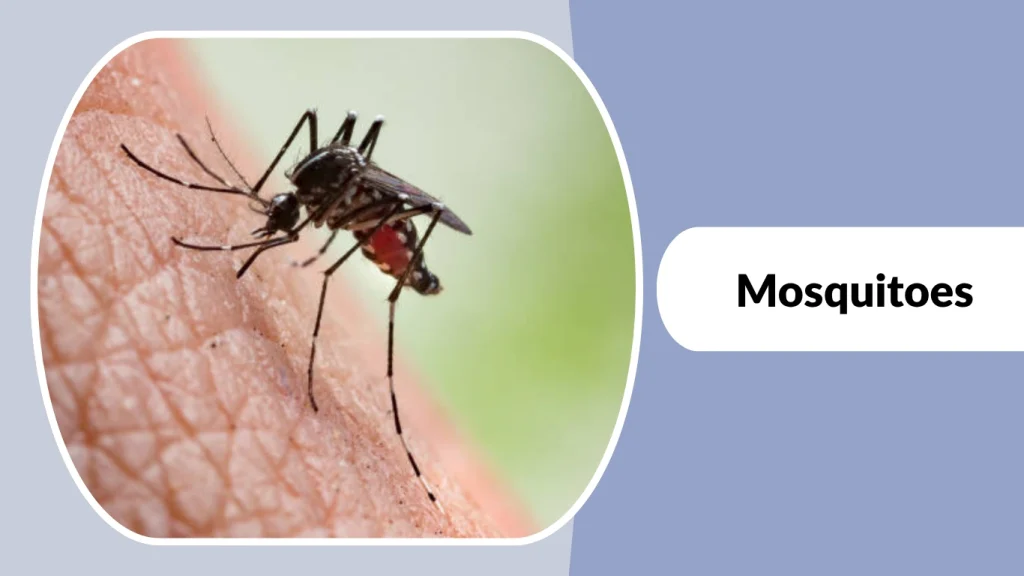
Mosquitoes are small flying insects commonly found both indoors and outdoors. They are well known for their biting behavior and ability to transmit diseases. Inside homes, they are often found in areas with standing water and can become a serious nuisance, especially at night.
Identification
- Small size (about 3–6 mm long)
- Slender body with long legs
- Narrow wings with visible veins
- Long, needle-like mouthpart (proboscis)
- High-pitched buzzing sound during flight
Habitat
Mosquitoes thrive in environments with standing water, which is essential for their reproduction. Inside homes, they may breed in water collected in containers, flower pots, buckets, clogged drains, or even small puddles.
They prefer warm, humid conditions and are often found in dark, sheltered areas during the day, such as under furniture or in corners. Poor drainage and open water sources increase their presence indoors.
Even small amounts of stagnant water can support mosquito breeding, making them difficult to control without proper elimination of water sources.
Behaviors
Mosquitoes are most active during early morning and evening, though some species bite at night. Female mosquitoes are responsible for biting humans and animals to obtain blood needed for egg production.
They are attracted to body heat, carbon dioxide, and body odors. Their flight is light and silent at times, but often accompanied by a noticeable buzzing sound.
Mosquitoes tend to rest during the day and become active when conditions are cooler.
Diet
Male mosquitoes feed mainly on plant nectar and juices. Female mosquitoes also consume nectar but require blood meals to develop their eggs.
They feed on humans and animals by piercing the skin and drawing blood. This feeding behavior is what makes them both irritating and potentially dangerous.
Lifecycle
Mosquitoes have a four-stage lifecycle: egg, larva, pupa, and adult. Eggs are laid in or near standing water, where they hatch into larvae within a few days.
Larvae live in water and develop into pupae before emerging as adults. Under ideal conditions, the entire lifecycle can be completed in about 1 to 2 weeks, allowing rapid population growth.
7. Moths
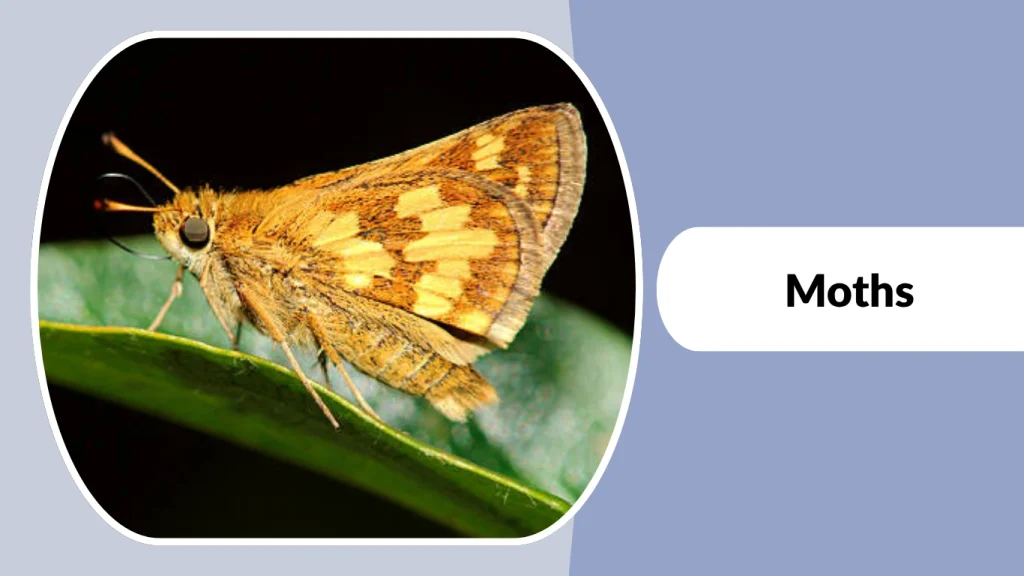
Moths are common flying insects found inside homes, especially in areas where food or fabric is stored. While many moths are harmless, some species can damage clothing, carpets, and stored food products. They are usually active at night and are attracted to light sources.
Identification
- Small to medium size (varies by species)
- Soft, powdery wings often dull in color (brown, gray, or beige)
- Wings held flat or tent-like over the body
- Feathery or thread-like antennae
- Weak, fluttering flight pattern
Habitat
Moths are commonly found in dark, undisturbed areas inside homes. Pantry moths prefer kitchen cabinets and food storage areas, especially where grains, flour, or cereals are kept. Clothes moths, on the other hand, are found in wardrobes, closets, and storage boxes.
They are attracted to areas with little disturbance and easy access to food or fabric. Poor storage practices and lack of cleaning can increase their presence indoors.
Moths often hide during the day and become active at night, making them less noticeable until the infestation grows.
Behaviors
Moths are primarily nocturnal and are strongly attracted to artificial light. They tend to flutter around light bulbs, lamps, and screens during the night.
They are not strong fliers and usually move in a slow, erratic pattern. Many species avoid human contact and quickly hide when disturbed.
Some moths lay eggs in hidden places, which allows their larvae to feed undetected for long periods.
Diet
Adult moths typically feed on nectar or may not feed at all, depending on the species. However, their larvae are the main concern indoors.
Pantry moth larvae feed on stored food products like grains, flour, nuts, and dried fruits. Clothes moth larvae feed on natural fibers such as wool, silk, and cotton, causing visible damage.
Lifecycle
Moths undergo a complete lifecycle consisting of egg, larva, pupa, and adult stages. Females lay eggs in suitable environments such as food sources or fabrics.
The larvae hatch and begin feeding, which is the most destructive stage. After feeding, they pupate and eventually emerge as adult moths. The full lifecycle can take several weeks to a few months depending on conditions.
8. Flying Ants
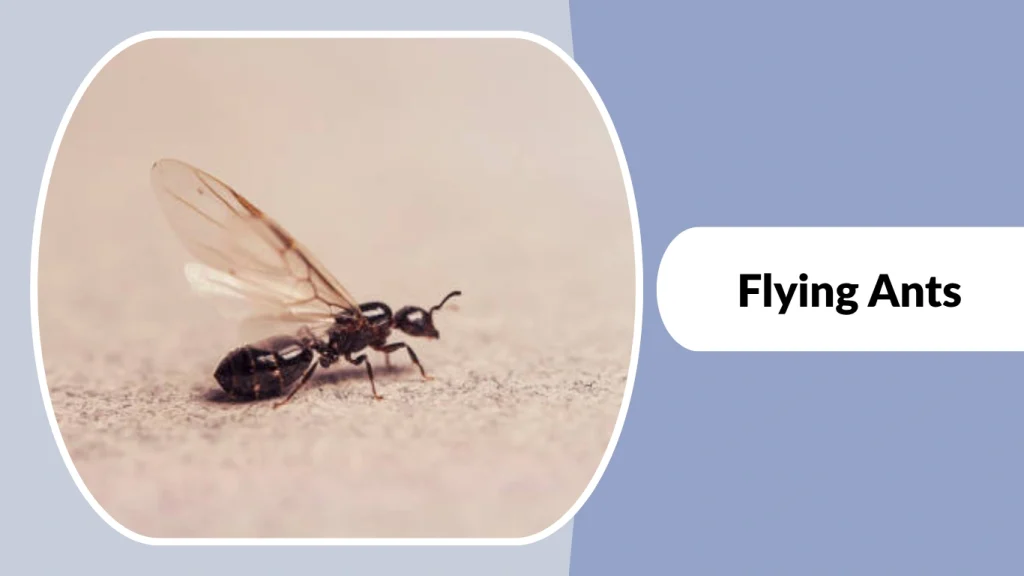
Flying ants are reproductive members of ant colonies, often seen indoors during certain times of the year. They are usually noticed when they swarm in large numbers, especially near windows, doors, or light sources. Their presence may indicate a nearby or hidden ant colony.
Identification
- Medium size (varies by species)
- Black, brown, or reddish body
- Two pairs of wings (front wings larger than back wings)
- Elbowed antennae
- Narrow, pinched waist
Habitat
Flying ants originate from established ant colonies, which may be located outdoors or inside walls, floors, or foundations. Indoors, they are commonly seen near windows, ceilings, or light sources during swarming periods.
They prefer warm environments and often emerge after rain or during humid conditions. If they appear inside frequently, it may indicate that a colony is nesting within the structure of the house.
They are not permanent indoor insects but appear temporarily for reproduction.
Behaviors
Flying ants are most active during swarming events, which occur when reproductive ants leave the colony to mate and establish new colonies. During this time, they may gather in large groups and fly toward light.
After mating, they shed their wings and search for new nesting sites. Their flight is usually short-lived, and most die shortly after the swarming period.
They are not aggressive but can be alarming due to their sudden appearance in large numbers.
Diet
Flying ants have similar feeding habits to regular ants. They consume a variety of foods, including sugars, crumbs, and organic matter.
Worker ants feed the colony, while reproductive ants rely on stored energy during their brief flying stage. Their diet is not a major concern during swarming but becomes relevant once new colonies are established.
Lifecycle
Flying ants are part of the reproductive phase of an ant colony. They develop from eggs into larvae, then pupae, and finally into adult ants.
Only certain ants develop wings and participate in swarming. After mating, females (future queens) land, shed their wings, and begin new colonies. The lifecycle then continues as the new colony grows and produces more ants over time.
9. Termite Swarmers
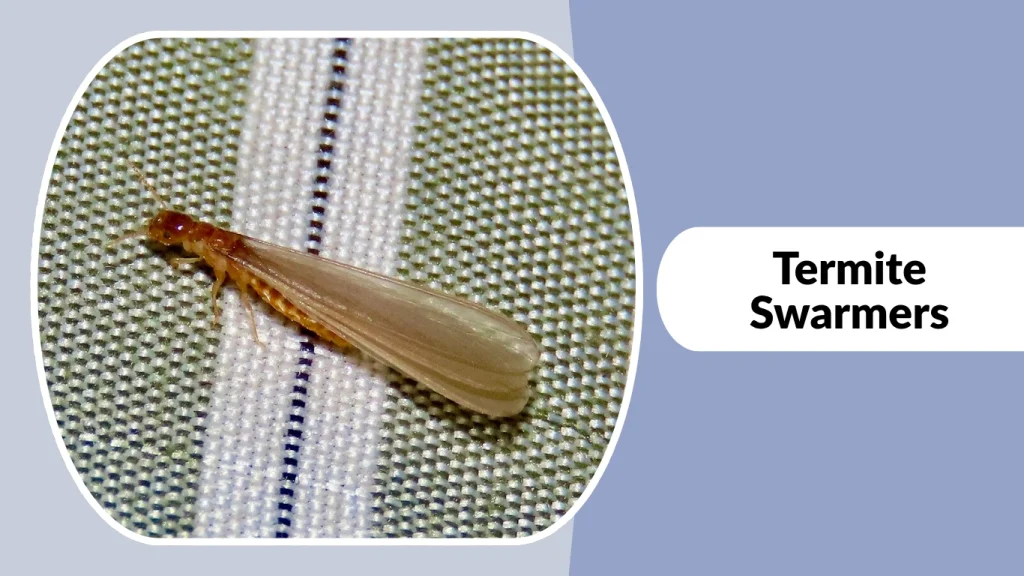
Termite swarmers, also known as alates, are winged reproductive termites that leave their colonies to form new ones. They are often mistaken for flying ants but can cause serious concern because they indicate a potential termite infestation inside or near the home.
Identification
- Small to medium size (about 4–10 mm long)
- Soft, pale brown to black body
- Two pairs of equal-sized wings
- Straight antennae
- Thick, straight waist (no pinched middle)
Habitat
Termite swarmers originate from established termite colonies, usually hidden in wood, soil, or structural areas of a home. Indoors, they are often found near windows, doors, or light sources during swarming events.
They prefer warm, humid conditions and are commonly seen after rain. Their presence inside a home often indicates an active colony within walls, floors, or wooden structures.
Because termites live in concealed environments, swarmers may be the first visible sign of an infestation.
Behaviors
Swarmers are most active during specific seasons when they leave the colony in large numbers to reproduce. They are attracted to light and may gather around bulbs or windows.
After a short flight, they shed their wings and search for a suitable place to establish a new colony. Their swarming period is brief, but the sudden appearance can be alarming.
They do not bite or sting, but their presence signals potential structural damage risks.
Diet
Termites primarily feed on cellulose, which is found in wood, paper, and other plant-based materials. While swarmers themselves do not feed much during their short lifespan, the colonies they form rely heavily on these materials.
This feeding behavior makes termites highly destructive, especially to wooden structures, furniture, and building materials.
Lifecycle
Termite swarmers are part of the reproductive stage of the termite lifecycle. After mating, they shed their wings and become kings and queens of new colonies.
The queen lays eggs that hatch into larvae, which develop into workers, soldiers, or future swarmers. The lifecycle continues over several years, with colonies growing large and potentially causing significant structural damage if left untreated.
10. Whiteflies
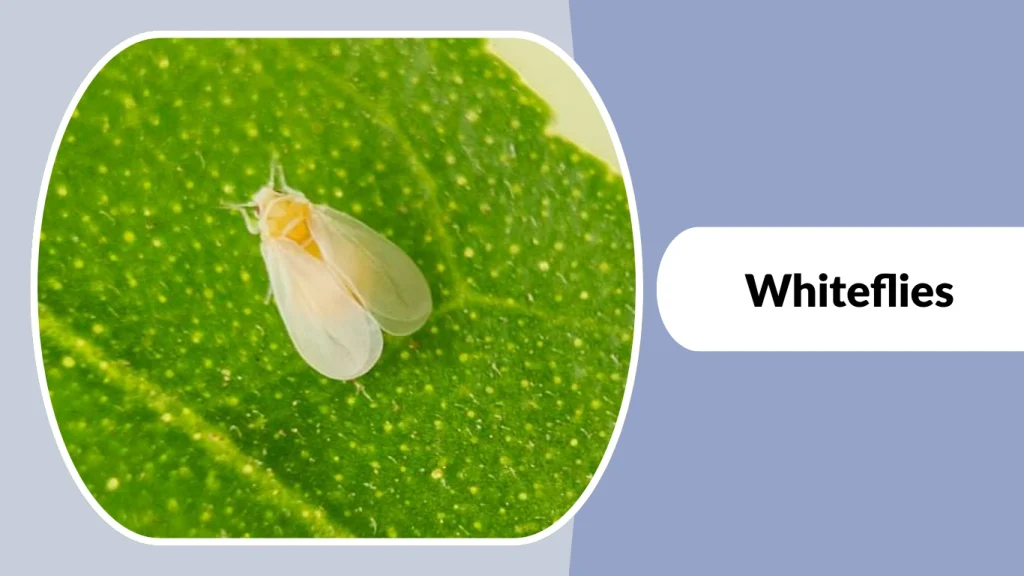
Whiteflies are tiny flying insects often found indoors on houseplants. They resemble small white moths and are usually seen flying up in a cloud when plants are disturbed. While they are more common in gardens, they can easily infest indoor plants and become a persistent problem.
Identification
- Very small size (about 1–2 mm long)
- White, powdery wings and body
- Moth-like appearance
- Found in clusters on the underside of leaves
- Weak, fluttering flight when disturbed
Habitat
Whiteflies thrive in warm environments and are commonly found on indoor plants. They prefer the underside of leaves, where they feed and lay eggs. Homes with multiple houseplants or poor air circulation are more likely to experience infestations.
They are often introduced through newly purchased plants. Once inside, they spread quickly from plant to plant, especially in enclosed or humid conditions.
Whiteflies rarely move far from their host plants, making plant areas their primary habitat indoors.
Behaviors
Whiteflies are usually inactive until disturbed. When a plant is touched, they quickly fly up in a small cloud before settling back down. They spend most of their time feeding and reproducing on leaf surfaces.
They are not aggressive and do not bite humans, but they can weaken plants over time. Heavy infestations may lead to visible plant stress and reduced growth.
Diet
Whiteflies feed on plant sap by piercing the leaves. This feeding weakens plants and can cause yellowing, wilting, or leaf drop.
They also produce a sticky substance called honeydew, which can lead to the growth of sooty mold on leaves. This further affects the plant’s health and appearance.
Lifecycle
Whiteflies have a short lifecycle that can be completed in about 2 to 4 weeks. Females lay eggs on the underside of leaves, where they hatch into larvae.
The larvae remain attached to the plant while feeding and developing. After progressing through several stages, they emerge as adult whiteflies, ready to reproduce and continue the cycle.
FAQs
What causes small flying insects in the house?
Small flying insects are usually attracted by food, moisture, or organic waste. Overripe fruits, dirty drains, standing water, and indoor plants create ideal breeding conditions. Poor sanitation and humidity make infestations more likely, especially in kitchens, bathrooms, and plant areas.
Are these flying insects harmful to humans?
Most small flying insects in homes are harmless but can be annoying. However, some like houseflies and mosquitoes can carry bacteria or spread diseases. Others, such as termites or moths, can damage property, fabrics, or food rather than directly harming people.
How can I get rid of flying insects quickly?
The fastest way is to remove their food and breeding sources. Clean surfaces, dispose of garbage regularly, fix leaks, and avoid overwatering plants. Using traps, sprays, or natural remedies can help reduce their numbers while addressing the root cause.
Why do flying insects keep coming back?
They return when the conditions that attract them are still present. Even small amounts of moisture, food residue, or hidden breeding spots can allow them to reproduce again. Consistent cleaning and maintenance are necessary to prevent recurring infestations.
Which areas of the house attract them the most?
Kitchens, bathrooms, and areas with indoor plants are the most common hotspots. Garbage bins, drains, standing water, and stored food are major attractants. Dark, damp, and undisturbed places also provide ideal environments for breeding and hiding.
