
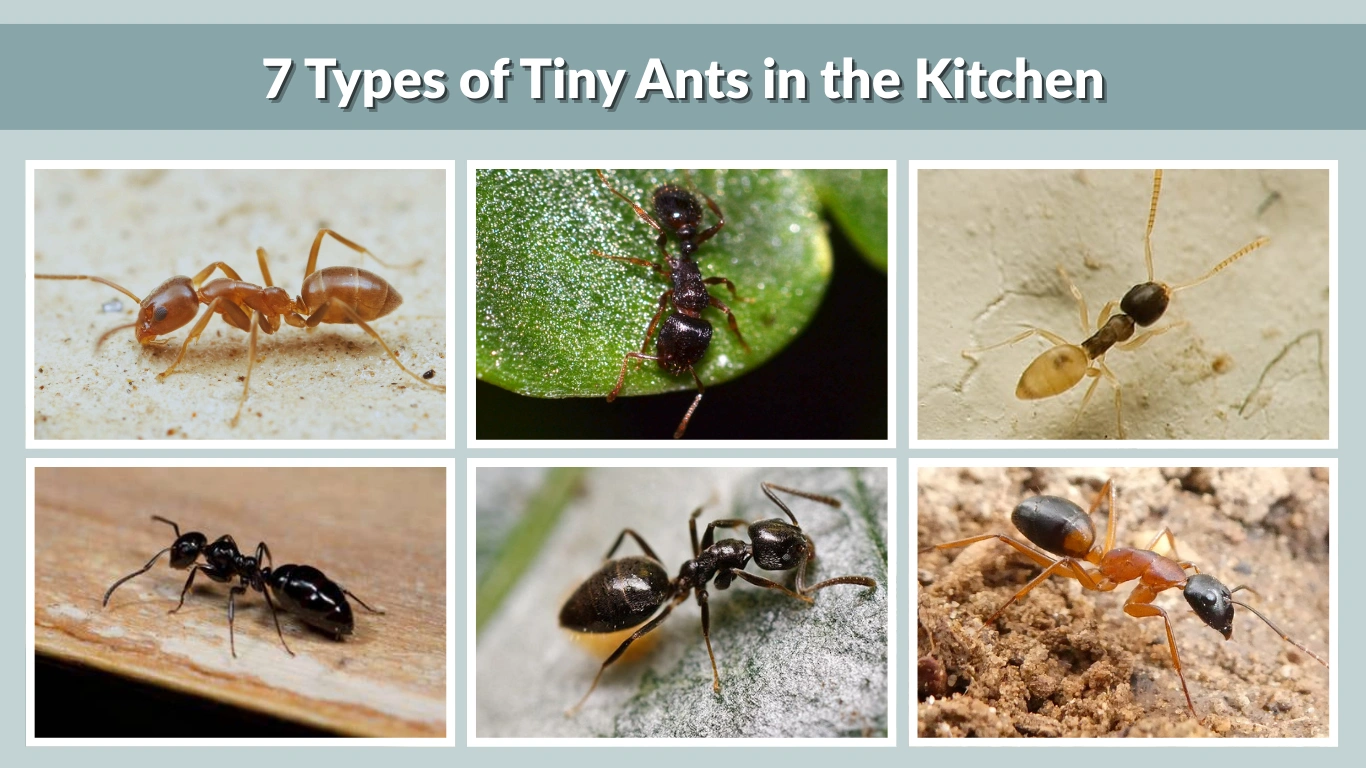
Ants are one of the most persistent pests you’ll find marching across kitchen counters, sneaking into sugar jars, or crawling around sinks. Their tiny size allows them to enter through the smallest cracks, and once they discover food or water, they quickly alert the rest of the colony. From sugar ants to ghost ants, different species behave in unique ways, which means a one-size-fits-all approach doesn’t always work. In this guide, we’ll explore seven types of tiny ants commonly found in kitchens, how to identify them, and the most effective ways to get rid of them while keeping your kitchen clean and pest-free.
Identifying Tiny Ants in the Kitchen
Understanding which type of tiny ant has invaded your kitchen is the first step toward effective control. Many ant species look similar at a glance, but their behavior, food preferences, and nesting habits vary. Proper identification helps you choose the right treatment method and avoid wasting time on solutions that don’t work.
1. Sugar Ants in the Kitchen
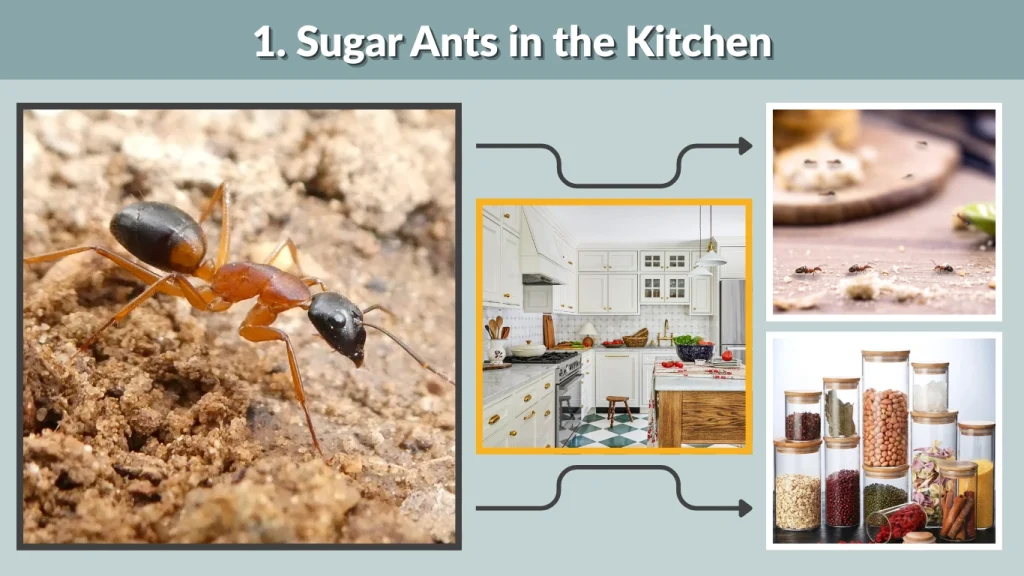
Sugar ants are among the most common culprits when tiny ants invade your kitchen. They are naturally attracted to sweet foods and sugary residues, making kitchens the perfect feeding ground. Although the term “sugar ants” is sometimes used loosely, it generally refers to small ants that target sweet substances.
Identification
- Small, usually brown or black ants
- Often found in trails on kitchen counters or near food jars
- Particularly active at night searching for crumbs, syrup, or spilled drinks
Behavior and Risks
Sugar ants are not dangerous to humans, but they are persistent. They invade in large numbers, contaminating food and spreading bacteria picked up from dirty surfaces. If left unchecked, they can establish colonies near or inside your home, making eradication more difficult.
How to Get Rid of Sugar Ants in the Kitchen
- Clean up food spills quickly: Even a few crumbs can attract a whole trail of ants.
- Seal sweets tightly: Store sugar, honey, and baked goods in airtight containers.
- Use bait traps: Sweet-based ant baits work well because worker ants carry the poison back to the colony.
- Natural remedies: Vinegar, lemon juice, and cinnamon can repel sugar ants without harsh chemicals.
2. Pharaoh Ants in the Kitchen
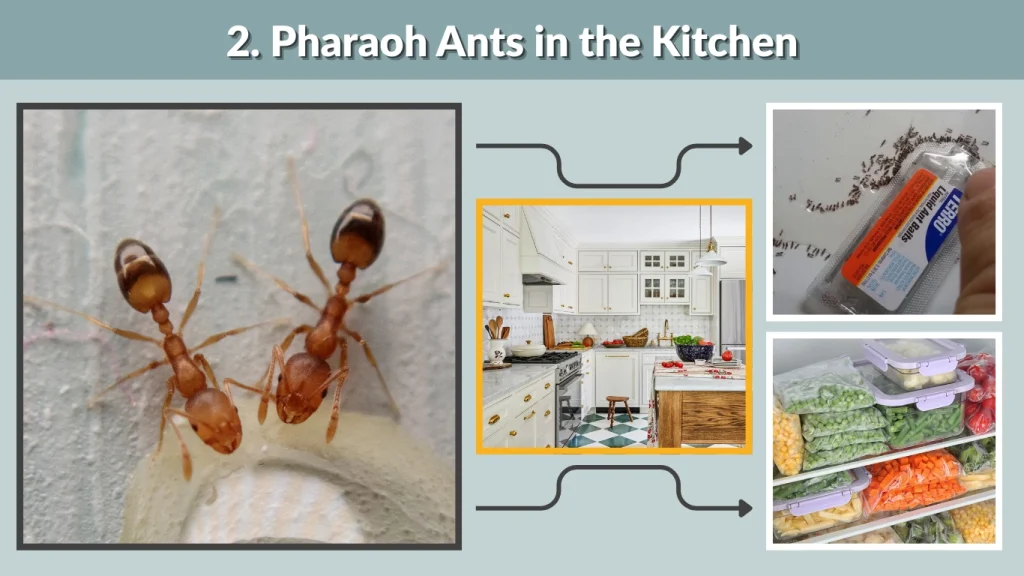
Pharaoh ants are extremely tiny, almost transparent ants that often go unnoticed until you see their trails across counters or inside cupboards. They are well-known for their persistence and their ability to spread quickly indoors.
Identification
- Very small ants, measuring only about 2 mm
- Light yellow to reddish-brown in color with darker abdomens
- Typically seen in long, organized trails around kitchen sinks and counters
Behavior and Risks
Pharaoh ants are more than just a nuisance; they are a health risk. These ants are capable of carrying and spreading bacteria, including those that can contaminate food and kitchen surfaces. Another challenge is their ability to “bud” colonies—when disturbed, one colony can split into several smaller ones, making infestations even harder to control.
Getting Rid of Pharaoh Ants
- Do not spray directly: Spraying causes colonies to scatter and multiply.
- Use gel or bait traps: Pharaoh ants respond best to slow-acting baits.
- Seal food storage: Keep all pantry items tightly sealed to cut off food sources.
- Professional help: Severe infestations often require expert exterminators.
3. Odorous House Ants in the Kitchen
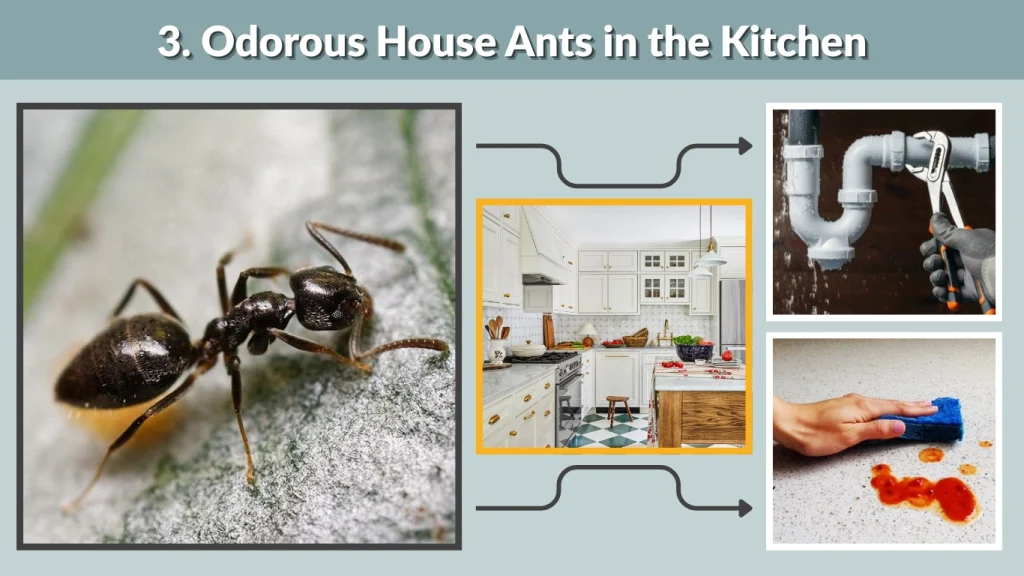
Odorous house ants are another common tiny ant species that invade kitchens in search of food and water. They get their name from the unpleasant smell they release when crushed, often compared to rotten coconut.
Identification
- Small, measuring 2.5–3.5 mm in length
- Brown to black in color
- Often move in irregular lines rather than straight trails
- Known for their distinctive foul odor when squashed
Behavior and Risks
These ants are attracted to both sweet foods and moisture, which is why they are commonly found around kitchen sinks, leaky pipes, and countertops. While they do not bite or sting, their constant presence can contaminate food and surfaces, making kitchens unsanitary. Colonies can contain thousands of workers, and once established indoors, they can be difficult to remove without consistent effort.
How to Eliminate Odorous House Ants
- Fix moisture problems: Repair leaks under sinks and around pipes.
- Clean food spills quickly: Wipe counters and floors to remove food residue.
- Use bait stations: Ants carry bait back to their nest, targeting the entire colony.
- Home remedies: Dish soap spray and vinegar solutions can kill or repel them.
4. Little Black Ants in the Kitchen
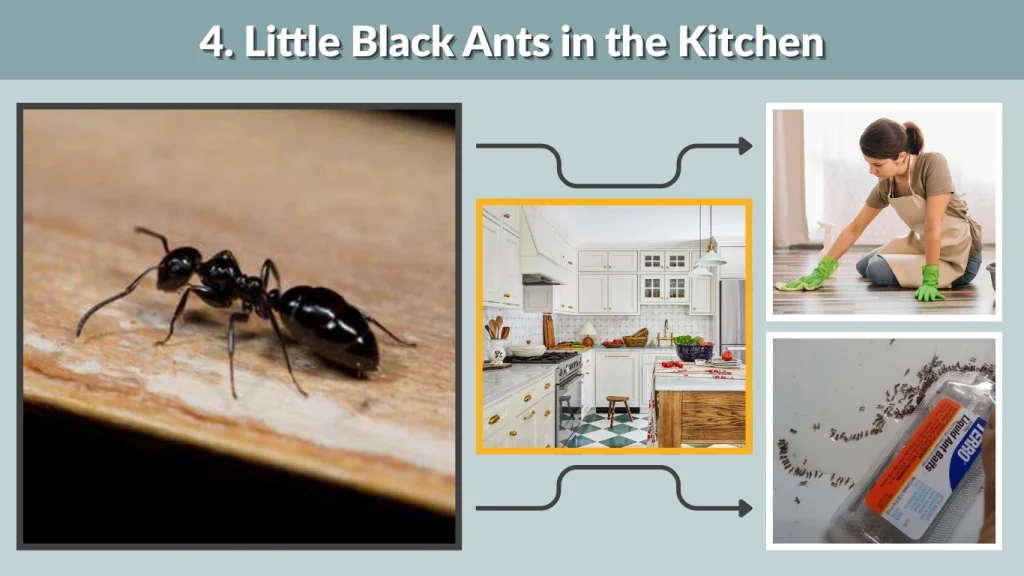
Little black ants are among the most recognizable ants you’ll encounter in kitchens. Though small, they are resilient and often return even after repeated cleaning if food sources remain available.
Identification
- Very small, shiny black ants, around 1.5–2 mm long
- Found in trails along baseboards, countertops, and window sills
- Nests are often hidden in wall voids, under floorboards, or outdoors near foundations
Behavior and Risks
Little black ants are persistent scavengers, primarily attracted to grease, crumbs, and sugary foods. They are not harmful to humans but are a major nuisance when they contaminate food and crawl across preparation areas. Colonies can be extensive, with multiple queens, allowing infestations to rebound quickly if not treated thoroughly.
Getting Rid of Little Black Ants
- Deep clean regularly: Sweep and mop floors, wipe down counters, and clean under appliances.
- Use commercial ant baits: These are effective since ants carry them back to the colony.
- Try homemade traps: A borax and sugar mixture works as a slow-acting poison.
- Seal entry points: Block cracks and crevices where ants are entering the kitchen.
5. Ghost Ants in the Kitchen

Ghost ants are tiny and hard to notice at first because of their pale, almost see-through bodies. They often appear suddenly in kitchens, especially around sweet foods and moisture.
Identification
- Extremely small ants, about 1.3–1.5 mm long
- Translucent legs and abdomen with a darker head and thorax
- Usually spotted trailing on countertops, inside cupboards, or near sinks
Behavior and Risks
Ghost ants are strongly attracted to sugary substances such as honey, juice, and soda spills. They often nest indoors, making them harder to control compared to other species. While they don’t bite, their presence in food preparation areas raises hygiene concerns. Colonies tend to split into multiple nests, allowing them to spread quickly throughout kitchens and nearby rooms.
How to Remove Ghost Ants
- Seal cracks and gaps: Prevent them from nesting inside walls or cupboards.
- Place liquid bait: Ghost ants prefer sweet liquid baits, which they carry back to the colony.
- Use natural repellents: Peppermint oil, citrus peels, and vinegar sprays discourage their activity.
- Maintain cleanliness: Wipe sticky spills and wash dishes promptly.
6. Argentine Ants in the Kitchen
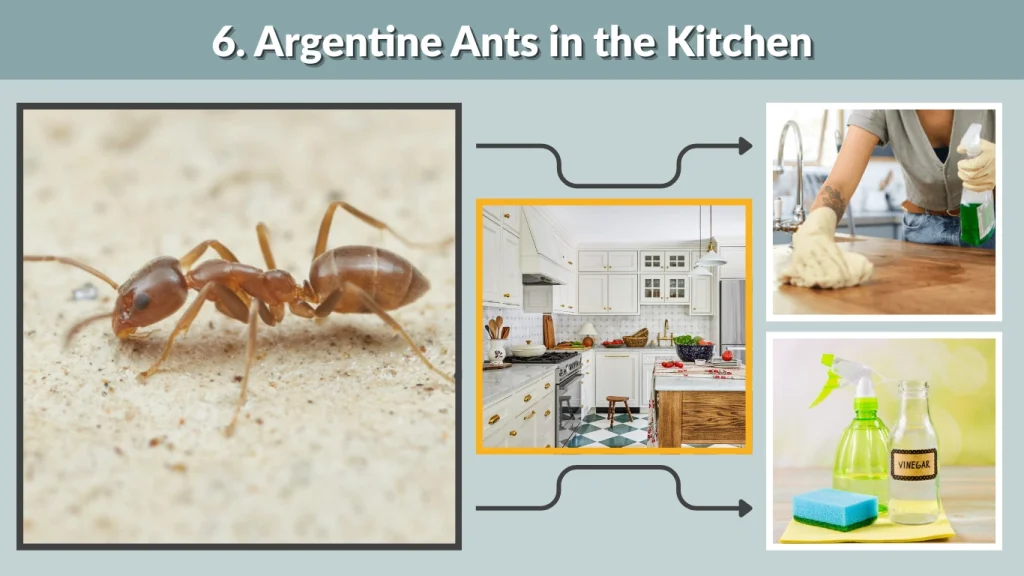
Argentine ants are tiny but highly invasive, known for forming massive colonies with multiple queens. Once they discover food in your kitchen, they often invade in large, noticeable trails.
Identification
- Small ants, about 2.5–3 mm long
- Light to dark brown in color
- Travel in wide, busy trails across counters, floors, and walls
- Colonies often contain thousands of workers and multiple queens
Behavior and Risks
Argentine ants are aggressive invaders that quickly take over food sources and compete with other ant species. They are not dangerous to humans, but their huge colony sizes make infestations overwhelming. They prefer sweets but will also feed on grease and proteins, meaning almost any food in the kitchen can attract them. Once inside, they can nest in wall voids, under floors, or outdoors near the foundation, making control difficult without a multi-step approach.
Getting Rid of Argentine Ants
- Clean food surfaces: Remove crumbs and spills promptly.
- Wipe trails with vinegar: This disrupts their pheromone trails.
- Use both indoor and outdoor baits: Helps reduce colony numbers.
- Consider professional treatment: Large infestations may need expert control.
7. Pavement Ants in the Kitchen
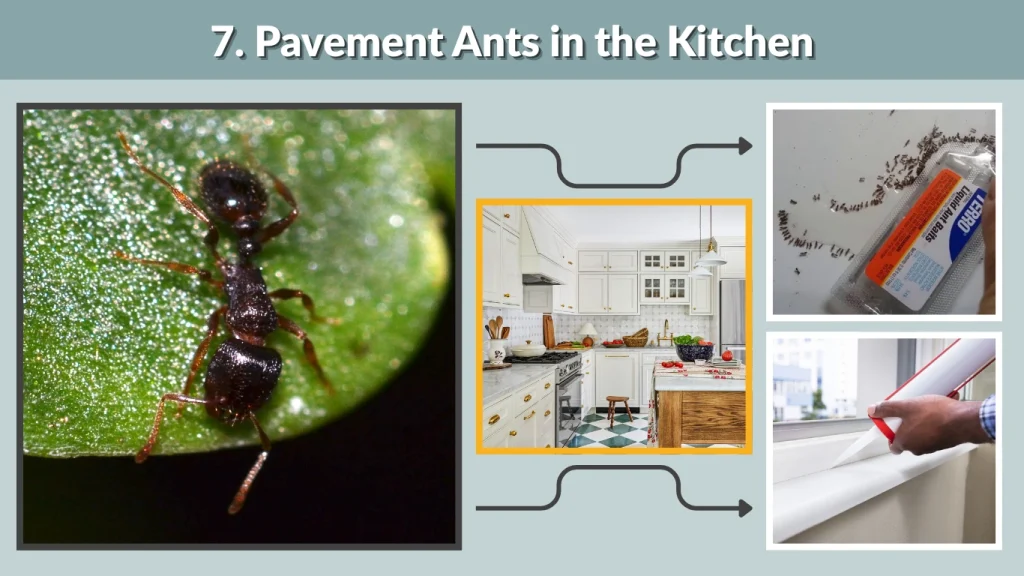
Pavement ants usually nest outdoors in soil, under sidewalks, or along building foundations, but they often make their way indoors, especially into kitchens. Their small size allows them to slip through cracks in tiles, walls, or windows.
Identification
- Small ants, about 2.5–4 mm long
- Brown to black in color with fine grooves on the head and thorax
- Often enter from cracks in the floor or walls, forming trails to food sources
Behavior and Risks
Pavement ants are persistent foragers, commonly feeding on sweets, greasy foods, and proteins. They can invade in large numbers and contaminate food in pantries, sinks, and counters. While not dangerous to humans, their constant presence in food preparation areas is unhygienic and unpleasant. Colonies can also spread beneath kitchen floors or walls, making them difficult to fully eliminate without targeted control.
How to Eradicate Pavement Ants
- Use gel bait traps: Effective since ants carry poison back to their nest.
- Seal cracks and entry points: Prevent ants from accessing the kitchen.
- Clean regularly: Remove crumbs and grease that attract them.
- Apply outdoor barriers: Treat the exterior foundation to stop them from reentering.
General Tips to Keep Ants Out of the Kitchen
Even after you’ve identified and treated specific ant species, keeping your kitchen ant-free requires consistent habits. Prevention is just as important as elimination, since ants can quickly return if conditions remain favorable.
Maintain Daily Cleaning Routines
- Wipe down countertops after preparing food
- Sweep and mop floors to remove crumbs and grease
- Clean under appliances where spills often go unnoticed
- Take out the trash regularly and wash the bin to remove odors
Store Food Properly
- Use airtight containers for sugar, flour, cereals, and snacks
- Keep honey, syrup, and jams sealed tightly
- Avoid leaving pet food in bowls overnight
Eliminate Water Sources
- Fix leaking pipes under sinks
- Wipe away standing water around faucets and dish racks
- Ensure good ventilation to reduce dampness in cupboards
Use Natural Repellents
- Place lemon peels, vinegar, or bay leaves in entry points and cupboards
- Spray peppermint or tea tree oil solutions around sink areas and windows
- Chalk and baby powder lines can disrupt ant trails temporarily
Inspect and Seal Entry Points
- Caulk cracks around windows, doors, and baseboards
- Repair damaged tiles or flooring where ants slip through
- Check outdoor walls and foundations to block entry routes
