

Ants crawling across kitchen counters, invading sugar jars, or appearing near sinks are a common household problem. While these pests are tiny, they arrive in large numbers, contaminate food, and can be incredibly persistent. Getting rid of ants in the kitchen requires a mix of identification, cleaning, natural remedies, and sometimes professional solutions. This guide will show you exactly how to identify kitchen ants, why they invade, and the best ways to eliminate them for good.
Why Ants Invade Kitchens
Kitchens are the perfect environment for ants because they offer everything a colony needs: food, water, and shelter. Even a few crumbs left on the floor or sugary spills on the counter can attract hundreds of ants. Water sources such as leaky pipes, dripping faucets, or damp sinks provide the hydration ants need to survive.
Ants typically enter through tiny cracks around windows, doors, and flooring. They leave behind pheromone trails that guide other ants straight to the food source, which is why infestations can escalate so quickly. Without proper control, what begins as a few ants scouting the area can turn into thousands swarming your kitchen.
Identifying Ants in the Kitchen
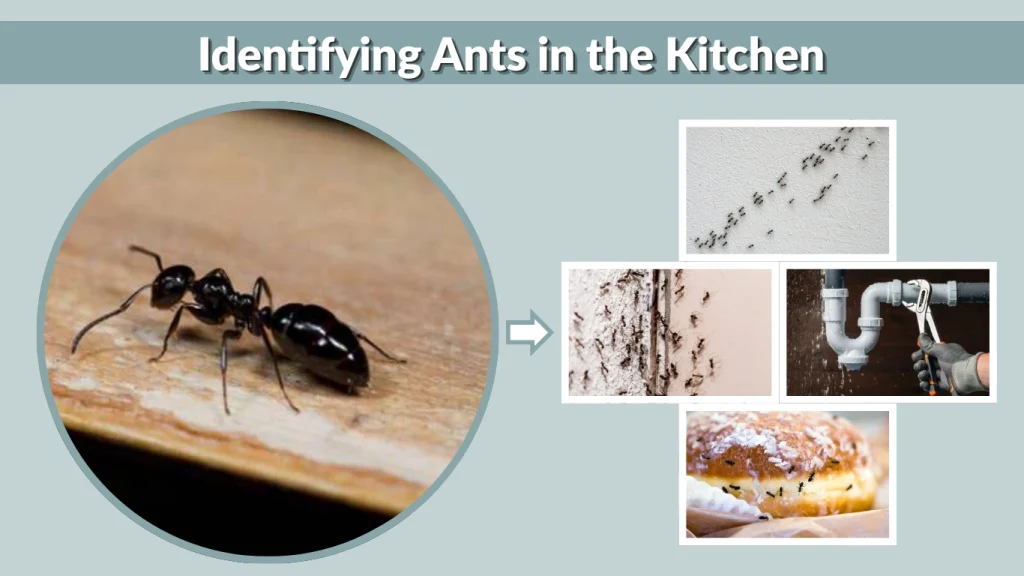
Why Identification Matters
Not all ants behave the same, and identifying the type of ant helps determine the right solution. For instance, Pharaoh ants should not be sprayed directly, because disturbing them causes colonies to split and spread. On the other hand, sugar ants respond well to bait traps. By recognizing the species, you avoid ineffective methods and speed up elimination.
Signs of an Ant Infestation
- Ant trails: Long lines of ants marching across countertops or walls.
- Activity near water sources: Frequent sightings around sinks, dishwashers, or leaking pipes.
- Food contamination: Ants discovered inside jars, bread bags, or pet food bowls.
- Nest indicators: Dirt mounds or debris near wall cracks, tiles, or under appliances.
Common Kitchen Ant Types
- Sugar ants – attracted to sweets, syrups, and honey.
- Odorous house ants – release a foul smell when crushed.
- Pharaoh ants – yellowish, very tiny, known for fast colony growth.
- Little black ants – shiny black ants often trailing near baseboards.
- Ghost ants – translucent ants that are difficult to see.
- Argentine ants – travel in massive trails, highly invasive.
- Pavement ants – enter from cracks in floors and walls.
Health and Hygiene Risks of Kitchen Ants
Ants may seem harmless because they don’t usually bite or sting, but their presence in kitchens raises serious hygiene concerns. As they move from outdoors to indoors, ants walk through soil, garbage, and other unsanitary areas before crawling on your counters and food. This movement can transfer bacteria such as Salmonella, E. coli, and Staphylococcus, contaminating surfaces where meals are prepared.
Pharaoh ants, in particular, are linked to spreading pathogens in hospitals and homes. While most ants don’t directly harm humans, they can cause foodborne illnesses if left unchecked. In addition, their constant presence in cupboards and sinks is unpleasant and stressful for homeowners.
Effective Ways to Get Rid of Ants in the Kitchen
1. Deep Cleaning and Sanitation
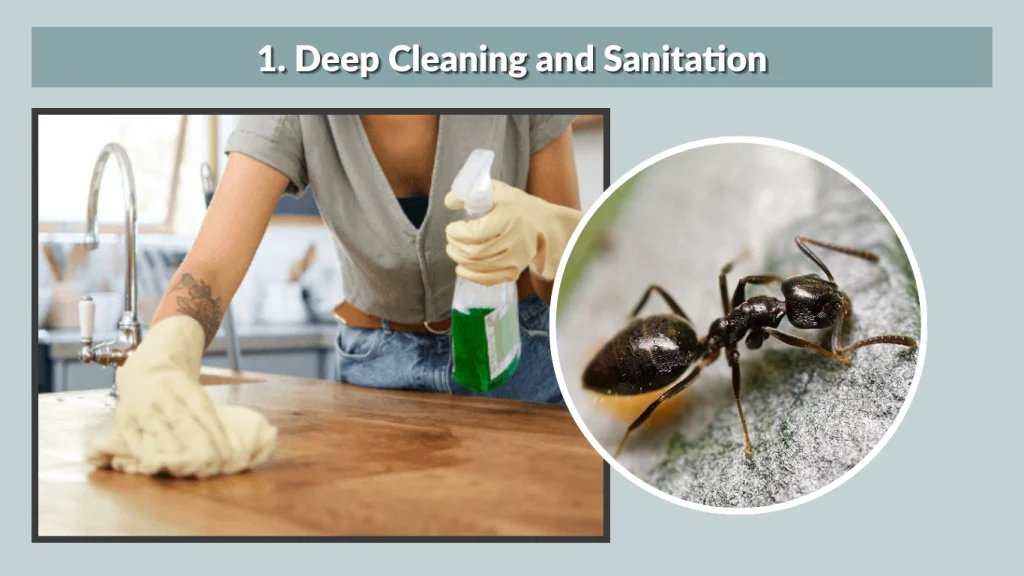
The foundation of ant control is cleanliness. Even the most powerful sprays or traps won’t work if your kitchen continues to provide easy food sources.
- Wipe countertops after every meal: Remove crumbs, grease, and sticky residues.
- Clean under appliances: Stoves, refrigerators, and microwaves often hide unnoticed spills.
- Vacuum and mop floors daily: Crumbs on the floor quickly attract scouts.
- Empty trash cans regularly: Wash bins with soap and water to eliminate food odors.
- Clean pet food areas: Store food in sealed containers and don’t leave bowls out overnight.
By maintaining strict cleaning habits, you cut off the ants’ main incentive for entering your kitchen.
2. Blocking Entry Points
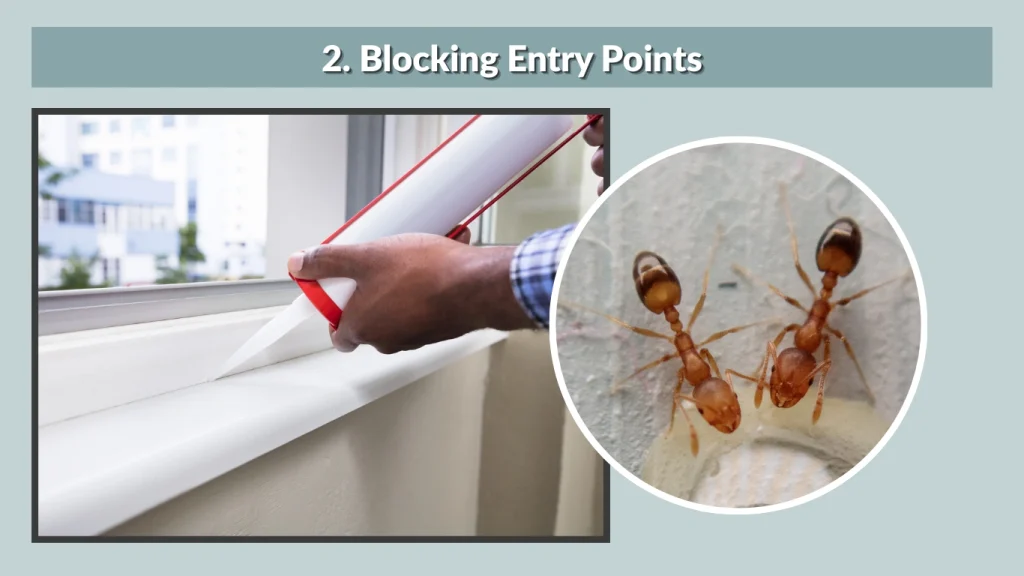
Ants can squeeze through cracks so small you might not even notice them. Blocking these entry points is essential for long-term prevention.
- Seal cracks and gaps: Use caulk to close openings around windows, doors, and baseboards.
- Inspect plumbing lines: Ants often enter through spaces around sink pipes and drains.
- Check electrical outlets: Tiny gaps can allow ants to crawl into kitchens from walls.
- Repair tiles and flooring: Broken grout or tiles provide easy access points.
- Use weather stripping: Install it around doors to reduce gaps ants can use.
While sealing may not eliminate current infestations, it helps reduce future invasions once ants are controlled.
3. Using Ant Baits and Traps

Ant baits are among the most effective solutions because they target the entire colony, not just the ants you see. Unlike sprays that kill on contact, baits are carried back by worker ants to feed the queen and larvae, wiping out the nest over time.
- How baits work: Worker ants consume the poisoned bait and transport it to their colony.
- Best placement: Put traps along ant trails, near sinks, under appliances, and close to entry points.
- Types of baits:
- Gel baits – ideal for cracks and tight spaces.
- Liquid baits – attractive to sugar ants and ghost ants.
- Granular baits – work indoors and outdoors.
- Gel baits – ideal for cracks and tight spaces.
- Be patient: It can take several days to weeks for baits to eliminate the colony.
4. Natural Home Remedies

Many homeowners prefer natural methods to deal with ants in the kitchen, especially when children or pets are around. These remedies may not kill colonies as effectively as baits, but they work well for repelling ants and disrupting their trails.
- Vinegar spray: A 50/50 mix of vinegar and water can be sprayed on countertops, ant trails, and entry points. The strong smell disrupts their pheromone trails.
- Lemon juice and citrus peels: Citric acid naturally repels ants. Wipe surfaces with lemon juice or leave citrus peels near sinks and cupboards.
- Cinnamon and cloves: Their strong aroma works as a deterrent. Sprinkle powdered cinnamon along windowsills or place cloves inside cupboards.
- Coffee grounds: Used coffee grounds can be placed near entry points to repel ants.
- Essential oils: Peppermint, eucalyptus, and tea tree oils mixed with water make an effective ant-repellent spray.
While these methods don’t eliminate colonies completely, they help keep ants away when used alongside proper cleaning and baiting strategies.
5. Store-Bought Ant Killers and Sprays
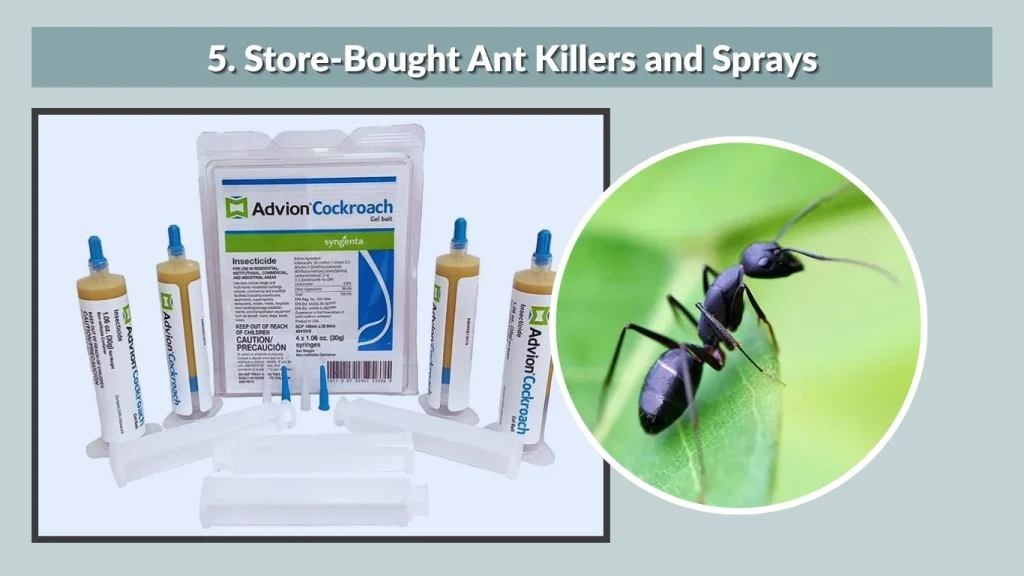
When infestations grow large, many people turn to store-bought chemical solutions. These products are widely available and can deliver fast results.
- Ant sprays: Designed for instant kill, useful for ants crawling on counters. However, sprays do not target colonies.
- Ant powders and dusts: Can be applied along cracks, crevices, and wall edges where ants travel.
- Gel baits: A popular option for kitchens since ants consume the gel and transport it to their nest.
- Precautions: Always read labels and avoid spraying chemicals directly on food-preparation surfaces. Keep products out of reach of children and pets.
6. Eliminating Food and Water Sources
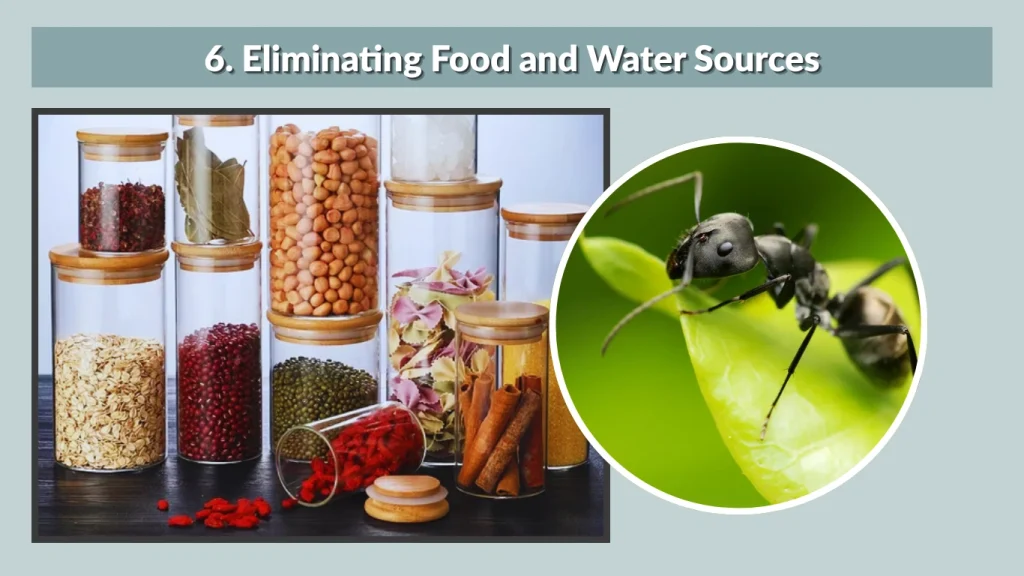
Ants invade kitchens because food and water are easily accessible. By cutting off these resources, you make your kitchen far less attractive to them.
- Airtight storage: Keep cereals, flour, sugar, and snacks in sealed containers.
- Tightly close jars and bottles: Ants can squeeze through loose lids on honey or syrup.
- Wash dishes immediately: Avoid leaving dirty dishes in the sink overnight.
- Pet food control: Store pet food in sealed bins and avoid leaving bowls out for long periods.
- Fix leaks and drips: Repair leaking pipes and faucets to cut off water sources.
- Wipe sinks dry: Standing water encourages ants to return.
Consistency is key. Even small lapses in cleanliness can attract new scouts.
Preventing Ants from Coming Back
Elimination is only half the battle. To keep ants out for good, long-term prevention is essential.
Daily Cleaning Habits
- Sweep floors and wipe counters regularly.
- Take out trash before it overflows.
- Rinse recyclables to remove sticky residue.
Outdoor Prevention
- Remove leaf piles and debris close to the house.
- Trim shrubs and plants that touch kitchen windows.
- Seal foundation cracks to block entry points.
Natural Barriers
- Use vinegar or lemon water around windows and doors.
- Place bay leaves or cloves inside cupboards.
- Draw chalk or sprinkle baby powder lines along common trails (temporary but effective).
By maintaining these habits, your kitchen becomes less inviting, and future infestations are far less likely.
When to Call a Professional Exterminator
DIY methods work for small to moderate infestations, but there are times when professional help is necessary.
- Large infestations: If ants appear in multiple rooms or in overwhelming numbers.
- Colonies keep returning: Recurring infestations often mean colonies are hidden deep inside walls or foundations.
- Pharaoh ants or Argentine ants: These species are notoriously difficult to eliminate without expert methods.
- Food safety concerns: If ants are consistently contaminating food storage areas.
Professional exterminators use specialized baits and treatments that reach hidden nests and provide long-lasting results.
FAQs
What is the fastest way to get rid of ants in the kitchen?
Using ant baits is the fastest and most effective solution. Ants carry the poisoned bait back to the colony, eliminating it at the source.
Are ants in the kitchen harmful to humans?
Most ants don’t bite or sting, but they contaminate food and surfaces. Some species, like Pharaoh ants, can spread harmful bacteria.
Do vinegar and lemon really work against ants?
Yes, vinegar and lemon juice disrupt pheromone trails and repel ants temporarily. However, they should be combined with bait traps for long-term control.
Why do ants keep coming back even after cleaning?
Ants leave pheromone trails that guide others to food. If the nest isn’t eliminated, new ants will follow the same path even after cleaning.
How long does it take to get rid of ants with bait traps?
It typically takes several days to two weeks for baits to eliminate an entire colony, depending on its size and location.
