
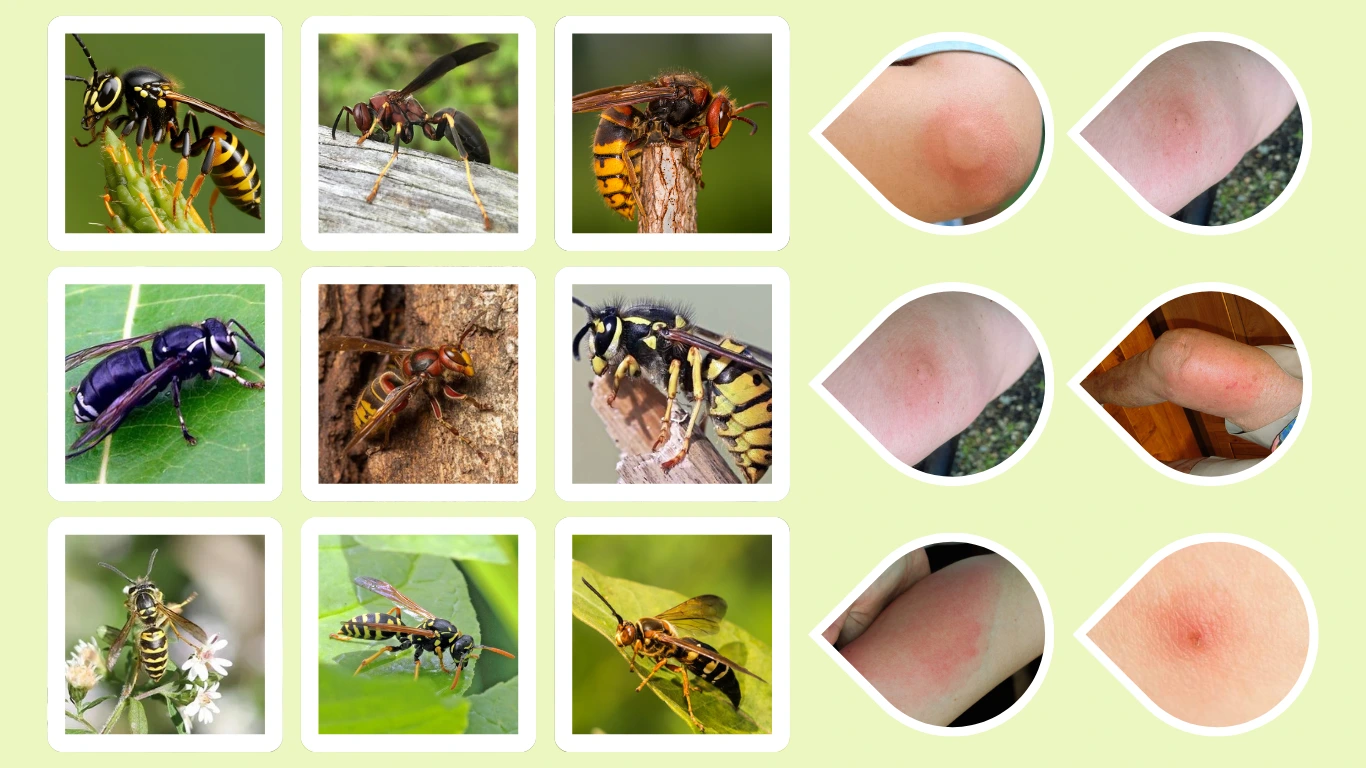
Wasps are common insects that can be helpful in nature but dangerous when they sting. Some wasps are calm, while others are aggressive and sting when disturbed. A wasp sting can cause sharp pain, swelling, and in some cases, allergic reactions.
Here, I’ll share 14 types of wasps that are known to sting people. For each wasp, I’ll explain how to identify them, the common sting symptoms, and simple treatment tips. If you spend time outdoors or have wasps around your home, knowing this can help you stay safe and take quick action if stung.
1. Yellowjacket Sting or Bite
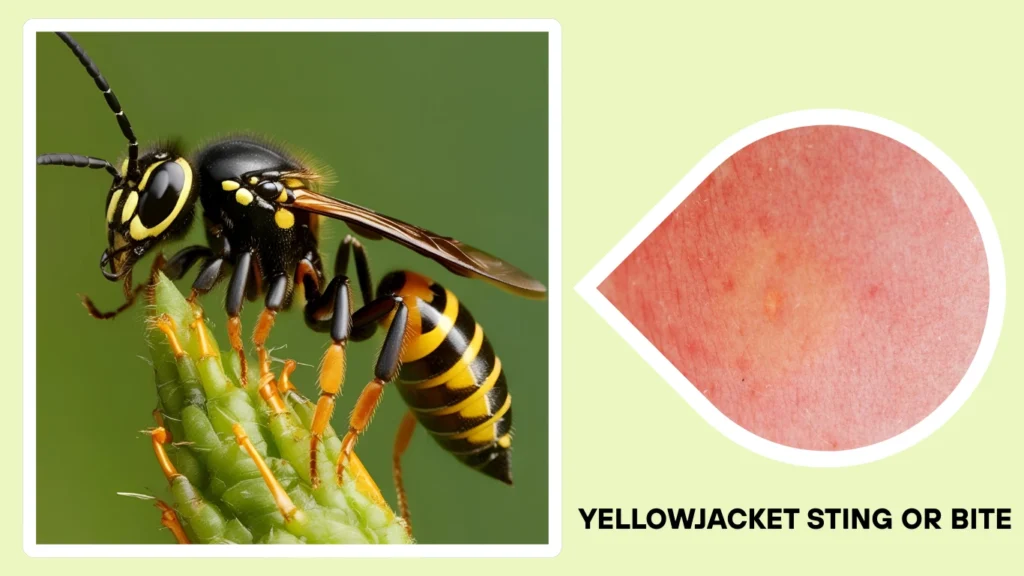
Yellowjackets are aggressive wasps that can sting multiple times. They often appear in late summer and are known to attack when disturbed. You might find them near food, garbage, or flowers. Their sting is painful and may cause strong reactions in some people.
Yellowjacket Sting or Bite Identification
Yellowjackets are black and yellow, about half an inch long. They look similar to bees but are smoother and shinier. Unlike bees, they don’t lose their stinger and can sting multiple times. If you’re stung, you’ll likely feel a sharp, burning pain right away.
Yellowjacket Sting Symptoms
- Sudden, sharp pain
- Swelling around the sting area
- Redness and warmth
- Itching or irritation
- In some cases, nausea or dizziness
- Severe allergic reactions (in rare cases)
Yellowjacket Sting Treatment
If you’re stung by a yellowjacket, quickly leave the area to avoid more stings. Gently wash the sting with soap and water to prevent infection. Apply a cold compress to reduce swelling and pain. You may also take an antihistamine for itching and monitor for signs of allergic reactions.
2. Paper Wasp Sting or Bite

Paper wasps are less aggressive than yellowjackets but will sting if they feel threatened. They often build umbrella-shaped nests under eaves, decks, or branches. Their sting can be painful and may cause redness and swelling.
Paper Wasp Sting or Bite Identification
Paper wasps are slender with long legs and narrow waists. They are usually brown with yellow or reddish markings. They don’t lose their stinger, so they can sting more than once. The sting feels sharp and can cause immediate discomfort.
Paper Wasp Sting Symptoms
- Burning pain at the sting site
- Swelling and redness
- Itching or irritation
- Mild warmth around the sting
- Rare allergic reactions in sensitive people
Paper Wasp Sting Treatment
Move away from the nest to avoid more stings. Wash the sting area with soap and water to keep it clean. Use a cold compress to ease pain and reduce swelling. If needed, take an antihistamine for itching and monitor for allergic reactions.
3. Hornet Sting or Bite

Hornets are a type of large wasp and are highly protective of their nests. They become aggressive quickly and can sting repeatedly. Their sting is very painful and may cause swelling that spreads beyond the sting site.
Hornet Sting or Bite Identification
Hornets are larger than most wasps and have black and white or black and yellow bodies. They build big, round paper nests often found in trees or under roofs. Their sting delivers a large amount of venom, which makes the pain more intense.
Hornet Sting Symptoms
- Strong, sharp pain
- Swelling that can grow large
- Redness and warmth
- Headache or nausea (in some cases)
- Allergic reactions like difficulty breathing (in rare cases)
Hornet Sting Treatment
Leave the area right away to avoid further attacks. Clean the sting with soap and water. Apply a cold pack to reduce pain and swelling. Over-the-counter pain relievers and antihistamines can help with symptoms. Watch closely for signs of severe allergic reaction.
4. Bald-faced Hornet Sting or Bite

Bald-faced hornets are a type of aerial yellowjacket. They are very aggressive and will defend their nest in large numbers. Their sting is extremely painful and can cause swelling that lasts for days.
Bald-faced Hornet Sting or Bite Identification
These hornets are black with white markings on their face and body. They are larger than yellowjackets and build round, gray paper nests in trees or under roofs. Their sting is sharp and delivers a strong venom.
Bald-faced Hornet Sting Symptoms
- Intense, burning pain
- Large swelling at the sting site
- Redness and itching
- Dizziness or nausea (in rare cases)
- Severe allergic reactions possible
Bald-faced Hornet Sting Treatment
Quickly move away from the nest. Wash the sting site with soap and water. Use a cold compress to reduce swelling and take antihistamines or pain relievers if needed. Seek emergency care if allergic symptoms appear.
5. European Hornet Sting or Bite

European hornets are large wasps that usually avoid people but will sting when threatened. They are active during the day and night and may be drawn to lights in the evening.
European Hornet Sting or Bite Identification
These hornets are reddish-brown with yellow markings. They are bigger than most wasps and make nests in tree hollows or wall voids. Their sting is very painful and can leave a large, swollen area.
European Hornet Sting Symptoms
- Sharp, throbbing pain
- Swelling and redness
- Itching around the sting site
- Headache or mild fever (sometimes)
- Allergic reactions in rare cases
European Hornet Sting Treatment
Step away from the hornet and stay calm. Clean the area with soap and water. Apply an ice pack to reduce pain and swelling. Take a painkiller or antihistamine if needed and watch for any allergic symptoms.
6. German Yellowjacket Sting or Bite

German yellowjackets are a common type of wasp in homes and urban areas. They are very aggressive and can sting multiple times, especially when disturbed.
German Yellowjacket Sting or Bite Identification
These wasps look similar to regular yellowjackets but are slightly larger and may nest inside walls or attics. They are black and yellow with clear wings. Their sting is painful and repeated stings are possible.
German Yellowjacket Sting Symptoms
- Sudden, sharp pain
- Local swelling and redness
- Itching or burning sensation
- Upset stomach or dizziness (rarely)
- Risk of severe allergic reaction
German Yellowjacket Sting Treatment
Leave the area and avoid disturbing more wasps. Gently clean the sting site, apply ice to reduce swelling, and consider taking an antihistamine or pain reliever. Seek medical attention for serious reactions.
7. Southern Yellowjacket Sting or Bite

Southern yellowjackets are aggressive and often sting in large numbers if their nest is disturbed. They are active during the warmer months and commonly nest underground or in wall voids.
Southern Yellowjacket Sting or Bite Identification
These wasps are black with yellow bands and look very similar to other yellowjackets. They often build hidden nests, making it easy to step near them by accident. Their sting is fast and painful.
Southern Yellowjacket Sting Symptoms
- Sharp, burning pain
- Swelling that spreads around the sting site
- Itchy and red skin
- Fatigue or mild fever (sometimes)
- Serious allergic reactions in sensitive individuals
Southern Yellowjacket Sting Treatment
Move away from the sting site. Clean the skin gently with soap and water. Use a cold compress to ease swelling and discomfort. Take antihistamines or mild pain relievers if needed and monitor for allergic responses.
8. Eastern Yellowjacket Sting or Bite

Eastern yellowjackets are found in forests, parks, and backyards. They’re very defensive and will attack in large numbers if their nest is disturbed, especially in late summer.
Eastern Yellowjacket Sting or Bite Identification
These yellowjackets are black with yellow stripes and are around half an inch long. They often build underground nests. Their stings are sharp, and they can attack repeatedly.
Eastern Yellowjacket Sting Symptoms
- Sudden, intense pain
- Raised, red bump at the sting site
- Swelling and itching
- Light-headedness or nausea (rarely)
- Risk of severe allergic reaction
Eastern Yellowjacket Sting Treatment
Quickly leave the area and stay calm. Wash the sting carefully. Apply a cold compress to reduce pain and swelling. Antihistamines can help with itching. Get emergency help if any serious symptoms appear.
9. Western Yellowjacket Sting or Bite

Western yellowjackets are highly aggressive scavengers. They are especially common around picnics, garbage bins, and outdoor food sources. They sting quickly and without much warning.
Western Yellowjacket Sting or Bite Identification
These wasps are black and yellow with a shiny, smooth body. They nest underground or in wall cavities. They sting multiple times and often in groups when provoked.
Western Yellowjacket Sting Symptoms
- Sharp, immediate pain
- Swelling that may grow over time
- Warmth and redness around the area
- Irritation or burning sensation
- Possible allergic response
Western Yellowjacket Sting Treatment
Leave the area to prevent more stings. Clean the sting with mild soap and water. Apply an ice pack to reduce swelling and pain. Use antihistamines for itching, and watch for signs of a serious reaction.
10. Common Wasp Sting or Bite
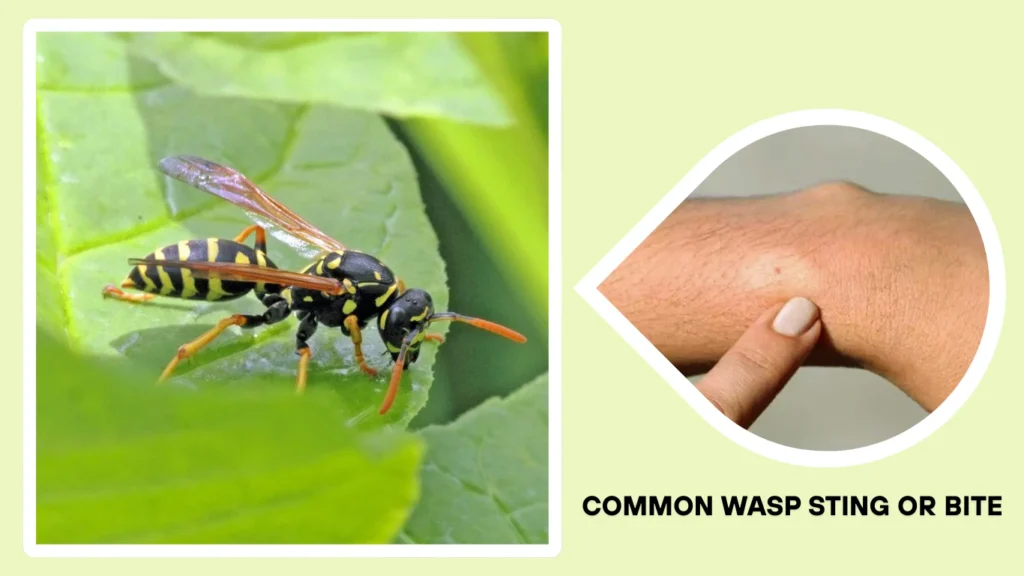
The common wasp is found in gardens, parks, and homes. It becomes more aggressive in late summer when food sources are low. They sting when threatened and are known for nesting in walls or trees.
Common Wasp Sting or Bite Identification
Common wasps are yellow with black stripes and about half an inch long. Their body is sleek and shiny. They can sting more than once and often fly aggressively near food.
Common Wasp Sting Symptoms
- Quick, sharp pain
- Swelling and redness
- Itching or tingling
- Warm sensation at the site
- Allergic symptoms in rare cases
Common Wasp Sting Treatment
Step away from the wasps calmly. Clean the sting site with soap and water. Use a cold compress to relieve swelling. An antihistamine can reduce itching, and painkillers may help if discomfort continues.
11. Red Wasp Sting or Bite
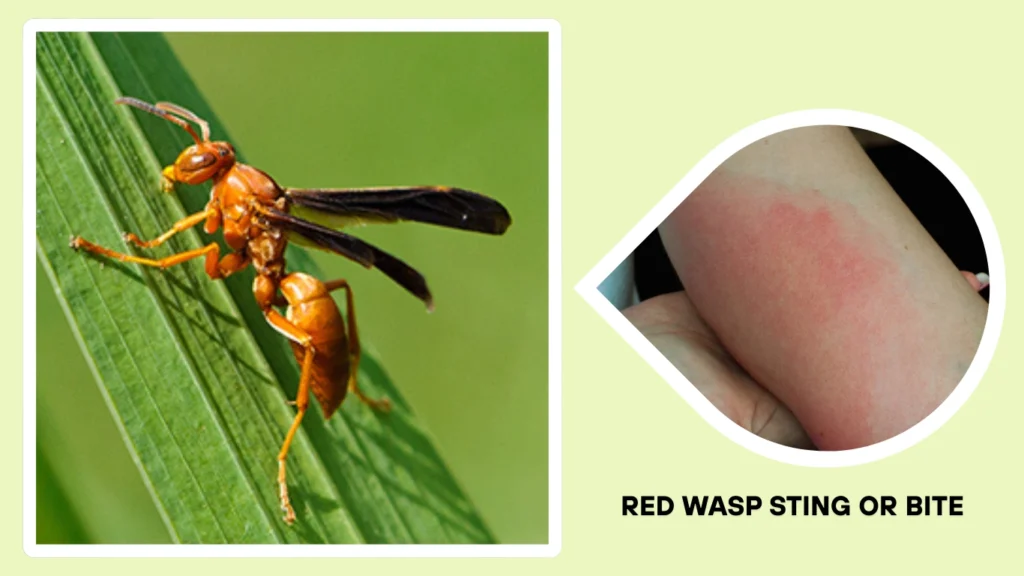
Red wasps are large and reddish-brown. They’re often seen around sheds, porches, and eaves. While not overly aggressive, they will sting if disturbed or if their nest is threatened.
Red Wasp Sting or Bite Identification
These wasps are easily recognized by their reddish color and long legs. Their nests are open and often attached to horizontal surfaces. Their sting is sharp and can cause localized swelling.
Red Wasp Sting Symptoms
- Painful sting sensation
- Redness and swelling
- Itchy or warm skin
- Mild allergic reactions in some people
- Rare cases of more serious reactions
Red Wasp Sting Treatment
Move away quickly and wash the sting gently. Apply an ice pack to reduce swelling. Over-the-counter antihistamines can help control itching, while pain relief medicine may ease discomfort.
12. Mexican Honey Wasp Sting or Bite

Mexican honey wasps are less aggressive but can sting when provoked. They are known for their ability to make honey and are more common in southern regions.
Mexican Honey Wasp Sting or Bite Identification
These wasps are small, dark-colored, and build large paper nests in trees. They are social insects but sting when they feel threatened. Their sting is less painful than most wasps.
Mexican Honey Wasp Sting Symptoms
- Mild pain
- Small swelling
- Itching or slight irritation
- Redness around the area
- Rare allergic responses
Mexican Honey Wasp Sting Treatment
Leave the area and clean the sting site. A cold compress can reduce minor swelling and pain. Antihistamines or creams can ease itching. Severe reactions are rare but still possible.
13. Guinea Wasp Sting or Bite

Guinea wasps are common in tropical regions and are highly aggressive. They defend their nests quickly and sting in large numbers when disturbed.
Guinea Wasp Sting or Bite Identification
These wasps are long and slim, often black with red or orange markings. Their nests are usually found in trees or on buildings. The sting is sharp and can be dangerous in large numbers.
Guinea Wasp Sting Symptoms
- Sudden, intense sting
- Spreading swelling and redness
- Burning sensation
- Dizziness or sweating (in some cases)
- Strong allergic reactions possible
Guinea Wasp Sting Treatment
Get to safety quickly. Clean the sting site thoroughly and apply cold compresses. Oral antihistamines and pain relievers may help with symptoms. Seek emergency help if you feel dizzy, short of breath, or have severe swelling.
14. Cicada Killer Wasp Sting or Bite

Cicada killer wasps are large and intimidating but rarely sting unless handled. They usually hunt cicadas and are not aggressive toward people.
Cicada Killer Wasp Sting or Bite Identification
These wasps are about two inches long with black and yellow markings. They dig nests in the ground. While they look scary, their sting is not very painful and usually only happens if they are grabbed.
Cicada Killer Wasp Sting Symptoms
- Mild, dull pain
- Small red bump
- Slight swelling
- Itchiness may occur
- Rare chance of allergic reaction
Cicada Killer Wasp Sting Treatment
Since they rarely sting, treatment is often simple. Wash the area with soap and water, and apply ice if needed. Most people do not need medication, but antihistamines can help if itching develops.
