
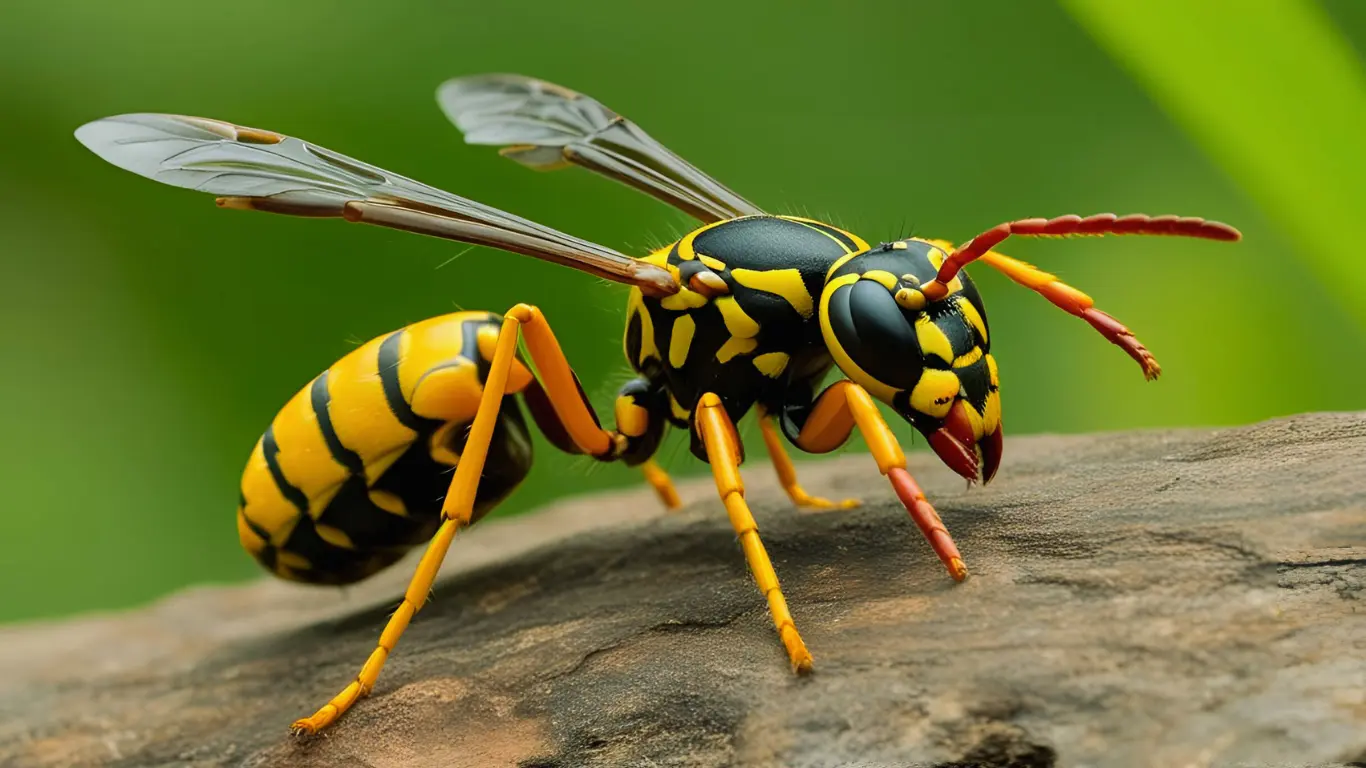
Spider wasps are amazing insects. They are known for hunting and paralyzing spiders. These wasps use their sting to catch spiders and feed their babies.
You can find spider wasps in many countries. They live in gardens, forests, and even near homes. Some are black, some are blue, and some have bright yellow or orange parts.
In this article, I will explain how to identify spider wasps, where they live, and how they behave. I’ll also share how they hunt spiders and if they are dangerous to people.
What is a Spider Wasp?
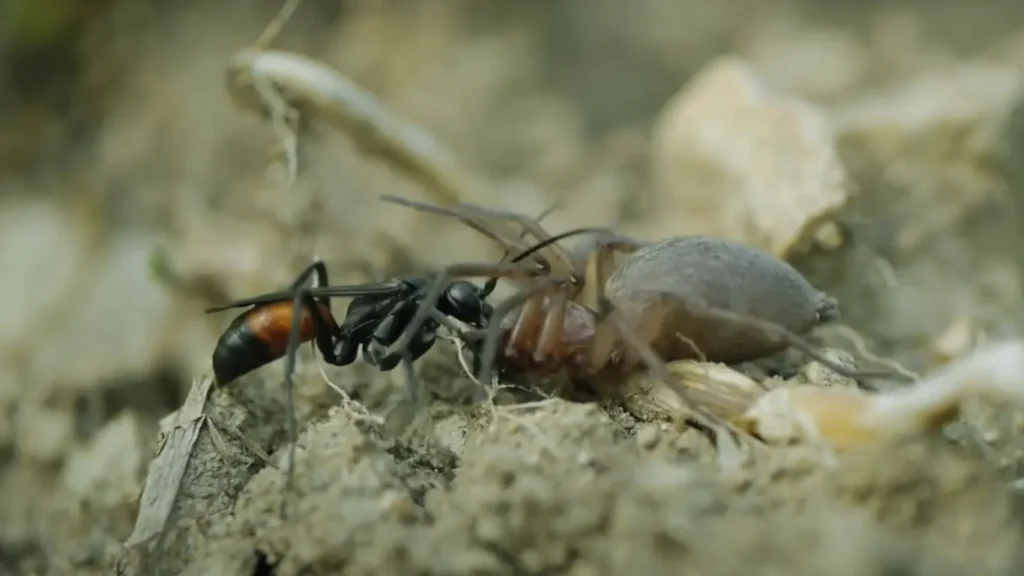
Spider wasps are insects that hunt and paralyze spiders. They belong to a group of wasps called Pompilidae. These wasps live alone and are found in many countries around the world. People often see them in gardens, forests, or open spaces.
Scientific classification (Pompilidae)
Spider wasps are part of the Pompilidae family. This family includes many types of wasps that only hunt spiders. They are also in the insect order Hymenoptera, which includes bees and ants. These wasps usually have long legs and strong stingers.
Unique behavior: spider hunter
Spider wasps are known for their hunting style. They sting spiders to make them stop moving. Then they carry the spider to a small hole or nest. There, the wasp lays one egg on the spider’s body. The baby wasp hatches and eats the spider to stay alive.
Difference between spider wasps and other wasps or spiders
Spider wasps are different from other wasps. Most wasps live in groups, but spider wasps live alone. They don’t build big nests like paper wasps. They also don’t hunt many kinds of bugs—only spiders. They are not spiders either. Spiders have eight legs and no wings. Spider wasps have six legs and can fly. Their name sounds like a spider, but they are a special kind of wasp that hunts spiders.
Physical Characteristics

Size Variations (Spider Wasp Size)
Spider wasps come in different sizes. Some are very small, about 1 to 2 centimeters long. Others are large and can reach up to 5 centimeters. The bigger ones are strong enough to carry large spiders like huntsmans. People often notice their size first because spider wasps look bigger than most other wasps.
Color Types (Blue Black, Yellow Antenna Black, Orange, Red-Legged)
Spider wasps have many color types. Some are shiny blue-black and look metallic in sunlight. Others are black with orange wings or legs. A few types have red legs or yellow antennae. These bright colors help scare away predators and make them easy to spot.
Wing Shape and Antenna Structure
Spider wasps have long, narrow wings that lay flat when they are resting. Their wings can be clear, dark, or slightly tinted. Their antennae are long and curved. They use them to feel around and search for spiders. Some types have colored antennae, like yellow or black tips.
Types of Spider Wasps

Spider wasps come in different types. Each one has unique colors and features, but all are expert spider hunters. Here are some common types:
- Blue-Black Spider Wasp
This wasp has a shiny blue or blue-black body. It often looks metallic under sunlight. It is one of the most common types and is easy to recognize. - Yellow Antenna Black Spider Wasp
This type has a black body with yellow tips on its antennae. The bright yellow color makes it stand out. It is often seen in warm areas. - Orange Spider Wasp
These wasps have black bodies with orange wings or legs. The orange color is a warning sign to predators. They are strong and often hunt large spiders. - Red-Legged Spider Wasp
This spider wasp has red or reddish-brown legs. Sometimes it has red marks on its body too. It lives in gardens, fields, and wooded areas.
Each of these wasps has a different look, but they all belong to the same family—Pompilidae. They live alone and are always ready to hunt spiders.
Spider Wasps Identification
Spider wasps are easy to identify if you know what to look for. They have a bold look and move with confidence. While they may look like other wasps or flies at first, their body shape, color, and behavior help set them apart.

Here are the key points to identify a spider wasp:
- Body Shape: Long and narrow body with a small waist.
- Legs: Very long legs, often with spines—especially on the back pair.
- Color: Shiny blue-black, plain black, or black with orange, red, or yellow markings.
- Antennae: Long, curved, and sometimes brightly colored like yellow or orange.
- Wings: Fold flat over the back when resting; may be dark, clear, or tinted.
- Flight Style: Fast and jerky movements, often low to the ground while searching for spiders.
- Behavior: Seen dragging spiders across the ground or digging into soil or cracks.
- Sound: Makes a low buzzing noise when flying—less sharp than bees or hornets.
- Habitat: Usually found in gardens, forests, or near dry soil where they can dig nests.
These features help you tell spider wasps apart from regular wasps or large flies. Watching their behavior is one of the easiest ways to spot them.
Habitat and Nesting

Spider wasps live in warm, sunny places like gardens, forests, fields, and even near homes. They prefer areas where spiders are easy to find. Most spider wasps make their nests in the ground, inside small holes or under rocks. Some use cracks in walls or old insect burrows. They work alone and do not build large group nests like bees or paper wasps. Each female wasp creates her own nest to raise her young.
Hunting Behavior and Life Cycle
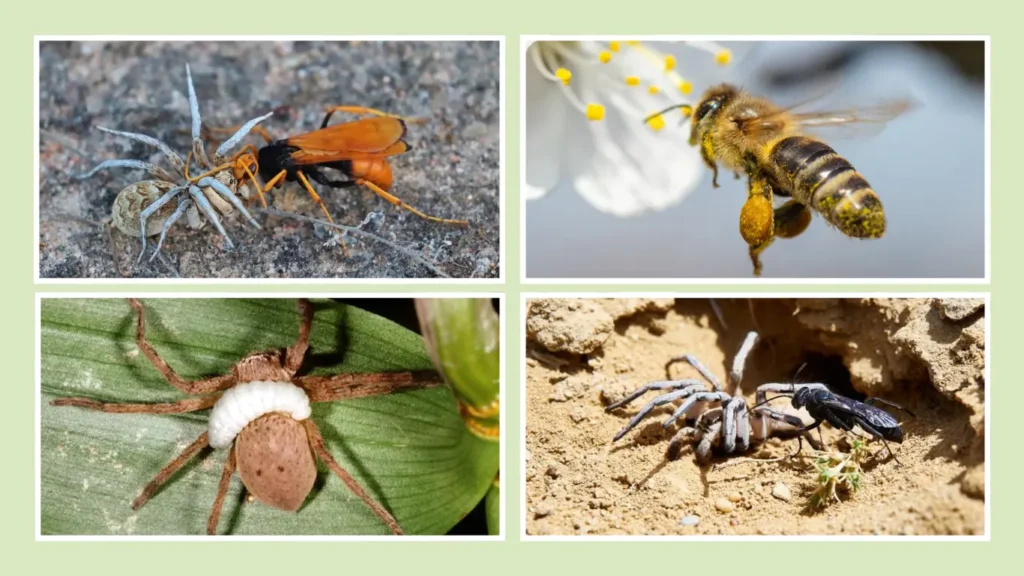
Spider wasps are expert hunters. They use their sting to paralyze spiders. Once the spider cannot move, the wasp drags it to a burrow or nest. This is where the wasp lays one egg on the spider’s body.
The spider stays alive but cannot move. This keeps it fresh for the baby wasp. When the egg hatches, the baby wasp (larva) eats the spider slowly. After eating, the larva turns into a pupa. Later, it becomes an adult wasp and flies away to live on its own.
Spider wasps hunt many kinds of spiders. Some target big spiders like huntsmans or wolf spiders. They search carefully, walking low to the ground and using their antennae to find spiders hiding under leaves or rocks.
Only female wasps hunt and sting. Males do not hunt and cannot sting. After growing up, adult wasps drink nectar and look for mates. The cycle then starts again.
Interaction with Humans
Are Spider Wasps Dangerous to Humans?
Spider wasps do not usually hurt people. They are not aggressive like some other wasps. They only sting if they feel attacked or trapped. If you leave them alone, they will fly away and not cause harm.
How Painful is the Sting?
The sting of a spider wasp can be very painful. People say it feels like a strong, sharp burn. The pain is quick but intense. It may last for a few minutes to an hour. Even though it hurts, the sting is not deadly for most people.
What to Do If Stung
If a spider wasp stings you, stay calm. Wash the area with soap and water. You can also put ice on it to stop swelling. If you have allergies to wasp stings, go to a doctor quickly. Serious signs include trouble breathing, swelling of the face, or feeling dizzy.
Should You Be Afraid?
No, spider wasps are not something to fear. They do not attack unless they are touched or stepped on. It’s best to watch them from far away. They help nature by hunting spiders and keeping a balance in the garden.
