

Water bugs are large aquatic insects that play an important role in freshwater ecosystems. They’re known for their predatory nature, impressive hunting skills, and ability to consume a wide range of prey. While often confused with cockroaches, these bugs are fierce hunters rather than scavengers. This article explores what water bugs eat, how they hunt, what eats them, and their surprising role in human diets across the world.
Understanding Water Bugs
Overview and Habitat
Water bugs belong to the family Belostomatidae and are often called “giant water bugs” or “toe-biters.” They live in freshwater environments such as ponds, lakes, and slow-moving streams. Unlike scavenging insects, water bugs are ambush predators, lying still until prey comes close. When threatened, they can fly short distances or bite defensively, delivering a painful sting.
Feeding Behavior
Water bugs are carnivorous, using stealth and power to capture prey. They don’t chew their food like roaches or beetles. Instead, they pierce their prey with a sharp beak and inject digestive enzymes that liquefy the tissues inside. They then suck out the fluids, leaving behind an empty shell — a feeding method known as “extraoral digestion.”
What Do Water Bugs Eat?

Natural Diet
In the wild, water bugs eat a wide range of aquatic organisms. Their favorite meals include:
- Mosquito larvae and small aquatic insects
- Tadpoles and young frogs
- Small fish and fish eggs
- Snails, worms, and soft-bodied creatures
They’re opportunistic feeders, meaning they’ll attack nearly anything they can overpower. Their bite is quick and efficient, allowing them to take down prey much larger than themselves.
In the Home
When water bugs wander indoors, they rarely feed. They might explore leftover crumbs or decaying organic matter, but they’re not attracted to food waste the same way roaches are. Instead, they enter homes seeking water, cool air, or shelter. If one does consume food indoors, it’s typically soft leftovers or damp organic debris found near sinks or drains.
Giant Water Bug Diet

Predatory Nature
The giant water bug (Lethocerus species) is one of the most formidable insects in freshwater habitats. It can grow up to two and a half inches long and uses its front legs to grasp and immobilize prey. Once it strikes, it injects a paralyzing enzyme that liquefies the prey’s insides, allowing easy consumption. This process happens in seconds, making them efficient aquatic hunters.
Examples of Prey
Giant water bugs don’t just feed on insects. They can overpower:
- Tadpoles, frogs, and small toads
- Small fish or even juvenile turtles
- Occasionally small snakes or ducklings in shallow water
They are apex predators in their aquatic environments, keeping smaller species in balance and controlling mosquito populations naturally.
How Water Bugs Hunt

Ambush Tactics
Water bugs are patient hunters. They hide beneath leaves or twigs, waiting motionless until prey swims close. Their brown coloring provides excellent camouflage in muddy water. When an unsuspecting insect or fish passes by, they grab it instantly with their clawed forelegs — similar to how a praying mantis captures its food.
Feeding Mechanism
After catching prey, a water bug pierces it with its beak and injects digestive saliva. This fluid dissolves the prey’s tissues into liquid form. The bug then consumes the liquefied nutrients, leaving behind only a husk. Because they rely on water to feed efficiently, they rarely eat on dry land.
What Eats Water Bugs?
Natural Predators
Despite being powerful hunters, water bugs are also prey for many larger animals. Their primary predators include:
- Fish such as bass and catfish
- Frogs, toads, and salamanders
- Birds like ducks, herons, and kingfishers
- Reptiles such as turtles and small snakes
At night, water bugs attracted to light become easy targets for bats and spiders. On land, they’re also vulnerable to lizards and rodents.
Ecosystem Role
Water bugs are both predators and prey, serving as a vital link in aquatic food chains. They help control mosquito larvae, tadpoles, and small fish populations, maintaining ecological balance. Their presence in a pond is a sign of healthy water quality, as they thrive in clean, oxygen-rich habitats.
Do Water Bugs Eat Other Insects?

Insect and Pest Prey
Yes — water bugs eat various insects, including mosquito larvae, flies, ants, and even small cockroaches. They’re especially effective at keeping mosquito populations under control, feeding on larvae before they can mature into biting adults. They may also attack other water bugs or insects that enter their hunting area.
Misconceptions
Water bugs do not eat wood, paper, or plants like termites or roaches sometimes do. Their diet is entirely meat-based. While they may be found near food indoors, they aren’t attracted to crumbs or starches. They only consume living or recently dead animals that they can pierce and liquefy.
Animals That Eat Water Bugs
Aquatic and Terrestrial Predators
Although water bugs are fierce hunters, many creatures see them as food. Fish such as bass, trout, and catfish frequently consume them in ponds and rivers. Frogs, salamanders, and turtles also rely on them for nutrition. Birds like ducks, kingfishers, and herons hunt them from above, while lizards and rodents prey on them when they crawl out of the water.
Predator-Prey Balance
This predator-prey relationship keeps ecosystems balanced. Water bugs help reduce mosquito larvae and small amphibian populations, while their predators ensure the bug population doesn’t grow uncontrollably. Their presence signifies a healthy, biodiverse aquatic environment.
Humans and Water Bugs
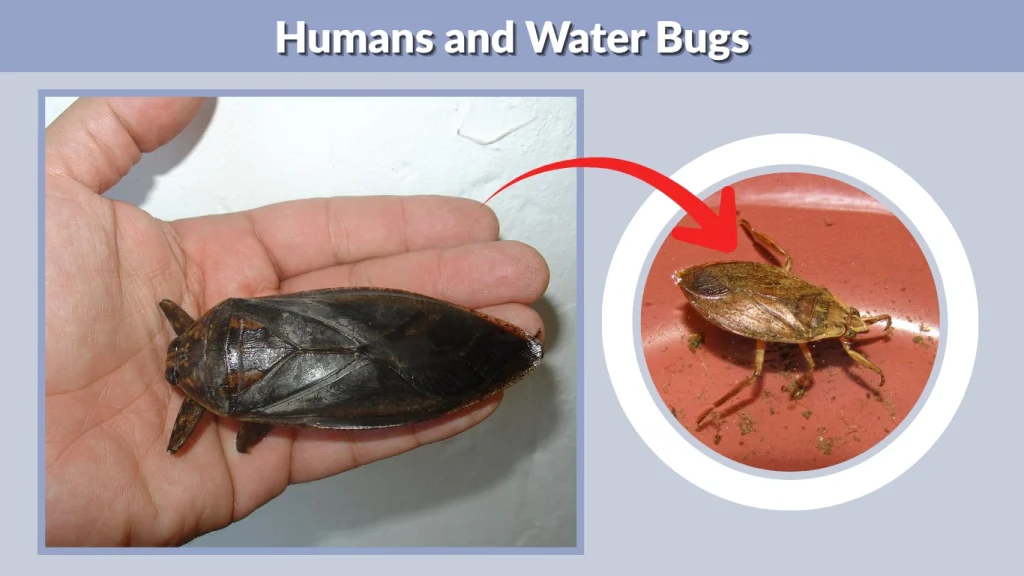
Can You Eat Water Bugs?
Surprisingly, yes — people do eat water bugs. In several Asian countries, including Thailand, Vietnam, and China, they’re considered a delicacy. Street vendors sell them roasted, fried, or boiled. The taste is often described as shrimp-like or nutty, with a crunchy texture. They’re also used in sauces or pastes for their aromatic flavor.
Why People Eat Water Bugs
Water bugs are rich in protein, low in fat, and packed with essential minerals such as iron, calcium, and magnesium. In Thailand, male giant water bugs are prized for their sweet aroma, and extracts from their scent glands are used as flavoring in traditional dishes. Eating insects like water bugs also supports sustainable food production because they require fewer resources than livestock.
Benefits of Eating Water Bugs
Nutritional Value
Water bugs offer numerous health benefits:
- High protein content with all essential amino acids
- Low levels of saturated fat and cholesterol
- Rich in minerals like iron, calcium, and potassium
- Contain healthy omega fatty acids
They’re also an eco-friendly food source, producing minimal waste and greenhouse emissions compared to cattle or poultry.
Cultural and Economic Benefits
Insect-based foods have long been part of Asian and Central American cuisines. Selling edible water bugs provides income for rural communities, and global interest in sustainable protein is increasing their market value. These insects represent the growing movement toward eco-conscious nutrition.
Pets and Water Bugs
Can Pets Eat Them?
- Bearded Dragons: Can safely eat small water bugs occasionally but avoid wild ones due to possible pesticide exposure.
- Cats and Dogs: Accidental ingestion is usually harmless, though it’s best discouraged since wild insects may carry bacteria.
- Fish and Reptiles: Many aquarium fish and lizards naturally consume water bugs in the wild without issues.
Safety Note
Always avoid feeding pets wild-caught bugs. If you want to provide insects as treats, use farm-raised feeders specifically meant for animals.
Fun Facts About Water Bug Feeding
- A single water bug can catch and eat prey nearly its own size.
- They’re called “toe-biters” because their defensive bite can startle swimmers.
- In Thailand, the male’s scent is used as a key ingredient in traditional sauces.
- Some species can trap air under their wings, allowing them to stay underwater for up to 30 minutes.
- Their unique feeding style—injecting enzymes and sucking liquefied tissue—makes them one of nature’s most efficient predators.
FAQs
What do water bugs eat in nature?
They primarily eat small aquatic animals such as fish, tadpoles, worms, and mosquito larvae. Their strong forelegs and piercing mouthparts help them capture and consume prey efficiently.
Do water bugs eat roaches or plants?
They might eat small roaches if available, but they never consume plants, paper, or wood. Their diet is entirely carnivorous and focused on animal matter.
Can people eat water bugs?
Yes. Cooked water bugs are edible and enjoyed in many Asian cuisines. They’re often roasted or fried and praised for their rich protein content and sustainable nature.
What animals eat water bugs?
Fish, frogs, birds, and turtles are the main predators of water bugs. Larger reptiles and even bats may feed on them near water surfaces or lights.
Do water bugs bite humans while feeding?
They don’t feed on humans, but they may bite defensively when handled. The bite is painful yet harmless, similar to a bee sting, and subsides within a few hours.
