

Water bugs are large aquatic insects that thrive in ponds, streams, and lakes across the world. Known for their ability to live both in and around water, these insects play an important role in aquatic ecosystems. While they resemble cockroaches, water bugs are strong swimmers and predators, not scavengers. This article explores where water bugs live, how long they survive, and how they adapt to different environments — including human homes.
Understanding Water Bugs
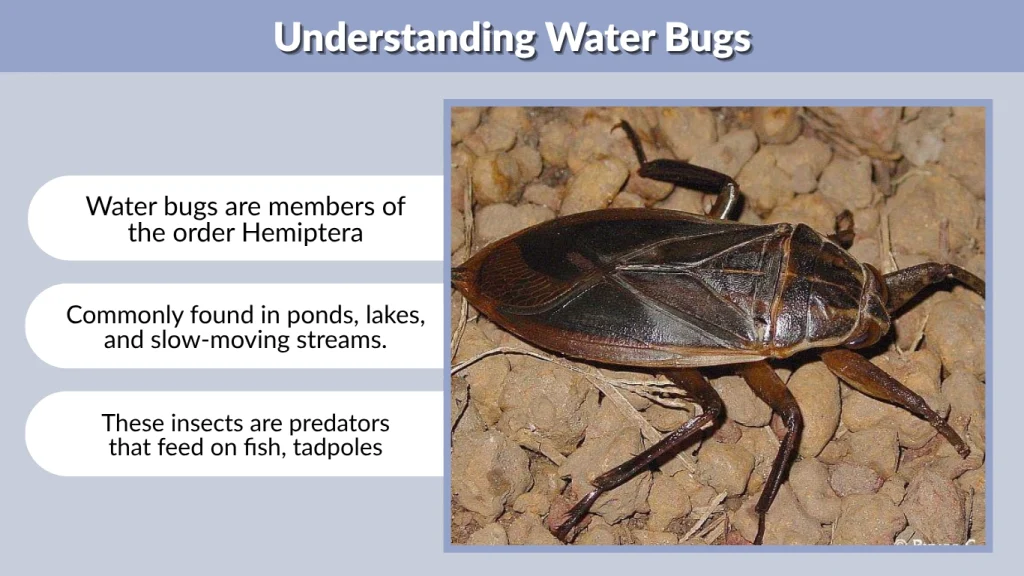
What Are Water Bugs?
Water bugs belong to the Belostomatidae family and are often called “giant water bugs” or “toe-biters.” They are flat, oval-shaped insects that can grow up to 2.5 inches long. These bugs live primarily in freshwater environments and feed on small fish, frogs, and other aquatic creatures. Unlike roaches, they are true water dwellers equipped with paddle-like legs and strong front claws for hunting.
Behavior and Habitat Preferences
Water bugs prefer calm, still waters with plenty of vegetation, such as ponds, swamps, and slow-moving streams. They hide under rocks or leaves during the day and hunt at night. Their strong wings allow them to fly from one water body to another, especially when searching for food or mates. They’re also attracted to light, which explains why you might spot them near porch lamps or pool areas.
Where Do Water Bugs Live?

Natural Habitats
Water bugs are found in freshwater habitats around the world. They thrive in:
- Ponds, lakes, and marshes with rich aquatic vegetation.
- Rice paddies and garden pools in tropical climates.
- Streams and wetlands where food sources like tadpoles and insects are abundant.
They breathe through air stored under their wings and can stay submerged for long periods. When oxygen runs low, they surface briefly to replenish their air supply before diving again.
Urban Environments
Although water bugs prefer natural settings, they occasionally appear in cities and homes. They may enter through open windows or drains, especially when outdoor water sources dry up. Indoors, they’re found in bathrooms, kitchens, or basements where moisture levels are high. However, they do not breed indoors — they only seek temporary shelter or hydration.
Giant Water Bug Habitats
Where Do Giant Water Bugs Live?
Giant water bugs inhabit still or slow-moving freshwater environments. They’re commonly found in ponds, lakes, and wetlands with shallow edges. In North America and Asia, they hide under submerged leaves or debris to ambush prey. These environments provide camouflage and easy access to food like tadpoles, insects, and small fish.
Distribution and Range
Giant water bugs live throughout North America, India, Thailand, Japan, and Southeast Asia. In tropical regions, they are active year-round, while in cooler climates they hibernate during winter. Their adaptability allows them to survive in natural lakes as well as artificial bodies like drainage ponds and rice fields.
Bugs That Live in or Near Water

Common Aquatic Insects
Water bugs share their habitats with several other aquatic insects, including:
- Water striders – glide across water surfaces using surface tension.
- Backswimmers – swim upside down and prey on smaller insects.
- Water boatmen – feed on algae and organic material underwater.
- Diving beetles – active hunters that store air bubbles to breathe underwater.
These species coexist, forming a balanced ecosystem where each plays a unique role in controlling insect and algae populations.
Habitats Around Water
Many insects live near water because it provides both food and humidity. You’ll often find them:
- Skimming the surface of ponds or lakes.
- Burrowing in muddy edges of marshes or streams.
- Hiding under rocks or floating plants for protection.
Still water offers a perfect environment for breeding and feeding.
Can Water Bugs Live Out of Water?
Limited Land Survival
Water bugs are true aquatic insects, but they can survive out of water for short periods. Their wings store a small air bubble that allows them to breathe temporarily on land. They may crawl into damp areas or under leaves when their habitat dries up. However, without water, they quickly dehydrate and die within a few days.
Do Water Bugs Live in Drains or Homes?
Sometimes, water bugs enter drains, bathrooms, or basements when outdoor ponds become too hot or polluted. Indoors, they can survive briefly in damp corners or around standing water but cannot reproduce. Their lifespan shortens significantly in dry environments, as they depend on constant humidity to stay alive.
Water Bugs and Pools
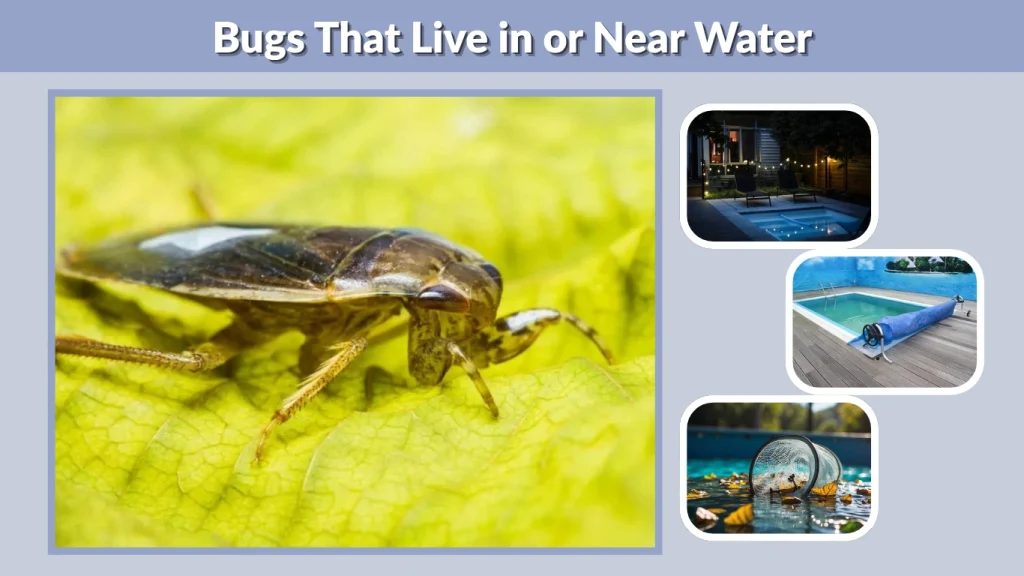
Can Water Bugs Live in Pools?
Water bugs can survive temporarily in swimming pools, especially if the pool is not well-maintained. They are attracted to lights and small insects floating on the water surface. However, chlorine-treated water shortens their lifespan and prevents long-term survival. They may remain for a few days before dying or leaving in search of natural water.
Prevention Tips
- Keep pool lights off at night to reduce attraction.
- Use a pool cover when not in use.
- Skim floating insects and debris daily.
- Maintain chlorine balance to deter bugs naturally.
A clean pool discourages water bugs from lingering or breeding nearby.
How Long Do Water Bugs Live?
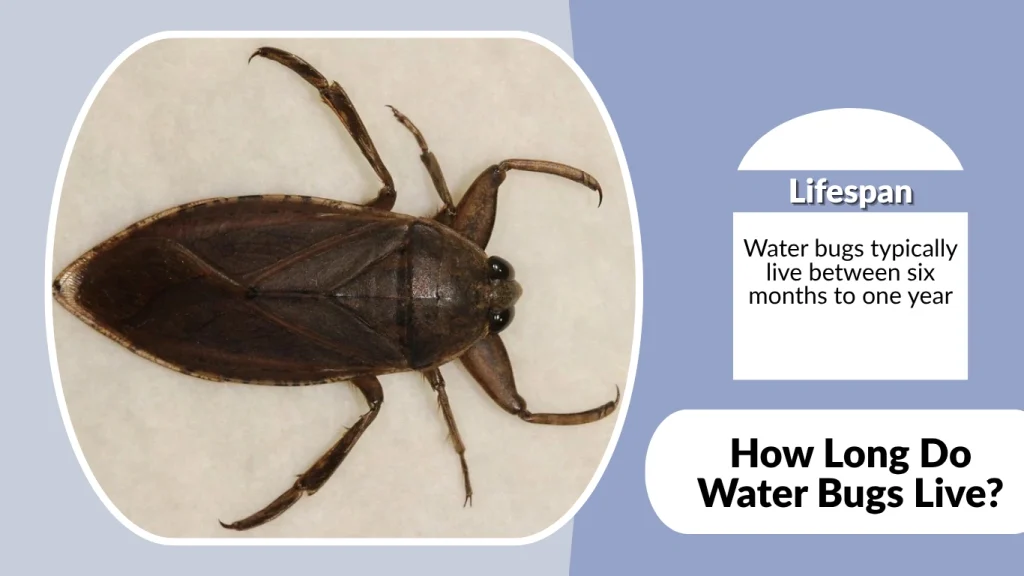
Average Lifespan
Water bugs typically live between six months to one year, depending on their environment and species. In the wild, their lifespan may be shortened by predators, pollution, or lack of food. The giant water bug species tends to live longer than smaller varieties, surviving close to a full year under stable, clean freshwater conditions.
Life Cycle
Their life cycle includes three stages: egg, nymph, and adult.
- Eggs are laid on aquatic plants or rocks near water.
- Nymphs hatch within two weeks and resemble miniature adults.
- They molt several times before reaching maturity, which takes around two months.
Once mature, adult water bugs continue hunting and reproducing until the end of their lifespan.
How Long Can Water Bugs Live Without Water or Food?
Survival Without Water
Water bugs are aquatic by nature, so they cannot survive long without moisture. When removed from water, they may live only 2 to 4 days depending on humidity. Their bodies require water to maintain oxygen exchange and hydration. Dry or air-conditioned environments rapidly dehydrate them, leading to death.
Survival Without Food
These insects can go for 1 to 2 weeks without eating. During food shortages, they become less active and conserve energy. However, because they’re predators, water bugs rarely starve in the wild—there’s almost always some form of aquatic prey available.
In Homes or Indoors
Inside homes, water bugs live only a few days. They can’t find suitable prey or reproduce without water, so they die off quickly. Their appearance indoors usually signals nearby outdoor breeding sites, like ponds, gutters, or drainage systems.
Other Bugs and Water Survivability
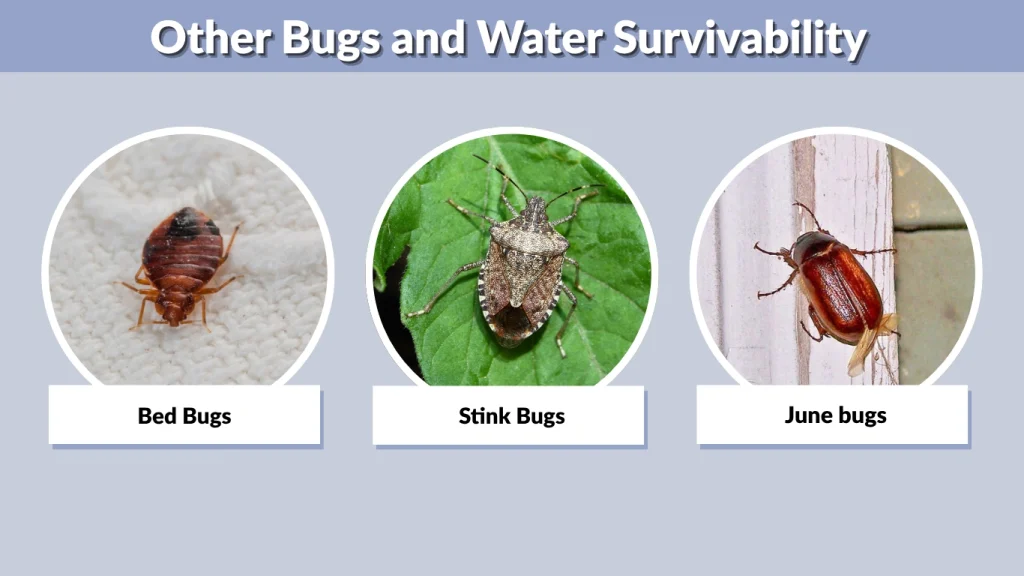
Can Bed Bugs Live in Water?
No, bed bugs cannot live or swim in water. If submerged, they drown within minutes. Hot or boiling water is an effective way to kill them on clothing or bedding. Even in damp areas, bed bugs won’t survive long—they need dry, warm conditions and human hosts to feed on blood.
Can Stink Bugs Live in Water?
Stink bugs cannot live underwater either. While they might float temporarily, they drown within a few hours. They can, however, survive for weeks without food or water, entering a dormant state when deprived of resources. This ability helps them outlast colder seasons inside homes.
Other Insects and Their Limits
- Pill bugs and mealybugs suffocate quickly underwater.
- Stick insects and June bugs die almost instantly when submerged.
- Aquatic beetles, on the other hand, thrive in water, using trapped air bubbles for breathing.
These differences show how diverse insect adaptations are to water environments.
Bugs That Live In and Around Water
Surface Dwellers
Some insects, like water striders and pond skaters, use surface tension to walk on water. Their long legs distribute weight evenly, preventing them from sinking. They feed on dead insects or larvae that float on the water’s surface.
Underwater Residents
Species such as backswimmers, diving beetles, and water boatmen live entirely underwater. They store oxygen in bubbles attached to their bodies and hunt smaller insects, larvae, or algae. Their swimming legs act like oars, making them fast and agile beneath the surface.
Near-Water Insects
Many bugs, including mosquitoes, dragonflies, and gnats, breed near ponds and streams. Their larvae rely on standing water to mature before emerging as adults. These areas provide a perfect balance of food, warmth, and moisture for breeding.
Interesting Facts About Water Bug Habitats
- Giant water bugs are sometimes found in Yellowstone’s warm springs and Hawaiian wetlands, showing their adaptability.
- Males often carry eggs on their backs to protect them from predators and ensure proper oxygen flow.
- Water bugs are strong fliers, capable of traveling long distances to find new habitats.
- They breathe using air bubbles trapped under their wings, allowing them to stay submerged for 30 minutes or longer.
- Their presence in ponds often indicates healthy, oxygen-rich water, as they cannot survive in polluted environments.
FAQs
Can water bugs live on land?
Only temporarily. They can survive for short periods if humidity is high but will quickly dehydrate without returning to water.
How long do water bugs live in homes?
Usually no more than a few days. Homes are too dry and lack suitable prey, so they eventually die unless they find a moist area or exit back outdoors.
Where do giant water bugs live?
They prefer calm freshwater bodies like ponds, marshes, and lakes. You can also find them in rice paddies and wetlands across North America and Asia.
Can bed bugs live in water?
No, they drown when submerged. Washing infested clothing or sheets in hot water effectively kills both adult bed bugs and eggs.
Do water bugs live in drains or pools?
Yes, temporarily. They may enter drains or pools in search of moisture or insects but cannot survive long in chlorinated or dry conditions.
