

Grasshoppers can devastate gardens and crops in a matter of days, leaving behind stripped leaves, damaged stems, and weakened plants. Because they move quickly and feed aggressively, many people search for methods that kill grasshoppers instantly or at least stop them fast. While true “instant kill” is rare in nature, several solutions—both natural and chemical—act extremely quickly and can either kill grasshoppers outright or immobilize them within seconds or minutes. This guide explains those methods and how to use them safely.
Understanding Grasshopper Behavior
Grasshoppers are voracious feeders that prefer tender leaves, flowering plants, fruit trees, vegetables, and grasses. Their populations can explode during hot, dry seasons, especially when natural predators are limited. They thrive in open spaces, migrate quickly from field to garden, and reproduce in soil, making control more challenging.
Understanding why infestations occur helps you choose the right control method. Grasshoppers:
- Eat continuously, especially in summer
- Prefer young plants, soft stems, and leafy vegetables
- Travel in groups, causing rapid damage
- Lay eggs in dry soil, enabling repeat infestations
Because of their mobility and fast feeding, slow solutions often fail—leading gardeners to look for fast or immediate treatments.
What Kills Grasshoppers Instantly? (Fastest-Acting Options)
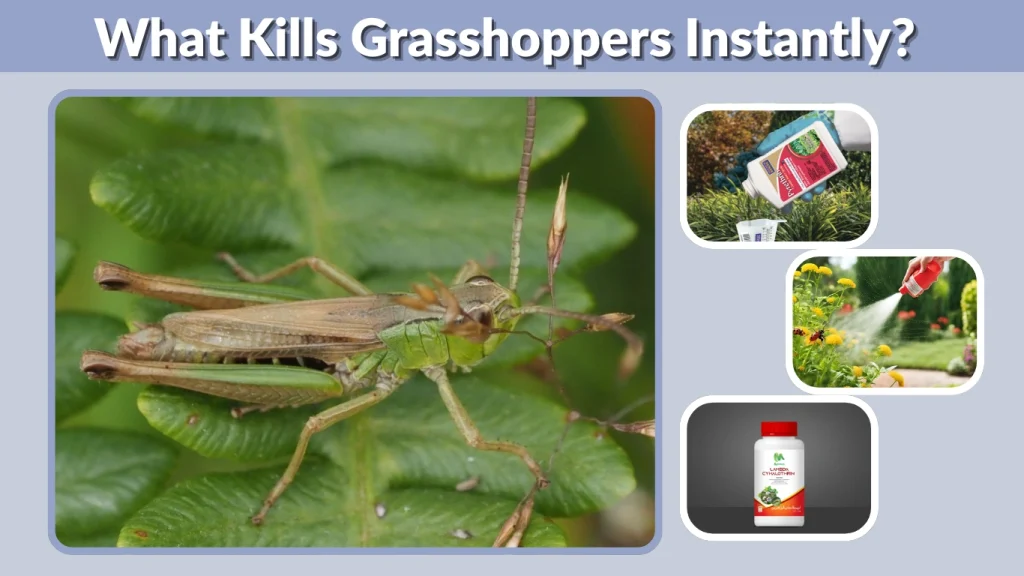
Before exploring natural remedies, it’s important to clarify what “instant kill” truly means. In most cases, no pesticide kills within a fraction of a second. However, several chemical treatments act within minutes, causing rapid paralysis or death.
Fastest Active Ingredients
Pyrethrin-based sprays
Pyrethrin comes from chrysanthemum flowers and is one of the quickest insect neurotoxins. When sprayed directly onto a grasshopper, it can cause immobilization within seconds and death shortly after.
Permethrin
A synthetic version of pyrethrin that kills grasshoppers extremely fast. Often used in commercial bug sprays for lawns and gardens.
Carbaryl (Sevin)
One of the most effective broad-spectrum insecticides. Grasshoppers exposed to carbaryl die quickly, often within minutes depending on concentration.
Lambda-Cyhalothrin
A professional-grade chemical used in many home lawn treatment products. It has rapid knockdown capability and provides residual protection.
Instant- vs Fast-Acting
- Instant: Paralysis or immobilization within seconds
- Fast-acting: Death within several minutes to an hour
- Residual: Continues killing grasshoppers for days or weeks
If you need immediate impact, spray these chemicals directly on the grasshopper.
What Kills Grasshoppers Instantly Naturally?
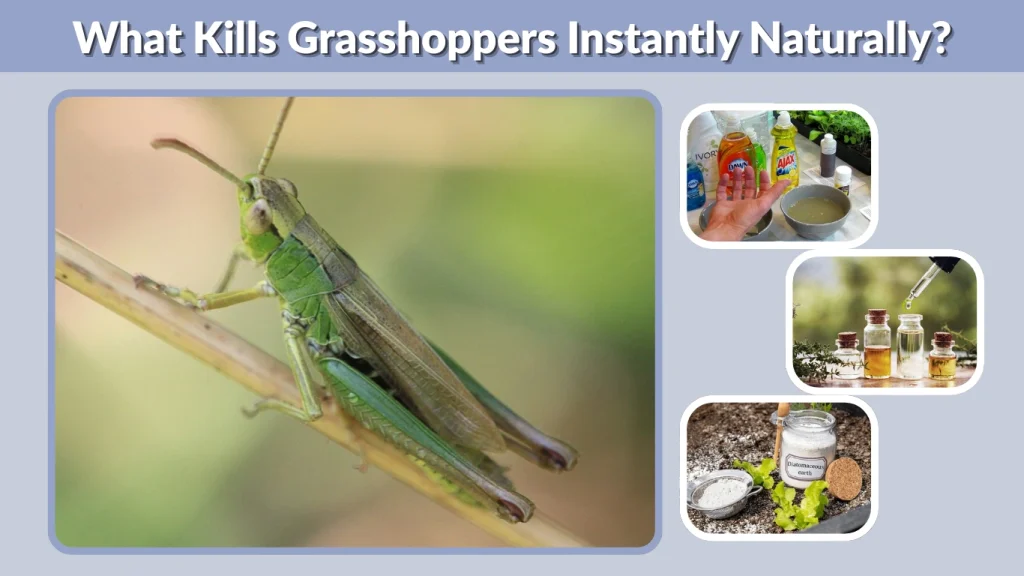
While natural remedies rarely kill in the same fast manner as chemical sprays, some natural solutions work surprisingly quickly and can stop grasshoppers long enough to remove or kill them.
Soapy Water Spray
A simple mixture of water and dish soap creates a coating that blocks the grasshopper’s spiracles (breathing pores). When sprayed directly, grasshoppers may become immobile almost instantly and die soon afterward.
Essential Oils
Some oils act as neurotoxins or suffocants when sprayed directly:
- Clove oil
- Peppermint oil
- Rosemary oil
These oils break down the insect’s respiratory system and can act within minutes.
Neem Oil
Neem does not kill instantly, but it stops feeding nearly immediately, which protects your plants while the grasshopper dies over several hours or days.
Diatomaceous Earth
Although not instant, it dehydrates insects rapidly by cutting their exoskeletons. Works best when applied to plant surfaces the grasshoppers land on.
Does Vinegar Kill Grasshoppers Instantly?
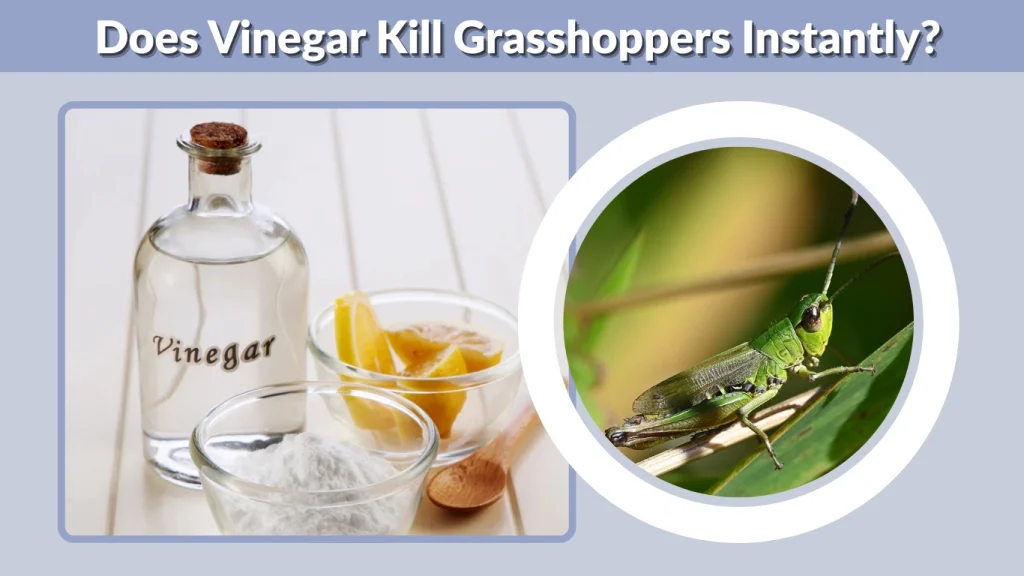
Vinegar is one of the most-searched natural remedies. While vinegar does not kill grasshoppers instantly, it can kill them relatively fast due to its high acidity and ability to damage the insect’s outer shell.
A strong vinegar spray—especially when mixed with soap—can cause rapid dehydration and immobilization.
Vinegar Spray Recipe (Fast-Acting Natural Option)
A strong vinegar solution works more effectively when combined with dish soap, which helps the mixture cling to the grasshopper’s body and disrupts its ability to breathe.
Homemade Vinegar Grasshopper Spray
- 1 cup white vinegar or apple cider vinegar
- 1 cup water
- 1–2 teaspoons dish soap
- Optional: 1 teaspoon garlic powder or chili powder
How to Use
Shake the mixture well and spray directly on grasshoppers. It may take several minutes for full effect, but many grasshoppers become weak or stop moving soon after being coated. Use in shaded hours (morning or evening) to prevent leaf burn.
Other Natural Ways to Kill or Repel Grasshoppers
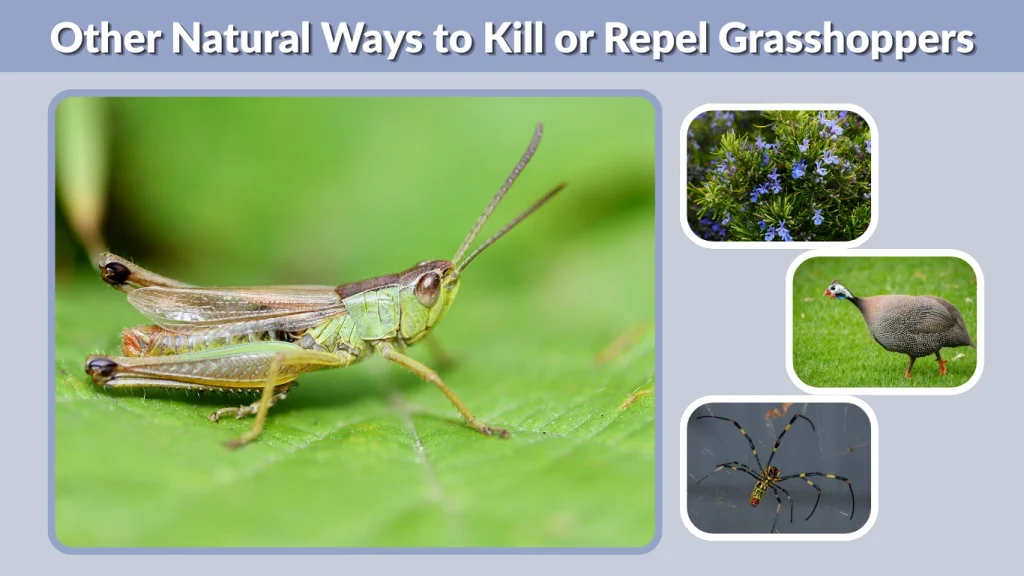
Not all solutions kill instantly, but many natural methods reduce populations, repel grasshoppers, or limit their ability to feed.
Plants That Repel Grasshoppers
Grasshoppers dislike the scent of certain herbs and shrubs. Planting these around your garden creates a natural barrier:
- Rosemary
- Sage
- Cilantro
- Lavender
- Juniper
These plants don’t kill grasshoppers but discourage them from feeding nearby.
Backyard Predators
You can reduce grasshopper populations naturally by encouraging predators:
- Chickens
- Guinea fowl
- Ducks
- Spiders
- Frogs
- Praying mantises
These hunters act quickly and help maintain long-term control.
Nosema locustae (Biological Control)
This naturally occurring microbe (sold as Nolo bait) infects grasshoppers and reduces populations over time. It’s not instant but is highly effective for long-term prevention.
Flour Dusting Method
Sprinkling all-purpose flour onto leaves causes grasshoppers to gum up their mouths when feeding. They stop eating rapidly and die shortly after from starvation or inability to feed.
Preventing Future Grasshopper Infestations
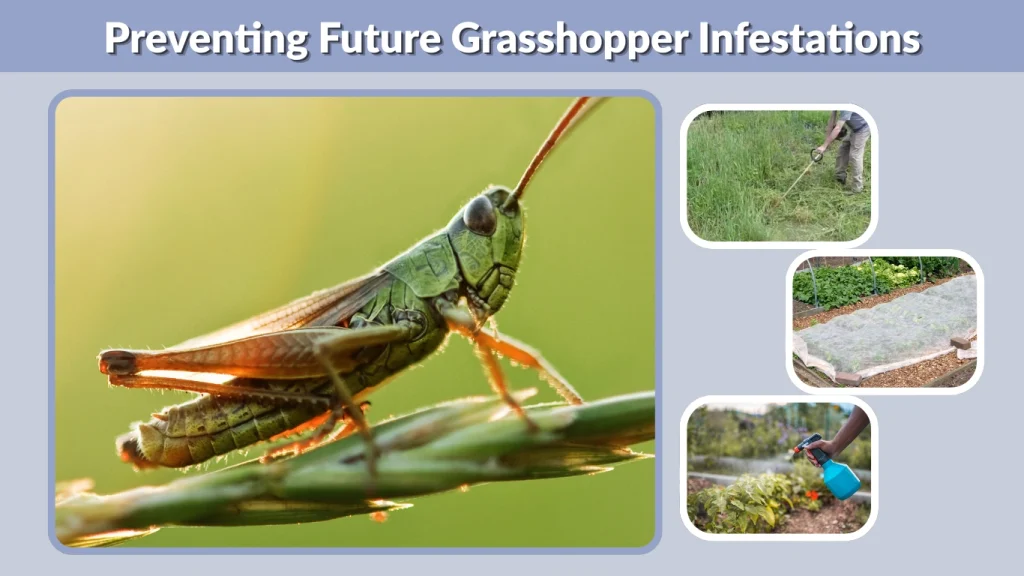
Controlling grasshopper populations is easier when you prevent them from taking hold in the first place.
Remove Weeds and Tall Grass
Grasshoppers hide in tall vegetation, especially during hot weather. Keep grass trimmed and remove weeds regularly.
Till Soil in Late Fall or Early Spring
Grasshopper eggs overwinter in soil. Tilling exposes and destroys them before they hatch.
Use Row Covers on Young Plants
Lightweight row covers protect vulnerable crops, especially during peak grasshopper season.
Companion Planting
Mixing strong-smelling herbs throughout your garden helps confuse and repel pests.
Regular Application of Natural Sprays
Even if grasshoppers aren’t visible, applying essential oil or vinegar sprays weekly helps deter them and prevent outbreaks.
Safety Considerations
Whether you choose chemical or natural methods, safety is essential—especially around children, pets, and pollinators.
Chemical Spray Safety
- Wear gloves and protective eyewear
- Avoid spraying during windy conditions
- Keep children and pets away until surfaces are dry
- Do not apply near flowering plants visited by bees
Vinegar Safety
- Avoid spraying directly on delicate plant leaves in direct sunlight
- Do not mix vinegar with chemical pesticides
- Test on one leaf before large applications
Soap and Essential Oils
- Some essential oils may harm beneficial insects
- Avoid overspraying herbs or edible crops
FAQs
What kills grasshoppers the fastest?
Pyrethrin-based sprays and permethrin are among the fastest-acting treatments, often causing paralysis within seconds and death shortly afterward.
Is there a natural spray that works instantly?
Soapy water is the closest natural “instant” method. It blocks the insect’s breathing pores, causing rapid immobilization and eventual death.
Does vinegar really kill grasshoppers?
Yes, especially when mixed with soap. It works by dehydrating and damaging the exoskeleton, though it is not truly instant.
Does soapy water kill grasshoppers on contact?
It immobilizes them almost immediately and typically kills them within minutes by disrupting respiratory function.
What is the safest method for vegetable gardens?
Neem oil, essential oils, and vinegar/soap mixtures are safe when used responsibly. Chickens and ducks are also excellent natural pest control options.
