

Large, bright green grasshopper-like insects are common across many regions, especially in warm climates. People often describe them as “big green grasshoppers,” “leaf-looking bugs,” or “huge green insects with long legs,” and many wonder whether they’re dangerous, where they come from, or what species they truly belong to. In reality, many of these sightings are not true grasshoppers at all but katydids, a close relative known for their leaf-shaped wings, powerful jump, and distinctive nighttime calls. This guide explains how to identify them, what species they belong to, and why they appear in different regions like Florida, Texas, Georgia, North Carolina, California, and even the UK.
What Is the Big Green Grasshopper?
The large green insect most people call a “big green grasshopper” is usually a katydid, a member of the Tettigoniidae family. While they resemble grasshoppers, katydids are different in several important ways. Their color is a bright or leafy green, and many have wings that look exactly like leaves—complete with veins, texture, and natural camouflage.
Grasshoppers tend to be shorter-bodied, stockier, and more brown or tan in color. Katydids, on the other hand, are more slender, longer, and often appear almost neon green when in sunlight.
Key differences between grasshoppers and katydids:
- Antennae: Katydids have extremely long antennae—often longer than their entire body—while grasshoppers have short, thick antennae.
- Body shape: Katydids are elongated and leaflike; grasshoppers are more compact.
- Color: Katydids are bright green; grasshoppers vary by species.
- Sound: Male katydids “sing” at night; grasshoppers typically chirp during the day.
This combination of size, color, and leaflike appearance explains why so many people describe these insects as “big green grasshoppers that look like a leaf.”
Identifying a Big Green Grasshopper (Appearance & Traits)

While several species can appear similar, most big green “grasshopper-looking” insects share core traits. These features help you quickly identify whether you’re seeing a true grasshopper or a katydid.
Common characteristics:
- Bright green or yellow-green coloring
- Leaf-shaped wings with visible veins
- Size ranging from 1.5 to 3+ inches
- Very long hind legs designed for jumping
- Long, threadlike antennae
- Ability to fly in short bursts
- Red or brown eyes in some species
Some individuals also have:
- Brown wings
- A yellow stripe down the back
- A reddish spot near the eyes
These variations depend on the species and the region.
The “stinger” that isn’t a stinger
A common question is why some big green grasshoppers seem to have a long, pointed “stinger.” This is actually a female’s ovipositor, a harmless egg-laying organ. It looks like a stinger but cannot inject venom or poison.
Common Species of Big Green Grasshoppers
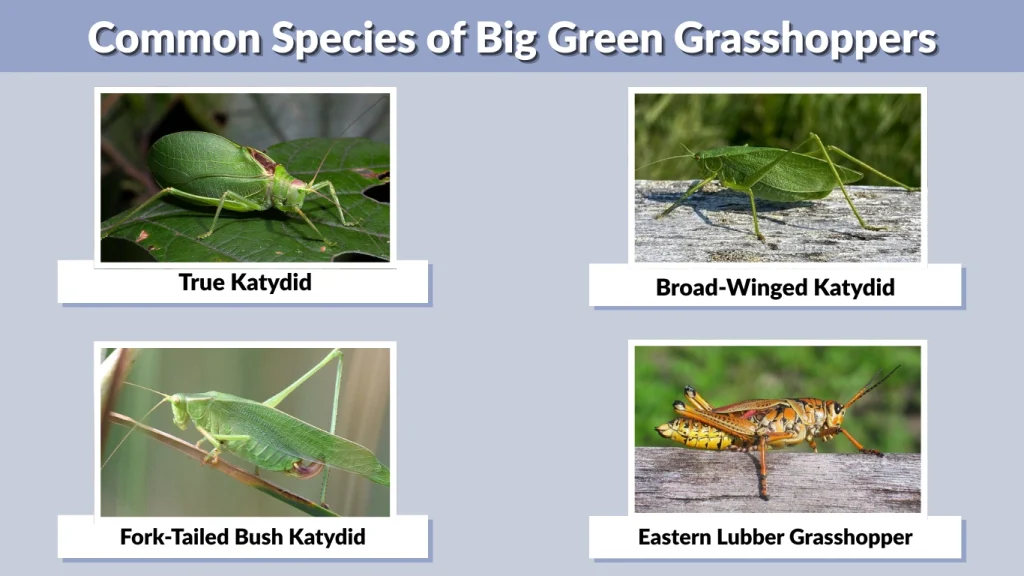
Many insects fit the description, but the species most frequently mistaken for giant green grasshoppers include:
1. True Katydid (Pterophylla camellifolia)
A large, heavy-bodied katydid found in the eastern United States. Known for its loud nighttime call and leaflike wings.
2. Broad-Winged Katydid
A slimmer katydid with wide, leafy wings and a bright green color.
3. Fork-Tailed Bush Katydid
Common in gardens and shrubs; often seen on tomatoes, roses, and fruit trees.
4. Eastern Lubber Grasshopper (Green Juvenile Stage)
Although adult lubber grasshoppers are black, orange, and yellow, their juveniles are bright green and can be mistaken for katydids.
5. Great Green Bush Cricket (UK & Europe)
Often called a “giant green grasshopper” in the UK, this species can reach impressive sizes and is harmless to humans.
Each species varies slightly in size, coloration, and range, but all fall under the umbrella of “big green grasshopper-like insects.”
Regional Sightings: Where Big Green Grasshoppers Are Found

Many of the search queries relate to regional sightings across the United States and beyond.
Florida
Florida has several katydid species and juvenile lubber grasshoppers. Despite their size, they are not dangerous and will not sting or bite unless handled aggressively.
Texas
Large katydids are extremely common in Texas during late summer, especially near lights at night. They are strong fliers and often land on porches and windows.
Georgia
Georgia residents frequently encounter broad-winged katydids and fork-tailed bush katydids. These insects are usually found around porch lights, shrubs, gardens, and wooded areas. Their bright green color makes them stand out against house siding or windows, which is why many people think they’ve discovered an unusually large grasshopper.
North Carolina
One of the most commonly reported insects in North Carolina is the katydid with a yellow stripe along its back. This stripe is natural and varies by species. Katydids in NC are active during warm months and are known for their distinct nighttime calls.
California
California is home to several species of katydids and leaf mimic insects. These insects thrive in gardens, citrus trees, vineyards, and ornamental plants. Their leafy camouflage helps them blend into bushes and tree canopies.
United Kingdom
In the UK, many sightings of “big green grasshoppers” actually refer to the Great Green Bush Cricket. This species can grow up to 2 inches long and looks almost identical to a large katydid. Despite their size, they’re harmless and generally shy around humans.
Behavior & Diet of Big Green Grasshoppers

Whether it’s a true grasshopper or a katydid, their diets and behaviors help explain why they show up near homes and gardens.
What They Eat
Big green grasshopper-like insects typically feed on:
- Leaves (especially soft or new growth)
- Flowers and buds
- Fruits like apples, peaches, and berries
- Vegetable garden plants
- Tree foliage
Katydids tend to be more selective and delicate feeders, nibbling small patches rather than stripping whole plants. Grasshoppers, however, can cause more visible damage.
Behavior Traits
- Mostly nocturnal: Katydids are active at night and attracted to lights.
- Strong jumpers: They leap long distances when threatened.
- Short flight bursts: Most species fly only briefly.
- Natural camouflage: Their leaflike wings protect them from predators.
- Mild temperament: They rarely bite and avoid humans.
Their harmless nature is one reason they’re often considered beneficial or neutral insects rather than pests.
Are Big Green Grasshoppers Dangerous?
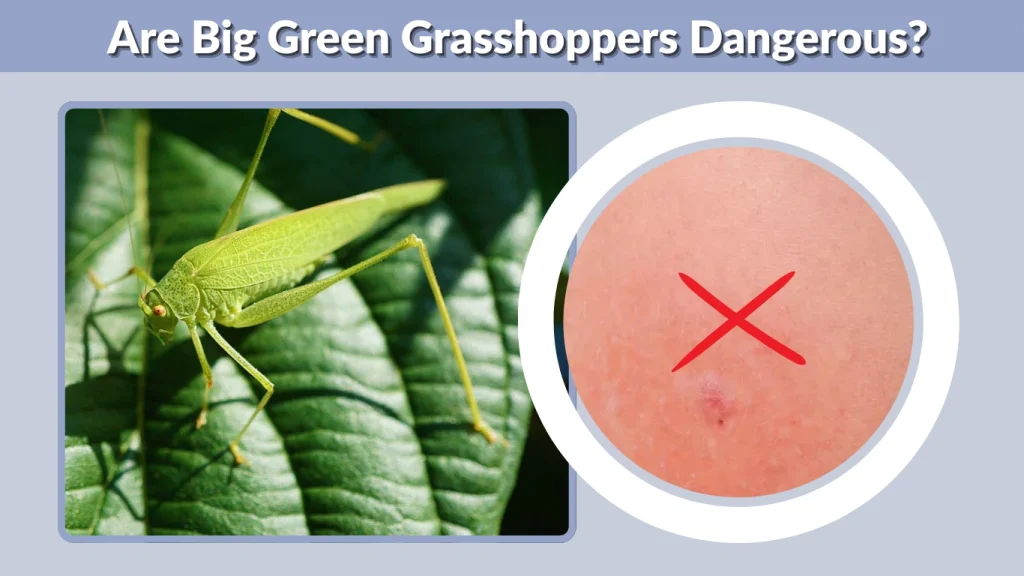
A common concern is whether these large insects pose any threat. Fortunately, they are not dangerous to humans.
They do NOT sting
The long, pointed structure on some individuals is an ovipositor, not a stinger. It’s used only for laying eggs.
They rarely bite
A katydid may bite if handled roughly, but the bite is mild and non-venomous.
Not toxic to pets
They are safe around dogs, cats, and livestock.
Garden impact varies
- Katydids: light to moderate leaf damage
- Grasshoppers: heavier feeding, especially in crops
- Lubbers: can be destructive in the South
Even with feeding, they are rarely considered a major threat unless present in large numbers.
Symbolism & Meaning of Seeing a Big Green Grasshopper
In many cultures, grasshoppers and katydids are symbols of:
- Good luck
- Opportunity or new beginnings
- Prosperity and abundance
- Growth and renewal
Green specifically represents nature, health, and fresh starts. Seeing a large green grasshopper-like insect may be interpreted as a sign of upcoming positive change or progress.
Look-Alike Insects Often Mistaken for Grasshoppers
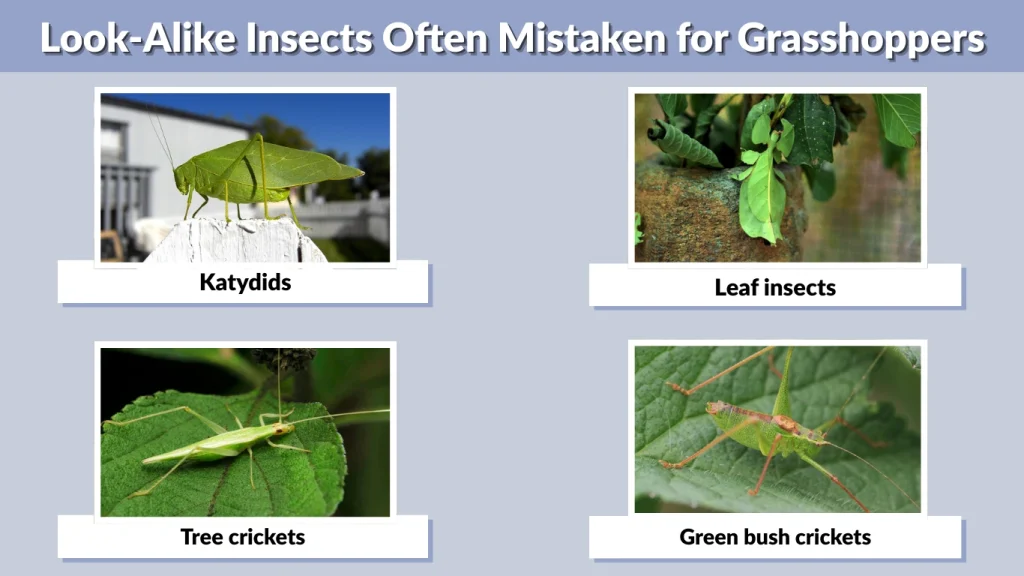
Many insects are confused with big green grasshoppers. These include:
- Katydids (most common)
- Leaf insects
- Tree crickets
- Green bush crickets
- Juvenile lubber grasshoppers
These look-alikes share features like long legs, green bodies, and leaf-shaped wings.
Big Green Grasshoppers in Gardens
Katydids typically cause minimal plant damage. They nibble here and there but rarely destroy entire plants. True grasshoppers and lubbers are more aggressive feeders and may require control if populations rise.
Natural predators—birds, frogs, lizards, spiders—help keep numbers balanced.
FAQs
What is the big green grasshopper called?
Most are katydids, especially broad-winged and bush katydids. In the UK, it may be the Great Green Bush Cricket.
Why does it have a stinger?
That “stinger” is actually a harmless ovipositor for laying eggs.
Are big green grasshoppers dangerous in Florida or the South?
No. The only dangerous large grasshopper is the Eastern lubber—but it is usually black/orange, not bright green.
What do big green grasshoppers eat?
Leaves, flowers, fruits, and garden plants. Damage is usually light.
What bug looks like a big green grasshopper?
Katydids are the most common look-alike.
