
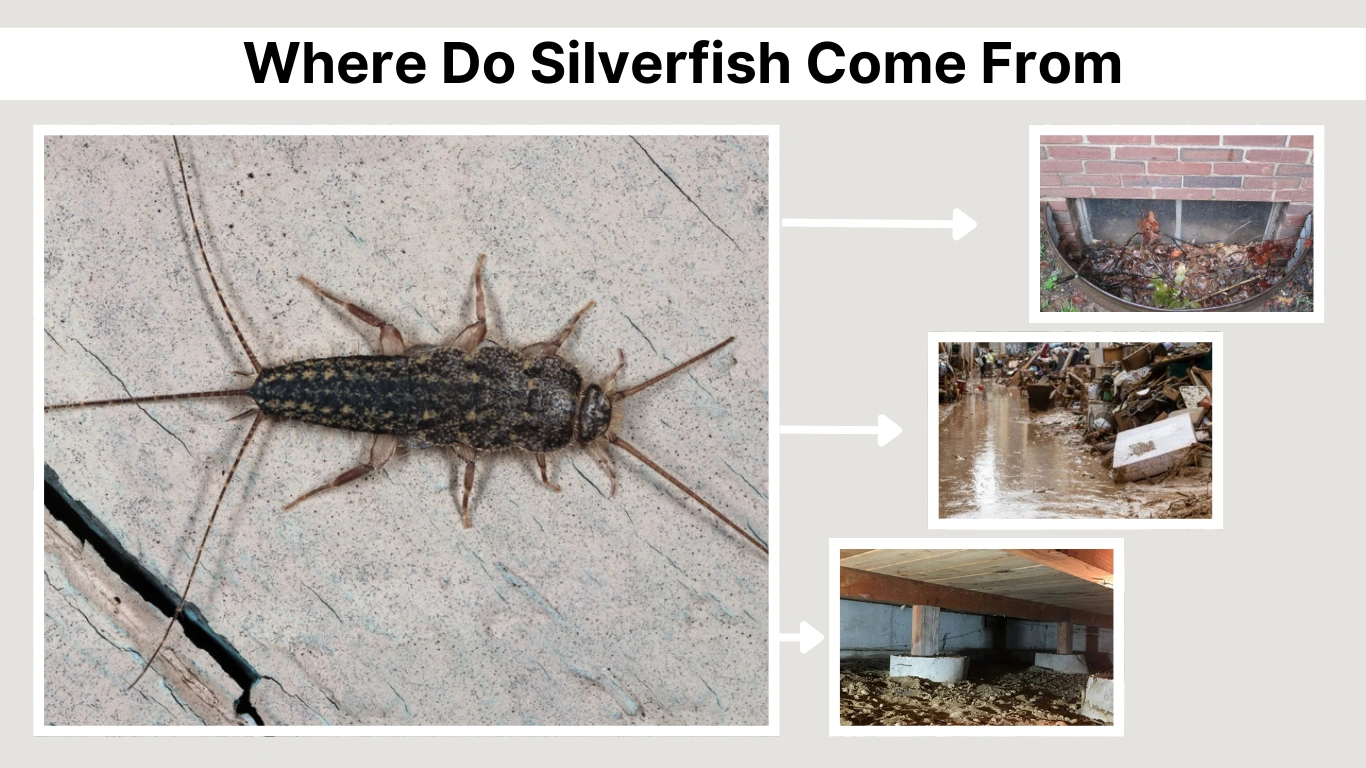
Silverfish are ancient, fast-moving insects that have been around for hundreds of millions of years. They are often found darting across bathroom floors or hiding in bookshelves, feeding quietly on starchy materials. While they are not harmful to humans, they can damage books, clothes, and pantry goods. To prevent them, it’s important to know where they come from, how they get inside, and why they stay.
The Natural Habitat of Silverfish
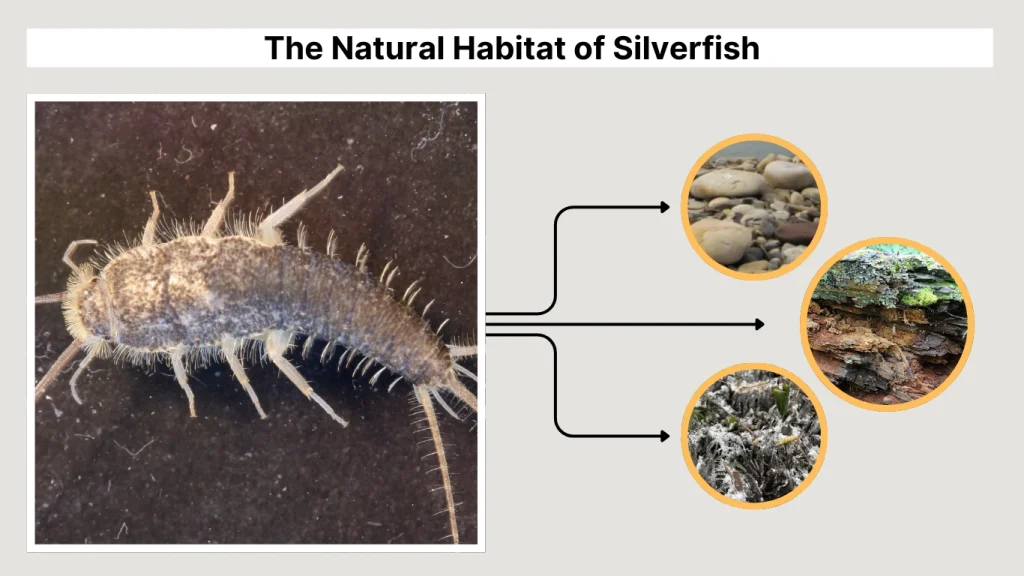
Silverfish thrive in environments that mimic their primitive origins—dark, humid, and undisturbed places with access to organic food sources. Before they enter homes, they are typically found outdoors in naturally moist areas.
Outdoor Environments
In nature, silverfish can be found beneath rocks, inside decaying logs, and under layers of leaf litter. They also hide beneath tree bark in damp forests and within the soil where humidity is high. These locations provide protection from predators and constant moisture, which is essential for their survival. Compost piles and garden mulch are also prime habitats, offering both food and cover.
Ideal Environmental Conditions
Silverfish require high humidity—ideally above 75%—to keep their bodies hydrated. They prefer temperatures between 70–80°F (21–27°C) and complete darkness to avoid predators. Without moisture, they can quickly dehydrate and die. This is why they tend to hide in spaces where water is abundant and light is minimal.
How Silverfish Enter Homes

Once they detect favorable indoor conditions, silverfish move inside through small openings or hitchhike in with human belongings. They are skilled at finding tiny entry points that are often overlooked.
Cracks and Gaps
Even the smallest openings in walls, foundations, or around windows can be used by silverfish to gain entry. They often squeeze through spaces that are barely visible, especially near ground level. Over time, they explore the interior and settle in areas with high humidity and available food.
Plumbing and Utility Openings
Pipes, drains, and utility lines act like highways for silverfish. They follow moisture and warmth along these paths, eventually reaching kitchens, bathrooms, or laundry rooms. Unsealed pipe entries and wall gaps make it even easier for them to invade.
Hitchhiking on Items
Silverfish eggs or adults can hide in cardboard boxes, second-hand books, and old furniture. When these items are brought indoors, they can introduce silverfish directly into a home. Because eggs are tiny and hard to detect, infestations can start without anyone noticing.
Indoor Environments That Attract Silverfish

Inside, silverfish look for the same conditions they prefer outdoors—darkness, moisture, and food. Certain areas of the home are particularly appealing to them.
Basements and Crawl Spaces
These spaces are naturally cooler, darker, and often humid, making them perfect for silverfish. Basements with stored paper goods, cardboard boxes, and old clothing provide both food and shelter. Crawl spaces with poor ventilation are also high-risk areas.
Bathrooms
Frequent water usage and steam from showers create a moisture-rich environment. Silverfish often hide under sinks, behind toilets, and in the corners of bathtubs or showers. Leaky pipes and poor ventilation make bathrooms a year-round silverfish hotspot.
Kitchens and Pantries
Silverfish are drawn to stored grains, cereals, flour, and sugar. Pantries with damaged or open packaging are especially vulnerable. Kitchens also provide moisture from sinks and dishwashers, which keeps the air humid.
Attics and Storage Rooms
Poorly ventilated attics and storage rooms trap heat and humidity, making them attractive to silverfish. Stored books, photo albums, and clothing create an ideal food supply. These rooms are often visited infrequently, giving silverfish time to reproduce undisturbed.
Silverfish Breeding and Spread
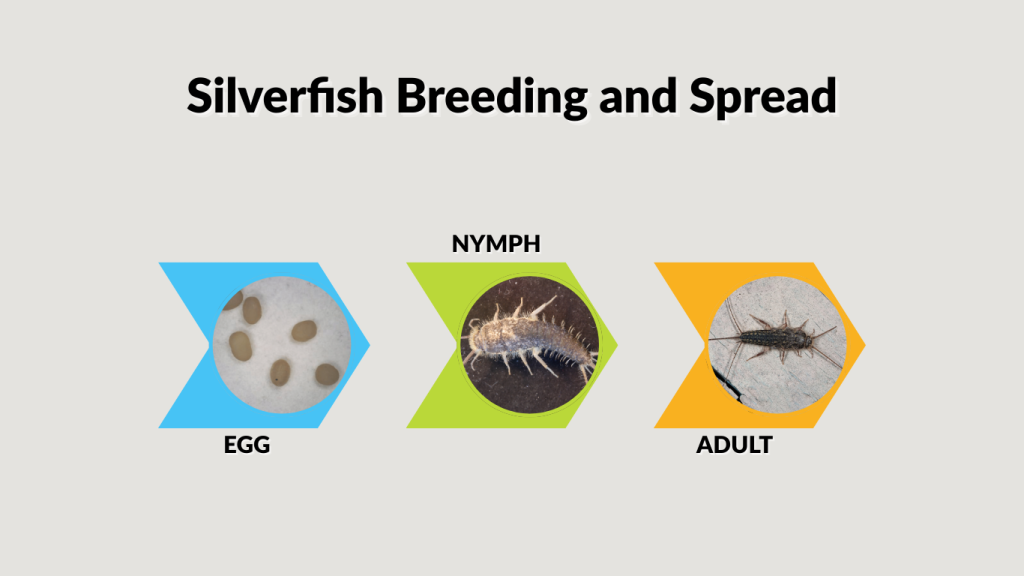
Once indoors, silverfish reproduce slowly but steadily, creating long-term infestations if left unchecked.
Egg Laying
Female silverfish lay eggs in hidden cracks, behind baseboards, or within stored items like boxes and books. Eggs are small, white, and hard to see without close inspection, making them easy to overlook during cleaning.
Egg Development
The time it takes for eggs to hatch depends on temperature and humidity. In warm, moist conditions, hatching can occur within three to six weeks. In cooler or drier conditions, development may take several months.
Gradual Spread
Silverfish typically start in one location and expand as the population grows. When food runs low, they explore nearby rooms, eventually infesting multiple areas of the home. This gradual spread can make infestations hard to detect early on.
Common Reasons for Silverfish Infestations

Silverfish infest homes because they find the conditions they need to survive—moisture, shelter, and food—all in one place.
Excess Moisture
Humidity from leaks, condensation, or poor ventilation attracts silverfish. Bathrooms, kitchens, basements, and laundry rooms are often the first areas they invade. Without moisture control, they can thrive year-round.
Available Food Sources
Silverfish feed on a wide range of items, including paper, fabrics, and pantry goods. Leaving stacks of newspapers, open food containers, or dirty laundry out increases the risk of infestation.
Poorly Sealed Structures
Holes in walls, gaps around windows, and unsealed foundations allow silverfish to move in from outside. Even tiny openings can serve as entry points if they lead to a moist environment.
Seasonal Patterns in Silverfish Activity
Silverfish are active all year, but their visibility may change with the seasons.
Warm Months
During spring and summer, high humidity and warm temperatures encourage more movement and reproduction. You might notice more silverfish sightings in bathrooms, kitchens, and storage areas during these months.
Indoor Survival in Winter
While outdoor populations slow in colder months, indoor silverfish continue to feed and breed if warmth and moisture are available. Heated homes can sustain infestations even in the dead of winter.
Signs That Silverfish Came from Outdoors

Not all silverfish infestations start indoors. Some begin with outdoor populations that migrate inside.
Indicators of Outdoor Origin
If you notice silverfish near doors, windows, or foundation edges, they may have recently come from outside. Activity may spike after heavy rains, which drive them from saturated soil into drier indoor spaces. Finding them in sheds or garages before they appear in main living areas is another clue.
Preventing Silverfish from Entering Your Home
Keeping silverfish out starts with eliminating entry points and making your home less inviting.
Seal Entry Points
Use caulk to fill cracks around foundations, siding, and window frames. Install door sweeps and weather stripping to block gaps at entry doors.
Control Moisture
Run dehumidifiers in damp rooms, repair leaky pipes, and improve ventilation in bathrooms and basements. Reducing humidity below 50% can make survival difficult for silverfish.
Store Items Properly
Keep food in airtight containers and store paper goods, books, and fabrics in sealed plastic bins. Avoid using cardboard for long-term storage in damp areas.
How to Remove Existing Silverfish
If silverfish are already inside, a combination of cleaning, moisture control, and targeted treatments works best.
Reduce Humidity
Lowering moisture levels forces silverfish to seek other environments. This is the most effective long-term control method.
Clean and Declutter
Vacuum regularly, especially in dark corners and behind furniture. Remove clutter that can serve as hiding spots or breeding areas.
Use Traps and Insecticides
Sticky traps and boric acid powder can help reduce silverfish numbers. Apply treatments carefully, especially in areas where children or pets are present.
Final Thoughts
Silverfish are ancient insects that naturally live outdoors in damp, dark environments. They enter homes through cracks, gaps, and infested items, seeking moisture, shelter, and food. Once inside, they can remain hidden for long periods while slowly causing damage to books, clothing, and stored goods. By sealing entry points, controlling humidity, and keeping storage areas clean, you can make your home far less attractive to these resilient pests.
