
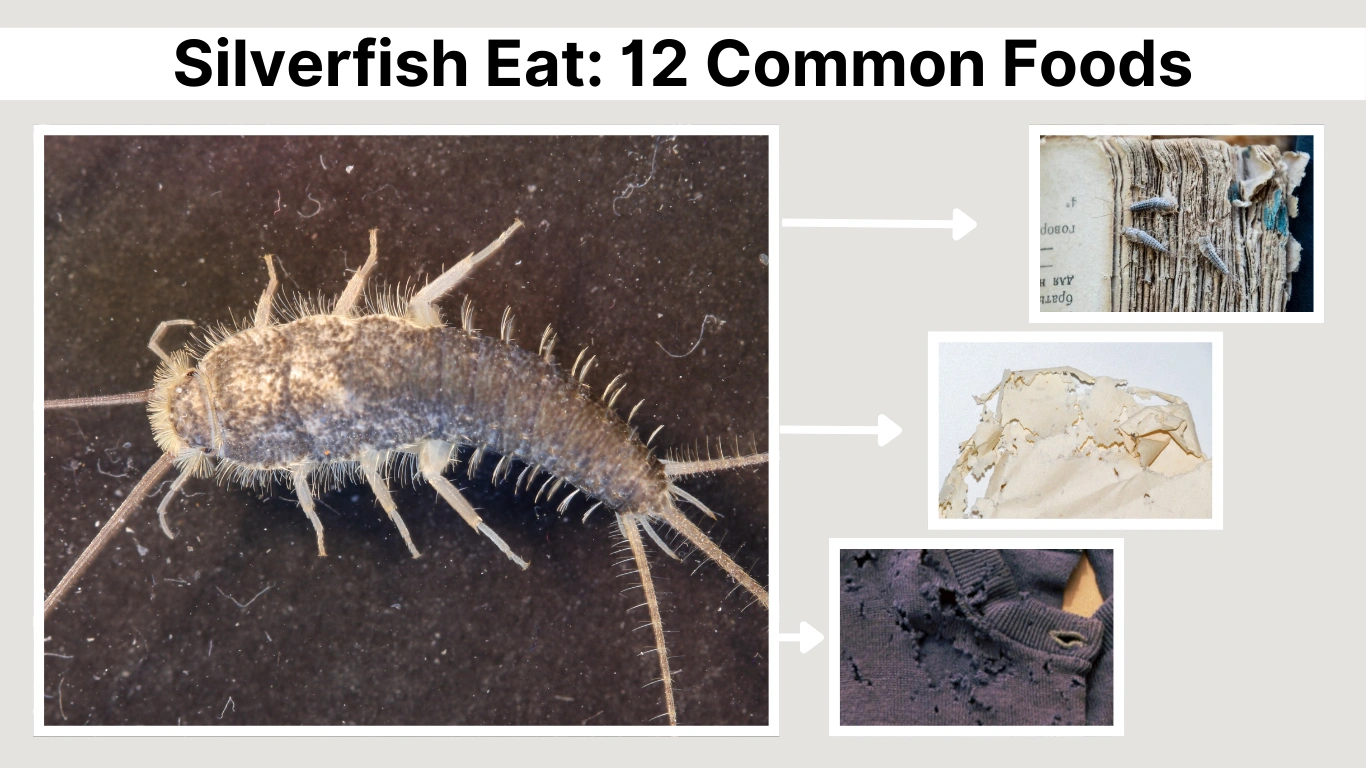
Silverfish are tiny, wingless insects known for their silvery scales and swift movements. Although harmless to humans in terms of bites or stings, they can be destructive pests in homes due to their diverse diet. These nocturnal feeders thrive in dark, damp environments, seeking out starchy, sugary, and protein-rich materials.
From paper and books to pantry staples and even clothing, understanding what silverfish eat—and how they locate these foods—can help you protect your belongings and prevent infestations.
1. Paper and Books

Silverfish have a notorious reputation for damaging books, important documents, and other paper-based items. They are drawn to the cellulose and starch found in paper, as well as the adhesives used in book bindings. Homes with libraries, stored paperwork, or stacks of magazines are especially at risk if humidity levels are high.
Hunting Process
- Uses its long antennae to detect the subtle scent of cellulose in paper.
- Navigates along bookshelves, storage boxes, or desk drawers in the dark.
- Finds the edges of pages or binding glue and begins scraping away the surface to consume the starch-rich material.
2. Wallpaper and Paste
Wallpaper, especially older types, often contains starch-based adhesives that silverfish find irresistible. In humid areas like bathrooms or kitchens, the glue softens, making it even easier for these pests to feed. Over time, this can lead to peeling wallpaper and visible damage along seams.
Hunting Process
- Moves toward moist walls where humidity softens the glue.
- Feels along wallpaper seams or corners to find loose sections.
- Scrapes and eats the glue residue, occasionally chewing into the paper layer itself.
3. Clothing (Cotton, Linen, Silk)
Natural fabrics are another target for silverfish because they contain starch and, in some cases, proteins like keratin. Stained clothes, especially with sweat or food residue, are more attractive to them. This can result in small, irregular holes that are often mistaken for moth damage.
Hunting Process
- Slips into wardrobes, drawers, or laundry piles where darkness and warmth provide cover.
- Detects the scent of sweat, body oils, or leftover food particles on fabric.
- Slowly chews through the fibers, weakening and damaging the material over time.
4. Cardboard
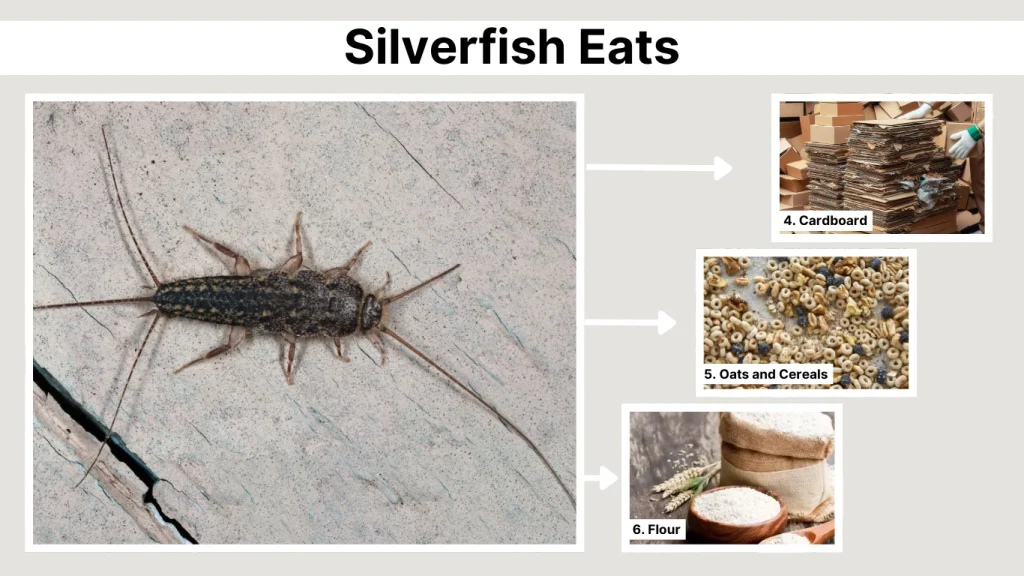
Cardboard is made from processed paper and is rich in cellulose, making it an easy snack for silverfish. Boxes stored in basements, attics, or garages are especially vulnerable when exposed to moisture.
Hunting Process
- Crawls into storage areas where cardboard boxes are kept.
- Targets damp, softened areas that are easier to chew.
- Gradually scrapes away the layers, leaving thin, uneven patches or holes.
5. Oats and Cereals
Pantry foods like oats, cornflakes, and other cereals are prime carbohydrate sources for silverfish. If stored in unsealed containers or damaged packaging, these items become easy targets for infestation.
Hunting Process
- Detects the scent of grains from open boxes or torn bags.
- Crawls into the pantry at night, using small gaps to enter containers.
- Chews on flakes or grains, often contaminating the food with droppings and shed scales.
6. Flour
Flour is soft, fine, and easy for silverfish to consume. Any spills or improperly sealed bags can quickly attract them, especially in kitchens with poor ventilation.
Hunting Process
- Locates flour particles or dust on counters, shelves, or in cupboards.
- Crawls inside paper bags or plastic containers with loose lids.
- Feeds continuously, leaving traces of contamination behind.
7. Sugar

Though they are more famous for starch cravings, silverfish also enjoy sugary substances. Any granulated sugar, syrup residue, or sweet crumbs can draw them in.
Hunting Process
- Smells sugary scents from jars, spills, or food scraps.
- Climbs onto kitchen surfaces or inside storage areas.
- Consumes sugar granules or licks sticky residues from surfaces.
8. Dandruff and Hair
Silverfish also feed on proteins, and human dandruff and hair provide an easily accessible source. They often find these in bedding, carpets, or around hairbrushes, especially in less frequently cleaned areas.
Hunting Process
- Crawls across floors, bedding, or furniture during the night.
- Detects skin flakes and stray hairs using sensory receptors.
- Nibbles at strands or consumes dandruff flakes for protein.
9. Dead Insects
Being opportunistic feeders, silverfish will scavenge insect carcasses for protein and nutrients. This includes dead ants, flies, and even other silverfish.
Hunting Process
- Finds insect remains in window sills, basements, or corners.
- Uses mandibles to tear apart dried or soft body parts.
- Consumes tissues and extracts any remaining nutrients.
10. Glue and Adhesives

Many adhesives—especially old-fashioned, starch-based ones—are highly attractive to silverfish. These can be found in book bindings, photo albums, envelopes, and craft projects.
Hunting Process
- Detects the scent of glue in bindings, crafts, or storage boxes.
- Positions itself at seams or joints where glue is exposed.
- Scrapes away and eats the adhesive, sometimes along with attached materials.
11. Pet Food
Dry pet food, whether for cats, dogs, or small animals, is rich in proteins and carbohydrates—making it a tempting meal for silverfish. Crumbs left in bowls or on the floor are easy access points.
Hunting Process
- Locates feeding areas by scent, often during the night.
- Crawls into food bowls, storage containers, or around spilled crumbs.
- Chews on dry pieces or consumes leftover residue from surfaces.
12. Mold and Fungi
In damp environments, silverfish feed on mold and fungi growing on walls, floors, or stored organic items. This source provides both food and moisture, helping them survive longer.
Hunting Process
- Seeks out dark, humid spaces like basements, bathrooms, or under sinks.
- Finds mold patches or fungus-covered items.
- Scrapes and consumes the growth, gaining hydration along with nutrients.
How to Prevent Silverfish From Accessing These Foods
Silverfish infestations can be greatly reduced by eliminating their food sources and creating an unfavorable environment for survival. Focus on moisture control, proper storage, and cleanliness to keep them away.
Prevention Tips
- Store paper, books, and important documents in sealed containers.
- Keep clothing in airtight garment bags, especially natural fabrics.
- Seal all food items in glass or thick plastic containers.
- Clean up crumbs, spills, and dust regularly.
- Use dehumidifiers in damp rooms to lower humidity.
- Repair leaks and improve ventilation in kitchens, bathrooms, and basements.
Final Thoughts
Knowing what silverfish eat—and how they find it—is the first step to preventing them from damaging your belongings. Their diet ranges from everyday pantry items to valuable books and fabrics, meaning no corner of your home is completely safe without proper precautions. By limiting their access to food, reducing moisture, and keeping storage areas clean, you can make your home far less inviting to these persistent pests.
