

The Sydney funnel-web spider is one of the most infamous arachnids in the world. Known for its powerful venom and aggressive behavior, this spider has gained a fearsome reputation, especially in eastern Australia. But it’s not alone. The Sydney funnel-web belongs to a larger group of spiders known as Australian funnel-web spiders, many of which are equally fascinating and, in some cases, just as dangerous. In this article, I’ll introduce 12 well-known types of funnel-web spiders, explain how they differ, and share key facts about each.
What Are Funnel-Web Spiders?
Funnel-web spiders are a group of highly venomous spiders native to Australia. They belong to the family Hexathelidae, with two main genera: Atrax and Hadronyche. These spiders are known for their funnel-shaped webs, strong fangs, and often aggressive defensive behavior.
Most funnel-web spiders live in moist environments—under logs, rocks, or forest floors—though some species prefer trees. Their dark, glossy appearance and quick movements make them easy to recognize, but hard to forget. While Atrax robustus (the Sydney funnel-web) is the most well-known, many species across eastern and southern Australia share similar traits and danger levels.
1. Sydney Funnel-Web Spider (Atrax robustus)

The Sydney funnel-web spider is the most recognized and dangerous species of all funnel-web spiders. Native to eastern Australia, particularly New South Wales, this spider has been responsible for numerous medical emergencies due to its potent venom. It is a ground-dwelling spider that builds silk-lined burrows and funnel-shaped retreats, often near human homes.
Appearance
The Sydney funnel-web spider has a glossy, dark brown to black body. Its carapace (the upper body shell) appears shiny and hairless, while the abdomen is more velvety and slightly lighter in tone. Adult males are typically smaller than females but more slender and agile. One of the most intimidating features is its large, powerful fangs, capable of piercing fingernails and soft shoes.
Habitat & Range
This species is mostly found in moist forested areas, gardens, and suburban bushlands around Sydney and coastal New South Wales. They prefer to live under rocks, logs, or in sheltered crevices and sometimes enter buildings during hot or wet weather in search of mates or refuge. They construct burrows with silk trip-lines radiating from the entrance, helping them detect prey or predators.
Identification
- Shiny black carapace with deep grooves
- Large fangs that point downward and move vertically
- Robust legs covered in short hairs
- Males have a spur (or kink) on their second pair of legs
- Silk burrow with tunnel-like structure and trip lines at the entrance
Venom & Danger Level
The venom of the Sydney funnel-web spider is highly toxic, particularly to humans and primates. It contains a compound called atracotoxin, which affects the nervous system. Bites from males are especially dangerous, as their venom is more potent and they are more likely to roam and encounter humans. Symptoms can appear rapidly, including muscle spasms, difficulty breathing, and unconsciousness. Fortunately, an antivenom has been available since 1981, which has dramatically reduced fatalities.
Funnel-Web Facts
- Only males are considered deadly; females are less venomous but still dangerous
- Can survive underwater for hours in swimming pools
- When threatened, they rear up and display their fangs aggressively
- They are most active during warm, humid months (November to March)
2. Northern Tree Funnel-Web Spider (Hadronyche formidabilis)

The Northern Tree Funnel-Web Spider is one of the largest and most dangerous funnel-web spiders in Australia. Unlike most funnel-web spiders, this species prefers arboreal (tree-dwelling) habitats. It inhabits the subtropical and rainforest regions of northern New South Wales and southern Queensland, making it a serious threat to both forest workers and locals in those areas.
Appearance
This spider is massive compared to others in its family, with some individuals reaching over 5 cm in body length. It has a dark black to chocolate-brown body with a somewhat rough-textured carapace. Its legs are long, sturdy, and equipped with powerful claws that help it grip tree bark.
Habitat & Range
Found in rainforest and wet forest areas, this spider hides in rotting tree stumps, hollow logs, or natural tree cavities. Unlike burrow-building funnel-webs, it uses tree crevices and silk to form a tubular retreat high above ground. Encounters with humans are rare but can be dangerous due to the spider’s potent venom.
Identification
- Very large size, often over 5 cm in body length
- Rough, shiny black or dark brown body
- Tree-dwelling instead of burrow-dwelling
- Dense silk tunnel or retreat within tree hollows
- Found in elevated rainforest zones
Venom & Danger Level
Its venom is highly toxic, similar in strength to that of the Sydney funnel-web. Although bites are rare due to its forest habitat, cases have been recorded. It has been responsible for at least one known human fatality. As with other dangerous species, antivenom is effective if administered quickly.
Funnel-Web Facts
- Largest funnel-web species in Australia
- Strong enough to pierce leather boots
- Active during humid summer nights
- Can climb trees with ease using claws on their legs
3. Blue Mountains Funnel-Web Spider (Hadronyche versuta)
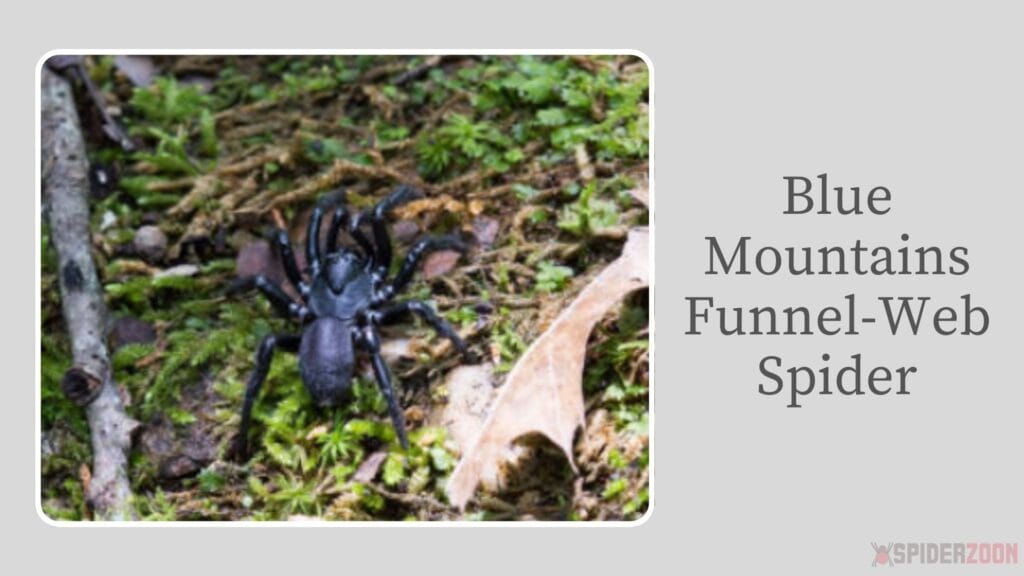
Named after the Blue Mountains region of New South Wales, the Blue Mountains Funnel-Web Spider is another ground-dwelling species known for its high venom toxicity and secretive lifestyle. While less aggressive than its Sydney cousin, it is still considered dangerous and must be treated with caution.
Appearance
This spider has a glossy dark blue-black cephalothorax with a velvety dark abdomen. It is medium to large in size and often confused with other funnel-webs due to its similar appearance. The overall color may have a bluish tint under light, giving it its name.
Habitat & Range
Found mainly in the Blue Mountains and surrounding bushland, it prefers cool, damp microhabitats like under rocks, decaying logs, and in leaf litter. It builds a silk-lined burrow with a clear funnel entrance, often hidden beneath dense vegetation or mossy cover.
Identification
- Blue-black carapace with velvety abdomen
- Medium to large size with thick legs
- Builds deep burrows in forest floors
- Funnel-shaped silk web with side tunnels
- Mostly found in highland bush areas
Venom & Danger Level
The venom of H. versuta is potent but less frequently encountered in medical emergencies due to its shy nature and remote habitat. Nonetheless, bites can cause serious symptoms, including nausea, sweating, and muscle spasms. As with other funnel-webs, prompt medical care and antivenom are crucial.
Funnel-Web Facts
- Named for its blue-tinted body
- Prefers moist, mountainous environments
- Not aggressive unless provoked
- One of the more reclusive funnel-web species
4. Southern Tree Funnel-Web Spider (Hadronyche cerberea)
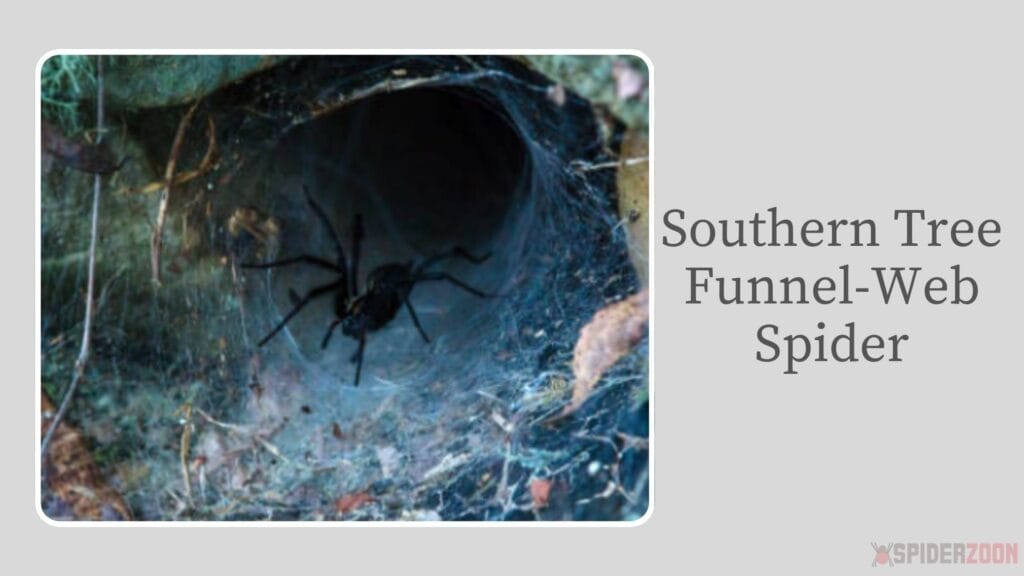
The Southern Tree Funnel-Web Spider is a tree-dwelling species found in coastal and mountain forests of New South Wales, particularly south of Sydney. It shares many traits with its northern relative but prefers cooler and more temperate climates. While less commonly seen, it is just as capable of delivering a dangerous bite.
Appearance
This spider has a shiny, dark brown to black body with a slightly rugged texture. It’s medium to large in size and has strong, thick legs adapted for climbing. The cephalothorax is smooth, and the abdomen is usually rounded and velvety in appearance.
Habitat & Range
It inhabits southern coastal forests, including the Illawarra and Southern Highlands regions. Like other arboreal funnel-webs, it makes its home in hollow trees, under bark, or within leaf bases of large plants. It builds silk-lined retreats high above the ground and is most active during humid weather.
Identification
- Tree-dwelling funnel-web found in southern NSW
- Glossy dark body with slightly rough surface
- Burrows in tree hollows and bark gaps
- Retreat is hidden in elevated vegetation
- Active in cooler, forested environments
Venom & Danger Level
Its venom is potent and fast-acting, though human bites are rare due to its reclusive lifestyle. Symptoms of envenomation can be severe but treatable with funnel-web antivenom. As with others in its group, medical attention is always recommended after a bite.
Funnel-Web Facts
- Tree-dwelling spider active after rainfall
- Builds strong vertical silk retreats
- Less aggressive than ground-dwellers
- Often confused with other black spiders in trees
5. Toowoomba Funnel-Web Spider (Hadronyche infensa)

The Toowoomba Funnel-Web Spider is one of the most venomous funnel-webs in Queensland. Found primarily in the Toowoomba and Darling Downs regions, this ground-dwelling spider has been responsible for several medically significant bites, making it one of the more dangerous species in the Hadronyche genus.
Appearance
It has a glossy black to reddish-black body with thick, sturdy legs and a broad carapace. Its abdomen is velvety and round. Males are smaller and more slender, while females are bulkier. Both sexes have prominent downward-facing fangs capable of deep punctures.
Habitat & Range
This spider is found in southeastern Queensland, especially in the Toowoomba Range. It prefers moist soils and forest floors, often burrowing beneath rocks, leaf litter, or fallen logs. It builds a typical funnel-shaped web with silk trip-lines extending from the entrance to alert it of nearby movement.
Identification
- Shiny black or reddish-black appearance
- Thick-legged and compact body structure
- Burrows under logs and leaf litter
- Funnel-shaped web with radiating trip lines
- Mostly found in Toowoomba and Darling Downs
Venom & Danger Level
This species produces highly toxic venom with effects similar to Atrax robustus, including sweating, rapid heart rate, and breathing difficulty. It has caused several severe envenomations. Immediate medical treatment and use of antivenom are essential.
Funnel-Web Facts
- Active during summer nights, especially after rain
- Responsible for multiple medical emergencies in Queensland
- Can remain hidden in burrows for long periods
- Males become mobile during mating season and pose more risk
6. Illawarra Funnel-Web Spider (Hadronyche modesta)

The Illawarra Funnel-Web Spider is a lesser-known species found in the Illawarra region of New South Wales. It is primarily a ground-dwelling species, like its Sydney cousin, but tends to be more reclusive and less aggressive. Despite its lower profile, its venom still poses a threat to humans and animals.
Appearance
This spider features a dark brown to black glossy body, with shorter legs compared to other funnel-web species. Its cephalothorax is rounded and smooth, and the abdomen is typically dark and covered with fine hairs. Males are leaner, while females have a broader build.
Habitat & Range
H. modesta is found in coastal bushlands and rainforests, especially around Wollongong and surrounding areas. It prefers damp, shaded places like under rocks, decaying logs, and in thick mulch. The spider creates a classic funnel-shaped silk burrow with trip lines stretching outward.
Identification
- Found mainly in the Illawarra region
- Glossy black or dark brown body
- Shorter, stocky legs
- Ground-dwelling with silk-lined burrow
- Trip lines extend from burrow entrance
Venom & Danger Level
While less aggressive, the Illawarra funnel-web spider still produces medically significant venom, especially from males. Its bites are painful and can cause neurological symptoms. Antivenom is effective, and fatalities are extremely rare due to timely treatment.
Funnel-Web Facts
- Less likely to wander into homes
- Named after the Illawarra region of NSW
- Burrow often well-hidden under dense cover
- Peak activity occurs during warm, wet months
7. Adelaide Hills Funnel-Web Spider (Hadronyche adelaidensis)

The Adelaide Hills Funnel-Web Spider is one of the few species of funnel-web spiders found in South Australia. Although less famous than its eastern cousins, this spider is important due to its unique geographical location. It lives in cooler forested regions and is rarely seen.
Appearance
This species has a dark brown or black body, often with a slightly lighter abdomen. It has a moderately robust body and relatively short legs. The carapace is smooth, while the abdomen is velvety. It resembles other funnel-web spiders but may appear slightly smaller.
Habitat & Range
It inhabits the Adelaide Hills and nearby bushland areas, living in moist soil, under debris, or beneath leaf litter. Its silk-lined burrows are usually well-hidden, and it is not typically found near human settlements. The spider prefers cooler, shaded environments.
Identification
- Located in Adelaide Hills, South Australia
- Glossy brown to black body
- Slightly smaller size than eastern species
- Builds funnel-shaped burrow in forest soil
- Rarely seen and not aggressive
Venom & Danger Level
Although bites from this species are extremely rare, it is assumed to carry venom similar to other Hadronyche spiders. There is limited data on its envenomation effects, but caution is advised, and medical attention should be sought if bitten.
Funnel-Web Facts
- Rare species with limited human encounters
- First discovered in South Australian forests
- Active mainly at night
- Part of ongoing venom research due to limited cases
8. Tasmanian Funnel-Web Spider (Hadronyche venenata)

The Tasmanian Funnel-Web Spider is the only known funnel-web species native to Tasmania. Though not as well-studied or widely feared as its mainland relatives, it is still considered venomous and medically important. Encounters are rare, and it typically keeps to itself in forested and rural areas.
Appearance
This spider has a dark brown to black glossy body, slightly smaller and more slender than Atrax robustus. The cephalothorax is smooth and slightly domed, while the abdomen is covered with fine hairs. Females tend to be bulkier, while males are more streamlined and mobile during mating season.
Habitat & Range
Found across forests and moist regions of Tasmania, particularly in the eastern and central areas. It builds burrows in soft soil, often under decaying logs, stones, or within leaf litter. The burrows are lined with silk and typically hidden in dense vegetation.
Identification
- Found only in Tasmania
- Glossy dark brown to black body
- Medium size with strong legs
- Burrow is silk-lined and well-camouflaged
- Lives in moist, shaded forest floors
Venom & Danger Level
H. venenata is venomous, and its bite can cause painful and localized symptoms, though no fatalities have been recorded. Its venom has not been studied as extensively as Atrax species, but medical attention is still necessary after any bite.
Funnel-Web Facts
- Tasmania’s only funnel-web spider
- Prefers cold, forested habitats
- Rarely enters urban areas
- Still under scientific observation for venom analysis
9. Mount Tamborine Funnel-Web Spider (Hadronyche mascordi)

Discovered in Mount Tamborine, Queensland, this species is named after renowned Australian arachnologist Ramon Mascord. It’s a relatively new addition to the Hadronyche genus and is known for its elusive nature and limited range. Very little is known, but it is considered medically significant.
Appearance
This spider features a dark, glossy black body with robust legs and a strong fang structure. It closely resembles other tree-dwelling funnel-webs, with a smooth carapace and a slightly rounded abdomen. Males have slender frames and longer legs, making them more likely to be seen during the warmer months.
Habitat & Range
Endemic to the Mount Tamborine area in southeastern Queensland, this spider prefers elevated, moist environments such as rainforests and mountain slopes. It may be found in tree hollows, stumps, or dense undergrowth, where it constructs a silk retreat.
Identification
- Native to Mount Tamborine, QLD
- Glossy black, tree-dwelling spider
- Silk tunnel often hidden in bark or undergrowth
- Rarely seen outside of its local region
- Likely nocturnal and rain-activated
Venom & Danger Level
Though not much clinical data exists, its venom is believed to be similar in potency to that of other Hadronyche species. Experts warn that all funnel-webs should be treated as potentially dangerous. Antivenom would be effective if required.
Funnel-Web Facts
- Named in honor of spider expert Ramon Mascord
- Discovered relatively recently
- Active at night and during rain
- Limited habitat range makes sightings uncommon
10. North Queensland Funnel-Web Spider (Hadronyche jensenae)

The North Queensland Funnel-Web Spider is a rare and localized species found in tropical regions of northern Queensland. Named after Australian scientist G.D. Jensen, this spider is part of the Hadronyche genus and shares many features with its more southerly cousins but thrives in warmer, more humid environments.
Appearance
It has a sleek black to dark brown body, with long legs and a shiny carapace. Slightly smaller than Atrax robustus, it still looks imposing due to its fang size and leg span. Its abdomen is oval-shaped and covered in short hairs.
Habitat & Range
Found in rainforests and tropical woodlands of North Queensland, especially in elevated and shaded regions. It prefers to live in soil burrows or beneath forest debris and rocks, lining its tunnels with silk and extending signal lines to detect prey.
Identification
- Native to North Queensland
- Shiny dark brown or black body
- Medium to large size
- Lives in tropical forest soil burrows
- Funnel-shaped web with trip lines around the entrance
Venom & Danger Level
Its venom is poorly studied but expected to have effects similar to other Hadronyche species. Given its remote location, human bites are rare, but caution is still advised. Any bite should be treated as medically serious, and antivenom is likely effective.
Funnel-Web Facts
- Named in honor of scientist G.D. Jensen
- Active mostly at night and during rain
- One of the few tropical funnel-web spiders
- Prefers hidden forest microhabitats
11. Darling Downs Funnel-Web Spider (Hadronyche valida)

The Darling Downs Funnel-Web Spider is found in the Darling Downs and Granite Belt regions of southeastern Queensland. This species is a ground-dwelling funnel-web that has been involved in multiple envenomation incidents. Its appearance and behavior are similar to H. infensa, and it is considered dangerous.
Appearance
It has a glossy black or deep brown body, with a broad cephalothorax and sturdy legs. Its body is slightly flatter than tree-dwelling species, and the abdomen has a velvety texture. Males are more commonly seen during mating season and are faster-moving than females.
Habitat & Range
Lives in woodlands and rural areas of the Darling Downs. It burrows in moist soil under rocks, logs, or garden debris. The burrow is silk-lined with a well-formed funnel entrance and radiating trip-lines that help detect prey or threats.
Identification
- Found in Darling Downs, QLD
- Glossy black or brown appearance
- Medium to large size with stocky build
- Burrows under soil, rocks, and logs
- Funnel entrance with web extensions
Venom & Danger Level
H. valida has venom that can cause serious symptoms, particularly from male bites. Effects may include nausea, breathing issues, and muscle spasms. As with other medically important funnel-webs, prompt antivenom treatment is effective in managing bites.
Funnel-Web Facts
- Often confused with H. infensa
- Has contributed to medically recorded bites
- Active in wet and warm weather
- Males wander during mating season, increasing encounter risk
12. Lamington Funnel-Web Spider (Hadronyche raveni)

The Lamington Funnel-Web Spider is a rare species found in the Lamington National Park and surrounding rainforest areas of southeastern Queensland. It’s named in honor of Dr. Robert Raven, a leading Australian arachnologist. Though not often encountered, it is part of the medically significant Hadronyche group.
Appearance
This spider has a shiny black to dark reddish-brown body, medium in size, with thick legs and a strong fang structure. Its cephalothorax is smooth and dome-shaped, and its abdomen is slightly elongated and covered with fine hairs.
Habitat & Range
Found in the cool, moist rainforests of Lamington Plateau, this spider prefers underground burrows or hidden retreats in forest debris. Its funnel-shaped silk web is often tucked beneath fallen logs or tree roots, where it stays protected from the elements.
Identification
- Native to Lamington National Park, QLD
- Glossy dark reddish-brown or black body
- Medium-sized and stocky
- Burrow-based with funnel silk entrance
- Rarely leaves forested areas
Venom & Danger Level
Though less frequently encountered, the venom of H. raveni is presumed toxic, similar to other Hadronyche species. Due to its remote habitat, bites are rarely reported. Antivenom is likely effective if required, and all bites should be treated seriously.
Funnel-Web Facts
- Named after Dr. Robert Raven
- Found only in a limited rainforest region
- Builds burrows with silk trip lines for prey detection
- Low public encounters due to isolated location
Comparison Table of 12 Funnel-Web Spider Species
Here’s a quick reference table comparing the 12 species covered in this article:
| Spider Name | Scientific Name | Habitat | Known Venom Danger | Region Found |
| Sydney Funnel-Web | Atrax robustus | Ground burrow | Very High | NSW (Sydney) |
| Northern Tree Funnel-Web | Hadronyche formidabilis | Tree hollows | Very High | QLD, Northern NSW |
| Blue Mountains Funnel-Web | Hadronyche versuta | Ground burrow | High | Blue Mountains, NSW |
| Southern Tree Funnel-Web | Hadronyche cerberea | Tree hollows | High | Southern NSW |
| Toowoomba Funnel-Web | Hadronyche infensa | Ground burrow | Very High | QLD |
| Illawarra Funnel-Web | Hadronyche modesta | Ground burrow | Moderate | Illawarra, NSW |
| Adelaide Hills Funnel-Web | Hadronyche adelaidensis | Ground burrow | Unknown | SA |
| Tasmanian Funnel-Web | Hadronyche venenata | Ground burrow | Moderate | Tasmania |
| Mt Tamborine Funnel-Web | Hadronyche mascordi | Tree retreats | Unknown | QLD |
| North QLD Funnel-Web | Hadronyche jensenae | Ground burrow | Moderate | QLD |
| Darling Downs Funnel-Web | Hadronyche valida | Ground burrow | High | QLD |
| Lamington Funnel-Web | Hadronyche raveni | Ground burrow | Unknown | QLD |
Tips for Identifying Funnel-Web Spiders
Identifying a funnel-web spider correctly is important, especially in regions where dangerous species live. While they can resemble other large spiders like trapdoor spiders or even tarantulas, a few key traits can help you tell them apart.
Look for These Features:
- Glossy black or dark brown body with a smooth cephalothorax.
- Powerful downward-pointing fangs (unlike the side-pointing fangs of many other spiders).
- No leg banding – their legs are usually a uniform color.
- Stout, strong legs with visible claws.
- Burrow style – silk-lined tunnel or burrow with a funnel-shaped entrance and silk trip lines.
Behavioral Clues:
- When threatened, they rear up on their hind legs, exposing their fangs aggressively.
- Males are more likely to wander into homes, especially during warm, wet weather.
- They are fast and defensive, unlike the shy behavior of many other spiders.
Where They Hide:
- Under rocks, logs, bark, or mulch.
- In tree hollows or cracks (especially for tree-dwelling species).
- Moist, shaded areas like gardens, forest floors, and leaf litter.
If you suspect a spider is a funnel-web, do not handle it, even if it appears dead. Many can survive for hours in water or sealed containers.