
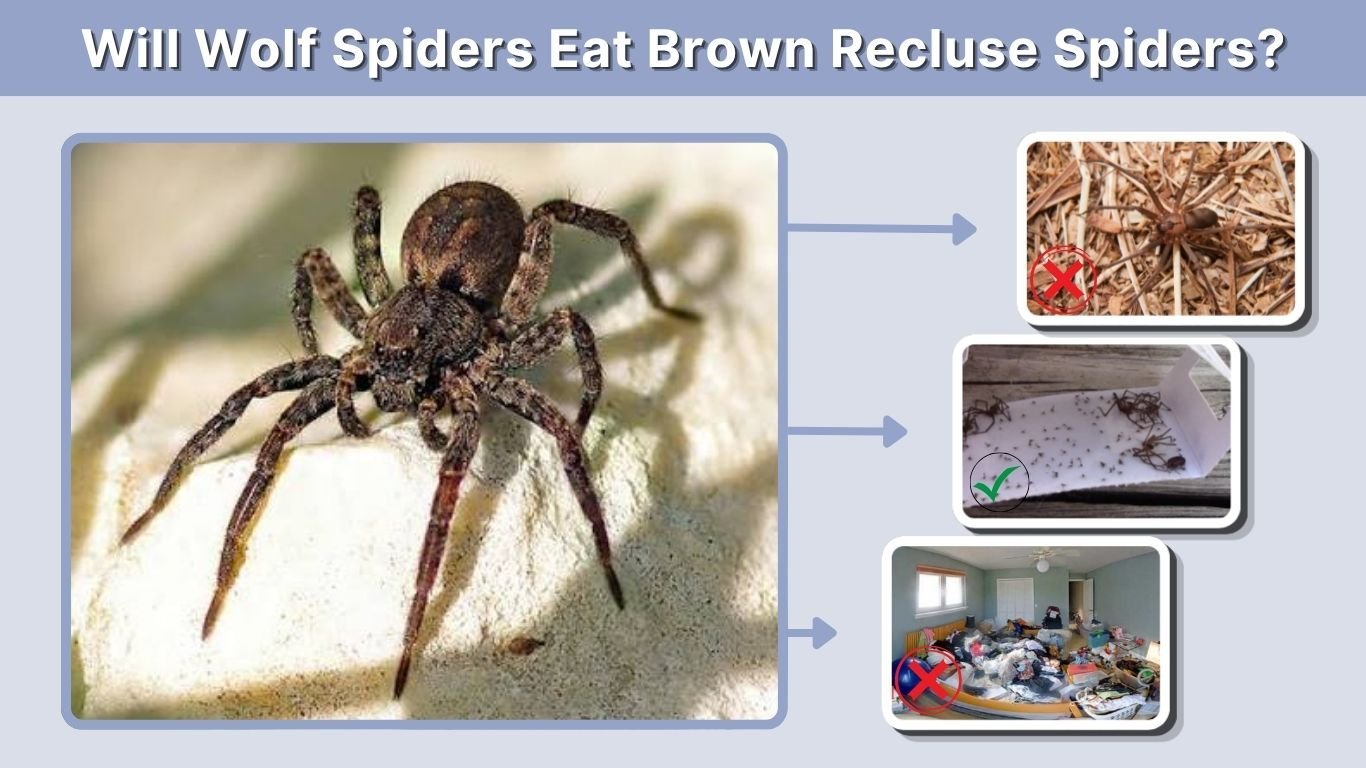
Yes, wolf spiders can eat brown recluse spiders, but they do not specifically hunt them as their main food source. Wolf spiders are active, ground-hunting predators that eat many insects and other small arthropods, so a smaller brown recluse could become prey if the two spiders cross paths. However, keeping wolf spiders around is not a dependable way to control brown recluse spiders indoors. The better approach is proper identification, clutter reduction, sealing entry points, trapping, and reducing the insects that attract spiders.
Quick Answer: Do Wolf Spiders Eat Brown Recluse?
Wolf spiders may eat brown recluse spiders when the opportunity appears, especially if the recluse is smaller, weak, young, or caught in a vulnerable position. Wolf spiders are fast hunters, and many species feed on insects and other invertebrates. University and extension sources describe wolf spiders as predators that hunt prey rather than using a web, and their diet commonly includes insects such as flies, crickets, cockroaches, and grasshoppers.
That said, “will wolf spiders eat brown recluse spiders?” is different from “will wolf spiders remove a brown recluse problem?” The answer to the second question is no. Wolf spiders are opportunistic predators, not a pest control plan. They may reduce some insects and possibly some spiders, but they will not reliably eliminate a brown recluse population.
Wolf Spiders and Brown Recluse Spiders at a Glance
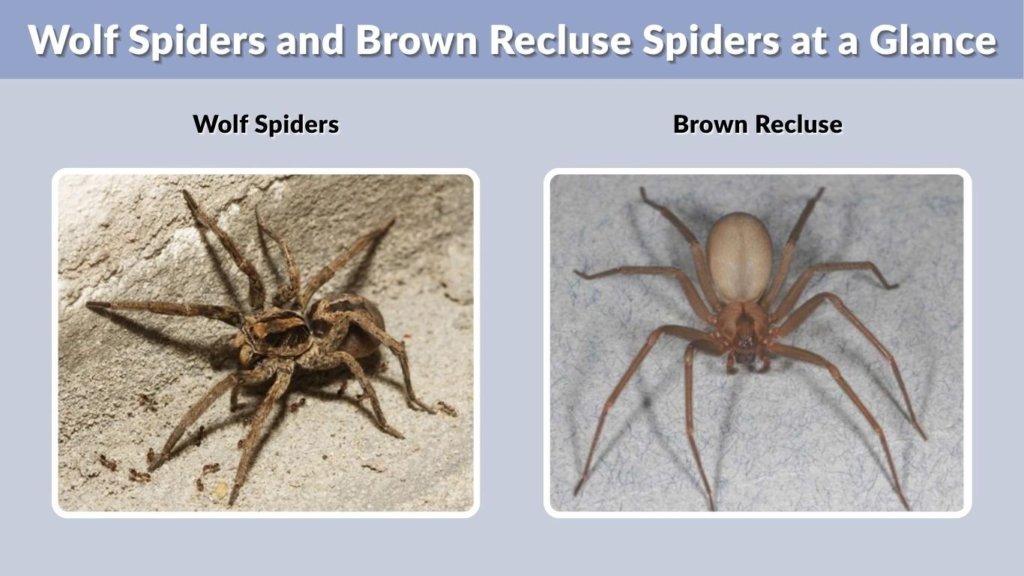
Both wolf spiders and brown recluse spiders are often found in quiet areas around homes, garages, basements, sheds, and outdoor hiding spots. Because they can be brown and fast-moving, people sometimes confuse them.
| Feature | Wolf Spider | Brown Recluse |
| Hunting style | Active ground hunter | Nocturnal hunter/scavenger |
| Web use | Does not build a prey-catching web | Does not use a web to capture food |
| Appearance | Usually hairy, patterned, sturdy body | Plain tan to brown, less hairy |
| Human risk | Bite can hurt but usually not medically serious | Bite can be medically significant |
| Pest role | Eats insects and other small prey | Eats insects, alive or dead |
The brown recluse hunts at night for insect prey and can feed on living or dead insects. It does not use a web to catch food. Wolf spiders also wander in search of prey rather than spinning a prey-catching web.
Why a Wolf Spider Might Eat a Brown Recluse
A wolf spider is not looking for brown recluses by name. It reacts to movement, size, opportunity, and hunger. If a brown recluse is small enough and within reach, a wolf spider may treat it like any other arthropod prey.
Wolf Spiders Are Opportunistic Hunters
Wolf spiders are known for active hunting. They run across the ground, wait in hidden areas, and attack prey that comes close enough. Their prey can include insects and other invertebrates. Colorado State University describes spiders generally as predators of insects and other arthropods, while Clemson notes that wolf spiders can eat houseflies, crickets, cockroaches, and grasshoppers.
A brown recluse is also an arthropod, so it can become prey under the right conditions. But wolf spiders usually prefer easier meals, such as insects that are smaller, softer-bodied, or more abundant.
Size Matters
A large wolf spider has a better chance of overpowering a small brown recluse. A small wolf spider may avoid a mature recluse because attacking another spider can be risky. Spiders are predators, but they are also prey for other animals and sometimes for other spiders.
This is why the answer is not a simple “wolf spiders always eat brown recluses.” The outcome depends on:
- The size of both spiders
- Whether the recluse can escape
- Hunger level
- Available insect prey
- The specific location where they meet
They May Compete for Similar Food
Wolf spiders and brown recluse spiders both eat insects. If your home has many crickets, cockroaches, flies, silverfish, or other insects, it can support more spiders. Texas A&M notes that when many brown recluse spiders are present in a building, it often means insect prey is also abundant.
In other words, if you see both wolf spiders and brown recluses, the bigger issue may be that your home has enough hiding spots and prey insects to support spider activity.
Will Wolf Spiders Control Brown Recluse Infestations?
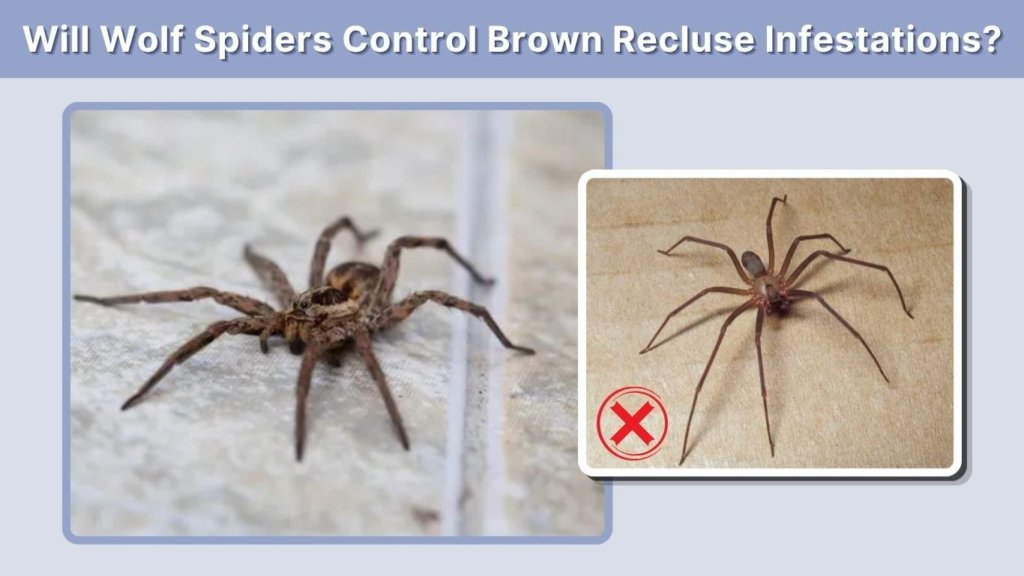
No, wolf spiders should not be used as brown recluse control. They might eat an occasional recluse, but they will not find every recluse hiding in wall voids, boxes, closets, attics, crawl spaces, or storage areas.
Brown recluse spiders are good at staying hidden. They can live in undisturbed places and may persist indoors for long periods. The University of Kentucky notes that brown recluses are well adapted to indoor living and can survive in places such as basements and attics.
A wolf spider wandering across the floor cannot reliably reach every recluse shelter. Brown recluses may hide in:
- Cardboard boxes
- Stored clothing
- Shoes
- Closets
- Basements
- Garages
- Attics
- Woodpiles
- Wall gaps and quiet corners
Even if a wolf spider eats one brown recluse, that does not mean it will control eggs, spiderlings, or hidden adults.
Which Spiders Eat Brown Recluse Spiders?
Some household spiders may prey on brown recluse spiders when they encounter them. The University of Kentucky notes that cobweb and cellar spiders can prey on other pests, including brown recluses, and may be considered beneficial in that sense.
| Possible Brown Recluse Predator | How It May Help | Reliable Control? |
| Wolf spider | May overpower smaller recluses | No |
| Cellar spider | May catch recluses in webs | No |
| Cobweb spider | May catch small spiders and insects | No |
| Centipede | May prey on spiders and insects | No |
| Birds or reptiles outdoors | May eat spiders naturally | No |
Natural predators exist, but they are not enough for serious indoor brown recluse management. If you are finding repeated brown recluses indoors, focus on prevention and control instead of relying on another spider.
Brown Recluse vs Wolf Spider: How to Tell the Difference
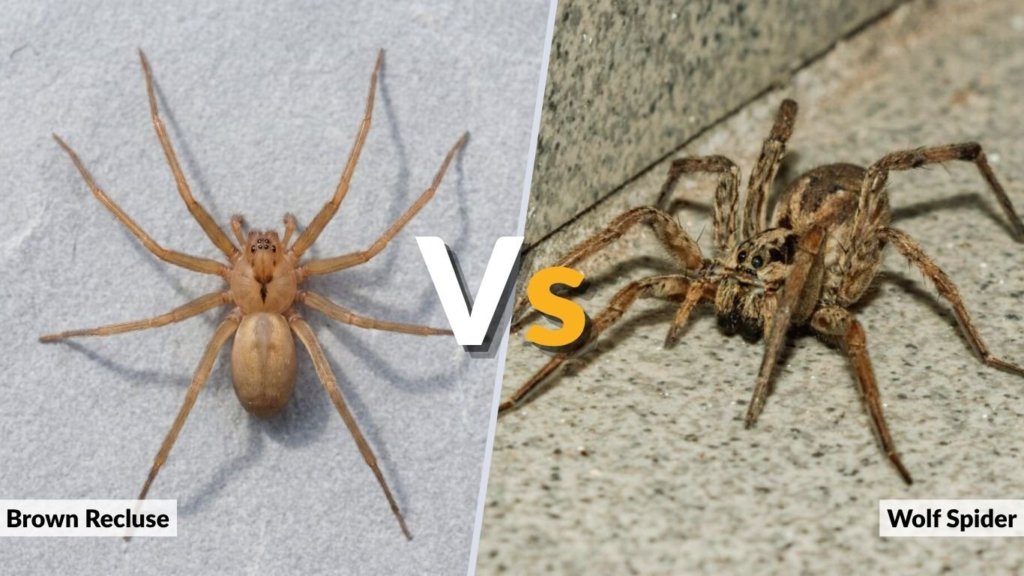
Many people search “will wolf spiders eat brown recluse spiders” because they are trying to identify a spider in the house. Correct identification matters because wolf spiders are usually considered nuisance spiders, while brown recluse spiders deserve more caution.
Body Shape and Hair
Wolf spiders are usually robust, hairy, and patterned. Their legs often look thicker, and their bodies may have stripes or mottled markings.
Brown recluses are usually smoother-looking, less hairy, and more uniform tan to brown. They have long, thin legs and a plain body compared with many wolf spiders.
Eyes
Eye arrangement is one of the more reliable differences. Wolf spiders have eight eyes, including two large forward-facing eyes. Brown recluse spiders have six eyes arranged in three pairs. This eye pattern is often more reliable than the violin-shaped mark because markings can be faint or misleading.
Webs and Behavior
Wolf spiders do not build webs to catch prey. They roam and hunt. Brown recluse spiders also do not use exposed webs to catch food, but they may make irregular silk retreats in hidden areas. If you see messy webs in open corners, those are often made by other spiders, such as cobwebs or cellar spiders.
Should You Keep Wolf Spiders Around?
Wolf spiders can be beneficial because they eat insects and other small pests. If you find one outdoors, it is usually best to leave it alone. In gardens, yards, and natural spaces, wolf spiders are part of the normal predator community.
Indoors, the answer depends on your comfort level. A wolf spider in a garage or basement may help reduce insects, but many people prefer not to have large spiders inside. If you see wolf spiders often, it may mean insects are entering your home or hiding nearby.
You can reduce both wolf spiders and brown recluse spiders by making your home less attractive to their prey.
Helpful steps include:
- Seal gaps around doors, windows, pipes, and utility lines
- Reduce cardboard storage and switch to sealed plastic bins
- Vacuum corners, baseboards, and storage areas regularly
- Keep firewood, leaves, and debris away from the foundation
- Use sticky traps to monitor ground-moving spiders
- Reduce insects such as crickets, roaches, flies, and silverfish
What to Do If You Think You Have Brown Recluse Spiders
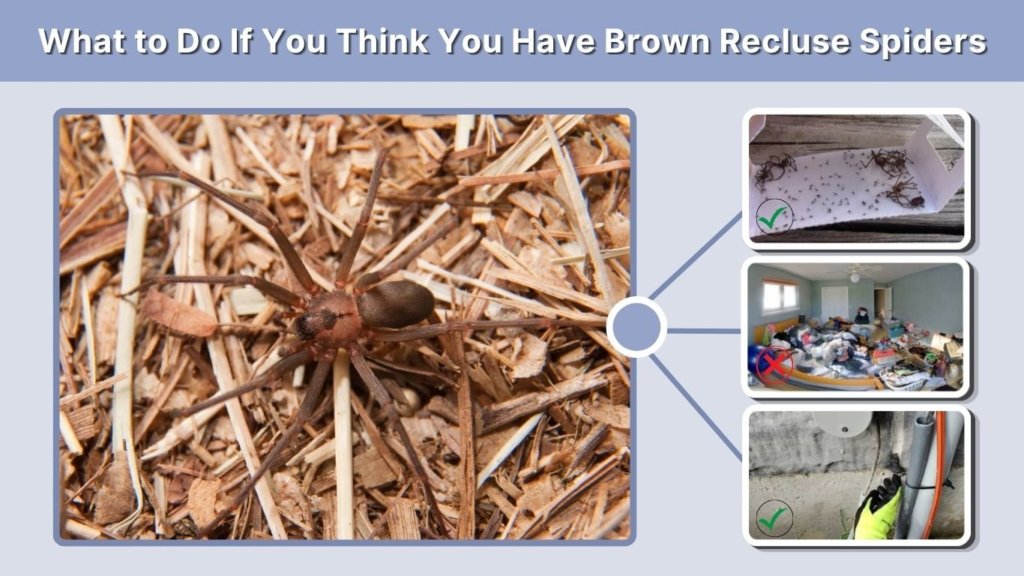
Do not depend on wolf spiders to solve the problem. Brown recluse control works best when you combine identification, monitoring, sanitation, exclusion, and targeted treatment.
| Step | What to Do | Why It Helps |
| Confirm identification | Compare eye pattern, body shape, and location | Prevents unnecessary panic |
| Use sticky traps | Place along walls, closets, basements, and storage areas | Monitors activity |
| Remove clutter | Reduce boxes, piles, and undisturbed items | Removes hiding places |
| Seal entry points | Close cracks and gaps | Limits spider and insect movement |
| Reduce prey insects | Control crickets, roaches, flies, and silverfish | Makes the home less attractive |
| Call a professional | Use for repeated sightings or high-risk areas | Helps with targeted control |
Missouri Extension notes that glue boards are effective for capturing ground-dwelling spiders such as brown recluse and wolf spiders. This makes sticky traps useful for monitoring which spiders are actually present.
Are Wolf Spiders Dangerous to Humans?
Wolf spiders can bite if handled or trapped against the skin, but they are not usually considered medically important. Virginia Cooperative Extension states that wolf spiders use venom to kill prey but are not considered medically important in Virginia.
A wolf spider bite may cause local pain, redness, or swelling. However, many suspected spider bites are never confirmed as spider bites. If you have severe pain, spreading redness, fever, tissue damage, or symptoms that worsen, contact a medical professional.
Brown recluse bites deserve more caution because they can sometimes cause more serious local tissue injury. If you suspect a brown recluse bite, especially with worsening pain, blistering, ulceration, fever, or spreading skin damage, seek medical advice.
FAQs
Will wolf spiders eat brown recluse spiders?
Yes, wolf spiders can eat brown recluse spiders if they encounter one and can overpower it. However, they do not specifically target brown recluses as their main prey.
Do wolf spiders keep brown recluse spiders away?
No. Wolf spiders may eat some spiders or insects, but they will not reliably keep brown recluse spiders out of your home. Prevention, sticky traps, clutter reduction, and pest control are more dependable.
Are wolf spiders better to have than brown recluse spiders?
From a human safety perspective, wolf spiders are usually less concerning than brown recluse spiders. Wolf spiders can bite, but they are generally not considered medically important. Brown recluse bites can sometimes be more serious.
What attracts wolf spiders and brown recluse spiders?
Both may be attracted by shelter and available prey. If your home has insects, clutter, cracks, cardboard boxes, or quiet storage areas, it may support more spider activity.
Should I kill wolf spiders if I have brown recluse spiders?
Not necessarily. A wolf spider may be beneficial outdoors or in a garage because it eats insects. But you should not rely on wolf spiders for brown recluse control. If you are seeing brown recluses repeatedly, use sticky traps and consider professional pest control.