

The King Baboon spider (Pelinobius muticus) is one of the most powerful and intimidating tarantulas in the world. Native to East Africa, this species is known for its aggressive temperament, strong bite, and unique hissing sound. Unlike beginner-friendly tarantulas, it requires experience and caution when kept in captivity. Its large size and fascinating defensive behavior make it a popular choice among advanced keepers. This guide covers key facts, habitat, size, behavior, and care essentials.
What Is a King Baboon Spider?
The King Baboon spider is a large, terrestrial tarantula that spends most of its life underground in deep burrows. It is famous for its defensive nature and ability to produce sound, which sets it apart from many other tarantulas.
Scientific Classification
- Scientific name: Pelinobius muticus
- Family: Theraphosidae
- Type: Terrestrial burrowing tarantula
Common Names
- King Baboon Spider
- African King Baboon Spider
King Baboon Spider Size, Growth and Lifespan
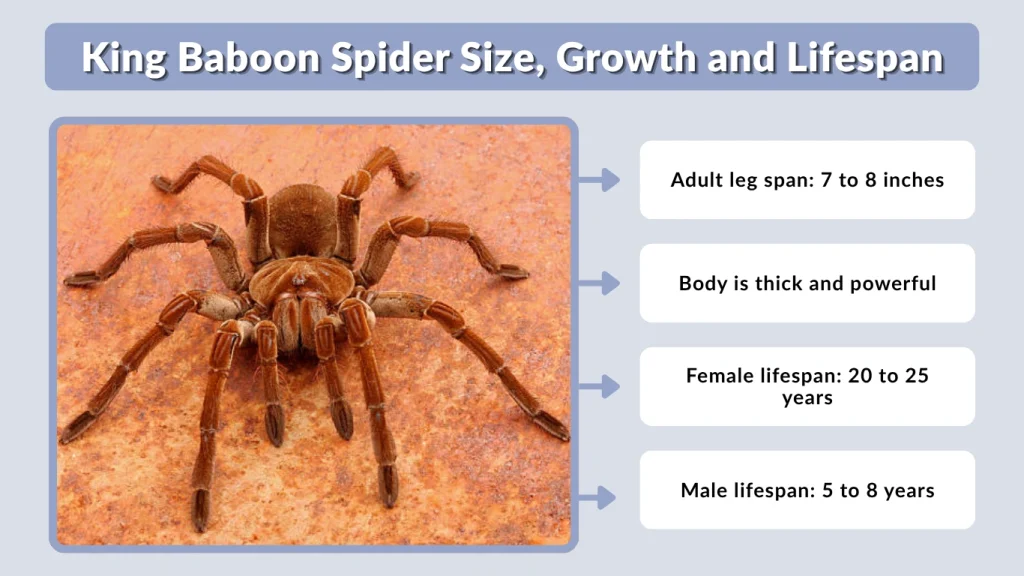
This species is known for its impressive size and long lifespan, especially in females. However, it grows slowly compared to other tarantulas.
Size and Growth Rate
- Adult leg span: 7 to 8 inches
- Body is thick and powerful
- Growth rate: Slow
Lifespan
- Female lifespan: 20 to 25 years
- Male lifespan: 5 to 8 years
King Baboon Spider Habitat and Natural Environment
The King Baboon spider is native to East Africa, particularly in countries like Kenya and Tanzania. It thrives in dry, hot environments where it can dig deep burrows for protection. These burrows help regulate temperature and humidity, allowing the spider to survive harsh conditions.
In the wild, this species rarely leaves its burrow unless hunting or searching for a mate. It prefers arid scrublands and grasslands with loose soil suitable for digging. Its entire lifestyle revolves around staying hidden and ambushing prey from within its burrow, making it a highly adapted survivalist in its natural habitat.
Behavior, Temperament and Sound
The King Baboon spider is not a calm or docile species. It is widely regarded as one of the most defensive tarantulas and is not suitable for beginners. Understanding its behavior is essential for safe keeping.
Defensive Behavior
- Extremely defensive and quick to react
- Raises front legs when threatened
- Likely to strike instead of fleeing
Unique Hissing Sound (Stridulation)
- Produces a loud hissing noise
- Sound is made by rubbing body parts together
- Used to warn predators and threats
General Behavior Traits
- Spends most time inside burrows
- Rarely climbs (strictly terrestrial)
- Active mainly at night
King Baboon Spider Bite and Venom
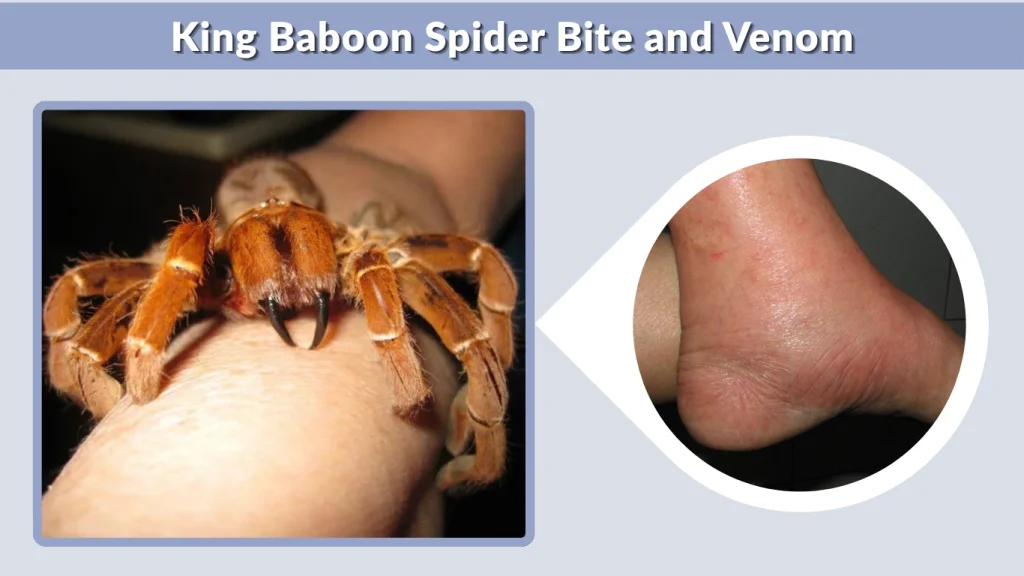
The bite of a King Baboon spider is one of the main concerns for keepers. While it is not deadly to humans, it is considered medically significant due to the intensity of its effects.
Bite Characteristics
- Very painful bite
- Large fangs capable of deep penetration
- Rare but possible if provoked
Venom Effects
- Intense localized pain
- Muscle cramps and stiffness
- Swelling and discomfort lasting hours or days
King Baboon Spider Diet and Feeding
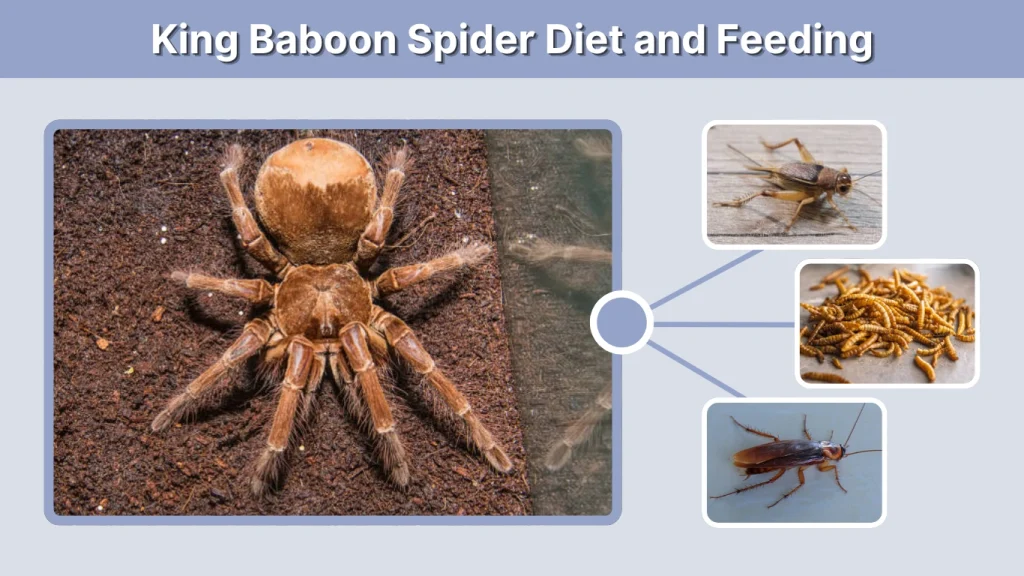
The King Baboon spider is a powerful predator that relies on ambush tactics. It waits inside its burrow and quickly attacks prey that comes close.
Natural Diet
- Insects such as beetles and crickets
- Occasionally small vertebrates
Feeding in Captivity
- Crickets and roaches are ideal
- Feed once every 1–2 weeks for adults
- Remove uneaten prey to prevent stress
King Baboon Spider Care Guide
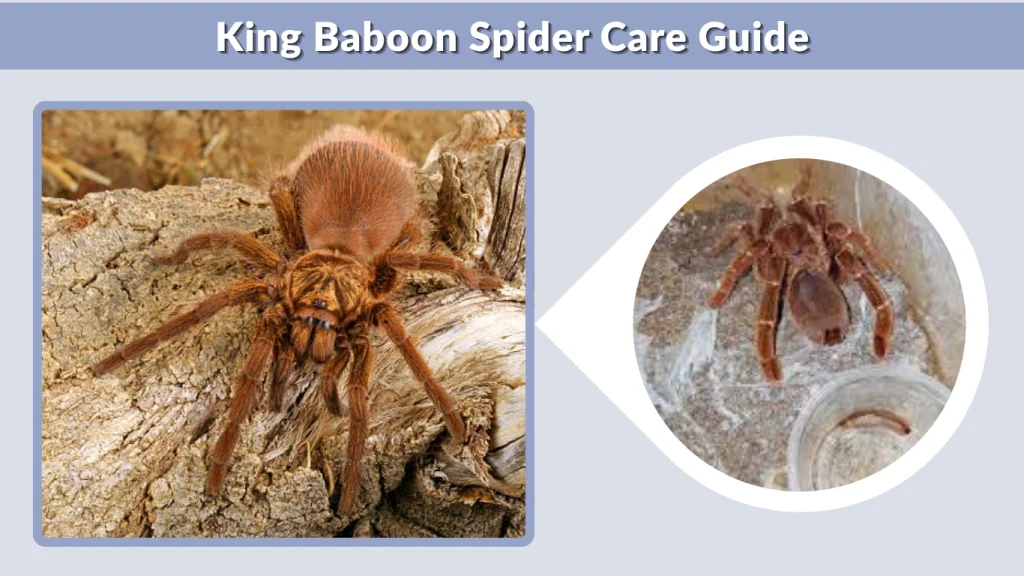
Caring for a King Baboon spider requires experience and attention to detail. This species is not forgiving like beginner tarantulas and needs a properly designed enclosure with minimal disturbance. Its burrowing nature and defensive temperament make setup and maintenance slightly challenging.
Enclosure Setup
- Deep substrate (at least 6–10 inches) for burrowing
- Secure enclosure with strong lid
- Low height to prevent injury
- Good ventilation without excessive airflow
Temperature and Humidity
- Temperature: 24–28°C
- Humidity: Low to moderate (around 50–60%)
- Keep substrate slightly dry to mimic natural habitat
Care Tips
- Avoid handling at all times
- Limit enclosure disturbances
- Feed consistently but not excessively
King Baboon Spider Reproduction and Life Cycle
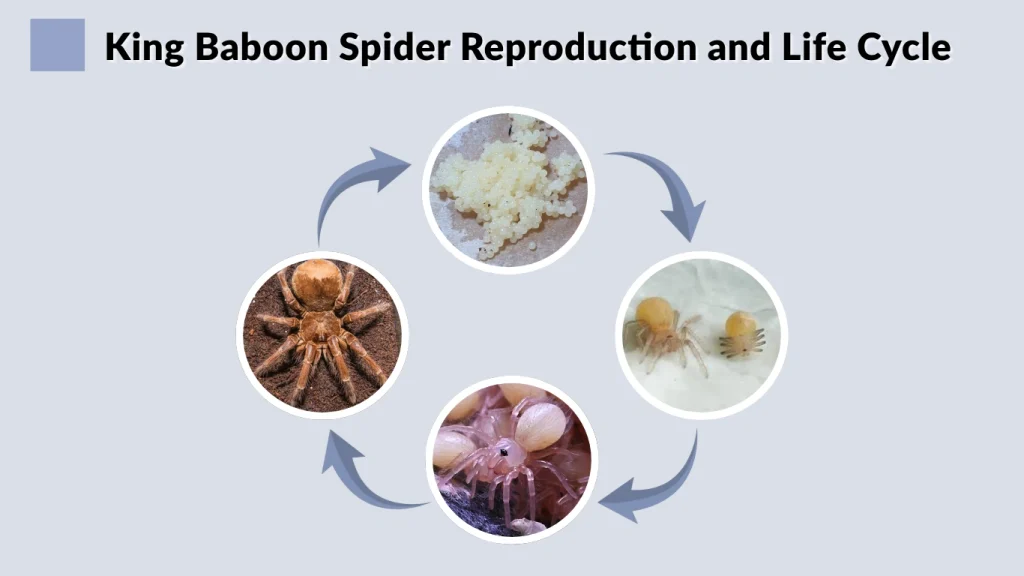
The King Baboon spider follows a typical tarantula life cycle but stands out due to its slow growth and long lifespan. Breeding is usually attempted by experienced keepers due to the species’ aggressive nature.
Breeding and Offspring
- Females produce egg sacs after mating
- Egg sacs may contain dozens to hundreds of spiderlings
- Females are highly protective during this stage
Life Cycle Stages
- Egg stage inside sac
- Spiderling (sling) stage
- Juvenile growth phase
- Adult maturity
Unlike insects, this species does not undergo true metamorphosis. Instead, it grows gradually through molting, shedding its exoskeleton multiple times throughout its life.
Predators and Survival Adaptations
In the wild, the King Baboon spider faces various predators but survives through a combination of strength, behavior, and unique adaptations. Its burrowing lifestyle plays a major role in avoiding danger, allowing it to stay hidden from most threats.
One of its most notable adaptations is its ability to produce a loud hissing sound, which acts as a warning signal to predators. Combined with its defensive posture and powerful fangs, this spider can effectively deter many attackers. Its strong legs are also designed for digging, enabling it to create deep, secure burrows that provide both shelter and hunting advantages.
King Baboon Spider Pros and Cons as a Pet
Before choosing a King Baboon spider as a pet, it is important to weigh its advantages and challenges. This species is best suited for experienced keepers who understand its behavior.
Pros
- Unique hissing (stridulation) behavior
- Impressive size and appearance
- Long lifespan, especially females
Cons
- Highly aggressive and defensive
- Painful bite risk
- Not suitable for beginners
FAQs
Is the King Baboon spider dangerous?
The King Baboon spider is not deadly, but it is considered medically significant. Its bite can cause intense pain, muscle cramps, and swelling. Due to its defensive nature, it should always be handled with caution and respect.
Why does the King Baboon spider make a hissing sound?
This spider produces a hissing sound through a process called stridulation. It rubs certain body parts together to create noise, which serves as a warning to predators and threats, helping it avoid physical confrontation.
Can you handle a King Baboon spider?
Handling is strongly discouraged. This species is highly defensive and more likely to bite than flee. Even experienced keepers avoid direct contact and instead use tools for maintenance and enclosure management.
How big does a King Baboon spider get?
An adult King Baboon spider can reach a leg span of about 7 to 8 inches. It has a thick, heavy body and powerful legs, making it one of the largest tarantulas found in Africa.
Where do King Baboon spiders live?
They are native to East Africa, especially Kenya and Tanzania. They inhabit dry grasslands and scrublands, where they dig deep burrows to protect themselves from heat, predators, and environmental changes.